
Start with paid problems
Grid reliability, commercial cooling and industrial reuse have customers who can measure avoided outages or operating cost. Healthcare needs a verified payer and clinician network. Need alone is insufficient.
Start with businesses that can point to paying customers today. Then ask what would make orders grow, why Indian suppliers would win, and what they would keep after costs.
Electronics components, storage integration and chip packaging lead the middle sales scenarios. Look at what a supplier can sell within each industry, how much cash it needs, and what customers will pay.
Efficient cooling, factory upgrades, data-centre services and industrial water reuse offer a way to start with a paid contract or upgrade. Test the savings or reliability the customer is paying for, then check how much cash you need to repeat the work.
Grid reliability and regional healthcare can also benefit from lasting demand. The scenarios show a range of possible sales. Your return depends on the business, the price you pay, and the cash it can generate.
Grid reliability, commercial cooling and industrial reuse have customers who can measure avoided outages or operating cost. Healthcare needs a verified payer and clinician network. Need alone is insufficient.
Electronics assembly can expand while brands and foreign inputs retain much of the value. GCC activity can grow while captive teams displace vendors. AI can raise output and lower billable hours.
Grid, cooling, regional healthcare, specialised engineering, industrial water and factory productivity form the leading group. Reasonable weighting changes reorder them. Scores do not justify treating rank 1 as objectively superior to rank 4.
Reliable power, trained people, collected customer payments and competitive imported inputs support many theses. Buying 50 of these businesses would not create 25 independent macro exposures.
The base case needs roughly 6–7% long-run Indian real growth, affordable funding for viable projects, continued access to key imported technology, and gradual improvements in execution. It does not require a war, a frontier scientific breakthrough, or every announced incentive succeeding. Growth below that range does not eliminate essential service demand; it reduces the room for speculative capacity.
Important boundary: this is a business-investigation ranking, not a listed-stock recommendation or valuation exercise. A great sector bought at an excessive price can be a poor investment. We have not verified any target company’s investment price, accounts or legal liabilities.
The atlas now adds 25 service cases covering home care, specialist healthcare, households/property, business operations and skills. The 10 November consolidation groups the added services into home/long-term care networks, qualified testing/quality infrastructure, healthcare financial operations, MSME financial operations, occupational health and asset-lifecycle networks. Specialty care is nested; workforce enablers and selective local businesses are no longer independent main-ranking entries. These are a research queue, not 25 equally strong new recommendations. Existing provider supply and standards support feasibility; customer-level renewals, safe staffing and cash-return cohorts remain incomplete. S73 S75 S90 S84
Home-care need does not automatically become affordable paid demand. Labour, travel, supervision, replacement cover and collection delays can absorb the apparent low-capex advantage. Similar constraints apply to housekeeping, staffing, facilities and food contracts. Claims administration and migration preparation diversify some domestic demand but introduce foreign budget, data-access, recognition and visa dependencies.
Working definition: a structural boom is unusually large, sustained expansion in paid, useful activity, supported by capacity and financing that can operate commercially. We test both size and percentage growth; there is no universal numerical cut-off.
| Pattern | How to recognise it | Why it can mislead |
|---|---|---|
| Small-base percentage boom | Fivefold revenue in ten years from a tiny base; ~17.5% annualised. | May remain too small to matter nationally; a small service firm can still be attractive. |
| Large absolute expansion | A large existing market adds significant paid volume even at 7–10% growth. | Much growth may be inflation or imported content; investment returns remain separate. |
| Temporary cycle | Prices, scarcity margins or utilisation recover after a slump. | New supply and normalisation can reverse margins before debt is repaid. |
| Durable structure | Penetration, installed base, replacement demand and productivity create repeated purchases. | Competition can still transfer the gains to customers. |
| Policy capex wave | Approvals, budget, tendering and construction increase. | Unfunded or unused assets can create revenue for contractors while destroying owner/lender capital. |
For orientation, 2.5× nominal revenue over ten years is ~9.6% annualised; 4× is ~14.9%. With 4% annual inflation, those imply roughly 1.7× and 2.7× real revenue. This is arithmetic, not evidence of feasibility. A sector must still pass the customer, financing, capacity and value-capture tests.
As a screening convention, exceptional percentage expansion means sustained real paid activity around 8% or more annually, above our 6–7% Indian real-growth reference, or a credible rapid gain in penetration/local share. At 4% price inflation, 8% real growth is about 12.3% nominal and 3.2× revenue over ten years. This chosen hurdle is not a natural law. Exceptional absolute expansion can occur at lower percentage growth in a large market, but should be demonstrated in units or incremental annual demand. Where a precise niche lacks a national baseline, we cannot claim a quantified national absolute boom.
We separately assess industry growth, India’s share and domestic value addition, and business economics. Government expenditure, exports, gross production, market capitalisation and GVA answer different questions. A high score for national impact is not evidence of high investor return.
Are customers buying more units or services, or are prices simply going up? Would demand last after a shortage ends?
Check what companies in India design, make, and sell. An item assembled in India can still rely on expensive parts made abroad.
Check how much cash remains after paying staff, buying and maintaining equipment, finding customers, and financing the business.
Read one thesis at a time. Each has ten numbered arguments, a causal flow, necessary conditions, entry routes and invalidation. The full evidence remains available in reading/print view.
Growth ranks how many times larger annual sales could be in 2036 than in the 2026 starting estimate. It uses the middle scenario. Switch to Business economics to compare margins, cash needed, and how hard the business is to copy. Impact shows what could matter most to India.
Say you buy a business at 20 times its annual profit of ₹10 crore. You pay ₹200 crore. If the profit doubles to ₹20 crore and a buyer now pays 10 times profit, the sale price is still ₹200 crore in this example. How much you earn also depends on distributions, debt, any extra money you put in, and how much of the company you own.
Growth uses the middle of each middle-scenario range. If two midpoints are equal, the higher lower bound ranks first, then case name. Neighbouring ranges often overlap. Sales are in future rupees, so the estimates include price changes. Service groups use the named operating example, with each underlying case available in Scenarios.
Business economics puts most weight on margins, capital needed, durability of demand, and how ready customers are to buy. The rubric uses judgments about the business model. Actual returns depend on company finances and the price paid.
| Criterion | Impact | Balanced | Business builder | India value capture | Resilience |
|---|---|---|---|---|---|
| Demand durability | 15% | 20% | 18% | 15% | 20% |
| Absolute scale | 25% | 10% | 5% | 15% | 5% |
| India advantage/value capture | 20% | 15% | 10% | 25% | 10% |
| Readiness/timing | 5% | 10% | 12% | 8% | 10% |
| Margins/return potential | 5% | 15% | 22% | 10% | 15% |
| Capital/working-capital efficiency | 0% | 8% | 13% | 4% | 5% |
| Defensibility | 5% | 7% | 10% | 5% | 5% |
| Policy/execution resilience | 5% | 5% | 4% | 5% | 12% |
| External/input resilience | 5% | 5% | 4% | 5% | 15% |
| Productivity/export/jobs impact | 15% | 5% | 2% | 8% | 3% |
| Main opportunity | Growth | Impact | Balanced | Business economics | India value capture | Resilience |
|---|---|---|---|---|---|---|
| Electronics components | #1 · 3.0–5.0× | 85/100 · #4 | 75/100 · #10 | 70/100 · #18 | 79/100 · #9 | 69/100 · #20 |
| Storage integration | #2 · 2.4–4.5× | 76/100 · #17 | 70/100 · #22 | 67/100 · #27 | 71/100 · #25 | 66/100 · #28 |
| Chip packaging & test | #3 · 2.3–4.5× | 72/100 · #24 | 63/100 · #30 | 60/100 · #31 | 66/100 · #30 | 57/100 · #31 |
| Data-centre infrastructure | #4 · 2.4–4.3× | 80/100 · #9 | 80/100 · #7 | 79/100 · #8 | 80/100 · #8 | 76/100 · #7 |
| Defence suppliers | #5 · 2.4–4.2× | 79/100 · #12 | 73/100 · #16 | 70/100 · #17 | 75/100 · #15 | 69/100 · #21 |
| Efficient cooling | #6 · 2.5–4.0× | 85/100 · #5 | 85/100 · #4 | 84/100 · #2 | 84/100 · #4 | 83/100 · #3 |
| Factory productivity | #7 · 2.5–4.0× | 83/100 · #7 | 82/100 · #6 | 82/100 · #5 | 82/100 · #5 | 80/100 · #6 |
| Battery material recovery | #8 · 2.2–4.2× | 67/100 · #31 | 62/100 · #31 | 60/100 · #30 | 63/100 · #31 | 59/100 · #30 |
| Grid reliability | #9 · 2.5–3.8× | 90/100 · #1 | 85/100 · #1 | 83/100 · #3 | 86/100 · #2 | 81/100 · #4 |
| Regional healthcare | #10 · 2.5–3.8× | 90/100 · #2 | 85/100 · #3 | 82/100 · #6 | 86/100 · #3 | 83/100 · #1 |
| Complex pharma services | #11 · 2.3–4.0× | 78/100 · #15 | 75/100 · #12 | 73/100 · #9 | 76/100 · #13 | 73/100 · #12 |
| Industrial water reuse | #12 · 2.4–3.8× | 81/100 · #8 | 84/100 · #5 | 85/100 · #1 | 82/100 · #6 | 83/100 · #2 |
| EV motors & thermal parts | #13 · 2.2–3.9× | 78/100 · #16 | 70/100 · #23 | 66/100 · #28 | 74/100 · #19 | 66/100 · #27 |
| Electric fleet services | #14 · 2.1–3.8× | 76/100 · #18 | 73/100 · #17 | 70/100 · #19 | 75/100 · #18 | 71/100 · #17 |
| Rail safety & maintenance | #15 · 2.0–3.8× | 79/100 · #13 | 72/100 · #21 | 68/100 · #21 | 75/100 · #16 | 68/100 · #25 |
| Engineering & AI services | #16 · 2.2–3.5× | 90/100 · #3 | 85/100 · #2 | 83/100 · #4 | 88/100 · #1 | 81/100 · #5 |
| Food cold-chain | #17 · 2.2–3.5× | 80/100 · #10 | 72/100 · #18 | 68/100 · #23 | 76/100 · #14 | 72/100 · #14 |
| Medical-device lifecycle | #18 · 2.1–3.6× | 76/100 · #19 | 78/100 · #8 | 79/100 · #7 | 77/100 · #11 | 73/100 · #10 |
| Home & long-term care networks | #19 · 2.1–3.5× | 71/100 · #25 | 69/100 · #27 | 68/100 · #25 | 69/100 · #27 | 70/100 · #18 |
| Technical textiles | #20 · 2.0–3.6× | 71/100 · #26 | 70/100 · #24 | 68/100 · #22 | 71/100 · #24 | 69/100 · #22 |
| Contract logistics | #21 · 2.0–3.5× | 85/100 · #6 | 77/100 · #9 | 72/100 · #13 | 80/100 · #7 | 75/100 · #8 |
| Food processing services | #22 · 2.0–3.5× | 80/100 · #11 | 75/100 · #13 | 71/100 · #15 | 77/100 · #10 | 74/100 · #9 |
| Rooftop solar services | #23 · 2.0–3.4× | 79/100 · #14 | 75/100 · #11 | 73/100 · #10 | 77/100 · #12 | 72/100 · #15 |
| Qualified process chemicals | #24 · 1.9–3.5× | 74/100 · #21 | 68/100 · #29 | 65/100 · #29 | 71/100 · #23 | 63/100 · #29 |
| Circular packaging | #25 · 1.9–3.4× | 70/100 · #28 | 70/100 · #25 | 68/100 · #24 | 71/100 · #26 | 67/100 · #26 |
| Employer-funded occupational health | #26 · 2.0–3.2× | 71/100 · #27 | 69/100 · #28 | 68/100 · #26 | 69/100 · #28 | 70/100 · #19 |
| Regional travel operations | #27 · 1.9–3.2× | 69/100 · #30 | 72/100 · #19 | 72/100 · #14 | 72/100 · #21 | 73/100 · #11 |
| Testing & quality infrastructure | #28 · 1.9–3.2× | 76/100 · #20 | 74/100 · #14 | 73/100 · #11 | 75/100 · #17 | 72/100 · #16 |
| Asset lifecycle service networks | #29 · 1.9–3.1× | 74/100 · #22 | 72/100 · #20 | 71/100 · #16 | 72/100 · #22 | 73/100 · #13 |
| Healthcare financial operations | #30 · 1.6–3.0× | 74/100 · #23 | 73/100 · #15 | 73/100 · #12 | 74/100 · #20 | 68/100 · #23 |
| MSME financial operations | #31 · 1.5–2.9× | 70/100 · #29 | 70/100 · #26 | 69/100 · #20 | 69/100 · #29 | 68/100 · #24 |
Scroll horizontally to see both sales scenarios, business economics, impact and confidence. The table follows the growth ranking.
| Growth rank | Opportunity | Middle case · 2036 sales compared with 2026 | Slower case · same comparison | Business economics | Impact | Starting market evidence | Main risk | Evidence confidence |
|---|---|---|---|---|---|---|---|---|
| 1 | <button class="text-button" data-open-industry="electronics">Electronics components ↗</button> | 3.0–5.0× | 1.4–2.2× | 70/100 | 85/100 | FY26 gross Indian electronics production ₹13.11 lakh crore; exports ~₹4.24 lakh crore, a subset. Qualified components/tooling niche not separately reconciled. <a class="cite" href="https://www.pib.gov.in/PressReleasePage.aspx?PRID=2291171&lang=1&reg=1" target="_blank" rel="noopener noreferrer" title="MeitY: Electronics manufacturing and exports · 29 July 2026 · FY2025–26">S23</a> | Low yields, buyer concentration, imported inputs and oversupply | 55/100 anchor-model confidence |
| 2 | <button class="text-button" data-open-industry="storage">Storage integration ↗</button> | 2.4–4.5× | 0.9–1.8× | 67/100 | 76/100 | Selected niche: no consistent current national revenue estimate verified. On 4 November 2026 the Cabinet approved a new grid-storage support envelope spanning batteries, pumped hydro and alternative technologies. Older schemes already exist. The new approval must not be added mechanically to overlapping older awards or labelled operating BESS. <a class="cite" href="https://www.pmindia.gov.in/en/news_updates/cabinet-approves-rs-14500-crore-viability-gap-funding-scheme-for-development-of-92-gwh-grid-scale-energy-storage-systems/?comment=disable" target="_blank" rel="noopener noreferrer" title="Cabinet: new grid-scale storage VGF scheme · 4 November 2026 · Approved envelope FY2026–27 to FY2030–31; not commissioned capacity">S58</a> <a class="cite" href="https://ieefa.org/resources/viability-standalone-battery-energy-storage-tariffs-discovered-2025" target="_blank" rel="noopener noreferrer" title="IEEFA: viability of 2025 standalone battery bids · 19 May 2026 · 2025 tenders; 2026 input risks">S48</a> | Award volumes rise while projects cannot finance or meet degradation guarantees | 55/100 anchor-model confidence |
| 3 | <button class="text-button" data-open-industry="semipack">Chip packaging & test ↗</button> | 2.3–4.5× | 0.8–1.8× | 60/100 | 72/100 | Selected niche: no consistent current national revenue estimate verified. The NIC archive records Kaynes and CG Semi commercial-production inaugurations in March and July 2026, distinct from a fab ground-breaking. This is stronger than approval alone, but it does not disclose sustained test yield, utilisation or customer economics. <a class="cite" href="https://webcast.gov.in/meity/semiconindia/?lang=en" target="_blank" rel="noopener noreferrer" title="NIC/MeitY: semiconductor commercial-production events · 4 July and 31 March 2026 events; checked 8 November · CG Semi and Kaynes OSAT commercial-production inaugurations">S65</a> <a class="cite" href="https://www.pib.gov.in/PressReleasePage.aspx?PRID=2291171&lang=1&reg=1" target="_blank" rel="noopener noreferrer" title="MeitY: Electronics manufacturing and exports · 29 July 2026 · FY2025–26">S23</a> | Inaugurated plants remain low-yield or underused and suppliers never receive repeat orders | 50/100 anchor-model confidence |
| 4 | <button class="text-button" data-open-industry="datainfra">Data-centre infrastructure ↗</button> | 2.4–4.3× | 1.1–1.9× | 79/100 | 80/100 | Selected niche: no consistent current national revenue estimate verified. Budget 2026 explanatory material proposes incentives for eligible foreign cloud providers using Indian data centres. This is not verified blanket tax relief for every Indian landlord. Larger compute loads require physical power, cooling and commissioning even when foreign firms retain the cloud/software margin. <a class="cite" href="https://www.pib.gov.in/PressNoteDetails.aspx?ModuleId=3&NoteId=157352&id=157352&lang=1&reg=3" target="_blank" rel="noopener noreferrer" title="PIB: Budget 2026–27 cloud/data-centre measures · 14 February 2026 · Budget announcements, not independently verified final tax eligibility">S71</a> <a class="cite" href="https://www.iea.org/reports/electricity-2026/demand" target="_blank" rel="noopener noreferrer" title="IEA: Electricity 2026 — demand · 2026 · 2025 actual estimates; forecast 2026–30">S15</a> | Reserved MW does not become accepted, paid capacity; OEM bundles remove specialist margin | 60/100 anchor-model confidence |
| 5 | <button class="text-button" data-open-industry="defence">Defence suppliers ↗</button> | 2.4–4.2× | 1.2–1.9× | 70/100 | 79/100 | FY26 parent defence production ₹1.78 lakh crore; exports ₹38,424 crore, including private exports ₹17,353 crore. Recommended supplier slice is unmeasured. <a class="cite" href="https://www.pib.gov.in/PressReleasePage.aspx?PRID=2248124&lang=2&reg=48" target="_blank" rel="noopener noreferrer" title="Defence Ministry: FY26 defence exports · 2 April 2026 · FY2025–26">S38</a> <a class="cite" href="https://www.pib.gov.in/FactsheetDetails.aspx?Id=150909&lang=1&reg=40" target="_blank" rel="noopener noreferrer" title="Defence Ministry/PIB: production and industrial base · 2026 factsheet; accessed November 2026 · FY2025–26">S39</a> | Monopsony, long certification, imported technology and order timing | 55/100 anchor-model confidence |
| 6 | <button class="text-button" data-open-industry="cooling">Efficient cooling ↗</button> | 2.5–4.0× | 1.4–2.0× | 84/100 | 85/100 | FY26 Indian room-AC volume 11.1–11.5m units (ICRA estimate), a parent-demand anchor; selected retrofit/service market revenue is unmeasured. FY27 12.6–12.9m is a forecast. <a class="cite" href="https://www.icra.in/Research/ViewResearchReport/a-cooler-growth-story-in-a-heated-cost-environment/7144" target="_blank" rel="noopener noreferrer" title="ICRA: Room AC market and margins · 30 September 2026 · FY2025–26 estimates; FY2026–27 forecast">S20</a> | Affordability, weather, excess appliance capacity | 70/100 anchor-model confidence |
| 7 | <button class="text-button" data-open-industry="automation">Factory productivity ↗</button> | 2.5–4.0× | 1.3–1.9× | 82/100 | 83/100 | Adjacent FY26 machine-tool consumption ₹36,419 crore; domestic production ₹17,387 crore, exports ₹2,596 crore and imports ₹21,628 crore. Retrofit/vision/service niche is smaller and unmeasured. <a class="cite" href="https://www.mmindia.co.in/article/3641/indian-manufacturing-on-an-upward-trajectory" target="_blank" rel="noopener noreferrer" title="IMTMA Data & Policy Team: machine-tool industry FY26 · 2026; exact article date not displayed · FY2025–26 revised estimates">S35</a> | Slow MSME capex, imported controls, project customisation | 60/100 anchor-model confidence |
| 8 | <button class="text-button" data-open-industry="batteryrecycle">Battery material recovery ↗</button> | 2.2–4.2× | 0.7–1.6× | 60/100 | 67/100 | Selected niche: no consistent current national revenue estimate verified. CPCB operates battery-producer/recycler registration and EPR infrastructure; the Mines Ministry has a critical-mineral recycling incentive scheme. The portal’s application window is not presumed open today. Neither obligation nor approved capacity proves enough end-of-life lithium feedstock or battery-grade product yield. <a class="cite" href="https://eprbattery.cpcb.gov.in/" target="_blank" rel="noopener noreferrer" title="CPCB: battery waste EPR rules and operating portal · Live page checked 8 November 2026 · 2022 rules, listed amendments through 2025 and current portal notices">S61</a> <a class="cite" href="https://ncmm.jnarddc.gov.in/" target="_blank" rel="noopener noreferrer" title="Ministry of Mines/JNARDDC: critical-mineral recycling scheme · Portal checked 8 November 2026; 2025 notifications · FY2025–26 to FY2030–31; application window shown ending 1 April 2026">S59</a> | Feedstock scarcity and expensive bidding erase recovery margins, or certificate revenue substitutes for physical processing | 50/100 anchor-model confidence |
| 9 | <button class="text-button" data-open-industry="grid">Grid reliability ↗</button> | 2.5–3.8× | 1.4–2.0× | 83/100 | 90/100 | Selected equipment/service slice: no defensible consolidated Indian revenue total found. Anchor: ₹9.15 lakh crore transmission plan over FY23–FY32; this is multi-year planned capex, not current annual market size. <a class="cite" href="https://www.pib.gov.in/Pressreleaseshare.aspx?PRID=2064751&lang=2&reg=48" target="_blank" rel="noopener noreferrer" title="Power Ministry/CEA: National Electricity Plan, transmission · 14 October 2024 · Plan FY2022–23 to FY2031–32; 220kV and above">S16</a> | Tender delays, commodity inflation, overbuilt factory capacity | 75/100 anchor-model confidence |
| 10 | <button class="text-button" data-open-industry="health">Regional healthcare ↗</button> | 2.5–3.8× | 1.6–2.2× | 82/100 | 90/100 | Selected regional/day-care niche: current national revenue unavailable on a consistent basis. Broad FY23 health expenditure implied at ~₹8.8 lakh crore from government ₹3.85 lakh crore / 43.7%; a lagged all-health parent envelope, not hospital TAM. <a class="cite" href="https://www.pib.gov.in/PressReleasePage.aspx?PRID=2265816&lang=1&reg=3" target="_blank" rel="noopener noreferrer" title="Health Ministry: National Health Accounts 2022–23 · 27 May 2026 · FY2022–23; original GDP vintage">S29</a> | Doctor dependence, affordability, payer delays and overbuilding | 70/100 anchor-model confidence |
| 11 | <button class="text-button" data-open-industry="pharma">Complex pharma services ↗</button> | 2.3–4.0× | 1.0–1.7× | 73/100 | 78/100 | Selected Indian complex-chemistry/analytical outsourcing revenue: no consistent current national estimate verified. Comparator Syngene FY26 operations revenue ₹3,739 crore, +3%, operating EBITDA 25%. <a class="cite" href="https://nsearchives.nseindia.com/corporate/SYNGENE2_30042026131446_IPQ4_Signed.pdf" target="_blank" rel="noopener noreferrer" title="Syngene: FY26 earnings presentation · 30 April 2026 · Year ended March 2026">S33</a> | Molecule failure, client concentration, quality and underutilised assets | 60/100 anchor-model confidence |
| 12 | <button class="text-button" data-open-industry="water">Industrial water reuse ↗</button> | 2.4–3.8× | 1.3–1.9× | 85/100 | 81/100 | Indian industrial reuse/O&M market: no reconciled current national estimate established. WABAG FY26 consolidated global revenue ₹3,944 crore is a capability comparator, not India TAM. <a class="cite" href="https://www.wabag.com/wp-content/uploads/2026/05/Q4FY26_Investor-Presentation.pdf" target="_blank" rel="noopener noreferrer" title="WABAG: FY26 investor presentation · May 2026 · Year ended March 2026; consolidated global company">S30</a> | Free freshwater, weak enforcement, municipal non-payment | 60/100 anchor-model confidence |
| 13 | <button class="text-button" data-open-industry="evparts">EV motors & thermal parts ↗</button> | 2.2–3.9× | 1.0–1.8× | 66/100 | 78/100 | Selected niche: no consistent current national revenue estimate verified. India already has an automotive-component supplier base, while EV support remains vehicle-category specific. Changing drivetrain content creates new motor, power-electronic enclosure and thermal requirements; it also destroys some ICE-component demand. <a class="cite" href="https://acma.in/about-us.php" target="_blank" rel="noopener noreferrer" title="ACMA: FY26 industry overview · Live page accessed November 2026 · FY2025–26">S49</a> <a class="cite" href="https://pmedrive.heavyindustries.gov.in/about-us" target="_blank" rel="noopener noreferrer" title="MHI: current PM E-DRIVE scheme brief · Live portal checked 8 November 2026 · Amended scheme status, including August 2026 amendment">S57</a> | OEM internalisation, cheap imports or platform cancellations leave dedicated tooling idle | 60/100 anchor-model confidence |
| 14 | <button class="text-button" data-open-industry="evfleet">Electric fleet services ↗</button> | 2.1–3.8× | 1.0–1.7× | 70/100 | 76/100 | Selected niche: no consistent current national revenue estimate verified. The current MHI scheme brief distinguishes extended PM E-DRIVE categories from L5 three-wheelers closed in December 2025. Installed vehicles still need maintenance and energy service. Registration or subsidy eligibility is not evidence that a fleet route earns. <a class="cite" href="https://pmedrive.heavyindustries.gov.in/about-us" target="_blank" rel="noopener noreferrer" title="MHI: current PM E-DRIVE scheme brief · Live portal checked 8 November 2026 · Amended scheme status, including August 2026 amendment">S57</a> <a class="cite" href="https://acma.in/about-us.php" target="_blank" rel="noopener noreferrer" title="ACMA: FY26 industry overview · Live page accessed November 2026 · FY2025–26">S49</a> | Insufficient productive kilometres, OEM lockout or battery claims consume savings | 60/100 anchor-model confidence |
| 15 | <button class="text-button" data-open-industry="rail">Rail safety & maintenance ↗</button> | 2.0–3.8× | 1.0–1.7× | 68/100 | 79/100 | Selected niche: no consistent current national revenue estimate verified. The August 2026 Railways disclosure reports expenditure against the annual grant and version-specific commissioned Kavach 4.0 routes. Commissioned safety systems demonstrate execution, but budget, total route length and supplier revenue remain different measures. <a class="cite" href="https://www.pib.gov.in/newsite/PrintRelease.aspx?lang=2&reg=48&relid=292764" target="_blank" rel="noopener noreferrer" title="Railways: expenditure and Kavach implementation · 5 August 2026 · Expenditure to July/June 2026; Kavach 4.0 commissioning at 31 July">S64</a> <a class="cite" href="https://nsearchives.nseindia.com/corporate/SIEMENS57_28052026093907_SE_Presentationsigned.pdf" target="_blank" rel="noopener noreferrer" title="Siemens India analyst presentation · 28 May 2026 · Six months ended March 2026">S19</a> | Few primes capture orders and SMEs bear working capital without bargaining power | 60/100 anchor-model confidence |
| 16 | <button class="text-button" data-open-industry="gcc">Engineering & AI services ↗</button> | 2.2–3.5× | 1.1–1.7× | 83/100 | 90/100 | FY26 parent GCC study: 2,117 centres, $98.4bn reported revenue and 2.36m talent. Captive value is not external supplier revenue. Selected engineering/cyber/AI-vendor TAM not consistently measured. <a class="cite" href="https://zinnov.com/centers-of-excellence/zinnov-nasscom-india-gcc-landscape-2026-report/" target="_blank" rel="noopener noreferrer" title="Zinnov–Nasscom: India GCC Landscape 2026 · 2026; exact release date not shown · FY2026 industry study">S26</a> | AI price compression, captive substitution, export concentration | 60/100 anchor-model confidence |
| 17 | <button class="text-button" data-open-industry="coldchain">Food cold-chain ↗</button> | 2.2–3.5× | 1.2–1.8× | 68/100 | 80/100 | Selected modern multi-commodity cold-chain revenue: no consistent current national estimate established. Comparator Snowman FY26 revenue ₹604.38 crore, EBITDA ₹94.53 crore and PAT ₹3.30 crore. <a class="cite" href="https://nsearchives.nseindia.com/corporate/SNOWMAN8_06052026180103_Press_Release___Intimation_Q4_sd.pdf" target="_blank" rel="noopener noreferrer" title="Snowman Logistics FY26 results · 6 May 2026 · Year ended March 2026">S40</a> | Poor utilisation, low yields, customer price pressure and asset debt | 45/100 anchor-model confidence |
| 18 | <button class="text-button" data-open-industry="meddevices">Medical-device lifecycle ↗</button> | 2.1–3.6× | 1.2–1.8× | 79/100 | 76/100 | Selected niche: no consistent current national revenue estimate verified. The July 2026 pharmaceutical-department disclosure separates device investment and commenced production from approved grants and cash released. More equipment creates lifecycle work, but manufacturing incentives do not automatically grant independent service firms access to proprietary parts or software. <a class="cite" href="https://www.pib.gov.in/PressReleasePage.aspx?PRID=2288770&lang=1&reg=3" target="_blank" rel="noopener noreferrer" title="Department of Pharmaceuticals: high precision medical instruments · 24 July 2026 · Scheme approvals, actual investment, releases and utilisation to stated dates">S60</a> <a class="cite" href="https://www.icra.in/Research/ViewResearchReport/strong-demand-and-6-8-rise-in-arpob-to-support-healthy-revenue-growth-of-13-15-in-fy2027/7044" target="_blank" rel="noopener noreferrer" title="ICRA: Hospital demand, occupancy and profitability · 30 July 2026 · FY26 sample actual; FY27/28 forecast">S28</a> | OEM access is blocked, liabilities are uninsurable or public/private hospitals pay too slowly | 60/100 anchor-model confidence |
| 19 | <button class="text-button" data-open-opportunity="care_networks">Home & long-term care networks ↗</button><br><small>Growth example: Post-discharge home care</small> | 2.1–3.5× | 1.0–1.5× | 68/100 | 71/100 | See the example case. The group has no combined sales estimate. | Affordability and safe staff supply bind first. Families can hire directly; hospitals can internalise referrals. A national roll-up can add overhead before density. | Model scores 45–60; family unscored |
| 20 | <button class="text-button" data-open-industry="textiles">Technical textiles ↗</button> | 2.0–3.6× | 1.0–1.7× | 68/100 | 71/100 | Selected niche: no consistent current national revenue estimate verified. The February 2026 NTTM disclosure records approved research, start-up and education projects. That establishes capability-building activity, not commercial orders. Filtration, protective and geotechnical applications require different tests and customers; broad apparel exports are not the selected market. <a class="cite" href="https://www.pib.gov.in/PressReleasePage.aspx?PRID=2222482&lang=1&reg=3" target="_blank" rel="noopener noreferrer" title="Textiles Ministry: National Technical Textiles Mission · 3 February 2026 · Programme status reported in parliamentary answer">S66</a> <a class="cite" href="https://www.indiabudget.gov.in/economicsurvey/doc/eschapter/echap08.pdf" target="_blank" rel="noopener noreferrer" title="Economic Survey 2025–26: industry · January 2026 · Mixed latest available industrial indicators">S47</a> | Customers will not pay for functional performance, or certification/quality fails after capex | 60/100 anchor-model confidence |
| 21 | <button class="text-button" data-open-industry="logistics">Contract logistics ↗</button> | 2.0–3.5× | 1.1–1.7× | 72/100 | 85/100 | Selected niche: no consistent current national revenue estimate verified. DPIIT’s National Logistics Policy and implementation reports frame multimodal coordination and digital interfaces. The policy’s cost-reduction objective is not a verified achieved national cost ratio. Factory production and actual consignments, not speculative warehouse announcements, create paid handling work. <a class="cite" href="https://www.dpiit.gov.in/static/uploads/2025/06/e266b2694ebc0cbfa72a929e22790301.pdf" target="_blank" rel="noopener noreferrer" title="DPIIT: annual report and National Logistics Policy · 2025 publication · FY2024–25 implementation context">S68</a> <a class="cite" href="https://www.dpiit.gov.in/static/uploads/2026/06/0cc232b2543366629f90658f51fd69c3.pdf" target="_blank" rel="noopener noreferrer" title="DPIIT: LEADS 2025 · 2026 publication · State logistics assessments, 2025 edition">S54</a> | Anchor volumes fall, customers rebid at uneconomic rates or volume risk remains entirely with the operator | 60/100 anchor-model confidence |
| 22 | <button class="text-button" data-open-industry="foodprocess">Food processing services ↗</button> | 2.0–3.5× | 1.1–1.8× | 71/100 | 80/100 | Selected niche: no consistent current national revenue estimate verified. The July 2026 MoFPI disclosure distinguishes sanctioned, completed and operational processing projects. It supports an execution base, not proof every plant is full. Formal food buyers need consistent preparation, safety and supply; household affordability still constrains premium processed-food spending. <a class="cite" href="https://www.pib.gov.in/PressReleasePage.aspx?PRID=2291791&lang=1&reg=48" target="_blank" rel="noopener noreferrer" title="MoFPI: PMKSY infrastructure implementation · 30 July 2026 · Projects sanctioned, completed and operational as of 30 June 2026">S63</a> <a class="cite" href="https://www.mofpi.gov.in/sites/default/files/mofpi_annual_report_2024-25_english_21.08.2025.pdf" target="_blank" rel="noopener noreferrer" title="Food Processing Ministry annual report 2024–25 · 2025 · FY2024–25; some cold-chain gap data from 2015">S42</a> | Raw-material swings, recalls, buyer power and seasonal idle assets erase margins | 60/100 anchor-model confidence |
| 23 | <button class="text-button" data-open-industry="solarservice">Rooftop solar services ↗</button> | 2.0–3.4× | 1.1–1.7× | 73/100 | 79/100 | Selected niche: no consistent current national revenue estimate verified. The Cabinet approved PM Surya Ghar in February 2024 for residential rooftops. Its vendor/service ecosystem is relevant, but residential assistance is not a subsidy for commercial roofs. Existing solar deployment, rather than applications alone, creates maintainable equipment. <a class="cite" href="https://www.pmindia.gov.in/en/news_updates/cabinet-approves-pm-surya-ghar-muft-bijli-yojana-for-installing-rooftop-solar-in-one-crore-households/" target="_blank" rel="noopener noreferrer" title="Cabinet: PM Surya Ghar residential rooftop scheme · 29 February 2024 · Original approved scheme and residential eligibility">S69</a> <a class="cite" href="https://www.iea.org/reports/renewables-2025/executive-summary" target="_blank" rel="noopener noreferrer" title="IEA: Renewables 2025 — executive summary · 2025 · Recent manufacturing economics and forecast through 2030">S43</a> | Customers self-maintain, bundle service with OEMs or refuse to pay for small performance gains | 60/100 anchor-model confidence |
| 24 | <button class="text-button" data-open-industry="specialchem">Qualified process chemicals ↗</button> | 1.9–3.5× | 0.9–1.6× | 65/100 | 74/100 | Selected niche: no consistent current national revenue estimate verified. India has established chemical/process capabilities, while the Economic Survey and company disclosures do not establish a universal China+1 profit boom. Customers can diversify supply without abandoning cheaper Chinese producers. Formulation and application qualification are stronger commercial foundations than a commodity capacity announcement. <a class="cite" href="https://www.indiabudget.gov.in/economicsurvey/doc/eschapter/echap08.pdf" target="_blank" rel="noopener noreferrer" title="Economic Survey 2025–26: industry · January 2026 · Mixed latest available industrial indicators">S47</a> <a class="cite" href="https://www.divislabs.com/wp-content/uploads/2025/08/Annual-Report-2024-25.pdf" target="_blank" rel="noopener noreferrer" title="Divi’s Laboratories annual report FY2024–25 · 2025 · FY2024–25">S34</a> | Products are commodity intermediates with a specialty label, or environmental/working-capital costs were omitted | 55/100 anchor-model confidence |
| 25 | <button class="text-button" data-open-industry="plasticrecycle">Circular packaging ↗</button> | 1.9–3.4× | 0.8–1.6× | 68/100 | 70/100 | Selected niche: no consistent current national revenue estimate verified. CPCB’s live portal lists plastic rules and amendments through 2026. EPR creates compliance obligations and reporting, but certificate activity is not proof of sorted tonnes or valuable recycled resin. Product-contact approvals and quality remain application specific. <a class="cite" href="https://pwm.cpcb.gov.in/" target="_blank" rel="noopener noreferrer" title="CPCB: plastic waste rules and reporting portal · Live page checked 8 November 2026 · 2016 rules and amendments listed through 2026">S62</a> <a class="cite" href="https://www.indiabudget.gov.in/economicsurvey/doc/eschapter/echap08.pdf" target="_blank" rel="noopener noreferrer" title="Economic Survey 2025–26: industry · January 2026 · Mixed latest available industrial indicators">S47</a> | Material is too contaminated, virgin resin undercuts netback or alleged EPR activity cannot be physically verified | 55/100 anchor-model confidence |
| 26 | <button class="text-button" data-open-opportunity="workforce_health">Employer-funded occupational health ↗</button><br><small>Growth example: Occupational health</small> | 2.0–3.2× | 1.0–1.5× | 68/100 | 71/100 | See the example case. The group has no combined sales estimate. | Weak enforcement, lowest-price tenders, hospital/public alternatives and delayed employer payments constrain scale and returns. | Model scores 60–60; family unscored |
| 27 | <button class="text-button" data-open-industry="tourism">Regional travel operations ↗</button> | 1.9–3.2× | 0.9–1.5× | 72/100 | 69/100 | Selected niche: no consistent current national revenue estimate verified. The Tourism Ministry lists sanctioned destination projects and assigns operations/revenue generation to states/UTs. Its February release states approval through March 2026; a later new-award extension was not verified. Sanctioned infrastructure is not visitor footfall or hotel occupancy. <a class="cite" href="https://www.pib.gov.in/PressReleasePage.aspx?PRID=2223768&lang=1&reg=3" target="_blank" rel="noopener noreferrer" title="Tourism Ministry: Swadesh Darshan 2.0 projects · 5 February 2026 · Projects and approval period reported in early 2026">S67</a> <a class="cite" href="https://www.pib.gov.in/PressReleasePage.aspx?PRID=2097601&lang=2&reg=48" target="_blank" rel="noopener noreferrer" title="MoSPI: HCES 2023–24 release · 30 January 2025 · August 2023–July 2024; nominal rupees per person per month">S04</a> | Infrastructure announcements produce no repeat visitation; local carrying capacity or owner disputes prevent operations | 60/100 anchor-model confidence |
| 28 | <button class="text-button" data-open-opportunity="quality_infra">Testing & quality infrastructure ↗</button><br><small>Growth example: Testing & certification</small> | 1.9–3.2× | 1.0–1.5× | 73/100 | 76/100 | See the example case. The group has no combined sales estimate. | Imported instruments, idle capacity, customer non-recognition and compliance failure can destroy returns despite national manufacturing growth. | Model scores 60–60; family unscored |
| 29 | <button class="text-button" data-open-opportunity="asset_lifecycle">Asset lifecycle service networks ↗</button><br><small>Growth example: Facility management</small> | 1.9–3.1× | 1.0–1.5× | 71/100 | 74/100 | See the example case. The group has no combined sales estimate. | Low staffing spreads, working capital, OEM lock-in and repeated tender repricing can absorb growth. This is an operating-system opportunity, not an assumption of exceptional household platform margins. | Model scores 55–60; family unscored |
| 30 | <button class="text-button" data-open-opportunity="health_rcm">Healthcare financial operations ↗</button><br><small>Growth example: Healthcare claims operations</small> | 1.6–3.0× | 0.8–1.3× | 73/100 | 74/100 | See the example case. The group has no combined sales estimate. | AI repricing, offshore/data restrictions, integrated platforms and concentrated customers can retain the value outside an independent Indian vendor. | Model scores 55–55; family unscored |
| 31 | <button class="text-button" data-open-opportunity="sme_ops">MSME financial operations ↗</button><br><small>Growth example: MSME finance operations</small> | 1.5–2.9× | 0.8–1.3× | 69/100 | 70/100 | See the example case. The group has no combined sales estimate. | Software and accountants already own distribution. AI can increase output while reducing revenue; fragmented small customers can make acquisition uneconomic. | Model scores 55–55; family unscored |
Try an example business. Even if it makes a profit, the return can be low if it needs costly equipment or waits months to be paid. Change the numbers to see how that works. The inputs are examples, and money is in ₹ crore.
NOPAT = (revenue × EBITDA margin − depreciation) × (1 − assumed tax), with no tax benefit for a loss. Illustrative ROIC = NOPAT / (operating fixed capital + working capital). This simplified ratio excludes goodwill, leases and acquisition price unless entered in capital; it is not reported ROCE. EBITDA excludes maintenance capex and debt service. Use average invested capital in real diligence.
Choose from 50 business cases. Each starts with who pays, what you could sell, and what to check before committing money. Open the growth chart for the reasoning, or see what a startup could build and how it could get its first customer.
50 cases
Start with what’s changing in the world. Follow it to India, then see who has a problem, what they could buy, and whether the business can earn a profit.
A brand assembling phones or other devices can buy parts from several countries. An assembly site may want nearby parts or tests if that shortens delivery and reduces defects.
If a brand makes more devices in India, it needs parts, tools and testing near its factories. It will still import items when local suppliers cannot match price or quality.
Preparation for US–China rivalry supports diversification. Actual conflict across the Taiwan Strait can sever chips, machinery parts, logistics and customer demand simultaneously; Indian lines dependent on foreign inputs may stop. A China–India border escalation could restrict visas, technicians and equipment. Gulf disruption raises freight and power costs. De-escalation can reduce risk premiums and China+1 urgency, but customer proximity still has value if costs work. No base forecast depends on war.
Government figures show production and exports. They include the value of imported parts in finished products, so the opportunity is to win a specific part or service inside that total. S23 S24
Real Indian electronics output and exports are already substantial: MeitY reports FY26 production ₹13.11 lakh crore and exports ~₹4.24 lakh crore. S23 ECMS had 106 approved projects in August 2026, with 38 manufacturing and 16 in advanced construction/installation; those are distinct stages. S24 Electronics PLI disbursements of ~₹15,554 crore show money actually paid, not just a scheme ceiling. S25 MeitY’s IT-hardware production disclosures also show uneven progress across categories. S51 The US–India framework and ongoing strategic trade changes create incentives to diversify, but product-specific access remains uncertain. S11
A factory pays for a qualified tool, test or component when it makes the line run reliably. A successful sample still has to pass the buyer’s approval process.
Brand owners seek resilient supply, acceptable landed cost, timely model launches and control of IP. Contract manufacturers seek large customer orders with thin assembly margins; they may prefer captive affiliates. India’s government publicly seeks domestic value addition and employment. Component firms want stable multi-year demand to pay for yield learning and equipment. China can respond through lower prices and restrictions; other Asian locations compete for the same orders. Our inference: proximity becomes valuable only where qualified local production reduces total landed cost or supply risk enough to overcome yield and scale disadvantages.
Start with a named factory and a part it has agreed to test. Support repairs and changes locally so the buyer can resolve production problems quickly.
Tamil Nadu/Karnataka and Andhra Pradesh offer southern assembly/supplier corridors; Uttar Pradesh/NCR and Gujarat offer other customer and project clusters. Verify actual customer distance, labour housing, water and customs performance. Vietnam has deeper regional Asian integration; Mexico offers US proximity; Malaysia has established electronics/packaging capability; China retains supplier density and scale. India’s distinctive asset is the combination of domestic demand and demonstrated assembly production. Entrepreneurs need not own a fab: qualified tools, fixtures, process services and selected components are more accessible. Advanced materials, chips and equipment profits can remain foreign-owned.
Track the share of parts that pass, the price of the imported alternative and whether actual orders cover the equipment bought for that part.
An illustrative niche envelope is 5–10% of FY26 gross electronics output: ₹65,550–131,100 crore. This is an assumed addressable bill-of-materials/process share, not actual Indian component revenue, and must be reduced for imported content, captive sourcing and products outside scope. Do not multiply it by our local-share growth forecast as though baseline domestic share were already known. Parent-production planning check: 1.7–2.3× volume × 1.1–1.2× nominal mix gives ~₹24.5–36.2 lakh crore in 2036 using FY26 as a baseline proxy, before any tariff or execution downside. An assumed export share 35–45% would imply ~₹8.6–16.3 lakh crore exports included in that output; it is a scenario, not a ministry forecast. Domestic consumption cannot be inferred as output minus exports without imports and inventory.
Illustrative budgets: ₹2–10 crore for tooling/test services; ₹25–150+ crore for a limited component process; substantially more for advanced PCBs or semiconductor facilities. These are planning bands, not quotations. Allow 90–180 days of combined inventory/receivable funding, product-specific qualification of 12–36 months, and a multi-year ramp. Underwrite 8–15% mature EBITDA for differentiated components, lower for commodity assembly; stress scrap and warranty expense. Require a path to >70% productive utilisation and stable yield before full expansion. Separate subsidy receivables from operating cash and calculate returns with and without incentives.
Follow a sample part from buyer approval to repeat paid orders. Check how many parts pass inspection and what equivalent imports cost.
The strongest competing explanation is that subsidy-supported assembly grows while high-value input and IP production remain offshore. New component capacity may outrun demand; buyers capture all localisation savings through annual price cuts. Existing overcapacity in some ECMS categories is contrary evidence today. S24 Reject a plant without yield data and customer nomination. Downgrade if qualified local sourcing share fails to rise by 2029, utilisation stays <60% after ramp, or positive cash flow depends on new subsidy receipts. A service/tooling niche can survive slower localisation better than a large dedicated factory.
| What needs to happen | What would show it | Who can make it happen and what could block it | When to check |
|---|---|---|---|
| Necessary · foreign/mixed | Anchor customers approve quality and allocate commercial orders | Brands/EMS procurement control qualification. Operating ECMS plants are progress; no general guarantee of orders. S24 Buyer concentration and affiliate sourcing constrain access. | 1–3 years; qualification before volume capex |
| Necessary · India/mixed | Yield-adjusted landed cost approaches competing Asian plants | Supplier controls process quality; imported machinery/material vendors control key inputs. Scrap, uptime and logistics matter more than wage comparisons. | 2–5 years; pilot line → stable yield → scale |
| Necessary · mixed | Trade access and incentive timing support, rather than create, viable economics | Governments control tariffs and disbursements; firm must survive delays. Do not treat announced trade framework as universal preferential treatment. S11 | Continuous; scenario before funding |
Electronics components · 3 ideas
Ideas to test with customers. Investor signals show which related products funds have backed or asked founders to build.
Screened on 11 November 2026 for India-based companies at pre-seed or seed, valued under ₹100 crore. Leads are ranked by valuation evidence, product fit and how well the sources establish the funding stage. Incubator listings can show what a company builds; its latest round and valuation may still need checking.
Develops heat-dissipating substrates for lights and power electronics. For data centres, this is a component supplier lead.
Uses AI to help engineers design circuit boards.
Builds infrared image sensor chips.
Builds imaging sensors. Check whether industrial customers are buying its inspection hardware.
Builds sensing and edge processing for vehicle systems.
A tablet app stores inspection readings and photos for each batch. The quality manager can send a buyer one report showing what passed, what failed and what the factory fixed.
Deliver one paid quality-record pack accepted by the buyer
Peak XV lists its partnership with Zetwerk from 2018. Zetwerk connects manufacturing buyers and suppliers in a broader sourcing business.
Zetwerk portfolio profile ↗Accel backed Arrakis to automate workflows across fragmented systems in industries including manufacturing, energy and logistics.
Investment in Arrakis ↗Sell a test rig for one type of connector. It holds the part in place, checks whether electricity flows through the right pins and records the result against the serial number.
Build a paid fixture that passes the buyer's acceptance tests
Software reads a buyer’s drawing and spreadsheet, checks for missing sizes or approved materials, and drafts a price quote for an engineer to sign.
Charge for a pilot on live requests for quotes in one component family. Compare engineer time and misses with the current process.
Accel led Atira’s seed round. Atira helps industrial suppliers review specifications and prepare commercial responses.
Seed investment in Atira ↗Peak XV lists its partnership with Zetwerk from 2018. Zetwerk connects manufacturing buyers and suppliers in a broader sourcing business.
Zetwerk portfolio profile ↗Tamil Nadu/Karnataka and Andhra Pradesh offer southern assembly/supplier corridors; Uttar Pradesh/NCR and Gujarat offer other customer and project clusters. Verify actual customer distance, labour housing, water and customs performance. Vietnam has deeper regional Asian integration; Mexico offers US proximity; Malaysia has established electronics/packaging capability; China retains supplier density and scale. India’s distinctive asset is the combination of domestic demand and demonstrated assembly production. Entrepreneurs need not own a fab: qualified tools, fixtures, process services and selected components are more accessible. Advanced materials, chips and equipment profits can remain foreign-owned.
| What needs to happen | What would show it | Who can make it happen and what could block it | When to check |
|---|---|---|---|
| Necessary · foreign/mixed | Anchor customers approve quality and allocate commercial orders | Brands/EMS procurement control qualification. Operating ECMS plants are progress; no general guarantee of orders. S24 Buyer concentration and affiliate sourcing constrain access. | 1–3 years; qualification before volume capex |
| Necessary · India/mixed | Yield-adjusted landed cost approaches competing Asian plants | Supplier controls process quality; imported machinery/material vendors control key inputs. Scrap, uptime and logistics matter more than wage comparisons. | 2–5 years; pilot line → stable yield → scale |
| Necessary · mixed | Trade access and incentive timing support, rather than create, viable economics | Governments control tariffs and disbursements; firm must survive delays. Do not treat announced trade framework as universal preferential treatment. S11 | Continuous; scenario before funding |
High realised parent growth; medium-low niche returns
Weakest necessary gate: Returns survive import competition. Weekly comparable landed quotes; quarterly subsidy-excluded cash returns.
Who controls the budget
A specific deliverable
The commercial proof
What kind of growth could this be? Strongest exceptional-percentage candidate through qualified local share gains; policy and yield risk high.
FY26 gross Indian electronics production ₹13.11 lakh crore; exports ~₹4.24 lakh crore, a subset. Qualified components/tooling niche not separately reconciled. S23
Base selected Indian supplier revenue: end-product production volume 1.7–2.3× × nominal component content 1.1–1.2× × qualified local sourcing share 1.6–1.8× ≈ 3.0–5.0×. Qualification and share gains, rather than an assumed government target, are the key uncertain terms.
See section 08 for what the estimate includes, how it was calculated, and what suppliers could earn. The scenarios use assumptions chosen for this report.
A brand assembling phones or other devices can buy parts from several countries. An assembly site may want nearby parts or tests if that shortens delivery and reduces defects.
If a brand makes more devices in India, it needs parts, tools and testing near its factories. It will still import items when local suppliers cannot match price or quality.
Government figures show production and exports. They include the value of imported parts in finished products, so the opportunity is to win a specific part or service inside that total. S23 S24
Real Indian electronics output and exports are already substantial: MeitY reports FY26 production ₹13.11 lakh crore and exports ~₹4.24 lakh crore. S23 ECMS had 106 approved projects in August 2026, with 38 manufacturing and 16 in advanced construction/installation; those are distinct stages. S24 Electronics PLI disbursements of ~₹15,554 crore show money actually paid, not just a scheme ceiling. S25 MeitY’s IT-hardware production disclosures also show uneven progress across categories. S51 The US–India framework and ongoing strategic trade changes create incentives to diversify, but product-specific access remains uncertain. S11
A factory pays for a qualified tool, test or component when it makes the line run reliably. A successful sample still has to pass the buyer’s approval process.
Brand owners seek resilient supply, acceptable landed cost, timely model launches and control of IP. Contract manufacturers seek large customer orders with thin assembly margins; they may prefer captive affiliates. India’s government publicly seeks domestic value addition and employment. Component firms want stable multi-year demand to pay for yield learning and equipment. China can respond through lower prices and restrictions; other Asian locations compete for the same orders.
Our inference: proximity becomes valuable only where qualified local production reduces total landed cost or supply risk enough to overcome yield and scale disadvantages.
Start with a named factory and a part it has agreed to test. Support repairs and changes locally so the buyer can resolve production problems quickly.
Follow a sample part from buyer approval to repeat paid orders. Check how many parts pass inspection and what equivalent imports cost.
| What must hold | What to look for | Who can make it happen | When to check |
|---|---|---|---|
| Necessary · foreign/mixed | Anchor customers approve quality and allocate commercial orders | Brands/EMS procurement control qualification. Operating ECMS plants are progress; no general guarantee of orders. S24 Buyer concentration and affiliate sourcing constrain access. | 1–3 years; qualification before volume capex |
| Necessary · India/mixed | Yield-adjusted landed cost approaches competing Asian plants | Supplier controls process quality; imported machinery/material vendors control key inputs. Scrap, uptime and logistics matter more than wage comparisons. | 2–5 years; pilot line → stable yield → scale |
| Necessary · mixed | Trade access and incentive timing support, rather than create, viable economics | Governments control tariffs and disbursements; firm must survive delays. Do not treat announced trade framework as universal preferential treatment. S11 | Continuous; scenario before funding |
| Accelerator | Dense suppliers, common facilities and faster customs | State parks, logistics providers and assemblers influence ecosystem depth. | 1–6 years |
| Optional upside | High-value components, semiconductor packaging and design IP | Require additional capability and customer qualification; not needed for tooling/service entry. | 4–10 years |
Follow a sample part from buyer approval to repeat paid orders. Check how many parts pass inspection and what equivalent imports cost.
This chain has real production behind it, making it stronger than a purely announced China+1 story. However, ECMS itself reports capacity exceeding domestic demand in some components, including optical transceivers and relays; localisation is not synonymous with scarcity. S24 Its August release also contains inconsistent latest-tranche investment numbers; we use only clearly labelled aggregate/status counts and avoid tranche arithmetic. Gross output does not measure Indian value addition.
The weakest link is profitable customer-qualified share gain after subsidies, not assembly expansion. Historical Asian cluster development took supplier learning and market discipline; India cannot simply inherit it. S46
If a brand makes more devices in India, it needs parts, tools and testing near its factories. It will still import items when local suppliers cannot match price or quality.
Preparation for US–China rivalry supports diversification. Actual conflict across the Taiwan Strait can sever chips, machinery parts, logistics and customer demand simultaneously; Indian lines dependent on foreign inputs may stop. A China–India border escalation could restrict visas, technicians and equipment. Gulf disruption raises freight and power costs. De-escalation can reduce risk premiums and China+1 urgency, but customer proximity still has value if costs work. No base forecast depends on war.
Start with a named factory and a part it has agreed to test. Support repairs and changes locally so the buyer can resolve production problems quickly.
The periods below show how the business might develop if buyers pay for the first service and the supplier can repeat the work.
| Period | What could change for buyers and suppliers |
|---|---|
| Years 1–3 | Tooling, fixtures, maintenance and precision parts can precede deep component plants. Demand verified through purchase orders beats scheme approval. Build customer/yield evidence. |
| Years 4–6 | Qualified plants ramp; supplier density can reduce costs. At the same time new ECMS capacity can create a price war. Buyers retain bargaining power through dual sourcing. |
| Years 7–10 | Local process know-how and design participation can raise value capture; simple assembly may remain low-margin. Technology changes can obsolete tooling and capacity. |
Start with a named factory and a part it has agreed to test. Support repairs and changes locally so the buyer can resolve production problems quickly.
Track the share of parts that pass, the price of the imported alternative and whether actual orders cover the equipment bought for that part.
Tamil Nadu/Karnataka and Andhra Pradesh offer southern assembly/supplier corridors; Uttar Pradesh/NCR and Gujarat offer other customer and project clusters. Verify actual customer distance, labour housing, water and customs performance. Vietnam has deeper regional Asian integration; Mexico offers US proximity; Malaysia has established electronics/packaging capability; China retains supplier density and scale. India’s distinctive asset is the combination of domestic demand and demonstrated assembly production. Entrepreneurs need not own a fab: qualified tools, fixtures, process services and selected components are more accessible.
Advanced materials, chips and equipment profits can remain foreign-owned.
An illustrative niche envelope is 5–10% of FY26 gross electronics output: ₹65,550–131,100 crore. This is an assumed addressable bill-of-materials/process share, not actual Indian component revenue, and must be reduced for imported content, captive sourcing and products outside scope. Do not multiply it by our local-share growth forecast as though baseline domestic share were already known. Parent-production planning check: 1.7–2.3× volume × 1.1–1.2× nominal mix gives ~₹24.5–36.2 lakh crore in 2036 using FY26 as a baseline proxy, before any tariff or execution downside.
An assumed export share 35–45% would imply ~₹8.6–16.3 lakh crore exports included in that output; it is a scenario, not a ministry forecast. Domestic consumption cannot be inferred as output minus exports without imports and inventory.
| More units sold | Prices and products sold | More buyers adopt it | Old products are replaced | Suppliers win a bigger share |
|---|---|---|---|---|
| End-product production creates component orders | Mix competes with annual price reductions | Customer qualification determines access | Product refresh can replace or obsolete tooling | Local sourcing/yield gains are central uncertain terms |
Illustrative budgets: ₹2–10 crore for tooling/test services; ₹25–150+ crore for a limited component process; substantially more for advanced PCBs or semiconductor facilities. These are planning bands, not quotations. Allow 90–180 days of combined inventory/receivable funding, product-specific qualification of 12–36 months, and a multi-year ramp. Underwrite 8–15% mature EBITDA for differentiated components, lower for commodity assembly; stress scrap and warranty expense. Require a path to >70% productive utilisation and stable yield before full expansion.
Separate subsidy receivables from operating cash and calculate returns with and without incentives.
Startup/SME: fixtures, test software, equipment repair, precision moulds and factory process services with one approved customer. Acquisition: supplier with transferable qualification and process engineers; confirm customer approval survives ownership change. Joint venture: targeted component technology plus contracted demand. Large operator: integrated process plant only with orders, yield learning and full working-capital support. A scheme eligibility letter is not bankable offtake.
Can add exports, manufacturing jobs and supplier learning; domestic value addition must be measured net of imported materials, royalties and equipment. Imported intermediate inputs can enable exports rather than simply indicate failure. Do not add parent electronics sales, component sales and tooling sales as independent final-output gains.
Follow a sample part from buyer approval to repeat paid orders. Check how many parts pass inspection and what equivalent imports cost.
The strongest competing explanation is that subsidy-supported assembly grows while high-value input and IP production remain offshore. New component capacity may outrun demand; buyers capture all localisation savings through annual price cuts. Existing overcapacity in some ECMS categories is contrary evidence today. S24 Reject a plant without yield data and customer nomination. Downgrade if qualified local sourcing share fails to rise by 2029, utilisation stays <60% after ramp, or positive cash flow depends on new subsidy receipts.
A service/tooling niche can survive slower localisation better than a large dedicated factory.
Track the share of parts that pass, the price of the imported alternative and whether actual orders cover the equipment bought for that part.
Because Indian electronics output and exports have already scaled and some component plants are operating, brands, assemblers and government have incentives to deepen qualified local sourcing. If orders, competitive yields and viable trade access hold, more process work and selected inputs can move near Indian assembly. India captures part through its existing customer footprint, increasing demand for tooling, test systems and qualified components. This is a credible exceptional-growth candidate for 2026–36, with medium confidence in returns; persistent imported value dependence, oversupply or subsidy-only profitability would weaken it.
Follow a sample part from buyer approval to repeat paid orders. Check how many parts pass inspection and what equivalent imports cost.
Checking a box records your progress. It does not change the evidence score.
Notes and review marks are stored only in this browser when storage is available.
Visit 5 operating supplier plants and 3 assembly buyers; obtain scrap/yield curves, customer nominations, bill-of-material origin, tariff classification, equipment service access and subsidy collection dates. Validate narrow market size through procurement rather than headline production.
Assembly buyers, component procurement/quality teams, operating suppliers and equipment vendors
Talk to people who paid and people who turned the offer down. Ask what they agreed to buy, at what price, and whether the supplier received payment.
Customer nominations, qualified product scope, bill-of-material origin, accepted yield/scrap, warranty and actual shipment/collection records
Pick a period and match the work customers accepted to the invoices, money received and costs. Count each sale once and separate money that goes straight to a subcontractor.
Trace one production batch from imported/local input to buyer acceptance and rework
Write down what you saw during normal operations and what the team showed you in a demonstration. Ask what happened at a site or with a customer that left.
Brands/EMS procurement control qualification. Operating ECMS plants are progress; no general guarantee of orders. S24 Buyer concentration and affiliate sourcing constrain access.
Required timing / sequence: 1–3 years; qualification before volume capex. Request direct evidence from the controlling actor; record unresolved contradictions and permissions.
Supplier controls process quality; imported machinery/material vendors control key inputs. Scrap, uptime and logistics matter more than wage comparisons.
Required timing / sequence: 2–5 years; pilot line → stable yield → scale. Request direct evidence from the controlling actor; record unresolved contradictions and permissions.
Governments control tariffs and disbursements; firm must survive delays. Do not treat announced trade framework as universal preferential treatment. S11
Required timing / sequence: Continuous; scenario before funding. Request direct evidence from the controlling actor; record unresolved contradictions and permissions.
Accepted local value added and steady yield must earn cash after imported tools/materials, rejects, working capital and customer price-downs
Use actual quotes for equipment and upkeep. Check how much cash the business needs before customers pay and who pays when something goes wrong. See what happens if fewer people buy, prices fall, or the loan rate rises by three percentage points.
Seek failed entrants, lost tenders/customers, competing substitutes and counterparties who disagree. Compare their explanations against this model’s published failure case and watch indicators.
The strongest competing explanation is that subsidy-supported assembly grows while high-value input and IP production remain offshore. New component capacity may outrun demand; buyers capture all localisation savings through annual price cuts. Existing overcapacity in some ECMS categories is contrary evidence today. S24 Reject a plant without yield data and customer nomination. Downgrade if qualified local sourcing share fails to rise by 2029, utilisation stays <60% after ramp, or positive cash flow depends on new subsidy receipts. A service/tooling niche can survive slower localisation better than a large dedicated factory.
Use these signals to decide when to take another look. Check the actual company’s costs and results before using an example target to make a decision.
Start with what’s changing in the world. Follow it to India, then see who has a problem, what they could buy, and whether the business can earn a profit.
A power system can have plenty of electricity at one hour and too little later. Storage can save some of the first hour’s power and deliver it when needed.
A power distributor or factory may buy storage capacity to cover expensive peak hours or keep power available. The payment needs to match the service the battery can deliver.
Chinese export restrictions, Gulf freight costs and rupee weakness can disrupt cells and controls. Preparation supports alternate sourcing; active Taiwan conflict can stop imported electronics. Domestic-content rules can create orders while raising qualifying costs. The base case needs no war.
India’s Cabinet approved support for several storage technologies in November 2026. Earlier battery awards show procurement activity. Both still need projects built and running to establish operating results. S58 S48
A battery can fail to meet the contract if it loses capacity faster than expected or cannot charge at the right time. Buyers may pay for safe installation and monitoring to reduce that risk.
Power Ministry, DISCOMs and renewable developers want dispatchable supply and fewer balancing constraints. Cell suppliers seek volume; integrators compete on system guarantees. Banks need enforceable availability payments. Buyers can defer awards, choose hydro or demand lower tariffs as cells become cheaper. Stated public objectives come from the cited sources; the commercial response and incentives described here are our inference, not claims of private intention. S58 S48
Sell controls, safety checks or ongoing monitoring to a project with a signed contract. Verify who owns the battery and who pays when it wears out.
Gujarat, Rajasthan, Maharashtra and Tamil Nadu offer grid/renewable customer concentrations. Indian integration and site support can compete; China retains major cell scale, Korea/Japan selected cell technology and overseas firms control some software/warranties. Proven local commissioning does not mean domestic battery materials.
Compare what the project earns per year with borrowing costs and expected replacements. For a service supplier, check the fee, warranty obligations and payment dates.
No consistent Indian integration/O&M revenue total was verified. The approved 92 GWh storage envelope includes several technologies and is not annual BESS sales. Illustrative 100 MWh integration assignment × assumed ₹0.5–1.5 lakh/MWh integration/service fee = ₹0.5–1.5 crore, excluding cells, power conversion hardware and electricity trading. The fee is not a market quote. S58 S48
Illustrative integration team ₹2–10 crore plus guarantees; owning a utility battery project requires separately priced, much larger asset finance. Model 8–15% EBITDA on net integration/service revenue, 90–180 days combined inventory/receivables and a 12–30 month tender cycle. Stress replacement cells and 20% cost overrun; pass-through cell sales inflate revenue without similar margin. These are explicit screening assumptions, not measured sector-average margins or a financeable project quotation. Underwrite a business-specific cost of capital and acquisition price.
Check the payment terms, the cost of financing and who pays if batteries wear out faster than promised.
Award volumes rise while projects cannot finance or meet degradation guarantees. Reject bids with no funded augmentation or customer remedy; downgrade if commissioned capacity and cash collections lag repeated award cycles.
| What needs to happen | What would show it | Who can make it happen and what could block it | When to check |
|---|---|---|---|
| Necessary · India | DISCOMs, renewable producers and industrial users pay for an explicit availability, capacity or peak-cost service. | Customer/procurer and financiers control actual paid orders; current public anchor does not replace a contract. | Years 1–3; verify before scaling |
| Necessary · mixed | Cell warranties, fire safety, grid access and degradation measurement must work together. | Operator/regulator and sometimes foreign OEMs control qualification and input access. Existing adjacent capability is evidence, not an entrant guarantee. | Years 1–3; permits and audits precede repeat output |
| Necessary · India/mixed | Contract price must fund augmentation, import/FX risk, guarantees and working capital after any subsidy. | Business, customers and lenders control prices, collections and funding. Project-level cash evidence remains incomplete. | Before investment; review each quarter |
Storage integration · 3 ideas
Ideas to test with customers. Investor signals show which related products funds have backed or asked founders to build.
Screened on 11 November 2026 for India-based companies at pre-seed or seed, valued under ₹100 crore. Leads are ranked by valuation evidence, product fit and how well the sources establish the funding stage. Incubator listings can show what a company builds; its latest round and valuation may still need checking.
Installs batteries and control software behind commercial and industrial meters.
Makes battery systems for heavy EVs and related applications.
Develops iron-air batteries for long-duration storage. Check validated duty cycle and cost.
Monitors rooftop solar systems and battery health after installation.
Models energy demand and battery use for buildings, factories and utilities.
A site report compares measured battery capacity and wear with the owner’s warranty and operating assumptions.
Complete a paid assessment used in an operating or finance decision
A qualified field team gives a storage developer a commissioning checklist, safety drill and documented sign-off pack.
Win a paid scope accepted by the owner and relevant authorities
Software uses meter data and power rates to suggest when to use the battery. The plant operator approves the schedule and sees the bill savings.
Sell a paid bill review and supervised trial at one site. Track charges, battery wear and effect on backup capacity.
Accel backed Axle Energy, which coordinates batteries and other devices for power flexibility. Its UK market arrangements differ from those available to an Indian factory.
Investment in Axle Energy ↗Gujarat, Rajasthan, Maharashtra and Tamil Nadu offer grid/renewable customer concentrations. Indian integration and site support can compete; China retains major cell scale, Korea/Japan selected cell technology and overseas firms control some software/warranties. Proven local commissioning does not mean domestic battery materials.
| What needs to happen | What would show it | Who can make it happen and what could block it | When to check |
|---|---|---|---|
| Necessary · India | DISCOMs, renewable producers and industrial users pay for an explicit availability, capacity or peak-cost service. | Customer/procurer and financiers control actual paid orders; current public anchor does not replace a contract. | Years 1–3; verify before scaling |
| Necessary · mixed | Cell warranties, fire safety, grid access and degradation measurement must work together. | Operator/regulator and sometimes foreign OEMs control qualification and input access. Existing adjacent capability is evidence, not an entrant guarantee. | Years 1–3; permits and audits precede repeat output |
| Necessary · India/mixed | Contract price must fund augmentation, import/FX risk, guarantees and working capital after any subsidy. | Business, customers and lenders control prices, collections and funding. Project-level cash evidence remains incomplete. | Before investment; review each quarter |
Provisional: sector-specific source anchors; limited entrant cash-return evidence
Weakest necessary gate: Collected lifecycle cash return. Quarterly collected cash, maintenance, working capital and cohort returns.
Who controls the budget
A specific deliverable
The commercial proof
What kind of growth could this be? Conditional structural/customer-share expansion in a specific business model. National niche scale and through-cycle entrant returns remain incompletely measured.
Selected niche: no consistent current national revenue estimate verified. On 4 November 2026 the Cabinet approved a new grid-storage support envelope spanning batteries, pumped hydro and alternative technologies. Older schemes already exist. The new approval must not be added mechanically to overlapping older awards or labelled operating BESS. S58 S48
Author planning range, not a national forecast. A selected business combining paid volume/customer growth of roughly 1.9–3.3× with 1.25–1.35× nominal price/mix gives approximately 2.4–4.5× revenue. These illustrative factors are not independent estimates. Contract access, finance and productive utilisation must support the volume; price competition can offset inflation. Downside and upside are coherent underwriting stress envelopes, not calibrated probability intervals.
See section 08 for what the estimate includes, how it was calculated, and what suppliers could earn. The scenarios use assumptions chosen for this report.
A power system can have plenty of electricity at one hour and too little later. Storage can save some of the first hour’s power and deliver it when needed.
A power distributor or factory may buy storage capacity to cover expensive peak hours or keep power available. The payment needs to match the service the battery can deliver.
India’s Cabinet approved support for several storage technologies in November 2026. Earlier battery awards show procurement activity. Both still need projects built and running to establish operating results. S58 S48
On 4 November 2026 the Cabinet approved a new grid-storage support envelope spanning batteries, pumped hydro and alternative technologies. Older schemes already exist. The new approval must not be added mechanically to overlapping older awards or labelled operating BESS. S58 S48
A battery can fail to meet the contract if it loses capacity faster than expected or cannot charge at the right time. Buyers may pay for safe installation and monitoring to reduce that risk.
Power Ministry, DISCOMs and renewable developers want dispatchable supply and fewer balancing constraints. Cell suppliers seek volume; integrators compete on system guarantees. Banks need enforceable availability payments. Buyers can defer awards, choose hydro or demand lower tariffs as cells become cheaper. Stated public objectives come from the cited sources; the commercial response and incentives described here are our inference, not claims of private intention. S58 S48
Sell controls, safety checks or ongoing monitoring to a project with a signed contract. Verify who owns the battery and who pays when it wears out.
Check the payment terms, the cost of financing and who pays if batteries wear out faster than promised.
| What must hold | What to look for | Who can make it happen | When to check |
|---|---|---|---|
| Necessary · India | DISCOMs, renewable producers and industrial users pay for an explicit availability, capacity or peak-cost service. | Customer/procurer and financiers control actual paid orders; current public anchor does not replace a contract. | Years 1–3; verify before scaling |
| Necessary · mixed | Cell warranties, fire safety, grid access and degradation measurement must work together. | Operator/regulator and sometimes foreign OEMs control qualification and input access. Existing adjacent capability is evidence, not an entrant guarantee. | Years 1–3; permits and audits precede repeat output |
| Necessary · India/mixed | Contract price must fund augmentation, import/FX risk, guarantees and working capital after any subsidy. | Business, customers and lenders control prices, collections and funding. Project-level cash evidence remains incomplete. | Before investment; review each quarter |
| Accelerator | Actual VGF disbursement and bankable tender terms help; cheap cells alone do not validate a low bid. | Policy tracker separates known baseline support from genuinely new execution evidence. | Source-specific; annual budgets are not 2036 promises |
| Optional upside | Additional export/customer share beyond the domestic operating case | Foreign customers and competitors determine qualification and price; no actual conflict is required. | Years 4–10; exclude until qualified |
Check the payment terms, the cost of financing and who pays if batteries wear out faster than promised.
Power-project and recent low-storage-bid experience warn that strategic need can coexist with equity losses. Earlier solar cost declines rewarded buyers; fixed guarantees and aggressive bids left suppliers exposed. No reliable entrant-survival rate was established. The cited policy/operating anchor supports feasibility but does not establish entrant-level commercial success. The weakest link is contract price must fund augmentation, import/fx risk, guarantees and working capital after any subsidy.
No reliable entrant-survival base rate was found for this exact niche. S58 S48
A power distributor or factory may buy storage capacity to cover expensive peak hours or keep power available. The payment needs to match the service the battery can deliver.
Chinese export restrictions, Gulf freight costs and rupee weakness can disrupt cells and controls. Preparation supports alternate sourcing; active Taiwan conflict can stop imported electronics. Domestic-content rules can create orders while raising qualifying costs. The base case needs no war.
Sell controls, safety checks or ongoing monitoring to a project with a signed contract. Verify who owns the battery and who pays when it wears out.
The periods below show how the business might develop if buyers pay for the first service and the supplier can repeat the work.
| Period | What could change for buyers and suppliers |
|---|---|
| Years 1–3 · 2026–29 | Verify tender finance, actual commissioning and warranty enforceability. |
| Years 4–6 · 2029–32 | Build operating-reference data and paid availability/service cohorts. |
| Years 7–10 · 2032–36 | Augmentation and replacement grow; standard integration may commoditise. |
Sell controls, safety checks or ongoing monitoring to a project with a signed contract. Verify who owns the battery and who pays when it wears out.
Compare what the project earns per year with borrowing costs and expected replacements. For a service supplier, check the fee, warranty obligations and payment dates.
Gujarat, Rajasthan, Maharashtra and Tamil Nadu offer grid/renewable customer concentrations. Indian integration and site support can compete; China retains major cell scale, Korea/Japan selected cell technology and overseas firms control some software/warranties. Proven local commissioning does not mean domestic battery materials.
No consistent Indian integration/O&M revenue total was verified. The approved 92 GWh storage envelope includes several technologies and is not annual BESS sales. Illustrative 100 MWh integration assignment × assumed ₹0.5–1.5 lakh/MWh integration/service fee = ₹0.5–1.5 crore, excluding cells, power conversion hardware and electricity trading. The fee is not a market quote. S58 S48
| More units sold | Prices and products sold | More buyers adopt it | Old products are replaced | Suppliers win a bigger share |
|---|---|---|---|---|
| DISCOMs, renewable producers and industrial users pay for an explicit availability, capacity or peak-cost service. | Net realised price/mix; inflation is not real volume | Cell warranties, fire safety, grid access and degradation measurement must work together. | Augmentation and replacement grow; standard integration may commoditise. | Gujarat, Rajasthan, Maharashtra and Tamil Nadu offer grid/renewable customer concentrations. Indian integration and site support can compete; China retains major cell scale, Korea/Japan selected cell technology and overseas firms control some software/warranties. Proven local commissioning does not mean domestic battery materials. |
Illustrative integration team ₹2–10 crore plus guarantees; owning a utility battery project requires separately priced, much larger asset finance. Model 8–15% EBITDA on net integration/service revenue, 90–180 days combined inventory/receivables and a 12–30 month tender cycle. Stress replacement cells and 20% cost overrun; pass-through cell sales inflate revenue without similar margin. These are explicit screening assumptions, not measured sector-average margins or a financeable project quotation.
Underwrite a business-specific cost of capital and acquisition price.
Enter protection, commissioning, thermal/fire monitoring or controls services before owning merchant batteries. Acquire an integrator only after reviewing guarantee liabilities.
Can raise productivity, skilled local service/production employment and resilience when the paid operating case works. Gross sales include pass-through and overlapping customer spending; they are not incremental GDP. Environmental and resource costs must remain inside the operator’s economics.
Check the payment terms, the cost of financing and who pays if batteries wear out faster than promised.
Award volumes rise while projects cannot finance or meet degradation guarantees. Reject bids with no funded augmentation or customer remedy; downgrade if commissioned capacity and cash collections lag repeated award cycles.
Compare what the project earns per year with borrowing costs and expected replacements. For a service supplier, check the fee, warranty obligations and payment dates.
Because On 4 November 2026 the Cabinet approved a new grid-storage support envelope spanning batteries, pumped hydro and alternative technologies, the named buyers and operators have incentives to solve the specific operating problem. If paid demand, qualified delivery and positive collected lifecycle cash returns materialise, activity can shift toward battery storage integration, commissioning and lifecycle controls. India can capture part through the local capabilities and clusters described above.
This is a conditional 2026–36 candidate, not an equally strong endorsement alongside the leading original cases. Confidence is provisional because niche market size and entrant cash returns remain incompletely observed; award volumes rise while projects cannot finance or meet degradation guarantees would weaken or break the chain.
Check the payment terms, the cost of financing and who pays if batteries wear out faster than promised.
Checking a box records your progress. It does not change the evidence score.
Notes and review marks are stored only in this browser when storage is available.
Interview at least five paying buyers and three qualified operators; obtain 24 months of site/project/cohort cash, rejection, utilisation and collection data. Enter protection, commissioning, thermal/fire monitoring or controls services before owning merchant batteries. Acquire an integrator only after reviewing guarantee liabilities. Obtain competing landed quotes and verify applicable permissions before commitment.
Project sponsors, DISCOM/industrial buyers, battery OEMs, integrators and lenders
Talk to people who paid and people who turned the offer down. Ask what they agreed to buy, at what price, and whether the supplier received payment.
Executed capacity/availability contracts, dispatch/revenue stack, degradation warranties, augmentation capex and payment security
Pick a period and match the work customers accepted to the invoices, money received and costs. Count each sale once and separate money that goes straight to a subcontractor.
Inspect a commissioned system's dispatch, thermal/safety controls and documented fault response
Write down what you saw during normal operations and what the team showed you in a demonstration. Ask what happened at a site or with a customer that left.
Customer/procurer and financiers control actual paid orders; current public anchor does not replace a contract.
Required timing / sequence: Years 1–3; verify before scaling. Request direct evidence from the controlling actor; record unresolved contradictions and permissions.
Operator/regulator and sometimes foreign OEMs control qualification and input access. Existing adjacent capability is evidence, not an entrant guarantee.
Required timing / sequence: Years 1–3; permits and audits precede repeat output. Request direct evidence from the controlling actor; record unresolved contradictions and permissions.
Business, customers and lenders control prices, collections and funding. Project-level cash evidence remains incomplete.
Required timing / sequence: Before investment; review each quarter. Request direct evidence from the controlling actor; record unresolved contradictions and permissions.
Contracted cash must cover dispatch restrictions, degradation, augmentation and debt service; do not underwrite the same revenue stack twice
Use actual quotes for equipment and upkeep. Check how much cash the business needs before customers pay and who pays when something goes wrong. See what happens if fewer people buy, prices fall, or the loan rate rises by three percentage points.
Seek failed entrants, lost tenders/customers, competing substitutes and counterparties who disagree. Compare their explanations against this model’s published failure case and watch indicators.
Award volumes rise while projects cannot finance or meet degradation guarantees. Reject bids with no funded augmentation or customer remedy; downgrade if commissioned capacity and cash collections lag repeated award cycles.
Use these signals to decide when to take another look. Check the actual company’s costs and results before using an example target to make a decision.
Start with what’s changing in the world. Follow it to India, then see who has a problem, what they could buy, and whether the business can earn a profit.
Packaging connects the chip to the outside world and protects it. Testing checks whether it works. Plants pay for equipment and supplies that keep those steps reliable.
If an Indian plant starts shipping approved chips, it needs test fixtures, repair support and materials close by. Global suppliers may still provide specialised parts.
A Taiwan blockade could remove tools, substrates and customers at the same time it raises diversification interest. US/Chinese export restrictions are product/end-user specific. A beneficiary unable to import critical inputs cannot monetise strategic importance.
A plant may pay for test services that catch defects or a local technician who can fix equipment faster. The supplier needs approval for the exact work.
MeitY seeks a domestic ecosystem; Micron, CG/Renesas partners, Kaynes and customers seek qualified capacity and geographic flexibility. Equipment/material suppliers seek installed-base sales. Customers will keep Malaysian, Taiwanese or Chinese packaging if Indian yield, delivery or cost fails. Stated public objectives come from the cited sources; the commercial response and incentives described here are our inference, not claims of private intention. S65 S23
Offer equipment servicing, test fixtures or reliability testing to a named plant. Start with an approved line where orders can repeat.
Sanand/Gujarat, Assam-linked approved sites, Bengaluru and Hyderabad are candidate plant/support clusters; verify actual operating customer access. Malaysia has deeper OSAT talent and Taiwan advanced packaging. India wins nearby support and diversifying customers only after proving equal quality.
Ask how many chips pass tests, how often the plant reorders and what approval and staffing cost. A large factory can take time to reach steady production.
No matched national supplier/testing niche estimate was verified. Illustration: 10 operating customer lines × assumed ₹0.5–2 crore annual qualified support revenue = ₹5–20 crore; facilities, line count and fees require contracts. Exclude the chip’s total selling value and avoid overlap with electronics assembly. S65 S23
Illustrative equipment-support/fixture lab ₹3–20 crore; owning packaging lines can require hundreds/thousands of crores and a separate technology/anchor plan. Screen 12–20% specialist service EBITDA, 60–150 days working capital and 12–36 month qualification. Yield and warranty matter more than a fixed nominal utilisation target. These are explicit screening assumptions, not measured sector-average margins or a financeable project quotation. Underwrite a business-specific cost of capital and acquisition price.
Ask how many chips pass quality tests and how often the plant reorders supplies. A new plant can take time to reach steady output.
Inaugurated plants remain low-yield or underused and suppliers never receive repeat orders. Downgrade if qualification milestones slip repeatedly, or imported tooling access and maintenance cannot be secured.
| What needs to happen | What would show it | Who can make it happen and what could block it | When to check |
|---|---|---|---|
| Necessary · India | Operating packaging facilities and chip customers pay for yield, reliability and equipment availability. | Customer/procurer and financiers control actual paid orders; current public anchor does not replace a contract. | Years 1–3; verify before scaling |
| Necessary · mixed | Cleanroom quality, metrology, process qualification and lawful equipment/material access are necessary. | Operator/regulator and sometimes foreign OEMs control qualification and input access. Existing adjacent capability is evidence, not an entrant guarantee. | Years 1–3; permits and audits precede repeat output |
| Necessary · India/mixed | Paid utilisation and yield must fund expensive assets and imported tools without assuming permanent subsidy. | Business, customers and lenders control prices, collections and funding. Project-level cash evidence remains incomplete. | Before investment; review each quarter |
Chip packaging & test · 2 ideas
Ideas to test with customers. Investor signals show which related products funds have backed or asked founders to build.
Screened on 11 November 2026 for India-based companies at pre-seed or seed, valued under ₹100 crore. Leads are ranked by valuation evidence, product fit and how well the sources establish the funding stage. Incubator listings can show what a company builds; its latest round and valuation may still need checking.
Develops equipment to inspect material and semiconductor structures below the surface.
Helps semiconductor factories find process faults and improve yield.
Builds software for semiconductor verification. Adjacent to packaging and test through chip quality, rather than packaging production.
Develops silicon ingot equipment. Upstream of semiconductor and solar assembly, so buyer validation differs.
A local field team services one approved packaging fixture or tool family, with agreed response times and a record of each repair.
Obtain access and a paid scope at an operating facility
A quality dashboard links packaging lots to test results and holds, with a release report an engineer can trace to the original result.
Use permitted data in a paid quality-team pilot
Sanand/Gujarat, Assam-linked approved sites, Bengaluru and Hyderabad are candidate plant/support clusters; verify actual operating customer access. Malaysia has deeper OSAT talent and Taiwan advanced packaging. India wins nearby support and diversifying customers only after proving equal quality.
| What needs to happen | What would show it | Who can make it happen and what could block it | When to check |
|---|---|---|---|
| Necessary · India | Operating packaging facilities and chip customers pay for yield, reliability and equipment availability. | Customer/procurer and financiers control actual paid orders; current public anchor does not replace a contract. | Years 1–3; verify before scaling |
| Necessary · mixed | Cleanroom quality, metrology, process qualification and lawful equipment/material access are necessary. | Operator/regulator and sometimes foreign OEMs control qualification and input access. Existing adjacent capability is evidence, not an entrant guarantee. | Years 1–3; permits and audits precede repeat output |
| Necessary · India/mixed | Paid utilisation and yield must fund expensive assets and imported tools without assuming permanent subsidy. | Business, customers and lenders control prices, collections and funding. Project-level cash evidence remains incomplete. | Before investment; review each quarter |
Provisional: sector-specific source anchors; limited entrant cash-return evidence
Weakest necessary gate: Collected lifecycle cash return. Quarterly collected cash, maintenance, working capital and cohort returns.
Who controls the budget
A specific deliverable
The commercial proof
What kind of growth could this be? Conditional structural/customer-share expansion in a specific business model. National niche scale and through-cycle entrant returns remain incompletely measured.
Selected niche: no consistent current national revenue estimate verified. The NIC archive records Kaynes and CG Semi commercial-production inaugurations in March and July 2026, distinct from a fab ground-breaking. This is stronger than approval alone, but it does not disclose sustained test yield, utilisation or customer economics. S65 S23
Author planning range, not a national forecast. A selected business combining paid volume/customer growth of roughly 1.8–3.3× with 1.25–1.35× nominal price/mix gives approximately 2.3–4.5× revenue. These illustrative factors are not independent estimates. Contract access, finance and productive utilisation must support the volume; price competition can offset inflation. Downside and upside are coherent underwriting stress envelopes, not calibrated probability intervals.
See section 08 for what the estimate includes, how it was calculated, and what suppliers could earn. The scenarios use assumptions chosen for this report.
Packaging connects the chip to the outside world and protects it. Testing checks whether it works. Plants pay for equipment and supplies that keep those steps reliable.
If an Indian plant starts shipping approved chips, it needs test fixtures, repair support and materials close by. Global suppliers may still provide specialised parts.
Government releases distinguish facilities starting production from sites under construction. Check sustained output and customer acceptance before estimating what the plant will buy. S65 S23
The NIC archive records Kaynes and CG Semi commercial-production inaugurations in March and July 2026, distinct from a fab ground-breaking. This is stronger than approval alone, but it does not disclose sustained test yield, utilisation or customer economics. S65 S23
A plant may pay for test services that catch defects or a local technician who can fix equipment faster. The supplier needs approval for the exact work.
MeitY seeks a domestic ecosystem; Micron, CG/Renesas partners, Kaynes and customers seek qualified capacity and geographic flexibility. Equipment/material suppliers seek installed-base sales. Customers will keep Malaysian, Taiwanese or Chinese packaging if Indian yield, delivery or cost fails. Stated public objectives come from the cited sources; the commercial response and incentives described here are our inference, not claims of private intention. S65 S23
Offer equipment servicing, test fixtures or reliability testing to a named plant. Start with an approved line where orders can repeat.
Ask how many chips pass quality tests and how often the plant reorders supplies. A new plant can take time to reach steady output.
| What must hold | What to look for | Who can make it happen | When to check |
|---|---|---|---|
| Necessary · India | Operating packaging facilities and chip customers pay for yield, reliability and equipment availability. | Customer/procurer and financiers control actual paid orders; current public anchor does not replace a contract. | Years 1–3; verify before scaling |
| Necessary · mixed | Cleanroom quality, metrology, process qualification and lawful equipment/material access are necessary. | Operator/regulator and sometimes foreign OEMs control qualification and input access. Existing adjacent capability is evidence, not an entrant guarantee. | Years 1–3; permits and audits precede repeat output |
| Necessary · India/mixed | Paid utilisation and yield must fund expensive assets and imported tools without assuming permanent subsidy. | Business, customers and lenders control prices, collections and funding. Project-level cash evidence remains incomplete. | Before investment; review each quarter |
| Accelerator | Incentive release and anchor contracts help; owning a leading-edge fab is not required for the supplier route. | Policy tracker separates known baseline support from genuinely new execution evidence. | Source-specific; annual budgets are not 2036 promises |
| Optional upside | Additional export/customer share beyond the domestic operating case | Foreign customers and competitors determine qualification and price; no actual conflict is required. | Years 4–10; exclude until qualified |
Ask how many chips pass quality tests and how often the plant reorders supplies. A new plant can take time to reach steady output.
East Asian semiconductor clusters accumulated supplier/process skill over decades. Their success does not give a new Indian plant equal yield overnight. Fabrication and packaging investment cycles regularly overbuild; supplier qualification can outlast a demand upswing. The cited policy/operating anchor supports feasibility but does not establish entrant-level commercial success. The weakest link is paid utilisation and yield must fund expensive assets and imported tools without assuming permanent subsidy.
No reliable entrant-survival base rate was found for this exact niche. S65 S23
If an Indian plant starts shipping approved chips, it needs test fixtures, repair support and materials close by. Global suppliers may still provide specialised parts.
A Taiwan blockade could remove tools, substrates and customers at the same time it raises diversification interest. US/Chinese export restrictions are product/end-user specific. A beneficiary unable to import critical inputs cannot monetise strategic importance.
Offer equipment servicing, test fixtures or reliability testing to a named plant. Start with an approved line where orders can repeat.
The periods below show how the business might develop if buyers pay for the first service and the supplier can repeat the work.
| Period | What could change for buyers and suppliers |
|---|---|
| Years 1–3 · 2026–29 | Qualify support work at operating facilities, not announced campuses. |
| Years 4–6 · 2029–32 | Build reliability data, local consumable qualifications and repeat orders. |
| Years 7–10 · 2032–36 | Advanced packaging may grow, but process changes can strand older tools. |
Offer equipment servicing, test fixtures or reliability testing to a named plant. Start with an approved line where orders can repeat.
Ask how many chips pass tests, how often the plant reorders and what approval and staffing cost. A large factory can take time to reach steady production.
Sanand/Gujarat, Assam-linked approved sites, Bengaluru and Hyderabad are candidate plant/support clusters; verify actual operating customer access. Malaysia has deeper OSAT talent and Taiwan advanced packaging. India wins nearby support and diversifying customers only after proving equal quality.
No matched national supplier/testing niche estimate was verified. Illustration: 10 operating customer lines × assumed ₹0.5–2 crore annual qualified support revenue = ₹5–20 crore; facilities, line count and fees require contracts. Exclude the chip’s total selling value and avoid overlap with electronics assembly. S65 S23
| More units sold | Prices and products sold | More buyers adopt it | Old products are replaced | Suppliers win a bigger share |
|---|---|---|---|---|
| Operating packaging facilities and chip customers pay for yield, reliability and equipment availability. | Net realised price/mix; inflation is not real volume | Cleanroom quality, metrology, process qualification and lawful equipment/material access are necessary. | Advanced packaging may grow, but process changes can strand older tools. | Sanand/Gujarat, Assam-linked approved sites, Bengaluru and Hyderabad are candidate plant/support clusters; verify actual operating customer access. Malaysia has deeper OSAT talent and Taiwan advanced packaging. India wins nearby support and diversifying customers only after proving equal quality. |
Illustrative equipment-support/fixture lab ₹3–20 crore; owning packaging lines can require hundreds/thousands of crores and a separate technology/anchor plan. Screen 12–20% specialist service EBITDA, 60–150 days working capital and 12–36 month qualification. Yield and warranty matter more than a fixed nominal utilisation target. These are explicit screening assumptions, not measured sector-average margins or a financeable project quotation. Underwrite a business-specific cost of capital and acquisition price.
Prefer equipment service, fixtures, cleanroom consumables and independent reliability testing with paid anchors. Greenfield OSAT ownership remains a high-capital conditional case.
Can raise productivity, skilled local service/production employment and resilience when the paid operating case works. Gross sales include pass-through and overlapping customer spending; they are not incremental GDP. Environmental and resource costs must remain inside the operator’s economics.
Ask how many chips pass quality tests and how often the plant reorders supplies. A new plant can take time to reach steady output.
Inaugurated plants remain low-yield or underused and suppliers never receive repeat orders. Downgrade if qualification milestones slip repeatedly, or imported tooling access and maintenance cannot be secured.
Ask how many chips pass tests, how often the plant reorders and what approval and staffing cost. A large factory can take time to reach steady production.
Because The NIC archive records Kaynes and CG Semi commercial-production inaugurations in March and July 2026, distinct from a fab ground-breaking, the named buyers and operators have incentives to solve the specific operating problem. If paid demand, qualified delivery and positive collected lifecycle cash returns materialise, activity can shift toward semiconductor packaging/test suppliers, reliability labs and equipment support. India can capture part through the local capabilities and clusters described above.
This is a conditional 2026–36 candidate, not an equally strong endorsement alongside the leading original cases. Confidence is provisional because niche market size and entrant cash returns remain incompletely observed; inaugurated plants remain low-yield or underused and suppliers never receive repeat orders would weaken or break the chain.
Ask how many chips pass quality tests and how often the plant reorders supplies. A new plant can take time to reach steady output.
Checking a box records your progress. It does not change the evidence score.
Notes and review marks are stored only in this browser when storage is available.
Interview at least five paying buyers and three qualified operators; obtain 24 months of site/project/cohort cash, rejection, utilisation and collection data. Prefer equipment service, fixtures, cleanroom consumables and independent reliability testing with paid anchors. Greenfield OSAT ownership remains a high-capital conditional case. Obtain competing landed quotes and verify applicable permissions before commitment.
Operating OSAT/fab customers, equipment OEMs, packaging engineers and reliability labs
Talk to people who paid and people who turned the offer down. Ask what they agreed to buy, at what price, and whether the supplier received payment.
Installed/commissioned lines, paid wafer/package throughput, yield, tool service rights, cleanroom cost and customer qualification
Pick a period and match the work customers accepted to the invoices, money received and costs. Count each sale once and separate money that goes straight to a subcontractor.
Inspect the exact accepted package/test scope and distinguish equipment installation from qualified paid output
Write down what you saw during normal operations and what the team showed you in a demonstration. Ask what happened at a site or with a customer that left.
Customer/procurer and financiers control actual paid orders; current public anchor does not replace a contract.
Required timing / sequence: Years 1–3; verify before scaling. Request direct evidence from the controlling actor; record unresolved contradictions and permissions.
Operator/regulator and sometimes foreign OEMs control qualification and input access. Existing adjacent capability is evidence, not an entrant guarantee.
Required timing / sequence: Years 1–3; permits and audits precede repeat output. Request direct evidence from the controlling actor; record unresolved contradictions and permissions.
Business, customers and lenders control prices, collections and funding. Project-level cash evidence remains incomplete.
Required timing / sequence: Before investment; review each quarter. Request direct evidence from the controlling actor; record unresolved contradictions and permissions.
Commercially accepted throughput and lawful OEM access must cover tool depreciation, uptime support, consumables and qualification runway
Use actual quotes for equipment and upkeep. Check how much cash the business needs before customers pay and who pays when something goes wrong. See what happens if fewer people buy, prices fall, or the loan rate rises by three percentage points.
Seek failed entrants, lost tenders/customers, competing substitutes and counterparties who disagree. Compare their explanations against this model’s published failure case and watch indicators.
Inaugurated plants remain low-yield or underused and suppliers never receive repeat orders. Downgrade if qualification milestones slip repeatedly, or imported tooling access and maintenance cannot be secured.
Use these signals to decide when to take another look. Check the actual company’s costs and results before using an example target to make a decision.
Start with what’s changing in the world. Follow it to India, then see who has a problem, what they could buy, and whether the business can earn a profit.
Servers need electricity and give off heat. A data centre earns from usable computing or hosting capacity, so an outage or cooling failure affects what it can sell.
Domestic companies can use Indian sites, and some foreign buyers may choose them. Sites need firm power, land, connectivity and customers willing to pay.
Taiwan-related chip delivery disruption can delay customer fit-out; Gulf shocks increase fuel/financing costs. Heat and water constraints can make nominal power capacity unusable. Faster AI efficiency may lower required compute per task, so forecasts must track contracted physical demand.
The budget outlined treatment for eligible foreign cloud providers using Indian sites. A site still needs signed customers and a dependable power connection. S71 S15
Budget 2026 explanatory material proposes incentives for eligible foreign cloud providers using Indian data centres. This is not verified blanket tax relief for every Indian landlord. Larger compute loads require physical power, cooling and commissioning even when foreign firms retain the cloud/software margin. S71 S15
A data-centre operator may pay for electrical and cooling checks before opening. Once it sells capacity, it can pay for quick maintenance to meet its uptime promise.
Cloud providers and colocation operators want dependable capacity near customers; utilities want funded load connections; equipment OEMs want package sales. A local specialist seeks maintenance and commissioning responsibility. Buyers can reduce compute demand, lease elsewhere or bundle service with a global OEM. Stated public objectives come from the cited sources; the commercial response and incentives described here are our inference, not claims of private intention. S71 S15
Work with an operator whose site is funded and has a service need it can pay for. Check which work is already included in the equipment warranty.
Mumbai/Navi Mumbai, Chennai, Hyderabad, NCR and Bengaluru offer connectivity/customer clusters, conditional on district-level power and water. India competes with Singapore, Malaysia and Middle Eastern hubs on reliability and energy cost. Indian field response helps, while chip and cloud IP rents largely remain offshore.
Verify the site’s paid use and what happens if opening is delayed. Service fees need to cover staff, parts and the cost of meeting response times.
Selected facility services have no verified national standalone revenue total here. Illustration: 20 MW commissioned/year × assumed ₹10–30 lakh/MW specialist engineering fees = ₹2–6 crore, excluding servers, land, electricity and general EPC. Customer scope and price must be independently quoted. S71 S15
Illustrative service/commissioning team ₹2–10 crore; owning a facility or GPU fleet is a separate high-capital business. Model 12–20% specialist EBITDA, 60–120 debtor days and 6–24 month sales cycles. Underwrite paid contracted MW, guarantee caps and recurring service attachment; do not treat speculative power reservations as utilisation. These are explicit screening assumptions, not measured sector-average margins or a financeable project quotation. Underwrite a business-specific cost of capital and acquisition price.
Verify how much capacity customers actually use and pay for. Check whether the equipment maker already includes the service in its contract.
Reserved MW does not become accepted, paid capacity; OEM bundles remove specialist margin. Downgrade repeated fit-out delays, denied water/power permissions or unpriced service penalties.
| What needs to happen | What would show it | Who can make it happen and what could block it | When to check |
|---|---|---|---|
| Necessary · India | Colocation/enterprise operators pay for accepted MW and service-level compliance, not announced AI compute. | Customer/procurer and financiers control actual paid orders; current public anchor does not replace a contract. | Years 1–3; verify before scaling |
| Necessary · mixed | Firm power, water/heat management, OEM-approved equipment and trained shift teams must exist. | Operator/regulator and sometimes foreign OEMs control qualification and input access. Existing adjacent capability is evidence, not an entrant guarantee. | Years 1–3; permits and audits precede repeat output |
| Necessary · India/mixed | Service/project prices must fund guarantees, working capital and customer concentration; land speculation is excluded. | Business, customers and lenders control prices, collections and funding. Project-level cash evidence remains incomplete. | Before investment; review each quarter |
Data-centre infrastructure · 2 ideas
Ideas to test with customers. Investor signals show which related products funds have backed or asked founders to build.
Screened on 11 November 2026 for India-based companies at pre-seed or seed, valued under ₹100 crore. Leads are ranked by valuation evidence, product fit and how well the sources establish the funding stage. Incubator listings can show what a company builds; its latest round and valuation may still need checking.
Develops networking hardware for data centres. Check site acceptance and paid deployments.
Develops heat-dissipating substrates for lights and power electronics. For data centres, this is a component supplier lead.
Helps technology teams manage incidents. For data centres it is an adjacent uptime tool, with no physical facilities product.
A commissioning team runs an agreed power and cooling acceptance test and gives the owner a signed defect list and retest record.
Complete a paid owner-approved commissioning scope
a16z announced a fund targeting physical AI infrastructure, including data centres, chips and robotics.
The Machine Age Fund ↗A planning tool shows a campus operator how much rack load can be added before the site hits a power, cooling or water limit.
Sell a site study that informs a funded decision
a16z announced a fund targeting physical AI infrastructure, including data centres, chips and robotics.
The Machine Age Fund ↗a16z announced an investment in Volta. It highlighted access to power, long customer commitments and financing as data-centre constraints.
Investment in Volta ↗Mumbai/Navi Mumbai, Chennai, Hyderabad, NCR and Bengaluru offer connectivity/customer clusters, conditional on district-level power and water. India competes with Singapore, Malaysia and Middle Eastern hubs on reliability and energy cost. Indian field response helps, while chip and cloud IP rents largely remain offshore.
| What needs to happen | What would show it | Who can make it happen and what could block it | When to check |
|---|---|---|---|
| Necessary · India | Colocation/enterprise operators pay for accepted MW and service-level compliance, not announced AI compute. | Customer/procurer and financiers control actual paid orders; current public anchor does not replace a contract. | Years 1–3; verify before scaling |
| Necessary · mixed | Firm power, water/heat management, OEM-approved equipment and trained shift teams must exist. | Operator/regulator and sometimes foreign OEMs control qualification and input access. Existing adjacent capability is evidence, not an entrant guarantee. | Years 1–3; permits and audits precede repeat output |
| Necessary · India/mixed | Service/project prices must fund guarantees, working capital and customer concentration; land speculation is excluded. | Business, customers and lenders control prices, collections and funding. Project-level cash evidence remains incomplete. | Before investment; review each quarter |
Provisional: sector-specific source anchors; limited entrant cash-return evidence
Weakest necessary gate: Collected lifecycle cash return. Quarterly collected cash, maintenance, working capital and cohort returns.
Who controls the budget
A specific deliverable
The commercial proof
What kind of growth could this be? Conditional structural/customer-share expansion in a specific business model. National niche scale and through-cycle entrant returns remain incompletely measured.
Selected niche: no consistent current national revenue estimate verified. Budget 2026 explanatory material proposes incentives for eligible foreign cloud providers using Indian data centres. This is not verified blanket tax relief for every Indian landlord. Larger compute loads require physical power, cooling and commissioning even when foreign firms retain the cloud/software margin. S71 S15
Author planning range, not a national forecast. A selected business combining paid volume/customer growth of roughly 1.9–3.2× with 1.25–1.35× nominal price/mix gives approximately 2.4–4.3× revenue. These illustrative factors are not independent estimates. Contract access, finance and productive utilisation must support the volume; price competition can offset inflation. Downside and upside are coherent underwriting stress envelopes, not calibrated probability intervals.
See section 08 for what the estimate includes, how it was calculated, and what suppliers could earn. The scenarios use assumptions chosen for this report.
Servers need electricity and give off heat. A data centre earns from usable computing or hosting capacity, so an outage or cooling failure affects what it can sell.
Domestic companies can use Indian sites, and some foreign buyers may choose them. Sites need firm power, land, connectivity and customers willing to pay.
The budget outlined treatment for eligible foreign cloud providers using Indian sites. A site still needs signed customers and a dependable power connection. S71 S15
Budget 2026 explanatory material proposes incentives for eligible foreign cloud providers using Indian data centres. This is not verified blanket tax relief for every Indian landlord. Larger compute loads require physical power, cooling and commissioning even when foreign firms retain the cloud/software margin. S71 S15
A data-centre operator may pay for electrical and cooling checks before opening. Once it sells capacity, it can pay for quick maintenance to meet its uptime promise.
Cloud providers and colocation operators want dependable capacity near customers; utilities want funded load connections; equipment OEMs want package sales. A local specialist seeks maintenance and commissioning responsibility. Buyers can reduce compute demand, lease elsewhere or bundle service with a global OEM. Stated public objectives come from the cited sources; the commercial response and incentives described here are our inference, not claims of private intention. S71 S15
Work with an operator whose site is funded and has a service need it can pay for. Check which work is already included in the equipment warranty.
Verify how much capacity customers actually use and pay for. Check whether the equipment maker already includes the service in its contract.
| What must hold | What to look for | Who can make it happen | When to check |
|---|---|---|---|
| Necessary · India | Colocation/enterprise operators pay for accepted MW and service-level compliance, not announced AI compute. | Customer/procurer and financiers control actual paid orders; current public anchor does not replace a contract. | Years 1–3; verify before scaling |
| Necessary · mixed | Firm power, water/heat management, OEM-approved equipment and trained shift teams must exist. | Operator/regulator and sometimes foreign OEMs control qualification and input access. Existing adjacent capability is evidence, not an entrant guarantee. | Years 1–3; permits and audits precede repeat output |
| Necessary · India/mixed | Service/project prices must fund guarantees, working capital and customer concentration; land speculation is excluded. | Business, customers and lenders control prices, collections and funding. Project-level cash evidence remains incomplete. | Before investment; review each quarter |
| Accelerator | Enacted eligible incentives and faster interconnection accelerate deployment; no tax holiday is assumed without the final instrument. | Policy tracker separates known baseline support from genuinely new execution evidence. | Source-specific; annual budgets are not 2036 promises |
| Optional upside | Additional export/customer share beyond the domestic operating case | Foreign customers and competitors determine qualification and price; no actual conflict is required. | Years 4–10; exclude until qualified |
Verify how much capacity customers actually use and pay for. Check whether the equipment maker already includes the service in its contract.
Telecom and real-estate investment cycles show that fast traffic growth can coexist with poor infrastructure equity returns. Facility services avoid GPU residual-value risk but not tender competition or customer concentration. The cited policy/operating anchor supports feasibility but does not establish entrant-level commercial success. The weakest link is service/project prices must fund guarantees, working capital and customer concentration; land speculation is excluded. No reliable entrant-survival base rate was found for this exact niche. S71 S15
Domestic companies can use Indian sites, and some foreign buyers may choose them. Sites need firm power, land, connectivity and customers willing to pay.
Taiwan-related chip delivery disruption can delay customer fit-out; Gulf shocks increase fuel/financing costs. Heat and water constraints can make nominal power capacity unusable. Faster AI efficiency may lower required compute per task, so forecasts must track contracted physical demand.
Work with an operator whose site is funded and has a service need it can pay for. Check which work is already included in the equipment warranty.
The periods below show how the business might develop if buyers pay for the first service and the supplier can repeat the work.
| Period | What could change for buyers and suppliers |
|---|---|
| Years 1–3 · 2026–29 | Contract power-ready sites and paid commissioning work. |
| Years 4–6 · 2029–32 | Grow shifts/service fleets as accepted capacity, rather than plans, expands. |
| Years 7–10 · 2032–36 | Replacement, liquid-cooling changes and efficient compute reshape the service mix. |
Work with an operator whose site is funded and has a service need it can pay for. Check which work is already included in the equipment warranty.
Verify the site’s paid use and what happens if opening is delayed. Service fees need to cover staff, parts and the cost of meeting response times.
Mumbai/Navi Mumbai, Chennai, Hyderabad, NCR and Bengaluru offer connectivity/customer clusters, conditional on district-level power and water. India competes with Singapore, Malaysia and Middle Eastern hubs on reliability and energy cost. Indian field response helps, while chip and cloud IP rents largely remain offshore.
Selected facility services have no verified national standalone revenue total here. Illustration: 20 MW commissioned/year × assumed ₹10–30 lakh/MW specialist engineering fees = ₹2–6 crore, excluding servers, land, electricity and general EPC. Customer scope and price must be independently quoted. S71 S15
| More units sold | Prices and products sold | More buyers adopt it | Old products are replaced | Suppliers win a bigger share |
|---|---|---|---|---|
| Colocation/enterprise operators pay for accepted MW and service-level compliance, not announced AI compute. | Net realised price/mix; inflation is not real volume | Firm power, water/heat management, OEM-approved equipment and trained shift teams must exist. | Replacement, liquid-cooling changes and efficient compute reshape the service mix. | Mumbai/Navi Mumbai, Chennai, Hyderabad, NCR and Bengaluru offer connectivity/customer clusters, conditional on district-level power and water. India competes with Singapore, Malaysia and Middle Eastern hubs on reliability and energy cost. Indian field response helps, while chip and cloud IP rents largely remain offshore. |
Illustrative service/commissioning team ₹2–10 crore; owning a facility or GPU fleet is a separate high-capital business. Model 12–20% specialist EBITDA, 60–120 debtor days and 6–24 month sales cycles. Underwrite paid contracted MW, guarantee caps and recurring service attachment; do not treat speculative power reservations as utilisation. These are explicit screening assumptions, not measured sector-average margins or a financeable project quotation. Underwrite a business-specific cost of capital and acquisition price.
Enter independent commissioning, power quality, water-efficient cooling controls or authorised maintenance. Reconcile overlap with grid/cooling revenues; do not add them as separate national TAMs.
Can raise productivity, skilled local service/production employment and resilience when the paid operating case works. Gross sales include pass-through and overlapping customer spending; they are not incremental GDP. Environmental and resource costs must remain inside the operator’s economics.
Verify how much capacity customers actually use and pay for. Check whether the equipment maker already includes the service in its contract.
Reserved MW does not become accepted, paid capacity; OEM bundles remove specialist margin. Downgrade repeated fit-out delays, denied water/power permissions or unpriced service penalties.
Verify the site’s paid use and what happens if opening is delayed. Service fees need to cover staff, parts and the cost of meeting response times.
Because Budget 2026 explanatory material proposes incentives for eligible foreign cloud providers using Indian data centres, the named buyers and operators have incentives to solve the specific operating problem. If paid demand, qualified delivery and positive collected lifecycle cash returns materialise, activity can shift toward data-centre electrical, thermal, commissioning and uptime services. India can capture part through the local capabilities and clusters described above. This is a conditional 2026–36 candidate, not an equally strong endorsement alongside the leading original cases.
Confidence is provisional because niche market size and entrant cash returns remain incompletely observed; reserved mw does not become accepted, paid capacity; oem bundles remove specialist margin would weaken or break the chain.
Verify how much capacity customers actually use and pay for. Check whether the equipment maker already includes the service in its contract.
Checking a box records your progress. It does not change the evidence score.
Notes and review marks are stored only in this browser when storage is available.
Interview at least five paying buyers and three qualified operators; obtain 24 months of site/project/cohort cash, rejection, utilisation and collection data. Enter independent commissioning, power quality, water-efficient cooling controls or authorised maintenance. Reconcile overlap with grid/cooling revenues; do not add them as separate national TAMs. Obtain competing landed quotes and verify applicable permissions before commitment.
Colocation/enterprise operators, utilities, EPC contractors and commissioning customers
Talk to people who paid and people who turned the offer down. Ask what they agreed to buy, at what price, and whether the supplier received payment.
Energised/accepted MW, power agreements, completed commissioning tests, contracted utilisation, service SLAs and collections
Pick a period and match the work customers accepted to the invoices, money received and costs. Count each sale once and separate money that goes straight to a subcontractor.
Walk power and cooling redundancy at an operating site and observe a documented integrated systems test
Write down what you saw during normal operations and what the team showed you in a demonstration. Ask what happened at a site or with a customer that left.
Customer/procurer and financiers control actual paid orders; current public anchor does not replace a contract.
Required timing / sequence: Years 1–3; verify before scaling. Request direct evidence from the controlling actor; record unresolved contradictions and permissions.
Operator/regulator and sometimes foreign OEMs control qualification and input access. Existing adjacent capability is evidence, not an entrant guarantee.
Required timing / sequence: Years 1–3; permits and audits precede repeat output. Request direct evidence from the controlling actor; record unresolved contradictions and permissions.
Business, customers and lenders control prices, collections and funding. Project-level cash evidence remains incomplete.
Required timing / sequence: Before investment; review each quarter. Request direct evidence from the controlling actor; record unresolved contradictions and permissions.
Paying accepted capacity and service-level delivery must cover power/cooling constraints, imported equipment and delayed infrastructure
Use actual quotes for equipment and upkeep. Check how much cash the business needs before customers pay and who pays when something goes wrong. See what happens if fewer people buy, prices fall, or the loan rate rises by three percentage points.
Seek failed entrants, lost tenders/customers, competing substitutes and counterparties who disagree. Compare their explanations against this model’s published failure case and watch indicators.
Reserved MW does not become accepted, paid capacity; OEM bundles remove specialist margin. Downgrade repeated fit-out delays, denied water/power permissions or unpriced service penalties.
Use these signals to decide when to take another look. Check the actual company’s costs and results before using an example target to make a decision.
Start with what’s changing in the world. Follow it to India, then see who has a problem, what they could buy, and whether the business can earn a profit.
Indian procurement can require local supply or encourage it. A manufacturer still has to meet the buyer’s specification and win a defined order.
A China–India or India–Pakistan escalation could raise urgency while disrupting border trade, finances and imported electronics. Foreign sanctions/export controls may constrain specific components; approvals cannot be assumed. A Taiwan crisis can restrict chips used by Indian suppliers. Gulf conflict raises energy and shipping costs. During a crisis a supplier can profit only if inputs, customer acceptance and cash collection continue. De-escalation preserves maintenance/replacement needs but can delay discretionary procurement. Opportunities are driven by preparation and support, not by cheering war.
Published policy and delivery evidence show where Indian companies already participate. Individual order terms determine which suppliers benefit and when. S38 S39
India reports FY26 defence production ₹1.78 lakh crore and exports ₹38,424 crore. These establish actual industrial activity beyond announcements. S38 S39 The export release shows a material distinction: DPSU exports rose 151%, while private exports rose 14%. S38 This contradicts applying headline export growth to a new private supplier. Security concerns and equipment replacement provide a preparedness rationale; this report does not assume a particular future conflict or secretly coordinated procurement decision.
A government buyer or main contractor pays for accepted parts, testing or upkeep. If delivery falls short of the contract, approval and payment can be delayed.
India’s armed forces want readiness, reliable equipment and serviceability; government also publicly seeks domestic capability. Prime contractors want qualified suppliers who deliver on schedule and protect quality. Export buyers seek affordable dependable systems with support and finance, but can buy from larger established suppliers. SMEs want recurring orders but face a small buyer set and long acceptance cycles. Our inference: components and sustainment can be more accessible than building complete platforms, but primes and procurement agencies retain bargaining power.
Look for a funded order where you can provide a tested component, inspection service or maintenance capability with clear acceptance terms.
Bengaluru, Hyderabad, Pune, Chennai and NCR offer existing primes, electronics and engineering access; Tamil Nadu and Uttar Pradesh corridor sites need actual customer/qualification evidence. Compared with foreign suppliers, Indian firms may have procurement proximity and service advantages. Israel, South Korea, the US and Europe possess stronger IP in selected systems; China has scale but may be ineligible for specific Indian procurement. India need not reproduce every system. Seek approved domestic component work while being candid about imported chips, licences and prime-owned designs.
Check approval dates, payment dates and stock costs. Buying equipment before a contract is awarded can leave money tied up for a long time.
Exports are a subset of production and may include diverse civil/dual-use product definitions; neither is the addressable market of an SME. Private exports grew 14%, whereas the aggregate grew 62.66%, driven strongly by DPSUs. S38 A parent-output stress envelope from FY26 proxy: volume 1.5–2.1× × nominal mix 1.2–1.35× = ~₹3.2–5.0 lakh crore annual output in 2036; not a government target. Assuming 20–25% export share yields ~₹0.64–1.26 lakh crore exports within output, conditional on customer access and definitions. The qualified-supplier 2.4–4.2× revenue model may exceed parent growth through outsourcing/share gains, which must be verified.
Illustrative planning: ₹5–25 crore for specialised components/test capability, ₹25–100+ crore for larger qualified manufacturing; project-specific tooling can raise this sharply. Model 12–20% mature EBITDA, but allow 120–240 days combined inventory/receivable funding and 2–5-year qualification/sales cycles. A low-volume programme needs advance/tooling payments or an alternative customer. Utilisation assumptions must be contract-specific; 50% of plan is a necessary downside test. These are screening assumptions, not audited sector margins. Value a supplier on repeat orders and free cash, not only advertised order book.
Check delivery approval, when payment arrives, and how much cash is tied up while waiting. A procurement announcement is an early step.
The strongest bearish case is that a few primes and public firms capture the growth, while SMEs endure irregular orders and expensive approvals. The private/aggregate export-growth gap is evidence of that risk today. S38 Reject projects requiring politically assumed orders. Downgrade if procurement slips >24 months, accepted orders fail to replenish shipments for two years, or working capital exceeds a year of sales without advances. Maintenance can survive reduced headline procurement; a dedicated unaccepted product may not.
| What needs to happen | What would show it | Who can make it happen and what could block it | When to check |
|---|---|---|---|
| Necessary · India | Budget priorities convert into accepted, paid orders | Ministry, forces and primes control procurement; output exists but order timing remains lumpy. S39 | 1–5 years; qualification before scaled orders |
| Necessary · India/mixed | Supplier passes certification and maintains traceability | Prime/customer and supplier quality teams share control. Foreign electronics/materials can remain required. | 2–5 years; testing precedes acceptance |
| Necessary · mixed | Working capital and legal export/technology access remain available | Banks, customers and foreign licensing authorities influence delivery. Customer concentration and inventory can exhaust capital. | Continuous; approval before export contracts |
Defence suppliers · 2 ideas
Ideas to test with customers. Investor signals show which related products funds have backed or asked founders to build.
Screened on 11 November 2026 for India-based companies at pre-seed or seed, valued under ₹100 crore. Leads are ranked by valuation evidence, product fit and how well the sources establish the funding stage. Incubator listings can show what a company builds; its latest round and valuation may still need checking.
Builds precision aerospace components. Check repeat component orders and supplier approvals.
An approved metrology service inspects a supplier’s machined lot against the buyer’s drawings and returns a signed measurement report.
Complete a paid batch accepted by the prime contractor
An authorised shop examines one ageing subsystem and gives the operator a condition report, parts options and a documented repair service where approved.
Obtain written scope and complete one accepted paid repair
Bengaluru, Hyderabad, Pune, Chennai and NCR offer existing primes, electronics and engineering access; Tamil Nadu and Uttar Pradesh corridor sites need actual customer/qualification evidence. Compared with foreign suppliers, Indian firms may have procurement proximity and service advantages. Israel, South Korea, the US and Europe possess stronger IP in selected systems; China has scale but may be ineligible for specific Indian procurement. India need not reproduce every system. Seek approved domestic component work while being candid about imported chips, licences and prime-owned designs.
| What needs to happen | What would show it | Who can make it happen and what could block it | When to check |
|---|---|---|---|
| Necessary · India | Budget priorities convert into accepted, paid orders | Ministry, forces and primes control procurement; output exists but order timing remains lumpy. S39 | 1–5 years; qualification before scaled orders |
| Necessary · India/mixed | Supplier passes certification and maintains traceability | Prime/customer and supplier quality teams share control. Foreign electronics/materials can remain required. | 2–5 years; testing precedes acceptance |
| Necessary · mixed | Working capital and legal export/technology access remain available | Banks, customers and foreign licensing authorities influence delivery. Customer concentration and inventory can exhaust capital. | Continuous; approval before export contracts |
Medium demand; medium-low accessible returns
Weakest necessary gate: Working capital earns. Weekly ageing and programme cash; quarterly return on invested capital.
Who controls the budget
A specific deliverable
The commercial proof
What kind of growth could this be? Procurement and supplier-share expansion; broad production growth need not reach new entrants.
FY26 parent defence production ₹1.78 lakh crore; exports ₹38,424 crore, including private exports ₹17,353 crore. Recommended supplier slice is unmeasured. S38 S39
Base: delivered domestic/export qualified order volume 1.8–2.8× × nominal content/mix 1.33–1.5× ≈ 2.4–4.2×. Replenishment and procurement matter; no actual-war demand surge is assumed.
See section 08 for what the estimate includes, how it was calculated, and what suppliers could earn. The scenarios use assumptions chosen for this report.
Defence purchases involve approved suppliers, acceptance tests and maintenance. Planned spending creates openings only when buyers award and fund specific contracts. S38 S39
Indian procurement can require local supply or encourage it. A manufacturer still has to meet the buyer’s specification and win a defined order.
Published policy and delivery evidence show where Indian companies already participate. Individual order terms determine which suppliers benefit and when. S38 S39
India reports FY26 defence production ₹1.78 lakh crore and exports ₹38,424 crore. These establish actual industrial activity beyond announcements. S38 S39 The export release shows a material distinction: DPSU exports rose 151%, while private exports rose 14%. S38 This contradicts applying headline export growth to a new private supplier. Security concerns and equipment replacement provide a preparedness rationale; this report does not assume a particular future conflict or secretly coordinated procurement decision.
A government buyer or main contractor pays for accepted parts, testing or upkeep. If delivery falls short of the contract, approval and payment can be delayed.
India’s armed forces want readiness, reliable equipment and serviceability; government also publicly seeks domestic capability. Prime contractors want qualified suppliers who deliver on schedule and protect quality. Export buyers seek affordable dependable systems with support and finance, but can buy from larger established suppliers. SMEs want recurring orders but face a small buyer set and long acceptance cycles. Our inference: components and sustainment can be more accessible than building complete platforms, but primes and procurement agencies retain bargaining power.
Look for a funded order where you can provide a tested component, inspection service or maintenance capability with clear acceptance terms.
Check delivery approval, when payment arrives, and how much cash is tied up while waiting. A procurement announcement is an early step.
| What must hold | What to look for | Who can make it happen | When to check |
|---|---|---|---|
| Necessary · India | Budget priorities convert into accepted, paid orders | Ministry, forces and primes control procurement; output exists but order timing remains lumpy. S39 | 1–5 years; qualification before scaled orders |
| Necessary · India/mixed | Supplier passes certification and maintains traceability | Prime/customer and supplier quality teams share control. Foreign electronics/materials can remain required. | 2–5 years; testing precedes acceptance |
| Necessary · mixed | Working capital and legal export/technology access remain available | Banks, customers and foreign licensing authorities influence delivery. Customer concentration and inventory can exhaust capital. | Continuous; approval before export contracts |
| Accelerator | Indigenisation and larger export programmes | Policy helps qualification opportunities; commercial orders are still required. | 1–6 years |
| Optional upside | International second sourcing and increased readiness budgets | Useful upside, but actual war is neither needed nor presumed profitable. | 4–10 years |
Check delivery approval, when payment arrives, and how much cash is tied up while waiting. A procurement announcement is an early step.
Actual production and exports support more confidence than policy targets alone, but private-sector evidence supports a slower trajectory than aggregate headlines. S38 The weak link is procurement access and order continuity for a specific supplier. Historical infrastructure and procurement cycles caution against valuing a long pipeline like collected revenue. S44 We found no reliable base rate for all firms entering Indian defence supply; certification survivors are a selected sample.
Medium confidence in continued domestic activity, lower confidence in accessible new-entrant returns.
Indian procurement can require local supply or encourage it. A manufacturer still has to meet the buyer’s specification and win a defined order.
A China–India or India–Pakistan escalation could raise urgency while disrupting border trade, finances and imported electronics. Foreign sanctions/export controls may constrain specific components; approvals cannot be assumed. A Taiwan crisis can restrict chips used by Indian suppliers. Gulf conflict raises energy and shipping costs. During a crisis a supplier can profit only if inputs, customer acceptance and cash collection continue. De-escalation preserves maintenance/replacement needs but can delay discretionary procurement.
Opportunities are driven by preparation and support, not by cheering war.
Look for a funded order where you can provide a tested component, inspection service or maintenance capability with clear acceptance terms.
The periods below show how the business might develop if buyers pay for the first service and the supplier can repeat the work.
| Period | What could change for buyers and suppliers |
|---|---|
| Years 1–3 | Qualify with a prime, build quality/traceability and finance pilot orders. Revenue may lag effort for years. |
| Years 4–6 | Repeat production and sustainment become possible after platform acceptance. Buyer concentration remains high. |
| Years 7–10 | Installed-base support can extend demand; technology changes and new platforms can obsolete specialised capacity. |
Look for a funded order where you can provide a tested component, inspection service or maintenance capability with clear acceptance terms.
Check approval dates, payment dates and stock costs. Buying equipment before a contract is awarded can leave money tied up for a long time.
Bengaluru, Hyderabad, Pune, Chennai and NCR offer existing primes, electronics and engineering access; Tamil Nadu and Uttar Pradesh corridor sites need actual customer/qualification evidence. Compared with foreign suppliers, Indian firms may have procurement proximity and service advantages. Israel, South Korea, the US and Europe possess stronger IP in selected systems; China has scale but may be ineligible for specific Indian procurement. India need not reproduce every system.
Seek approved domestic component work while being candid about imported chips, licences and prime-owned designs.
Exports are a subset of production and may include diverse civil/dual-use product definitions; neither is the addressable market of an SME. Private exports grew 14%, whereas the aggregate grew 62.66%, driven strongly by DPSUs. S38 A parent-output stress envelope from FY26 proxy: volume 1.5–2.1× × nominal mix 1.2–1.35× = ~₹3.2–5.0 lakh crore annual output in 2036; not a government target. Assuming 20–25% export share yields ~₹0.64–1.26 lakh crore exports within output, conditional on customer access and definitions.
The qualified-supplier 2.4–4.2× revenue model may exceed parent growth through outsourcing/share gains, which must be verified.
| More units sold | Prices and products sold | More buyers adopt it | Old products are replaced | Suppliers win a bigger share |
|---|---|---|---|---|
| Accepted production and sustainment orders | Content/mix subject to buyer negotiation | Prime qualification and approved vendor access | Existing equipment needs maintenance/spares | Domestic sourcing/export wins; primes can retain rents |
Illustrative planning: ₹5–25 crore for specialised components/test capability, ₹25–100+ crore for larger qualified manufacturing; project-specific tooling can raise this sharply. Model 12–20% mature EBITDA, but allow 120–240 days combined inventory/receivable funding and 2–5-year qualification/sales cycles. A low-volume programme needs advance/tooling payments or an alternative customer. Utilisation assumptions must be contract-specific; 50% of plan is a necessary downside test. These are screening assumptions, not audited sector margins.
Value a supplier on repeat orders and free cash, not only advertised order book.
SME: qualified precision/electronic components and maintenance support. Startup: non-speculative testing, inspection and secure workflow tools tied to approved programmes. Acquisition: approved supplier with transferable contracts and qualified staff. Large operators: platform/subsystem capacity only with the technical and balance-sheet capability. No operational weapons-development guidance is needed to evaluate these commercial positions.
Can improve readiness and resilience and create skilled industrial jobs. Indigenous final assembly can still depend on foreign IP and inputs. Export sales need legally supportable after-sales obligations; gross output is not net import substitution.
Check delivery approval, when payment arrives, and how much cash is tied up while waiting. A procurement announcement is an early step.
The strongest bearish case is that a few primes and public firms capture the growth, while SMEs endure irregular orders and expensive approvals. The private/aggregate export-growth gap is evidence of that risk today. S38 Reject projects requiring politically assumed orders. Downgrade if procurement slips >24 months, accepted orders fail to replenish shipments for two years, or working capital exceeds a year of sales without advances.
Maintenance can survive reduced headline procurement; a dedicated unaccepted product may not.
Check approval dates, payment dates and stock costs. Buying equipment before a contract is awarded can leave money tied up for a long time.
Because India already produces and exports defence equipment, forces and primes have incentives to secure qualified supply and maintain the installed base. If accepted orders, certification and financing materialise, more demand can reach domestic components and support. India captures part through procurement proximity and engineering clusters, raising demand for qualified electronics, precision parts and sustainment. This is a selective 2026–36 candidate with medium demand confidence and lower new-entrant return confidence; procurement delay, concentrated rents or input restrictions could break it.
Check delivery approval, when payment arrives, and how much cash is tied up while waiting. A procurement announcement is an early step.
Checking a box records your progress. It does not change the evidence score.
Notes and review marks are stored only in this browser when storage is available.
Interview 5 prime procurement teams and qualified suppliers; verify vendor approval transferability, acceptance tests, delivered invoices, export licences and warranty obligations. Build a month-by-month cash plan through the longest expected qualification cycle.
Prime-contractor procurement, qualified tier suppliers, inspectors and former bidders
Talk to people who paid and people who turned the offer down. Ask what they agreed to buy, at what price, and whether the supplier received payment.
Transferable approvals, funded purchase orders, acceptance tests, rejection/rework history, guarantees and receivable ageing
Pick a period and match the work customers accepted to the invoices, money received and costs. Count each sale once and separate money that goes straight to a subcontractor.
Trace a serialised part through machining, inspection, acceptance and payment
Write down what you saw during normal operations and what the team showed you in a demonstration. Ask what happened at a site or with a customer that left.
Ministry, forces and primes control procurement; output exists but order timing remains lumpy. S39
Required timing / sequence: 1–5 years; qualification before scaled orders. Request direct evidence from the controlling actor; record unresolved contradictions and permissions.
Prime/customer and supplier quality teams share control. Foreign electronics/materials can remain required.
Required timing / sequence: 2–5 years; testing precedes acceptance. Request direct evidence from the controlling actor; record unresolved contradictions and permissions.
Banks, customers and foreign licensing authorities influence delivery. Customer concentration and inventory can exhaust capital.
Required timing / sequence: Continuous; approval before export contracts. Request direct evidence from the controlling actor; record unresolved contradictions and permissions.
Funded accepted work and transferable qualifications must support working capital without relying on an announced procurement pipeline
Use actual quotes for equipment and upkeep. Check how much cash the business needs before customers pay and who pays when something goes wrong. See what happens if fewer people buy, prices fall, or the loan rate rises by three percentage points.
Seek failed entrants, lost tenders/customers, competing substitutes and counterparties who disagree. Compare their explanations against this model’s published failure case and watch indicators.
The strongest bearish case is that a few primes and public firms capture the growth, while SMEs endure irregular orders and expensive approvals. The private/aggregate export-growth gap is evidence of that risk today. S38 Reject projects requiring politically assumed orders. Downgrade if procurement slips >24 months, accepted orders fail to replenish shipments for two years, or working capital exceeds a year of sales without advances. Maintenance can survive reduced headline procurement; a dedicated unaccepted product may not.
Use these signals to decide when to take another look. Check the actual company’s costs and results before using an example target to make a decision.
Start with what’s changing in the world. Follow it to India, then see who has a problem, what they could buy, and whether the business can earn a profit.
A hot day raises the need for cooling, but the cost of a unit and its electricity bill decides whether a household buys it. A factory, hotel or office can often justify an upgrade if the bill falls enough.
Gulf disruption raises fuel-linked electricity, freight and imported input costs; rupee weakness raises compressor and electronics costs. China export restrictions or a Taiwan crisis could stop controls and inverter supply. Higher heat does not offset a household affordability shock. De-escalation helps equipment cost and working capital while leaving replacement demand. The thesis does not require geopolitical escalation.
ICRA reported a fall in room air conditioner volumes in FY26. A cooler season can hurt sales even when the longer-term need for cooling remains. S20
India’s heat exposure and built environment create a rising requirement for cooling; the World Bank highlights hotter urban centres and continuing urban construction. S09 The IEA identifies cooling as over one-fifth of incremental electricity demand in its 2026–30 India forecast. S15 Revealed demand remains cyclical: ICRA estimates FY26 room-AC volumes contracted 10–12%, and sample PBIT margin fell to 4.3%. S20 Mitsubishi Electric inaugurated a ₹2,100 crore Chennai-area AC/compressor plant in February 2026. That supports localisation but also signals competitive supply. S21
A hotel cannot easily leave rooms unusable when cooling fails. It may pay for reliable servicing or an upgrade if it can see how much electricity and downtime it saves.
Households want comfort but face purchase, electricity and financing costs. Offices, hospitals, hotels and factories want temperature stability at the lowest lifecycle cost; facility managers control operating budgets but landlords may control capex, creating a split incentive. Appliance OEMs seek scale and distribution; electricity utilities seek to reduce peak load; efficiency researchers advocate stronger standards. Proposed Berkeley standards are proposals, not enacted Indian rules. S22 Our inference: a vendor who verifies savings can capture spending earlier than one who relies only on consumer aspiration.
A service business can clean and tune equipment, install controls that reduce waste and track electricity use before and after. The buyer gets a bill and operating results it can compare.
On-site engineering and service are hard to import. Tamil Nadu/Andhra Pradesh offer appliance production clusters; NCR and Maharashtra offer commercial customers; hot Tier 2 cities offer growing fleets, subject to income and grid checks. China and Southeast Asia can remain cheaper in mass components; Japan’s OEMs retain technology. Indian SMEs can earn by integrating products, measuring energy savings and responding quickly. Owning the global compressor IP is not necessary. A compressor factory is a different, far more capital-intensive bet.
Check what a building pays after installation and whether it renews the service. Count the labour and replacement parts needed to keep the savings going.
A volume-to-value check, not a published market estimate: FY26 11.1–11.5m units × assumed manufacturer realisation ₹25,000–35,000 = roughly ₹27,750–40,250 crore of room-AC equipment revenue. Realisations are analyst assumptions, exclude installation/retail margins and require OEM invoice validation. For 2036: 24–35m units × assumed nominal ₹32,000–45,000 = ₹76,800–157,500 crore. This wide range concerns domestic equipment demand, not Indian-owned output, exports or the recommended commercial service niche. Existing-stock maintenance and commercial chillers require separate datasets.
Observed evidence is cautionary: ICRA’s sample PBIT margin was 4.3% in FY26. S20 Do not substitute an aspirational 20% service margin for appliance manufacturing economics. Illustrative budgets: ₹0.5–3 crore for a regional maintenance/retrofit team; ₹10–50 crore for a component plant; compressor manufacturing can require hundreds to thousands of crores, consistent with the scale of the Mitsubishi integrated project. S21 Model service EBITDA 10–18%, 30–90-day receivables and 1–6-month sales cycles; performance contracts may need 6–18 months and more balance-sheet capital. Target ≥70% technician billability and verify savings through a full hot season. All planning ranges need local quotations.
Compare energy use in similar weather and operating hours. Ask whether customers will pay for the upgrade and renew the service.
Heat may increase need faster than paying demand. Cheaper appliances and powerful brands can transfer most savings to consumers, while overcapacity destroys OEM returns. Poor maintenance or unreliable baselines can make performance guarantees loss-making. Downgrade expansion if weather-adjusted sell-through stalls for two years, dealer inventories rise, contract renewals fall below 80%, or measured retrofit savings miss guarantees. Service survives a consumer downturn better than inventory-led retail, but customers can defer maintenance.
| What needs to happen | What would show it | Who can make it happen and what could block it | When to check |
|---|---|---|---|
| Necessary · India | Customers can afford lifetime cooling costs | Owners, lenders and utilities influence financing and tariffs. Existing sales establish adoption; weak FY26 volumes show weather and budgets matter. S20 | Immediate; before scaling retail inventory |
| Necessary · India | Installation and maintenance preserve rated efficiency | OEMs and service contractors train technicians. No breakthrough is needed; poor sizing, leakage and refrigerant practice can destroy promised savings. | 1–3 years; technical quality before performance guarantees |
| Necessary · mixed | Power and components remain reliable enough | State distribution utilities control supply; compressor/electronic suppliers influence cost. Local commissioning improves supply options but not universal self-sufficiency. S21 | 1–6 years; supply contracts before large obligations |
Efficient cooling · 2 ideas
Ideas to test with customers. Investor signals show which related products funds have backed or asked founders to build.
Screened on 11 November 2026 for India-based companies at pre-seed or seed, valued under ₹100 crore. Leads are ranked by valuation evidence, product fit and how well the sources establish the funding stage. Incubator listings can show what a company builds; its latest round and valuation may still need checking.
Develops heat-dissipating substrates for lights and power electronics. For data centres, this is a component supplier lead.
Supplies energy-saving fans and controls for commercial HVAC. Check verified electricity savings after installation.
Models energy demand and battery use for buildings, factories and utilities.
Makes efficient electric motors. For cooling, test whether HVAC manufacturers are paying customers.
An energy dashboard shows what a building used before and after a chiller upgrade, adjusted for weather and occupancy.
Verify one paid retrofit against an agreed baseline
A local team offers scheduled servicing, a fault hotline and a stocked kit of common spares for two chiller brands.
Win nearby sites and track repair cost and repeat faults
On-site engineering and service are hard to import. Tamil Nadu/Andhra Pradesh offer appliance production clusters; NCR and Maharashtra offer commercial customers; hot Tier 2 cities offer growing fleets, subject to income and grid checks. China and Southeast Asia can remain cheaper in mass components; Japan’s OEMs retain technology. Indian SMEs can earn by integrating products, measuring energy savings and responding quickly. Owning the global compressor IP is not necessary. A compressor factory is a different, far more capital-intensive bet.
| What needs to happen | What would show it | Who can make it happen and what could block it | When to check |
|---|---|---|---|
| Necessary · India | Customers can afford lifetime cooling costs | Owners, lenders and utilities influence financing and tariffs. Existing sales establish adoption; weak FY26 volumes show weather and budgets matter. S20 | Immediate; before scaling retail inventory |
| Necessary · India | Installation and maintenance preserve rated efficiency | OEMs and service contractors train technicians. No breakthrough is needed; poor sizing, leakage and refrigerant practice can destroy promised savings. | 1–3 years; technical quality before performance guarantees |
| Necessary · mixed | Power and components remain reliable enough | State distribution utilities control supply; compressor/electronic suppliers influence cost. Local commissioning improves supply options but not universal self-sufficiency. S21 | 1–6 years; supply contracts before large obligations |
High on need; medium on monetisation
Weakest necessary gate: Savings can be collected. Quarterly service cohort cash margin and repeat claims.
Who controls the budget
A specific deliverable
The commercial proof
What kind of growth could this be? Penetration plus replacement/service expansion; annual weather cycles remain material.
FY26 Indian room-AC volume 11.1–11.5m units (ICRA estimate), a parent-demand anchor; selected retrofit/service market revenue is unmeasured. FY27 12.6–12.9m is a forecast. S20
Base selected revenue: serviced installed base / project volume 2.0–2.8× × nominal revenue per serviced unit 1.25–1.43× ≈ 2.5–4.0×. New room-AC units separately modelled at 24–35m/year in 2036, versus FY26 11.1–11.5m; do not add service and equipment revenue as independent final demand.
See section 08 for what the estimate includes, how it was calculated, and what suppliers could earn. The scenarios use assumptions chosen for this report.
Air conditioning keeps homes and workplaces usable in hot weather. Running many units at the same time also raises demand on the electricity grid. S09 S15
A hot day raises the need for cooling, but the cost of a unit and its electricity bill decides whether a household buys it. A factory, hotel or office can often justify an upgrade if the bill falls enough.
ICRA reported a fall in room air conditioner volumes in FY26. A cooler season can hurt sales even when the longer-term need for cooling remains. S20
India’s heat exposure and built environment create a rising requirement for cooling; the World Bank highlights hotter urban centres and continuing urban construction. S09 The IEA identifies cooling as over one-fifth of incremental electricity demand in its 2026–30 India forecast. S15 Revealed demand remains cyclical: ICRA estimates FY26 room-AC volumes contracted 10–12%, and sample PBIT margin fell to 4.3%. S20 Mitsubishi Electric inaugurated a ₹2,100 crore Chennai-area AC/compressor plant in February 2026.
That supports localisation but also signals competitive supply. S21
A hotel cannot easily leave rooms unusable when cooling fails. It may pay for reliable servicing or an upgrade if it can see how much electricity and downtime it saves.
Households want comfort but face purchase, electricity and financing costs. Offices, hospitals, hotels and factories want temperature stability at the lowest lifecycle cost; facility managers control operating budgets but landlords may control capex, creating a split incentive. Appliance OEMs seek scale and distribution; electricity utilities seek to reduce peak load; efficiency researchers advocate stronger standards. Proposed Berkeley standards are proposals, not enacted Indian rules. S22 Our inference: a vendor who verifies savings can capture spending earlier than one who relies only on consumer aspiration.
A service business can clean and tune equipment, install controls that reduce waste and track electricity use before and after. The buyer gets a bill and operating results it can compare.
Compare energy use in similar weather and operating hours. Ask whether customers will pay for the upgrade and renew the service.
| What must hold | What to look for | Who can make it happen | When to check |
|---|---|---|---|
| Necessary · India | Customers can afford lifetime cooling costs | Owners, lenders and utilities influence financing and tariffs. Existing sales establish adoption; weak FY26 volumes show weather and budgets matter. S20 | Immediate; before scaling retail inventory |
| Necessary · India | Installation and maintenance preserve rated efficiency | OEMs and service contractors train technicians. No breakthrough is needed; poor sizing, leakage and refrigerant practice can destroy promised savings. | 1–3 years; technical quality before performance guarantees |
| Necessary · mixed | Power and components remain reliable enough | State distribution utilities control supply; compressor/electronic suppliers influence cost. Local commissioning improves supply options but not universal self-sufficiency. S21 | 1–6 years; supply contracts before large obligations |
| Accelerator | Efficiency enforcement and building performance contracts | Regulators and building owners can support adoption; do not book proposed standards as orders. | 1–6 years |
| Optional upside | Exports, district cooling and data-centre thermal systems | Require customer-specific engineering and long contracts. Excluded from the basic local-service case. | 4–10 years |
Compare energy use in similar weather and operating hours. Ask whether customers will pay for the upgrade and renew the service.
Commercial cooling is mature technology. The strongest proof is an existing equipment fleet and customers who already pay energy bills. The weakest link is whether savings are measured and paid for, especially where tenants bear bills and owners choose equipment. Berkeley’s modelled 130–150m additional room ACs over 2025–35 is a stock-addition scenario, not annual sales and not a guarantee; our annual-sales range includes replacement and deliberately allows a much slower path. S22 The FY26 contraction and weak margins make a generic new AC brand less attractive than installation, specialised components and service.
A hot day raises the need for cooling, but the cost of a unit and its electricity bill decides whether a household buys it. A factory, hotel or office can often justify an upgrade if the bill falls enough.
Gulf disruption raises fuel-linked electricity, freight and imported input costs; rupee weakness raises compressor and electronics costs. China export restrictions or a Taiwan crisis could stop controls and inverter supply. Higher heat does not offset a household affordability shock. De-escalation helps equipment cost and working capital while leaving replacement demand. The thesis does not require geopolitical escalation.
A service business can clean and tune equipment, install controls that reduce waste and track electricity use before and after. The buyer gets a bill and operating results it can compare.
The periods below show how the business might develop if buyers pay for the first service and the supplier can repeat the work.
| Period | What could change for buyers and suppliers |
|---|---|
| Years 1–3 | Commercial energy audits, repairs and controls upgrades can sell now. New appliance supply increases discounting risk. Establish service density before entering distant cities. |
| Years 4–6 | More installed systems and power constraints increase interest in efficient retrofits. Compressor localisation can lower import exposure; dominant OEMs can retain those gains through pricing. |
| Years 7–10 | Replacement cycles and an ageing installed fleet support recurring service. Efficient buildings can slow electricity growth without eliminating comfort or maintenance demand. |
A service business can clean and tune equipment, install controls that reduce waste and track electricity use before and after. The buyer gets a bill and operating results it can compare.
Check what a building pays after installation and whether it renews the service. Count the labour and replacement parts needed to keep the savings going.
On-site engineering and service are hard to import. Tamil Nadu/Andhra Pradesh offer appliance production clusters; NCR and Maharashtra offer commercial customers; hot Tier 2 cities offer growing fleets, subject to income and grid checks. China and Southeast Asia can remain cheaper in mass components; Japan’s OEMs retain technology. Indian SMEs can earn by integrating products, measuring energy savings and responding quickly. Owning the global compressor IP is not necessary.
A compressor factory is a different, far more capital-intensive bet.
A volume-to-value check, not a published market estimate: FY26 11.1–11.5m units × assumed manufacturer realisation ₹25,000–35,000 = roughly ₹27,750–40,250 crore of room-AC equipment revenue. Realisations are analyst assumptions, exclude installation/retail margins and require OEM invoice validation. For 2036: 24–35m units × assumed nominal ₹32,000–45,000 = ₹76,800–157,500 crore. This wide range concerns domestic equipment demand, not Indian-owned output, exports or the recommended commercial service niche. Existing-stock maintenance and commercial chillers require separate datasets.
| More units sold | Prices and products sold | More buyers adopt it | Old products are replaced | Suppliers win a bigger share |
|---|---|---|---|---|
| More systems installed and serviced | Efficiency/mix raises ticket; competition lowers hardware price | More paying households/buildings, bounded by affordability | Installed fleet replacement/AMCs grow | Local component/service share; OEMs retain IP |
Observed evidence is cautionary: ICRA’s sample PBIT margin was 4.3% in FY26. S20 Do not substitute an aspirational 20% service margin for appliance manufacturing economics. Illustrative budgets: ₹0.5–3 crore for a regional maintenance/retrofit team; ₹10–50 crore for a component plant; compressor manufacturing can require hundreds to thousands of crores, consistent with the scale of the Mitsubishi integrated project. S21 Model service EBITDA 10–18%, 30–90-day receivables and 1–6-month sales cycles; performance contracts may need 6–18 months and more balance-sheet capital.
Target ≥70% technician billability and verify savings through a full hot season. All planning ranges need local quotations.
Startup: metering and controls linked to a paid energy-savings contract. SME: multi-brand service, leak detection and efficient commercial retrofits. Acquisition: local HVAC contractor with renewal data and trained technicians. Suppliers: heat exchangers, sheet metal, controls integration and qualified spares. Large capital: compressor/component manufacturing only after OEM offtake qualification. Installation quality and reliable response are more defensible than reselling standard units.
Cooling protects productivity and health; efficiency reduces required peak investment and energy bills. Service creates skilled jobs. Refrigerants, electricity emissions and water use matter: a cheap inefficient system can impose large social costs. The grid impact is already part of the grid thesis, not separate GDP value.
Compare energy use in similar weather and operating hours. Ask whether customers will pay for the upgrade and renew the service.
Heat may increase need faster than paying demand. Cheaper appliances and powerful brands can transfer most savings to consumers, while overcapacity destroys OEM returns. Poor maintenance or unreliable baselines can make performance guarantees loss-making. Downgrade expansion if weather-adjusted sell-through stalls for two years, dealer inventories rise, contract renewals fall below 80%, or measured retrofit savings miss guarantees. Service survives a consumer downturn better than inventory-led retail, but customers can defer maintenance.
Check what a building pays after installation and whether it renews the service. Count the labour and replacement parts needed to keep the savings going.
Because India already buys millions of ACs and heat plus urban construction increases cooling needs, commercial owners and households have incentives to purchase and maintain effective systems. If affordability, installation quality and reliable power hold, a larger installed fleet will require more efficient operation. India captures this through local engineering and field service, increasing demand for commercial HVAC retrofit and maintenance. It is a credible 2026–36 candidate, with high confidence in need and medium confidence in returns; poor savings verification, affordability stress or excess capacity would weaken it.
Compare energy use in similar weather and operating hours. Ask whether customers will pay for the upgrade and renew the service.
Checking a box records your progress. It does not change the evidence score.
Notes and review marks are stored only in this browser when storage is available.
Audit 15 buildings across two hot cities; obtain electricity bills and occupancy data; interview facility managers, three OEM distributors and technicians. Quote compressors, refrigerants and warranty liabilities separately.
Building owners, facility managers, chiller/controls OEMs and energy-service customers who rejected quotes
Talk to people who paid and people who turned the offer down. Ask what they agreed to buy, at what price, and whether the supplier received payment.
Metered baseline and post-retrofit energy, weather/occupancy, equipment duty, maintenance invoices and savings-sharing contracts
Pick a period and match the work customers accepted to the invoices, money received and costs. Count each sale once and separate money that goes straight to a subcontractor.
Inspect a hot-season operating plant and compare the proposed retrofit with a maintenance-only alternative
Write down what you saw during normal operations and what the team showed you in a demonstration. Ask what happened at a site or with a customer that left.
Owners, lenders and utilities influence financing and tariffs. Existing sales establish adoption; weak FY26 volumes show weather and budgets matter. S20
Required timing / sequence: Immediate; before scaling retail inventory. Request direct evidence from the controlling actor; record unresolved contradictions and permissions.
OEMs and service contractors train technicians. No breakthrough is needed; poor sizing, leakage and refrigerant practice can destroy promised savings.
Required timing / sequence: 1–3 years; technical quality before performance guarantees. Request direct evidence from the controlling actor; record unresolved contradictions and permissions.
State distribution utilities control supply; compressor/electronic suppliers influence cost. Local commissioning improves supply options but not universal self-sufficiency. S21
Required timing / sequence: 1–6 years; supply contracts before large obligations. Request direct evidence from the controlling actor; record unresolved contradictions and permissions.
Savings must persist after weather/occupancy adjustment and pay for downtime, maintenance, guarantees and financing
Use actual quotes for equipment and upkeep. Check how much cash the business needs before customers pay and who pays when something goes wrong. See what happens if fewer people buy, prices fall, or the loan rate rises by three percentage points.
Seek failed entrants, lost tenders/customers, competing substitutes and counterparties who disagree. Compare their explanations against this model’s published failure case and watch indicators.
Heat may increase need faster than paying demand. Cheaper appliances and powerful brands can transfer most savings to consumers, while overcapacity destroys OEM returns. Poor maintenance or unreliable baselines can make performance guarantees loss-making. Downgrade expansion if weather-adjusted sell-through stalls for two years, dealer inventories rise, contract renewals fall below 80%, or measured retrofit savings miss guarantees. Service survives a consumer downturn better than inventory-led retail, but customers can defer maintenance.
Use these signals to decide when to take another look. Check the actual company’s costs and results before using an example target to make a decision.
Start with what’s changing in the world. Follow it to India, then see who has a problem, what they could buy, and whether the business can earn a profit.
A customer can reject a batch with defects or choose a supplier who delivers faster. Cameras, sensors and software help a factory catch problems earlier when they fit the production line.
A plant trying to win harder orders may start by inspecting one step or reducing downtime. A small upgrade can be easier to pay for than replacing the whole line.
A global recession reduces export-factory capex; higher interest rates raise payback hurdles. China/Taiwan disruption can interrupt controllers, cameras and machine spares. US trade remedies may limit exported systems. De-escalation can lower component costs but increase imported-system competition. Domestic service remains useful without any geopolitical diversification, provided customers have profitable orders.
Siemens’s Bengaluru centre shows local training and simulation capability. That demonstrates support is available, while savings still have to be measured at the buyer’s own factory. S36
IMTMA’s FY26 estimates show Indian machine-tool demand materially exceeds local production, with substantial imports from China, Japan and Germany. S35 Siemens already operates a Bengaluru machine-tool simulation/training centre, showing an existing integration ecosystem. S36 Meanwhile the US proclamation of 28 October 2026 directs robotics/machinery trade negotiations and contemplates further remedies; it does not establish a particular new universal tariff. S37 The opportunity is therefore local productivity improvement first, rather than assumed frictionless machinery exports.
A factory may pay when a camera catches defects early enough to save materials or when a monitor warns of a breakdown before the line stops.
Indian factories want fewer defects, more output and reliable delivery. MSME owners need short payback and service they can understand; lenders need repayment. Global automation OEMs want hardware/software sales, while local integrators solve application-specific problems. Our inference: buyers will pay for verified throughput or quality improvement even when wages are low, but labour-replacement alone often fails the investment test. Customers’ revealed equipment imports show spending; they do not prove a retrofit proposal’s ROI.
Sell a project with a clear starting measure, such as rejected units per shift. Compare results on the same line after installation and include operator training.
Pune/Nashik, Chennai/Hosur/Coimbatore, Bengaluru/Tumakuru, Rajkot/Ahmedabad and NCR are candidate engineering/customer clusters. Their attractiveness depends on actual customer density and support response time. Germany/Japan lead high-end machines; China supplies low-cost hardware; India can capture local integration, precision process work and service. Domestic firms need trained application engineers and customer references, not a scientific breakthrough. A small workshop/integration firm can begin with ₹1–5 crore; high-precision capacity needs much more.
Check whether the customer buys the next installation and how many hours each new site needs. A solution rebuilt from scratch for every plant is harder to make profitable.
The machine-tool identity reconciles: 17,387 + 21,628 − 2,596 = ₹36,419 crore consumption. S35 This excludes much software/service and includes equipment outside the recommendation. A separate planning envelope, not a measured market: 10,000–25,000 paying plants × assumed ₹10–30 lakh annualised retrofit/service budget = ₹1,000–7,500 crore/year. Plant count and budget are explicitly unverified; do not add this mechanically to machine-tool consumption. A ten-year 2.5–4.0× activity model implies ₹2,500–30,000 crore only conditional on those baseline assumptions. Domestic customer ROI is central; export machinery sales are optional.
Illustrative planning: ₹1–5 crore integration team; ₹5–30 crore precision workshop, plus equipment-specific capex. Model 12–20% mature EBITDA after all commissioning labour and warranty cost, 60–120 debtor days, 3–12-month sales cycles and ≥65% engineer/workshop productive utilisation. Insist on customer cash payback within roughly 24–36 months under realistic production, an investor hurdle rather than an observed national norm. For a ₹50 lakh system saving a verified ₹2 lakh/month net, simple payback is 25 months before finance/tax; at half expected savings it is 50 months. Do not sell a 25-month projection as guaranteed.
Measure savings on the customer’s own line and ask whether they placed another order. Include the time and cost of adapting the upgrade to each factory.
Customers may not have sufficient orders or financing; cheap labour and inexpensive imported equipment can limit the premium for custom systems. Low repeatability can turn growth into a larger engineering payroll. Downgrade if pilots miss net savings by >25%, repeat deployments are <30% of sales after two years, or receivables exceed 120 days. A manufacturing capex boom is unnecessary for maintenance work but important for aggressive growth.
| What needs to happen | What would show it | Who can make it happen and what could block it | When to check |
|---|---|---|---|
| Necessary · India | Customer has orders and a measurable production bottleneck | Plant owner controls demand and baseline data. Existing equipment spending supports readiness; idle factories will not buy productivity upgrades. | Before sale; 3–12-month validation |
| Necessary · India | Payback survives downtime, training and maintenance | Integrator/owner jointly control execution. Require a trial, not a vendor demonstration only. | 6–18 months; pilot before rollout |
| Necessary · mixed | Controls, spares and skilled integrators remain available | Global OEMs partly control parts/software; Indian team controls adaptation. Import dependence is visible in the adjacent market. S35 | Continuous; service agreement before guarantees |
Factory productivity · 2 ideas
Ideas to test with customers. Investor signals show which related products funds have backed or asked founders to build.
Screened on 11 November 2026 for India-based companies at pre-seed or seed, valued under ₹100 crore. Leads are ranked by valuation evidence, product fit and how well the sources establish the funding stage. Incubator listings can show what a company builds; its latest round and valuation may still need checking.
Retrofits existing machines with automation and remote controls.
Builds optimisation software. Check if plants pay for repeat scheduling or production work.
Helps semiconductor factories find process faults and improve yield.
Builds inspection robots for hard-to-reach industrial assets. Check how much inspection revenue repeats.
Uses wireless sensors to monitor machine condition and alert maintenance staff.
The presentation gives ₹35 crore without a transaction date, stage or valuation basis. Confirm the latest round before applying the cap.
Install a camera, light and small computer above one line. The screen flags one specific defect and stores the photo for a supervisor to confirm.
Run a paid comparison against the current inspection method
YC asked founders to apply software to industrial production, including manufacturing and energy. The request is framed around the United States.
Techno-Industrialist Requests for Startups ↗a16z announced a fund targeting physical AI infrastructure, including data centres, chips and robotics.
The Machine Age Fund ↗A technician scans a code on an older machine to see prior faults, approved spare parts and the jobs due this month.
Reduce repair time in one paid machine-family pilot
Accel backed Arrakis to automate workflows across fragmented systems in industries including manufacturing, energy and logistics.
Investment in Arrakis ↗Pune/Nashik, Chennai/Hosur/Coimbatore, Bengaluru/Tumakuru, Rajkot/Ahmedabad and NCR are candidate engineering/customer clusters. Their attractiveness depends on actual customer density and support response time. Germany/Japan lead high-end machines; China supplies low-cost hardware; India can capture local integration, precision process work and service. Domestic firms need trained application engineers and customer references, not a scientific breakthrough. A small workshop/integration firm can begin with ₹1–5 crore; high-precision capacity needs much more.
| What needs to happen | What would show it | Who can make it happen and what could block it | When to check |
|---|---|---|---|
| Necessary · India | Customer has orders and a measurable production bottleneck | Plant owner controls demand and baseline data. Existing equipment spending supports readiness; idle factories will not buy productivity upgrades. | Before sale; 3–12-month validation |
| Necessary · India | Payback survives downtime, training and maintenance | Integrator/owner jointly control execution. Require a trial, not a vendor demonstration only. | 6–18 months; pilot before rollout |
| Necessary · mixed | Controls, spares and skilled integrators remain available | Global OEMs partly control parts/software; Indian team controls adaptation. Import dependence is visible in the adjacent market. S35 | Continuous; service agreement before guarantees |
Medium-high need; medium customer ROI
Weakest necessary gate: Integration retains margin. Quarterly project cash margin and unbilled receivables.
Who controls the budget
A specific deliverable
The commercial proof
What kind of growth could this be? Small-base productivity/service penetration; customer ROI controls adoption.
Adjacent FY26 machine-tool consumption ₹36,419 crore; domestic production ₹17,387 crore, exports ₹2,596 crore and imports ₹21,628 crore. Retrofit/vision/service niche is smaller and unmeasured. S35
Base: paid retrofit/precision-service volume 2.0–2.8× × nominal ticket/mix 1.25–1.43× ≈ 2.5–4.0×. Growth requires demonstrated customer payback and repeatability; broad manufacturing output does not automatically translate into automation purchases.
See section 08 for what the estimate includes, how it was calculated, and what suppliers could earn. The scenarios use assumptions chosen for this report.
A customer can reject a batch with defects or choose a supplier who delivers faster. Cameras, sensors and software help a factory catch problems earlier when they fit the production line.
A plant trying to win harder orders may start by inspecting one step or reducing downtime. A small upgrade can be easier to pay for than replacing the whole line.
Siemens’s Bengaluru centre shows local training and simulation capability. That demonstrates support is available, while savings still have to be measured at the buyer’s own factory. S36
IMTMA’s FY26 estimates show Indian machine-tool demand materially exceeds local production, with substantial imports from China, Japan and Germany. S35 Siemens already operates a Bengaluru machine-tool simulation/training centre, showing an existing integration ecosystem. S36 Meanwhile the US proclamation of 28 October 2026 directs robotics/machinery trade negotiations and contemplates further remedies; it does not establish a particular new universal tariff. S37 The opportunity is therefore local productivity improvement first, rather than assumed frictionless machinery exports.
A factory may pay when a camera catches defects early enough to save materials or when a monitor warns of a breakdown before the line stops.
Indian factories want fewer defects, more output and reliable delivery. MSME owners need short payback and service they can understand; lenders need repayment. Global automation OEMs want hardware/software sales, while local integrators solve application-specific problems. Our inference: buyers will pay for verified throughput or quality improvement even when wages are low, but labour-replacement alone often fails the investment test. Customers’ revealed equipment imports show spending; they do not prove a retrofit proposal’s ROI.
Sell a project with a clear starting measure, such as rejected units per shift. Compare results on the same line after installation and include operator training.
Measure savings on the customer’s own line and ask whether they placed another order. Include the time and cost of adapting the upgrade to each factory.
| What must hold | What to look for | Who can make it happen | When to check |
|---|---|---|---|
| Necessary · India | Customer has orders and a measurable production bottleneck | Plant owner controls demand and baseline data. Existing equipment spending supports readiness; idle factories will not buy productivity upgrades. | Before sale; 3–12-month validation |
| Necessary · India | Payback survives downtime, training and maintenance | Integrator/owner jointly control execution. Require a trial, not a vendor demonstration only. | 6–18 months; pilot before rollout |
| Necessary · mixed | Controls, spares and skilled integrators remain available | Global OEMs partly control parts/software; Indian team controls adaptation. Import dependence is visible in the adjacent market. S35 | Continuous; service agreement before guarantees |
| Accelerator | Customer quality/export requirements tighten | OEM suppliers and regulators raise value of traceability and low defects. | 1–6 years |
| Optional upside | Export standardised systems and advanced robotics | Requires scalable product/support; humanoid breakthroughs are not needed. | 4–10 years |
Measure savings on the customer’s own line and ask whether they placed another order. Include the time and cost of adapting the upgrade to each factory.
Mature sensors, machine vision, CNC and controls permit useful projects now. Domestic demand and integration capability exist. S35 S36 The weak link is repeatable economics across heterogeneous MSMEs: bespoke engineering can consume the entire margin. We prefer an integrator that repeats one solution in one cluster over a general “Industry 4.0” consultancy. Historical export industrialisation supports the importance of quality and supplier learning, but today’s imported controls and protectionist trade environment weaken a simple East Asia analogy. S46
A plant trying to win harder orders may start by inspecting one step or reducing downtime. A small upgrade can be easier to pay for than replacing the whole line.
A global recession reduces export-factory capex; higher interest rates raise payback hurdles. China/Taiwan disruption can interrupt controllers, cameras and machine spares. US trade remedies may limit exported systems. De-escalation can lower component costs but increase imported-system competition. Domestic service remains useful without any geopolitical diversification, provided customers have profitable orders.
Sell a project with a clear starting measure, such as rejected units per shift. Compare results on the same line after installation and include operator training.
The periods below show how the business might develop if buyers pay for the first service and the supplier can repeat the work.
| Period | What could change for buyers and suppliers |
|---|---|
| Years 1–3 | Retrofit existing lines with short payback; collect production evidence and standardise one application. |
| Years 4–6 | Roll out across suppliers in a cluster; recurring service and metrology help smooth project cycles. |
| Years 7–10 | Simpler vision/control systems commoditise; value moves to process knowledge, integration and contractual accountability. |
Sell a project with a clear starting measure, such as rejected units per shift. Compare results on the same line after installation and include operator training.
Check whether the customer buys the next installation and how many hours each new site needs. A solution rebuilt from scratch for every plant is harder to make profitable.
Pune/Nashik, Chennai/Hosur/Coimbatore, Bengaluru/Tumakuru, Rajkot/Ahmedabad and NCR are candidate engineering/customer clusters. Their attractiveness depends on actual customer density and support response time. Germany/Japan lead high-end machines; China supplies low-cost hardware; India can capture local integration, precision process work and service. Domestic firms need trained application engineers and customer references, not a scientific breakthrough. A small workshop/integration firm can begin with ₹1–5 crore; high-precision capacity needs much more.
The machine-tool identity reconciles: 17,387 + 21,628 − 2,596 = ₹36,419 crore consumption. S35 This excludes much software/service and includes equipment outside the recommendation. A separate planning envelope, not a measured market: 10,000–25,000 paying plants × assumed ₹10–30 lakh annualised retrofit/service budget = ₹1,000–7,500 crore/year. Plant count and budget are explicitly unverified; do not add this mechanically to machine-tool consumption. A ten-year 2.5–4.0× activity model implies ₹2,500–30,000 crore only conditional on those baseline assumptions.
Domestic customer ROI is central; export machinery sales are optional.
| More units sold | Prices and products sold | More buyers adopt it | Old products are replaced | Suppliers win a bigger share |
|---|---|---|---|---|
| Repeat installations and precision throughput | Standard hardware becomes cheaper; process skill has value | ROI converts manual/legacy lines | Retrofit/spares on existing installed assets | Local integration replaces some imported turnkey work |
Illustrative planning: ₹1–5 crore integration team; ₹5–30 crore precision workshop, plus equipment-specific capex. Model 12–20% mature EBITDA after all commissioning labour and warranty cost, 60–120 debtor days, 3–12-month sales cycles and ≥65% engineer/workshop productive utilisation. Insist on customer cash payback within roughly 24–36 months under realistic production, an investor hurdle rather than an observed national norm. For a ₹50 lakh system saving a verified ₹2 lakh/month net, simple payback is 25 months before finance/tax; at half expected savings it is 50 months.
Do not sell a 25-month projection as guaranteed.
Startups: one repeatable vision/metrology application. SMEs: retrofit, fixture and precision services. Acquisitions: application-engineering firm with reusable designs and diversified customers; audit unbilled work. Large operators: production automation platforms and advanced machining with contracted utilisation. Roll-ups need common delivery standards; unrelated custom projects do not create software-like scale.
Direct productivity and quality gains can improve export competitiveness and reduce waste. Skilled technicians gain work, while some repetitive roles decline; training and redeployment are dependencies. Equipment output, auto components and electronics demand overlap with this enabling service.
Measure savings on the customer’s own line and ask whether they placed another order. Include the time and cost of adapting the upgrade to each factory.
Customers may not have sufficient orders or financing; cheap labour and inexpensive imported equipment can limit the premium for custom systems. Low repeatability can turn growth into a larger engineering payroll. Downgrade if pilots miss net savings by >25%, repeat deployments are <30% of sales after two years, or receivables exceed 120 days. A manufacturing capex boom is unnecessary for maintenance work but important for aggressive growth.
Check whether the customer buys the next installation and how many hours each new site needs. A solution rebuilt from scratch for every plant is harder to make profitable.
Because Indian factories already spend on machinery while facing quality and throughput constraints, owners have incentives to improve existing assets. If measured payback, serviceability and integration capability hold, more spending can shift toward targeted retrofits. India captures this through nearby application engineers and industrial clusters, increasing demand for machine vision, metrology and precision process services. This is credible for 2026–36 with medium confidence; weak customer orders, failed payback or endless custom engineering would undermine it.
Measure savings on the customer’s own line and ask whether they placed another order. Include the time and cost of adapting the upgrade to each factory.
Checking a box records your progress. It does not change the evidence score.
Notes and review marks are stored only in this browser when storage is available.
Visit 10 factories in one cluster; measure an actual bottleneck, pilot two installations and obtain OEM spare/software terms. Interview owners who rejected automation, not only vendors and successful customers.
Factory production/quality heads, maintenance staff, machine OEMs and users of failed installations
Talk to people who paid and people who turned the offer down. Ask what they agreed to buy, at what price, and whether the supplier received payment.
Before/after bottleneck data, scrap/cycle-time logs, downtime, service tickets and software/spares licences
Pick a period and match the work customers accepted to the invoices, money received and costs. Count each sale once and separate money that goes straight to a subcontractor.
Run a representative part mix through an installed cell and inspect operator recovery after a fault
Write down what you saw during normal operations and what the team showed you in a demonstration. Ask what happened at a site or with a customer that left.
Plant owner controls demand and baseline data. Existing equipment spending supports readiness; idle factories will not buy productivity upgrades.
Required timing / sequence: Before sale; 3–12-month validation. Request direct evidence from the controlling actor; record unresolved contradictions and permissions.
Integrator/owner jointly control execution. Require a trial, not a vendor demonstration only.
Required timing / sequence: 6–18 months; pilot before rollout. Request direct evidence from the controlling actor; record unresolved contradictions and permissions.
Global OEMs partly control parts/software; Indian team controls adaptation. Import dependence is visible in the adjacent market. S35
Required timing / sequence: Continuous; service agreement before guarantees. Request direct evidence from the controlling actor; record unresolved contradictions and permissions.
Collected customer productivity gains and serviceability must support paid repeat deployments without overstated automation savings
Use actual quotes for equipment and upkeep. Check how much cash the business needs before customers pay and who pays when something goes wrong. See what happens if fewer people buy, prices fall, or the loan rate rises by three percentage points.
Seek failed entrants, lost tenders/customers, competing substitutes and counterparties who disagree. Compare their explanations against this model’s published failure case and watch indicators.
Customers may not have sufficient orders or financing; cheap labour and inexpensive imported equipment can limit the premium for custom systems. Low repeatability can turn growth into a larger engineering payroll. Downgrade if pilots miss net savings by >25%, repeat deployments are <30% of sales after two years, or receivables exceed 120 days. A manufacturing capex boom is unnecessary for maintenance work but important for aggressive growth.
Use these signals to decide when to take another look. Check the actual company’s costs and results before using an example target to make a decision.
Start with what’s changing in the world. Follow it to India, then see who has a problem, what they could buy, and whether the business can earn a profit.
Factories generate some scrap while making cells or packs. Vehicles and other equipment create used packs when batteries wear out, often years after the original sale.
As more packs are made or used in India, producers and fleet owners need safe, traceable handling. A recycler needs enough material of the right kind to run its plant.
Metal-price collapse can hurt recovery even when input batteries grow. Import/export restrictions can strand black mass or equipment; oil/freight affects reverse logistics. A Taiwan shock reduces scrap-generating production and downstream demand as well as increasing strategic interest.
The pollution control board runs producer and recycler registration and certificate infrastructure. The rules can create paid work when companies contract for collection or recovery. S61 S59
CPCB operates battery-producer/recycler registration and EPR infrastructure; the Mines Ministry has a critical-mineral recycling incentive scheme. The portal’s application window is not presumed open today. Neither obligation nor approved capacity proves enough end-of-life lithium feedstock or battery-grade product yield. S61 S59
A producer may pay for documented handling. A material buyer pays only if the recovered material meets its specification.
Battery producers need lawful recovery and traceability; recyclers want affordable feedstock and saleable material; OEMs may internalise scrap. Collectors and black-mass traders compete for feedstock. Customers pay for verified physical service/material quality; speculative certificate prices are not a durable business foundation. Stated public objectives come from the cited sources; the commercial response and incentives described here are our inference, not claims of private intention. S61 S59
Agree where the batteries come from, how they will be handled and who buys the recovered output. Test the material and its value before building large capacity.
NCR, Gujarat, Maharashtra and southern auto/electronics clusters are candidates. India has collection proximity; China has deep recovery/refining scale, with EU/Korean competitors pursuing closed loops. Local waste access helps only if quality, safety and saleable output are competitive.
Check feedstock price, the amount of useful material recovered and the sale price. Lower material prices or a shortage of batteries can leave a plant underused.
A consistent national selected lithium-recovery-service TAM was not verified. Illustration: 1,000 tonnes/year input × assumed ₹20,000–50,000 net service contribution before fixed costs = ₹2–5 crore, excluding gross recovered-metal resale. Chemistry, metal prices and feedstock costs make this an unverified underwriting scenario, not a market estimate. S61 S59
Illustrative collection/diagnostics ₹1–5 crore; mechanical processing or hydrometallurgy requires separately quoted larger plant and environmental finance. Screen utilisation against contracted feedstock rather than licensed tonnes; allow 60–150 working-capital days and 1–3 year qualification/permitting. No representative recoverer margin was established; stress LFP-heavy feedstock and falling metal prices. These are explicit screening assumptions, not measured sector-average margins or a financeable project quotation. Underwrite a business-specific cost of capital and acquisition price.
Check the supply and price of used batteries, the amount of saleable material recovered, and the buyer’s written purchase terms.
Feedstock scarcity and expensive bidding erase recovery margins, or certificate revenue substitutes for physical processing. Reject unverifiable mass balances and uncontracted plant utilisation; downgrade persistent quality rejection.
| What needs to happen | What would show it | Who can make it happen and what could block it | When to check |
|---|---|---|---|
| Necessary · India | Producers, fleet owners and material buyers pay under enforceable collection/recovery/offtake contracts. | Customer/procurer and financiers control actual paid orders; current public anchor does not replace a contract. | Years 1–3; verify before scaling |
| Necessary · mixed | Safe transport, chemistry segregation, pollution approvals and independently tested recovery quality are necessary. | Operator/regulator and sometimes foreign OEMs control qualification and input access. Existing adjacent capability is evidence, not an entrant guarantee. | Years 1–3; permits and audits precede repeat output |
| Necessary · India/mixed | Feedstock price, recovery yield and material netback must cover processing, waste and working capital. | Business, customers and lenders control prices, collections and funding. Project-level cash evidence remains incomplete. | Before investment; review each quarter |
Battery material recovery · 2 ideas
Ideas to test with customers. Investor signals show which related products funds have backed or asked founders to build.
Screened on 11 November 2026 for India-based companies at pre-seed or seed, valued under ₹100 crore. Leads are ranked by valuation evidence, product fit and how well the sources establish the funding stage. Incubator listings can show what a company builds; its latest round and valuation may still need checking.
Collects and grades used EV batteries and supplies material for recycling or second use.
Was shortlisted for an India–EU battery recycling programme. Confirm active facilities and sales.
Was shortlisted for an India–EU battery recycling programme. Confirm permits, operations and buyer contracts.
A collection partner gets a lot-level report on chemistry, condition and traceability. An approved recycler receives only material it has accepted.
Contract a permitted feedstock batch and reconcile quality and cash
A recycler links weighbridge tickets, recovery tests and sales receipts to check how much usable material each incoming lot produced.
Reconcile a paid production run from input to collected sale
NCR, Gujarat, Maharashtra and southern auto/electronics clusters are candidates. India has collection proximity; China has deep recovery/refining scale, with EU/Korean competitors pursuing closed loops. Local waste access helps only if quality, safety and saleable output are competitive.
| What needs to happen | What would show it | Who can make it happen and what could block it | When to check |
|---|---|---|---|
| Necessary · India | Producers, fleet owners and material buyers pay under enforceable collection/recovery/offtake contracts. | Customer/procurer and financiers control actual paid orders; current public anchor does not replace a contract. | Years 1–3; verify before scaling |
| Necessary · mixed | Safe transport, chemistry segregation, pollution approvals and independently tested recovery quality are necessary. | Operator/regulator and sometimes foreign OEMs control qualification and input access. Existing adjacent capability is evidence, not an entrant guarantee. | Years 1–3; permits and audits precede repeat output |
| Necessary · India/mixed | Feedstock price, recovery yield and material netback must cover processing, waste and working capital. | Business, customers and lenders control prices, collections and funding. Project-level cash evidence remains incomplete. | Before investment; review each quarter |
Provisional: sector-specific source anchors; limited entrant cash-return evidence
Weakest necessary gate: Collected lifecycle cash return. Quarterly collected cash, maintenance, working capital and cohort returns.
Who controls the budget
A specific deliverable
The commercial proof
What kind of growth could this be? Conditional structural/customer-share expansion in a specific business model. National niche scale and through-cycle entrant returns remain incompletely measured.
Selected niche: no consistent current national revenue estimate verified. CPCB operates battery-producer/recycler registration and EPR infrastructure; the Mines Ministry has a critical-mineral recycling incentive scheme. The portal’s application window is not presumed open today. Neither obligation nor approved capacity proves enough end-of-life lithium feedstock or battery-grade product yield. S61 S59
Author planning range, not a national forecast. A selected business combining paid volume/customer growth of roughly 1.8–3.1× with 1.25–1.35× nominal price/mix gives approximately 2.2–4.2× revenue. These illustrative factors are not independent estimates. Contract access, finance and productive utilisation must support the volume; price competition can offset inflation. Downside and upside are coherent underwriting stress envelopes, not calibrated probability intervals.
See section 08 for what the estimate includes, how it was calculated, and what suppliers could earn. The scenarios use assumptions chosen for this report.
Factories generate some scrap while making cells or packs. Vehicles and other equipment create used packs when batteries wear out, often years after the original sale.
As more packs are made or used in India, producers and fleet owners need safe, traceable handling. A recycler needs enough material of the right kind to run its plant.
The pollution control board runs producer and recycler registration and certificate infrastructure. The rules can create paid work when companies contract for collection or recovery. S61 S59
CPCB operates battery-producer/recycler registration and EPR infrastructure; the Mines Ministry has a critical-mineral recycling incentive scheme. The portal’s application window is not presumed open today. Neither obligation nor approved capacity proves enough end-of-life lithium feedstock or battery-grade product yield. S61 S59
A producer may pay for documented handling. A material buyer pays only if the recovered material meets its specification.
Battery producers need lawful recovery and traceability; recyclers want affordable feedstock and saleable material; OEMs may internalise scrap. Collectors and black-mass traders compete for feedstock. Customers pay for verified physical service/material quality; speculative certificate prices are not a durable business foundation. Stated public objectives come from the cited sources; the commercial response and incentives described here are our inference, not claims of private intention. S61 S59
Agree where the batteries come from, how they will be handled and who buys the recovered output. Test the material and its value before building large capacity.
Check the supply and price of used batteries, the amount of saleable material recovered, and the buyer’s written purchase terms.
| What must hold | What to look for | Who can make it happen | When to check |
|---|---|---|---|
| Necessary · India | Producers, fleet owners and material buyers pay under enforceable collection/recovery/offtake contracts. | Customer/procurer and financiers control actual paid orders; current public anchor does not replace a contract. | Years 1–3; verify before scaling |
| Necessary · mixed | Safe transport, chemistry segregation, pollution approvals and independently tested recovery quality are necessary. | Operator/regulator and sometimes foreign OEMs control qualification and input access. Existing adjacent capability is evidence, not an entrant guarantee. | Years 1–3; permits and audits precede repeat output |
| Necessary · India/mixed | Feedstock price, recovery yield and material netback must cover processing, waste and working capital. | Business, customers and lenders control prices, collections and funding. Project-level cash evidence remains incomplete. | Before investment; review each quarter |
| Accelerator | Verified EPR enforcement and released incentives help; EV registrations are not immediate end-of-life feedstock. | Policy tracker separates known baseline support from genuinely new execution evidence. | Source-specific; annual budgets are not 2036 promises |
| Optional upside | Additional export/customer share beyond the domestic operating case | Foreign customers and competitors determine qualification and price; no actual conflict is required. | Years 4–10; exclude until qualified |
Check the supply and price of used batteries, the amount of saleable material recovered, and the buyer’s written purchase terms.
Recycling booms often overbuild plants relative to collectable feedstock; materials cycles transfer profit to whoever controls scrap or customer qualification. Lead-acid experience is not directly transferable to lithium chemistries, safety and product specifications. The cited policy/operating anchor supports feasibility but does not establish entrant-level commercial success. The weakest link is feedstock price, recovery yield and material netback must cover processing, waste and working capital. No reliable entrant-survival base rate was found for this exact niche. S61 S59
As more packs are made or used in India, producers and fleet owners need safe, traceable handling. A recycler needs enough material of the right kind to run its plant.
Metal-price collapse can hurt recovery even when input batteries grow. Import/export restrictions can strand black mass or equipment; oil/freight affects reverse logistics. A Taiwan shock reduces scrap-generating production and downstream demand as well as increasing strategic interest.
Agree where the batteries come from, how they will be handled and who buys the recovered output. Test the material and its value before building large capacity.
The periods below show how the business might develop if buyers pay for the first service and the supplier can repeat the work.
| Period | What could change for buyers and suppliers |
|---|---|
| Years 1–3 · 2026–29 | Contract lawful feedstock and safe collection; verify real recovery trials. |
| Years 4–6 · 2029–32 | Scale only after offtake purity and mass-balance audits. |
| Years 7–10 · 2032–36 | Larger end-of-life cohorts may arrive; chemistry substitution can lower recoverable value. |
Agree where the batteries come from, how they will be handled and who buys the recovered output. Test the material and its value before building large capacity.
Check feedstock price, the amount of useful material recovered and the sale price. Lower material prices or a shortage of batteries can leave a plant underused.
NCR, Gujarat, Maharashtra and southern auto/electronics clusters are candidates. India has collection proximity; China has deep recovery/refining scale, with EU/Korean competitors pursuing closed loops. Local waste access helps only if quality, safety and saleable output are competitive.
A consistent national selected lithium-recovery-service TAM was not verified. Illustration: 1,000 tonnes/year input × assumed ₹20,000–50,000 net service contribution before fixed costs = ₹2–5 crore, excluding gross recovered-metal resale. Chemistry, metal prices and feedstock costs make this an unverified underwriting scenario, not a market estimate. S61 S59
| More units sold | Prices and products sold | More buyers adopt it | Old products are replaced | Suppliers win a bigger share |
|---|---|---|---|---|
| Producers, fleet owners and material buyers pay under enforceable collection/recovery/offtake contracts. | Net realised price/mix; inflation is not real volume | Safe transport, chemistry segregation, pollution approvals and independently tested recovery quality are necessary. | Larger end-of-life cohorts may arrive; chemistry substitution can lower recoverable value. | NCR, Gujarat, Maharashtra and southern auto/electronics clusters are candidates. India has collection proximity; China has deep recovery/refining scale, with EU/Korean competitors pursuing closed loops. Local waste access helps only if quality, safety and saleable output are competitive. |
Illustrative collection/diagnostics ₹1–5 crore; mechanical processing or hydrometallurgy requires separately quoted larger plant and environmental finance. Screen utilisation against contracted feedstock rather than licensed tonnes; allow 60–150 working-capital days and 1–3 year qualification/permitting. No representative recoverer margin was established; stress LFP-heavy feedstock and falling metal prices. These are explicit screening assumptions, not measured sector-average margins or a financeable project quotation. Underwrite a business-specific cost of capital and acquisition price.
Enter traceable collection, pack diagnostics or contracted toll processing before owning a large refinery. This remains speculative on commercial scale until feedstock/offtake are proved.
Can raise productivity, skilled local service/production employment and resilience when the paid operating case works. Gross sales include pass-through and overlapping customer spending; they are not incremental GDP. Environmental and resource costs must remain inside the operator’s economics.
Check the supply and price of used batteries, the amount of saleable material recovered, and the buyer’s written purchase terms.
Feedstock scarcity and expensive bidding erase recovery margins, or certificate revenue substitutes for physical processing. Reject unverifiable mass balances and uncontracted plant utilisation; downgrade persistent quality rejection.
Check feedstock price, the amount of useful material recovered and the sale price. Lower material prices or a shortage of batteries can leave a plant underused.
Because CPCB operates battery-producer/recycler registration and EPR infrastructure; the Mines Ministry has a critical-mineral recycling incentive scheme, the named buyers and operators have incentives to solve the specific operating problem. If paid demand, qualified delivery and positive collected lifecycle cash returns materialise, activity can shift toward battery collection, diagnostics and qualified secondary-material recovery. India can capture part through the local capabilities and clusters described above.
This is a conditional 2026–36 candidate, not an equally strong endorsement alongside the leading original cases. Confidence is provisional because niche market size and entrant cash returns remain incompletely observed; feedstock scarcity and expensive bidding erase recovery margins, or certificate revenue substitutes for physical processing would weaken or break the chain.
Check the supply and price of used batteries, the amount of saleable material recovered, and the buyer’s written purchase terms.
Checking a box records your progress. It does not change the evidence score.
Notes and review marks are stored only in this browser when storage is available.
Interview at least five paying buyers and three qualified operators; obtain 24 months of site/project/cohort cash, rejection, utilisation and collection data. Enter traceable collection, pack diagnostics or contracted toll processing before owning a large refinery. This remains speculative on commercial scale until feedstock/offtake are proved. Obtain competing landed quotes and verify applicable permissions before commitment.
Fleet/producers with end-of-life feedstock, collectors, refiners, material buyers and EPR counterparties
Talk to people who paid and people who turned the offer down. Ask what they agreed to buy, at what price, and whether the supplier received payment.
Chemistry/age-specific feedstock contracts, recovery mass balance, metal assays, hazardous-waste permissions and offtake settlements
Pick a period and match the work customers accepted to the invoices, money received and costs. Count each sale once and separate money that goes straight to a subcontractor.
Trace a collected battery lot through safe handling, recovery and actual material settlement
Write down what you saw during normal operations and what the team showed you in a demonstration. Ask what happened at a site or with a customer that left.
Customer/procurer and financiers control actual paid orders; current public anchor does not replace a contract.
Required timing / sequence: Years 1–3; verify before scaling. Request direct evidence from the controlling actor; record unresolved contradictions and permissions.
Operator/regulator and sometimes foreign OEMs control qualification and input access. Existing adjacent capability is evidence, not an entrant guarantee.
Required timing / sequence: Years 1–3; permits and audits precede repeat output. Request direct evidence from the controlling actor; record unresolved contradictions and permissions.
Business, customers and lenders control prices, collections and funding. Project-level cash evidence remains incomplete.
Required timing / sequence: Before investment; review each quarter. Request direct evidence from the controlling actor; record unresolved contradictions and permissions.
Secured feedstock and acceptable recovered material must cover recovery, logistics and liability without depending on a speculative metal or certificate price
Use actual quotes for equipment and upkeep. Check how much cash the business needs before customers pay and who pays when something goes wrong. See what happens if fewer people buy, prices fall, or the loan rate rises by three percentage points.
Seek failed entrants, lost tenders/customers, competing substitutes and counterparties who disagree. Compare their explanations against this model’s published failure case and watch indicators.
Feedstock scarcity and expensive bidding erase recovery margins, or certificate revenue substitutes for physical processing. Reject unverifiable mass balances and uncontracted plant utilisation; downgrade persistent quality rejection.
Use these signals to decide when to take another look. Check the actual company’s costs and results before using an example target to make a decision.
Start with what’s changing in the world. Follow it to India, then see who has a problem, what they could buy, and whether the business can earn a profit.
Factories, cooling systems and digital services need power when they operate. Wind and solar output changes through the day, so grids also need equipment that can handle changing flows. S15
When demand rises in an industrial area, the local lines and transformers must carry more power. New generation in a different region also needs lines to reach those customers.
An Iran/Gulf shipping escalation raises oil, freight and financing costs and may delay imported electronics. A China–Taiwan blockade scenario would disrupt chips, controls and machinery; it would not hand India a working substitute supply chain. Preparation supports inventories and alternate sourcing; an actual blockade can halt production. De-escalation lowers costs without removing domestic grid needs. Export-dependent transformer businesses should stress-test destination tariffs and project cancellations.
The Central Electricity Authority set out planned lines and substations. The electrical equipment industry reported that new high-voltage lines fell short of the planned length in the year to March 2026. That shows work underway and a risk of delay. S16 S17
Electricity systems must accommodate new loads and generation in different locations. The IEA expects Indian electricity demand to grow 6.4% annually through 2030, but records only 1.4% in weather-affected 2025: the mechanism is structural, the annual path is volatile. S15 CEA’s 2024 transmission plan specifies physical additions through FY32. S16 Actual FY26 additions were 12,139 circuit-km versus a 15,382 target; execution is already lagging plan. S17 Hitachi Energy announced an approximately ₹2,000 crore Vadodara transformer factory in June 2026, evidence that established competitors also see demand. It remains future capacity. S18
Utilities and large factories pay for equipment and services when overloaded or unreliable power interrupts service. A supplier must meet the buyer’s technical standards before winning those orders.
CEA and state utilities publicly seek evacuation capacity and dependable supply. Their constraint is approvals, right of way, financing and state utility cash collection. Industrial buyers seek lower outage losses, harmonics and energy bills; they can fund a retrofit when avoided losses exceed its cost. Hitachi Energy, Siemens and Indian manufacturers seek orders and installed-base service revenue; their demonstrated investments and disclosures support this incentive. S18 S19 Our inference: reliability spending will often be more defensible than speculative generation capacity. Utilities do not automatically pay a premium for quality when tenders prioritise initial price.
An Indian supplier can sell approved transformer parts, test equipment before it goes into use, or service equipment already installed. Maintenance can bring repeat orders even if a new line is delayed.
For domestic utility and industrial projects, Indian firms benefit from physical proximity, field service and an existing electrical manufacturing ecosystem. Gujarat, Maharashtra and Tamil Nadu are candidate production/service hubs; NCR and Karnataka support engineering and customer access. These are cluster hypotheses requiring district-level tariff, land and customer checks. China has deeper low-cost supply; Japan/Europe lead selected high-voltage technology; Vietnam lacks India’s domestic grid scale. India’s strongest position is locally qualified equipment and service, not all upstream IP. Build/acquire a service organisation first; enter critical manufacturing only with qualification and committed orders.
Check how much work was accepted, when the buyer paid and how much stock the supplier had to carry. Long waits for payment can tie up the money needed for the next order.
Domestic consumption: utilities, renewable developers and factories buy substations, protection, transformers and uptime. Indian production includes exports; no matched product-level supply/use table was established. IEEMA reports FY26 overall equipment growth of 12.6% and power-transformer growth of 31.6%, but this index cannot be converted into rupee market size. S17 A crude plan-intensity check is ₹9.15 lakh crore / 10 years = ₹91,500 crore/year of transmission works on average; equipment, civil works, land and services are embedded. It is neither remaining spend nor the TAM of the recommended niches.
Observed comparator: Siemens’ Smart Infrastructure disclosure links revenue growth to electrification but also reports material-cost pressure. S19 It is not a small-contractor margin benchmark. Illustrative entry budgets: ₹1–5 crore for diagnostics/field service; ₹20–100+ crore for component fabrication; hundreds of crores or more for large power equipment. Plan for 60–150 receivable days, plus inventory and retentions. Small service work can sell in 1–6 months; utility qualification and tenders can take 12–36 months. Underwrite 12–18% EBITDA only for a differentiated service/component mix, lower for pass-through EPC; require repeat revenue and ≥65% productive equipment utilisation before major expansion. These are screening assumptions, not measured sector averages.
Ask for recent orders, completed installations and payments. A planned power line tells you less about sales than work that has started and been paid for.
The strongest bearish case is a temporary transformer/order boom amplified by tender bunching. New factories arrive just as government capex slows; raw-material inflation absorbs margins and delayed collections consume cash. Today’s missed line-addition targets already contradict a smooth execution story. S17 Downgrade new capacity if sector orders trail sales for four quarters, receivables rise >30 days without contractual explanation, or prices fall while utilisation remains below 60%. Domestic service can survive an export slowdown, but not persistent customer non-payment.
| What needs to happen | What would show it | Who can make it happen and what could block it | When to check |
|---|---|---|---|
| Necessary · India | Funded projects become completed, energised assets | Central/state utilities and transmission concessionaires control execution. FY26 additions demonstrate delivery, but below target. Right of way, courts and substation land can stall it. S17 | 1–6 years; awards → line/substation completion → service revenue |
| Necessary · India | Customer collections and procurement reward usable performance | State buyers and private utilities control contract terms. Demand is demonstrated; payment quality must be checked customer by customer. Retentions and receivables can absorb all profit. | Before taking orders; ongoing |
| Necessary · mixed | Supplier qualifies and secures electrical steel, copper and electronics | Manufacturers and test labs control qualification; foreign mills and chip suppliers partly control inputs. Existing large suppliers show feasibility; an SME cannot assume HVDC IP access. | 1–3 years for components; longer for critical high-voltage equipment |
Grid reliability · 2 ideas
Ideas to test with customers. Investor signals show which related products funds have backed or asked founders to build.
Screened on 11 November 2026 for India-based companies at pre-seed or seed, valued under ₹100 crore. Leads are ranked by valuation evidence, product fit and how well the sources establish the funding stage. Incubator listings can show what a company builds; its latest round and valuation may still need checking.
Installs batteries and control software behind commercial and industrial meters.
Supplies communications for smart meter networks. Check whether utilities pay for repeat deployments.
Helps businesses plan, buy and manage renewable power. Check paid use after initial installation.
Develops iron-air batteries for long-duration storage. Check validated duty cycle and cost.
Models energy demand and battery use for buildings, factories and utilities.
A technician inspects the plant’s transformers and hands the maintenance chief a ranked repair list with readings and photos.
Sell a paid inspection to a small factory cluster
A mobile form records readings against an equipment tag. The office exports the signed handover packet the plant requires for payment.
Complete one paid project with records the buyer accepts
For domestic utility and industrial projects, Indian firms benefit from physical proximity, field service and an existing electrical manufacturing ecosystem. Gujarat, Maharashtra and Tamil Nadu are candidate production/service hubs; NCR and Karnataka support engineering and customer access. These are cluster hypotheses requiring district-level tariff, land and customer checks. China has deeper low-cost supply; Japan/Europe lead selected high-voltage technology; Vietnam lacks India’s domestic grid scale. India’s strongest position is locally qualified equipment and service, not all upstream IP. Build/acquire a service organisation first; enter critical manufacturing only with qualification and committed orders.
| What needs to happen | What would show it | Who can make it happen and what could block it | When to check |
|---|---|---|---|
| Necessary · India | Funded projects become completed, energised assets | Central/state utilities and transmission concessionaires control execution. FY26 additions demonstrate delivery, but below target. Right of way, courts and substation land can stall it. S17 | 1–6 years; awards → line/substation completion → service revenue |
| Necessary · India | Customer collections and procurement reward usable performance | State buyers and private utilities control contract terms. Demand is demonstrated; payment quality must be checked customer by customer. Retentions and receivables can absorb all profit. | Before taking orders; ongoing |
| Necessary · mixed | Supplier qualifies and secures electrical steel, copper and electronics | Manufacturers and test labs control qualification; foreign mills and chip suppliers partly control inputs. Existing large suppliers show feasibility; an SME cannot assume HVDC IP access. | 1–3 years for components; longer for critical high-voltage equipment |
High on demand; medium on returns
Weakest necessary gate: Cash returns survive normalisation. Quarterly cash ROIC and receivable ageing.
Who controls the budget
A specific deliverable
The commercial proof
What kind of growth could this be? Large absolute structural expansion; selected service share gains. Not a forecast of permanently exceptional transformer margins.
Selected equipment/service slice: no defensible consolidated Indian revenue total found. Anchor: ₹9.15 lakh crore transmission plan over FY23–FY32; this is multi-year planned capex, not current annual market size. S16
Base: equipment/service volume 1.8–2.5× × price/mix 1.25–1.4× × domestic/qualified supplier share 1.10× ≈ 2.5–3.8× nominal revenue. These rounded endpoints are a conditional activity model, not an order-book forecast.
See section 08 for what the estimate includes, how it was calculated, and what suppliers could earn. The scenarios use assumptions chosen for this report.
Factories, cooling systems and digital services need power when they operate. Wind and solar output changes through the day, so grids also need equipment that can handle changing flows. S15
When demand rises in an industrial area, the local lines and transformers must carry more power. New generation in a different region also needs lines to reach those customers.
The Central Electricity Authority set out planned lines and substations. The electrical equipment industry reported that new high-voltage lines fell short of the planned length in the year to March 2026. That shows work underway and a risk of delay. S16 S17
Electricity systems must accommodate new loads and generation in different locations. The IEA expects Indian electricity demand to grow 6.4% annually through 2030, but records only 1.4% in weather-affected 2025: the mechanism is structural, the annual path is volatile. S15 CEA’s 2024 transmission plan specifies physical additions through FY32. S16 Actual FY26 additions were 12,139 circuit-km versus a 15,382 target; execution is already lagging plan. S17 Hitachi Energy announced an approximately ₹2,000 crore Vadodara transformer factory in June 2026, evidence that established competitors also see demand.
It remains future capacity. S18
Utilities and large factories pay for equipment and services when overloaded or unreliable power interrupts service. A supplier must meet the buyer’s technical standards before winning those orders.
CEA and state utilities publicly seek evacuation capacity and dependable supply. Their constraint is approvals, right of way, financing and state utility cash collection. Industrial buyers seek lower outage losses, harmonics and energy bills; they can fund a retrofit when avoided losses exceed its cost. Hitachi Energy, Siemens and Indian manufacturers seek orders and installed-base service revenue; their demonstrated investments and disclosures support this incentive. S18 S19 Our inference: reliability spending will often be more defensible than speculative generation capacity.
Utilities do not automatically pay a premium for quality when tenders prioritise initial price.
An Indian supplier can sell approved transformer parts, test equipment before it goes into use, or service equipment already installed. Maintenance can bring repeat orders even if a new line is delayed.
Ask for recent orders, completed installations and payments. A planned power line tells you less about sales than work that has started and been paid for.
| What must hold | What to look for | Who can make it happen | When to check |
|---|---|---|---|
| Necessary · India | Funded projects become completed, energised assets | Central/state utilities and transmission concessionaires control execution. FY26 additions demonstrate delivery, but below target. Right of way, courts and substation land can stall it. S17 | 1–6 years; awards → line/substation completion → service revenue |
| Necessary · India | Customer collections and procurement reward usable performance | State buyers and private utilities control contract terms. Demand is demonstrated; payment quality must be checked customer by customer. Retentions and receivables can absorb all profit. | Before taking orders; ongoing |
| Necessary · mixed | Supplier qualifies and secures electrical steel, copper and electronics | Manufacturers and test labs control qualification; foreign mills and chip suppliers partly control inputs. Existing large suppliers show feasibility; an SME cannot assume HVDC IP access. | 1–3 years for components; longer for critical high-voltage equipment |
| Accelerator | Faster renewable and industrial commissioning | Developer capex and faster interconnection increase load, but are not needed for replacement work. | 1–6 years |
| Optional upside | Export share gain and advanced HVDC localisation | Foreign customer certification and technology partnerships required; excluded from basic service thesis. | 4–10 years |
Ask for recent orders, completed installations and payments. A planned power line tells you less about sales than work that has started and been paid for.
This is one of the strongest chains because physical additions and existing purchases already exist, and the equipment is commercially mature. Plan-to-delivery gaps lower confidence in the pace. Siemens’ May 2026 disclosure shows demand and margin pressure coexisting. S19 The historical power capex cycle warns that essential infrastructure can still damage lenders and project equity when fuel, tariffs and collections fail. S44 The weakest link is cash conversion at smaller suppliers, not electricity need.
High confidence in continued demand; medium confidence in exceptional returns for a newly built factory.
When demand rises in an industrial area, the local lines and transformers must carry more power. New generation in a different region also needs lines to reach those customers.
An Iran/Gulf shipping escalation raises oil, freight and financing costs and may delay imported electronics. A China–Taiwan blockade scenario would disrupt chips, controls and machinery; it would not hand India a working substitute supply chain. Preparation supports inventories and alternate sourcing; an actual blockade can halt production. De-escalation lowers costs without removing domestic grid needs. Export-dependent transformer businesses should stress-test destination tariffs and project cancellations.
An Indian supplier can sell approved transformer parts, test equipment before it goes into use, or service equipment already installed. Maintenance can bring repeat orders even if a new line is delayed.
The periods below show how the business might develop if buyers pay for the first service and the supplier can repeat the work.
| Period | What could change for buyers and suppliers |
|---|---|
| Years 1–3 · Nov 2026–Nov 2029 | Convert awarded works into deliveries; sell diagnostics and power-quality retrofits into existing plants. Scarcity may favour proven manufacturers, but new entrants must qualify. |
| Years 4–6 · Nov 2029–Nov 2032 | Network expansion and factory capacity arrive together; transformer lead times and pricing can normalise. Prefer installed-base service attach rates to extrapolated scarcity margins. |
| Years 7–10 · Nov 2032–Nov 2036 | Larger installed base creates replacement and maintenance demand. Digital monitoring helps only if it reduces actual failures; generic hardware becomes more competitive. |
An Indian supplier can sell approved transformer parts, test equipment before it goes into use, or service equipment already installed. Maintenance can bring repeat orders even if a new line is delayed.
Check how much work was accepted, when the buyer paid and how much stock the supplier had to carry. Long waits for payment can tie up the money needed for the next order.
For domestic utility and industrial projects, Indian firms benefit from physical proximity, field service and an existing electrical manufacturing ecosystem. Gujarat, Maharashtra and Tamil Nadu are candidate production/service hubs; NCR and Karnataka support engineering and customer access. These are cluster hypotheses requiring district-level tariff, land and customer checks. China has deeper low-cost supply; Japan/Europe lead selected high-voltage technology; Vietnam lacks India’s domestic grid scale. India’s strongest position is locally qualified equipment and service, not all upstream IP.
Build/acquire a service organisation first; enter critical manufacturing only with qualification and committed orders.
Domestic consumption: utilities, renewable developers and factories buy substations, protection, transformers and uptime. Indian production includes exports; no matched product-level supply/use table was established. IEEMA reports FY26 overall equipment growth of 12.6% and power-transformer growth of 31.6%, but this index cannot be converted into rupee market size. S17 A crude plan-intensity check is ₹9.15 lakh crore / 10 years = ₹91,500 crore/year of transmission works on average; equipment, civil works, land and services are embedded.
It is neither remaining spend nor the TAM of the recommended niches.
| More units sold | Prices and products sold | More buyers adopt it | Old products are replaced | Suppliers win a bigger share |
|---|---|---|---|---|
| Network and industrial equipment additions | Commodity pass-through is not real growth | More plants buy diagnostics/power quality | Ageing installed assets need service/spares | Qualified Indian supplier/export share can rise |
Observed comparator: Siemens’ Smart Infrastructure disclosure links revenue growth to electrification but also reports material-cost pressure. S19 It is not a small-contractor margin benchmark. Illustrative entry budgets: ₹1–5 crore for diagnostics/field service; ₹20–100+ crore for component fabrication; hundreds of crores or more for large power equipment. Plan for 60–150 receivable days, plus inventory and retentions. Small service work can sell in 1–6 months; utility qualification and tenders can take 12–36 months.
Underwrite 12–18% EBITDA only for a differentiated service/component mix, lower for pass-through EPC; require repeat revenue and ≥65% productive equipment utilisation before major expansion. These are screening assumptions, not measured sector averages.
Startup: diagnostics and power-quality analytics tied to verified maintenance savings. SME: qualified insulation, busbars, enclosures, repair and testing. Acquisition: regional service contractor with auditable customers and technicians; price on collected cash, not tender backlog. Large operator: transformer capacity only with test capability, supply agreements and a realistic competitive-capacity schedule. Avoid financing low-price contracts through unsecured short-term debt.
Higher uptime increases factory productivity; domestic service employment is durable and geographically distributed. Qualified exports can add value, but gross equipment sales include imported and commodity content. Grid, cooling, electronics and cold-chain benefits overlap: do not add all their gross revenue to GDP.
Ask for recent orders, completed installations and payments. A planned power line tells you less about sales than work that has started and been paid for.
The strongest bearish case is a temporary transformer/order boom amplified by tender bunching. New factories arrive just as government capex slows; raw-material inflation absorbs margins and delayed collections consume cash. Today’s missed line-addition targets already contradict a smooth execution story. S17 Downgrade new capacity if sector orders trail sales for four quarters, receivables rise >30 days without contractual explanation, or prices fall while utilisation remains below 60%.
Domestic service can survive an export slowdown, but not persistent customer non-payment.
Check how much work was accepted, when the buyer paid and how much stock the supplier had to carry. Long waits for payment can tie up the money needed for the next order.
Because CEA has a physical network plan and equipment additions are already occurring, utilities and industrial customers have incentives to improve transfer capacity and reliability. If funded execution, supplier qualification and collections hold, India will need more installed equipment and lifecycle service. India can capture this through existing manufacturers and nearby technicians, increasing demand for protection retrofits, diagnostics and qualified components. This is a credible 2026–36 structural-growth candidate.
Confidence is high on demand and medium on returns; persistent commissioning delays, excess capacity or poor collections would weaken it.
Ask for recent orders, completed installations and payments. A planned power line tells you less about sales than work that has started and been paid for.
Checking a box records your progress. It does not change the evidence score.
Notes and review marks are stored only in this browser when storage is available.
Interview 8 utility/private-plant procurement heads and 5 service contractors; inspect failure records, qualification timelines, debtor ageing and raw-material pass-through clauses. Build a competitor capacity map before financing a factory.
Utility/industrial-plant procurement heads, transformer OEMs and independent maintenance contractors
Talk to people who paid and people who turned the offer down. Ask what they agreed to buy, at what price, and whether the supplier received payment.
Asset failure logs, approved-vendor scope, test certificates, service invoices and payment ageing
Pick a period and match the work customers accepted to the invoices, money received and costs. Count each sale once and separate money that goes straight to a subcontractor.
Observe a shutdown/test at an energised-asset service facility using the operator's lawful safety process
Write down what you saw during normal operations and what the team showed you in a demonstration. Ask what happened at a site or with a customer that left.
Central/state utilities and transmission concessionaires control execution. FY26 additions demonstrate delivery, but below target. Right of way, courts and substation land can stall it. S17
Required timing / sequence: 1–6 years; awards → line/substation completion → service revenue. Request direct evidence from the controlling actor; record unresolved contradictions and permissions.
State buyers and private utilities control contract terms. Demand is demonstrated; payment quality must be checked customer by customer. Retentions and receivables can absorb all profit.
Required timing / sequence: Before taking orders; ongoing. Request direct evidence from the controlling actor; record unresolved contradictions and permissions.
Manufacturers and test labs control qualification; foreign mills and chip suppliers partly control inputs. Existing large suppliers show feasibility; an SME cannot assume HVDC IP access.
Required timing / sequence: 1–3 years for components; longer for critical high-voltage equipment. Request direct evidence from the controlling actor; record unresolved contradictions and permissions.
Repeat accepted service orders must cover qualified crews, liability, instruments and the actual collection cycle
Use actual quotes for equipment and upkeep. Check how much cash the business needs before customers pay and who pays when something goes wrong. See what happens if fewer people buy, prices fall, or the loan rate rises by three percentage points.
Seek failed entrants, lost tenders/customers, competing substitutes and counterparties who disagree. Compare their explanations against this model’s published failure case and watch indicators.
The strongest bearish case is a temporary transformer/order boom amplified by tender bunching. New factories arrive just as government capex slows; raw-material inflation absorbs margins and delayed collections consume cash. Today’s missed line-addition targets already contradict a smooth execution story. S17 Downgrade new capacity if sector orders trail sales for four quarters, receivables rise >30 days without contractual explanation, or prices fall while utilisation remains below 60%. Domestic service can survive an export slowdown, but not persistent customer non-payment.
Use these signals to decide when to take another look. Check the actual company’s costs and results before using an example target to make a decision.
Start with what’s changing in the world. Follow it to India, then see who has a problem, what they could buy, and whether the business can earn a profit.
People with ongoing conditions may need regular tests, treatment and follow-up. Having to travel to a big city each time adds time and cost. S10
A regional Indian facility can handle suitable tests or treatments locally. A referral to a larger hospital remains important when the patient needs specialist care.
An energy/import shock raises consumables, equipment and power costs while squeezing household ability to pay. Rupee depreciation hurts imported imaging devices; maintain spare-part and maintenance cover. Global recession affects medical tourism, which is deliberately excluded. Conflict can raise care need without raising funded demand. Domestic essential care should be more resilient than discretionary exports, but elective procedures may be deferred.
National health accounts and insurance data help show who funds care. A local clinic still needs to check which patients can pay or have cover for the treatment it offers. S29 S28
UNFPA’s ageing research points to greater chronic-care needs alongside limited pensions and financial protection. S10 India’s financing mix is changing but affordability remains material: FY23 NHA reports 43.4% out-of-pocket expenditure, released only in May 2026. S29 Listed hospital chains are demonstrating paid demand: ICRA records FY26 growth and occupancy despite new capacity. S28 This supports an organised-care shift, but the urban listed sample cannot prove that every Tier 2 town can sustain a high-price hospital.
Patients, insurers and employers may pay for a visit or treatment. The price and the kind of cover available shape how many appointments a clinic can actually fill.
Patients want trusted, timely and affordable treatment near home. Doctors want clinical facilities, income and professional autonomy. Private insurers and government purchasers want cost control and predictable claims, while hospitals seek occupancy and higher-value case mix. Incumbent chains have capital and brands; regional operators have local referrals. Our inference: a smaller well-run provider can capture unmet local demand if it retains clinicians and offers viable payer economics. Public insurance enrolment is not equivalent to collected hospital revenue.
Partner with an existing hospital to provide day treatment, tests or follow-up for a long-term condition. Start with a service for which doctors already refer patients.
Patients require local physical care: India does not need to beat Vietnam on export costs to capture this demand. Clinical talent and management are the relevant capabilities. Telangana/Andhra Pradesh, Tamil Nadu/Karnataka, Maharashtra and NCR offer specialist hubs; secondary cities in Uttar Pradesh, Rajasthan and central India require catchment-specific staffing checks. These are diligence locations, not equal-return state rankings. Foreign device and drug suppliers may capture part of spending; Indian operators capture service value through clinical quality, referrals and utilisation. A laboratory or day-care model is more accessible than a 500-bed greenfield hospital.
Check repeat visits, what insurers actually reimburse and whether the clinic can retain doctors. A busy waiting room can still leave little after wages, rent and equipment.
Separate need, hospital billings and payer coverage. ICRA’s 11-listed-chain sample had FY26 occupancy 63.5%, revenue growth 18% and operating margin 24.1%; these are incumbent sample results, not all Indian providers. S28 Bottom-up 200-bed operating unit: 200 × 365 × 65% occupancy × assumed net ₹20,000–30,000 per occupied bed-day ≈ ₹95–142 crore/year. The assumption must include a consistent treatment of outpatient/diagnostic allocations; do not add those twice. At 50% occupancy, revenue becomes ₹73–110 crore. Domestic care is the thesis; medical tourism is optional and excluded.
Observed large-chain margins are shown above; do not use them as an SME forecast. Illustrative project budgets: ₹2–10 crore for a day-care/diagnostic unit; ₹75–200+ crore for a 150–250-bed regional hospital excluding expensive land, depending on specialty and equipment. Obtain local quotations. Model mature EBITDA 15–22%, 30–120 debtor days depending on payer mix, and 2–4 years to ramp a new hospital. Seek sustainable occupancy around 60–70%, but measure actual break-even for the staffing model. Acquisition economics depend on retained doctors and maintenance capex; lease accounting can inflate EBITDA. Clinical customer acquisition must use ethical referrals, repeat trust and outcomes, not uncontrolled marketing spend.
Check whether a local facility can keep its doctors, fill appointments and collect enough after rejected claims, staffing and equipment costs.
Local purchasing power may be too low; public tariffs may fail to cover costs; new chains may overbuild profitable catchments. Star doctors can leave and take referrals. Existing high out-of-pocket spending contradicts an effortless affordability story. S29 Reject a site without a clinician-retention plan or credible payer collection. Downgrade if mature occupancy stays below 55% for four quarters, receivables exceed 120 days without funding, or doctor attrition and adverse clinical outcomes rise. Essential care survives a weak global economy, but not poor quality.
| What needs to happen | What would show it | Who can make it happen and what could block it | When to check |
|---|---|---|---|
| Necessary · India | Local catchment can pay directly or via reliable reimbursement | Patients, insurers and state purchasers determine realised payment. National need is clear; district affordability and claim denials remain unmeasured. | Before acquisition; 1–3-year payer validation |
| Necessary · India | Clinicians and nurses remain, with measurable quality | Hospital management and staff control retention and protocols. Listed-chain execution proves feasibility, not easy recruitment in every town. S28 | 1–3 years before expansion |
| Necessary · India | Occupancy and realised tariffs cover full capital and maintenance cost | Owner controls purchase price and bed additions. Avoid projected occupancy unsupported by referrals or doctor schedules. | 2–4-year greenfield ramp; faster for verified acquisitions |
Regional healthcare · 2 ideas
Ideas to test with customers. Investor signals show which related products funds have backed or asked founders to build.
Screened on 11 November 2026 for India-based companies at pre-seed or seed, valued under ₹100 crore. Leads are ranked by valuation evidence, product fit and how well the sources establish the funding stage. Incubator listings can show what a company builds; its latest round and valuation may still need checking.
Develops software to connect hospital systems. Check whether claims teams use the product.
Builds hospital software. Check whether providers use a separate billing or claims product.
Makes a portable blood-testing device for clinics and labs. A smaller site can test closer to the patient, making this relevant to regional diagnostics and locally made equipment.
BIRAC gives a valuation without dating the transaction or specifying its terms. The seed round is dated separately by Caplight; public evidence does not tie that round to the ₹60 crore figure.
BIRAC Impact Report 2026 · p. 14 ↗ · Mobilab agreement · Technology Development Board ↗ · Historical seed stage · Caplight ↗
Builds infrastructure for doctors to offer primary care.
Builds hospital administration and patient workflow software. Verify whether billing teams pay for the product.
A regional clinic books follow-up visits and calls patients who miss them. Its clinicians decide when a patient needs an in-person review.
Test a funded care pathway with qualified clinicians
A billing clerk uploads a draft claim and supporting files. A checklist flags missing documents and rule mismatches before the clerk submits it.
Use permitted claim records to prove net collections improve
Sequoia lists Commure, formerly Athelas, as a portfolio company. Its products connect clinical and financial work for providers.
Commure portfolio profile ↗Sequoia discusses selling completed work using AI, with US healthcare billing among its examples.
Services: The New Software ↗Patients require local physical care: India does not need to beat Vietnam on export costs to capture this demand. Clinical talent and management are the relevant capabilities. Telangana/Andhra Pradesh, Tamil Nadu/Karnataka, Maharashtra and NCR offer specialist hubs; secondary cities in Uttar Pradesh, Rajasthan and central India require catchment-specific staffing checks. These are diligence locations, not equal-return state rankings. Foreign device and drug suppliers may capture part of spending; Indian operators capture service value through clinical quality, referrals and utilisation. A laboratory or day-care model is more accessible than a 500-bed greenfield hospital.
| What needs to happen | What would show it | Who can make it happen and what could block it | When to check |
|---|---|---|---|
| Necessary · India | Local catchment can pay directly or via reliable reimbursement | Patients, insurers and state purchasers determine realised payment. National need is clear; district affordability and claim denials remain unmeasured. | Before acquisition; 1–3-year payer validation |
| Necessary · India | Clinicians and nurses remain, with measurable quality | Hospital management and staff control retention and protocols. Listed-chain execution proves feasibility, not easy recruitment in every town. S28 | 1–3 years before expansion |
| Necessary · India | Occupancy and realised tariffs cover full capital and maintenance cost | Owner controls purchase price and bed additions. Avoid projected occupancy unsupported by referrals or doctor schedules. | 2–4-year greenfield ramp; faster for verified acquisitions |
High on need; medium on regional returns
Weakest necessary gate: Regional capital earns. Quarterly site-cohort cash returns, not just EBITDA.
Who controls the budget
A specific deliverable
The commercial proof
What kind of growth could this be? Large structural need and organised-care share gains; only funded treatment counts.
Selected regional/day-care niche: current national revenue unavailable on a consistent basis. Broad FY23 health expenditure implied at ~₹8.8 lakh crore from government ₹3.85 lakh crore / 43.7%; a lagged all-health parent envelope, not hospital TAM. S29
Base: completed treatment episodes / occupied bed-days 1.7–2.3× × nominal realised revenue per episode 1.45–1.65× ≈ 2.5–3.8×. Prices cannot indefinitely outrun household income; occupancy ramp and case mix, rather than a beds-only CAGR, drive the scenario.
See section 08 for what the estimate includes, how it was calculated, and what suppliers could earn. The scenarios use assumptions chosen for this report.
People with ongoing conditions may need regular tests, treatment and follow-up. Having to travel to a big city each time adds time and cost. S10
A regional Indian facility can handle suitable tests or treatments locally. A referral to a larger hospital remains important when the patient needs specialist care.
National health accounts and insurance data help show who funds care. A local clinic still needs to check which patients can pay or have cover for the treatment it offers. S29 S28
UNFPA’s ageing research points to greater chronic-care needs alongside limited pensions and financial protection. S10 India’s financing mix is changing but affordability remains material: FY23 NHA reports 43.4% out-of-pocket expenditure, released only in May 2026. S29 Listed hospital chains are demonstrating paid demand: ICRA records FY26 growth and occupancy despite new capacity. S28 This supports an organised-care shift, but the urban listed sample cannot prove that every Tier 2 town can sustain a high-price hospital.
Patients, insurers and employers may pay for a visit or treatment. The price and the kind of cover available shape how many appointments a clinic can actually fill.
Patients want trusted, timely and affordable treatment near home. Doctors want clinical facilities, income and professional autonomy. Private insurers and government purchasers want cost control and predictable claims, while hospitals seek occupancy and higher-value case mix. Incumbent chains have capital and brands; regional operators have local referrals. Our inference: a smaller well-run provider can capture unmet local demand if it retains clinicians and offers viable payer economics.
Public insurance enrolment is not equivalent to collected hospital revenue.
Partner with an existing hospital to provide day treatment, tests or follow-up for a long-term condition. Start with a service for which doctors already refer patients.
Check whether a local facility can keep its doctors, fill appointments and collect enough after rejected claims, staffing and equipment costs.
| What must hold | What to look for | Who can make it happen | When to check |
|---|---|---|---|
| Necessary · India | Local catchment can pay directly or via reliable reimbursement | Patients, insurers and state purchasers determine realised payment. National need is clear; district affordability and claim denials remain unmeasured. | Before acquisition; 1–3-year payer validation |
| Necessary · India | Clinicians and nurses remain, with measurable quality | Hospital management and staff control retention and protocols. Listed-chain execution proves feasibility, not easy recruitment in every town. S28 | 1–3 years before expansion |
| Necessary · India | Occupancy and realised tariffs cover full capital and maintenance cost | Owner controls purchase price and bed additions. Avoid projected occupancy unsupported by referrals or doctor schedules. | 2–4-year greenfield ramp; faster for verified acquisitions |
| Accelerator | Better insurance coverage, referrals and transport | Payers and state systems can increase treated episodes, but tariffs and collection delays can offset volume. | 1–6 years |
| Optional upside | Medical tourism and digital remote support | Useful complements; not required for domestic chronic-care demand. | 4–10 years |
Check whether a local facility can keep its doctors, fill appointments and collect enough after rejected claims, staffing and equipment costs.
Clinical care is an established service, and the evidence of paid demand is stronger than in speculative health technology. Max Healthcare reported FY26 operating EBITDA of ₹2,638 crore on ₹10,065 crore net revenue, about 26.2%. S27 That is an established premium chain, not the expected margin of a new regional centre. The weakest link is the combination of staffing, affordable prices and purchase price. Increasing episodes without increasing clinical safety or collections is not success.
Do not translate demographic projections into a beds target without district incidence, referral and payer data.
A regional Indian facility can handle suitable tests or treatments locally. A referral to a larger hospital remains important when the patient needs specialist care.
An energy/import shock raises consumables, equipment and power costs while squeezing household ability to pay. Rupee depreciation hurts imported imaging devices; maintain spare-part and maintenance cover. Global recession affects medical tourism, which is deliberately excluded. Conflict can raise care need without raising funded demand. Domestic essential care should be more resilient than discretionary exports, but elective procedures may be deferred.
Partner with an existing hospital to provide day treatment, tests or follow-up for a long-term condition. Start with a service for which doctors already refer patients.
The periods below show how the business might develop if buyers pay for the first service and the supplier can repeat the work.
| Period | What could change for buyers and suppliers |
|---|---|
| Years 1–3 | Acquire or partner with an operating regional provider; fix billing, quality, procurement and scheduling. Day-care extensions can use existing referrals. |
| Years 4–6 | Hub-and-spoke referrals support selected specialties; add beds only where occupancy and clinician capacity support them. Competing chains may bid up doctor pay and acquisition prices. |
| Years 7–10 | Chronic-care and replacement demand sustain volumes; insurers gain bargaining power and may compress tariffs. Strong outcomes and efficiency matter more than a premium lobby. |
Partner with an existing hospital to provide day treatment, tests or follow-up for a long-term condition. Start with a service for which doctors already refer patients.
Check repeat visits, what insurers actually reimburse and whether the clinic can retain doctors. A busy waiting room can still leave little after wages, rent and equipment.
Patients require local physical care: India does not need to beat Vietnam on export costs to capture this demand. Clinical talent and management are the relevant capabilities. Telangana/Andhra Pradesh, Tamil Nadu/Karnataka, Maharashtra and NCR offer specialist hubs; secondary cities in Uttar Pradesh, Rajasthan and central India require catchment-specific staffing checks. These are diligence locations, not equal-return state rankings. Foreign device and drug suppliers may capture part of spending; Indian operators capture service value through clinical quality, referrals and utilisation.
A laboratory or day-care model is more accessible than a 500-bed greenfield hospital.
Separate need, hospital billings and payer coverage. ICRA’s 11-listed-chain sample had FY26 occupancy 63.5%, revenue growth 18% and operating margin 24.1%; these are incumbent sample results, not all Indian providers. S28 Bottom-up 200-bed operating unit: 200 × 365 × 65% occupancy × assumed net ₹20,000–30,000 per occupied bed-day ≈ ₹95–142 crore/year. The assumption must include a consistent treatment of outpatient/diagnostic allocations; do not add those twice.
At 50% occupancy, revenue becomes ₹73–110 crore. Domestic care is the thesis; medical tourism is optional and excluded.
| More units sold | Prices and products sold | More buyers adopt it | Old products are replaced | Suppliers win a bigger share |
|---|---|---|---|---|
| Episodes and occupied bed-days | Net collected tariffs and case mix; bounded by payer budgets | More patients obtain funded treatment | Repeat chronic care; maintenance/equipment replacement | Organised local networks gain referrals/share |
Observed large-chain margins are shown above; do not use them as an SME forecast. Illustrative project budgets: ₹2–10 crore for a day-care/diagnostic unit; ₹75–200+ crore for a 150–250-bed regional hospital excluding expensive land, depending on specialty and equipment. Obtain local quotations. Model mature EBITDA 15–22%, 30–120 debtor days depending on payer mix, and 2–4 years to ramp a new hospital. Seek sustainable occupancy around 60–70%, but measure actual break-even for the staffing model.
Acquisition economics depend on retained doctors and maintenance capex; lease accounting can inflate EBITDA. Clinical customer acquisition must use ethical referrals, repeat trust and outcomes, not uncontrolled marketing spend.
Startup: focused chronic-care pathway with a licensed clinical team, existing referral partner and collected-revenue model. SME: diagnostics or day care attached to an established hospital. Acquisition/roll-up: regional units with stable doctors, clean licences and claims data; integration is clinical and operational, not just financial. Large capital: greenfield hospitals only after workforce, catchment and land diligence. Do not confuse owning a building with owning a trusted care franchise.
Improves health, reduces travel/time losses, creates skilled clinical employment and supports workforce productivity. More billed procedures are not necessarily better care; assess appropriateness, adverse events and outcomes. Public health remains important even where private economics are poor.
Check whether a local facility can keep its doctors, fill appointments and collect enough after rejected claims, staffing and equipment costs.
Local purchasing power may be too low; public tariffs may fail to cover costs; new chains may overbuild profitable catchments. Star doctors can leave and take referrals. Existing high out-of-pocket spending contradicts an effortless affordability story. S29 Reject a site without a clinician-retention plan or credible payer collection. Downgrade if mature occupancy stays below 55% for four quarters, receivables exceed 120 days without funding, or doctor attrition and adverse clinical outcomes rise.
Essential care survives a weak global economy, but not poor quality.
Check repeat visits, what insurers actually reimburse and whether the clinic can retain doctors. A busy waiting room can still leave little after wages, rent and equipment.
Because paid organised hospital demand exists and ageing increases chronic-care needs, families and payers have incentives to fund credible nearby treatment. If catchment affordability, clinician retention and safe operations hold, more episodes can shift to regional networks. India captures this through its local care workforce, increasing demand for secondary care, day care and attached diagnostics. This is a credible 2026–36 structural opportunity, with high confidence in need and medium confidence in returns; low occupancy, unaffordable tariffs or staff loss would invalidate a specific investment.
Check whether a local facility can keep its doctors, fill appointments and collect enough after rejected claims, staffing and equipment costs.
Checking a box records your progress. It does not change the evidence score.
Notes and review marks are stored only in this browser when storage is available.
Interview patients, insurers and referring clinicians independently. Review 24 months of anonymised episode/claims data, doctor contracts, licences, equipment service obligations and clinical outcomes at 4–6 target hospitals.
Catchment patients/payers, independent referring clinicians, hospital managers and doctors considering leaving
Talk to people who paid and people who turned the offer down. Ask what they agreed to buy, at what price, and whether the supplier received payment.
De-identified episode cohorts, payer-wise collections/denials, occupancy, clinician contracts, licences and outcomes
Pick a period and match the work customers accepted to the invoices, money received and costs. Count each sale once and separate money that goes straight to a subcontractor.
Inspect clinical pathways, staffing by shift and equipment condition at an operating regional unit
Write down what you saw during normal operations and what the team showed you in a demonstration. Ask what happened at a site or with a customer that left.
Patients, insurers and state purchasers determine realised payment. National need is clear; district affordability and claim denials remain unmeasured.
Required timing / sequence: Before acquisition; 1–3-year payer validation. Request direct evidence from the controlling actor; record unresolved contradictions and permissions.
Hospital management and staff control retention and protocols. Listed-chain execution proves feasibility, not easy recruitment in every town. S28
Required timing / sequence: 1–3 years before expansion. Request direct evidence from the controlling actor; record unresolved contradictions and permissions.
Owner controls purchase price and bed additions. Avoid projected occupancy unsupported by referrals or doctor schedules.
Required timing / sequence: 2–4-year greenfield ramp; faster for verified acquisitions. Request direct evidence from the controlling actor; record unresolved contradictions and permissions.
Collected episode economics, safe staffing and durable clinician retention must support the local catchment and maintenance capex
Use actual quotes for equipment and upkeep. Check how much cash the business needs before customers pay and who pays when something goes wrong. See what happens if fewer people buy, prices fall, or the loan rate rises by three percentage points.
Seek failed entrants, lost tenders/customers, competing substitutes and counterparties who disagree. Compare their explanations against this model’s published failure case and watch indicators.
Local purchasing power may be too low; public tariffs may fail to cover costs; new chains may overbuild profitable catchments. Star doctors can leave and take referrals. Existing high out-of-pocket spending contradicts an effortless affordability story. S29 Reject a site without a clinician-retention plan or credible payer collection. Downgrade if mature occupancy stays below 55% for four quarters, receivables exceed 120 days without funding, or doctor attrition and adverse clinical outcomes rise. Essential care survives a weak global economy, but not poor quality.
Use these signals to decide when to take another look. Check the actual company’s costs and results before using an example target to make a decision.
Start with what’s changing in the world. Follow it to India, then see who has a problem, what they could buy, and whether the business can earn a profit.
Indian specialists can bid on process development or manufacturing when a drug developer wants extra capacity or a second supplier. The customer must approve the site and the specific work.
US–China restrictions could encourage second sourcing, but need product-level legal verification and are not assumed. A global biotech funding downturn delays projects; high rates reduce early-stage customer budgets. Chinese price competition can neutralise diversification gains. Shipping shocks affect chemicals and controlled-temperature inputs; India must maintain safe inventory and export documentation. De-escalation does not remove demand for specialist chemistry if quality and cost are competitive.
The cited companies report development and manufacturing work. Their results show the model exists, while a new supplier needs its own paying customers and proven process. S33 S34
Pharma innovators require outsourced scientific and manufacturing work, but current Indian company results contradict an effortless boom. Syngene’s FY26 revenue from operations grew only 3%, while operating EBITDA margin fell from 29% to 25%. Its disclosure shows real clients, scientists and regulated infrastructure. S33 Divi’s report distinguishes custom synthesis from generic APIs and documents regulated capabilities. S34 Supply diversification can support second sourcing, but customer quality qualification and the economics of molecules are more consequential than a geopolitical slogan.
The buyer pays when the project has funding and the team can meet its deadlines and quality requirements. A cancelled drug programme can end the order.
Innovators want reliable quality, protected IP, speed and flexible capacity. They can dual-source, remain with Chinese providers, use European/US CDMOs or build captive plants. Indian firms seek long relationships and higher-value chemistry; regulators require consistent quality regardless of national origin. Biotech customers depend on financing. Our inference: diversification benefits qualified Indian processes, but it does not force customers to abandon effective Chinese suppliers or pay any price. A speculative legal restriction on competitors is excluded from the base case.
Sell a defined stage for a named programme. Use it to show reliable results before committing equipment to repeat manufacturing.
Hyderabad, Bengaluru, Visakhapatnam and Gujarat chemical/pharma clusters offer scientific and operating ecosystems. Site water, hazardous waste and specialist recruitment must be checked. China has deeper capacity and cost competition; Europe/US offer customer proximity and established quality; Singapore has a strong regulated base. India wins only where chemistry skill, trust and cost align. Foreign customers generally own molecule IP; Indian providers may own process expertise subject to contract. Build quality systems and treatment alongside the lab; no credible universal per-site cost estimate is available.
Check how many paid projects turn into repeat batches. Measure the cost of running equipment between jobs and what happens if a major client cancels.
Do not call India’s entire pharmaceutical exports a CDMO TAM. A bottom-up firm-level scenario: 100–250 paying development projects × assumed ₹1–3 crore annual revenue/project = ₹100–750 crore/year, excluding commercial manufacturing. Customer/project counts, modality and stage mix must be validated; these are business-scale examples, not all-India market estimates. Commercial API manufacture is priced by product volume, yield and contracted capacity rather than project count. Exports are central here; domestic manufacturing of a customer’s product is not domestic consumption. The 2.3–4.0× 2036 index is conditional on an operating portfolio, not a greenfield guarantee.
Observed comparator: Syngene FY26 operating EBITDA 25%, down from 29%; reported EBITDA 26% uses different treatment, so these should not be mixed. S33 Illustrative launch: ₹5–25 crore specialised analytical/process lab; ₹100–500+ crore GMP manufacturing, highly modality-dependent. Plan 90–180 days inventory/receivables and 18–48-month customer qualification; commercial stages can take longer. Underwrite 18–25% mature EBITDA for qualified research/complex services, but require returns after depreciation, treatment, maintenance and tax. Utilisation below 60% can destroy returns on dedicated assets even at a high gross margin. Planning bands are not average industry performance.
Check which projects become repeat manufacturing work and how much of the equipment stays in use. Cancelled drug programmes can leave expensive facilities idle.
The strongest bearish case is Chinese price competition, slow biotech funding and cancelled molecules leaving expensive Indian assets idle. Current slow revenue growth and margin decline are direct counterevidence to a frictionless boom. S33 Downgrade if new-client nominations do not replace cancellations for two years, utilisation remains <60% after ramp, or regulatory findings threaten data integrity. Reject dedicated capacity without credible customer commitments. The thesis survives geopolitics cooling if technical differentiation holds.
| What needs to happen | What would show it | Who can make it happen and what could block it | When to check |
|---|---|---|---|
| Necessary · foreign/mixed | Customers nominate the supplier and molecules progress | Innovator owns pipeline/budget. Existing client relationships support feasibility; recent slow growth shows timing risk. S33 | 1–3 years development; 3–7+ years commercial progression |
| Necessary · India | Quality, data integrity and IP protection remain credible | Management, scientists and regulators influence compliance. A major finding can stop shipments and impair years of capex. | Continuous; quality before scale |
| Necessary · India/mixed | Capacity is matched to contracted demand and safe waste treatment | Supplier controls capex; customers control utilisation. Imported equipment and financing remain dependencies. | 2–5 years; nominations before dedicated assets |
Complex pharma services · 2 ideas
Ideas to test with customers. Investor signals show which related products funds have backed or asked founders to build.
Screened on 11 November 2026 for India-based companies at pre-seed or seed, valued under ₹100 crore. Leads are ranked by valuation evidence, product fit and how well the sources establish the funding stage. Incubator listings can show what a company builds; its latest round and valuation may still need checking.
Builds tools for modelling and scaling biomanufacturing processes. Check paid validation work with manufacturers.
A specialist lab delivers an agreed analytical test package and a transfer report the drug maker’s own quality lab can reproduce.
Win paid work in an agreed method and quality scope
A controlled case file links a factory deviation to source records, assigned corrective work and a quality manager’s approval.
Test a paid administrative workflow with quality staff
Hyderabad, Bengaluru, Visakhapatnam and Gujarat chemical/pharma clusters offer scientific and operating ecosystems. Site water, hazardous waste and specialist recruitment must be checked. China has deeper capacity and cost competition; Europe/US offer customer proximity and established quality; Singapore has a strong regulated base. India wins only where chemistry skill, trust and cost align. Foreign customers generally own molecule IP; Indian providers may own process expertise subject to contract. Build quality systems and treatment alongside the lab; no credible universal per-site cost estimate is available.
| What needs to happen | What would show it | Who can make it happen and what could block it | When to check |
|---|---|---|---|
| Necessary · foreign/mixed | Customers nominate the supplier and molecules progress | Innovator owns pipeline/budget. Existing client relationships support feasibility; recent slow growth shows timing risk. S33 | 1–3 years development; 3–7+ years commercial progression |
| Necessary · India | Quality, data integrity and IP protection remain credible | Management, scientists and regulators influence compliance. A major finding can stop shipments and impair years of capex. | Continuous; quality before scale |
| Necessary · India/mixed | Capacity is matched to contracted demand and safe waste treatment | Supplier controls capex; customers control utilisation. Imported equipment and financing remain dependencies. | 2–5 years; nominations before dedicated assets |
Medium; current results temper narrative
Weakest necessary gate: Utilisation pays for assets. Quarterly asset utilisation and commercial-molecule cash contribution.
Who controls the budget
A specific deliverable
The commercial proof
What kind of growth could this be? Selective complex-service share gains; a uniform outsourcing boom is not established.
Selected Indian complex-chemistry/analytical outsourcing revenue: no consistent current national estimate verified. Comparator Syngene FY26 operations revenue ₹3,739 crore, +3%, operating EBITDA 25%. S33
Base: paying projects/commercialised molecules 1.7–2.5× × value/complexity mix 1.35–1.6× ≈ 2.3–4.0×. Pipeline attrition, idle capacity and customer cancellations are embedded in the cautious range; no universal drug-approval probability is assumed.
See section 08 for what the estimate includes, how it was calculated, and what suppliers could earn. The scenarios use assumptions chosen for this report.
Developers can pay other companies to test quality, improve a production process or make ingredients. They still need reliable results and records that meet regulatory requirements. S33 S34
Indian specialists can bid on process development or manufacturing when a drug developer wants extra capacity or a second supplier. The customer must approve the site and the specific work.
The cited companies report development and manufacturing work. Their results show the model exists, while a new supplier needs its own paying customers and proven process. S33 S34
Pharma innovators require outsourced scientific and manufacturing work, but current Indian company results contradict an effortless boom. Syngene’s FY26 revenue from operations grew only 3%, while operating EBITDA margin fell from 29% to 25%. Its disclosure shows real clients, scientists and regulated infrastructure. S33 Divi’s report distinguishes custom synthesis from generic APIs and documents regulated capabilities. S34 Supply diversification can support second sourcing, but customer quality qualification and the economics of molecules are more consequential than a geopolitical slogan.
The buyer pays when the project has funding and the team can meet its deadlines and quality requirements. A cancelled drug programme can end the order.
Innovators want reliable quality, protected IP, speed and flexible capacity. They can dual-source, remain with Chinese providers, use European/US CDMOs or build captive plants. Indian firms seek long relationships and higher-value chemistry; regulators require consistent quality regardless of national origin. Biotech customers depend on financing. Our inference: diversification benefits qualified Indian processes, but it does not force customers to abandon effective Chinese suppliers or pay any price.
A speculative legal restriction on competitors is excluded from the base case.
Sell a defined stage for a named programme. Use it to show reliable results before committing equipment to repeat manufacturing.
Check which projects become repeat manufacturing work and how much of the equipment stays in use. Cancelled drug programmes can leave expensive facilities idle.
| What must hold | What to look for | Who can make it happen | When to check |
|---|---|---|---|
| Necessary · foreign/mixed | Customers nominate the supplier and molecules progress | Innovator owns pipeline/budget. Existing client relationships support feasibility; recent slow growth shows timing risk. S33 | 1–3 years development; 3–7+ years commercial progression |
| Necessary · India | Quality, data integrity and IP protection remain credible | Management, scientists and regulators influence compliance. A major finding can stop shipments and impair years of capex. | Continuous; quality before scale |
| Necessary · India/mixed | Capacity is matched to contracted demand and safe waste treatment | Supplier controls capex; customers control utilisation. Imported equipment and financing remain dependencies. | 2–5 years; nominations before dedicated assets |
| Accelerator | Second sourcing and stronger innovator funding | Foreign customers/lenders influence budget; policy restrictions can help or hurt. | 1–6 years |
| Optional upside | High-value modalities and novel proprietary processes | Require more science and regulatory work; not necessary for proven complex chemistry. | 4–10 years |
Check which projects become repeat manufacturing work and how much of the equipment stays in use. Cancelled drug programmes can leave expensive facilities idle.
Indian firms already operate regulated chemistry and research businesses, so the thesis does not depend on a discovery breakthrough by the entrepreneur. S33 S34 The weakest link is commercially utilised projects, not laboratory capacity. Company EBITDA is not ROIC: Syngene’s FY26 net fixed assets of about ₹4,046 crore alongside modest growth show why capital and depreciation matter. S33 No reliable cohort of all Indian CDMO entrants was found; survivorship-biased listed-company data cannot establish a success probability.
Indian specialists can bid on process development or manufacturing when a drug developer wants extra capacity or a second supplier. The customer must approve the site and the specific work.
US–China restrictions could encourage second sourcing, but need product-level legal verification and are not assumed. A global biotech funding downturn delays projects; high rates reduce early-stage customer budgets. Chinese price competition can neutralise diversification gains. Shipping shocks affect chemicals and controlled-temperature inputs; India must maintain safe inventory and export documentation. De-escalation does not remove demand for specialist chemistry if quality and cost are competitive.
Sell a defined stage for a named programme. Use it to show reliable results before committing equipment to repeat manufacturing.
The periods below show how the business might develop if buyers pay for the first service and the supplier can repeat the work.
| Period | What could change for buyers and suppliers |
|---|---|
| Years 1–3 | Win analytical/process projects, qualify laboratories and acquire capability selectively. Avoid building large dedicated reactors for uncommitted molecules. |
| Years 4–6 | Some projects commercialise; customer attrition and cancellations reveal quality of the portfolio. Scale flexible assets rather than single-product optimism. |
| Years 7–10 | Process IP, compliance record and client trust can sustain rents; generic chemistry and unused capacity commoditise. |
Sell a defined stage for a named programme. Use it to show reliable results before committing equipment to repeat manufacturing.
Check how many paid projects turn into repeat batches. Measure the cost of running equipment between jobs and what happens if a major client cancels.
Hyderabad, Bengaluru, Visakhapatnam and Gujarat chemical/pharma clusters offer scientific and operating ecosystems. Site water, hazardous waste and specialist recruitment must be checked. China has deeper capacity and cost competition; Europe/US offer customer proximity and established quality; Singapore has a strong regulated base. India wins only where chemistry skill, trust and cost align. Foreign customers generally own molecule IP; Indian providers may own process expertise subject to contract.
Build quality systems and treatment alongside the lab; no credible universal per-site cost estimate is available.
Do not call India’s entire pharmaceutical exports a CDMO TAM. A bottom-up firm-level scenario: 100–250 paying development projects × assumed ₹1–3 crore annual revenue/project = ₹100–750 crore/year, excluding commercial manufacturing. Customer/project counts, modality and stage mix must be validated; these are business-scale examples, not all-India market estimates. Commercial API manufacture is priced by product volume, yield and contracted capacity rather than project count. Exports are central here; domestic manufacturing of a customer’s product is not domestic consumption.
The 2.3–4.0× 2036 index is conditional on an operating portfolio, not a greenfield guarantee.
| More units sold | Prices and products sold | More buyers adopt it | Old products are replaced | Suppliers win a bigger share |
|---|---|---|---|---|
| Projects and successful molecule volumes | Complexity/mix vs Chinese price competition | More qualified client nominations | Repeat commercial manufacture; molecule loss offsets | Selective outsourcing share; molecule IP often stays abroad |
Observed comparator: Syngene FY26 operating EBITDA 25%, down from 29%; reported EBITDA 26% uses different treatment, so these should not be mixed. S33 Illustrative launch: ₹5–25 crore specialised analytical/process lab; ₹100–500+ crore GMP manufacturing, highly modality-dependent. Plan 90–180 days inventory/receivables and 18–48-month customer qualification; commercial stages can take longer. Underwrite 18–25% mature EBITDA for qualified research/complex services, but require returns after depreciation, treatment, maintenance and tax.
Utilisation below 60% can destroy returns on dedicated assets even at a high gross margin. Planning bands are not average industry performance.
Startup: focused analytical method/process development with credible scientific founders and paid clients. SME: niche custom chemistry with environmental discipline. Acquisition: regulated facility with audit history and transferable client relationships; investigate legacy contamination. Large operator: flexible GMP capacity after nominations and staged capex. A roll-up of unrelated scientific teams requires integration and retention, not only valuation arbitrage.
Can generate high-quality scientific employment, exports and process capability. Import substitution in generic APIs is a separate, often lower-margin proposition. Environmental liabilities and molecule-IP ownership limit national value capture; gross export value is not all domestic GVA.
Check which projects become repeat manufacturing work and how much of the equipment stays in use. Cancelled drug programmes can leave expensive facilities idle.
The strongest bearish case is Chinese price competition, slow biotech funding and cancelled molecules leaving expensive Indian assets idle. Current slow revenue growth and margin decline are direct counterevidence to a frictionless boom. S33 Downgrade if new-client nominations do not replace cancellations for two years, utilisation remains <60% after ramp, or regulatory findings threaten data integrity. Reject dedicated capacity without credible customer commitments. The thesis survives geopolitics cooling if technical differentiation holds.
Check how many paid projects turn into repeat batches. Measure the cost of running equipment between jobs and what happens if a major client cancels.
Because Indian providers already serve regulated innovators, customers have incentives to procure specialised chemistry and diversify qualified supply. If quality, client nominations and commercial utilisation hold, some development work can become repeat manufacturing. India captures part through scientific capability and existing relationships, increasing demand for complex chemistry and analytical development. This is a credible but selective 2026–36 opportunity with medium confidence; pipeline failures, idle assets or regulatory loss would weaken it.
Check which projects become repeat manufacturing work and how much of the equipment stays in use. Cancelled drug programmes can leave expensive facilities idle.
Checking a box records your progress. It does not change the evidence score.
Notes and review marks are stored only in this browser when storage is available.
Interview innovator procurement and scientists; inspect project cohorts by modality/stage, client retention, quality audits, wastewater permits, capacity contracts and maintenance capex. Obtain adverse-client references and model cancellations without assuming diversification legislation.
Innovator procurement/scientists, quality heads, former clients and independent regulatory specialists
Talk to people who paid and people who turned the offer down. Ask what they agreed to buy, at what price, and whether the supplier received payment.
Project cohorts by stage, paid milestone conversion, validation/audit records, batch deviations, utilisation and client retention
Pick a period and match the work customers accepted to the invoices, money received and costs. Count each sale once and separate money that goes straight to a subcontractor.
Inspect a qualified lab/plant with its quality team and trace a completed project through invoices and acceptance
Write down what you saw during normal operations and what the team showed you in a demonstration. Ask what happened at a site or with a customer that left.
Innovator owns pipeline/budget. Existing client relationships support feasibility; recent slow growth shows timing risk. S33
Required timing / sequence: 1–3 years development; 3–7+ years commercial progression. Request direct evidence from the controlling actor; record unresolved contradictions and permissions.
Management, scientists and regulators influence compliance. A major finding can stop shipments and impair years of capex.
Required timing / sequence: Continuous; quality before scale. Request direct evidence from the controlling actor; record unresolved contradictions and permissions.
Supplier controls capex; customers control utilisation. Imported equipment and financing remain dependencies.
Required timing / sequence: 2–5 years; nominations before dedicated assets. Request direct evidence from the controlling actor; record unresolved contradictions and permissions.
Repeat qualified projects must cover scientific talent, quality systems, idle capacity and customer concentration through the funding cycle
Use actual quotes for equipment and upkeep. Check how much cash the business needs before customers pay and who pays when something goes wrong. See what happens if fewer people buy, prices fall, or the loan rate rises by three percentage points.
Seek failed entrants, lost tenders/customers, competing substitutes and counterparties who disagree. Compare their explanations against this model’s published failure case and watch indicators.
The strongest bearish case is Chinese price competition, slow biotech funding and cancelled molecules leaving expensive Indian assets idle. Current slow revenue growth and margin decline are direct counterevidence to a frictionless boom. S33 Downgrade if new-client nominations do not replace cancellations for two years, utilisation remains <60% after ramp, or regulatory findings threaten data integrity. Reject dedicated capacity without credible customer commitments. The thesis survives geopolitics cooling if technical differentiation holds.
Use these signals to decide when to take another look. Check the actual company’s costs and results before using an example target to make a decision.
Start with what’s changing in the world. Follow it to India, then see who has a problem, what they could buy, and whether the business can earn a profit.
A shortage or tighter discharge limits can make it harder to run a plant that uses water for cleaning, cooling or production. Reusing water gives the plant another source.
When fresh water is unreliable or costly in an industrial area, a factory can compare the cost of buying more with treating water it already uses. The quality has to match what the factory needs. S32
Energy and imported membrane/sensor costs can rise during Gulf or East Asian disruption. Plants need electricity and chemicals even when customers reduce production; take-or-pay clauses are valuable only if the customer can pay. De-escalation reduces costs. A Taiwan crisis does not make advanced sensors available locally by itself. Neither war nor nationwide freshwater pricing reform is required for sites where tanker or outage costs already justify reuse.
Chennai awarded a project to treat wastewater for reuse. A project award shows a buyer is arranging supply. It takes operating results to know how much water is delivered and paid for. S31
Water reliability and wastewater quality increasingly constrain industrial sites, but national scarcity slogans obscure basin-level differences. NITI’s November 2025 workshop explicitly addressed reuse standards, monitoring and governance, showing institutional attention rather than implemented demand. S32 More consequential evidence is WABAG’s March 2026 Chennai 45 MLD tertiary-treatment/reuse award. It is procurement evidence, not a commissioned asset. S31 WABAG’s FY26 financial results establish commercial water-treatment capability; its global mix cannot establish Indian industrial profitability. S30
A factory pays for treatment when it can get the right water quality at a predictable cost and keep production running. Different factories need different water quality.
Factory managers want continuous process water and compliance without shutdowns. State pollution-control boards want compliant discharge, but staff and monitoring limit enforcement. Municipal utilities may want a buyer for treated sewage and new revenue but can fail to provide stable feedstock or collect payments. Technology suppliers want equipment sales; financiers need predictable offtake. Our inference: industry-backed contracts are more investable than a plant justified solely by a municipality’s environmental target. Public commitments and successful water sales must be verified separately.
Sell better monitoring, replacement filters or a service that runs the treatment plant. A paid trial can show how much usable water the factory gets for each rupee.
Treatment must match local effluent and site operations. Indian firms have relevant process-engineering and field capability; WABAG demonstrates global project delivery. S30 Gujarat chemical/textile clusters, Tamil Nadu industrial corridors, Maharashtra and water-constrained Karnataka are investigation priorities. Local enforcement and tariffs matter more than state slogans. Israel/Singapore offer advanced process know-how; China competes in equipment. India’s advantage is adaptation, operations and proximity. Specialty membrane IP and equipment may still accrue to foreign suppliers; a joint venture or sourcing agreement is more plausible than immediate upstream self-sufficiency.
Compare the full treatment cost with the next best source. Check power, chemicals and the cost of handling the waste left over, then verify who pays when water use falls.
Do not price all untreated sewage as a commercial market. A bottom-up operating unit: 10 MLD plant × 1,000 m³/ML × 365 × 80% billable availability × assumed ₹20–40/m³ = ₹5.84–11.68 crore annual gross billed water. This includes no equipment revenue and is not a national market estimate. Feedwater, electricity, membrane replacement, sludge disposal, delivery pipelines and finance must be deducted. A 30% flow shortfall cuts billed revenue by 30%, before considering fixed costs. Domestic industrial sales are the core; Indian engineering exports are optional and should be measured separately.
Illustrative entry: ₹0.5–3 crore for monitoring/O&M; ₹5–30 crore for retrofit/engineering capacity; ₹30–150+ crore for a financed reuse plant and pipes, highly site-specific. Plan 60–150 debtor days, performance guarantees and costly spares. Industrial retrofit sales may take 6–18 months; municipal concessions 18–48. A differentiated O&M/retrofit blend may justify a 12–18% EBITDA planning range, while a concession must be valued on post-maintenance cash flow. Require ≥75–85% contracted availability and billable flow, not only nameplate capacity. These are underwriting hurdles, not a survey. Source comparator: WABAG 13.3% FY26 consolidated EBITDA. S30
Compare the full cost per unit of treated water with the factory’s alternatives. Check water quality, the signed purchase agreement and actual receipts.
The strongest alternative is that freshwater remains cheap, enforcement remains sporadic, and industries install minimum-cost compliance equipment without paying for reliable operation. Municipal non-payment and absent sewers/pipelines can strand plants. Downgrade a project if contracted price fails full delivered cost by >15%, billed flow stays below 70% of plan for four quarters, or receivables exceed 180 days. The thesis survives policy delay only at sites with demonstrated private economic savings.
| What needs to happen | What would show it | Who can make it happen and what could block it | When to check |
|---|---|---|---|
| Necessary · India | Named creditworthy customer values recovered water above full delivered cost | Industrial buyer controls offtake. Check freshwater price, outage losses and quality requirements. Procurement awards are encouraging but do not establish positive water-level unit economics. S31 | Before construction; contracts 1–3 years |
| Necessary · India | Stable feedwater, land and delivery pipeline exist | Utility, industry and land authorities share control. A treatment plant without collection/delivery pipes cannot sell water. Variable salinity and toxic loads can undermine design. | 1–4 years; infrastructure before throughput ramp |
| Necessary · mixed | Operator meets quality and waste-disposal requirements at contracted cost | Local engineers and equipment vendors control design; some membranes/sensors are imported. Mature technology exists, but each stream needs pilot tests. | 6–24 months; pilot before guarantee |
Industrial water reuse · 2 ideas
Ideas to test with customers. Investor signals show which related products funds have backed or asked founders to build.
Screened on 11 November 2026 for India-based companies at pre-seed or seed, valued under ₹100 crore. Leads are ranked by valuation evidence, product fit and how well the sources establish the funding stage. Incubator listings can show what a company builds; its latest round and valuation may still need checking.
Makes modular water and sewage treatment equipment.
Measures water use and losses with metering and monitoring tools.
Develops clamp-on water meters and leak alerts. Adjacent to industrial reuse through monitoring.
Take over one plant’s existing reuse unit. Supply agreed volumes of usable water and give the factory a weekly quality report.
Run a paid plant trial with measured quality and cost
A plant dashboard matches meter readings, lab reports and contractor visits, then flags missing readings or broken quality limits for review.
Reconcile a paid site's records with lab results
Treatment must match local effluent and site operations. Indian firms have relevant process-engineering and field capability; WABAG demonstrates global project delivery. S30 Gujarat chemical/textile clusters, Tamil Nadu industrial corridors, Maharashtra and water-constrained Karnataka are investigation priorities. Local enforcement and tariffs matter more than state slogans. Israel/Singapore offer advanced process know-how; China competes in equipment. India’s advantage is adaptation, operations and proximity. Specialty membrane IP and equipment may still accrue to foreign suppliers; a joint venture or sourcing agreement is more plausible than immediate upstream self-sufficiency.
| What needs to happen | What would show it | Who can make it happen and what could block it | When to check |
|---|---|---|---|
| Necessary · India | Named creditworthy customer values recovered water above full delivered cost | Industrial buyer controls offtake. Check freshwater price, outage losses and quality requirements. Procurement awards are encouraging but do not establish positive water-level unit economics. S31 | Before construction; contracts 1–3 years |
| Necessary · India | Stable feedwater, land and delivery pipeline exist | Utility, industry and land authorities share control. A treatment plant without collection/delivery pipes cannot sell water. Variable salinity and toxic loads can undermine design. | 1–4 years; infrastructure before throughput ramp |
| Necessary · mixed | Operator meets quality and waste-disposal requirements at contracted cost | Local engineers and equipment vendors control design; some membranes/sensors are imported. Mature technology exists, but each stream needs pilot tests. | 6–24 months; pilot before guarantee |
Medium-high demand; medium execution
Weakest necessary gate: Lifecycle cash economics. Monthly plant cash cost/m³; quarterly counterparty risk.
Who controls the budget
A specific deliverable
The commercial proof
What kind of growth could this be? Small-base penetration growth where customers pay; national absolute size not established.
Indian industrial reuse/O&M market: no reconciled current national estimate established. WABAG FY26 consolidated global revenue ₹3,944 crore is a capability comparator, not India TAM. S30
Base: paying treated/reused flow 1.8–2.7× × nominal net revenue per flow 1.33–1.4× ≈ 2.4–3.8×. Increased freshwater tariffs accelerate this, but are not assumed universally. Physical treatment capacity without paying offtake does not count.
See section 08 for what the estimate includes, how it was calculated, and what suppliers could earn. The scenarios use assumptions chosen for this report.
A shortage or tighter discharge limits can make it harder to run a plant that uses water for cleaning, cooling or production. Reusing water gives the plant another source.
When fresh water is unreliable or costly in an industrial area, a factory can compare the cost of buying more with treating water it already uses. The quality has to match what the factory needs. S32
Chennai awarded a project to treat wastewater for reuse. A project award shows a buyer is arranging supply. It takes operating results to know how much water is delivered and paid for. S31
Water reliability and wastewater quality increasingly constrain industrial sites, but national scarcity slogans obscure basin-level differences. NITI’s November 2025 workshop explicitly addressed reuse standards, monitoring and governance, showing institutional attention rather than implemented demand. S32 More consequential evidence is WABAG’s March 2026 Chennai 45 MLD tertiary-treatment/reuse award. It is procurement evidence, not a commissioned asset. S31 WABAG’s FY26 financial results establish commercial water-treatment capability; its global mix cannot establish Indian industrial profitability. S30
A factory pays for treatment when it can get the right water quality at a predictable cost and keep production running. Different factories need different water quality.
Factory managers want continuous process water and compliance without shutdowns. State pollution-control boards want compliant discharge, but staff and monitoring limit enforcement. Municipal utilities may want a buyer for treated sewage and new revenue but can fail to provide stable feedstock or collect payments. Technology suppliers want equipment sales; financiers need predictable offtake. Our inference: industry-backed contracts are more investable than a plant justified solely by a municipality’s environmental target.
Public commitments and successful water sales must be verified separately.
Sell better monitoring, replacement filters or a service that runs the treatment plant. A paid trial can show how much usable water the factory gets for each rupee.
Compare the full cost per unit of treated water with the factory’s alternatives. Check water quality, the signed purchase agreement and actual receipts.
| What must hold | What to look for | Who can make it happen | When to check |
|---|---|---|---|
| Necessary · India | Named creditworthy customer values recovered water above full delivered cost | Industrial buyer controls offtake. Check freshwater price, outage losses and quality requirements. Procurement awards are encouraging but do not establish positive water-level unit economics. S31 | Before construction; contracts 1–3 years |
| Necessary · India | Stable feedwater, land and delivery pipeline exist | Utility, industry and land authorities share control. A treatment plant without collection/delivery pipes cannot sell water. Variable salinity and toxic loads can undermine design. | 1–4 years; infrastructure before throughput ramp |
| Necessary · mixed | Operator meets quality and waste-disposal requirements at contracted cost | Local engineers and equipment vendors control design; some membranes/sensors are imported. Mature technology exists, but each stream needs pilot tests. | 6–24 months; pilot before guarantee |
| Accelerator | Metered industrial water pricing and enforceable discharge rules | State utilities and pollution boards influence returns. Stronger rules accelerate adoption; no uniform enforcement assumed. | 1–6 years |
| Optional upside | Municipal reuse concessions and exports | Require additional counterparty, currency and public-finance underwriting. | 4–10 years |
Compare the full cost per unit of treated water with the factory’s alternatives. Check water quality, the signed purchase agreement and actual receipts.
The technology does not need a breakthrough: reuse projects and commercial operators exist. The weakest link is willingness and ability to pay for delivered water rather than install subsidised treatment capacity. WABAG’s FY26 EBITDA margin of 13.3% shows water can be a profitable contracting business; it does not reveal the return of a specific Indian water concession. S30 Older sewage inventories are useful context but too stale and broad to size today’s paying niche.
Historical infrastructure experience favours paid operations and retrofit over construction without an offtaker. S44
When fresh water is unreliable or costly in an industrial area, a factory can compare the cost of buying more with treating water it already uses. The quality has to match what the factory needs. S32
Energy and imported membrane/sensor costs can rise during Gulf or East Asian disruption. Plants need electricity and chemicals even when customers reduce production; take-or-pay clauses are valuable only if the customer can pay. De-escalation reduces costs. A Taiwan crisis does not make advanced sensors available locally by itself. Neither war nor nationwide freshwater pricing reform is required for sites where tanker or outage costs already justify reuse.
Sell better monitoring, replacement filters or a service that runs the treatment plant. A paid trial can show how much usable water the factory gets for each rupee.
The periods below show how the business might develop if buyers pay for the first service and the supplier can repeat the work.
| Period | What could change for buyers and suppliers |
|---|---|
| Years 1–3 | Prioritise existing industrial effluent plants: improve recovery, reliability and monitoring; sign O&M contracts with operating factories. |
| Years 4–6 | Cluster pipelines and industrial offtake can support larger reuse concessions. Water quality assurance becomes a differentiator; cheap undifferentiated EPC faces pressure. |
| Years 7–10 | Installed assets require replacement membranes, upgrades and dependable operations. Better technology may lower unit prices while increasing feasible treated volume. |
Sell better monitoring, replacement filters or a service that runs the treatment plant. A paid trial can show how much usable water the factory gets for each rupee.
Compare the full treatment cost with the next best source. Check power, chemicals and the cost of handling the waste left over, then verify who pays when water use falls.
Treatment must match local effluent and site operations. Indian firms have relevant process-engineering and field capability; WABAG demonstrates global project delivery. S30 Gujarat chemical/textile clusters, Tamil Nadu industrial corridors, Maharashtra and water-constrained Karnataka are investigation priorities. Local enforcement and tariffs matter more than state slogans. Israel/Singapore offer advanced process know-how; China competes in equipment. India’s advantage is adaptation, operations and proximity. Specialty membrane IP and equipment may still accrue to foreign suppliers; a joint venture or sourcing agreement is more plausible than immediate upstream self-sufficiency.
Do not price all untreated sewage as a commercial market. A bottom-up operating unit: 10 MLD plant × 1,000 m³/ML × 365 × 80% billable availability × assumed ₹20–40/m³ = ₹5.84–11.68 crore annual gross billed water. This includes no equipment revenue and is not a national market estimate. Feedwater, electricity, membrane replacement, sludge disposal, delivery pipelines and finance must be deducted. A 30% flow shortfall cuts billed revenue by 30%, before considering fixed costs.
Domestic industrial sales are the core; Indian engineering exports are optional and should be measured separately.
| More units sold | Prices and products sold | More buyers adopt it | Old products are replaced | Suppliers win a bigger share |
|---|---|---|---|---|
| More billable recovered m³ | Delivered tariff vs fresh-water cost is binding | Paying offtakers, not total wastewater need | Membranes/plant upgrades and O&M | Private industry contracts, not assumed municipal reform |
Illustrative entry: ₹0.5–3 crore for monitoring/O&M; ₹5–30 crore for retrofit/engineering capacity; ₹30–150+ crore for a financed reuse plant and pipes, highly site-specific. Plan 60–150 debtor days, performance guarantees and costly spares. Industrial retrofit sales may take 6–18 months; municipal concessions 18–48. A differentiated O&M/retrofit blend may justify a 12–18% EBITDA planning range, while a concession must be valued on post-maintenance cash flow. Require ≥75–85% contracted availability and billable flow, not only nameplate capacity.
These are underwriting hurdles, not a survey. Source comparator: WABAG 13.3% FY26 consolidated EBITDA. S30
Startup: effluent monitoring with paid compliance workflow. SME: retrofit plus multi-year O&M and chemicals management. Acquisition: service portfolio with retention, sludge liabilities and actual collections verified. Large operator: financed reuse assets only after matching feedwater and industrial offtake contracts. Do not buy a concession solely on an inflated construction order book.
Improves industrial resilience, reduces freshwater withdrawal where additionality is proven, and creates process-engineering jobs. Reuse can worsen energy use or concentrate hazardous waste; disposal and lifecycle costs must be included. Municipal treatment improves welfare even where it is not a viable private investment.
Compare the full cost per unit of treated water with the factory’s alternatives. Check water quality, the signed purchase agreement and actual receipts.
The strongest alternative is that freshwater remains cheap, enforcement remains sporadic, and industries install minimum-cost compliance equipment without paying for reliable operation. Municipal non-payment and absent sewers/pipelines can strand plants. Downgrade a project if contracted price fails full delivered cost by >15%, billed flow stays below 70% of plan for four quarters, or receivables exceed 180 days. The thesis survives policy delay only at sites with demonstrated private economic savings.
Compare the full treatment cost with the next best source. Check power, chemicals and the cost of handling the waste left over, then verify who pays when water use falls.
Because industrial water reliability has real operating value and reuse procurement is occurring, factories and utilities have incentives to recover and sell usable water. If creditworthy offtake, feedwater, pipelines and technical performance hold, more process demand can shift to recycled water. India captures this through process engineering and nearby operations, raising demand for industrial reuse retrofit, O&M and monitoring. It is credible for 2026–36 with medium confidence; cheap unrestricted freshwater, weak payment or non-operating infrastructure would break the chain.
Compare the full cost per unit of treated water with the factory’s alternatives. Check water quality, the signed purchase agreement and actual receipts.
Checking a box records your progress. It does not change the evidence score.
Notes and review marks are stored only in this browser when storage is available.
Visit 6 industrial ETP/reuse sites in two basins; obtain feedwater tests, 24-month flow/power records and invoices. Interview offtakers separately from EPC contractors; price pipelines and sludge liability before technology.
Plant utilities heads, ETP operators, membrane suppliers and buyers in two water-stressed catchments
Talk to people who paid and people who turned the offer down. Ask what they agreed to buy, at what price, and whether the supplier received payment.
Feed-water assays, permitted discharge limits, recovery/reject streams, power/chemical bills and collected water-service invoices
Pick a period and match the work customers accepted to the invoices, money received and costs. Count each sale once and separate money that goes straight to a subcontractor.
Walk feed-water intake through treatment and lawful reject disposal during actual operation
Write down what you saw during normal operations and what the team showed you in a demonstration. Ask what happened at a site or with a customer that left.
Industrial buyer controls offtake. Check freshwater price, outage losses and quality requirements. Procurement awards are encouraging but do not establish positive water-level unit economics. S31
Required timing / sequence: Before construction; contracts 1–3 years. Request direct evidence from the controlling actor; record unresolved contradictions and permissions.
Utility, industry and land authorities share control. A treatment plant without collection/delivery pipes cannot sell water. Variable salinity and toxic loads can undermine design.
Required timing / sequence: 1–4 years; infrastructure before throughput ramp. Request direct evidence from the controlling actor; record unresolved contradictions and permissions.
Local engineers and equipment vendors control design; some membranes/sensors are imported. Mature technology exists, but each stream needs pilot tests.
Required timing / sequence: 6–24 months; pilot before guarantee. Request direct evidence from the controlling actor; record unresolved contradictions and permissions.
Quality/recovery and full cash cost must work on the real feed-water mix without unpriced reject disposal or unsupported take-or-pay assumptions
Use actual quotes for equipment and upkeep. Check how much cash the business needs before customers pay and who pays when something goes wrong. See what happens if fewer people buy, prices fall, or the loan rate rises by three percentage points.
Seek failed entrants, lost tenders/customers, competing substitutes and counterparties who disagree. Compare their explanations against this model’s published failure case and watch indicators.
The strongest alternative is that freshwater remains cheap, enforcement remains sporadic, and industries install minimum-cost compliance equipment without paying for reliable operation. Municipal non-payment and absent sewers/pipelines can strand plants. Downgrade a project if contracted price fails full delivered cost by >15%, billed flow stays below 70% of plan for four quarters, or receivables exceed 180 days. The thesis survives policy delay only at sites with demonstrated private economic savings.
Use these signals to decide when to take another look. Check the actual company’s costs and results before using an example target to make a decision.
Start with what’s changing in the world. Follow it to India, then see who has a problem, what they could buy, and whether the business can earn a profit.
An electric drive uses motors and power electronics, and batteries need controlled temperatures. Vehicle manufacturers qualify parts for specific designs before ordering in volume.
If a model is made at scale in India, its maker may source nearby parts to reduce delivery time and simplify fixes. Imported parts remain an option if they cost less or work better.
China-related magnet or controller restrictions can stop Indian output. Rupee depreciation helps export realisations but raises imported input costs. Trade protection can shelter local price while weakening export competitiveness. No actual military conflict is necessary for diversification orders.
The buyer pays for a part only after tests show it meets its design and quality requirements. A successful sample by itself does not set the production volume.
Indian OEMs want cost-down, qualification and warranty performance. Tier-one suppliers seek platform nominations and localisation. Magnet, semiconductor and specialist-machine suppliers retain bargaining power. OEMs can dual-source imports or integrate key parts in-house; policy does not force them to buy an unqualified local part. Stated public objectives come from the cited sources; the commercial response and incentives described here are our inference, not claims of private intention. S49 S57
Start with a motor housing, cooling plate or test fixture for a buyer that will fund or approve development. Agree what changes the buyer can ask for after approval.
Pune, Chennai/Hosur, NCR, Sanand and Bengaluru support auto tooling and customer proximity. India competes with China’s deeper electronics/magnet supply and Thailand’s established auto ecosystem. Local engineering changes and response times help; IP and scale components may remain foreign.
Check how many vehicles the buyer actually makes, how many parts pass tests and who pays for tools if the model sells less than planned.
ACMA parent-sector turnover is not an EV-motor/thermal TAM. Illustration: 100,000 qualified assemblies/year × assumed ₹1,000–3,000 net supplier revenue = ₹10–30 crore, excluding the complete vehicle. Product price and OEM nominated volumes are unverified planning inputs. S49 S57
Illustrative machining/thermal-component launch ₹5–25 crore, higher for motor or power-electronics manufacturing. Test 10–16% EBITDA, 60–120 days inventory/receivables and 60–75% validated utilisation after ramp. Nominations can require 18–36 months; finance tooling against contracted programmes and downside volumes. These are explicit screening assumptions, not measured sector-average margins or a financeable project quotation. Underwrite a business-specific cost of capital and acquisition price.
Check how many vehicles the customer actually produces and whether orders cover the cost of tools built for that design.
OEM internalisation, cheap imports or platform cancellations leave dedicated tooling idle. Reject unfinanced tooling; downgrade if nominated volumes repeatedly fail to ramp or warranty cash exceeds underwritten provision.
| What needs to happen | What would show it | Who can make it happen and what could block it | When to check |
|---|---|---|---|
| Necessary · India | OEMs and tier-one suppliers pay for approved parts, development and replacement supply. | Customer/procurer and financiers control actual paid orders; current public anchor does not replace a contract. | Years 1–3; verify before scaling |
| Necessary · mixed | Supplier process control, traceability and scarce materials/electronics must meet platform specifications. | Operator/regulator and sometimes foreign OEMs control qualification and input access. Existing adjacent capability is evidence, not an entrant guarantee. | Years 1–3; permits and audits precede repeat output |
| Necessary · India/mixed | Net pricing must cover tooling amortisation, scrap, warranty and annual buyer price reductions. | Business, customers and lenders control prices, collections and funding. Project-level cash evidence remains incomplete. | Before investment; review each quarter |
EV motors & thermal parts · 2 ideas
Ideas to test with customers. Investor signals show which related products funds have backed or asked founders to build.
Screened on 11 November 2026 for India-based companies at pre-seed or seed, valued under ₹100 crore. Leads are ranked by valuation evidence, product fit and how well the sources establish the funding stage. Incubator listings can show what a company builds; its latest round and valuation may still need checking.
Makes power electronics and chargers for electric vehicles.
Builds sensing and edge processing for vehicle systems.
Makes efficient electric motors. For cooling, test whether HVAC manufacturers are paying customers.
Makes battery systems for heavy EVs and related applications.
Makes power conversion systems for commercial batteries, EV chargers and small grids.
Design a coolant manifold for one electric vehicle platform and supply samples with the customer’s qualification results.
Secure a paid development brief and qualification plan
A bench checks one EV part at the end of the line and sends the serial number and test result to the factory system.
Deliver a paid fixture that passes customer acceptance
Pune, Chennai/Hosur, NCR, Sanand and Bengaluru support auto tooling and customer proximity. India competes with China’s deeper electronics/magnet supply and Thailand’s established auto ecosystem. Local engineering changes and response times help; IP and scale components may remain foreign.
| What needs to happen | What would show it | Who can make it happen and what could block it | When to check |
|---|---|---|---|
| Necessary · India | OEMs and tier-one suppliers pay for approved parts, development and replacement supply. | Customer/procurer and financiers control actual paid orders; current public anchor does not replace a contract. | Years 1–3; verify before scaling |
| Necessary · mixed | Supplier process control, traceability and scarce materials/electronics must meet platform specifications. | Operator/regulator and sometimes foreign OEMs control qualification and input access. Existing adjacent capability is evidence, not an entrant guarantee. | Years 1–3; permits and audits precede repeat output |
| Necessary · India/mixed | Net pricing must cover tooling amortisation, scrap, warranty and annual buyer price reductions. | Business, customers and lenders control prices, collections and funding. Project-level cash evidence remains incomplete. | Before investment; review each quarter |
Provisional: sector-specific source anchors; limited entrant cash-return evidence
Weakest necessary gate: Collected lifecycle cash return. Quarterly collected cash, maintenance, working capital and cohort returns.
Who controls the budget
A specific deliverable
The commercial proof
What kind of growth could this be? Conditional structural/customer-share expansion in a specific business model. National niche scale and through-cycle entrant returns remain incompletely measured.
Selected niche: no consistent current national revenue estimate verified. India already has an automotive-component supplier base, while EV support remains vehicle-category specific. Changing drivetrain content creates new motor, power-electronic enclosure and thermal requirements; it also destroys some ICE-component demand. S49 S57
Author planning range, not a national forecast. A selected business combining paid volume/customer growth of roughly 1.8–2.9× with 1.25–1.35× nominal price/mix gives approximately 2.2–3.9× revenue. These illustrative factors are not independent estimates. Contract access, finance and productive utilisation must support the volume; price competition can offset inflation. Downside and upside are coherent underwriting stress envelopes, not calibrated probability intervals.
See section 08 for what the estimate includes, how it was calculated, and what suppliers could earn. The scenarios use assumptions chosen for this report.
An electric drive uses motors and power electronics, and batteries need controlled temperatures. Vehicle manufacturers qualify parts for specific designs before ordering in volume.
If a model is made at scale in India, its maker may source nearby parts to reduce delivery time and simplify fixes. Imported parts remain an option if they cost less or work better.
The cited vehicle and policy data show activity across categories. Use actual production of the model that needs the part to estimate the order. S49 S57
India already has an automotive-component supplier base, while EV support remains vehicle-category specific. Changing drivetrain content creates new motor, power-electronic enclosure and thermal requirements; it also destroys some ICE-component demand. S49 S57
The buyer pays for a part only after tests show it meets its design and quality requirements. A successful sample by itself does not set the production volume.
Indian OEMs want cost-down, qualification and warranty performance. Tier-one suppliers seek platform nominations and localisation. Magnet, semiconductor and specialist-machine suppliers retain bargaining power. OEMs can dual-source imports or integrate key parts in-house; policy does not force them to buy an unqualified local part. Stated public objectives come from the cited sources; the commercial response and incentives described here are our inference, not claims of private intention. S49 S57
Start with a motor housing, cooling plate or test fixture for a buyer that will fund or approve development. Agree what changes the buyer can ask for after approval.
Check how many vehicles the customer actually produces and whether orders cover the cost of tools built for that design.
| What must hold | What to look for | Who can make it happen | When to check |
|---|---|---|---|
| Necessary · India | OEMs and tier-one suppliers pay for approved parts, development and replacement supply. | Customer/procurer and financiers control actual paid orders; current public anchor does not replace a contract. | Years 1–3; verify before scaling |
| Necessary · mixed | Supplier process control, traceability and scarce materials/electronics must meet platform specifications. | Operator/regulator and sometimes foreign OEMs control qualification and input access. Existing adjacent capability is evidence, not an entrant guarantee. | Years 1–3; permits and audits precede repeat output |
| Necessary · India/mixed | Net pricing must cover tooling amortisation, scrap, warranty and annual buyer price reductions. | Business, customers and lenders control prices, collections and funding. Project-level cash evidence remains incomplete. | Before investment; review each quarter |
| Accelerator | Localisation procurement and eligible EV demand support help; broad import protection is not assumed. | Policy tracker separates known baseline support from genuinely new execution evidence. | Source-specific; annual budgets are not 2036 promises |
| Optional upside | Additional export/customer share beyond the domestic operating case | Foreign customers and competitors determine qualification and price; no actual conflict is required. | Years 4–10; exclude until qualified |
Check how many vehicles the customer actually produces and whether orders cover the cost of tools built for that design.
ICE supplier clusters demonstrate long qualification and sticky programmes, but also annual price reductions and painful model transitions. EV conversion is not a free growth layer on existing ICE sales; obsolete machinery and lost content must be written down. The cited policy/operating anchor supports feasibility but does not establish entrant-level commercial success. The weakest link is net pricing must cover tooling amortisation, scrap, warranty and annual buyer price reductions.
No reliable entrant-survival base rate was found for this exact niche. S49 S57
If a model is made at scale in India, its maker may source nearby parts to reduce delivery time and simplify fixes. Imported parts remain an option if they cost less or work better.
China-related magnet or controller restrictions can stop Indian output. Rupee depreciation helps export realisations but raises imported input costs. Trade protection can shelter local price while weakening export competitiveness. No actual military conflict is necessary for diversification orders.
Start with a motor housing, cooling plate or test fixture for a buyer that will fund or approve development. Agree what changes the buyer can ask for after approval.
The periods below show how the business might develop if buyers pay for the first service and the supplier can repeat the work.
| Period | What could change for buyers and suppliers |
|---|---|
| Years 1–3 · 2026–29 | Win tested prototypes and tooling payments. |
| Years 4–6 · 2029–32 | Ramp approved platforms with controlled warranty exposure. |
| Years 7–10 · 2032–36 | Diversify platforms; next-generation motors or integration may obsolete designs. |
Start with a motor housing, cooling plate or test fixture for a buyer that will fund or approve development. Agree what changes the buyer can ask for after approval.
Check how many vehicles the buyer actually makes, how many parts pass tests and who pays for tools if the model sells less than planned.
Pune, Chennai/Hosur, NCR, Sanand and Bengaluru support auto tooling and customer proximity. India competes with China’s deeper electronics/magnet supply and Thailand’s established auto ecosystem. Local engineering changes and response times help; IP and scale components may remain foreign.
ACMA parent-sector turnover is not an EV-motor/thermal TAM. Illustration: 100,000 qualified assemblies/year × assumed ₹1,000–3,000 net supplier revenue = ₹10–30 crore, excluding the complete vehicle. Product price and OEM nominated volumes are unverified planning inputs. S49 S57
| More units sold | Prices and products sold | More buyers adopt it | Old products are replaced | Suppliers win a bigger share |
|---|---|---|---|---|
| OEMs and tier-one suppliers pay for approved parts, development and replacement supply. | Net realised price/mix; inflation is not real volume | Supplier process control, traceability and scarce materials/electronics must meet platform specifications. | Diversify platforms; next-generation motors or integration may obsolete designs. | Pune, Chennai/Hosur, NCR, Sanand and Bengaluru support auto tooling and customer proximity. India competes with China’s deeper electronics/magnet supply and Thailand’s established auto ecosystem. Local engineering changes and response times help; IP and scale components may remain foreign. |
Illustrative machining/thermal-component launch ₹5–25 crore, higher for motor or power-electronics manufacturing. Test 10–16% EBITDA, 60–120 days inventory/receivables and 60–75% validated utilisation after ramp. Nominations can require 18–36 months; finance tooling against contracted programmes and downside volumes. These are explicit screening assumptions, not measured sector-average margins or a financeable project quotation. Underwrite a business-specific cost of capital and acquisition price.
SMEs can enter housings, cooling plates, precision shafts and test fixtures. Acquire qualified process capability rather than an undifferentiated EV label.
Can raise productivity, skilled local service/production employment and resilience when the paid operating case works. Gross sales include pass-through and overlapping customer spending; they are not incremental GDP. Environmental and resource costs must remain inside the operator’s economics.
Check how many vehicles the customer actually produces and whether orders cover the cost of tools built for that design.
OEM internalisation, cheap imports or platform cancellations leave dedicated tooling idle. Reject unfinanced tooling; downgrade if nominated volumes repeatedly fail to ramp or warranty cash exceeds underwritten provision.
Check how many vehicles the buyer actually makes, how many parts pass tests and who pays for tools if the model sells less than planned.
Because India already has an automotive-component supplier base, while EV support remains vehicle-category specific, the named buyers and operators have incentives to solve the specific operating problem. If paid demand, qualified delivery and positive collected lifecycle cash returns materialise, activity can shift toward qualified electric powertrain, thermal-management and motor components. India can capture part through the local capabilities and clusters described above. This is a conditional 2026–36 candidate, not an equally strong endorsement alongside the leading original cases.
Confidence is provisional because niche market size and entrant cash returns remain incompletely observed; oem internalisation, cheap imports or platform cancellations leave dedicated tooling idle would weaken or break the chain.
Check how many vehicles the customer actually produces and whether orders cover the cost of tools built for that design.
Checking a box records your progress. It does not change the evidence score.
Notes and review marks are stored only in this browser when storage is available.
Interview at least five paying buyers and three qualified operators; obtain 24 months of site/project/cohort cash, rejection, utilisation and collection data. SMEs can enter housings, cooling plates, precision shafts and test fixtures. Acquire qualified process capability rather than an undifferentiated EV label. Obtain competing landed quotes and verify applicable permissions before commitment.
OEM/tier-one engineering and purchasing teams, process suppliers and rejected vendors
Talk to people who paid and people who turned the offer down. Ask what they agreed to buy, at what price, and whether the supplier received payment.
Platform nomination, PPAP/validation scope, tooling ownership, yield, warranty debit notes, volume commitments and price-down clauses
Pick a period and match the work customers accepted to the invoices, money received and costs. Count each sale once and separate money that goes straight to a subcontractor.
Trace a qualified motor/thermal component through process capability checks and final acceptance
Write down what you saw during normal operations and what the team showed you in a demonstration. Ask what happened at a site or with a customer that left.
Customer/procurer and financiers control actual paid orders; current public anchor does not replace a contract.
Required timing / sequence: Years 1–3; verify before scaling. Request direct evidence from the controlling actor; record unresolved contradictions and permissions.
Operator/regulator and sometimes foreign OEMs control qualification and input access. Existing adjacent capability is evidence, not an entrant guarantee.
Required timing / sequence: Years 1–3; permits and audits precede repeat output. Request direct evidence from the controlling actor; record unresolved contradictions and permissions.
Business, customers and lenders control prices, collections and funding. Project-level cash evidence remains incomplete.
Required timing / sequence: Before investment; review each quarter. Request direct evidence from the controlling actor; record unresolved contradictions and permissions.
Platform lifetime collected contribution must repay dedicated tooling and qualification despite design changes, customer concentration and price-downs
Use actual quotes for equipment and upkeep. Check how much cash the business needs before customers pay and who pays when something goes wrong. See what happens if fewer people buy, prices fall, or the loan rate rises by three percentage points.
Seek failed entrants, lost tenders/customers, competing substitutes and counterparties who disagree. Compare their explanations against this model’s published failure case and watch indicators.
OEM internalisation, cheap imports or platform cancellations leave dedicated tooling idle. Reject unfinanced tooling; downgrade if nominated volumes repeatedly fail to ramp or warranty cash exceeds underwritten provision.
Use these signals to decide when to take another look. Check the actual company’s costs and results before using an example target to make a decision.
Start with what’s changing in the world. Follow it to India, then see who has a problem, what they could buy, and whether the business can earn a profit.
Delivery and passenger fleets compare the cost per kilometre. Charging, repairs and time off the road can matter as much as the price of the vehicle.
Short, regular routes with a depot make it easier to plan charging. A fleet still needs enough paid trips to cover the vehicle and charging costs.
Cell/controller shortages and FX depreciation raise repairs before fares adjust. Recession reduces delivery density; extreme heat can reduce range and strain charging. A policy rollback need not destroy existing-fleet service, but can slow new fleet acquisition.
The cited industry and policy sources show adoption and scheme limits. Check the vehicle and date before relying on a subsidy. S57 S49
A delivery operator loses revenue when a vehicle waits for a charger or repair. It may pay a workshop or depot operator that can shorten those delays.
Delivery fleets and drivers want lower cost per completed kilometre and minimal downtime. OEMs want vehicle sales and controlled warranty channels; financiers want recoverable assets; depot operators want dense demand. Customers can switch brands, retain ICE vehicles or internalise service. Stated public objectives come from the cited sources; the commercial response and incentives described here are our inference, not claims of private intention. S57 S49
Sell scheduled maintenance, charging coordination or repair with clear turnaround times. Use the fleet’s actual trip and breakdown records to size the service.
NCR, Bengaluru, Hyderabad, Pune, Chennai and dense Tier 2 routes are candidates. Local service proximity helps versus imported turnkey fleets. Chinese component scale remains relevant; Indian OEM proprietary diagnostics can exclude independents. Route density is a stronger advantage than national EV enthusiasm.
Check kilometres driven, repair bills, battery warranty claims and payments collected. Include slow days and the cost of spare parts.
The service niche lacks a verified national revenue total. Illustration: 1,000 active vehicles × ₹500–1,000 monthly net maintenance fee ×12 = ₹0.6–1.2 crore/year; exclude electricity pass-through, vehicle purchase and lending principal. Validate fee, active fleet size and OEM warranty access. S57 S49
Illustrative workshop/depot service ₹1–5 crore; vehicle ownership adds a much larger credit and residual-value book. Test 10–18% service EBITDA, 15–60 days collections and utilisation tied to paid vehicle-days. A depot must cover demand charges at actual kWh sold. Fleet contracts may take 2–9 months; work with a captive load rather than speculative public charging. These are explicit screening assumptions, not measured sector-average margins or a financeable project quotation. Underwrite a business-specific cost of capital and acquisition price.
Check the kilometres vehicles actually drive, repair bills, battery claims and cash collected. Confirm the service pays for itself on the routes customers use.
Insufficient productive kilometres, OEM lockout or battery claims consume savings. Downgrade after sustained negative route contribution or two cohorts with rising downtime despite contracted service.
| What needs to happen | What would show it | Who can make it happen and what could block it | When to check |
|---|---|---|---|
| Necessary · India | Fleet owners or drivers pay from route contribution; subsidies are excluded when a category is ineligible. | Customer/procurer and financiers control actual paid orders; current public anchor does not replace a contract. | Years 1–3; verify before scaling |
| Necessary · mixed | Safe diagnostics, spare parts, warranty permission and suitable depot power must exist. | Operator/regulator and sometimes foreign OEMs control qualification and input access. Existing adjacent capability is evidence, not an entrant guarantee. | Years 1–3; permits and audits precede repeat output |
| Necessary · India/mixed | Service prices and paid utilisation must cover staff, energy losses, battery liability and collections. | Business, customers and lenders control prices, collections and funding. Project-level cash evidence remains incomplete. | Before investment; review each quarter |
Electric fleet services · 2 ideas
Ideas to test with customers. Investor signals show which related products funds have backed or asked founders to build.
Screened on 11 November 2026 for India-based companies at pre-seed or seed, valued under ₹100 crore. Leads are ranked by valuation evidence, product fit and how well the sources establish the funding stage. Incubator listings can show what a company builds; its latest round and valuation may still need checking.
Makes power electronics and chargers for electric vehicles.
Makes battery systems for heavy EVs and related applications.
Builds battery swapping equipment for four-wheeled EVs.
Builds EV charging infrastructure.
Provides EV charging in residential buildings. Relevant to shared charging operations and servicing.
A dispatcher uploads tomorrow’s routes. The app schedules when each vehicle charges and flags vehicles that may miss their required range.
Improve route readiness in one paid depot pilot
Accel backed Axle Energy, which coordinates batteries and other devices for power flexibility. Its UK market arrangements differ from those available to an Indian factory.
Investment in Axle Energy ↗An inspector gives a used-fleet buyer a standard battery condition report, with the data available for review before bidding.
Complete paid inspections used in actual purchase decisions
NCR, Bengaluru, Hyderabad, Pune, Chennai and dense Tier 2 routes are candidates. Local service proximity helps versus imported turnkey fleets. Chinese component scale remains relevant; Indian OEM proprietary diagnostics can exclude independents. Route density is a stronger advantage than national EV enthusiasm.
| What needs to happen | What would show it | Who can make it happen and what could block it | When to check |
|---|---|---|---|
| Necessary · India | Fleet owners or drivers pay from route contribution; subsidies are excluded when a category is ineligible. | Customer/procurer and financiers control actual paid orders; current public anchor does not replace a contract. | Years 1–3; verify before scaling |
| Necessary · mixed | Safe diagnostics, spare parts, warranty permission and suitable depot power must exist. | Operator/regulator and sometimes foreign OEMs control qualification and input access. Existing adjacent capability is evidence, not an entrant guarantee. | Years 1–3; permits and audits precede repeat output |
| Necessary · India/mixed | Service prices and paid utilisation must cover staff, energy losses, battery liability and collections. | Business, customers and lenders control prices, collections and funding. Project-level cash evidence remains incomplete. | Before investment; review each quarter |
Provisional: sector-specific source anchors; limited entrant cash-return evidence
Weakest necessary gate: Collected lifecycle cash return. Quarterly collected cash, maintenance, working capital and cohort returns.
Who controls the budget
A specific deliverable
The commercial proof
What kind of growth could this be? Conditional structural/customer-share expansion in a specific business model. National niche scale and through-cycle entrant returns remain incompletely measured.
Selected niche: no consistent current national revenue estimate verified. The current MHI scheme brief distinguishes extended PM E-DRIVE categories from L5 three-wheelers closed in December 2025. Installed vehicles still need maintenance and energy service. Registration or subsidy eligibility is not evidence that a fleet route earns. S57 S49
Author planning range, not a national forecast. A selected business combining paid volume/customer growth of roughly 1.7–2.8× with 1.25–1.35× nominal price/mix gives approximately 2.1–3.8× revenue. These illustrative factors are not independent estimates. Contract access, finance and productive utilisation must support the volume; price competition can offset inflation. Downside and upside are coherent underwriting stress envelopes, not calibrated probability intervals.
See section 08 for what the estimate includes, how it was calculated, and what suppliers could earn. The scenarios use assumptions chosen for this report.
Delivery and passenger fleets compare the cost per kilometre. Charging, repairs and time off the road can matter as much as the price of the vehicle.
Short, regular routes with a depot make it easier to plan charging. A fleet still needs enough paid trips to cover the vehicle and charging costs.
The cited industry and policy sources show adoption and scheme limits. Check the vehicle and date before relying on a subsidy. S57 S49
The current MHI scheme brief distinguishes extended PM E-DRIVE categories from L5 three-wheelers closed in December 2025. Installed vehicles still need maintenance and energy service. Registration or subsidy eligibility is not evidence that a fleet route earns. S57 S49
A delivery operator loses revenue when a vehicle waits for a charger or repair. It may pay a workshop or depot operator that can shorten those delays.
Delivery fleets and drivers want lower cost per completed kilometre and minimal downtime. OEMs want vehicle sales and controlled warranty channels; financiers want recoverable assets; depot operators want dense demand. Customers can switch brands, retain ICE vehicles or internalise service. Stated public objectives come from the cited sources; the commercial response and incentives described here are our inference, not claims of private intention. S57 S49
Sell scheduled maintenance, charging coordination or repair with clear turnaround times. Use the fleet’s actual trip and breakdown records to size the service.
Check the kilometres vehicles actually drive, repair bills, battery claims and cash collected. Confirm the service pays for itself on the routes customers use.
| What must hold | What to look for | Who can make it happen | When to check |
|---|---|---|---|
| Necessary · India | Fleet owners or drivers pay from route contribution; subsidies are excluded when a category is ineligible. | Customer/procurer and financiers control actual paid orders; current public anchor does not replace a contract. | Years 1–3; verify before scaling |
| Necessary · mixed | Safe diagnostics, spare parts, warranty permission and suitable depot power must exist. | Operator/regulator and sometimes foreign OEMs control qualification and input access. Existing adjacent capability is evidence, not an entrant guarantee. | Years 1–3; permits and audits precede repeat output |
| Necessary · India/mixed | Service prices and paid utilisation must cover staff, energy losses, battery liability and collections. | Business, customers and lenders control prices, collections and funding. Project-level cash evidence remains incomplete. | Before investment; review each quarter |
| Accelerator | Eligible incentives can lower purchase cost; no perpetual subsidy or L5 extension is assumed. | Policy tracker separates known baseline support from genuinely new execution evidence. | Source-specific; annual budgets are not 2036 promises |
| Optional upside | Additional export/customer share beyond the domestic operating case | Foreign customers and competitors determine qualification and price; no actual conflict is required. | Years 4–10; exclude until qualified |
Check the kilometres vehicles actually drive, repair bills, battery claims and cash collected. Confirm the service pays for itself on the routes customers use.
Fleet leasing and early mobility expansions show that bookings and registrations can conceal idle assets, driver churn and credit losses. Maintenance has less residual-value risk than vehicle leasing, but only when warranties and commercial responsibility are explicit. The cited policy/operating anchor supports feasibility but does not establish entrant-level commercial success. The weakest link is service prices and paid utilisation must cover staff, energy losses, battery liability and collections.
No reliable entrant-survival base rate was found for this exact niche. S57 S49
Short, regular routes with a depot make it easier to plan charging. A fleet still needs enough paid trips to cover the vehicle and charging costs.
Cell/controller shortages and FX depreciation raise repairs before fares adjust. Recession reduces delivery density; extreme heat can reduce range and strain charging. A policy rollback need not destroy existing-fleet service, but can slow new fleet acquisition.
Sell scheduled maintenance, charging coordination or repair with clear turnaround times. Use the fleet’s actual trip and breakdown records to size the service.
The periods below show how the business might develop if buyers pay for the first service and the supplier can repeat the work.
| Period | What could change for buyers and suppliers |
|---|---|
| Years 1–3 · 2026–29 | Audit route kilometres, downtime and cash before contracting a depot. |
| Years 4–6 · 2029–32 | Expand only to dense adjacent routes and proven battery cohorts. |
| Years 7–10 · 2032–36 | Ageing batteries and fleet replacement support service; improved OEM reliability can reduce work. |
Sell scheduled maintenance, charging coordination or repair with clear turnaround times. Use the fleet’s actual trip and breakdown records to size the service.
Check kilometres driven, repair bills, battery warranty claims and payments collected. Include slow days and the cost of spare parts.
NCR, Bengaluru, Hyderabad, Pune, Chennai and dense Tier 2 routes are candidates. Local service proximity helps versus imported turnkey fleets. Chinese component scale remains relevant; Indian OEM proprietary diagnostics can exclude independents. Route density is a stronger advantage than national EV enthusiasm.
The service niche lacks a verified national revenue total. Illustration: 1,000 active vehicles × ₹500–1,000 monthly net maintenance fee ×12 = ₹0.6–1.2 crore/year; exclude electricity pass-through, vehicle purchase and lending principal. Validate fee, active fleet size and OEM warranty access. S57 S49
| More units sold | Prices and products sold | More buyers adopt it | Old products are replaced | Suppliers win a bigger share |
|---|---|---|---|---|
| Fleet owners or drivers pay from route contribution; subsidies are excluded when a category is ineligible. | Net realised price/mix; inflation is not real volume | Safe diagnostics, spare parts, warranty permission and suitable depot power must exist. | Ageing batteries and fleet replacement support service; improved OEM reliability can reduce work. | NCR, Bengaluru, Hyderabad, Pune, Chennai and dense Tier 2 routes are candidates. Local service proximity helps versus imported turnkey fleets. Chinese component scale remains relevant; Indian OEM proprietary diagnostics can exclude independents. Route density is a stronger advantage than national EV enthusiasm. |
Illustrative workshop/depot service ₹1–5 crore; vehicle ownership adds a much larger credit and residual-value book. Test 10–18% service EBITDA, 15–60 days collections and utilisation tied to paid vehicle-days. A depot must cover demand charges at actual kWh sold. Fleet contracts may take 2–9 months; work with a captive load rather than speculative public charging. These are explicit screening assumptions, not measured sector-average margins or a financeable project quotation.
Underwrite a business-specific cost of capital and acquisition price.
Start with a paid fleet workshop or managed depot. Buy service businesses on collected contract cash; avoid bundling unpriced vehicle-credit risk.
Can raise productivity, skilled local service/production employment and resilience when the paid operating case works. Gross sales include pass-through and overlapping customer spending; they are not incremental GDP. Environmental and resource costs must remain inside the operator’s economics.
Check the kilometres vehicles actually drive, repair bills, battery claims and cash collected. Confirm the service pays for itself on the routes customers use.
Insufficient productive kilometres, OEM lockout or battery claims consume savings. Downgrade after sustained negative route contribution or two cohorts with rising downtime despite contracted service.
Check kilometres driven, repair bills, battery warranty claims and payments collected. Include slow days and the cost of spare parts.
Because The current MHI scheme brief distinguishes extended PM E-DRIVE categories from L5 three-wheelers closed in December 2025, the named buyers and operators have incentives to solve the specific operating problem. If paid demand, qualified delivery and positive collected lifecycle cash returns materialise, activity can shift toward high-use electric two/three-wheeler fleet maintenance and depot services. India can capture part through the local capabilities and clusters described above.
This is a conditional 2026–36 candidate, not an equally strong endorsement alongside the leading original cases. Confidence is provisional because niche market size and entrant cash returns remain incompletely observed; insufficient productive kilometres, oem lockout or battery claims consume savings would weaken or break the chain.
Check the kilometres vehicles actually drive, repair bills, battery claims and cash collected. Confirm the service pays for itself on the routes customers use.
Checking a box records your progress. It does not change the evidence score.
Notes and review marks are stored only in this browser when storage is available.
Interview at least five paying buyers and three qualified operators; obtain 24 months of site/project/cohort cash, rejection, utilisation and collection data. Start with a paid fleet workshop or managed depot. Buy service businesses on collected contract cash; avoid bundling unpriced vehicle-credit risk. Obtain competing landed quotes and verify applicable permissions before commitment.
Fleet owners/drivers, anchor delivery buyers, depot operators, insurers and failed fleet operators
Talk to people who paid and people who turned the offer down. Ask what they agreed to buy, at what price, and whether the supplier received payment.
Route-level paid utilisation, vehicle/charger uptime, electricity, battery lease/warranty, driver earnings and arrears
Pick a period and match the work customers accepted to the invoices, money received and costs. Count each sale once and separate money that goes straight to a subcontractor.
Follow a complete duty/charging cycle and examine a vehicle after sustained commercial use
Write down what you saw during normal operations and what the team showed you in a demonstration. Ask what happened at a site or with a customer that left.
Customer/procurer and financiers control actual paid orders; current public anchor does not replace a contract.
Required timing / sequence: Years 1–3; verify before scaling. Request direct evidence from the controlling actor; record unresolved contradictions and permissions.
Operator/regulator and sometimes foreign OEMs control qualification and input access. Existing adjacent capability is evidence, not an entrant guarantee.
Required timing / sequence: Years 1–3; permits and audits precede repeat output. Request direct evidence from the controlling actor; record unresolved contradictions and permissions.
Business, customers and lenders control prices, collections and funding. Project-level cash evidence remains incomplete.
Required timing / sequence: Before investment; review each quarter. Request direct evidence from the controlling actor; record unresolved contradictions and permissions.
Full-price route contribution must cover financing, downtime, battery risk and replacement costs for the actual vehicle category
Use actual quotes for equipment and upkeep. Check how much cash the business needs before customers pay and who pays when something goes wrong. See what happens if fewer people buy, prices fall, or the loan rate rises by three percentage points.
Seek failed entrants, lost tenders/customers, competing substitutes and counterparties who disagree. Compare their explanations against this model’s published failure case and watch indicators.
Insufficient productive kilometres, OEM lockout or battery claims consume savings. Downgrade after sustained negative route contribution or two cohorts with rising downtime despite contracted service.
Use these signals to decide when to take another look. Check the actual company’s costs and results before using an example target to make a decision.
Start with what’s changing in the world. Follow it to India, then see who has a problem, what they could buy, and whether the business can earn a profit.
Trains, signals and tracks wear out. Operators need approved replacement parts and regular testing to keep service safe and dependable.
When Indian Railways upgrades safety systems or replaces old equipment, it needs suppliers who can meet its tests. Installed equipment then needs maintenance.
Imported electronics and security restrictions can delay delivery. Gulf/oil shocks pressure fiscal space and financing. Security urgency can accelerate procurement while worsening acceptance/cash bottlenecks. De-escalation does not remove safety maintenance.
Railways reports expenditure and routes where Kavach train protection equipment has been put into use. Those figures help separate work underway from planned work. S64
A contractor pays for a component or test that fits the approved system and passes the buyer’s acceptance process. A failed test can delay the whole job.
Indian Railways wants certified safety and network reliability; RDSO/approved firms control qualification; primes want accepted installations and support. Component SMEs want repeat orders but cannot bypass safety certification. Public budget priorities and a small buyer base can make award timing lumpy. Stated public objectives come from the cited sources; the commercial response and incentives described here are our inference, not claims of private intention. S64 S19
Choose a specific system where you can qualify and support the equipment after installation. Check whether approval carries over if you buy an existing supplier.
Hyderabad, Bengaluru, NCR, Pune and established rail workshops offer customer/engineering proximity. Europe/Japan retain advanced rail systems capability; India has procurement familiarity and an operating domestic network. The right to win is approval and local service, not access to every safety IP.
Check contracts, acceptance dates and payment records. An operator needs enough cash to keep staff and stock while invoices are outstanding.
The rail budget is not the signalling/service niche TAM. Illustration: 100 accepted service sites × assumed ₹5–15 lakh annual contract value = ₹5–15 crore/year. Specification, scope and site count require awarded contracts; do not convert national route-km to SME share without qualification and bills of quantities. S64 S19
Illustrative approved service/testing capability ₹2–10 crore; specialist manufacturing ₹10–50+ crore. Screen 10–18% mature EBITDA, 120–240 days combined inventory/receivables and a 1–3 year qualification/tender cycle. Retention and liquidated-damage exposure must be financed before accepting growth. These are explicit screening assumptions, not measured sector-average margins or a financeable project quotation. Underwrite a business-specific cost of capital and acquisition price.
Check whether qualifications transfer if you buy a supplier, and how long it takes to get paid after delivery.
Few primes capture orders and SMEs bear working capital without bargaining power. Downgrade repeated acceptance/payment delays beyond remedy or inability to maintain certification; no politically assumed order is bankable.
| What needs to happen | What would show it | Who can make it happen and what could block it | When to check |
|---|---|---|---|
| Necessary · India | Railway procurement and prime contractors pay for accepted work; a sanctioned corridor alone does not pay a supplier. | Customer/procurer and financiers control actual paid orders; current public anchor does not replace a contract. | Years 1–3; verify before scaling |
| Necessary · mixed | Required certification, safety documentation, access and skilled commissioning teams must be secured. | Operator/regulator and sometimes foreign OEMs control qualification and input access. Existing adjacent capability is evidence, not an entrant guarantee. | Years 1–3; permits and audits precede repeat output |
| Necessary · India/mixed | Advances, milestone acceptance and collections must finance inventory, retentions and warranty. | Business, customers and lenders control prices, collections and funding. Project-level cash evidence remains incomplete. | Before investment; review each quarter |
Rail safety & maintenance · 2 ideas
Ideas to test with customers. Investor signals show which related products funds have backed or asked founders to build.
Screened on 11 November 2026 for India-based companies at pre-seed or seed, valued under ₹100 crore. Leads are ranked by valuation evidence, product fit and how well the sources establish the funding stage. Incubator listings can show what a company builds; its latest round and valuation may still need checking.
Develops a portable inspection system for railway tracks.
The presentation gives ₹5 crore without a transaction date, stage or valuation basis. Confirm the latest round before applying the cap.
Inspects railway track for defects and provides data for maintenance teams.
A supplier scans each lot to link its inspection results and approvals to the parts delivered against a railway order.
Complete one paid batch record accepted by the buyer
A qualified crew brings an approved test tool to a maintenance depot and delivers a report in the operator’s accepted format.
Win a paid approved test scope before buying more tools
Hyderabad, Bengaluru, NCR, Pune and established rail workshops offer customer/engineering proximity. Europe/Japan retain advanced rail systems capability; India has procurement familiarity and an operating domestic network. The right to win is approval and local service, not access to every safety IP.
| What needs to happen | What would show it | Who can make it happen and what could block it | When to check |
|---|---|---|---|
| Necessary · India | Railway procurement and prime contractors pay for accepted work; a sanctioned corridor alone does not pay a supplier. | Customer/procurer and financiers control actual paid orders; current public anchor does not replace a contract. | Years 1–3; verify before scaling |
| Necessary · mixed | Required certification, safety documentation, access and skilled commissioning teams must be secured. | Operator/regulator and sometimes foreign OEMs control qualification and input access. Existing adjacent capability is evidence, not an entrant guarantee. | Years 1–3; permits and audits precede repeat output |
| Necessary · India/mixed | Advances, milestone acceptance and collections must finance inventory, retentions and warranty. | Business, customers and lenders control prices, collections and funding. Project-level cash evidence remains incomplete. | Before investment; review each quarter |
Provisional: sector-specific source anchors; limited entrant cash-return evidence
Weakest necessary gate: Collected lifecycle cash return. Quarterly collected cash, maintenance, working capital and cohort returns.
Who controls the budget
A specific deliverable
The commercial proof
What kind of growth could this be? Conditional structural/customer-share expansion in a specific business model. National niche scale and through-cycle entrant returns remain incompletely measured.
Selected niche: no consistent current national revenue estimate verified. The August 2026 Railways disclosure reports expenditure against the annual grant and version-specific commissioned Kavach 4.0 routes. Commissioned safety systems demonstrate execution, but budget, total route length and supplier revenue remain different measures. S64 S19
Author planning range, not a national forecast. A selected business combining paid volume/customer growth of roughly 1.6–2.8× with 1.25–1.35× nominal price/mix gives approximately 2.0–3.8× revenue. These illustrative factors are not independent estimates. Contract access, finance and productive utilisation must support the volume; price competition can offset inflation. Downside and upside are coherent underwriting stress envelopes, not calibrated probability intervals.
See section 08 for what the estimate includes, how it was calculated, and what suppliers could earn. The scenarios use assumptions chosen for this report.
Trains, signals and tracks wear out. Operators need approved replacement parts and regular testing to keep service safe and dependable.
When Indian Railways upgrades safety systems or replaces old equipment, it needs suppliers who can meet its tests. Installed equipment then needs maintenance.
Railways reports expenditure and routes where Kavach train protection equipment has been put into use. Those figures help separate work underway from planned work. S64
The August 2026 Railways disclosure reports expenditure against the annual grant and version-specific commissioned Kavach 4.0 routes. Commissioned safety systems demonstrate execution, but budget, total route length and supplier revenue remain different measures. S64 S19
A contractor pays for a component or test that fits the approved system and passes the buyer’s acceptance process. A failed test can delay the whole job.
Indian Railways wants certified safety and network reliability; RDSO/approved firms control qualification; primes want accepted installations and support. Component SMEs want repeat orders but cannot bypass safety certification. Public budget priorities and a small buyer base can make award timing lumpy. Stated public objectives come from the cited sources; the commercial response and incentives described here are our inference, not claims of private intention. S64 S19
Choose a specific system where you can qualify and support the equipment after installation. Check whether approval carries over if you buy an existing supplier.
Check whether qualifications transfer if you buy a supplier, and how long it takes to get paid after delivery.
| What must hold | What to look for | Who can make it happen | When to check |
|---|---|---|---|
| Necessary · India | Railway procurement and prime contractors pay for accepted work; a sanctioned corridor alone does not pay a supplier. | Customer/procurer and financiers control actual paid orders; current public anchor does not replace a contract. | Years 1–3; verify before scaling |
| Necessary · mixed | Required certification, safety documentation, access and skilled commissioning teams must be secured. | Operator/regulator and sometimes foreign OEMs control qualification and input access. Existing adjacent capability is evidence, not an entrant guarantee. | Years 1–3; permits and audits precede repeat output |
| Necessary · India/mixed | Advances, milestone acceptance and collections must finance inventory, retentions and warranty. | Business, customers and lenders control prices, collections and funding. Project-level cash evidence remains incomplete. | Before investment; review each quarter |
| Accelerator | Faster documented disbursement/route commissioning helps; safety spending is not an unconditional margin guarantee. | Policy tracker separates known baseline support from genuinely new execution evidence. | Source-specific; annual budgets are not 2036 promises |
| Optional upside | Additional export/customer share beyond the domestic operating case | Foreign customers and competitors determine qualification and price; no actual conflict is required. | Years 4–10; exclude until qualified |
Check whether qualifications transfer if you buy a supplier, and how long it takes to get paid after delivery.
Public infrastructure expansions have produced both capable recurring suppliers and cash-starved contractors. Signalling qualification can create a moat, but historical capex booms show that backlog and lender money are not owner profit. The cited policy/operating anchor supports feasibility but does not establish entrant-level commercial success. The weakest link is advances, milestone acceptance and collections must finance inventory, retentions and warranty. No reliable entrant-survival base rate was found for this exact niche. S64 S19
When Indian Railways upgrades safety systems or replaces old equipment, it needs suppliers who can meet its tests. Installed equipment then needs maintenance.
Imported electronics and security restrictions can delay delivery. Gulf/oil shocks pressure fiscal space and financing. Security urgency can accelerate procurement while worsening acceptance/cash bottlenecks. De-escalation does not remove safety maintenance.
Choose a specific system where you can qualify and support the equipment after installation. Check whether approval carries over if you buy an existing supplier.
The periods below show how the business might develop if buyers pay for the first service and the supplier can repeat the work.
| Period | What could change for buyers and suppliers |
|---|---|
| Years 1–3 · 2026–29 | Qualify a narrow supply/test scope and finance acceptance milestones. |
| Years 4–6 · 2029–32 | Convert operating references to repeat awards and service. |
| Years 7–10 · 2032–36 | Installed-base renewal grows, while standards upgrades obsolete some components. |
Choose a specific system where you can qualify and support the equipment after installation. Check whether approval carries over if you buy an existing supplier.
Check contracts, acceptance dates and payment records. An operator needs enough cash to keep staff and stock while invoices are outstanding.
Hyderabad, Bengaluru, NCR, Pune and established rail workshops offer customer/engineering proximity. Europe/Japan retain advanced rail systems capability; India has procurement familiarity and an operating domestic network. The right to win is approval and local service, not access to every safety IP.
The rail budget is not the signalling/service niche TAM. Illustration: 100 accepted service sites × assumed ₹5–15 lakh annual contract value = ₹5–15 crore/year. Specification, scope and site count require awarded contracts; do not convert national route-km to SME share without qualification and bills of quantities. S64 S19
| More units sold | Prices and products sold | More buyers adopt it | Old products are replaced | Suppliers win a bigger share |
|---|---|---|---|---|
| Railway procurement and prime contractors pay for accepted work; a sanctioned corridor alone does not pay a supplier. | Net realised price/mix; inflation is not real volume | Required certification, safety documentation, access and skilled commissioning teams must be secured. | Installed-base renewal grows, while standards upgrades obsolete some components. | Hyderabad, Bengaluru, NCR, Pune and established rail workshops offer customer/engineering proximity. Europe/Japan retain advanced rail systems capability; India has procurement familiarity and an operating domestic network. The right to win is approval and local service, not access to every safety IP. |
Illustrative approved service/testing capability ₹2–10 crore; specialist manufacturing ₹10–50+ crore. Screen 10–18% mature EBITDA, 120–240 days combined inventory/receivables and a 1–3 year qualification/tender cycle. Retention and liquidated-damage exposure must be financed before accepting growth. These are explicit screening assumptions, not measured sector-average margins or a financeable project quotation. Underwrite a business-specific cost of capital and acquisition price.
Start as an approved test/component/service partner; acquire qualifications only if contracts and technical staff transfer legally. Avoid speculative unapproved safety products.
Can raise productivity, skilled local service/production employment and resilience when the paid operating case works. Gross sales include pass-through and overlapping customer spending; they are not incremental GDP. Environmental and resource costs must remain inside the operator’s economics.
Check whether qualifications transfer if you buy a supplier, and how long it takes to get paid after delivery.
Few primes capture orders and SMEs bear working capital without bargaining power. Downgrade repeated acceptance/payment delays beyond remedy or inability to maintain certification; no politically assumed order is bankable.
Check contracts, acceptance dates and payment records. An operator needs enough cash to keep staff and stock while invoices are outstanding.
Because The August 2026 Railways disclosure reports expenditure against the annual grant and version-specific commissioned Kavach 4, the named buyers and operators have incentives to solve the specific operating problem. If paid demand, qualified delivery and positive collected lifecycle cash returns materialise, activity can shift toward qualified rail signalling, testing and installed-base maintenance. India can capture part through the local capabilities and clusters described above.
This is a conditional 2026–36 candidate, not an equally strong endorsement alongside the leading original cases. Confidence is provisional because niche market size and entrant cash returns remain incompletely observed; few primes capture orders and smes bear working capital without bargaining power would weaken or break the chain.
Check whether qualifications transfer if you buy a supplier, and how long it takes to get paid after delivery.
Checking a box records your progress. It does not change the evidence score.
Notes and review marks are stored only in this browser when storage is available.
Interview at least five paying buyers and three qualified operators; obtain 24 months of site/project/cohort cash, rejection, utilisation and collection data. Start as an approved test/component/service partner; acquire qualifications only if contracts and technical staff transfer legally. Avoid speculative unapproved safety products. Obtain competing landed quotes and verify applicable permissions before commitment.
Railway/prime procurement teams, approved safety vendors, inspectors and maintenance contractors
Talk to people who paid and people who turned the offer down. Ask what they agreed to buy, at what price, and whether the supplier received payment.
Approved product/site scope, funded work orders, safety acceptance, inspection backlog, delivery penalties and payment records
Pick a period and match the work customers accepted to the invoices, money received and costs. Count each sale once and separate money that goes straight to a subcontractor.
Inspect a qualified workshop/test process and trace a safety-critical item through acceptance
Write down what you saw during normal operations and what the team showed you in a demonstration. Ask what happened at a site or with a customer that left.
Customer/procurer and financiers control actual paid orders; current public anchor does not replace a contract.
Required timing / sequence: Years 1–3; verify before scaling. Request direct evidence from the controlling actor; record unresolved contradictions and permissions.
Operator/regulator and sometimes foreign OEMs control qualification and input access. Existing adjacent capability is evidence, not an entrant guarantee.
Required timing / sequence: Years 1–3; permits and audits precede repeat output. Request direct evidence from the controlling actor; record unresolved contradictions and permissions.
Business, customers and lenders control prices, collections and funding. Project-level cash evidence remains incomplete.
Required timing / sequence: Before investment; review each quarter. Request direct evidence from the controlling actor; record unresolved contradictions and permissions.
Accepted funded supply/maintenance must repay qualification, instruments and working capital without treating a sanctioned corridor as an order
Use actual quotes for equipment and upkeep. Check how much cash the business needs before customers pay and who pays when something goes wrong. See what happens if fewer people buy, prices fall, or the loan rate rises by three percentage points.
Seek failed entrants, lost tenders/customers, competing substitutes and counterparties who disagree. Compare their explanations against this model’s published failure case and watch indicators.
Few primes capture orders and SMEs bear working capital without bargaining power. Downgrade repeated acceptance/payment delays beyond remedy or inability to maintain certification; no politically assumed order is bankable.
Use these signals to decide when to take another look. Check the actual company’s costs and results before using an example target to make a decision.
Start with what’s changing in the world. Follow it to India, then see who has a problem, what they could buy, and whether the business can earn a profit.
A global company can ask an Indian team to design a part, check a simulation or automate a business task. Work stays in-house when data access or product ownership makes outsourcing difficult.
US/EU recession reduces discretionary technology budgets; protectionism or data localisation can restrict offshore work. A China–Taiwan disruption can constrain servers and networking even though service delivery is less shipping-intensive. Gulf energy shocks affect Indian offices and employee costs. Rupee depreciation helps export realisations only to the extent that wages, cloud bills and hedges do not absorb it. The thesis survives US–China de-escalation because enterprise productivity remains valuable; it fails if access or client trust is lost.
The India GCC study counts company-owned centres and their staff. They show a pool of trained workers. A supplier still has to prove which work those companies will buy outside their own teams. S26
The FY26 Zinnov–Nasscom study identifies an already substantial Indian GCC footprint, evidence that multinational firms have placed work and teams in India. S26 AI changes the unit cost of software and analytical tasks, but a technology’s capability does not establish paid deployment ROI. Existing engineering and training infrastructure, such as Siemens’ Bengaluru application centre, shows capability in bridging software and industrial workflows. S36 India’s R&D intensity remains low in the Economic Survey’s cited data, warning against equating software headcount with frontier IP ownership. S47
A manager may pay for fewer design errors or a faster task. Agree on what counts as success and who can access the data before doing the work.
Multinationals want lower operating cost, reliable product engineering, secure data and control over IP. They can build captive teams or procure specialists; a GCC can therefore create demand and displace an outsourcing vendor simultaneously. Security leaders want demonstrable risk reduction, not AI demos. Cloud and model suppliers want usage; they may retain much of the technology rent. Indian talent seeks better wages and career paths. Our inference: domain specialists paid for validated outcomes can defend value better than undifferentiated staffing. Secret motives or guaranteed outsourcing plans are not assumed.
Offer a paid design check or automate one secure workflow. Price it around the actual work and show the difference in time, errors or cost before asking for a larger contract.
Bengaluru, Hyderabad, Pune, Chennai and NCR already offer client/talent access; selected work can spread to Tier 2 hubs if management and specialised hiring work. Poland and Eastern Europe offer proximity to Europe and engineering talent; the Philippines is strong in selected business processes; Mexico offers US proximity. India’s advantage is scale and existing relationships, not immunity to competition. Founders should verify scarce domain leads and client access before hiring a large bench. US/EU model, chip and software suppliers may retain core IP rents; Indian firms can own workflow knowledge and distribution.
Check whether the first buyer renews and what remains after paying specialists, software and sales costs. The buyer may build its own team or ask for a lower price as tools improve.
Illustrative accessible-spend envelope: apply an assumed 3–8% specialist external-procurement share to $98.4bn = $3.0–7.9bn, before removing overlaps and non-addressable contracts. This is a hypothesis to test with procurement budgets, not a measured Indian market. It excludes independent export clients and may overlap broader IT-services revenue. At a constant procurement share, the 2.2–3.5× model implies roughly $6.5–27.6bn in 2036 at constant 2026 FX; dollar growth under rupee depreciation is lower. Do not combine the upper spend share and upper growth into a central forecast.
Illustrative specialist-firm launch: ₹1–5 crore for initial team and compliance; ₹5–20 crore runway for larger enterprise delivery. Working capital is largely payroll; plan 60–120 receivable days, a 6–18-month enterprise sales cycle and 65–80% billable deployment. Model mature EBITDA 15–25% only after including founders’ market salaries, cloud/API usage, sales effort, security and warranty/support. These are underwriting assumptions, not national averages. A 30% price cut can more than erase productivity gains if the vendor does not cut hours or costs. Outcome pricing requires reliable attribution and capped liability.
Ask for repeat contracts and the profit after staff and software costs. A client may build its own team or ask for a lower price as the work gets easier.
The strongest bearish explanation is that GCC growth represents internalisation rather than an external supplier boom, while AI reduces the labour content of outsourced work. Large incumbents, captive teams and global model vendors can compress the niche. Downgrade if paid pilots do not renew, net revenue retention falls below 100%, realised revenue per delivery employee declines >10% without cost adjustment, or one client exceeds 30% of revenue without protection. Domestic automation can survive export weakness if customers demonstrably pay; generic staffing is less resilient.
| What needs to happen | What would show it | Who can make it happen and what could block it | When to check |
|---|---|---|---|
| Necessary · mixed | Customers buy repeat production work with measurable benefit | Foreign/global CIOs and business owners control budgets. GCC footprint proves existing commitment; repeat AI deployment economics remain workflow-specific. S26 | 6–24 months; paid pilot → repeat deployment |
| Necessary · India | Vendor owns scarce domain skill, delivery reliability or reusable IP | Founders and technical leaders control hiring and productisation. Generic coding is easier to substitute. Salary inflation and staff churn can erase the cost advantage. | 1–3 years; skills before selling guarantees |
| Necessary · foreign/mixed | Data access, cross-border delivery and technology access remain permissible | Client security/legal teams and governments control restrictions. A treaty or friendly relationship does not override client data rules. | Continuous; approvals before deployment |
Engineering & AI services · 2 ideas
Ideas to test with customers. Investor signals show which related products funds have backed or asked founders to build.
Screened on 11 November 2026 for India-based companies at pre-seed or seed, valued under ₹100 crore. Leads are ranked by valuation evidence, product fit and how well the sources establish the funding stage. Incubator listings can show what a company builds; its latest round and valuation may still need checking.
Lets companies build voice agents for calls in multiple languages. Relevant to the thesis on Indian language workflows.
Helps technology teams manage incidents. For data centres it is an adjacent uptime tool, with no physical facilities product.
Builds automation for business operations. Check whether small finance teams pay for the product.
Builds optimisation software. Check if plants pay for repeat scheduling or production work.
Automates some embedded software development and testing.
Build an API an AI team calls before an agent buys an approved tool. It checks the budget, sends approval to a person and matches the invoice to the approved request.
Sell one paid workflow with human approval and regulated payment partners
Accel announced it was leading the seed round in Sapiom, which builds controls for how agents buy access to tools and services.
Seed investment in Sapiom ↗a16z backed Keycard, which manages agent identities and permissions. The product concerns access controls more broadly than payments.
Investment in Keycard ↗Evidence: Monid markets paid-tool access and usage billing. Razorpay already advertises agentic payments: in-app commerce is labelled beta; UPI Circle is coming soon. These are advertised features, not proof of profits. ST01 ST03
Google announced its AP2 contribution to FIDO on 28 April 2026. Shared standards could help adoption while making basic connectors easier to copy. ST06
Agents gain access to paid tools.
AI teams need access; finance teams need spending control.
Buyers add approvals and supplier contracts before allowing more autonomy.
Connect Indian vendors, invoices and purchasing rules through regulated payment partners.
Charge for useful controls and billing. Money passing through the system is not revenue.
Must hold: a funded buyer, written tool rights, permitted integrations and suitable payment partners. Confirm the legal requirements for the actual activity; calling it software does not settle them. The RBI payment-aggregator framework may apply. ST05
The 8 October 2025 NPCI circular describes a limited closed-user-group framework and explicit user action. It does not establish permission for unrestricted autonomous UPI spending. Get current written partner approval. ST04
Faster growth: repeat paid tool use and customer-approved delegation. Optional upside: wider permitted autonomy. The first product must work with human approval.
Years 1–3: one paid workflow and repeat customers. 4–6: more integrations and permitted delegation. 7–10: broader purchasing software, if platforms do not bundle it. These are planning stages.
Investment view: investigate a narrow control-and-billing product. The enabling activity is visible; durable startup margins are unproven. Proceed only if customers pay, renew and grant the required access. Stop if incumbents solve the whole problem.
Sell a licensed pack of Indian-language service calls, expert labels and a separate test set that shows which calls a model still gets wrong.
Get a paid brief and compare results on a separate test set
YC lists Datoric in Summer 2026. Datoric sells custom robotics datasets with collection and quality checks.
Datoric company profile ↗Evidence: Ocular AI offers specialist speech, audiovisual and expert datasets, plus evaluation work. Its product page does not establish profitability or Indian demand. ST02
IndiaAI launched AIKosha, a public data initiative. Public, customer-owned and synthetic data can compete with a startup; access does not mean permission to resell. ST08
AI suppliers offer specialist data and model tests.
A model team wants to fix a costly Indian-language or task failure.
It funds a narrow test if cheaper data cannot solve the problem.
Recruit local experts and willing speakers; secure rights and measure quality.
Charge for useful data and updates. Cheap labelling alone is easy to undercut.
Must hold: a funded buyer problem, documented data rights, reliable expert labels and better results on a separate test set. Compare against public, licensed and synthetic alternatives.
The DPDP Rules notified on 13 November 2025 take effect in stages; not every operational rule is in force at this review. Check current law, contracts and IP rights. Removing names does not give permission to resell clinical, employee, child or voice records. ST07
Faster growth: buyer-accepted quality and repeated model updates. Optional upside: licensing the same dataset to more buyers, only where rights allow it.
Years 1–3: a paid test and small collection. 4–6: repeat updates and evaluation contracts. 7–10: a reusable data library, if rights and demand support it. Better models could also remove the need.
Investment view: investigate one funded gap, not a broad data marketplace. The supplier category exists; this Indian product is untested. Proceed only if lawful expert data beats alternatives and earns repeat orders. Stop if rights, useful improvement or paid demand fails.
Bengaluru, Hyderabad, Pune, Chennai and NCR already offer client/talent access; selected work can spread to Tier 2 hubs if management and specialised hiring work. Poland and Eastern Europe offer proximity to Europe and engineering talent; the Philippines is strong in selected business processes; Mexico offers US proximity. India’s advantage is scale and existing relationships, not immunity to competition. Founders should verify scarce domain leads and client access before hiring a large bench. US/EU model, chip and software suppliers may retain core IP rents; Indian firms can own workflow knowledge and distribution.
| What needs to happen | What would show it | Who can make it happen and what could block it | When to check |
|---|---|---|---|
| Necessary · mixed | Customers buy repeat production work with measurable benefit | Foreign/global CIOs and business owners control budgets. GCC footprint proves existing commitment; repeat AI deployment economics remain workflow-specific. S26 | 6–24 months; paid pilot → repeat deployment |
| Necessary · India | Vendor owns scarce domain skill, delivery reliability or reusable IP | Founders and technical leaders control hiring and productisation. Generic coding is easier to substitute. Salary inflation and staff churn can erase the cost advantage. | 1–3 years; skills before selling guarantees |
| Necessary · foreign/mixed | Data access, cross-border delivery and technology access remain permissible | Client security/legal teams and governments control restrictions. A treaty or friendly relationship does not override client data rules. | Continuous; approvals before deployment |
Medium-high installed base; medium future value capture
Weakest necessary gate: AI savings become vendor value. Cohort gross profit, renewal and workflow outcome logs.
Who controls the budget
A specific deliverable
The commercial proof
What kind of growth could this be? Share and productivity opportunity; broad captive growth may not become external vendor revenue.
FY26 parent GCC study: 2,117 centres, $98.4bn reported revenue and 2.36m talent. Captive value is not external supplier revenue. Selected engineering/cyber/AI-vendor TAM not consistently measured. S26
Base: paid engineering/workflow output 1.8–2.5× × net realised value per output 0.90–1.10× × Indian supplier share 1.35–1.27× ≈ 2.2–3.5×. The share factors are paired endpoints, not independent ranges. Automation may cut billable hours even while output grows; no automatic headcount CAGR is assumed.
See section 08 for what the estimate includes, how it was calculated, and what suppliers could earn. The scenarios use assumptions chosen for this report.
A company updating a product or adopting AI may need engineering, data or security skills it cannot spare from its own teams. It can hire specialists for a defined project. S26 S36
A global company can ask an Indian team to design a part, check a simulation or automate a business task. Work stays in-house when data access or product ownership makes outsourcing difficult.
The India GCC study counts company-owned centres and their staff. They show a pool of trained workers. A supplier still has to prove which work those companies will buy outside their own teams. S26
The FY26 Zinnov–Nasscom study identifies an already substantial Indian GCC footprint, evidence that multinational firms have placed work and teams in India. S26 AI changes the unit cost of software and analytical tasks, but a technology’s capability does not establish paid deployment ROI. Existing engineering and training infrastructure, such as Siemens’ Bengaluru application centre, shows capability in bridging software and industrial workflows. S36 India’s R&D intensity remains low in the Economic Survey’s cited data, warning against equating software headcount with frontier IP ownership. S47
A manager may pay for fewer design errors or a faster task. Agree on what counts as success and who can access the data before doing the work.
Multinationals want lower operating cost, reliable product engineering, secure data and control over IP. They can build captive teams or procure specialists; a GCC can therefore create demand and displace an outsourcing vendor simultaneously. Security leaders want demonstrable risk reduction, not AI demos. Cloud and model suppliers want usage; they may retain much of the technology rent. Indian talent seeks better wages and career paths.
Our inference: domain specialists paid for validated outcomes can defend value better than undifferentiated staffing. Secret motives or guaranteed outsourcing plans are not assumed.
Offer a paid design check or automate one secure workflow. Price it around the actual work and show the difference in time, errors or cost before asking for a larger contract.
Ask for repeat contracts and the profit after staff and software costs. A client may build its own team or ask for a lower price as the work gets easier.
| What must hold | What to look for | Who can make it happen | When to check |
|---|---|---|---|
| Necessary · mixed | Customers buy repeat production work with measurable benefit | Foreign/global CIOs and business owners control budgets. GCC footprint proves existing commitment; repeat AI deployment economics remain workflow-specific. S26 | 6–24 months; paid pilot → repeat deployment |
| Necessary · India | Vendor owns scarce domain skill, delivery reliability or reusable IP | Founders and technical leaders control hiring and productisation. Generic coding is easier to substitute. Salary inflation and staff churn can erase the cost advantage. | 1–3 years; skills before selling guarantees |
| Necessary · foreign/mixed | Data access, cross-border delivery and technology access remain permissible | Client security/legal teams and governments control restrictions. A treaty or friendly relationship does not override client data rules. | Continuous; approvals before deployment |
| Accelerator | GCC expansion and secure cloud access | Multinational capex and recruitment increase ecosystem spending; they may also internalise the work. | 1–6 years |
| Optional upside | Exportable proprietary tools and usage-based IP | Requires repeat customer value and distribution; frontier foundation-model success not required. | 4–10 years |
Ask for repeat contracts and the profit after staff and software costs. A client may build its own team or ask for a lower price as the work gets easier.
The revealed behaviour is the existing centre and workforce base, not forecast AI spending. S26 It supports India’s right to participate but cannot quantify an SME’s addressable market. The weakest link is retention of economic value when productivity improves: customers may demand lower prices, and model providers may retain rents. India’s earlier services success suggests client trust and delivery scale matter; today’s automation weakens the historic link between export revenue and headcount.
We assign medium confidence to attractive specialist businesses, low to generic “AI agency” growth claims.
A global company can ask an Indian team to design a part, check a simulation or automate a business task. Work stays in-house when data access or product ownership makes outsourcing difficult.
US/EU recession reduces discretionary technology budgets; protectionism or data localisation can restrict offshore work. A China–Taiwan disruption can constrain servers and networking even though service delivery is less shipping-intensive. Gulf energy shocks affect Indian offices and employee costs. Rupee depreciation helps export realisations only to the extent that wages, cloud bills and hedges do not absorb it. The thesis survives US–China de-escalation because enterprise productivity remains valuable; it fails if access or client trust is lost.
Offer a paid design check or automate one secure workflow. Price it around the actual work and show the difference in time, errors or cost before asking for a larger contract.
The periods below show how the business might develop if buyers pay for the first service and the supplier can repeat the work.
| Period | What could change for buyers and suppliers |
|---|---|
| Years 1–3 | Sell narrow paid deployments with named business owners: engineering verification, secure data operations or regulated workflow automation. Track realised savings and renewal. |
| Years 4–6 | Successful workflows become repeat contracts or tools; headcount-based vendors face repricing. Captive teams can absorb generic integration. |
| Years 7–10 | Value shifts toward domain data rights, customer distribution and high-accountability operations. India can gain output share without equivalent employment growth. |
Offer a paid design check or automate one secure workflow. Price it around the actual work and show the difference in time, errors or cost before asking for a larger contract.
Check whether the first buyer renews and what remains after paying specialists, software and sales costs. The buyer may build its own team or ask for a lower price as tools improve.
Bengaluru, Hyderabad, Pune, Chennai and NCR already offer client/talent access; selected work can spread to Tier 2 hubs if management and specialised hiring work. Poland and Eastern Europe offer proximity to Europe and engineering talent; the Philippines is strong in selected business processes; Mexico offers US proximity. India’s advantage is scale and existing relationships, not immunity to competition. Founders should verify scarce domain leads and client access before hiring a large bench.
US/EU model, chip and software suppliers may retain core IP rents; Indian firms can own workflow knowledge and distribution.
Illustrative accessible-spend envelope: apply an assumed 3–8% specialist external-procurement share to $98.4bn = $3.0–7.9bn, before removing overlaps and non-addressable contracts. This is a hypothesis to test with procurement budgets, not a measured Indian market. It excludes independent export clients and may overlap broader IT-services revenue. At a constant procurement share, the 2.2–3.5× model implies roughly $6.5–27.6bn in 2036 at constant 2026 FX; dollar growth under rupee depreciation is lower.
Do not combine the upper spend share and upper growth into a central forecast.
| More units sold | Prices and products sold | More buyers adopt it | Old products are replaced | Suppliers win a bigger share |
|---|---|---|---|---|
| Output/projects can grow as hours fall | Prices can decline after automation | More workflows reach paid production | Recurring support/security; old work cannibalised | India gains work share only with skill and access |
Illustrative specialist-firm launch: ₹1–5 crore for initial team and compliance; ₹5–20 crore runway for larger enterprise delivery. Working capital is largely payroll; plan 60–120 receivable days, a 6–18-month enterprise sales cycle and 65–80% billable deployment. Model mature EBITDA 15–25% only after including founders’ market salaries, cloud/API usage, sales effort, security and warranty/support. These are underwriting assumptions, not national averages. A 30% price cut can more than erase productivity gains if the vendor does not cut hours or costs.
Outcome pricing requires reliable attribution and capped liability.
Startup: one industry, one costly workflow, a paid reference customer and proprietary integration knowledge. SME: embedded engineering/security service with recurring contracts. Acquisition: small specialist with client concentration and founder dependence audited. Roll-up only where delivery methods and cross-selling are real. Large operators can build secure platforms and global sales, but should price in cannibalisation of old hourly revenue. Avoid selling commodity access to someone else’s model as a moat.
Potentially raises export value and domestic productivity, but employment gains may be smaller than output gains. Cyber resilience and engineering quality have spillovers. Captive transfer-pricing revenue is not equivalent to an Indian entrepreneur’s profit or Indian-owned IP.
Ask for repeat contracts and the profit after staff and software costs. A client may build its own team or ask for a lower price as the work gets easier.
The strongest bearish explanation is that GCC growth represents internalisation rather than an external supplier boom, while AI reduces the labour content of outsourced work. Large incumbents, captive teams and global model vendors can compress the niche. Downgrade if paid pilots do not renew, net revenue retention falls below 100%, realised revenue per delivery employee declines >10% without cost adjustment, or one client exceeds 30% of revenue without protection.
Domestic automation can survive export weakness if customers demonstrably pay; generic staffing is less resilient.
Check whether the first buyer renews and what remains after paying specialists, software and sales costs. The buyer may build its own team or ask for a lower price as tools improve.
Because multinational firms already operate large Indian engineering teams, business and technology leaders have incentives to improve productivity and secure complex operations. If repeat paid use, scarce domain capability and lawful data access hold, enterprise spending can move toward specialist outcomes and managed workflows. India captures part through existing talent and relationships, increasing demand for domain engineering, cyber operations and validated AI integration. This is credible for 2026–36 with medium confidence in future returns; captive substitution, price compression or failed renewals would weaken it.
Ask for repeat contracts and the profit after staff and software costs. A client may build its own team or ask for a lower price as the work gets easier.
Checking a box records your progress. It does not change the evidence score.
Notes and review marks are stored only in this browser when storage is available.
Interview 10 GCC procurement/domain heads, 5 security leaders and 10 paying workflow users. Request pilot cost baselines, production renewals, cloud bills, data rights and outcomes measured after deployment; validate the 3–8% spend-share assumption.
GCC/domain procurement heads, security teams, paying workflow owners and clients who stopped a pilot
Talk to people who paid and people who turned the offer down. Ask what they agreed to buy, at what price, and whether the supplier received payment.
Paid pilot baselines, production renewals, cloud/model invoices, billable deployment, data/IP rights and client concentration
Pick a period and match the work customers accepted to the invoices, money received and costs. Count each sale once and separate money that goes straight to a subcontractor.
Observe a production workflow, failed-task handling and customer acceptance instead of a scripted AI demo
Write down what you saw during normal operations and what the team showed you in a demonstration. Ask what happened at a site or with a customer that left.
Foreign/global CIOs and business owners control budgets. GCC footprint proves existing commitment; repeat AI deployment economics remain workflow-specific. S26
Required timing / sequence: 6–24 months; paid pilot → repeat deployment. Request direct evidence from the controlling actor; record unresolved contradictions and permissions.
Founders and technical leaders control hiring and productisation. Generic coding is easier to substitute. Salary inflation and staff churn can erase the cost advantage.
Required timing / sequence: 1–3 years; skills before selling guarantees. Request direct evidence from the controlling actor; record unresolved contradictions and permissions.
Client security/legal teams and governments control restrictions. A treaty or friendly relationship does not override client data rules.
Required timing / sequence: Continuous; approvals before deployment. Request direct evidence from the controlling actor; record unresolved contradictions and permissions.
Repeat paid benefit must survive fee repricing, full labour/API/security costs and the option for clients to internalise delivery
Use actual quotes for equipment and upkeep. Check how much cash the business needs before customers pay and who pays when something goes wrong. See what happens if fewer people buy, prices fall, or the loan rate rises by three percentage points.
Seek failed entrants, lost tenders/customers, competing substitutes and counterparties who disagree. Compare their explanations against this model’s published failure case and watch indicators.
The strongest bearish explanation is that GCC growth represents internalisation rather than an external supplier boom, while AI reduces the labour content of outsourced work. Large incumbents, captive teams and global model vendors can compress the niche. Downgrade if paid pilots do not renew, net revenue retention falls below 100%, realised revenue per delivery employee declines >10% without cost adjustment, or one client exceeds 30% of revenue without protection. Domestic automation can survive export weakness if customers demonstrably pay; generic staffing is less resilient.
Use these signals to decide when to take another look. Check the actual company’s costs and results before using an example target to make a decision.
Start with what’s changing in the world. Follow it to India, then see who has a problem, what they could buy, and whether the business can earn a profit.
Fresh and frozen products can lose quality if they warm up along the way. Retailers, kitchens and exporters care about temperature at each handoff.
A delay in packing or a warm truck can make a batch harder to sell. Where buyers reject those loads or pay less, better handling has a measurable value. S40 S41
Gulf disruption raises diesel, refrigeration power and finance costs; food inflation can reduce premium consumption. Shipping delays hurt perishable exports and cause claims. A global downturn reduces restaurant/export demand. De-escalation lowers logistics costs but may pass savings to customers. The domestic route thesis can survive weaker exports only if it has enough local contracted volume and enforceable cost escalation.
Published project and sector data show infrastructure exists and varies by location. The business question is which customers pay to use it regularly. S41 S42
Food chains require dependable quality, but cold-store need is not proof of profit. The Food Processing Ministry reported 404 approved cold-chain projects and 300 completed in December 2025. S41 Its annual report still references the 2015 NCCD capacity-gap study; that gap should not be presented as current. S42 Snowman’s FY26 revenue increased 9.4%, while EBITDA was broadly flat and PAT fell to ₹3.30 crore. S40 This is direct counterevidence to the claim that cold-chain growth automatically creates strong equity returns.
A retailer or processor may hire a refrigerated carrier if it can prove the product stays in range. A producer may pay for pre-cooling before a long trip.
Processors, modern retailers, restaurants and exporters want safe food, predictable shelf life and lower rejects. Farmers seek better realisations but may not pay a storage fee without assured buyers. Logistics operators want route density and paid utilisation; customers seek low rates and may self-operate. Government seeks lower losses and rural value addition. Our inference: a signed processor/retailer anchor is more commercially meaningful than a national food-loss statistic or a grant approval.
Keep a temperature record from pickup to delivery. Start where several customers can share the same route or site so equipment stays in use.
India necessarily handles domestic food near farms and consumers. Maharashtra/Gujarat horticulture and consumption centres, Punjab/Haryana processing supply, southern metros and Andhra Pradesh coastal food chains are investigation routes, not universal location recommendations. Vietnam/Thailand can outperform India in selected food exports and processing; that does not remove domestic logistics demand. Indian operators capture coordination, handling and route service. Refrigeration equipment and financiers may capture more value than a lightly utilised asset owner.
Check the price customers actually pay, the cost of electricity and how often trucks return empty. A store can be full in one season and lose money the rest of the year.
Avoid combining potato storage, cold transport, food trading and processing into one opaque TAM. Snowman’s approximately 155,000 pallets and mixed business revenue cannot be used to extrapolate pure pallet rent. S40 Illustrative standalone store: 10,000 pallets × 80% occupied × assumed ₹800–1,500/pallet/month × 12 = ₹7.7–14.4 crore annual storage revenue before handling/transport. Rates are unverified planning assumptions; power, rent, maintenance, spoilage and debt must be deducted. At 60% occupancy the same range falls to ₹5.8–10.8 crore. The national 2036 revenue index applies only to paid service throughput; domestic food production and exports are separate customer outputs, not additive logistics sales.
Observed Snowman FY26 EBITDA/revenue ≈15.6%, PAT/revenue ≈0.55%, calculated from disclosure. S40 Its mixed revenue and leases make it unsuitable as a pure warehouse benchmark. Illustrative launch ₹1–5 crore for leased route/quality service; ₹15–60+ crore for a multi-temperature store/packhouse excluding expensive land. Plan 30–90 debtor days, 3–12-month anchor sales and ≥75–85% occupied/paid capacity with return loads where feasible. Underwrite EBITDA 12–18% only after a realistic product mix and maintenance allowance; judge the investment on post-capex free cash and asset-level ROIC. Planning rates are not a measured national average.
Check how much space customers pay for, whether trucks have return loads and how much power, maintenance and spoilage cost.
The strongest bearish case is that fragmented farm supply and low willingness to pay keep assets seasonal and underused, while large buyers push rates down. Recent comparator results already show revenue growth without stronger net profit. S40 Reject a new store without anchors and a full seasonal plan. Downgrade if paid utilisation stays below 70% for four quarters, claims exceed contractual margins or debt coverage falls below 1.3×. This is a business-screening threshold, not a forecast of sector failure.
| What needs to happen | What would show it | Who can make it happen and what could block it | When to check |
|---|---|---|---|
| Necessary · India | Creditworthy anchors commit sufficient throughput | Retailers/processors control volumes; agriculture supply varies. Existing national logistics firms prove service demand but not a new route. S40 | Before capex; 6–18-month contracts |
| Necessary · India | Network density and utilisation cover fixed costs | Operator controls routing and customer mix; seasonality and empty returns can destroy economics. | 1–3 years ramp; anchor first |
| Necessary · India/mixed | Power, refrigeration uptime and food safety hold | Utilities, OEMs and operators share control. Spoilage liability can exceed several months of fee revenue. | Continuous; maintenance before throughput |
Food cold-chain · 2 ideas
Ideas to test with customers. Investor signals show which related products funds have backed or asked founders to build.
Screened on 11 November 2026 for India-based companies at pre-seed or seed, valued under ₹100 crore. Leads are ranked by valuation evidence, product fit and how well the sources establish the funding stage. Incubator listings can show what a company builds; its latest round and valuation may still need checking.
Builds a refrigeration system for cold stores in areas with unreliable grid access.
A dashboard joins sensor readings to shipment handoffs. When a load gets too warm, it opens a case with the time, place and response.
Resolve a paid customer's real exception using trusted records
Sell fixed weekly slots on one leased refrigerated route. The customer gets a pickup window, a temperature record and proof of delivery.
Secure contracted loads before adding leased capacity
India necessarily handles domestic food near farms and consumers. Maharashtra/Gujarat horticulture and consumption centres, Punjab/Haryana processing supply, southern metros and Andhra Pradesh coastal food chains are investigation routes, not universal location recommendations. Vietnam/Thailand can outperform India in selected food exports and processing; that does not remove domestic logistics demand. Indian operators capture coordination, handling and route service. Refrigeration equipment and financiers may capture more value than a lightly utilised asset owner.
| What needs to happen | What would show it | Who can make it happen and what could block it | When to check |
|---|---|---|---|
| Necessary · India | Creditworthy anchors commit sufficient throughput | Retailers/processors control volumes; agriculture supply varies. Existing national logistics firms prove service demand but not a new route. S40 | Before capex; 6–18-month contracts |
| Necessary · India | Network density and utilisation cover fixed costs | Operator controls routing and customer mix; seasonality and empty returns can destroy economics. | 1–3 years ramp; anchor first |
| Necessary · India/mixed | Power, refrigeration uptime and food safety hold | Utilities, OEMs and operators share control. Spoilage liability can exceed several months of fee revenue. | Continuous; maintenance before throughput |
Medium demand; low-medium returns
Weakest necessary gate: Post-maintenance cash return. Quarterly service-only cash economics, excluding trading pass-through.
Who controls the budget
A specific deliverable
The commercial proof
What kind of growth could this be? Conditional structural throughput expansion; evidence does not justify a generic profitable-boom claim.
Selected modern multi-commodity cold-chain revenue: no consistent current national estimate established. Comparator Snowman FY26 revenue ₹604.38 crore, EBITDA ₹94.53 crore and PAT ₹3.30 crore. S40
Base: paid temperature-controlled throughput 1.7–2.5× × nominal net service realisation 1.3–1.4× ≈ 2.2–3.5×. This excludes commodity-price inflation and pass-through food trading; higher food GMV alone is not logistics growth.
See section 08 for what the estimate includes, how it was calculated, and what suppliers could earn. The scenarios use assumptions chosen for this report.
Fresh and frozen products can lose quality if they warm up along the way. Retailers, kitchens and exporters care about temperature at each handoff.
A delay in packing or a warm truck can make a batch harder to sell. Where buyers reject those loads or pay less, better handling has a measurable value. S40 S41
Published project and sector data show infrastructure exists and varies by location. The business question is which customers pay to use it regularly. S41 S42
Food chains require dependable quality, but cold-store need is not proof of profit. The Food Processing Ministry reported 404 approved cold-chain projects and 300 completed in December 2025. S41 Its annual report still references the 2015 NCCD capacity-gap study; that gap should not be presented as current. S42 Snowman’s FY26 revenue increased 9.4%, while EBITDA was broadly flat and PAT fell to ₹3.30 crore. S40 This is direct counterevidence to the claim that cold-chain growth automatically creates strong equity returns.
A retailer or processor may hire a refrigerated carrier if it can prove the product stays in range. A producer may pay for pre-cooling before a long trip.
Processors, modern retailers, restaurants and exporters want safe food, predictable shelf life and lower rejects. Farmers seek better realisations but may not pay a storage fee without assured buyers. Logistics operators want route density and paid utilisation; customers seek low rates and may self-operate. Government seeks lower losses and rural value addition. Our inference: a signed processor/retailer anchor is more commercially meaningful than a national food-loss statistic or a grant approval.
Keep a temperature record from pickup to delivery. Start where several customers can share the same route or site so equipment stays in use.
Check how much space customers pay for, whether trucks have return loads and how much power, maintenance and spoilage cost.
| What must hold | What to look for | Who can make it happen | When to check |
|---|---|---|---|
| Necessary · India | Creditworthy anchors commit sufficient throughput | Retailers/processors control volumes; agriculture supply varies. Existing national logistics firms prove service demand but not a new route. S40 | Before capex; 6–18-month contracts |
| Necessary · India | Network density and utilisation cover fixed costs | Operator controls routing and customer mix; seasonality and empty returns can destroy economics. | 1–3 years ramp; anchor first |
| Necessary · India/mixed | Power, refrigeration uptime and food safety hold | Utilities, OEMs and operators share control. Spoilage liability can exceed several months of fee revenue. | Continuous; maintenance before throughput |
| Accelerator | More processed/perishable formal retail and export quality requirements | Customers and standards increase demand; consumption growth is uncertain. | 1–6 years |
| Optional upside | Large food-export penetration gains and asset roll-ups | Require market access, offtake and integration; not assumed in local route case. | 4–10 years |
Check how much space customers pay for, whether trucks have return loads and how much power, maintenance and spoilage cost.
Cold-chain assets operate today and the technology is mature. The weakest link is paid asset utilisation at a sufficient net fee. Snowman’s EBITDA/PAT gap is a reminder that depreciation, finance and asset intensity matter. S40 The 300/404 completion snapshot (~74%) is not a statistical probability of eventual completion, and neither completed capacity nor grants prove utilisation. S41 No representative cohort return data were found. This remains a conditional shortlist candidate, not one of the leading “boom” calls.
A delay in packing or a warm truck can make a batch harder to sell. Where buyers reject those loads or pay less, better handling has a measurable value. S40 S41
Gulf disruption raises diesel, refrigeration power and finance costs; food inflation can reduce premium consumption. Shipping delays hurt perishable exports and cause claims. A global downturn reduces restaurant/export demand. De-escalation lowers logistics costs but may pass savings to customers. The domestic route thesis can survive weaker exports only if it has enough local contracted volume and enforceable cost escalation.
Keep a temperature record from pickup to delivery. Start where several customers can share the same route or site so equipment stays in use.
The periods below show how the business might develop if buyers pay for the first service and the supplier can repeat the work.
| Period | What could change for buyers and suppliers |
|---|---|
| Years 1–3 | Begin with leased/contracted vehicles or a small packhouse supported by anchors; measure empty returns and claims. |
| Years 4–6 | Route density and multi-customer utilisation can justify selective owned assets; expansion can also trigger rate competition. |
| Years 7–10 | Larger formal supply chains support throughput, but retailers and processors gain bargaining power. Quality systems and density protect returns better than isolated warehouses. |
Keep a temperature record from pickup to delivery. Start where several customers can share the same route or site so equipment stays in use.
Check the price customers actually pay, the cost of electricity and how often trucks return empty. A store can be full in one season and lose money the rest of the year.
India necessarily handles domestic food near farms and consumers. Maharashtra/Gujarat horticulture and consumption centres, Punjab/Haryana processing supply, southern metros and Andhra Pradesh coastal food chains are investigation routes, not universal location recommendations. Vietnam/Thailand can outperform India in selected food exports and processing; that does not remove domestic logistics demand. Indian operators capture coordination, handling and route service. Refrigeration equipment and financiers may capture more value than a lightly utilised asset owner.
Avoid combining potato storage, cold transport, food trading and processing into one opaque TAM. Snowman’s approximately 155,000 pallets and mixed business revenue cannot be used to extrapolate pure pallet rent. S40 Illustrative standalone store: 10,000 pallets × 80% occupied × assumed ₹800–1,500/pallet/month × 12 = ₹7.7–14.4 crore annual storage revenue before handling/transport. Rates are unverified planning assumptions; power, rent, maintenance, spoilage and debt must be deducted.
At 60% occupancy the same range falls to ₹5.8–10.8 crore. The national 2036 revenue index applies only to paid service throughput; domestic food production and exports are separate customer outputs, not additive logistics sales.
| More units sold | Prices and products sold | More buyers adopt it | Old products are replaced | Suppliers win a bigger share |
|---|---|---|---|---|
| Paid pallets, tonnes and route throughput | Net service fees; exclude food/fuel pass-through | Formal customers contract routes | Maintenance/vehicle and refrigeration replacement | Dense networks gain share; big buyers can self-operate |
Observed Snowman FY26 EBITDA/revenue ≈15.6%, PAT/revenue ≈0.55%, calculated from disclosure. S40 Its mixed revenue and leases make it unsuitable as a pure warehouse benchmark. Illustrative launch ₹1–5 crore for leased route/quality service; ₹15–60+ crore for a multi-temperature store/packhouse excluding expensive land. Plan 30–90 debtor days, 3–12-month anchor sales and ≥75–85% occupied/paid capacity with return loads where feasible. Underwrite EBITDA 12–18% only after a realistic product mix and maintenance allowance; judge the investment on post-capex free cash and asset-level ROIC.
Planning rates are not a measured national average.
Startup: temperature assurance, claims reduction and food-quality services paid by a processor. SME: one anchor-backed route or packhouse. Acquisition: assets below replacement cost only if location, refrigerants, maintenance and customers are sound. Roll-up: add route density, not just pallet counts. Large capital: integrated network after validating throughput; avoid speculative cold stores justified by subsidy or land appreciation.
Can reduce food losses, improve safety and farmer realisations when benefits are shared, and support processing jobs. Additional refrigerated energy and refrigerant use create environmental costs. Cold-chain revenue is an input into food output and overlaps cooling/electrical opportunities.
Check how much space customers pay for, whether trucks have return loads and how much power, maintenance and spoilage cost.
The strongest bearish case is that fragmented farm supply and low willingness to pay keep assets seasonal and underused, while large buyers push rates down. Recent comparator results already show revenue growth without stronger net profit. S40 Reject a new store without anchors and a full seasonal plan. Downgrade if paid utilisation stays below 70% for four quarters, claims exceed contractual margins or debt coverage falls below 1.3×.
This is a business-screening threshold, not a forecast of sector failure.
Check the price customers actually pay, the cost of electricity and how often trucks return empty. A store can be full in one season and lose money the rest of the year.
Because processors and organised buyers already purchase temperature-controlled services, they have incentives to reduce rejects and improve reliability. If contracted throughput, density and safe operations hold, more food can move through paid cold-chain routes. India captures this through local farm and consumer networks, increasing demand for anchor-backed routes, packhouses and quality services. This is a selective 2026–36 candidate with medium demand and low-medium return confidence; low utilisation, rate pressure or asset debt can invalidate it even as food demand grows.
Check how much space customers pay for, whether trucks have return loads and how much power, maintenance and spoilage cost.
Checking a box records your progress. It does not change the evidence score.
Notes and review marks are stored only in this browser when storage is available.
Visit a route and store in peak and off-season; interview processors and retailers; obtain 24-month utilisation, power, claims and return-load data. Separate trading revenue and lease accounting from physical service economics.
Processors, retailers, shippers, claims handlers and operators on the target route
Talk to people who paid and people who turned the offer down. Ask what they agreed to buy, at what price, and whether the supplier received payment.
Two-season/24-month occupancy or route logs, temperature excursions, electricity, spoilage claims and collected contract revenue
Pick a period and match the work customers accepted to the invoices, money received and costs. Count each sale once and separate money that goes straight to a subcontractor.
Visit in peak and off-season and follow a shipment through dwell time and last-mile handover
Write down what you saw during normal operations and what the team showed you in a demonstration. Ask what happened at a site or with a customer that left.
Retailers/processors control volumes; agriculture supply varies. Existing national logistics firms prove service demand but not a new route. S40
Required timing / sequence: Before capex; 6–18-month contracts. Request direct evidence from the controlling actor; record unresolved contradictions and permissions.
Operator controls routing and customer mix; seasonality and empty returns can destroy economics.
Required timing / sequence: 1–3 years ramp; anchor first. Request direct evidence from the controlling actor; record unresolved contradictions and permissions.
Utilities, OEMs and operators share control. Spoilage liability can exceed several months of fee revenue.
Required timing / sequence: Continuous; maintenance before throughput. Request direct evidence from the controlling actor; record unresolved contradictions and permissions.
Route/store density and seasonally collected contribution must cover power, claims, empty returns and replacement refrigeration
Use actual quotes for equipment and upkeep. Check how much cash the business needs before customers pay and who pays when something goes wrong. See what happens if fewer people buy, prices fall, or the loan rate rises by three percentage points.
Seek failed entrants, lost tenders/customers, competing substitutes and counterparties who disagree. Compare their explanations against this model’s published failure case and watch indicators.
The strongest bearish case is that fragmented farm supply and low willingness to pay keep assets seasonal and underused, while large buyers push rates down. Recent comparator results already show revenue growth without stronger net profit. S40 Reject a new store without anchors and a full seasonal plan. Downgrade if paid utilisation stays below 70% for four quarters, claims exceed contractual margins or debt coverage falls below 1.3×. This is a business-screening threshold, not a forecast of sector failure.
Use these signals to decide when to take another look. Check the actual company’s costs and results before using an example target to make a decision.
Start with what’s changing in the world. Follow it to India, then see who has a problem, what they could buy, and whether the business can earn a profit.
A scanner or lab machine needs testing, parts and repairs over its working life. If it stops working, the hospital loses appointment time and patients may wait longer.
Where a hospital or lab buys and uses equipment, it needs a nearby team that can test and fix it. A device sitting idle creates less paid work.
FX and import controls raise spare costs; global shipping delays affect uptime. Recession weakens discretionary hospital capex but existing essential equipment still needs service, subject to hospital cash. Clinical safety requirements do not relax because supplies are scarce.
Hospital and device-sector sources show a base of equipment and care. Use a list of working devices at real customer sites to size the service. S60 S28
The July 2026 pharmaceutical-department disclosure separates device investment and commenced production from approved grants and cash released. More equipment creates lifecycle work, but manufacturing incentives do not automatically grant independent service firms access to proprietary parts or software. S60 S28
A lab may pay for regular checks so it can trust its measurements. A hospital may pay for a service contract that restores a device quickly when it breaks.
Hospitals want equipment uptime, regulatory compliance and predictable costs. OEMs want proprietary consumable/service revenue; domestic manufacturers want qualified users. Independent service providers can lower downtime only where lawful documentation, parts and competent technicians are available. Stated public objectives come from the cited sources; the commercial response and incentives described here are our inference, not claims of private intention. S60 S28
Offer testing and repair where you have the needed approvals, parts and technical information. Agree how quickly you will respond and which parts the fee covers.
NCR, Hyderabad, Bengaluru, Chennai/Kanchipuram and Pune connect device/hospital clusters. India has local support and engineering advantages; US/EU/Japanese OEMs retain substantial design and proprietary supply power, while China competes on manufacturing price. A qualified regional service network need not replicate every device.
Check access to spares, the hours spent on repeat faults and how quickly hospitals pay. A low bid can become expensive if it covers unlimited call-outs.
No national independent lifecycle-service/qualified-consumables TAM was verified. Illustration: 500 devices × assumed ₹20,000–60,000 annual net service fee = ₹1–3 crore; do not multiply this fee across unlike devices. Exclude hospital treatment revenue and complete capital-equipment sales. S60 S28
Illustrative authorised calibration/maintenance business ₹1–5 crore; specialist consumable manufacture ₹5–25+ crore plus product validation. Screen 12–20% service EBITDA, 45–120 debtor days and 3–12 month procurement cycles. Technician productive hours and spare-part stock must cover response obligations. These are explicit screening assumptions, not measured sector-average margins or a financeable project quotation. Underwrite a business-specific cost of capital and acquisition price.
Verify access to parts, permission to service the equipment and how long hospitals take to pay.
OEM access is blocked, liabilities are uninsurable or public/private hospitals pay too slowly. Reject unauthorised servicing assumptions; downgrade repeated quality failures or negative service-cohort contribution.
| What needs to happen | What would show it | Who can make it happen and what could block it | When to check |
|---|---|---|---|
| Necessary · India | Hospitals, laboratories and device manufacturers pay for verified performance and lawful replacement supply. | Customer/procurer and financiers control actual paid orders; current public anchor does not replace a contract. | Years 1–3; verify before scaling |
| Necessary · mixed | OEM/regulatory permissions, calibrated test tools, traceability and clinical risk management are necessary. | Operator/regulator and sometimes foreign OEMs control qualification and input access. Existing adjacent capability is evidence, not an entrant guarantee. | Years 1–3; permits and audits precede repeat output |
| Necessary · India/mixed | Contract fees must pay for spares, response guarantees, liability and slow hospital collections. | Business, customers and lenders control prices, collections and funding. Project-level cash evidence remains incomplete. | Before investment; review each quarter |
Medical-device lifecycle · 2 ideas
Ideas to test with customers. Investor signals show which related products funds have backed or asked founders to build.
Screened on 11 November 2026 for India-based companies at pre-seed or seed, valued under ₹100 crore. Leads are ranked by valuation evidence, product fit and how well the sources establish the funding stage. Incubator listings can show what a company builds; its latest round and valuation may still need checking.
Builds rehabilitation devices for clinics and mid-sized hospitals. A clinic equipment lead for the home rehabilitation thesis.
Develops medical technology. Check product approvals and repeat sales to labs.
Makes a portable blood-testing device for clinics and labs. A smaller site can test closer to the patient, making this relevant to regional diagnostics and locally made equipment.
BIRAC gives a valuation without dating the transaction or specifying its terms. The seed round is dated separately by Caplight; public evidence does not tie that round to the ₹60 crore figure.
BIRAC Impact Report 2026 · p. 14 ↗ · Mobilab agreement · Technology Development Board ↗ · Historical seed stage · Caplight ↗
Develops portable eye imaging equipment. Check validation, buyer approval and servicing.
Develops surgical robotics. Check how it supports equipment after installation.
An authorised field team sells preventive servicing, fault response and service records for a specific equipment family.
Secure written rights and paid nearby sites
A hospital dashboard shows which devices need calibration, who did the work and which certificates are about to expire.
Reconcile one hospital's inventory in a paid pilot
NCR, Hyderabad, Bengaluru, Chennai/Kanchipuram and Pune connect device/hospital clusters. India has local support and engineering advantages; US/EU/Japanese OEMs retain substantial design and proprietary supply power, while China competes on manufacturing price. A qualified regional service network need not replicate every device.
| What needs to happen | What would show it | Who can make it happen and what could block it | When to check |
|---|---|---|---|
| Necessary · India | Hospitals, laboratories and device manufacturers pay for verified performance and lawful replacement supply. | Customer/procurer and financiers control actual paid orders; current public anchor does not replace a contract. | Years 1–3; verify before scaling |
| Necessary · mixed | OEM/regulatory permissions, calibrated test tools, traceability and clinical risk management are necessary. | Operator/regulator and sometimes foreign OEMs control qualification and input access. Existing adjacent capability is evidence, not an entrant guarantee. | Years 1–3; permits and audits precede repeat output |
| Necessary · India/mixed | Contract fees must pay for spares, response guarantees, liability and slow hospital collections. | Business, customers and lenders control prices, collections and funding. Project-level cash evidence remains incomplete. | Before investment; review each quarter |
Provisional: sector-specific source anchors; limited entrant cash-return evidence
Weakest necessary gate: Collected lifecycle cash return. Quarterly collected cash, maintenance, working capital and cohort returns.
Who controls the budget
A specific deliverable
The commercial proof
What kind of growth could this be? Conditional structural/customer-share expansion in a specific business model. National niche scale and through-cycle entrant returns remain incompletely measured.
Selected niche: no consistent current national revenue estimate verified. The July 2026 pharmaceutical-department disclosure separates device investment and commenced production from approved grants and cash released. More equipment creates lifecycle work, but manufacturing incentives do not automatically grant independent service firms access to proprietary parts or software. S60 S28
Author planning range, not a national forecast. A selected business combining paid volume/customer growth of roughly 1.7–2.7× with 1.25–1.35× nominal price/mix gives approximately 2.1–3.6× revenue. These illustrative factors are not independent estimates. Contract access, finance and productive utilisation must support the volume; price competition can offset inflation. Downside and upside are coherent underwriting stress envelopes, not calibrated probability intervals.
See section 08 for what the estimate includes, how it was calculated, and what suppliers could earn. The scenarios use assumptions chosen for this report.
A scanner or lab machine needs testing, parts and repairs over its working life. If it stops working, the hospital loses appointment time and patients may wait longer.
Where a hospital or lab buys and uses equipment, it needs a nearby team that can test and fix it. A device sitting idle creates less paid work.
Hospital and device-sector sources show a base of equipment and care. Use a list of working devices at real customer sites to size the service. S60 S28
The July 2026 pharmaceutical-department disclosure separates device investment and commenced production from approved grants and cash released. More equipment creates lifecycle work, but manufacturing incentives do not automatically grant independent service firms access to proprietary parts or software. S60 S28
A lab may pay for regular checks so it can trust its measurements. A hospital may pay for a service contract that restores a device quickly when it breaks.
Hospitals want equipment uptime, regulatory compliance and predictable costs. OEMs want proprietary consumable/service revenue; domestic manufacturers want qualified users. Independent service providers can lower downtime only where lawful documentation, parts and competent technicians are available. Stated public objectives come from the cited sources; the commercial response and incentives described here are our inference, not claims of private intention. S60 S28
Offer testing and repair where you have the needed approvals, parts and technical information. Agree how quickly you will respond and which parts the fee covers.
Verify access to parts, permission to service the equipment and how long hospitals take to pay.
| What must hold | What to look for | Who can make it happen | When to check |
|---|---|---|---|
| Necessary · India | Hospitals, laboratories and device manufacturers pay for verified performance and lawful replacement supply. | Customer/procurer and financiers control actual paid orders; current public anchor does not replace a contract. | Years 1–3; verify before scaling |
| Necessary · mixed | OEM/regulatory permissions, calibrated test tools, traceability and clinical risk management are necessary. | Operator/regulator and sometimes foreign OEMs control qualification and input access. Existing adjacent capability is evidence, not an entrant guarantee. | Years 1–3; permits and audits precede repeat output |
| Necessary · India/mixed | Contract fees must pay for spares, response guarantees, liability and slow hospital collections. | Business, customers and lenders control prices, collections and funding. Project-level cash evidence remains incomplete. | Before investment; review each quarter |
| Accelerator | Domestic manufacturing/common-test facilities can help; independent service rights must be checked separately. | Policy tracker separates known baseline support from genuinely new execution evidence. | Source-specific; annual budgets are not 2036 promises |
| Optional upside | Additional export/customer share beyond the domestic operating case | Foreign customers and competitors determine qualification and price; no actual conflict is required. | Years 4–10; exclude until qualified |
Verify access to parts, permission to service the equipment and how long hospitals take to pay.
Installed-base service models can produce recurring cash, but OEM lock-in determines who captures it. Regional healthcare demand is not proof that every device distributor earns; safety failures can erase years of profit. The cited policy/operating anchor supports feasibility but does not establish entrant-level commercial success. The weakest link is contract fees must pay for spares, response guarantees, liability and slow hospital collections. No reliable entrant-survival base rate was found for this exact niche. S60 S28
Where a hospital or lab buys and uses equipment, it needs a nearby team that can test and fix it. A device sitting idle creates less paid work.
FX and import controls raise spare costs; global shipping delays affect uptime. Recession weakens discretionary hospital capex but existing essential equipment still needs service, subject to hospital cash. Clinical safety requirements do not relax because supplies are scarce.
Offer testing and repair where you have the needed approvals, parts and technical information. Agree how quickly you will respond and which parts the fee covers.
The periods below show how the business might develop if buyers pay for the first service and the supplier can repeat the work.
| Period | What could change for buyers and suppliers |
|---|---|
| Years 1–3 · 2026–29 | Secure product-specific authorisation and paid maintenance references. |
| Years 4–6 · 2029–32 | Expand technician density and validated spare logistics. |
| Years 7–10 · 2032–36 | Ageing fleets support replacement/calibration; OEM remote service may reduce local labour needs. |
Offer testing and repair where you have the needed approvals, parts and technical information. Agree how quickly you will respond and which parts the fee covers.
Check access to spares, the hours spent on repeat faults and how quickly hospitals pay. A low bid can become expensive if it covers unlimited call-outs.
NCR, Hyderabad, Bengaluru, Chennai/Kanchipuram and Pune connect device/hospital clusters. India has local support and engineering advantages; US/EU/Japanese OEMs retain substantial design and proprietary supply power, while China competes on manufacturing price. A qualified regional service network need not replicate every device.
No national independent lifecycle-service/qualified-consumables TAM was verified. Illustration: 500 devices × assumed ₹20,000–60,000 annual net service fee = ₹1–3 crore; do not multiply this fee across unlike devices. Exclude hospital treatment revenue and complete capital-equipment sales. S60 S28
| More units sold | Prices and products sold | More buyers adopt it | Old products are replaced | Suppliers win a bigger share |
|---|---|---|---|---|
| Hospitals, laboratories and device manufacturers pay for verified performance and lawful replacement supply. | Net realised price/mix; inflation is not real volume | OEM/regulatory permissions, calibrated test tools, traceability and clinical risk management are necessary. | Ageing fleets support replacement/calibration; OEM remote service may reduce local labour needs. | NCR, Hyderabad, Bengaluru, Chennai/Kanchipuram and Pune connect device/hospital clusters. India has local support and engineering advantages; US/EU/Japanese OEMs retain substantial design and proprietary supply power, while China competes on manufacturing price. A qualified regional service network need not replicate every device. |
Illustrative authorised calibration/maintenance business ₹1–5 crore; specialist consumable manufacture ₹5–25+ crore plus product validation. Screen 12–20% service EBITDA, 45–120 debtor days and 3–12 month procurement cycles. Technician productive hours and spare-part stock must cover response obligations. These are explicit screening assumptions, not measured sector-average margins or a financeable project quotation. Underwrite a business-specific cost of capital and acquisition price.
Acquire an authorised service book with transferable rights; build calibration, uptime analytics and qualified low-risk consumables after product-level regulatory diligence.
Can raise productivity, skilled local service/production employment and resilience when the paid operating case works. Gross sales include pass-through and overlapping customer spending; they are not incremental GDP. Environmental and resource costs must remain inside the operator’s economics.
Verify access to parts, permission to service the equipment and how long hospitals take to pay.
OEM access is blocked, liabilities are uninsurable or public/private hospitals pay too slowly. Reject unauthorised servicing assumptions; downgrade repeated quality failures or negative service-cohort contribution.
Check access to spares, the hours spent on repeat faults and how quickly hospitals pay. A low bid can become expensive if it covers unlimited call-outs.
Because The July 2026 pharmaceutical-department disclosure separates device investment and commenced production from approved grants and cash released, the named buyers and operators have incentives to solve the specific operating problem. If paid demand, qualified delivery and positive collected lifecycle cash returns materialise, activity can shift toward medical-device maintenance, calibration and qualified consumables. India can capture part through the local capabilities and clusters described above.
This is a conditional 2026–36 candidate, not an equally strong endorsement alongside the leading original cases. Confidence is provisional because niche market size and entrant cash returns remain incompletely observed; oem access is blocked, liabilities are uninsurable or public/private hospitals pay too slowly would weaken or break the chain.
Verify access to parts, permission to service the equipment and how long hospitals take to pay.
Checking a box records your progress. It does not change the evidence score.
Notes and review marks are stored only in this browser when storage is available.
Interview at least five paying buyers and three qualified operators; obtain 24 months of site/project/cohort cash, rejection, utilisation and collection data. Acquire an authorised service book with transferable rights; build calibration, uptime analytics and qualified low-risk consumables after product-level regulatory diligence. Obtain competing landed quotes and verify applicable permissions before commitment.
Hospital/lab biomedical teams, device OEMs, authorised service firms and users of failed equipment
Talk to people who paid and people who turned the offer down. Ask what they agreed to buy, at what price, and whether the supplier received payment.
Service authorisation, calibration traceability, device uptime, spare-part access, warranty terms and maintenance contract renewals
Pick a period and match the work customers accepted to the invoices, money received and costs. Count each sale once and separate money that goes straight to a subcontractor.
Observe a traceable calibration/service job with qualified staff and inspect documentation handed to the customer
Write down what you saw during normal operations and what the team showed you in a demonstration. Ask what happened at a site or with a customer that left.
Customer/procurer and financiers control actual paid orders; current public anchor does not replace a contract.
Required timing / sequence: Years 1–3; verify before scaling. Request direct evidence from the controlling actor; record unresolved contradictions and permissions.
Operator/regulator and sometimes foreign OEMs control qualification and input access. Existing adjacent capability is evidence, not an entrant guarantee.
Required timing / sequence: Years 1–3; permits and audits precede repeat output. Request direct evidence from the controlling actor; record unresolved contradictions and permissions.
Business, customers and lenders control prices, collections and funding. Project-level cash evidence remains incomplete.
Required timing / sequence: Before investment; review each quarter. Request direct evidence from the controlling actor; record unresolved contradictions and permissions.
Accepted lawful uptime service must pay for instruments, OEM parts, qualified labour and clinical liability without assuming unrestricted third-party access
Use actual quotes for equipment and upkeep. Check how much cash the business needs before customers pay and who pays when something goes wrong. See what happens if fewer people buy, prices fall, or the loan rate rises by three percentage points.
Seek failed entrants, lost tenders/customers, competing substitutes and counterparties who disagree. Compare their explanations against this model’s published failure case and watch indicators.
OEM access is blocked, liabilities are uninsurable or public/private hospitals pay too slowly. Reject unauthorised servicing assumptions; downgrade repeated quality failures or negative service-cohort contribution.
Use these signals to decide when to take another look. Check the actual company’s costs and results before using an example target to make a decision.
Provisional analyst assessment; observed adjacent/service supply, incomplete local paid demand and cash-return evidence
Weakest necessary gate: Collected service cash return. Collected fee and direct cost per completed shift; nurse productive hours, cancellations, referral concentration and receivable ageing.
Who controls the budget
A specific deliverable
The commercial proof
Use net service fees for care delivered outside hospital admission. Allocate a billed shift/visit once; coordination fees exclude the underlying provider invoice. Healthcare spending is a parent context, never additional TAM.
Opportunity ratings revised; the 8 November condition-support baseline is unchanged. Paid local care is plausible, but demographic need is not a national paid market; staffing, acquisition and cash returns are incompletely measured.
What kind of growth could this be? Conditional structural/customer-share expansion in a specific business model. National niche scale and through-cycle entrant returns remain incompletely measured.
Current Indian niche revenue: unavailable on a consistently defined, verified basis. Apollo Homecare offers nursing and post-operative services; its catalogue establishes existing supply, not audited demand or margins. S73 S72
Author operating scenario, not a national TAM forecast: completed paid customer/episode/site volume 1.8–2.7× over ten years × net nominal fee/mix 1.15–1.3× = about 2.1–3.5× 2036 annual revenue relative to 2026. Endpoints are paired; they are not independent probability bounds. Net price may decline where automation substitutes labour. Staffing/instrument/place capacity, affordable payer budgets and funded working capital must grow with completed work. The upside requires faster paid adoption and retention; downside includes cancellations, weak affordability, repricing and execution failure.
See section 08 for what the estimate includes, how it was calculated, and what suppliers could earn. The scenarios use assumptions chosen for this report.
Start with what’s changing in the world. Follow it to India, then see who has a problem, what they could buy, and whether the business can earn a profit.
Industrial buyers use fabrics to filter liquids, reinforce materials or protect workers. The buyer tests how the fabric works because a failure can interrupt production or affect safety.
A local weaving or coating business can make a fabric to a buyer’s specification. It needs equipment and quality controls that deliver the same result in every batch.
Petrochemical fibres, coatings and imported testing equipment are exposed to oil/FX and trade controls. Infrastructure delays and global recession affect end customers. Climate need can raise demand while reducing factory water/energy reliability.
The cited programme supports research and development. A buyer’s approved sample and repeat purchase show which products can become a business. S66 S47
The February 2026 NTTM disclosure records approved research, start-up and education projects. That establishes capability-building activity, not commercial orders. Filtration, protective and geotechnical applications require different tests and customers; broad apparel exports are not the selected market. S66 S47
A filtration company may pay for a fabric that lasts longer or reduces rejects. It will compare the cost of using it with the existing material.
Industrial filtration users, infrastructure contractors and safety buyers want materials meeting specifications at a defensible lifecycle cost. Indian mills seek higher-value conversion; specialty-fibre suppliers retain input power. Buyers can use imports or established global fabrics if local certification, consistency or delivery fails. Stated public objectives come from the cited sources; the commercial response and incentives described here are our inference, not claims of private intention. S66 S47
Start with a named use, such as a filter fabric, and agree what the customer will test. Supply replacement batches on the buyer’s schedule.
Gujarat, Maharashtra, Tamil Nadu and NCR offer textile/conversion clusters and industrial buyers. China has synthetic-fibre scale; Germany/Japan/US control advanced materials and tests. India can win qualified conversion and application niches using existing manufacturing talent, not assume frontier fibre IP.
Check repeat volumes, rejected lots and what the customer pays after discounts. An approval with a small order may never cover the cost of changing the line.
No reconciled current national market for the three selected application families was verified. Illustration: 1 million qualified m²/year × assumed ₹100–300 net conversion sales/m² = ₹10–30 crore, excluding fibre pass-through where appropriate. Each application needs a distinct product/price/volume estimate; they cannot share one generic CAGR. S66 S47
Illustrative converting/testing ₹3–15 crore; integrated specialty fibres require far larger capital and process development. Screen 10–18% EBITDA, 60–150 debtor/inventory days and 6–24 month qualification. Productive utilisation and rejected-lot recovery determine returns; grants do not remove material-yield risk. These are explicit screening assumptions, not measured sector-average margins or a financeable project quotation. Underwrite a business-specific cost of capital and acquisition price.
Ask which customers reorder after testing. Verify the price, rejects and how much of the machinery they keep busy.
Customers will not pay for functional performance, or certification/quality fails after capex. Downgrade recurrent lot rejection and no repeat orders despite approved R&D; reject forecasts using all apparel spending as TAM.
| What needs to happen | What would show it | Who can make it happen and what could block it | When to check |
|---|---|---|---|
| Necessary · India | Industrial and infrastructure customers pay for specified performance, not a textile R&D approval. | Customer/procurer and financiers control actual paid orders; current public anchor does not replace a contract. | Years 1–3; verify before scaling |
| Necessary · mixed | Testing, fibre/coating consistency, traceability and use-case certification must be achieved. | Operator/regulator and sometimes foreign OEMs control qualification and input access. Existing adjacent capability is evidence, not an entrant guarantee. | Years 1–3; permits and audits precede repeat output |
| Necessary · India/mixed | Product premium must cover input fibres, rejects, testing and tender/customer collections. | Business, customers and lenders control prices, collections and funding. Project-level cash evidence remains incomplete. | Before investment; review each quarter |
Technical textiles · 2 ideas
Ideas to test with customers. Investor signals show which related products funds have backed or asked founders to build.
Screened on 11 November 2026 for India-based companies at pre-seed or seed, valued under ₹100 crore. Leads are ranked by valuation evidence, product fit and how well the sources establish the funding stage. Incubator listings can show what a company builds; its latest round and valuation may still need checking.
Develops wool denim and lower-water textile processes. Adjacent to specialised fabric production.
Run a paid trial to finish one technical fabric to a buyer specification and provide test results from the approved process.
Complete a paid batch accepted for its intended use
A buyer scans a roll ID to see which fabric lot it came from, its functional test results and who approved shipment.
Create a paid batch record used for customer acceptance
Gujarat, Maharashtra, Tamil Nadu and NCR offer textile/conversion clusters and industrial buyers. China has synthetic-fibre scale; Germany/Japan/US control advanced materials and tests. India can win qualified conversion and application niches using existing manufacturing talent, not assume frontier fibre IP.
| What needs to happen | What would show it | Who can make it happen and what could block it | When to check |
|---|---|---|---|
| Necessary · India | Industrial and infrastructure customers pay for specified performance, not a textile R&D approval. | Customer/procurer and financiers control actual paid orders; current public anchor does not replace a contract. | Years 1–3; verify before scaling |
| Necessary · mixed | Testing, fibre/coating consistency, traceability and use-case certification must be achieved. | Operator/regulator and sometimes foreign OEMs control qualification and input access. Existing adjacent capability is evidence, not an entrant guarantee. | Years 1–3; permits and audits precede repeat output |
| Necessary · India/mixed | Product premium must cover input fibres, rejects, testing and tender/customer collections. | Business, customers and lenders control prices, collections and funding. Project-level cash evidence remains incomplete. | Before investment; review each quarter |
Provisional: sector-specific source anchors; limited entrant cash-return evidence
Weakest necessary gate: Collected lifecycle cash return. Quarterly collected cash, maintenance, working capital and cohort returns.
Who controls the budget
A specific deliverable
The commercial proof
What kind of growth could this be? Conditional structural/customer-share expansion in a specific business model. National niche scale and through-cycle entrant returns remain incompletely measured.
Selected niche: no consistent current national revenue estimate verified. The February 2026 NTTM disclosure records approved research, start-up and education projects. That establishes capability-building activity, not commercial orders. Filtration, protective and geotechnical applications require different tests and customers; broad apparel exports are not the selected market. S66 S47
Author planning range, not a national forecast. A selected business combining paid volume/customer growth of roughly 1.6–2.7× with 1.25–1.35× nominal price/mix gives approximately 2.0–3.6× revenue. These illustrative factors are not independent estimates. Contract access, finance and productive utilisation must support the volume; price competition can offset inflation. Downside and upside are coherent underwriting stress envelopes, not calibrated probability intervals.
See section 08 for what the estimate includes, how it was calculated, and what suppliers could earn. The scenarios use assumptions chosen for this report.
Industrial buyers use fabrics to filter liquids, reinforce materials or protect workers. The buyer tests how the fabric works because a failure can interrupt production or affect safety.
A local weaving or coating business can make a fabric to a buyer’s specification. It needs equipment and quality controls that deliver the same result in every batch.
The cited programme supports research and development. A buyer’s approved sample and repeat purchase show which products can become a business. S66 S47
The February 2026 NTTM disclosure records approved research, start-up and education projects. That establishes capability-building activity, not commercial orders. Filtration, protective and geotechnical applications require different tests and customers; broad apparel exports are not the selected market. S66 S47
A filtration company may pay for a fabric that lasts longer or reduces rejects. It will compare the cost of using it with the existing material.
Industrial filtration users, infrastructure contractors and safety buyers want materials meeting specifications at a defensible lifecycle cost. Indian mills seek higher-value conversion; specialty-fibre suppliers retain input power. Buyers can use imports or established global fabrics if local certification, consistency or delivery fails. Stated public objectives come from the cited sources; the commercial response and incentives described here are our inference, not claims of private intention. S66 S47
Start with a named use, such as a filter fabric, and agree what the customer will test. Supply replacement batches on the buyer’s schedule.
Ask which customers reorder after testing. Verify the price, rejects and how much of the machinery they keep busy.
| What must hold | What to look for | Who can make it happen | When to check |
|---|---|---|---|
| Necessary · India | Industrial and infrastructure customers pay for specified performance, not a textile R&D approval. | Customer/procurer and financiers control actual paid orders; current public anchor does not replace a contract. | Years 1–3; verify before scaling |
| Necessary · mixed | Testing, fibre/coating consistency, traceability and use-case certification must be achieved. | Operator/regulator and sometimes foreign OEMs control qualification and input access. Existing adjacent capability is evidence, not an entrant guarantee. | Years 1–3; permits and audits precede repeat output |
| Necessary · India/mixed | Product premium must cover input fibres, rejects, testing and tender/customer collections. | Business, customers and lenders control prices, collections and funding. Project-level cash evidence remains incomplete. | Before investment; review each quarter |
| Accelerator | Mission-funded testing/skilling can accelerate capability; no unspecified mandatory procurement or extension is assumed. | Policy tracker separates known baseline support from genuinely new execution evidence. | Source-specific; annual budgets are not 2036 promises |
| Optional upside | Additional export/customer share beyond the domestic operating case | Foreign customers and competitors determine qualification and price; no actual conflict is required. | Years 4–10; exclude until qualified |
Ask which customers reorder after testing. Verify the price, rejects and how much of the machinery they keep busy.
Moving from commodity cloth to functional fabrics resembles other supplier upgrades: certification and customer applications create value, while subsidised looms alone can overbuild. Apparel success is a weak analogy where filtration/safety liability and qualification are much stricter. The cited policy/operating anchor supports feasibility but does not establish entrant-level commercial success. The weakest link is product premium must cover input fibres, rejects, testing and tender/customer collections.
No reliable entrant-survival base rate was found for this exact niche. S66 S47
A local weaving or coating business can make a fabric to a buyer’s specification. It needs equipment and quality controls that deliver the same result in every batch.
Petrochemical fibres, coatings and imported testing equipment are exposed to oil/FX and trade controls. Infrastructure delays and global recession affect end customers. Climate need can raise demand while reducing factory water/energy reliability.
Start with a named use, such as a filter fabric, and agree what the customer will test. Supply replacement batches on the buyer’s schedule.
The periods below show how the business might develop if buyers pay for the first service and the supplier can repeat the work.
| Period | What could change for buyers and suppliers |
|---|---|
| Years 1–3 · 2026–29 | Choose one application, test and qualify paid lots. |
| Years 4–6 · 2029–32 | Scale repeat customer nominations and compliant production. |
| Years 7–10 · 2032–36 | Defend performance/IP as more mills enter and prices converge. |
Start with a named use, such as a filter fabric, and agree what the customer will test. Supply replacement batches on the buyer’s schedule.
Check repeat volumes, rejected lots and what the customer pays after discounts. An approval with a small order may never cover the cost of changing the line.
Gujarat, Maharashtra, Tamil Nadu and NCR offer textile/conversion clusters and industrial buyers. China has synthetic-fibre scale; Germany/Japan/US control advanced materials and tests. India can win qualified conversion and application niches using existing manufacturing talent, not assume frontier fibre IP.
No reconciled current national market for the three selected application families was verified. Illustration: 1 million qualified m²/year × assumed ₹100–300 net conversion sales/m² = ₹10–30 crore, excluding fibre pass-through where appropriate. Each application needs a distinct product/price/volume estimate; they cannot share one generic CAGR. S66 S47
| More units sold | Prices and products sold | More buyers adopt it | Old products are replaced | Suppliers win a bigger share |
|---|---|---|---|---|
| Industrial and infrastructure customers pay for specified performance, not a textile R&D approval. | Net realised price/mix; inflation is not real volume | Testing, fibre/coating consistency, traceability and use-case certification must be achieved. | Defend performance/IP as more mills enter and prices converge. | Gujarat, Maharashtra, Tamil Nadu and NCR offer textile/conversion clusters and industrial buyers. China has synthetic-fibre scale; Germany/Japan/US control advanced materials and tests. India can win qualified conversion and application niches using existing manufacturing talent, not assume frontier fibre IP. |
Illustrative converting/testing ₹3–15 crore; integrated specialty fibres require far larger capital and process development. Screen 10–18% EBITDA, 60–150 debtor/inventory days and 6–24 month qualification. Productive utilisation and rejected-lot recovery determine returns; grants do not remove material-yield risk. These are explicit screening assumptions, not measured sector-average margins or a financeable project quotation. Underwrite a business-specific cost of capital and acquisition price.
SMEs can enter testing-backed conversion, filtration replacement or compliant protective products. Acquire customer qualifications and process capability rather than unutilised machinery.
Can raise productivity, skilled local service/production employment and resilience when the paid operating case works. Gross sales include pass-through and overlapping customer spending; they are not incremental GDP. Environmental and resource costs must remain inside the operator’s economics.
Ask which customers reorder after testing. Verify the price, rejects and how much of the machinery they keep busy.
Customers will not pay for functional performance, or certification/quality fails after capex. Downgrade recurrent lot rejection and no repeat orders despite approved R&D; reject forecasts using all apparel spending as TAM.
Check repeat volumes, rejected lots and what the customer pays after discounts. An approval with a small order may never cover the cost of changing the line.
Because The February 2026 NTTM disclosure records approved research, start-up and education projects, the named buyers and operators have incentives to solve the specific operating problem. If paid demand, qualified delivery and positive collected lifecycle cash returns materialise, activity can shift toward certified filtration, protective and infrastructure technical textiles. India can capture part through the local capabilities and clusters described above. This is a conditional 2026–36 candidate, not an equally strong endorsement alongside the leading original cases.
Confidence is provisional because niche market size and entrant cash returns remain incompletely observed; customers will not pay for functional performance, or certification/quality fails after capex would weaken or break the chain.
Ask which customers reorder after testing. Verify the price, rejects and how much of the machinery they keep busy.
Checking a box records your progress. It does not change the evidence score.
Notes and review marks are stored only in this browser when storage is available.
Interview at least five paying buyers and three qualified operators; obtain 24 months of site/project/cohort cash, rejection, utilisation and collection data. SMEs can enter testing-backed conversion, filtration replacement or compliant protective products. Acquire customer qualifications and process capability rather than unutilised machinery. Obtain competing landed quotes and verify applicable permissions before commitment.
Industrial/infrastructure buyers, converters, test labs and suppliers of competing fabrics
Talk to people who paid and people who turned the offer down. Ask what they agreed to buy, at what price, and whether the supplier received payment.
End-use certification, accepted specifications, qualified order history, loom/converting utilisation, rejects and net realisations
Pick a period and match the work customers accepted to the invoices, money received and costs. Count each sale once and separate money that goes straight to a subcontractor.
Inspect converting/testing for the specific end-use and compare performance with a qualified substitute
Write down what you saw during normal operations and what the team showed you in a demonstration. Ask what happened at a site or with a customer that left.
Customer/procurer and financiers control actual paid orders; current public anchor does not replace a contract.
Required timing / sequence: Years 1–3; verify before scaling. Request direct evidence from the controlling actor; record unresolved contradictions and permissions.
Operator/regulator and sometimes foreign OEMs control qualification and input access. Existing adjacent capability is evidence, not an entrant guarantee.
Required timing / sequence: Years 1–3; permits and audits precede repeat output. Request direct evidence from the controlling actor; record unresolved contradictions and permissions.
Business, customers and lenders control prices, collections and funding. Project-level cash evidence remains incomplete.
Required timing / sequence: Before investment; review each quarter. Request direct evidence from the controlling actor; record unresolved contradictions and permissions.
Specified paid performance and utilisation must cover qualification, fibre cost and working capital; the technical-textile label is not a moat
Use actual quotes for equipment and upkeep. Check how much cash the business needs before customers pay and who pays when something goes wrong. See what happens if fewer people buy, prices fall, or the loan rate rises by three percentage points.
Seek failed entrants, lost tenders/customers, competing substitutes and counterparties who disagree. Compare their explanations against this model’s published failure case and watch indicators.
Customers will not pay for functional performance, or certification/quality fails after capex. Downgrade recurrent lot rejection and no repeat orders despite approved R&D; reject forecasts using all apparel spending as TAM.
Use these signals to decide when to take another look. Check the actual company’s costs and results before using an example target to make a decision.
Start with what’s changing in the world. Follow it to India, then see who has a problem, what they could buy, and whether the business can earn a profit.
The International Maritime Organization reported disruption in the Strait of Hormuz in 2026. When ships are delayed, businesses still need parts and goods on time. A buyer may keep more stock nearby or use a different route. Either choice needs someone to store, track and move those goods. S13
An Indian importer may pay for buffer stock so a late shipment doesn’t stop its factory. If brands also place more production orders in India, more parts and goods have to move between local suppliers, factories and shops. More domestic retail orders can create the same work. Delays can also raise fuel and freight costs.
A shipping disruption can make Indian importers pay for more storage while they wait for goods. It can also raise fuel and freight costs and reduce shipments if overseas customers buy less. Flooding or heat can interrupt warehouse work and routes. A short burst of emergency storage is useful income, but a warehouse that needs staff and rent all year needs repeat contracts.
India’s National Logistics Policy aims to help companies track shipments and move goods between road, rail and ports. Say a warehouse knows when a truck will arrive. It can schedule people to unload it at that time, cutting the hours they spend waiting. That can lower the cost per order, if customers send enough orders to keep the warehouse busy. The government’s state logistics report shows conditions vary by route and state. S68 S54
The Indian government’s National Logistics Policy aims to make it easier to plan and track shipments across roads, rail and ports. For example, if a factory and its warehouse operator can see when a shipment will arrive, the operator can schedule a team to unload it instead of paying them to wait. The government’s state logistics report shows that the quality of transport and services varies across India. Check actual delivery times and costs on the route you want to serve. A national goal for cheaper shipping is a target. S68 S54
A factory can stop work if a part arrives late. A retailer can lose a sale if its records show stock that isn’t there. Either can hire a logistics company under a contract to receive goods, store them, ship orders and process returns.
A factory pays to have parts arrive when the production line needs them. A retailer pays to keep track of stock, fill orders and take returns. Both can hire an operator or do the work themselves. The operator earns more when several customers use the same area and staff stay busy. A landlord earns rent from the building. Running a warehouse for a customer is a separate business. S68 S54
For example, take on stock checks, packing and returns for a factory or retailer at an existing leased site. Charge for work such as each order handled. Start where a customer already ships regularly, so staff and vehicles have work most days.
The Delhi area, Mumbai–Pune, Ahmedabad–Sanand, Chennai–Hosur and Hyderabad have manufacturing clusters where multiple customers can use the same routes and sites. In a smaller city, first find a factory or retailer with regular shipments. Local operators know the roads and can organise nearby staff. Global logistics firms may already hold contracts with multinational buyers, and low-cost carriers can bid down transport prices.
Rent and wages are due even when orders are slow. Look for a contract that pays for a minimum volume, covers agreed cost increases and pays on time. Count the handling fee you keep. If you collect money just to pay a trucking company, that money adds little to what you earn.
Here is one warehouse contract as an example. If a customer pays the operator to handle 100,000 orders a month at ₹20–50 per order, the operator bills ₹2.4–6 crore a year for that work. That is an example using assumed prices, not a national estimate. Count the fee for handling the order, excluding the value of the goods and money collected on behalf of a carrier. Check the contract and actual order records. S68 S54
A company that runs a leased warehouse might need ₹1–5 crore to get started, plus deposits and money for payroll. Buying a warehouse or trucks changes the investment. To screen a deal, the report assumes 8–14% of the service fees remain after day-to-day operating costs, before interest, taxes and the accounting cost of equipment. It also assumes buyers could take 45–90 days to pay while wages are due monthly, and that winning a contract could take 3–12 months. These are assumptions to check against a real operator’s records. Ask what the customer pays if it sends fewer orders than expected and what it costs to end the lease.
Check how many orders customers commit to, how often they renew, and what remains after paying carriers, staff and landlords.
The case weakens if a major customer sends fewer orders than planned or switches to a cheaper supplier. Rent and wages still have to be paid. Check for work the buyer has accepted but has not paid for, and see whether the agreed fees rise when wages or fuel get more expensive.
| What needs to happen | What would show it | Who can make it happen and what could block it | When to check |
|---|---|---|---|
| Necessary · India | Manufacturers, distributors and retailers pay for throughput and service levels; avoid counting freight pass-through as value added. | Customer/procurer and financiers control actual paid orders; current public anchor does not replace a contract. | Years 1–3; verify before scaling |
| Necessary · mixed | Reliable sites, labour, IT integration, permissions and route density must exist. | Operator/regulator and sometimes foreign OEMs control qualification and input access. Existing adjacent capability is evidence, not an entrant guarantee. | Years 1–3; permits and audits precede repeat output |
| Necessary · India/mixed | Contracts need wage/fuel pass-through, adequate volume commitments and financeable collections. | Business, customers and lenders control prices, collections and funding. Project-level cash evidence remains incomplete. | Before investment; review each quarter |
Contract logistics · 2 ideas
Ideas to test with customers. Investor signals show which related products funds have backed or asked founders to build.
Screened on 11 November 2026 for India-based companies at pre-seed or seed, valued under ₹100 crore. Leads are ranked by valuation evidence, product fit and how well the sources establish the funding stage. Incubator listings can show what a company builds; its latest round and valuation may still need checking.
Runs last-mile delivery in Pune, a local example of selling delivery capacity to businesses.
Runs a local delivery service focused on smaller towns.
Supplies reusable transport packaging. Relevant to reuse and return logistics.
Authenticates and traces products. Adjacent to testing records and chain of custody.
Coordinates cross-border logistics for businesses.
A warehouse billing desk imports accepted picks, packs and returns, applies contract rates and produces an invoice file with links to the proof.
Reconcile a paid site's completed work to collected invoices
YC lists Reform, which includes warehouse order intake and invoice matching in its logistics software.
Reform company profile ↗A local returns line inspects one product class and gives the merchant a reason code and a documented choice of restock, repair or disposal.
Win an anchor contract and cost a paid returns batch
The Delhi area, Mumbai–Pune, Ahmedabad–Sanand, Chennai–Hosur and Hyderabad have manufacturing clusters where multiple customers can use the same routes and sites. In a smaller city, first find a factory or retailer with regular shipments. Local operators know the roads and can organise nearby staff. Global logistics firms may already hold contracts with multinational buyers, and low-cost carriers can bid down transport prices.
| What needs to happen | What would show it | Who can make it happen and what could block it | When to check |
|---|---|---|---|
| Necessary · India | Manufacturers, distributors and retailers pay for throughput and service levels; avoid counting freight pass-through as value added. | Customer/procurer and financiers control actual paid orders; current public anchor does not replace a contract. | Years 1–3; verify before scaling |
| Necessary · mixed | Reliable sites, labour, IT integration, permissions and route density must exist. | Operator/regulator and sometimes foreign OEMs control qualification and input access. Existing adjacent capability is evidence, not an entrant guarantee. | Years 1–3; permits and audits precede repeat output |
| Necessary · India/mixed | Contracts need wage/fuel pass-through, adequate volume commitments and financeable collections. | Business, customers and lenders control prices, collections and funding. Project-level cash evidence remains incomplete. | Before investment; review each quarter |
Provisional: sector-specific source anchors; limited entrant cash-return evidence
Weakest necessary gate: Collected lifecycle cash return. Quarterly collected cash, maintenance, working capital and cohort returns.
Who controls the budget
A specific deliverable
The commercial proof
What kind of growth could this be? Conditional structural/customer-share expansion in a specific business model. National niche scale and through-cycle entrant returns remain incompletely measured.
Selected niche: no consistent current national revenue estimate verified. DPIIT’s National Logistics Policy and implementation reports frame multimodal coordination and digital interfaces. The policy’s cost-reduction objective is not a verified achieved national cost ratio. Factory production and actual consignments, not speculative warehouse announcements, create paid handling work. S68 S54
Author planning range, not a national forecast. A selected business combining paid volume/customer growth of roughly 1.6–2.6× with 1.25–1.35× nominal price/mix gives approximately 2.0–3.5× revenue. These illustrative factors are not independent estimates. Contract access, finance and productive utilisation must support the volume; price competition can offset inflation. Downside and upside are coherent underwriting stress envelopes, not calibrated probability intervals.
See section 08 for what the estimate includes, how it was calculated, and what suppliers could earn. The scenarios use assumptions chosen for this report.
The International Maritime Organization reported disruption in the Strait of Hormuz in 2026. When ships are delayed, businesses still need parts and goods on time. A buyer may keep more stock nearby or use a different route. Either choice needs someone to store, track and move those goods. S13
An Indian importer may pay for buffer stock so a late shipment doesn’t stop its factory. If brands also place more production orders in India, more parts and goods have to move between local suppliers, factories and shops. More domestic retail orders can create the same work. Delays can also raise fuel and freight costs.
India’s National Logistics Policy aims to help companies track shipments and move goods between road, rail and ports. Say a warehouse knows when a truck will arrive. It can schedule people to unload it at that time, cutting the hours they spend waiting. That can lower the cost per order, if customers send enough orders to keep the warehouse busy. The government’s state logistics report shows conditions vary by route and state. S68 S54
The Indian government’s National Logistics Policy aims to make it easier to plan and track shipments across roads, rail and ports. For example, if a factory and its warehouse operator can see when a shipment will arrive, the operator can schedule a team to unload it instead of paying them to wait. The government’s state logistics report shows that the quality of transport and services varies across India.
Check actual delivery times and costs on the route you want to serve. A national goal for cheaper shipping is a target. S68 S54
A factory can stop work if a part arrives late. A retailer can lose a sale if its records show stock that isn’t there. Either can hire a logistics company under a contract to receive goods, store them, ship orders and process returns.
A factory pays to have parts arrive when the production line needs them. A retailer pays to keep track of stock, fill orders and take returns. Both can hire an operator or do the work themselves. The operator earns more when several customers use the same area and staff stay busy. A landlord earns rent from the building. Running a warehouse for a customer is a separate business. S68 S54
For example, take on stock checks, packing and returns for a factory or retailer at an existing leased site. Charge for work such as each order handled. Start where a customer already ships regularly, so staff and vehicles have work most days.
Check how many orders customers commit to, how often they renew, and what remains after paying carriers, staff and landlords.
| What must hold | What to look for | Who can make it happen | When to check |
|---|---|---|---|
| Necessary · India | Manufacturers, distributors and retailers pay for throughput and service levels; avoid counting freight pass-through as value added. | Customer/procurer and financiers control actual paid orders; current public anchor does not replace a contract. | Years 1–3; verify before scaling |
| Necessary · mixed | Reliable sites, labour, IT integration, permissions and route density must exist. | Operator/regulator and sometimes foreign OEMs control qualification and input access. Existing adjacent capability is evidence, not an entrant guarantee. | Years 1–3; permits and audits precede repeat output |
| Necessary · India/mixed | Contracts need wage/fuel pass-through, adequate volume commitments and financeable collections. | Business, customers and lenders control prices, collections and funding. Project-level cash evidence remains incomplete. | Before investment; review each quarter |
| Accelerator | Interoperable logistics systems and completed corridors help; no aggregate cost target enters revenue directly. | Policy tracker separates known baseline support from genuinely new execution evidence. | Source-specific; annual budgets are not 2036 promises |
| Optional upside | Additional export/customer share beyond the domestic operating case | Foreign customers and competitors determine qualification and price; no actual conflict is required. | Years 4–10; exclude until qualified |
Check how many orders customers commit to, how often they renew, and what remains after paying carriers, staff and landlords.
Warehouse/property booms show how projected demand can become excess space. Logistics operators can earn without owning land, but price tenders and wage shocks can consume thin margins. Cold-chain is a distinct temperature-controlled slice; do not add overlapping revenue twice. The cited policy/operating anchor supports feasibility but does not establish entrant-level commercial success. The weakest link is contracts need wage/fuel pass-through, adequate volume commitments and financeable collections.
No reliable entrant-survival base rate was found for this exact niche. S68 S54
An Indian importer may pay for buffer stock so a late shipment doesn’t stop its factory. If brands also place more production orders in India, more parts and goods have to move between local suppliers, factories and shops. More domestic retail orders can create the same work. Delays can also raise fuel and freight costs.
A shipping disruption can make Indian importers pay for more storage while they wait for goods. It can also raise fuel and freight costs and reduce shipments if overseas customers buy less. Flooding or heat can interrupt warehouse work and routes. A short burst of emergency storage is useful income, but a warehouse that needs staff and rent all year needs repeat contracts.
For example, take on stock checks, packing and returns for a factory or retailer at an existing leased site. Charge for work such as each order handled. Start where a customer already ships regularly, so staff and vehicles have work most days.
The periods below show how the business might develop if buyers pay for the first service and the supplier can repeat the work.
| Period | What could change for buyers and suppliers |
|---|---|
| Years 1–3 · 2026–29 | Win one dense anchor and prove order accuracy and collections. |
| Years 4–6 · 2029–32 | Replicate a corridor, adding reusable packaging or control services. |
| Years 7–10 · 2032–36 | Automation changes labour needs; customers renegotiate productivity gains. |
For example, take on stock checks, packing and returns for a factory or retailer at an existing leased site. Charge for work such as each order handled. Start where a customer already ships regularly, so staff and vehicles have work most days.
Rent and wages are due even when orders are slow. Look for a contract that pays for a minimum volume, covers agreed cost increases and pays on time. Count the handling fee you keep. If you collect money just to pay a trucking company, that money adds little to what you earn.
The Delhi area, Mumbai–Pune, Ahmedabad–Sanand, Chennai–Hosur and Hyderabad have manufacturing clusters where multiple customers can use the same routes and sites. In a smaller city, first find a factory or retailer with regular shipments. Local operators know the roads and can organise nearby staff. Global logistics firms may already hold contracts with multinational buyers, and low-cost carriers can bid down transport prices.
Here is one warehouse contract as an example. If a customer pays the operator to handle 100,000 orders a month at ₹20–50 per order, the operator bills ₹2.4–6 crore a year for that work. That is an example using assumed prices, not a national estimate. Count the fee for handling the order, excluding the value of the goods and money collected on behalf of a carrier.
Check the contract and actual order records. S68 S54
| More units sold | Prices and products sold | More buyers adopt it | Old products are replaced | Suppliers win a bigger share |
|---|---|---|---|---|
| Manufacturers, distributors and retailers pay for throughput and service levels; avoid counting freight pass-through as value added. | Net realised price/mix; inflation is not real volume | Reliable sites, labour, IT integration, permissions and route density must exist. | Automation changes labour needs; customers renegotiate productivity gains. | NCR, Mumbai–Pune, Ahmedabad–Sanand, Chennai–Hosur and Hyderabad offer manufacturing corridors; Tier 2 networks need actual anchor flows. Indian firms have local routing/labour knowledge; global 3PLs retain multinational customer relationships and process IP. Low-cost trucking remains intense competition. |
A company that runs a leased warehouse might need ₹1–5 crore to get started, plus deposits and money for payroll. Buying a warehouse or trucks changes the investment. To screen a deal, the report assumes 8–14% of the service fees remain after day-to-day operating costs, before interest, taxes and the accounting cost of equipment. It also assumes buyers could take 45–90 days to pay while wages are due monthly, and that winning a contract could take 3–12 months.
These are assumptions to check against a real operator’s records. Ask what the customer pays if it sends fewer orders than expected and what it costs to end the lease.
Acquire a contract operator with transferable anchors; enter warehouse control, reusable transit packaging or reverse logistics. Landlord rental yield is a separate investment thesis.
Can raise productivity, skilled local service/production employment and resilience when the paid operating case works. Gross sales include pass-through and overlapping customer spending; they are not incremental GDP. Environmental and resource costs must remain inside the operator’s economics.
Check how many orders customers commit to, how often they renew, and what remains after paying carriers, staff and landlords.
The case weakens if a major customer sends fewer orders than planned or switches to a cheaper supplier. Rent and wages still have to be paid. Check for work the buyer has accepted but has not paid for, and see whether the agreed fees rise when wages or fuel get more expensive.
Rent and wages are due even when orders are slow. Look for a contract that pays for a minimum volume, covers agreed cost increases and pays on time. Count the handling fee you keep. If you collect money just to pay a trucking company, that money adds little to what you earn.
Because DPIIT’s National Logistics Policy and implementation reports frame multimodal coordination and digital interfaces, the named buyers and operators have incentives to solve the specific operating problem. If paid demand, qualified delivery and positive collected lifecycle cash returns materialise, activity can shift toward manufacturing contract logistics, warehouse operations and reusable assets. India can capture part through the local capabilities and clusters described above. This is a conditional 2026–36 candidate, not an equally strong endorsement alongside the leading original cases.
Confidence is provisional because niche market size and entrant cash returns remain incompletely observed; anchor volumes fall, customers rebid at uneconomic rates or volume risk remains entirely with the operator would weaken or break the chain.
Check how many orders customers commit to, how often they renew, and what remains after paying carriers, staff and landlords.
Checking a box records your progress. It does not change the evidence score.
Notes and review marks are stored only in this browser when storage is available.
Interview at least five paying buyers and three qualified operators; obtain 24 months of site/project/cohort cash, rejection, utilisation and collection data. Acquire a contract operator with transferable anchors; enter warehouse control, reusable transit packaging or reverse logistics. Landlord rental yield is a separate investment thesis. Obtain competing landed quotes and verify applicable permissions before commitment.
Anchor shippers, procurement teams, warehouse/depot operators and customers who retendered
Talk to people who paid and people who turned the offer down. Ask what they agreed to buy, at what price, and whether the supplier received payment.
Accepted throughput, site labour productivity, minimum-volume clauses, damage claims, penalties and payer-wise collection
Pick a period and match the work customers accepted to the invoices, money received and costs. Count each sale once and separate money that goes straight to a subcontractor.
Follow receiving, storage and dispatch at a live site and reconcile physical throughput to a paid invoice
Write down what you saw during normal operations and what the team showed you in a demonstration. Ask what happened at a site or with a customer that left.
Customer/procurer and financiers control actual paid orders; current public anchor does not replace a contract.
Required timing / sequence: Years 1–3; verify before scaling. Request direct evidence from the controlling actor; record unresolved contradictions and permissions.
Operator/regulator and sometimes foreign OEMs control qualification and input access. Existing adjacent capability is evidence, not an entrant guarantee.
Required timing / sequence: Years 1–3; permits and audits precede repeat output. Request direct evidence from the controlling actor; record unresolved contradictions and permissions.
Business, customers and lenders control prices, collections and funding. Project-level cash evidence remains incomplete.
Required timing / sequence: Before investment; review each quarter. Request direct evidence from the controlling actor; record unresolved contradictions and permissions.
Value-added margin and cash collections must cover payroll, site guarantees and claims; freight pass-through is not retained value
Use actual quotes for equipment and upkeep. Check how much cash the business needs before customers pay and who pays when something goes wrong. See what happens if fewer people buy, prices fall, or the loan rate rises by three percentage points.
Seek failed entrants, lost tenders/customers, competing substitutes and counterparties who disagree. Compare their explanations against this model’s published failure case and watch indicators.
The case weakens if a major customer sends fewer orders than planned or switches to a cheaper supplier. Rent and wages still have to be paid. Check for work the buyer has accepted but has not paid for, and see whether the agreed fees rise when wages or fuel get more expensive.
Use these signals to decide when to take another look. Check the actual company’s costs and results before using an example target to make a decision.
Start with what’s changing in the world. Follow it to India, then see who has a problem, what they could buy, and whether the business can earn a profit.
A buyer needs the right quantity, quality and safety each time. Preparing or preserving ingredients at a specialist plant can make that easier for buyers with regular orders.
Processing can make seasonal products easier to store and use. A plant needs a local raw-material supply and buyers who accept the finished batches at an agreed price.
Oil/shipping shocks raise packaging and export costs; export restrictions and foreign safety rules can close routes. Heat/flood/crop losses affect inputs while weak incomes reduce premium sales. Diversified domestic buyers improve resilience but do not remove food-safety liability.
The cited sources show facilities and support for the sector. Actual accepted output and repeat orders tell you how much of that equipment earns money. S63 S42
The July 2026 MoFPI disclosure distinguishes sanctioned, completed and operational processing projects. It supports an execution base, not proof every plant is full. Formal food buyers need consistent preparation, safety and supply; household affordability still constrains premium processed-food spending. S63 S42
A buyer may pay to outsource washing, cutting, freezing or testing if the supplier delivers on time and reduces work or waste for the buyer.
Food brands, institutional kitchens and exporters want consistent product quality without owning every plant. Processors seek repeat utilisation; farmers/aggregators want reliable offtake; retailers can demand credit and promotions. Customers can insource, change recipes or switch regional suppliers. Stated public objectives come from the cited sources; the commercial response and incentives described here are our inference, not claims of private intention. S63 S42
Agree the batch specification, who supplies raw material and who pays for rejected output. Start where several buyers or a firm contract can keep the plant busy.
Punjab/Haryana, Uttar Pradesh, Maharashtra, Gujarat and Andhra/Tamil Nadu offer crop/customer-specific clusters. India has local raw-material proximity; Thailand, Vietnam and China compete in selected exports on consistency, logistics and trade access. The strongest initial right to win is a local paid supply problem, not all global food demand.
Check orders outside peak months and what remains after raw material, energy, rejects and staff. A subsidy can reduce the cost of building the plant, while buyers fund its operation.
Selected contract-processing/quality-service revenue has no reconciled national total here. Illustration: 5,000 accepted tonnes/year × assumed ₹5,000–15,000 net conversion fee/tonne = ₹2.5–7.5 crore annual service revenue, excluding food/raw material resale and cold-chain transport. Product mix must be validated with actual purchase orders. S63 S42
Illustrative quality/ingredient-prep operation ₹1–5 crore; dedicated processing lines ₹5–30+ crore. Screen 10–16% EBITDA on net service revenue, 45–120 working-capital days and 60–70% seasonally adjusted productive use only after committed volumes. Sales/quality approvals may take 3–18 months; test a poor harvest and lost anchor together. These are explicit screening assumptions, not measured sector-average margins or a financeable project quotation. Underwrite a business-specific cost of capital and acquisition price.
Check ingredient costs, rejected batches, food safety records and whether the plant earns enough outside its busiest season.
Raw-material swings, recalls, buyer power and seasonal idle assets erase margins. Reject capex based only on grants; downgrade repeated rejected batches, unfinanced credit or utilisation below cash break-even across full seasons.
| What needs to happen | What would show it | Who can make it happen and what could block it | When to check |
|---|---|---|---|
| Necessary · India | Brands, kitchens and exporters pay for specified batches and accepted quality; a subsidy does not buy the output. | Customer/procurer and financiers control actual paid orders; current public anchor does not replace a contract. | Years 1–3; verify before scaling |
| Necessary · mixed | Food safety, traceable raw material, water/power and suitable preservation logistics are necessary. | Operator/regulator and sometimes foreign OEMs control qualification and input access. Existing adjacent capability is evidence, not an entrant guarantee. | Years 1–3; permits and audits precede repeat output |
| Necessary · India/mixed | Contract net conversion fees must cover seasonality, rejects, working capital and maintenance. | Business, customers and lenders control prices, collections and funding. Project-level cash evidence remains incomplete. | Before investment; review each quarter |
Food processing services · 2 ideas
Ideas to test with customers. Investor signals show which related products funds have backed or asked founders to build.
Screened on 11 November 2026 for India-based companies at pre-seed or seed, valued under ₹100 crore. Leads are ranked by valuation evidence, product fit and how well the sources establish the funding stage. Incubator listings can show what a company builds; its latest round and valuation may still need checking.
Makes packaged sauces. Check whether it can supply kitchens or brands in consistent batches.
Makes tests that help dairy buyers check incoming milk quality.
Processes agricultural products. Confirm which ingredients it supplies to paying businesses.
Makes vacuum-dried fruit products. Check repeat institutional ingredient orders.
Deliver one chilled, ready-to-cook ingredient in agreed batch sizes with a shelf-life and temperature record.
Secure a paying anchor before adding production capacity
A processor scans ingredients into a batch and prints a release report showing where the ingredients came from and who cleared the tests.
Deliver a paid traceability workflow accepted by the buyer
Punjab/Haryana, Uttar Pradesh, Maharashtra, Gujarat and Andhra/Tamil Nadu offer crop/customer-specific clusters. India has local raw-material proximity; Thailand, Vietnam and China compete in selected exports on consistency, logistics and trade access. The strongest initial right to win is a local paid supply problem, not all global food demand.
| What needs to happen | What would show it | Who can make it happen and what could block it | When to check |
|---|---|---|---|
| Necessary · India | Brands, kitchens and exporters pay for specified batches and accepted quality; a subsidy does not buy the output. | Customer/procurer and financiers control actual paid orders; current public anchor does not replace a contract. | Years 1–3; verify before scaling |
| Necessary · mixed | Food safety, traceable raw material, water/power and suitable preservation logistics are necessary. | Operator/regulator and sometimes foreign OEMs control qualification and input access. Existing adjacent capability is evidence, not an entrant guarantee. | Years 1–3; permits and audits precede repeat output |
| Necessary · India/mixed | Contract net conversion fees must cover seasonality, rejects, working capital and maintenance. | Business, customers and lenders control prices, collections and funding. Project-level cash evidence remains incomplete. | Before investment; review each quarter |
Provisional: sector-specific source anchors; limited entrant cash-return evidence
Weakest necessary gate: Collected lifecycle cash return. Quarterly collected cash, maintenance, working capital and cohort returns.
Who controls the budget
A specific deliverable
The commercial proof
What kind of growth could this be? Conditional structural/customer-share expansion in a specific business model. National niche scale and through-cycle entrant returns remain incompletely measured.
Selected niche: no consistent current national revenue estimate verified. The July 2026 MoFPI disclosure distinguishes sanctioned, completed and operational processing projects. It supports an execution base, not proof every plant is full. Formal food buyers need consistent preparation, safety and supply; household affordability still constrains premium processed-food spending. S63 S42
Author planning range, not a national forecast. A selected business combining paid volume/customer growth of roughly 1.6–2.6× with 1.25–1.35× nominal price/mix gives approximately 2.0–3.5× revenue. These illustrative factors are not independent estimates. Contract access, finance and productive utilisation must support the volume; price competition can offset inflation. Downside and upside are coherent underwriting stress envelopes, not calibrated probability intervals.
See section 08 for what the estimate includes, how it was calculated, and what suppliers could earn. The scenarios use assumptions chosen for this report.
A buyer needs the right quantity, quality and safety each time. Preparing or preserving ingredients at a specialist plant can make that easier for buyers with regular orders.
Processing can make seasonal products easier to store and use. A plant needs a local raw-material supply and buyers who accept the finished batches at an agreed price.
The cited sources show facilities and support for the sector. Actual accepted output and repeat orders tell you how much of that equipment earns money. S63 S42
The July 2026 MoFPI disclosure distinguishes sanctioned, completed and operational processing projects. It supports an execution base, not proof every plant is full. Formal food buyers need consistent preparation, safety and supply; household affordability still constrains premium processed-food spending. S63 S42
A buyer may pay to outsource washing, cutting, freezing or testing if the supplier delivers on time and reduces work or waste for the buyer.
Food brands, institutional kitchens and exporters want consistent product quality without owning every plant. Processors seek repeat utilisation; farmers/aggregators want reliable offtake; retailers can demand credit and promotions. Customers can insource, change recipes or switch regional suppliers. Stated public objectives come from the cited sources; the commercial response and incentives described here are our inference, not claims of private intention. S63 S42
Agree the batch specification, who supplies raw material and who pays for rejected output. Start where several buyers or a firm contract can keep the plant busy.
Check ingredient costs, rejected batches, food safety records and whether the plant earns enough outside its busiest season.
| What must hold | What to look for | Who can make it happen | When to check |
|---|---|---|---|
| Necessary · India | Brands, kitchens and exporters pay for specified batches and accepted quality; a subsidy does not buy the output. | Customer/procurer and financiers control actual paid orders; current public anchor does not replace a contract. | Years 1–3; verify before scaling |
| Necessary · mixed | Food safety, traceable raw material, water/power and suitable preservation logistics are necessary. | Operator/regulator and sometimes foreign OEMs control qualification and input access. Existing adjacent capability is evidence, not an entrant guarantee. | Years 1–3; permits and audits precede repeat output |
| Necessary · India/mixed | Contract net conversion fees must cover seasonality, rejects, working capital and maintenance. | Business, customers and lenders control prices, collections and funding. Project-level cash evidence remains incomplete. | Before investment; review each quarter |
| Accelerator | Operational cluster/testing infrastructure and actually released assistance help; capacity approvals alone do not. | Policy tracker separates known baseline support from genuinely new execution evidence. | Source-specific; annual budgets are not 2036 promises |
| Optional upside | Additional export/customer share beyond the domestic operating case | Foreign customers and competitors determine qualification and price; no actual conflict is required. | Years 4–10; exclude until qualified |
Check ingredient costs, rejected batches, food safety records and whether the plant earns enough outside its busiest season.
Food plants and cold stores have repeatedly been built without enough dense paid throughput. Brand growth can enrich retailers/brand owners more than contract processors. Seasonal crop availability and spoilage make utilisation less comparable to a continuous factory. The cited policy/operating anchor supports feasibility but does not establish entrant-level commercial success. The weakest link is contract net conversion fees must cover seasonality, rejects, working capital and maintenance.
No reliable entrant-survival base rate was found for this exact niche. S63 S42
Processing can make seasonal products easier to store and use. A plant needs a local raw-material supply and buyers who accept the finished batches at an agreed price.
Oil/shipping shocks raise packaging and export costs; export restrictions and foreign safety rules can close routes. Heat/flood/crop losses affect inputs while weak incomes reduce premium sales. Diversified domestic buyers improve resilience but do not remove food-safety liability.
Agree the batch specification, who supplies raw material and who pays for rejected output. Start where several buyers or a firm contract can keep the plant busy.
The periods below show how the business might develop if buyers pay for the first service and the supplier can repeat the work.
| Period | What could change for buyers and suppliers |
|---|---|
| Years 1–3 · 2026–29 | Qualify a product and contracted batch schedule before building a line. |
| Years 4–6 · 2029–32 | Add repeat buyers and waste/energy efficiency with actual collected cash. |
| Years 7–10 · 2032–36 | Automation and buyer concentration can compress conversion fees. |
Agree the batch specification, who supplies raw material and who pays for rejected output. Start where several buyers or a firm contract can keep the plant busy.
Check orders outside peak months and what remains after raw material, energy, rejects and staff. A subsidy can reduce the cost of building the plant, while buyers fund its operation.
Punjab/Haryana, Uttar Pradesh, Maharashtra, Gujarat and Andhra/Tamil Nadu offer crop/customer-specific clusters. India has local raw-material proximity; Thailand, Vietnam and China compete in selected exports on consistency, logistics and trade access. The strongest initial right to win is a local paid supply problem, not all global food demand.
Selected contract-processing/quality-service revenue has no reconciled national total here. Illustration: 5,000 accepted tonnes/year × assumed ₹5,000–15,000 net conversion fee/tonne = ₹2.5–7.5 crore annual service revenue, excluding food/raw material resale and cold-chain transport. Product mix must be validated with actual purchase orders. S63 S42
| More units sold | Prices and products sold | More buyers adopt it | Old products are replaced | Suppliers win a bigger share |
|---|---|---|---|---|
| Brands, kitchens and exporters pay for specified batches and accepted quality; a subsidy does not buy the output. | Net realised price/mix; inflation is not real volume | Food safety, traceable raw material, water/power and suitable preservation logistics are necessary. | Automation and buyer concentration can compress conversion fees. | Punjab/Haryana, Uttar Pradesh, Maharashtra, Gujarat and Andhra/Tamil Nadu offer crop/customer-specific clusters. India has local raw-material proximity; Thailand, Vietnam and China compete in selected exports on consistency, logistics and trade access. The strongest initial right to win is a local paid supply problem, not all global food demand. |
Illustrative quality/ingredient-prep operation ₹1–5 crore; dedicated processing lines ₹5–30+ crore. Screen 10–16% EBITDA on net service revenue, 45–120 working-capital days and 60–70% seasonally adjusted productive use only after committed volumes. Sales/quality approvals may take 3–18 months; test a poor harvest and lost anchor together. These are explicit screening assumptions, not measured sector-average margins or a financeable project quotation. Underwrite a business-specific cost of capital and acquisition price.
Acquire a compliant, under-capitalised processor with real repeat customers; enter quality testing, ingredient preparation or flexible contract batches. Keep overlapping cold-chain and packaging spending out of additive TAM claims.
Can raise productivity, skilled local service/production employment and resilience when the paid operating case works. Gross sales include pass-through and overlapping customer spending; they are not incremental GDP. Environmental and resource costs must remain inside the operator’s economics.
Check ingredient costs, rejected batches, food safety records and whether the plant earns enough outside its busiest season.
Raw-material swings, recalls, buyer power and seasonal idle assets erase margins. Reject capex based only on grants; downgrade repeated rejected batches, unfinanced credit or utilisation below cash break-even across full seasons.
Check orders outside peak months and what remains after raw material, energy, rejects and staff. A subsidy can reduce the cost of building the plant, while buyers fund its operation.
Because The July 2026 MoFPI disclosure distinguishes sanctioned, completed and operational processing projects, the named buyers and operators have incentives to solve the specific operating problem. If paid demand, qualified delivery and positive collected lifecycle cash returns materialise, activity can shift toward contract food processing, ingredient preparation and quality services. India can capture part through the local capabilities and clusters described above. This is a conditional 2026–36 candidate, not an equally strong endorsement alongside the leading original cases.
Confidence is provisional because niche market size and entrant cash returns remain incompletely observed; raw-material swings, recalls, buyer power and seasonal idle assets erase margins would weaken or break the chain.
Check ingredient costs, rejected batches, food safety records and whether the plant earns enough outside its busiest season.
Checking a box records your progress. It does not change the evidence score.
Notes and review marks are stored only in this browser when storage is available.
Interview at least five paying buyers and three qualified operators; obtain 24 months of site/project/cohort cash, rejection, utilisation and collection data. Acquire a compliant, under-capitalised processor with real repeat customers; enter quality testing, ingredient preparation or flexible contract batches. Keep overlapping cold-chain and packaging spending out of additive TAM claims. Obtain competing landed quotes and verify applicable permissions before commitment.
Brand/kitchen/export procurement, food-safety teams, growers/ingredient vendors and lost customers
Talk to people who paid and people who turned the offer down. Ask what they agreed to buy, at what price, and whether the supplier received payment.
Accepted batch yield, raw-material seasonality, food-safety records, wastage, customer deductions and actual net collections
Pick a period and match the work customers accepted to the invoices, money received and costs. Count each sale once and separate money that goes straight to a subcontractor.
Trace a raw lot through processing, quality release, cold handling where needed and buyer acceptance
Write down what you saw during normal operations and what the team showed you in a demonstration. Ask what happened at a site or with a customer that left.
Customer/procurer and financiers control actual paid orders; current public anchor does not replace a contract.
Required timing / sequence: Years 1–3; verify before scaling. Request direct evidence from the controlling actor; record unresolved contradictions and permissions.
Operator/regulator and sometimes foreign OEMs control qualification and input access. Existing adjacent capability is evidence, not an entrant guarantee.
Required timing / sequence: Years 1–3; permits and audits precede repeat output. Request direct evidence from the controlling actor; record unresolved contradictions and permissions.
Business, customers and lenders control prices, collections and funding. Project-level cash evidence remains incomplete.
Required timing / sequence: Before investment; review each quarter. Request direct evidence from the controlling actor; record unresolved contradictions and permissions.
Accepted output and repeat contracted demand must cover seasonal inputs, food safety, rejects and working capital instead of relying on approved subsidies
Use actual quotes for equipment and upkeep. Check how much cash the business needs before customers pay and who pays when something goes wrong. See what happens if fewer people buy, prices fall, or the loan rate rises by three percentage points.
Seek failed entrants, lost tenders/customers, competing substitutes and counterparties who disagree. Compare their explanations against this model’s published failure case and watch indicators.
Raw-material swings, recalls, buyer power and seasonal idle assets erase margins. Reject capex based only on grants; downgrade repeated rejected batches, unfinanced credit or utilisation below cash break-even across full seasons.
Use these signals to decide when to take another look. Check the actual company’s costs and results before using an example target to make a decision.
Start with what’s changing in the world. Follow it to India, then see who has a problem, what they could buy, and whether the business can earn a profit.
After surgery or injury, a patient may need several visits to regain movement. Travel can make regular clinic visits difficult.
A therapist can visit patients who have been assessed and can safely do the work at home. Home visits can reduce travel for patients, while the therapist has to travel instead.
China–Taiwan disruption can delay imported monitoring devices, spares and consumables, while an oil shock raises travel costs. Gulf disruption can reduce overseas-family ability to pay or cause return migration. Neither conflict is needed for domestic care demand. De-escalation lowers these costs; a staff-heavy operator survives only with available supplies, funded payroll and safe cover.
A patient may pay for several visits if the therapist explains the goal and checks progress. A referring doctor needs a way to know whether the plan is working.
Patients want mobility and independence; surgeons want appropriate rehabilitation after treatment. Therapists want viable earnings and manageable travel. Families weigh home convenience against cheaper clinic visits. A referring clinician can direct demand but cannot guarantee completion or payment; exercises and remote follow-up can substitute for some in-person visits. Stated public objectives come from the cited sources; the commercial response and incentives described here are our inference, not claims of private intention. S73 S74
Work with a clinic or hospital to agree which patients are suitable. Schedule a small area and measure progress across completed visits.
Hospital catchments in Bengaluru, Pune, Hyderabad, Chennai, NCR and Kerala are diligence candidates. Care cannot be offshored; local language, travel efficiency and clinician referrals help. In-person clinics compete on price and equipment; foreign digital tools can commoditise generic exercise content. The Indian operator must own fulfilment and outcomes.
Track attendance, refunds, travel and therapist time. A prepaid package can look like revenue before the visits and any refund obligations are complete.
No boundary-consistent Indian home-physiotherapy TAM established. Bottom-up: 20 therapists ×4 completed paid sessions/day ×250 days × assumed ₹900 collected/session = ₹1.8 crore/year. Four sessions is an explicit route-capacity assumption, not a clinical norm. At three sessions it falls to ₹1.35 crore. Clinic visits and equipment sales are excluded. S73 S74
Assumed launch ₹0.2–0.8 crore plus payroll; screen mature EBITDA 12–20%, subject to actual collections and clinical staffing. Travel can consume the apparent capex advantage. Patient sales cycles run days/weeks; ethical hospital channel approval can take 3–6 months. Consumer receivables should be short, while insurer/corporate work may take 30–60 days. All capex, margin, utilisation, price, debtor and sales-cycle figures here are explicit author underwriting assumptions, not observed industry averages or supplier quotations. EBITDA is before depreciation/finance/tax and is not ROIC. Reconcile leases, maintenance, goodwill and working capital; acquisition price can reverse the ranking.
Check completed visits, patient progress and refunds. Include travel time when estimating how many visits a therapist can make.
Clinical benefits are weak, therapists lose time in traffic, clients cancel or paid packages conceal unserved obligations. Generic exercise apps and low-cost clinics reduce willingness to pay. Downgrade if case-mix-adjusted outcomes or completed-session contribution deteriorate across two cohorts.
| What needs to happen | What would show it | Who can make it happen and what could block it | When to check |
|---|---|---|---|
| Necessary · customer / India or named foreign payer | Patients buy and complete appropriate treatment pathways; prepaid packages must be adjusted for refunds and unused visits. | Status: offered/adjacent services are observed; local recurring budgets and collections are incompletely verified. The customer controls purchase and can substitute, cancel or insource. A contract and collected first cohort must precede expansion. | 2026–29; obtain anchors before committing capacity |
| Necessary · operator / India; customer/regulator approval | Qualified therapists deliver documented functional progress with referral/escalation and realistic route capacity. | Status: existing Indian capabilities/standards support feasibility; this entrant has not been audited. Operator, qualified professionals and relevant authorities control staffing/permissions; wages, retention, scope or imported spares can block delivery. | 2026–29; qualification and safe roster before accepting work |
| Necessary · operator / payer / lender | Collected session fees cover therapist time, travel, cancellations, clinical supervision and acquisition before claiming a package margin. | Status: no representative entrant cash-return cohort established. Contract pricing, collection and committed funding control viability; booked revenue cannot fund payroll. Verify cash, acquisition price and all obligations. | Before scaling; two paid cohorts, then quarterly cash review |
Home rehabilitation · 2 ideas
Ideas to test with customers. Investor signals show which related products funds have backed or asked founders to build.
Screened on 11 November 2026 for India-based companies at pre-seed or seed, valued under ₹100 crore. Leads are ranked by valuation evidence, product fit and how well the sources establish the funding stage. Incubator listings can show what a company builds; its latest round and valuation may still need checking.
Connects patients with physiotherapists and helps clinics keep track of visits and progress.
Company announced the investment at US$800,000 without specifying pre- or post-money. Converted at ₹94.72 per US dollar on 8 September 2026. The current cap table has not been checked.
Physioplus strategic investment announcement ↗ · Investment valuation · HBF Direct ↗ · Seed round and Jaipur base · Indian Retailer ↗ · 8 September USD/INR rate · Nippon India Mutual Fund ↗
Offers health and mobility programmes for adults over 40. Check whether it sells repeat rehabilitation or senior support.
Provides physiotherapy in clinics and at home. Employer-paid workplace services are an adjacent customer model.
Builds rehabilitation devices for clinics and mid-sized hospitals. A clinic equipment lead for the home rehabilitation thesis.
A patient buys an assessment and a defined number of home visits with a licensed therapist. The referring clinician receives the agreed progress report.
Track a paid cohort through visits, cancellations and cash collection
Sell a measurement kit and an app a therapist uses to record the same functional checks at each supervised visit.
Test a paid supervised use case against existing practice
Hospital catchments in Bengaluru, Pune, Hyderabad, Chennai, NCR and Kerala are diligence candidates. Care cannot be offshored; local language, travel efficiency and clinician referrals help. In-person clinics compete on price and equipment; foreign digital tools can commoditise generic exercise content. The Indian operator must own fulfilment and outcomes.
| What needs to happen | What would show it | Who can make it happen and what could block it | When to check |
|---|---|---|---|
| Necessary · customer / India or named foreign payer | Patients buy and complete appropriate treatment pathways; prepaid packages must be adjusted for refunds and unused visits. | Status: offered/adjacent services are observed; local recurring budgets and collections are incompletely verified. The customer controls purchase and can substitute, cancel or insource. A contract and collected first cohort must precede expansion. | 2026–29; obtain anchors before committing capacity |
| Necessary · operator / India; customer/regulator approval | Qualified therapists deliver documented functional progress with referral/escalation and realistic route capacity. | Status: existing Indian capabilities/standards support feasibility; this entrant has not been audited. Operator, qualified professionals and relevant authorities control staffing/permissions; wages, retention, scope or imported spares can block delivery. | 2026–29; qualification and safe roster before accepting work |
| Necessary · operator / payer / lender | Collected session fees cover therapist time, travel, cancellations, clinical supervision and acquisition before claiming a package margin. | Status: no representative entrant cash-return cohort established. Contract pricing, collection and committed funding control viability; booked revenue cannot fund payroll. Verify cash, acquisition price and all obligations. | Before scaling; two paid cohorts, then quarterly cash review |
Provisional analyst assessment; observed adjacent/service supply, incomplete local paid demand and cash-return evidence
Weakest necessary gate: Collected service cash return. Collected session contribution, therapist paid utilisation, refund liabilities, functional-outcome completion and referral conversion.
Who controls the budget
A specific deliverable
The commercial proof
Use net service fees for care delivered outside hospital admission. Allocate a billed shift/visit once; coordination fees exclude the underlying provider invoice. Healthcare spending is a parent context, never additional TAM.
Opportunity ratings revised; the 8 November condition-support baseline is unchanged. Outcome-led local routes can work, but the selected national niche is unmeasured and therapist travel limits scalable throughput.
What kind of growth could this be? Conditional structural/customer-share expansion in a specific business model. National niche scale and through-cycle entrant returns remain incompletely measured.
Current Indian niche revenue: unavailable on a consistently defined, verified basis. Apollo Homecare includes physiotherapy in its delivered service catalogue; local paid outcomes and therapist economics remain unverified. S73 S74
Author operating scenario, not a national TAM forecast: completed paid customer/episode/site volume 1.7–2.6× over ten years × net nominal fee/mix 1.15–1.3× = about 2.0–3.4× 2036 annual revenue relative to 2026. Endpoints are paired; they are not independent probability bounds. Net price may decline where automation substitutes labour. Staffing/instrument/place capacity, affordable payer budgets and funded working capital must grow with completed work. The upside requires faster paid adoption and retention; downside includes cancellations, weak affordability, repricing and execution failure.
See section 08 for what the estimate includes, how it was calculated, and what suppliers could earn. The scenarios use assumptions chosen for this report.
After surgery or injury, a patient may need several visits to regain movement. Travel can make regular clinic visits difficult.
A therapist can visit patients who have been assessed and can safely do the work at home. Home visits can reduce travel for patients, while the therapist has to travel instead.
Existing providers describe rehabilitation at home. This establishes an option families can buy. The business still needs local data on completed sessions and outcomes. S73 S74
Apollo Homecare includes physiotherapy in its delivered service catalogue; local paid outcomes and therapist economics remain unverified. S73 S74
A patient may pay for several visits if the therapist explains the goal and checks progress. A referring doctor needs a way to know whether the plan is working.
Patients want mobility and independence; surgeons want appropriate rehabilitation after treatment. Therapists want viable earnings and manageable travel. Families weigh home convenience against cheaper clinic visits. A referring clinician can direct demand but cannot guarantee completion or payment; exercises and remote follow-up can substitute for some in-person visits. Stated public objectives come from the cited sources; the commercial response and incentives described here are our inference, not claims of private intention. S73 S74
Work with a clinic or hospital to agree which patients are suitable. Schedule a small area and measure progress across completed visits.
Check completed visits, patient progress and refunds. Include travel time when estimating how many visits a therapist can make.
| What must hold | What to look for | Who can make it happen | When to check |
|---|---|---|---|
| Necessary · customer / India or named foreign payer | Patients buy and complete appropriate treatment pathways; prepaid packages must be adjusted for refunds and unused visits. | Status: offered/adjacent services are observed; local recurring budgets and collections are incompletely verified. The customer controls purchase and can substitute, cancel or insource. A contract and collected first cohort must precede expansion. | 2026–29; obtain anchors before committing capacity |
| Necessary · operator / India; customer/regulator approval | Qualified therapists deliver documented functional progress with referral/escalation and realistic route capacity. | Status: existing Indian capabilities/standards support feasibility; this entrant has not been audited. Operator, qualified professionals and relevant authorities control staffing/permissions; wages, retention, scope or imported spares can block delivery. | 2026–29; qualification and safe roster before accepting work |
| Necessary · operator / payer / lender | Collected session fees cover therapist time, travel, cancellations, clinical supervision and acquisition before claiming a package margin. | Status: no representative entrant cash-return cohort established. Contract pricing, collection and committed funding control viability; booked revenue cannot fund payroll. Verify cash, acquisition price and all obligations. | Before scaling; two paid cohorts, then quarterly cash review |
| Accelerator · India / customer specific | Verified customer adoption, implemented scope-specific standards and actual staff/contract execution can accelerate growth. No generic policy bonus or subsidy is assumed. | Current policy is reference context only; customer commissioning, actual implementation and paid outcomes are stronger evidence. No automatic score rise from another headline. | 2029–32 after the three necessary gates |
| Optional upside · scope-specific | Additional cities, products, payer coverage or lawful export work beyond the proved operating case | Requires new qualification, local team and buyer proof. A foreign visa, reimbursement or rule change is not in the base case unless specifically evidenced. | 2032–36; qualify separately and avoid overlapping revenue |
Check completed visits, patient progress and refunds. Include travel time when estimating how many visits a therapist can make.
Clinic networks offer a hub-and-spoke precedent, but home routes trade facility capex for non-billable travel. Package sales in wellness do not prove treatment completion. No reliable entrant survival base rate for supervised Indian home rehabilitation was located. The cited policy/operating anchor supports feasibility but does not establish entrant-level commercial success. The weakest link is collected session fees cover therapist time, travel, cancellations, clinical supervision and acquisition before claiming a package margin.
No reliable entrant-survival base rate was found for this exact niche. S73 S74
A therapist can visit patients who have been assessed and can safely do the work at home. Home visits can reduce travel for patients, while the therapist has to travel instead.
China–Taiwan disruption can delay imported monitoring devices, spares and consumables, while an oil shock raises travel costs. Gulf disruption can reduce overseas-family ability to pay or cause return migration. Neither conflict is needed for domestic care demand. De-escalation lowers these costs; a staff-heavy operator survives only with available supplies, funded payroll and safe cover.
Work with a clinic or hospital to agree which patients are suitable. Schedule a small area and measure progress across completed visits.
The periods below show how the business might develop if buyers pay for the first service and the supplier can repeat the work.
| Period | What could change for buyers and suppliers |
|---|---|
| Years 1–3 · 2026–29 | Validate a narrow orthopaedic/neurological pathway with qualified supervision and outcomes. |
| Years 4–6 · 2029–32 | Densify referral routes and compare home versus clinic/hybrid delivered cost. |
| Years 7–10 · 2032–36 | Ageing and repeat care may support volumes; digital follow-up and payer bargaining can reduce billable in-person sessions. |
Work with a clinic or hospital to agree which patients are suitable. Schedule a small area and measure progress across completed visits.
Track attendance, refunds, travel and therapist time. A prepaid package can look like revenue before the visits and any refund obligations are complete.
Hospital catchments in Bengaluru, Pune, Hyderabad, Chennai, NCR and Kerala are diligence candidates. Care cannot be offshored; local language, travel efficiency and clinician referrals help. In-person clinics compete on price and equipment; foreign digital tools can commoditise generic exercise content. The Indian operator must own fulfilment and outcomes.
No boundary-consistent Indian home-physiotherapy TAM established. Bottom-up: 20 therapists ×4 completed paid sessions/day ×250 days × assumed ₹900 collected/session = ₹1.8 crore/year. Four sessions is an explicit route-capacity assumption, not a clinical norm. At three sessions it falls to ₹1.35 crore. Clinic visits and equipment sales are excluded. S73 S74
| More units sold | Prices and products sold | More buyers adopt it | Old products are replaced | Suppliers win a bigger share |
|---|---|---|---|---|
| Patients buy and complete appropriate treatment pathways; prepaid packages must be adjusted for refunds and unused visits. | Net realised price/mix; inflation is not real volume | Qualified therapists deliver documented functional progress with referral/escalation and realistic route capacity. | Ageing and repeat care may support volumes; digital follow-up and payer bargaining can reduce billable in-person sessions. | Hospital catchments in Bengaluru, Pune, Hyderabad, Chennai, NCR and Kerala are diligence candidates. Care cannot be offshored; local language, travel efficiency and clinician referrals help. In-person clinics compete on price and equipment; foreign digital tools can commoditise generic exercise content. The Indian operator must own fulfilment and outcomes. |
Assumed launch ₹0.2–0.8 crore plus payroll; screen mature EBITDA 12–20%, subject to actual collections and clinical staffing. Travel can consume the apparent capex advantage. Patient sales cycles run days/weeks; ethical hospital channel approval can take 3–6 months. Consumer receivables should be short, while insurer/corporate work may take 30–60 days. All capex, margin, utilisation, price, debtor and sales-cycle figures here are explicit author underwriting assumptions, not observed industry averages or supplier quotations.
EBITDA is before depreciation/finance/tax and is not ROIC. Reconcile leases, maintenance, goodwill and working capital; acquisition price can reverse the ranking.
Start with an experienced clinical team attached to independent referral sources; acquire a local clinic/home network with retained therapists and documented outcomes. Underwrite completion and cash rather than prepaid package bookings.
Can improve local service quality, formal skilled employment and productive time where the paying operating model works. Clinical/safeguarding outcomes take priority over billed volume; more procedures or visits are not automatically better care. Payroll, taxes, owner rent, customer claims and other pass-through are not incremental operator value added. Employment quantity must be considered with wages, safety, training and retention.
Check completed visits, patient progress and refunds. Include travel time when estimating how many visits a therapist can make.
Clinical benefits are weak, therapists lose time in traffic, clients cancel or paid packages conceal unserved obligations. Generic exercise apps and low-cost clinics reduce willingness to pay. Downgrade if case-mix-adjusted outcomes or completed-session contribution deteriorate across two cohorts.
Track attendance, refunds, travel and therapist time. A prepaid package can look like revenue before the visits and any refund obligations are complete.
Because Apollo Homecare includes physiotherapy in its delivered service catalogue, the named customers and providers have incentives to purchase and deliver the specified service. If patients buy and complete appropriate treatment pathways; prepaid packages must be adjusted for refunds and unused visits, and qualified therapists deliver documented functional progress with referral/escalation and realistic route capacity, organised paid activity could expand in India. India captures value through local qualified teams and customer access described above, increasing demand for outcome-tracked home physiotherapy and post-operative rehabilitation.
This is a conditional 8 November 2026–8 November 2036 opportunity with provisional confidence: existing supply/standards are better evidenced than entrant-level collected cash returns. The conclusion weakens or fails if clinical benefits are weak, therapists lose time in traffic, clients cancel or paid packages conceal unserved obligations.
Check completed visits, patient progress and refunds. Include travel time when estimating how many visits a therapist can make.
Checking a box records your progress. It does not change the evidence score.
Notes and review marks are stored only in this browser when storage is available.
Interview 10 paying buyers/families and five operators/qualified workers, including lost customers and failed operators. Obtain 24 months of consented aggregate cohort collections, staff utilisation, refunds, complaints/outcomes and working-capital data. Start with an experienced clinical team attached to independent referral sources; acquire a local clinic/home network with retained therapists and documented outcomes. Underwrite completion and cash rather than prepaid package bookings. Verify the current applicable permissions, actual clinical/professional scope where relevant and independent references. Do not put identifiable patient, child, worker or family records into the research ledger.
Patients/payers, referring clinicians, credentialed therapists and patients who stopped treatment
Talk to people who paid and people who turned the offer down. Ask what they agreed to buy, at what price, and whether the supplier received payment.
De-identified appropriate treatment plans, attended sessions, measured outcomes, travel time, cancellations and net receipts
Pick a period and match the work customers accepted to the invoices, money received and costs. Count each sale once and separate money that goes straight to a subcontractor.
Observe a consented scheduling and supervision process and check actual route density
Write down what you saw during normal operations and what the team showed you in a demonstration. Ask what happened at a site or with a customer that left.
Status: offered/adjacent services are observed; local recurring budgets and collections are incompletely verified. The customer controls purchase and can substitute, cancel or insource. A contract and collected first cohort must precede expansion.
Required timing / sequence: 2026–29; obtain anchors before committing capacity. Request direct evidence from the controlling actor; record unresolved contradictions and permissions.
Status: existing Indian capabilities/standards support feasibility; this entrant has not been audited. Operator, qualified professionals and relevant authorities control staffing/permissions; wages, retention, scope or imported spares can block delivery.
Required timing / sequence: 2026–29; qualification and safe roster before accepting work. Request direct evidence from the controlling actor; record unresolved contradictions and permissions.
Status: no representative entrant cash-return cohort established. Contract pricing, collection and committed funding control viability; booked revenue cannot fund payroll. Verify cash, acquisition price and all obligations.
Required timing / sequence: Before scaling; two paid cohorts, then quarterly cash review. Request direct evidence from the controlling actor; record unresolved contradictions and permissions.
Appropriate repeat sessions and credible outcomes must cover therapist time, travel and cancellations without extending unnecessary treatment
Use actual quotes for equipment and upkeep. Check how much cash the business needs before customers pay and who pays when something goes wrong. See what happens if fewer people buy, prices fall, or the loan rate rises by three percentage points.
Seek failed entrants, lost tenders/customers, competing substitutes and counterparties who disagree. Compare their explanations against this model’s published failure case and watch indicators.
Clinical benefits are weak, therapists lose time in traffic, clients cancel or paid packages conceal unserved obligations. Generic exercise apps and low-cost clinics reduce willingness to pay. Downgrade if case-mix-adjusted outcomes or completed-session contribution deteriorate across two cohorts.
Use these signals to decide when to take another look. Check the actual company’s costs and results before using an example target to make a decision.
Start with what’s changing in the world. Follow it to India, then see who has a problem, what they could buy, and whether the business can earn a profit.
As rooftop systems age, dirt, wiring faults or failed equipment can reduce the power they produce. Owners have an incentive to fix problems when the lost output costs them money.
A factory or campus with panels already in use may pay for servicing if reliable output lowers its electricity bill or helps it meet its power contract.
Red Sea/Gulf disruption or a Taiwan shock delays inverters and raises spares costs; cheaper Chinese modules can accelerate repowering while damaging inventory values. Domestic maintenance survives weaker export demand, conditional on customer liquidity.
PM Surya Ghar supports households. It is useful evidence about installation activity, while commercial servicing needs proof from actual business roofs and contracts. S69 S43
A property owner or company managing a solar system may pay for fault finding, safety checks and work that restores lost power.
MNRE and DISCOMs want deployable, connected generation. Factory owners want lower delivered power costs; EPCs want installation revenue; incumbent module/inverter makers want replacement sales. A service entrant earns only if customers value measured generation and safety enough to renew. Stated public objectives come from the cited sources; the commercial response and incentives described here are our inference, not claims of private intention. S69 S43
Inspect existing sites, log faults and show the change in power output after work. Agree who pays for replacement parts and roof access.
Gujarat, Maharashtra, Tamil Nadu, Karnataka and Rajasthan offer candidate installed-base clusters. India beats remote providers on site access and response; China can still supply cheaper hardware and OEMs can bundle maintenance. Own fault diagnosis and customer trust, rather than assume module IP.
Check whether customers renew once they see the results. An installer may already provide maintenance, so establish what the buyer will pay for separately.
No reconciled national C&I inspection/repowering revenue total was verified. Business-scale illustration: 100 MW under contract × assumed ₹2–5 lakh/MW/year = ₹2–5 crore recurring sales; exclude installed-system capex and electricity sales. Both customer footprint and fee are underwriting assumptions, not surveyed prices. S69 S43
Illustrative service launch ₹0.5–3 crore; technical team, test instruments and 6–12 months runway dominate. Test 10–18% EBITDA only after travel/warranty costs; model 30–90 debtor days. Dense dispatch and renewal coverage matter more than installed national GW. Sales can take 2–9 months; expansion requires a contracted technician workload, not nominal capacity announcements. These are explicit screening assumptions, not measured sector-average margins or a financeable project quotation. Underwrite a business-specific cost of capital and acquisition price.
Compare measured improvement in output with the fee, and check renewals. The customer may already get maintenance from the installer.
Customers self-maintain, bundle service with OEMs or refuse to pay for small performance gains. Fail the expansion case if two renewal cohorts lose contribution margin or collections exceed the financed contract cycle.
| What needs to happen | What would show it | Who can make it happen and what could block it | When to check |
|---|---|---|---|
| Necessary · India | Industrial roof owners, commercial campuses and RESCO asset managers pay for usable generation and electrical safety. | Customer/procurer and financiers control actual paid orders; current public anchor does not replace a contract. | Years 1–3; verify before scaling |
| Necessary · mixed | Local technicians must work safely, obtain spares and separate weather effects from faults. | Operator/regulator and sometimes foreign OEMs control qualification and input access. Existing adjacent capability is evidence, not an entrant guarantee. | Years 1–3; permits and audits precede repeat output |
| Necessary · India/mixed | Annual collected service fees must cover travel, labour, warranty and customer acquisition. | Business, customers and lenders control prices, collections and funding. Project-level cash evidence remains incomplete. | Before investment; review each quarter |
Rooftop solar services · 2 ideas
Ideas to test with customers. Investor signals show which related products funds have backed or asked founders to build.
Screened on 11 November 2026 for India-based companies at pre-seed or seed, valued under ₹100 crore. Leads are ranked by valuation evidence, product fit and how well the sources establish the funding stage. Incubator listings can show what a company builds; its latest round and valuation may still need checking.
Helps businesses plan, buy and manage renewable power. Check paid use after initial installation.
Installs and services residential rooftop solar. Check the share of ongoing service income.
Monitors rooftop solar systems and battery health after installation.
Offers home energy services. Check how much revenue is recurring rooftop service.
Develops silicon ingot equipment. Upstream of semiconductor and solar assembly, so buyer validation differs.
An owner buys a rooftop inspection, a report showing lost generation and a maintenance plan with response times.
Win paid sites and track faults, generation and service cost
A repair desk tests returned inverters from selected brands and sends a price and turnaround before repair or replacement.
Complete paid accepted repairs with written supplier rights
Gujarat, Maharashtra, Tamil Nadu, Karnataka and Rajasthan offer candidate installed-base clusters. India beats remote providers on site access and response; China can still supply cheaper hardware and OEMs can bundle maintenance. Own fault diagnosis and customer trust, rather than assume module IP.
| What needs to happen | What would show it | Who can make it happen and what could block it | When to check |
|---|---|---|---|
| Necessary · India | Industrial roof owners, commercial campuses and RESCO asset managers pay for usable generation and electrical safety. | Customer/procurer and financiers control actual paid orders; current public anchor does not replace a contract. | Years 1–3; verify before scaling |
| Necessary · mixed | Local technicians must work safely, obtain spares and separate weather effects from faults. | Operator/regulator and sometimes foreign OEMs control qualification and input access. Existing adjacent capability is evidence, not an entrant guarantee. | Years 1–3; permits and audits precede repeat output |
| Necessary · India/mixed | Annual collected service fees must cover travel, labour, warranty and customer acquisition. | Business, customers and lenders control prices, collections and funding. Project-level cash evidence remains incomplete. | Before investment; review each quarter |
Provisional: sector-specific source anchors; limited entrant cash-return evidence
Weakest necessary gate: Collected lifecycle cash return. Quarterly collected cash, maintenance, working capital and cohort returns.
Who controls the budget
A specific deliverable
The commercial proof
What kind of growth could this be? Conditional structural/customer-share expansion in a specific business model. National niche scale and through-cycle entrant returns remain incompletely measured.
Selected niche: no consistent current national revenue estimate verified. The Cabinet approved PM Surya Ghar in February 2024 for residential rooftops. Its vendor/service ecosystem is relevant, but residential assistance is not a subsidy for commercial roofs. Existing solar deployment, rather than applications alone, creates maintainable equipment. S69 S43
Author planning range, not a national forecast. A selected business combining paid volume/customer growth of roughly 1.6–2.5× with 1.25–1.35× nominal price/mix gives approximately 2.0–3.4× revenue. These illustrative factors are not independent estimates. Contract access, finance and productive utilisation must support the volume; price competition can offset inflation. Downside and upside are coherent underwriting stress envelopes, not calibrated probability intervals.
See section 08 for what the estimate includes, how it was calculated, and what suppliers could earn. The scenarios use assumptions chosen for this report.
As rooftop systems age, dirt, wiring faults or failed equipment can reduce the power they produce. Owners have an incentive to fix problems when the lost output costs them money.
A factory or campus with panels already in use may pay for servicing if reliable output lowers its electricity bill or helps it meet its power contract.
PM Surya Ghar supports households. It is useful evidence about installation activity, while commercial servicing needs proof from actual business roofs and contracts. S69 S43
The Cabinet approved PM Surya Ghar in February 2024 for residential rooftops. Its vendor/service ecosystem is relevant, but residential assistance is not a subsidy for commercial roofs. Existing solar deployment, rather than applications alone, creates maintainable equipment. S69 S43
A property owner or company managing a solar system may pay for fault finding, safety checks and work that restores lost power.
MNRE and DISCOMs want deployable, connected generation. Factory owners want lower delivered power costs; EPCs want installation revenue; incumbent module/inverter makers want replacement sales. A service entrant earns only if customers value measured generation and safety enough to renew. Stated public objectives come from the cited sources; the commercial response and incentives described here are our inference, not claims of private intention. S69 S43
Inspect existing sites, log faults and show the change in power output after work. Agree who pays for replacement parts and roof access.
Compare measured improvement in output with the fee, and check renewals. The customer may already get maintenance from the installer.
| What must hold | What to look for | Who can make it happen | When to check |
|---|---|---|---|
| Necessary · India | Industrial roof owners, commercial campuses and RESCO asset managers pay for usable generation and electrical safety. | Customer/procurer and financiers control actual paid orders; current public anchor does not replace a contract. | Years 1–3; verify before scaling |
| Necessary · mixed | Local technicians must work safely, obtain spares and separate weather effects from faults. | Operator/regulator and sometimes foreign OEMs control qualification and input access. Existing adjacent capability is evidence, not an entrant guarantee. | Years 1–3; permits and audits precede repeat output |
| Necessary · India/mixed | Annual collected service fees must cover travel, labour, warranty and customer acquisition. | Business, customers and lenders control prices, collections and funding. Project-level cash evidence remains incomplete. | Before investment; review each quarter |
| Accelerator | Faster rooftop commissioning and interoperable diagnostics help; residential subsidies do not enter the C&I base cash model. | Policy tracker separates known baseline support from genuinely new execution evidence. | Source-specific; annual budgets are not 2036 promises |
| Optional upside | Additional export/customer share beyond the domestic operating case | Foreign customers and competitors determine qualification and price; no actual conflict is required. | Years 4–10; exclude until qualified |
Compare measured improvement in output with the fee, and check renewals. The customer may already get maintenance from the installer.
Solar manufacturing expansions show that deployment growth and supplier profit diverge. Service is less exposed to module oversupply, but low-price installation competition can spill into O&M; recurring contracts do not guarantee retention. The cited policy/operating anchor supports feasibility but does not establish entrant-level commercial success. The weakest link is annual collected service fees must cover travel, labour, warranty and customer acquisition. No reliable entrant-survival base rate was found for this exact niche. S69 S43
A factory or campus with panels already in use may pay for servicing if reliable output lowers its electricity bill or helps it meet its power contract.
Red Sea/Gulf disruption or a Taiwan shock delays inverters and raises spares costs; cheaper Chinese modules can accelerate repowering while damaging inventory values. Domestic maintenance survives weaker export demand, conditional on customer liquidity.
Inspect existing sites, log faults and show the change in power output after work. Agree who pays for replacement parts and roof access.
The periods below show how the business might develop if buyers pay for the first service and the supplier can repeat the work.
| Period | What could change for buyers and suppliers |
|---|---|
| Years 1–3 · 2026–29 | Audit existing plants; win paid maintenance before owning generation assets. |
| Years 4–6 · 2029–32 | Build geographic density, spares partnerships and measured-renewal cohorts. |
| Years 7–10 · 2032–36 | Repower ageing equipment selectively; OEM bundled service may compress fees. |
Inspect existing sites, log faults and show the change in power output after work. Agree who pays for replacement parts and roof access.
Check whether customers renew once they see the results. An installer may already provide maintenance, so establish what the buyer will pay for separately.
Gujarat, Maharashtra, Tamil Nadu, Karnataka and Rajasthan offer candidate installed-base clusters. India beats remote providers on site access and response; China can still supply cheaper hardware and OEMs can bundle maintenance. Own fault diagnosis and customer trust, rather than assume module IP.
No reconciled national C&I inspection/repowering revenue total was verified. Business-scale illustration: 100 MW under contract × assumed ₹2–5 lakh/MW/year = ₹2–5 crore recurring sales; exclude installed-system capex and electricity sales. Both customer footprint and fee are underwriting assumptions, not surveyed prices. S69 S43
| More units sold | Prices and products sold | More buyers adopt it | Old products are replaced | Suppliers win a bigger share |
|---|---|---|---|---|
| Industrial roof owners, commercial campuses and RESCO asset managers pay for usable generation and electrical safety. | Net realised price/mix; inflation is not real volume | Local technicians must work safely, obtain spares and separate weather effects from faults. | Repower ageing equipment selectively; OEM bundled service may compress fees. | Gujarat, Maharashtra, Tamil Nadu, Karnataka and Rajasthan offer candidate installed-base clusters. India beats remote providers on site access and response; China can still supply cheaper hardware and OEMs can bundle maintenance. Own fault diagnosis and customer trust, rather than assume module IP. |
Illustrative service launch ₹0.5–3 crore; technical team, test instruments and 6–12 months runway dominate. Test 10–18% EBITDA only after travel/warranty costs; model 30–90 debtor days. Dense dispatch and renewal coverage matter more than installed national GW. Sales can take 2–9 months; expansion requires a contracted technician workload, not nominal capacity announcements. These are explicit screening assumptions, not measured sector-average margins or a financeable project quotation.
Underwrite a business-specific cost of capital and acquisition price.
Start with independent inspections; acquire a regional O&M book after verifying renewals and safety records. Keep EPC turnover and electricity-sale revenue out of the service comparison.
Can raise productivity, skilled local service/production employment and resilience when the paid operating case works. Gross sales include pass-through and overlapping customer spending; they are not incremental GDP. Environmental and resource costs must remain inside the operator’s economics.
Compare measured improvement in output with the fee, and check renewals. The customer may already get maintenance from the installer.
Customers self-maintain, bundle service with OEMs or refuse to pay for small performance gains. Fail the expansion case if two renewal cohorts lose contribution margin or collections exceed the financed contract cycle.
Check whether customers renew once they see the results. An installer may already provide maintenance, so establish what the buyer will pay for separately.
Because The Cabinet approved PM Surya Ghar in February 2024 for residential rooftops, the named buyers and operators have incentives to solve the specific operating problem. If paid demand, qualified delivery and positive collected lifecycle cash returns materialise, activity can shift toward commercial rooftop solar o&m, inspection and repowering. India can capture part through the local capabilities and clusters described above. This is a conditional 2026–36 candidate, not an equally strong endorsement alongside the leading original cases.
Confidence is provisional because niche market size and entrant cash returns remain incompletely observed; customers self-maintain, bundle service with oems or refuse to pay for small performance gains would weaken or break the chain.
Compare measured improvement in output with the fee, and check renewals. The customer may already get maintenance from the installer.
Checking a box records your progress. It does not change the evidence score.
Notes and review marks are stored only in this browser when storage is available.
Interview at least five paying buyers and three qualified operators; obtain 24 months of site/project/cohort cash, rejection, utilisation and collection data. Start with independent inspections; acquire a regional O&M book after verifying renewals and safety records. Keep EPC turnover and electricity-sale revenue out of the service comparison. Obtain competing landed quotes and verify applicable permissions before commitment.
Industrial roof owners, RESCO asset managers, OEMs and customers of underperforming sites
Talk to people who paid and people who turned the offer down. Ask what they agreed to buy, at what price, and whether the supplier received payment.
Generation and irradiance/downtime history, roof/electrical permissions, service scope, warranty exclusions and paid renewals
Pick a period and match the work customers accepted to the invoices, money received and costs. Count each sale once and separate money that goes straight to a subcontractor.
Inspect roof access, electrical protection, monitoring and a completed maintenance intervention
Write down what you saw during normal operations and what the team showed you in a demonstration. Ask what happened at a site or with a customer that left.
Customer/procurer and financiers control actual paid orders; current public anchor does not replace a contract.
Required timing / sequence: Years 1–3; verify before scaling. Request direct evidence from the controlling actor; record unresolved contradictions and permissions.
Operator/regulator and sometimes foreign OEMs control qualification and input access. Existing adjacent capability is evidence, not an entrant guarantee.
Required timing / sequence: Years 1–3; permits and audits precede repeat output. Request direct evidence from the controlling actor; record unresolved contradictions and permissions.
Business, customers and lenders control prices, collections and funding. Project-level cash evidence remains incomplete.
Required timing / sequence: Before investment; review each quarter. Request direct evidence from the controlling actor; record unresolved contradictions and permissions.
Collected uptime or generation service value must cover technician routes, liability and warranty/roof obligations without assuming a subsidy-funded order
Use actual quotes for equipment and upkeep. Check how much cash the business needs before customers pay and who pays when something goes wrong. See what happens if fewer people buy, prices fall, or the loan rate rises by three percentage points.
Seek failed entrants, lost tenders/customers, competing substitutes and counterparties who disagree. Compare their explanations against this model’s published failure case and watch indicators.
Customers self-maintain, bundle service with OEMs or refuse to pay for small performance gains. Fail the expansion case if two renewal cohorts lose contribution margin or collections exceed the financed contract cycle.
Use these signals to decide when to take another look. Check the actual company’s costs and results before using an example target to make a decision.
Start with what’s changing in the world. Follow it to India, then see who has a problem, what they could buy, and whether the business can earn a profit.
A chemical used in a production line can affect quality and safety. Buyers may test a second source to reduce supply risk, but changing the recipe takes work.
A local supplier can shorten delivery and help solve a production problem. It must show the buyer that each batch performs as well as the current product.
Oil/feedstock and freight shocks increase cash requirements; China restrictions can remove intermediates as well as rivals. A global recession hits end-use demand. Environmental incidents or water constraints can shut a plant regardless of favourable geopolitics.
The cited industry evidence gives context on manufacturing and research capacity. The specific chemical, buyer and process determine which suppliers can win. S47 S34
India has established chemical/process capabilities, while the Economic Survey and company disclosures do not establish a universal China+1 profit boom. Customers can diversify supply without abandoning cheaper Chinese producers. Formulation and application qualification are stronger commercial foundations than a commodity capacity announcement. S47 S34
A plant pays for a chemical that does its job at the right cost and arrives on time. Failed batches can be worth more to avoid than a small cut in the purchase price.
Industrial customers want consistent specifications, secure second sourcing and predictable cost. Indian producers seek process know-how and long nominations; Chinese competitors can lower prices; regulators require safe effluent and emissions. Customer IP may limit transferability and captive production can displace a supplier. Stated public objectives come from the cited sources; the commercial response and incentives described here are our inference, not claims of private intention. S47 S34
Sell application work or an approved batch for a named production line. Use the buyer’s own quality tests before expanding the plant.
Gujarat, Maharashtra and selected Andhra/Tamil Nadu clusters offer process talent and customers, subject to water, land and pollution limits. China has scale and intermediates; Germany/Japan retain high-end application IP. India can win responsive qualified niches without becoming lowest-cost in every molecule.
Ask whether the buyer pays for better performance. Count safe handling, waste treatment, stock and the time between supplying a batch and getting paid.
No consistent current national TAM for the selected qualified formulations was verified. Illustration: 20 customer/product nominations × assumed ₹0.5–2 crore annual sales = ₹10–40 crore; exclude overlapping pharma custom synthesis and auto/electronics component values. Obtain product-level volumes and landed import quotes. S47 S34
Illustrative application lab/blending ₹2–10 crore; multipurpose reaction plants ₹20–100+ crore plus treatment and safety capital. Screen 12–20% EBITDA only for a differentiated mix; 90–180 day combined working capital and 12–36 month qualification can dominate funding. Stress 20% realised-price decline and idle dedicated assets. These are explicit screening assumptions, not measured sector-average margins or a financeable project quotation. Underwrite a business-specific cost of capital and acquisition price.
Verify that customers pay for the performance, and count waste treatment, safety, inventory and the wait for payment.
Products are commodity intermediates with a specialty label, or environmental/working-capital costs were omitted. Reject margin forecasts based on exceptional shortages; downgrade lost nominations or persistent below-cost imports.
| What needs to happen | What would show it | Who can make it happen and what could block it | When to check |
|---|---|---|---|
| Necessary · India | Manufacturers pay for application performance and assured qualified deliveries, not the label specialty. | Customer/procurer and financiers control actual paid orders; current public anchor does not replace a contract. | Years 1–3; verify before scaling |
| Necessary · mixed | Process safety, quality, effluent permissions and lawful IP use are necessary. | Operator/regulator and sometimes foreign OEMs control qualification and input access. Existing adjacent capability is evidence, not an entrant guarantee. | Years 1–3; permits and audits precede repeat output |
| Necessary · India/mixed | Delivered netback must cover feedstock, utilities, waste, inventory and price competition. | Business, customers and lenders control prices, collections and funding. Project-level cash evidence remains incomplete. | Before investment; review each quarter |
Qualified process chemicals · 2 ideas
Ideas to test with customers. Investor signals show which related products funds have backed or asked founders to build.
Screened on 11 November 2026 for India-based companies at pre-seed or seed, valued under ₹100 crore. Leads are ranked by valuation evidence, product fit and how well the sources establish the funding stage. Incubator listings can show what a company builds; its latest round and valuation may still need checking.
Develops ways to make industrial biomaterials. Check product specifications and sales at commercial volumes.
Develops software for designing and improving chemical production processes.
Makes silica using rice-husk residues. Check buyer qualification and order repeatability.
Builds software to design and test candidate materials.
A qualified lab develops a single formulation for a buyer’s process and delivers trial samples with a test report against its specification.
Win a paid trial against the current formulation
A quality team logs each material substitution, attaches its tests and routes the change to the buyer or approver before release.
Use a paid plant pilot to verify one permitted substitution
Gujarat, Maharashtra and selected Andhra/Tamil Nadu clusters offer process talent and customers, subject to water, land and pollution limits. China has scale and intermediates; Germany/Japan retain high-end application IP. India can win responsive qualified niches without becoming lowest-cost in every molecule.
| What needs to happen | What would show it | Who can make it happen and what could block it | When to check |
|---|---|---|---|
| Necessary · India | Manufacturers pay for application performance and assured qualified deliveries, not the label specialty. | Customer/procurer and financiers control actual paid orders; current public anchor does not replace a contract. | Years 1–3; verify before scaling |
| Necessary · mixed | Process safety, quality, effluent permissions and lawful IP use are necessary. | Operator/regulator and sometimes foreign OEMs control qualification and input access. Existing adjacent capability is evidence, not an entrant guarantee. | Years 1–3; permits and audits precede repeat output |
| Necessary · India/mixed | Delivered netback must cover feedstock, utilities, waste, inventory and price competition. | Business, customers and lenders control prices, collections and funding. Project-level cash evidence remains incomplete. | Before investment; review each quarter |
Provisional: sector-specific source anchors; limited entrant cash-return evidence
Weakest necessary gate: Collected lifecycle cash return. Quarterly collected cash, maintenance, working capital and cohort returns.
Who controls the budget
A specific deliverable
The commercial proof
What kind of growth could this be? Conditional structural/customer-share expansion in a specific business model. National niche scale and through-cycle entrant returns remain incompletely measured.
Selected niche: no consistent current national revenue estimate verified. India has established chemical/process capabilities, while the Economic Survey and company disclosures do not establish a universal China+1 profit boom. Customers can diversify supply without abandoning cheaper Chinese producers. Formulation and application qualification are stronger commercial foundations than a commodity capacity announcement. S47 S34
Author planning range, not a national forecast. A selected business combining paid volume/customer growth of roughly 1.5–2.6× with 1.25–1.35× nominal price/mix gives approximately 1.9–3.5× revenue. These illustrative factors are not independent estimates. Contract access, finance and productive utilisation must support the volume; price competition can offset inflation. Downside and upside are coherent underwriting stress envelopes, not calibrated probability intervals.
See section 08 for what the estimate includes, how it was calculated, and what suppliers could earn. The scenarios use assumptions chosen for this report.
A chemical used in a production line can affect quality and safety. Buyers may test a second source to reduce supply risk, but changing the recipe takes work.
A local supplier can shorten delivery and help solve a production problem. It must show the buyer that each batch performs as well as the current product.
The cited industry evidence gives context on manufacturing and research capacity. The specific chemical, buyer and process determine which suppliers can win. S47 S34
India has established chemical/process capabilities, while the Economic Survey and company disclosures do not establish a universal China+1 profit boom. Customers can diversify supply without abandoning cheaper Chinese producers. Formulation and application qualification are stronger commercial foundations than a commodity capacity announcement. S47 S34
A plant pays for a chemical that does its job at the right cost and arrives on time. Failed batches can be worth more to avoid than a small cut in the purchase price.
Industrial customers want consistent specifications, secure second sourcing and predictable cost. Indian producers seek process know-how and long nominations; Chinese competitors can lower prices; regulators require safe effluent and emissions. Customer IP may limit transferability and captive production can displace a supplier. Stated public objectives come from the cited sources; the commercial response and incentives described here are our inference, not claims of private intention. S47 S34
Sell application work or an approved batch for a named production line. Use the buyer’s own quality tests before expanding the plant.
Verify that customers pay for the performance, and count waste treatment, safety, inventory and the wait for payment.
| What must hold | What to look for | Who can make it happen | When to check |
|---|---|---|---|
| Necessary · India | Manufacturers pay for application performance and assured qualified deliveries, not the label specialty. | Customer/procurer and financiers control actual paid orders; current public anchor does not replace a contract. | Years 1–3; verify before scaling |
| Necessary · mixed | Process safety, quality, effluent permissions and lawful IP use are necessary. | Operator/regulator and sometimes foreign OEMs control qualification and input access. Existing adjacent capability is evidence, not an entrant guarantee. | Years 1–3; permits and audits precede repeat output |
| Necessary · India/mixed | Delivered netback must cover feedstock, utilities, waste, inventory and price competition. | Business, customers and lenders control prices, collections and funding. Project-level cash evidence remains incomplete. | Before investment; review each quarter |
| Accelerator | Enforced environmental rules and diversified sourcing help only qualified operators; no unverified broad chemical subsidy is assumed. | Policy tracker separates known baseline support from genuinely new execution evidence. | Source-specific; annual budgets are not 2036 promises |
| Optional upside | Additional export/customer share beyond the domestic operating case | Foreign customers and competitors determine qualification and price; no actual conflict is required. | Years 4–10; exclude until qualified |
Verify that customers pay for the performance, and count waste treatment, safety, inventory and the wait for payment.
Chemical capacity cycles show that scarce supply and temporarily high spreads attract overinvestment. The analogy to pharma is useful for qualification, but not drug-like IP economics: industrial buyers may switch faster and Chinese spare capacity can reset price. The cited policy/operating anchor supports feasibility but does not establish entrant-level commercial success. The weakest link is delivered netback must cover feedstock, utilities, waste, inventory and price competition.
No reliable entrant-survival base rate was found for this exact niche. S47 S34
A local supplier can shorten delivery and help solve a production problem. It must show the buyer that each batch performs as well as the current product.
Oil/feedstock and freight shocks increase cash requirements; China restrictions can remove intermediates as well as rivals. A global recession hits end-use demand. Environmental incidents or water constraints can shut a plant regardless of favourable geopolitics.
Sell application work or an approved batch for a named production line. Use the buyer’s own quality tests before expanding the plant.
The periods below show how the business might develop if buyers pay for the first service and the supplier can repeat the work.
| Period | What could change for buyers and suppliers |
|---|---|
| Years 1–3 · 2026–29 | Win paid trials with full treatment/safety costing. |
| Years 4–6 · 2029–32 | Scale flexible plants after repeated nominations and export/customer audits. |
| Years 7–10 · 2032–36 | Defend application know-how as commodity processes spread. |
Sell application work or an approved batch for a named production line. Use the buyer’s own quality tests before expanding the plant.
Ask whether the buyer pays for better performance. Count safe handling, waste treatment, stock and the time between supplying a batch and getting paid.
Gujarat, Maharashtra and selected Andhra/Tamil Nadu clusters offer process talent and customers, subject to water, land and pollution limits. China has scale and intermediates; Germany/Japan retain high-end application IP. India can win responsive qualified niches without becoming lowest-cost in every molecule.
No consistent current national TAM for the selected qualified formulations was verified. Illustration: 20 customer/product nominations × assumed ₹0.5–2 crore annual sales = ₹10–40 crore; exclude overlapping pharma custom synthesis and auto/electronics component values. Obtain product-level volumes and landed import quotes. S47 S34
| More units sold | Prices and products sold | More buyers adopt it | Old products are replaced | Suppliers win a bigger share |
|---|---|---|---|---|
| Manufacturers pay for application performance and assured qualified deliveries, not the label specialty. | Net realised price/mix; inflation is not real volume | Process safety, quality, effluent permissions and lawful IP use are necessary. | Defend application know-how as commodity processes spread. | Gujarat, Maharashtra and selected Andhra/Tamil Nadu clusters offer process talent and customers, subject to water, land and pollution limits. China has scale and intermediates; Germany/Japan retain high-end application IP. India can win responsive qualified niches without becoming lowest-cost in every molecule. |
Illustrative application lab/blending ₹2–10 crore; multipurpose reaction plants ₹20–100+ crore plus treatment and safety capital. Screen 12–20% EBITDA only for a differentiated mix; 90–180 day combined working capital and 12–36 month qualification can dominate funding. Stress 20% realised-price decline and idle dedicated assets. These are explicit screening assumptions, not measured sector-average margins or a financeable project quotation. Underwrite a business-specific cost of capital and acquisition price.
Prefer flexible application labs, qualified blends or acquisition of a compliant customer-nominated plant. Do not pay for generic tonnes of announced capacity.
Can raise productivity, skilled local service/production employment and resilience when the paid operating case works. Gross sales include pass-through and overlapping customer spending; they are not incremental GDP. Environmental and resource costs must remain inside the operator’s economics.
Verify that customers pay for the performance, and count waste treatment, safety, inventory and the wait for payment.
Products are commodity intermediates with a specialty label, or environmental/working-capital costs were omitted. Reject margin forecasts based on exceptional shortages; downgrade lost nominations or persistent below-cost imports.
Ask whether the buyer pays for better performance. Count safe handling, waste treatment, stock and the time between supplying a batch and getting paid.
Because India has established chemical/process capabilities, while the Economic Survey and company disclosures do not establish a universal China+1 profit boom, the named buyers and operators have incentives to solve the specific operating problem. If paid demand, qualified delivery and positive collected lifecycle cash returns materialise, activity can shift toward customer-qualified process chemicals, formulations and industrial ingredients. India can capture part through the local capabilities and clusters described above.
This is a conditional 2026–36 candidate, not an equally strong endorsement alongside the leading original cases. Confidence is provisional because niche market size and entrant cash returns remain incompletely observed; products are commodity intermediates with a specialty label, or environmental/working-capital costs were omitted would weaken or break the chain.
Verify that customers pay for the performance, and count waste treatment, safety, inventory and the wait for payment.
Checking a box records your progress. It does not change the evidence score.
Notes and review marks are stored only in this browser when storage is available.
Interview at least five paying buyers and three qualified operators; obtain 24 months of site/project/cohort cash, rejection, utilisation and collection data. Prefer flexible application labs, qualified blends or acquisition of a compliant customer-nominated plant. Do not pay for generic tonnes of announced capacity. Obtain competing landed quotes and verify applicable permissions before commitment.
Customer application/quality teams, process chemists, distributors and qualified alternative suppliers
Talk to people who paid and people who turned the offer down. Ask what they agreed to buy, at what price, and whether the supplier received payment.
Application qualification, formulation/IP rights, input origin, batch consistency, effluent compliance and price-reset terms
Pick a period and match the work customers accepted to the invoices, money received and costs. Count each sale once and separate money that goes straight to a subcontractor.
Trace a formulation from application trial to repeat accepted production and lawful waste handling
Write down what you saw during normal operations and what the team showed you in a demonstration. Ask what happened at a site or with a customer that left.
Customer/procurer and financiers control actual paid orders; current public anchor does not replace a contract.
Required timing / sequence: Years 1–3; verify before scaling. Request direct evidence from the controlling actor; record unresolved contradictions and permissions.
Operator/regulator and sometimes foreign OEMs control qualification and input access. Existing adjacent capability is evidence, not an entrant guarantee.
Required timing / sequence: Years 1–3; permits and audits precede repeat output. Request direct evidence from the controlling actor; record unresolved contradictions and permissions.
Business, customers and lenders control prices, collections and funding. Project-level cash evidence remains incomplete.
Required timing / sequence: Before investment; review each quarter. Request direct evidence from the controlling actor; record unresolved contradictions and permissions.
Performance-qualified recurring orders must cover input volatility, quality and environmental cost despite Chinese or incumbent price competition
Use actual quotes for equipment and upkeep. Check how much cash the business needs before customers pay and who pays when something goes wrong. See what happens if fewer people buy, prices fall, or the loan rate rises by three percentage points.
Seek failed entrants, lost tenders/customers, competing substitutes and counterparties who disagree. Compare their explanations against this model’s published failure case and watch indicators.
Products are commodity intermediates with a specialty label, or environmental/working-capital costs were omitted. Reject margin forecasts based on exceptional shortages; downgrade lost nominations or persistent below-cost imports.
Use these signals to decide when to take another look. Check the actual company’s costs and results before using an example target to make a decision.
Start with what’s changing in the world. Follow it to India, then see who has a problem, what they could buy, and whether the business can earn a profit.
Companies that sell packaged goods can be required to arrange recovery. Some manufacturers also buy recycled plastic when it meets their production requirements.
Waste has to be gathered, sorted and processed near enough to make transport affordable. A buyer needs clean, consistent material it can put into a new product.
Cheap oil/virgin resin can hurt recyclers even as consumer packaging grows. Shipping/export restrictions can trap scrap; water stress and environmental enforcement can stop washing lines. Compliance is a preparation/resilience thesis, not a beneficiary that requires war.
The cited rules establish compliance requirements. Look for actual contracts, collected waste and customer acceptance to see what revenue an operator can earn. S62
A brand can pay for a verified service. A factory may pay for recovered polymer, which is processed plastic, when it behaves predictably in the factory’s machines.
Brand owners and packaging producers seek lawful compliance, consistent resin and controlled reputational risk. Recyclers want sorted feedstock and stable offtake; informal collectors control local material access. Buyers can reduce packaging, change polymers, buy virgin resin or internalise sourcing. Stated public objectives come from the cited sources; the commercial response and incentives described here are our inference, not claims of private intention. S62 S47
Start with a source of sorted material and a buyer that will test the output. Keep records so the brand can verify what happened to its packaging.
NCR, Gujarat, Maharashtra and southern industrial corridors offer collection and packaging customers, subject to local pollution controls. India’s local network helps; China and global polymer producers can undercut resin grades. Quality and traceability, not generic recycled branding, create a defensible niche.
Count collection, sorting, washing, rejects and transport. Check if the business still works when prices for recycled material or compliance certificates fall.
No boundary-consistent national traceable mechanical-recycling niche total was verified. Illustration: 5,000 tonnes of saleable output/year × assumed ₹5,000–15,000 processing contribution/tonne = ₹2.5–7.5 crore before fixed costs and finance. This is not gross resin turnover or a quoted margin; collect actual grade-specific spreads. S62 S47
Illustrative collection/sorting ₹1–5 crore; wash/pellet lines ₹5–25+ crore plus treatment/permitting. Model 30–90 working-capital days, paid offtake and saleable yield, not raw input tonnes. No representative sector EBITDA was verified; stress a virgin-resin price drop and higher contaminated feedstock. These are explicit screening assumptions, not measured sector-average margins or a financeable project quotation. Underwrite a business-specific cost of capital and acquisition price.
Check what proportion of collected plastic becomes saleable material, how prices compare with new plastic and whether the recycling can be verified.
Material is too contaminated, virgin resin undercuts netback or alleged EPR activity cannot be physically verified. Reject unsupported mass balances; downgrade recurring off-spec output, unpaid credits or missing effluent consent.
| What needs to happen | What would show it | Who can make it happen and what could block it | When to check |
|---|---|---|---|
| Necessary · India | Producers and material buyers pay for verified service and acceptable polymer; do not underwrite a company solely on certificate prices. | Customer/procurer and financiers control actual paid orders; current public anchor does not replace a contract. | Years 1–3; verify before scaling |
| Necessary · mixed | Lawful waste sourcing, traceability, effluent treatment and product-specific material quality are necessary. | Operator/regulator and sometimes foreign OEMs control qualification and input access. Existing adjacent capability is evidence, not an entrant guarantee. | Years 1–3; permits and audits precede repeat output |
| Necessary · India/mixed | Net realised value must cover feedstock, contamination, energy, water and rejected output. | Business, customers and lenders control prices, collections and funding. Project-level cash evidence remains incomplete. | Before investment; review each quarter |
Circular packaging · 2 ideas
Ideas to test with customers. Investor signals show which related products funds have backed or asked founders to build.
Screened on 11 November 2026 for India-based companies at pre-seed or seed, valued under ₹100 crore. Leads are ranked by valuation evidence, product fit and how well the sources establish the funding stage. Incubator listings can show what a company builds; its latest round and valuation may still need checking.
Supplies reusable transport packaging. Relevant to reuse and return logistics.
Makes edible cutlery. A packaging and food-service supply lead rather than a meal operator.
Makes alternatives to conventional plastic packaging. Check whether buyers accept them in existing processes.
An aggregator supplies lots of sorted plastic to a packaging converter with agreed contamination and quality limits.
Deliver a paid batch and reconcile rejects, stock and collections
A dashboard matches weighed material received to processed output, supporting records and dispatch receipts for review.
Reconcile a paid processing run with independent measurements
NCR, Gujarat, Maharashtra and southern industrial corridors offer collection and packaging customers, subject to local pollution controls. India’s local network helps; China and global polymer producers can undercut resin grades. Quality and traceability, not generic recycled branding, create a defensible niche.
| What needs to happen | What would show it | Who can make it happen and what could block it | When to check |
|---|---|---|---|
| Necessary · India | Producers and material buyers pay for verified service and acceptable polymer; do not underwrite a company solely on certificate prices. | Customer/procurer and financiers control actual paid orders; current public anchor does not replace a contract. | Years 1–3; verify before scaling |
| Necessary · mixed | Lawful waste sourcing, traceability, effluent treatment and product-specific material quality are necessary. | Operator/regulator and sometimes foreign OEMs control qualification and input access. Existing adjacent capability is evidence, not an entrant guarantee. | Years 1–3; permits and audits precede repeat output |
| Necessary · India/mixed | Net realised value must cover feedstock, contamination, energy, water and rejected output. | Business, customers and lenders control prices, collections and funding. Project-level cash evidence remains incomplete. | Before investment; review each quarter |
Provisional: sector-specific source anchors; limited entrant cash-return evidence
Weakest necessary gate: Collected lifecycle cash return. Quarterly collected cash, maintenance, working capital and cohort returns.
Who controls the budget
A specific deliverable
The commercial proof
What kind of growth could this be? Conditional structural/customer-share expansion in a specific business model. National niche scale and through-cycle entrant returns remain incompletely measured.
Selected niche: no consistent current national revenue estimate verified. CPCB’s live portal lists plastic rules and amendments through 2026. EPR creates compliance obligations and reporting, but certificate activity is not proof of sorted tonnes or valuable recycled resin. Product-contact approvals and quality remain application specific. S62 S47
Author planning range, not a national forecast. A selected business combining paid volume/customer growth of roughly 1.5–2.5× with 1.25–1.35× nominal price/mix gives approximately 1.9–3.4× revenue. These illustrative factors are not independent estimates. Contract access, finance and productive utilisation must support the volume; price competition can offset inflation. Downside and upside are coherent underwriting stress envelopes, not calibrated probability intervals.
See section 08 for what the estimate includes, how it was calculated, and what suppliers could earn. The scenarios use assumptions chosen for this report.
Companies that sell packaged goods can be required to arrange recovery. Some manufacturers also buy recycled plastic when it meets their production requirements.
Waste has to be gathered, sorted and processed near enough to make transport affordable. A buyer needs clean, consistent material it can put into a new product.
The cited rules establish compliance requirements. Look for actual contracts, collected waste and customer acceptance to see what revenue an operator can earn. S62
CPCB’s live portal lists plastic rules and amendments through 2026. EPR creates compliance obligations and reporting, but certificate activity is not proof of sorted tonnes or valuable recycled resin. Product-contact approvals and quality remain application specific. S62 S47
A brand can pay for a verified service. A factory may pay for recovered polymer, which is processed plastic, when it behaves predictably in the factory’s machines.
Brand owners and packaging producers seek lawful compliance, consistent resin and controlled reputational risk. Recyclers want sorted feedstock and stable offtake; informal collectors control local material access. Buyers can reduce packaging, change polymers, buy virgin resin or internalise sourcing. Stated public objectives come from the cited sources; the commercial response and incentives described here are our inference, not claims of private intention. S62 S47
Start with a source of sorted material and a buyer that will test the output. Keep records so the brand can verify what happened to its packaging.
Check what proportion of collected plastic becomes saleable material, how prices compare with new plastic and whether the recycling can be verified.
| What must hold | What to look for | Who can make it happen | When to check |
|---|---|---|---|
| Necessary · India | Producers and material buyers pay for verified service and acceptable polymer; do not underwrite a company solely on certificate prices. | Customer/procurer and financiers control actual paid orders; current public anchor does not replace a contract. | Years 1–3; verify before scaling |
| Necessary · mixed | Lawful waste sourcing, traceability, effluent treatment and product-specific material quality are necessary. | Operator/regulator and sometimes foreign OEMs control qualification and input access. Existing adjacent capability is evidence, not an entrant guarantee. | Years 1–3; permits and audits precede repeat output |
| Necessary · India/mixed | Net realised value must cover feedstock, contamination, energy, water and rejected output. | Business, customers and lenders control prices, collections and funding. Project-level cash evidence remains incomplete. | Before investment; review each quarter |
| Accelerator | Consistent enforcement and appropriate recycled-content procurement help; bans/substitution can reduce some feedstock demand. | Policy tracker separates known baseline support from genuinely new execution evidence. | Source-specific; annual budgets are not 2036 promises |
| Optional upside | Additional export/customer share beyond the domestic operating case | Foreign customers and competitors determine qualification and price; no actual conflict is required. | Years 4–10; exclude until qualified |
Check what proportion of collected plastic becomes saleable material, how prices compare with new plastic and whether the recycling can be verified.
Waste and commodity booms often shift profit to scarce feedstock owners while processors carry equipment and environmental liabilities. Digital certificate volume can grow separately from physical recovery; that analogy argues for mass-balance and cash audits. The cited policy/operating anchor supports feasibility but does not establish entrant-level commercial success. The weakest link is net realised value must cover feedstock, contamination, energy, water and rejected output. No reliable entrant-survival base rate was found for this exact niche. S62 S47
Waste has to be gathered, sorted and processed near enough to make transport affordable. A buyer needs clean, consistent material it can put into a new product.
Cheap oil/virgin resin can hurt recyclers even as consumer packaging grows. Shipping/export restrictions can trap scrap; water stress and environmental enforcement can stop washing lines. Compliance is a preparation/resilience thesis, not a beneficiary that requires war.
Start with a source of sorted material and a buyer that will test the output. Keep records so the brand can verify what happened to its packaging.
The periods below show how the business might develop if buyers pay for the first service and the supplier can repeat the work.
| Period | What could change for buyers and suppliers |
|---|---|
| Years 1–3 · 2026–29 | Verify lawful local collection and a product-specific buyer. |
| Years 4–6 · 2029–32 | Scale physical recovery only after quality and water-cost audits. |
| Years 7–10 · 2032–36 | Design-for-recycling and polymer substitution change the addressable feedstock. |
Start with a source of sorted material and a buyer that will test the output. Keep records so the brand can verify what happened to its packaging.
Count collection, sorting, washing, rejects and transport. Check if the business still works when prices for recycled material or compliance certificates fall.
NCR, Gujarat, Maharashtra and southern industrial corridors offer collection and packaging customers, subject to local pollution controls. India’s local network helps; China and global polymer producers can undercut resin grades. Quality and traceability, not generic recycled branding, create a defensible niche.
No boundary-consistent national traceable mechanical-recycling niche total was verified. Illustration: 5,000 tonnes of saleable output/year × assumed ₹5,000–15,000 processing contribution/tonne = ₹2.5–7.5 crore before fixed costs and finance. This is not gross resin turnover or a quoted margin; collect actual grade-specific spreads. S62 S47
| More units sold | Prices and products sold | More buyers adopt it | Old products are replaced | Suppliers win a bigger share |
|---|---|---|---|---|
| Producers and material buyers pay for verified service and acceptable polymer; do not underwrite a company solely on certificate prices. | Net realised price/mix; inflation is not real volume | Lawful waste sourcing, traceability, effluent treatment and product-specific material quality are necessary. | Design-for-recycling and polymer substitution change the addressable feedstock. | NCR, Gujarat, Maharashtra and southern industrial corridors offer collection and packaging customers, subject to local pollution controls. India’s local network helps; China and global polymer producers can undercut resin grades. Quality and traceability, not generic recycled branding, create a defensible niche. |
Illustrative collection/sorting ₹1–5 crore; wash/pellet lines ₹5–25+ crore plus treatment/permitting. Model 30–90 working-capital days, paid offtake and saleable yield, not raw input tonnes. No representative sector EBITDA was verified; stress a virgin-resin price drop and higher contaminated feedstock. These are explicit screening assumptions, not measured sector-average margins or a financeable project quotation. Underwrite a business-specific cost of capital and acquisition price.
Build collection/traceability and contracted sorting first; acquire a compliant line only with feedstock/offtake contracts. Food-contact claims need distinct legal and quality diligence.
Can raise productivity, skilled local service/production employment and resilience when the paid operating case works. Gross sales include pass-through and overlapping customer spending; they are not incremental GDP. Environmental and resource costs must remain inside the operator’s economics.
Check what proportion of collected plastic becomes saleable material, how prices compare with new plastic and whether the recycling can be verified.
Material is too contaminated, virgin resin undercuts netback or alleged EPR activity cannot be physically verified. Reject unsupported mass balances; downgrade recurring off-spec output, unpaid credits or missing effluent consent.
Count collection, sorting, washing, rejects and transport. Check if the business still works when prices for recycled material or compliance certificates fall.
Because CPCB’s live portal lists plastic rules and amendments through 2026, the named buyers and operators have incentives to solve the specific operating problem. If paid demand, qualified delivery and positive collected lifecycle cash returns materialise, activity can shift toward traceable plastic collection, mechanical recycling and qualified packaging inputs. India can capture part through the local capabilities and clusters described above. This is a conditional 2026–36 candidate, not an equally strong endorsement alongside the leading original cases.
Confidence is provisional because niche market size and entrant cash returns remain incompletely observed; material is too contaminated, virgin resin undercuts netback or alleged epr activity cannot be physically verified would weaken or break the chain.
Check what proportion of collected plastic becomes saleable material, how prices compare with new plastic and whether the recycling can be verified.
Checking a box records your progress. It does not change the evidence score.
Notes and review marks are stored only in this browser when storage is available.
Interview at least five paying buyers and three qualified operators; obtain 24 months of site/project/cohort cash, rejection, utilisation and collection data. Build collection/traceability and contracted sorting first; acquire a compliant line only with feedstock/offtake contracts. Food-contact claims need distinct legal and quality diligence. Obtain competing landed quotes and verify applicable permissions before commitment.
Packaging producers, polymer buyers, collectors, sorters and compliance counterparties
Talk to people who paid and people who turned the offer down. Ask what they agreed to buy, at what price, and whether the supplier received payment.
Bale/polymer quality, traceable feedstock, washing yield, contamination, water/energy cost and actual offtake/certificate settlements
Pick a period and match the work customers accepted to the invoices, money received and costs. Count each sale once and separate money that goes straight to a subcontractor.
Follow material from collection and sorting through washing to buyer-accepted pellets
Write down what you saw during normal operations and what the team showed you in a demonstration. Ask what happened at a site or with a customer that left.
Customer/procurer and financiers control actual paid orders; current public anchor does not replace a contract.
Required timing / sequence: Years 1–3; verify before scaling. Request direct evidence from the controlling actor; record unresolved contradictions and permissions.
Operator/regulator and sometimes foreign OEMs control qualification and input access. Existing adjacent capability is evidence, not an entrant guarantee.
Required timing / sequence: Years 1–3; permits and audits precede repeat output. Request direct evidence from the controlling actor; record unresolved contradictions and permissions.
Business, customers and lenders control prices, collections and funding. Project-level cash evidence remains incomplete.
Required timing / sequence: Before investment; review each quarter. Request direct evidence from the controlling actor; record unresolved contradictions and permissions.
Material and service contribution must remain positive after contamination, reject disposal and virgin-polymer price pressure without counting certificates twice
Use actual quotes for equipment and upkeep. Check how much cash the business needs before customers pay and who pays when something goes wrong. See what happens if fewer people buy, prices fall, or the loan rate rises by three percentage points.
Seek failed entrants, lost tenders/customers, competing substitutes and counterparties who disagree. Compare their explanations against this model’s published failure case and watch indicators.
Material is too contaminated, virgin resin undercuts netback or alleged EPR activity cannot be physically verified. Reject unsupported mass balances; downgrade recurring off-spec output, unpaid credits or missing effluent consent.
Use these signals to decide when to take another look. Check the actual company’s costs and results before using an example target to make a decision.
Start with what’s changing in the world. Follow it to India, then see who has a problem, what they could buy, and whether the business can earn a profit.
Patients can start with a check close to home. Some then need glasses, follow-up or treatment at a facility that can handle the case.
Patients who would struggle to travel repeatedly may use a nearby clinic. The clinic has to refer patients safely and check who will pay for treatment.
A Taiwan/Gulf disruption can raise imported device, diagnostic, drug and transport costs; a rupee fall can exceed any pricing power. A recession cuts elective/self-pay budgets and employer benefits. Essential need persists but funded episodes may decline. De-escalation helps inputs while new capacity and low-cost alternatives keep fees competitive.
Patients and payers may fund an appropriate test or procedure. It helps when clinics can explain prices, refer cases and arrange follow-up close to home.
Patients seek reliable vision care near home; ophthalmologists value equipment and referrals. Payers negotiate package tariffs; chains seek surgical throughput. Local practitioners retain trust and can resist acquisition integration. Imported equipment suppliers and specialist surgeons may capture more value than a high-price clinic buyer. Stated public objectives come from the cited sources; the commercial response and incentives described here are our inference, not claims of private intention. S80 S74
Open a small clinic linked to a capable treatment centre. Track which referrals turn into appropriate completed care and who pays.
Tamil Nadu has a strong specialist ecosystem; Karnataka, Telangana, Maharashtra and selected Tier 2 referral hubs merit catchment diligence. Local clinical access makes India the natural provider of domestic care. Imports retain some equipment/lens rents; competition with local surgeons and charitable care limits simplistic pricing claims.
Check what the clinic actually collects after discounts and insurer deductions. A large number of free checks can lead to few paid visits.
No separately reconciled regional eye-day-care TAM. Example: 2,000 annual paid procedures × assumed ₹25,000 collected net episode fee = ₹5 crore before associated diagnostics. This price/mix assumption is not a cataract tariff recommendation. Exclude optics retail and hospital eye episodes already counted in regional healthcare. S80 S74
Assumed ₹2–6 crore leased day-surgery setup plus equipment/ramp finance; 15–22% mature EBITDA is a hurdle requiring verification. A 2–3-year ramp and 30–90-day payer collections can dominate cash ROIC. Surgeon retention and replacement equipment costs are essential acquisition adjustments. All capex, margin, utilisation, price, debtor and sales-cycle figures here are explicit author underwriting assumptions, not observed industry averages or supplier quotations. EBITDA is before depreciation/finance/tax and is not ROIC. Reconcile leases, maintenance, goodwill and working capital; acquisition price can reverse the ranking.
Check paid procedures, clinical outcomes, waiting times and whether fees cover safe care and specialist staff.
Chains overbuild the same catchment, surgeons leave or low tariffs fail to cover safe procedures. Elective premium lens demand weakens with incomes. Reject an acquisition without audited appropriate outcomes and collected payer data.
| What needs to happen | What would show it | Who can make it happen and what could block it | When to check |
|---|---|---|---|
| Necessary · customer / India or named foreign payer | Catchment patients and contracted payers fund clinically appropriate episodes at collected net tariffs. | Status: offered/adjacent services are observed; local recurring budgets and collections are incompletely verified. The customer controls purchase and can substitute, cancel or insource. A contract and collected first cohort must precede expansion. | 2026–29; obtain anchors before committing capacity |
| Necessary · operator / India; customer/regulator approval | Retained ophthalmologists, licensed safe facilities, equipment uptime and auditable clinical quality support delivery. | Status: existing Indian capabilities/standards support feasibility; this entrant has not been audited. Operator, qualified professionals and relevant authorities control staffing/permissions; wages, retention, scope or imported spares can block delivery. | 2026–29; qualification and safe roster before accepting work |
| Necessary · operator / payer / lender | Surgical/diagnostic mix pays for surgeons, lenses/consumables, equipment maintenance, rent and invested capital. | Status: no representative entrant cash-return cohort established. Contract pricing, collection and committed funding control viability; booked revenue cannot fund payroll. Verify cash, acquisition price and all obligations. | Before scaling; two paid cohorts, then quarterly cash review |
Eye-care networks · 2 ideas
Ideas to test with customers. Investor signals show which related products funds have backed or asked founders to build.
Screened on 11 November 2026 for India-based companies at pre-seed or seed, valued under ₹100 crore. Leads are ranked by valuation evidence, product fit and how well the sources establish the funding stage. Incubator listings can show what a company builds; its latest round and valuation may still need checking.
Builds a screening and referral service linked to optometrists. Check paid referrals and completed visits.
Develops portable eye imaging equipment. Check validation, buyer approval and servicing.
A local coordinator books an eye-clinic referral and follows up to see whether the patient attended and got the next appointment.
Verify a funded lawful care pathway with clinicians
A field team services one authorised eye-device family and gives the clinic a verified repair and calibration record.
Win paid nearby clinics with written equipment rights
Tamil Nadu has a strong specialist ecosystem; Karnataka, Telangana, Maharashtra and selected Tier 2 referral hubs merit catchment diligence. Local clinical access makes India the natural provider of domestic care. Imports retain some equipment/lens rents; competition with local surgeons and charitable care limits simplistic pricing claims.
| What needs to happen | What would show it | Who can make it happen and what could block it | When to check |
|---|---|---|---|
| Necessary · customer / India or named foreign payer | Catchment patients and contracted payers fund clinically appropriate episodes at collected net tariffs. | Status: offered/adjacent services are observed; local recurring budgets and collections are incompletely verified. The customer controls purchase and can substitute, cancel or insource. A contract and collected first cohort must precede expansion. | 2026–29; obtain anchors before committing capacity |
| Necessary · operator / India; customer/regulator approval | Retained ophthalmologists, licensed safe facilities, equipment uptime and auditable clinical quality support delivery. | Status: existing Indian capabilities/standards support feasibility; this entrant has not been audited. Operator, qualified professionals and relevant authorities control staffing/permissions; wages, retention, scope or imported spares can block delivery. | 2026–29; qualification and safe roster before accepting work |
| Necessary · operator / payer / lender | Surgical/diagnostic mix pays for surgeons, lenses/consumables, equipment maintenance, rent and invested capital. | Status: no representative entrant cash-return cohort established. Contract pricing, collection and committed funding control viability; booked revenue cannot fund payroll. Verify cash, acquisition price and all obligations. | Before scaling; two paid cohorts, then quarterly cash review |
Provisional analyst assessment; observed adjacent/service supply, incomplete local paid demand and cash-return evidence
Weakest necessary gate: Collected service cash return. Net collected fee by payer/procedure, referral conversion, theatre utilisation and receivable ageing.
Who controls the budget
A specific deliverable
The commercial proof
Operating specialty-network precedent belongs under regional care, not a second additive industry.
Opportunity ratings revised; the 8 November condition-support baseline is unchanged. Operating specialty-chain precedent gives stronger delivery evidence, but this is a child of regional healthcare rather than a separate additive industry.
What kind of growth could this be? Conditional structural/customer-share expansion in a specific business model. National niche scale and through-cycle entrant returns remain incompletely measured.
Current Indian niche revenue: unavailable on a consistently defined, verified basis. Dr Agarwals’ FY2024-25 annual report documents an operating eye-care hub-and-spoke network; it is an older company precedent. S80 S74
Author operating scenario, not a national TAM forecast: completed paid customer/episode/site volume 1.7–2.5× over ten years × net nominal fee/mix 1.15–1.3× = about 2.0–3.2× 2036 annual revenue relative to 2026. Endpoints are paired; they are not independent probability bounds. Net price may decline where automation substitutes labour. Staffing/instrument/place capacity, affordable payer budgets and funded working capital must grow with completed work. The upside requires faster paid adoption and retention; downside includes cancellations, weak affordability, repricing and execution failure.
See section 08 for what the estimate includes, how it was calculated, and what suppliers could earn. The scenarios use assumptions chosen for this report.
Patients can start with a check close to home. Some then need glasses, follow-up or treatment at a facility that can handle the case.
Patients who would struggle to travel repeatedly may use a nearby clinic. The clinic has to refer patients safely and check who will pay for treatment.
A cited eye-care operator’s filings describe the model. A specific town still needs enough paid visits and appropriate treatments to cover its own costs. S80 S74
Dr Agarwals’ FY2024-25 annual report documents an operating eye-care hub-and-spoke network; it is an older company precedent. S80 S74
Patients and payers may fund an appropriate test or procedure. It helps when clinics can explain prices, refer cases and arrange follow-up close to home.
Patients seek reliable vision care near home; ophthalmologists value equipment and referrals. Payers negotiate package tariffs; chains seek surgical throughput. Local practitioners retain trust and can resist acquisition integration. Imported equipment suppliers and specialist surgeons may capture more value than a high-price clinic buyer. Stated public objectives come from the cited sources; the commercial response and incentives described here are our inference, not claims of private intention. S80 S74
Open a small clinic linked to a capable treatment centre. Track which referrals turn into appropriate completed care and who pays.
Check paid procedures, clinical outcomes, waiting times and whether fees cover safe care and specialist staff.
| What must hold | What to look for | Who can make it happen | When to check |
|---|---|---|---|
| Necessary · customer / India or named foreign payer | Catchment patients and contracted payers fund clinically appropriate episodes at collected net tariffs. | Status: offered/adjacent services are observed; local recurring budgets and collections are incompletely verified. The customer controls purchase and can substitute, cancel or insource. A contract and collected first cohort must precede expansion. | 2026–29; obtain anchors before committing capacity |
| Necessary · operator / India; customer/regulator approval | Retained ophthalmologists, licensed safe facilities, equipment uptime and auditable clinical quality support delivery. | Status: existing Indian capabilities/standards support feasibility; this entrant has not been audited. Operator, qualified professionals and relevant authorities control staffing/permissions; wages, retention, scope or imported spares can block delivery. | 2026–29; qualification and safe roster before accepting work |
| Necessary · operator / payer / lender | Surgical/diagnostic mix pays for surgeons, lenses/consumables, equipment maintenance, rent and invested capital. | Status: no representative entrant cash-return cohort established. Contract pricing, collection and committed funding control viability; booked revenue cannot fund payroll. Verify cash, acquisition price and all obligations. | Before scaling; two paid cohorts, then quarterly cash review |
| Accelerator · India / customer specific | Verified customer adoption, implemented scope-specific standards and actual staff/contract execution can accelerate growth. No generic policy bonus or subsidy is assumed. | Current policy is reference context only; customer commissioning, actual implementation and paid outcomes are stronger evidence. No automatic score rise from another headline. | 2029–32 after the three necessary gates |
| Optional upside · scope-specific | Additional cities, products, payer coverage or lawful export work beyond the proved operating case | Requires new qualification, local team and buyer proof. A foreign visa, reimbursement or rule change is not in the base case unless specifically evidenced. | 2032–36; qualify separately and avoid overlapping revenue |
Check paid procedures, clinical outcomes, waiting times and whether fees cover safe care and specialist staff.
The cited chain shows hubs/spokes and acquisitions are feasible, not that every acquisition creates value. Mature hub margins are unlike early spokes and exclude acquisition overpayment. No reliable median independent Indian eye-centre return series was found. The cited policy/operating anchor supports feasibility but does not establish entrant-level commercial success. The weakest link is surgical/diagnostic mix pays for surgeons, lenses/consumables, equipment maintenance, rent and invested capital.
No reliable entrant-survival base rate was found for this exact niche. S80 S74
Patients who would struggle to travel repeatedly may use a nearby clinic. The clinic has to refer patients safely and check who will pay for treatment.
A Taiwan/Gulf disruption can raise imported device, diagnostic, drug and transport costs; a rupee fall can exceed any pricing power. A recession cuts elective/self-pay budgets and employer benefits. Essential need persists but funded episodes may decline. De-escalation helps inputs while new capacity and low-cost alternatives keep fees competitive.
Open a small clinic linked to a capable treatment centre. Track which referrals turn into appropriate completed care and who pays.
The periods below show how the business might develop if buyers pay for the first service and the supplier can repeat the work.
| Period | What could change for buyers and suppliers |
|---|---|
| Years 1–3 · 2026–29 | Diligence clinicians, payer mix and local quality before expansion. |
| Years 4–6 · 2029–32 | Add spokes around utilised hubs rather than duplicate expensive theatres. |
| Years 7–10 · 2032–36 | Ageing supports replacement/chronic demand; tariff bargaining and equipment refresh can absorb growth. |
Open a small clinic linked to a capable treatment centre. Track which referrals turn into appropriate completed care and who pays.
Check what the clinic actually collects after discounts and insurer deductions. A large number of free checks can lead to few paid visits.
Tamil Nadu has a strong specialist ecosystem; Karnataka, Telangana, Maharashtra and selected Tier 2 referral hubs merit catchment diligence. Local clinical access makes India the natural provider of domestic care. Imports retain some equipment/lens rents; competition with local surgeons and charitable care limits simplistic pricing claims.
No separately reconciled regional eye-day-care TAM. Example: 2,000 annual paid procedures × assumed ₹25,000 collected net episode fee = ₹5 crore before associated diagnostics. This price/mix assumption is not a cataract tariff recommendation. Exclude optics retail and hospital eye episodes already counted in regional healthcare. S80 S74
| More units sold | Prices and products sold | More buyers adopt it | Old products are replaced | Suppliers win a bigger share |
|---|---|---|---|---|
| Catchment patients and contracted payers fund clinically appropriate episodes at collected net tariffs. | Net realised price/mix; inflation is not real volume | Retained ophthalmologists, licensed safe facilities, equipment uptime and auditable clinical quality support delivery. | Ageing supports replacement/chronic demand; tariff bargaining and equipment refresh can absorb growth. | Tamil Nadu has a strong specialist ecosystem; Karnataka, Telangana, Maharashtra and selected Tier 2 referral hubs merit catchment diligence. Local clinical access makes India the natural provider of domestic care. Imports retain some equipment/lens rents; competition with local surgeons and charitable care limits simplistic pricing claims. |
Assumed ₹2–6 crore leased day-surgery setup plus equipment/ramp finance; 15–22% mature EBITDA is a hurdle requiring verification. A 2–3-year ramp and 30–90-day payer collections can dominate cash ROIC. Surgeon retention and replacement equipment costs are essential acquisition adjustments. All capex, margin, utilisation, price, debtor and sales-cycle figures here are explicit author underwriting assumptions, not observed industry averages or supplier quotations. EBITDA is before depreciation/finance/tax and is not ROIC.
Reconcile leases, maintenance, goodwill and working capital; acquisition price can reverse the ranking.
Acquire an operating regional hub with retained clinicians; add referral/diagnostic spokes only when hub capacity and quality permit. Generic greenfield hospitals remain a separate thesis.
Can improve local service quality, formal skilled employment and productive time where the paying operating model works. Clinical/safeguarding outcomes take priority over billed volume; more procedures or visits are not automatically better care. Payroll, taxes, owner rent, customer claims and other pass-through are not incremental operator value added. Employment quantity must be considered with wages, safety, training and retention.
Check paid procedures, clinical outcomes, waiting times and whether fees cover safe care and specialist staff.
Chains overbuild the same catchment, surgeons leave or low tariffs fail to cover safe procedures. Elective premium lens demand weakens with incomes. Reject an acquisition without audited appropriate outcomes and collected payer data.
Check what the clinic actually collects after discounts and insurer deductions. A large number of free checks can lead to few paid visits.
Because Dr Agarwals’ FY2024-25 annual report documents an operating eye-care hub-and-spoke network, the named customers and providers have incentives to purchase and deliver the specified service. If catchment patients and contracted payers fund clinically appropriate episodes at collected net tariffs, and retained ophthalmologists, licensed safe facilities, equipment uptime and auditable clinical quality support delivery, organised paid activity could expand in India. India captures value through local qualified teams and customer access described above, increasing demand for regional eye-care day surgery, diagnostics and referral networks.
This is a conditional 8 November 2026–8 November 2036 opportunity with provisional confidence: existing supply/standards are better evidenced than entrant-level collected cash returns. The conclusion weakens or fails if chains overbuild the same catchment, surgeons leave or low tariffs fail to cover safe procedures.
Check paid procedures, clinical outcomes, waiting times and whether fees cover safe care and specialist staff.
Checking a box records your progress. It does not change the evidence score.
Notes and review marks are stored only in this browser when storage is available.
Interview 10 paying buyers/families and five operators/qualified workers, including lost customers and failed operators. Obtain 24 months of consented aggregate cohort collections, staff utilisation, refunds, complaints/outcomes and working-capital data. Acquire an operating regional hub with retained clinicians; add referral/diagnostic spokes only when hub capacity and quality permit. Generic greenfield hospitals remain a separate thesis. Verify the current applicable permissions, actual clinical/professional scope where relevant and independent references. Do not put identifiable patient, child, worker or family records into the research ledger.
Patients/payers, referring optometrists/clinicians, surgeons and specialty-chain operators
Talk to people who paid and people who turned the offer down. Ask what they agreed to buy, at what price, and whether the supplier received payment.
De-identified procedure/outcome cohorts, referral sources, appropriate indications, surgeon retention and payer-wise cash
Pick a period and match the work customers accepted to the invoices, money received and costs. Count each sale once and separate money that goes straight to a subcontractor.
Inspect diagnostic-to-treatment pathways, sterile process and service access in the target catchment
Write down what you saw during normal operations and what the team showed you in a demonstration. Ask what happened at a site or with a customer that left.
Status: offered/adjacent services are observed; local recurring budgets and collections are incompletely verified. The customer controls purchase and can substitute, cancel or insource. A contract and collected first cohort must precede expansion.
Required timing / sequence: 2026–29; obtain anchors before committing capacity. Request direct evidence from the controlling actor; record unresolved contradictions and permissions.
Status: existing Indian capabilities/standards support feasibility; this entrant has not been audited. Operator, qualified professionals and relevant authorities control staffing/permissions; wages, retention, scope or imported spares can block delivery.
Required timing / sequence: 2026–29; qualification and safe roster before accepting work. Request direct evidence from the controlling actor; record unresolved contradictions and permissions.
Status: no representative entrant cash-return cohort established. Contract pricing, collection and committed funding control viability; booked revenue cannot fund payroll. Verify cash, acquisition price and all obligations.
Required timing / sequence: Before scaling; two paid cohorts, then quarterly cash review. Request direct evidence from the controlling actor; record unresolved contradictions and permissions.
Safe appropriate procedures and trusted referrals must cover staffing, theatre/equipment use and payer collections without assuming chain-average margins
Use actual quotes for equipment and upkeep. Check how much cash the business needs before customers pay and who pays when something goes wrong. See what happens if fewer people buy, prices fall, or the loan rate rises by three percentage points.
Seek failed entrants, lost tenders/customers, competing substitutes and counterparties who disagree. Compare their explanations against this model’s published failure case and watch indicators.
Chains overbuild the same catchment, surgeons leave or low tariffs fail to cover safe procedures. Elective premium lens demand weakens with incomes. Reject an acquisition without audited appropriate outcomes and collected payer data.
Use these signals to decide when to take another look. Check the actual company’s costs and results before using an example target to make a decision.
Start with what’s changing in the world. Follow it to India, then see who has a problem, what they could buy, and whether the business can earn a profit.
An employer can lose work time when staff cannot get timely care. Some sites also need trained support because of the kind of work they do.
A factory or other large site may fund first response, checks or agreed medical coverage. The work depends on actual site needs, workforce size and applicable rules.
A Taiwan/Gulf disruption can raise imported device, diagnostic, drug and transport costs; a rupee fall can exceed any pricing power. A recession cuts elective/self-pay budgets and employer benefits. Essential need persists but funded episodes may decline. De-escalation helps inputs while new capacity and low-cost alternatives keep fees competitive.
Employers may pay for a nurse or clinician at defined hours and a clear process for urgent cases. They need qualified staff who reliably turn up.
Factories and employers want compliant, safe workplaces and fewer disruptions; workers need confidential appropriate care. Procurement seeks low prices; clinicians need independence. Insurers and ESIC/public facilities can provide competing fulfilment. Applicability is establishment/state-specific and cannot be inferred from an all-India headline. Stated public objectives come from the cited sources; the commercial response and incentives described here are our inference, not claims of private intention. S79 S91
Start at a site with a named buyer, specified hours and a plan for escalation. Agree how the employer will measure use and renew the contract.
Gujarat, Maharashtra, Tamil Nadu, Karnataka, Telangana and NCR industrial corridors offer dense buyer sites. Indian local clinical/language capability and lawful onsite presence favour domestic delivery over overseas alternatives. Large hospital/FM incumbents can bundle the service, making specialist surveillance, quality and response the accessible niches.
Check actual fees, staff costs and the wait for payment. An employer that expresses interest but buys few hours cannot support a dedicated team.
No reconciled Indian occupational-health service TAM for this boundary. Illustration: 20 contracted sites × assumed ₹2 lakh/month net service fee ×12 = ₹4.8 crore/year. At ₹2 lakh, the service scope must be explicitly costed; a comprehensive 24-hour clinic may require much more. Third-party tests and medicines are excluded if pass-through. S79 S91
Assumed ₹0.5–2 crore mobilisation plus 3–4 months of payroll/receivable funding; mature EBITDA hurdle 10–16%. B2B sales can take 6–12 months with 45–90-day collections. Site revenue without inflation pass-through and minimum staffing payment can be structurally loss-making. All capex, margin, utilisation, price, debtor and sales-cycle figures here are explicit author underwriting assumptions, not observed industry averages or supplier quotations. EBITDA is before depreciation/finance/tax and is not ROIC. Reconcile leases, maintenance, goodwill and working capital; acquisition price can reverse the ranking.
Check whether workers use the service, how well the team follows up and whether the employer pays and renews.
Employers treat examinations as a lowest-price checkbox, delay payment or use public/hospital alternatives. Rule implementation can be delayed or differ by state. Downgrade if renewal prices cannot cover safe staffing and cash conversion exceeds the funded payroll runway.
| What needs to happen | What would show it | Who can make it happen and what could block it | When to check |
|---|---|---|---|
| Necessary · customer / India or named foreign payer | A creditworthy employer signs and renews a scoped contract with meaningful actual utilisation. | Status: offered/adjacent services are observed; local recurring budgets and collections are incompletely verified. The customer controls purchase and can substitute, cancel or insource. A contract and collected first cohort must precede expansion. | 2026–29; obtain anchors before committing capacity |
| Necessary · operator / India; customer/regulator approval | Appropriately qualified clinicians, applicable permissions, lab partners and employee privacy are in place. | Status: existing Indian capabilities/standards support feasibility; this entrant has not been audited. Operator, qualified professionals and relevant authorities control staffing/permissions; wages, retention, scope or imported spares can block delivery. | 2026–29; qualification and safe roster before accepting work |
| Necessary · operator / payer / lender | Contract fees and wage/test-cost escalation cover onsite staffing, mobilisation, liability, travel and receivable finance. | Status: no representative entrant cash-return cohort established. Contract pricing, collection and committed funding control viability; booked revenue cannot fund payroll. Verify cash, acquisition price and all obligations. | Before scaling; two paid cohorts, then quarterly cash review |
Occupational health · 2 ideas
Ideas to test with customers. Investor signals show which related products funds have backed or asked founders to build.
Screened on 11 November 2026 for India-based companies at pre-seed or seed, valued under ₹100 crore. Leads are ranked by valuation evidence, product fit and how well the sources establish the funding stage. Incubator listings can show what a company builds; its latest round and valuation may still need checking.
Develops preventive health clinics in smaller cities. Employer contracts are a diligence question.
Provides physiotherapy in clinics and at home. Employer-paid workplace services are an adjacent customer model.
Factories buy scheduled workplace clinic coverage, with qualified staff, referral arrangements and agreed reporting.
Win a funded scope and cost staff, travel and collections
A workplace clinician records an authorised exposure check and follows up a referral. Employers see only reporting they are entitled to receive.
Sell a paid permitted workflow to a workplace clinical team
Gujarat, Maharashtra, Tamil Nadu, Karnataka, Telangana and NCR industrial corridors offer dense buyer sites. Indian local clinical/language capability and lawful onsite presence favour domestic delivery over overseas alternatives. Large hospital/FM incumbents can bundle the service, making specialist surveillance, quality and response the accessible niches.
| What needs to happen | What would show it | Who can make it happen and what could block it | When to check |
|---|---|---|---|
| Necessary · customer / India or named foreign payer | A creditworthy employer signs and renews a scoped contract with meaningful actual utilisation. | Status: offered/adjacent services are observed; local recurring budgets and collections are incompletely verified. The customer controls purchase and can substitute, cancel or insource. A contract and collected first cohort must precede expansion. | 2026–29; obtain anchors before committing capacity |
| Necessary · operator / India; customer/regulator approval | Appropriately qualified clinicians, applicable permissions, lab partners and employee privacy are in place. | Status: existing Indian capabilities/standards support feasibility; this entrant has not been audited. Operator, qualified professionals and relevant authorities control staffing/permissions; wages, retention, scope or imported spares can block delivery. | 2026–29; qualification and safe roster before accepting work |
| Necessary · operator / payer / lender | Contract fees and wage/test-cost escalation cover onsite staffing, mobilisation, liability, travel and receivable finance. | Status: no representative entrant cash-return cohort established. Contract pricing, collection and committed funding control viability; booked revenue cannot fund payroll. Verify cash, acquisition price and all obligations. | Before scaling; two paid cohorts, then quarterly cash review |
Provisional analyst assessment; observed adjacent/service supply, incomplete local paid demand and cash-return evidence
Weakest necessary gate: Collected service cash return. Collected site contribution, employer utilisation, overdue invoices, renewal pipeline and staffing escalation recoveries.
Who controls the budget
A specific deliverable
The commercial proof
Separate employer service fees from insurer premiums and hospital episodes. Childcare/training are linked workforce enablers with distinct economics, not automatically added health revenue.
Opportunity ratings revised; the 8 November condition-support baseline is unchanged. Identifiable employer payers and productivity benefits; implementation and local contract economics require proof.
What kind of growth could this be? Conditional structural/customer-share expansion in a specific business model. National niche scale and through-cycle entrant returns remain incompletely measured.
Current Indian niche revenue: unavailable on a consistently defined, verified basis. Labour Ministry material describes preventive workplace-health obligations; a policy explanation is weaker evidence than employer contracts and collected fees. S79 S91
Author operating scenario, not a national TAM forecast: completed paid customer/episode/site volume 1.7–2.5× over ten years × net nominal fee/mix 1.15–1.3× = about 2.0–3.2× 2036 annual revenue relative to 2026. Endpoints are paired; they are not independent probability bounds. Net price may decline where automation substitutes labour. Staffing/instrument/place capacity, affordable payer budgets and funded working capital must grow with completed work. The upside requires faster paid adoption and retention; downside includes cancellations, weak affordability, repricing and execution failure.
See section 08 for what the estimate includes, how it was calculated, and what suppliers could earn. The scenarios use assumptions chosen for this report.
An employer can lose work time when staff cannot get timely care. Some sites also need trained support because of the kind of work they do.
A factory or other large site may fund first response, checks or agreed medical coverage. The work depends on actual site needs, workforce size and applicable rules.
The cited rules and provider information give a starting point. Confirm which requirements apply to each customer and what the employer is willing to fund. S79 S91
Labour Ministry material describes preventive workplace-health obligations; a policy explanation is weaker evidence than employer contracts and collected fees. S79 S91
Employers may pay for a nurse or clinician at defined hours and a clear process for urgent cases. They need qualified staff who reliably turn up.
Factories and employers want compliant, safe workplaces and fewer disruptions; workers need confidential appropriate care. Procurement seeks low prices; clinicians need independence. Insurers and ESIC/public facilities can provide competing fulfilment. Applicability is establishment/state-specific and cannot be inferred from an all-India headline. Stated public objectives come from the cited sources; the commercial response and incentives described here are our inference, not claims of private intention. S79 S91
Start at a site with a named buyer, specified hours and a plan for escalation. Agree how the employer will measure use and renew the contract.
Check whether workers use the service, how well the team follows up and whether the employer pays and renews.
| What must hold | What to look for | Who can make it happen | When to check |
|---|---|---|---|
| Necessary · customer / India or named foreign payer | A creditworthy employer signs and renews a scoped contract with meaningful actual utilisation. | Status: offered/adjacent services are observed; local recurring budgets and collections are incompletely verified. The customer controls purchase and can substitute, cancel or insource. A contract and collected first cohort must precede expansion. | 2026–29; obtain anchors before committing capacity |
| Necessary · operator / India; customer/regulator approval | Appropriately qualified clinicians, applicable permissions, lab partners and employee privacy are in place. | Status: existing Indian capabilities/standards support feasibility; this entrant has not been audited. Operator, qualified professionals and relevant authorities control staffing/permissions; wages, retention, scope or imported spares can block delivery. | 2026–29; qualification and safe roster before accepting work |
| Necessary · operator / payer / lender | Contract fees and wage/test-cost escalation cover onsite staffing, mobilisation, liability, travel and receivable finance. | Status: no representative entrant cash-return cohort established. Contract pricing, collection and committed funding control viability; booked revenue cannot fund payroll. Verify cash, acquisition price and all obligations. | Before scaling; two paid cohorts, then quarterly cash review |
| Accelerator · India / customer specific | Verified customer adoption, implemented scope-specific standards and actual staff/contract execution can accelerate growth. No generic policy bonus or subsidy is assumed. | Current policy is reference context only; customer commissioning, actual implementation and paid outcomes are stronger evidence. No automatic score rise from another headline. | 2029–32 after the three necessary gates |
| Optional upside · scope-specific | Additional cities, products, payer coverage or lawful export work beyond the proved operating case | Requires new qualification, local team and buyer proof. A foreign visa, reimbursement or rule change is not in the base case unless specifically evidenced. | 2032–36; qualify separately and avoid overlapping revenue |
Check whether workers use the service, how well the team follows up and whether the employer pays and renews.
Payroll-heavy facility contracts show why recurring revenues need wage escalation and reliable payment. Regulatory demand creates a floor only where enforced and funded. Unlike discretionary wellness, occupational-risk work requires qualified follow-up; no national entrant return base rate was identified. The cited policy/operating anchor supports feasibility but does not establish entrant-level commercial success. The weakest link is contract fees and wage/test-cost escalation cover onsite staffing, mobilisation, liability, travel and receivable finance.
No reliable entrant-survival base rate was found for this exact niche. S79 S91
A factory or other large site may fund first response, checks or agreed medical coverage. The work depends on actual site needs, workforce size and applicable rules.
A Taiwan/Gulf disruption can raise imported device, diagnostic, drug and transport costs; a rupee fall can exceed any pricing power. A recession cuts elective/self-pay budgets and employer benefits. Essential need persists but funded episodes may decline. De-escalation helps inputs while new capacity and low-cost alternatives keep fees competitive.
Start at a site with a named buyer, specified hours and a plan for escalation. Agree how the employer will measure use and renew the contract.
The periods below show how the business might develop if buyers pay for the first service and the supplier can repeat the work.
| Period | What could change for buyers and suppliers |
|---|---|
| Years 1–3 · 2026–29 | Validate establishment-specific obligations and win a funded pilot with defined service levels. |
| Years 4–6 · 2029–32 | Replicate adjacent industrial sites using common quality and staffing systems. |
| Years 7–10 · 2032–36 | Formalisation and ageing workforces may expand coverage; employer consolidation and procurement rebids compress fees. |
Start at a site with a named buyer, specified hours and a plan for escalation. Agree how the employer will measure use and renew the contract.
Check actual fees, staff costs and the wait for payment. An employer that expresses interest but buys few hours cannot support a dedicated team.
Gujarat, Maharashtra, Tamil Nadu, Karnataka, Telangana and NCR industrial corridors offer dense buyer sites. Indian local clinical/language capability and lawful onsite presence favour domestic delivery over overseas alternatives. Large hospital/FM incumbents can bundle the service, making specialist surveillance, quality and response the accessible niches.
No reconciled Indian occupational-health service TAM for this boundary. Illustration: 20 contracted sites × assumed ₹2 lakh/month net service fee ×12 = ₹4.8 crore/year. At ₹2 lakh, the service scope must be explicitly costed; a comprehensive 24-hour clinic may require much more. Third-party tests and medicines are excluded if pass-through. S79 S91
| More units sold | Prices and products sold | More buyers adopt it | Old products are replaced | Suppliers win a bigger share |
|---|---|---|---|---|
| A creditworthy employer signs and renews a scoped contract with meaningful actual utilisation. | Net realised price/mix; inflation is not real volume | Appropriately qualified clinicians, applicable permissions, lab partners and employee privacy are in place. | Formalisation and ageing workforces may expand coverage; employer consolidation and procurement rebids compress fees. | Gujarat, Maharashtra, Tamil Nadu, Karnataka, Telangana and NCR industrial corridors offer dense buyer sites. Indian local clinical/language capability and lawful onsite presence favour domestic delivery over overseas alternatives. Large hospital/FM incumbents can bundle the service, making specialist surveillance, quality and response the accessible niches. |
Assumed ₹0.5–2 crore mobilisation plus 3–4 months of payroll/receivable funding; mature EBITDA hurdle 10–16%. B2B sales can take 6–12 months with 45–90-day collections. Site revenue without inflation pass-through and minimum staffing payment can be structurally loss-making. All capex, margin, utilisation, price, debtor and sales-cycle figures here are explicit author underwriting assumptions, not observed industry averages or supplier quotations. EBITDA is before depreciation/finance/tax and is not ROIC.
Reconcile leases, maintenance, goodwill and working capital; acquisition price can reverse the ranking.
Acquire a small clinical operator with transferable factory contracts and clean quality records; sell surveillance/follow-up or onsite management with minimum fee commitments. Expansion needs anchors before mobile-clinic capex.
Can improve local service quality, formal skilled employment and productive time where the paying operating model works. Clinical/safeguarding outcomes take priority over billed volume; more procedures or visits are not automatically better care. Payroll, taxes, owner rent, customer claims and other pass-through are not incremental operator value added. Employment quantity must be considered with wages, safety, training and retention.
Check whether workers use the service, how well the team follows up and whether the employer pays and renews.
Employers treat examinations as a lowest-price checkbox, delay payment or use public/hospital alternatives. Rule implementation can be delayed or differ by state. Downgrade if renewal prices cannot cover safe staffing and cash conversion exceeds the funded payroll runway.
Check actual fees, staff costs and the wait for payment. An employer that expresses interest but buys few hours cannot support a dedicated team.
Because Labour Ministry material describes preventive workplace-health obligations, the named customers and providers have incentives to purchase and deliver the specified service. If a creditworthy employer signs and renews a scoped contract with meaningful actual utilisation, and appropriately qualified clinicians, applicable permissions, lab partners and employee privacy are in place, organised paid activity could expand in India. India captures value through local qualified teams and customer access described above, increasing demand for employer-funded occupational-health clinics, surveillance and follow-up.
This is a conditional 8 November 2026–8 November 2036 opportunity with provisional confidence: existing supply/standards are better evidenced than entrant-level collected cash returns. The conclusion weakens or fails if employers treat examinations as a lowest-price checkbox, delay payment or use public/hospital alternatives.
Check whether workers use the service, how well the team follows up and whether the employer pays and renews.
Checking a box records your progress. It does not change the evidence score.
Notes and review marks are stored only in this browser when storage is available.
Interview 10 paying buyers/families and five operators/qualified workers, including lost customers and failed operators. Obtain 24 months of consented aggregate cohort collections, staff utilisation, refunds, complaints/outcomes and working-capital data. Acquire a small clinical operator with transferable factory contracts and clean quality records; sell surveillance/follow-up or onsite management with minimum fee commitments. Expansion needs anchors before mobile-clinic capex. Verify the current applicable permissions, actual clinical/professional scope where relevant and independent references. Do not put identifiable patient, child, worker or family records into the research ledger.
Employer EHS/HR buyers, workers, occupational clinicians and clients that terminated contracts
Talk to people who paid and people who turned the offer down. Ask what they agreed to buy, at what price, and whether the supplier received payment.
Signed scope and legal eligibility, covered shifts/headcount, clinical credentials, incident response and payer-wise receivables
Pick a period and match the work customers accepted to the invoices, money received and costs. Count each sale once and separate money that goes straight to a subcontractor.
Walk an actual workplace service and test the documented referral/emergency process with the responsible team
Write down what you saw during normal operations and what the team showed you in a demonstration. Ask what happened at a site or with a customer that left.
Status: offered/adjacent services are observed; local recurring budgets and collections are incompletely verified. The customer controls purchase and can substitute, cancel or insource. A contract and collected first cohort must precede expansion.
Required timing / sequence: 2026–29; obtain anchors before committing capacity. Request direct evidence from the controlling actor; record unresolved contradictions and permissions.
Status: existing Indian capabilities/standards support feasibility; this entrant has not been audited. Operator, qualified professionals and relevant authorities control staffing/permissions; wages, retention, scope or imported spares can block delivery.
Required timing / sequence: 2026–29; qualification and safe roster before accepting work. Request direct evidence from the controlling actor; record unresolved contradictions and permissions.
Status: no representative entrant cash-return cohort established. Contract pricing, collection and committed funding control viability; booked revenue cannot fund payroll. Verify cash, acquisition price and all obligations.
Required timing / sequence: Before scaling; two paid cohorts, then quarterly cash review. Request direct evidence from the controlling actor; record unresolved contradictions and permissions.
Recurring employer-funded scope must cover safe qualified staffing, travel and collections; generic wellness interest is not contracted demand
Use actual quotes for equipment and upkeep. Check how much cash the business needs before customers pay and who pays when something goes wrong. See what happens if fewer people buy, prices fall, or the loan rate rises by three percentage points.
Seek failed entrants, lost tenders/customers, competing substitutes and counterparties who disagree. Compare their explanations against this model’s published failure case and watch indicators.
Employers treat examinations as a lowest-price checkbox, delay payment or use public/hospital alternatives. Rule implementation can be delayed or differ by state. Downgrade if renewal prices cannot cover safe staffing and cash conversion exceeds the funded payroll runway.
Use these signals to decide when to take another look. Check the actual company’s costs and results before using an example target to make a decision.
Start with what’s changing in the world. Follow it to India, then see who has a problem, what they could buy, and whether the business can earn a profit.
Adults may move for work while their parents stay in the same city. It can be difficult to arrange an appointment, check a repair or respond to a problem from far away.
An adult child in another city or country may pay a local team to coordinate support. The parent needs to agree to the arrangement.
China–Taiwan disruption can delay imported monitoring devices, spares and consumables, while an oil shock raises travel costs. Gulf disruption can reduce overseas-family ability to pay or cause return migration. Neither conflict is needed for domestic care demand. De-escalation lowers these costs; a staff-heavy operator survives only with available supplies, funded payroll and safe cover.
A family may pay for regular check-ins and a person to arrange services when needed. It needs to know which help is included and how quickly someone will respond.
Adult children living overseas or in another Indian city want accountable local help for parents. Parents retain consent and may dislike monitoring or delegation. Hospitals, agencies and property managers can bundle coordination. The coordinator wants recurring fees but must deliver real local responses; a diaspora population count does not prove willingness to subscribe. Stated public objectives come from the cited sources; the commercial response and incentives described here are our inference, not claims of private intention. S76 S75
Offer a clear schedule and a reliable way to contact the team. Coordinate clinical care through qualified providers when it is needed.
Kerala, Chennai/Coimbatore, Hyderabad, Pune and NCR have possible family networks; validate catchments rather than equating out-migration with affluence. Local language, trusted relationships and on-ground response favour Indian teams over foreign apps. Overseas distributors/payment channels can still retain acquisition rents.
Count calls, visits, travel and keeping someone available for urgent requests. Check whether families renew after the first few months.
No reconciled national elder-coordination market. Example: 500 active paying households × assumed ₹3,000/month ×12 = ₹1.8 crore annual coordination fees. Third-party treatment, attendant wages and property repair invoices are excluded. Five hundred subscribers do not imply five hundred simultaneously staff-intensive visits; calculate field caseload and response redundancy. S76 S75
Assumed ₹0.2–0.8 crore setup and 6–12 months of customer-acquisition/field-team runway; test mature EBITDA 10–18% only after fully costing visits and response cover. Subscription receipts create unearned-service obligations. Model 0–30 collection days, renewal cohorts and acquisition payback inside twelve months rather than perpetual retention. All capex, margin, utilisation, price, debtor and sales-cycle figures here are explicit author underwriting assumptions, not observed industry averages or supplier quotations. EBITDA is before depreciation/finance/tax and is not ROIC. Reconcile leases, maintenance, goodwill and working capital; acquisition price can reverse the ranking.
Check renewals after the first emergency is over. Verify how often families use the service and what it costs to respond.
Subscribers cancel once immediate needs pass, parents reject the service or response promises exceed staffing economics. A brand can sell a reassuring dashboard without solving the local problem. Downgrade if renewal/acquisition payback misses the approved cohort model twice.
| What needs to happen | What would show it | Who can make it happen and what could block it | When to check |
|---|---|---|---|
| Necessary · customer / India or named foreign payer | Families pay and renew a defined coordination contract; parents consent and actual eligible households are identified. | Status: offered/adjacent services are observed; local recurring budgets and collections are incompletely verified. The customer controls purchase and can substitute, cancel or insource. A contract and collected first cohort must precede expansion. | 2026–29; obtain anchors before committing capacity |
| Necessary · operator / India; customer/regulator approval | A local team can deliver promised visits and response windows; clinical acts remain with qualified providers. | Status: existing Indian capabilities/standards support feasibility; this entrant has not been audited. Operator, qualified professionals and relevant authorities control staffing/permissions; wages, retention, scope or imported spares can block delivery. | 2026–29; qualification and safe roster before accepting work |
| Necessary · operator / payer / lender | Recurring fees cover field capacity, support, vendor checks, refunds and emergency administration without hidden referral dependence. | Status: no representative entrant cash-return cohort established. Contract pricing, collection and committed funding control viability; booked revenue cannot fund payroll. Verify cash, acquisition price and all obligations. | Before scaling; two paid cohorts, then quarterly cash review |
Remote-family elder care · 2 ideas
Ideas to test with customers. Investor signals show which related products funds have backed or asked founders to build.
Screened on 11 November 2026 for India-based companies at pre-seed or seed, valued under ₹100 crore. Leads are ranked by valuation evidence, product fit and how well the sources establish the funding stage. Incubator listings can show what a company builds; its latest round and valuation may still need checking.
Offers health and mobility programmes for adults over 40. Check whether it sells repeat rehabilitation or senior support.
A family living elsewhere buys a local coordinator who checks in, arranges approved home services and reports what was completed and paid for.
Track a paid family group through visits, complaints and refunds
Accel backed Hera, a US elder-care coordination business.
Seed investment in Hera ↗A shared family dashboard shows who is due to visit, checks the vendor’s credentials and records when a family concern is resolved.
Reconcile a paid provider's service cases and resolutions
Kerala, Chennai/Coimbatore, Hyderabad, Pune and NCR have possible family networks; validate catchments rather than equating out-migration with affluence. Local language, trusted relationships and on-ground response favour Indian teams over foreign apps. Overseas distributors/payment channels can still retain acquisition rents.
| What needs to happen | What would show it | Who can make it happen and what could block it | When to check |
|---|---|---|---|
| Necessary · customer / India or named foreign payer | Families pay and renew a defined coordination contract; parents consent and actual eligible households are identified. | Status: offered/adjacent services are observed; local recurring budgets and collections are incompletely verified. The customer controls purchase and can substitute, cancel or insource. A contract and collected first cohort must precede expansion. | 2026–29; obtain anchors before committing capacity |
| Necessary · operator / India; customer/regulator approval | A local team can deliver promised visits and response windows; clinical acts remain with qualified providers. | Status: existing Indian capabilities/standards support feasibility; this entrant has not been audited. Operator, qualified professionals and relevant authorities control staffing/permissions; wages, retention, scope or imported spares can block delivery. | 2026–29; qualification and safe roster before accepting work |
| Necessary · operator / payer / lender | Recurring fees cover field capacity, support, vendor checks, refunds and emergency administration without hidden referral dependence. | Status: no representative entrant cash-return cohort established. Contract pricing, collection and committed funding control viability; booked revenue cannot fund payroll. Verify cash, acquisition price and all obligations. | Before scaling; two paid cohorts, then quarterly cash review |
Provisional analyst assessment; observed adjacent/service supply, incomplete local paid demand and cash-return evidence
Weakest necessary gate: Collected service cash return. Paid renewals, field hours per household, net coordination contribution, refunds and customer-acquisition payback by channel.
Who controls the budget
A specific deliverable
The commercial proof
Use net service fees for care delivered outside hospital admission. Allocate a billed shift/visit once; coordination fees exclude the underlying provider invoice. Healthcare spending is a parent context, never additional TAM.
Opportunity ratings revised; the 8 November condition-support baseline is unchanged. A narrow coordination product with uncertain renewal and limited defensibility; a diaspora count is not a subscriber market.
What kind of growth could this be? Conditional structural/customer-share expansion in a specific business model. National niche scale and through-cycle entrant returns remain incompletely measured.
Current Indian niche revenue: unavailable on a consistently defined, verified basis. MEA lists substantial overseas Indian communities; this does not establish paid elder-care subscriptions or eligible customer numbers. S76 S75
Author operating scenario, not a national TAM forecast: completed paid customer/episode/site volume 1.6–2.7× over ten years × net nominal fee/mix 1.1–1.25× = about 1.8–3.4× 2036 annual revenue relative to 2026. Endpoints are paired; they are not independent probability bounds. Net price may decline where automation substitutes labour. Staffing/instrument/place capacity, affordable payer budgets and funded working capital must grow with completed work. The upside requires faster paid adoption and retention; downside includes cancellations, weak affordability, repricing and execution failure.
See section 08 for what the estimate includes, how it was calculated, and what suppliers could earn. The scenarios use assumptions chosen for this report.
Adults may move for work while their parents stay in the same city. It can be difficult to arrange an appointment, check a repair or respond to a problem from far away.
An adult child in another city or country may pay a local team to coordinate support. The parent needs to agree to the arrangement.
Existing provider and care sources show the service can be delivered. Ask how many customers renew and what support they actually use. S76 S75
MEA lists substantial overseas Indian communities; this does not establish paid elder-care subscriptions or eligible customer numbers. S76 S75
A family may pay for regular check-ins and a person to arrange services when needed. It needs to know which help is included and how quickly someone will respond.
Adult children living overseas or in another Indian city want accountable local help for parents. Parents retain consent and may dislike monitoring or delegation. Hospitals, agencies and property managers can bundle coordination. The coordinator wants recurring fees but must deliver real local responses; a diaspora population count does not prove willingness to subscribe. Stated public objectives come from the cited sources; the commercial response and incentives described here are our inference, not claims of private intention. S76 S75
Offer a clear schedule and a reliable way to contact the team. Coordinate clinical care through qualified providers when it is needed.
Check renewals after the first emergency is over. Verify how often families use the service and what it costs to respond.
| What must hold | What to look for | Who can make it happen | When to check |
|---|---|---|---|
| Necessary · customer / India or named foreign payer | Families pay and renew a defined coordination contract; parents consent and actual eligible households are identified. | Status: offered/adjacent services are observed; local recurring budgets and collections are incompletely verified. The customer controls purchase and can substitute, cancel or insource. A contract and collected first cohort must precede expansion. | 2026–29; obtain anchors before committing capacity |
| Necessary · operator / India; customer/regulator approval | A local team can deliver promised visits and response windows; clinical acts remain with qualified providers. | Status: existing Indian capabilities/standards support feasibility; this entrant has not been audited. Operator, qualified professionals and relevant authorities control staffing/permissions; wages, retention, scope or imported spares can block delivery. | 2026–29; qualification and safe roster before accepting work |
| Necessary · operator / payer / lender | Recurring fees cover field capacity, support, vendor checks, refunds and emergency administration without hidden referral dependence. | Status: no representative entrant cash-return cohort established. Contract pricing, collection and committed funding control viability; booked revenue cannot fund payroll. Verify cash, acquisition price and all obligations. | Before scaling; two paid cohorts, then quarterly cash review |
| Accelerator · India / customer specific | Verified customer adoption, implemented scope-specific standards and actual staff/contract execution can accelerate growth. No generic policy bonus or subsidy is assumed. | Current policy is reference context only; customer commissioning, actual implementation and paid outcomes are stronger evidence. No automatic score rise from another headline. | 2029–32 after the three necessary gates |
| Optional upside · scope-specific | Additional cities, products, payer coverage or lawful export work beyond the proved operating case | Requires new qualification, local team and buyer proof. A foreign visa, reimbursement or rule change is not in the base case unless specifically evidenced. | 2032–36; qualify separately and avoid overlapping revenue |
Check renewals after the first emergency is over. Verify how often families use the service and what it costs to respond.
Concierge/property services show recurring coordination can scale locally, but concierge marketing is weak evidence of reliable emergencies. Caregiving introduces consent and safeguarding requirements beyond property management. No independent subscription retention or return base rate was established. The cited policy/operating anchor supports feasibility but does not establish entrant-level commercial success. The weakest link is recurring fees cover field capacity, support, vendor checks, refunds and emergency administration without hidden referral dependence.
No reliable entrant-survival base rate was found for this exact niche. S76 S75
An adult child in another city or country may pay a local team to coordinate support. The parent needs to agree to the arrangement.
China–Taiwan disruption can delay imported monitoring devices, spares and consumables, while an oil shock raises travel costs. Gulf disruption can reduce overseas-family ability to pay or cause return migration. Neither conflict is needed for domestic care demand. De-escalation lowers these costs; a staff-heavy operator survives only with available supplies, funded payroll and safe cover.
Offer a clear schedule and a reliable way to contact the team. Coordinate clinical care through qualified providers when it is needed.
The periods below show how the business might develop if buyers pay for the first service and the supplier can repeat the work.
| Period | What could change for buyers and suppliers |
|---|---|
| Years 1–3 · 2026–29 | Interview paying families and parents independently; validate a tightly bounded local promise. |
| Years 4–6 · 2029–32 | Expand only adjacent service zones with redundancy and renewal evidence. |
| Years 7–10 · 2032–36 | Ageing may increase complexity; hospital bundles, informal family networks and low-cost monitoring tools can cap coordination fees. |
Offer a clear schedule and a reliable way to contact the team. Coordinate clinical care through qualified providers when it is needed.
Count calls, visits, travel and keeping someone available for urgent requests. Check whether families renew after the first few months.
Kerala, Chennai/Coimbatore, Hyderabad, Pune and NCR have possible family networks; validate catchments rather than equating out-migration with affluence. Local language, trusted relationships and on-ground response favour Indian teams over foreign apps. Overseas distributors/payment channels can still retain acquisition rents.
No reconciled national elder-coordination market. Example: 500 active paying households × assumed ₹3,000/month ×12 = ₹1.8 crore annual coordination fees. Third-party treatment, attendant wages and property repair invoices are excluded. Five hundred subscribers do not imply five hundred simultaneously staff-intensive visits; calculate field caseload and response redundancy. S76 S75
| More units sold | Prices and products sold | More buyers adopt it | Old products are replaced | Suppliers win a bigger share |
|---|---|---|---|---|
| Families pay and renew a defined coordination contract; parents consent and actual eligible households are identified. | Net realised price/mix; inflation is not real volume | A local team can deliver promised visits and response windows; clinical acts remain with qualified providers. | Ageing may increase complexity; hospital bundles, informal family networks and low-cost monitoring tools can cap coordination fees. | Kerala, Chennai/Coimbatore, Hyderabad, Pune and NCR have possible family networks; validate catchments rather than equating out-migration with affluence. Local language, trusted relationships and on-ground response favour Indian teams over foreign apps. Overseas distributors/payment channels can still retain acquisition rents. |
Assumed ₹0.2–0.8 crore setup and 6–12 months of customer-acquisition/field-team runway; test mature EBITDA 10–18% only after fully costing visits and response cover. Subscription receipts create unearned-service obligations. Model 0–30 collection days, renewal cohorts and acquisition payback inside twelve months rather than perpetual retention. All capex, margin, utilisation, price, debtor and sales-cycle figures here are explicit author underwriting assumptions, not observed industry averages or supplier quotations.
EBITDA is before depreciation/finance/tax and is not ROIC. Reconcile leases, maintenance, goodwill and working capital; acquisition price can reverse the ranking.
Start through trusted diaspora/community and clinician channels; acquire a local coordination book only after verifying paid renewals, consent and completed field work. Keep provider invoices and discretionary emergency costs transparent.
Can improve local service quality, formal skilled employment and productive time where the paying operating model works. Clinical/safeguarding outcomes take priority over billed volume; more procedures or visits are not automatically better care. Payroll, taxes, owner rent, customer claims and other pass-through are not incremental operator value added. Employment quantity must be considered with wages, safety, training and retention.
Check renewals after the first emergency is over. Verify how often families use the service and what it costs to respond.
Subscribers cancel once immediate needs pass, parents reject the service or response promises exceed staffing economics. A brand can sell a reassuring dashboard without solving the local problem. Downgrade if renewal/acquisition payback misses the approved cohort model twice.
Count calls, visits, travel and keeping someone available for urgent requests. Check whether families renew after the first few months.
Because MEA lists substantial overseas Indian communities, the named customers and providers have incentives to purchase and deliver the specified service. If families pay and renew a defined coordination contract; parents consent and actual eligible households are identified, and a local team can deliver promised visits and response windows; clinical acts remain with qualified providers, organised paid activity could expand in India. India captures value through local qualified teams and customer access described above, increasing demand for local elder-care coordination for adult children living elsewhere.
This is a conditional 8 November 2026–8 November 2036 opportunity with provisional confidence: existing supply/standards are better evidenced than entrant-level collected cash returns. The conclusion weakens or fails if subscribers cancel once immediate needs pass, parents reject the service or response promises exceed staffing economics.
Check renewals after the first emergency is over. Verify how often families use the service and what it costs to respond.
Checking a box records your progress. It does not change the evidence score.
Notes and review marks are stored only in this browser when storage is available.
Interview 10 paying buyers/families and five operators/qualified workers, including lost customers and failed operators. Obtain 24 months of consented aggregate cohort collections, staff utilisation, refunds, complaints/outcomes and working-capital data. Start through trusted diaspora/community and clinician channels; acquire a local coordination book only after verifying paid renewals, consent and completed field work. Keep provider invoices and discretionary emergency costs transparent. Verify the current applicable permissions, actual clinical/professional scope where relevant and independent references. Do not put identifiable patient, child, worker or family records into the research ledger.
Remote family payers, local elders, care coordinators and cancelled subscribers
Talk to people who paid and people who turned the offer down. Ask what they agreed to buy, at what price, and whether the supplier received payment.
Consented service utilisation, paid renewals, response logs, subcontractor quality, refunds and contribution per retained household
Pick a period and match the work customers accepted to the invoices, money received and costs. Count each sale once and separate money that goes straight to a subcontractor.
Trace a consented request through local fulfilment and incident escalation without accessing identifiable care records
Write down what you saw during normal operations and what the team showed you in a demonstration. Ask what happened at a site or with a customer that left.
Status: offered/adjacent services are observed; local recurring budgets and collections are incompletely verified. The customer controls purchase and can substitute, cancel or insource. A contract and collected first cohort must precede expansion.
Required timing / sequence: 2026–29; obtain anchors before committing capacity. Request direct evidence from the controlling actor; record unresolved contradictions and permissions.
Status: existing Indian capabilities/standards support feasibility; this entrant has not been audited. Operator, qualified professionals and relevant authorities control staffing/permissions; wages, retention, scope or imported spares can block delivery.
Required timing / sequence: 2026–29; qualification and safe roster before accepting work. Request direct evidence from the controlling actor; record unresolved contradictions and permissions.
Status: no representative entrant cash-return cohort established. Contract pricing, collection and committed funding control viability; booked revenue cannot fund payroll. Verify cash, acquisition price and all obligations.
Required timing / sequence: Before scaling; two paid cohorts, then quarterly cash review. Request direct evidence from the controlling actor; record unresolved contradictions and permissions.
Retained coordination fees must cover actual field work and responsibility; diaspora population is not a subscriber market
Use actual quotes for equipment and upkeep. Check how much cash the business needs before customers pay and who pays when something goes wrong. See what happens if fewer people buy, prices fall, or the loan rate rises by three percentage points.
Seek failed entrants, lost tenders/customers, competing substitutes and counterparties who disagree. Compare their explanations against this model’s published failure case and watch indicators.
Subscribers cancel once immediate needs pass, parents reject the service or response promises exceed staffing economics. A brand can sell a reassuring dashboard without solving the local problem. Downgrade if renewal/acquisition payback misses the approved cohort model twice.
Use these signals to decide when to take another look. Check the actual company’s costs and results before using an example target to make a decision.
Start with what’s changing in the world. Follow it to India, then see who has a problem, what they could buy, and whether the business can earn a profit.
A person may need regular help moving around or getting through the day. Families often have to arrange that help for months or years.
Families may pay for dependable shifts when relatives work or live elsewhere. The fee has to fit the household’s budget for as long as the help is needed.
China–Taiwan disruption can delay imported monitoring devices, spares and consumables, while an oil shock raises travel costs. Gulf disruption can reduce overseas-family ability to pay or cause return migration. Neither conflict is needed for domestic care demand. De-escalation lowers these costs; a staff-heavy operator survives only with available supplies, funded payroll and safe cover.
A family pays for practical help it can depend on. It needs a replacement when an aide is away and qualified clinical care if a medical issue arises.
Families purchase help with daily living; attendants want safe work, wages and time off. Agencies seek dependable recurring rosters. Family members can recruit directly and bypass an intermediary; a hospital may compete for the same labour. Public training institutions can improve supply but do not guarantee placement or wage retention. Stated public objectives come from the cited sources; the commercial response and incentives described here are our inference, not claims of private intention. S75 S94
Offer a clear set of daily tasks, backup cover and a named supervisor. Start in an area where aides can reach several households without long trips.
Kerala, Tamil Nadu, Maharashtra and urban NCR/southern metros are possible catchments; wage/transport/affordability differences dominate. Local language and proximity help Indian operators; overseas care-sector wages may pull away the best workers. Domestic unpaid family care and direct hiring are the relevant substitutes.
Measure how many customers renew and how often shifts are missed. Paying workers fairly and replacing absences both have to fit inside the fee.
No verified national supervised-attendant market total. Example: 200 active monthly assignments × assumed ₹30,000 collected/month ×12 = ₹7.2 crore gross annual billing. At an assumed 15% spread before central overhead that is ₹1.08 crore, not ₹7.2 crore of value added. Aide hours cannot also be counted as home-nursing revenue. S75 S94
Assumed ₹0.3–1.0 crore setup and 2–3 payroll months as working capital; stress mature EBITDA at only 4–8% of gross billings. Monthly advance collection reduces financing risk but refunds/replacements remain obligations. Sell to households in weeks; employer/hospital channels take months. Track each staffed month after recruiter and supervisor time. All capex, margin, utilisation, price, debtor and sales-cycle figures here are explicit author underwriting assumptions, not observed industry averages or supplier quotations. EBITDA is before depreciation/finance/tax and is not ROIC. Reconcile leases, maintenance, goodwill and working capital; acquisition price can reverse the ranking.
Check how many families renew at full price and how often they hire attendants directly. Count the cost of arranging cover.
A family hires the aide directly, churn makes replacement costly, or wages rise faster than fee renewals. Unpaid accounts can leave wages unfunded. Reject any model requiring aides to perform nursing acts without appropriate qualification.
| What needs to happen | What would show it | Who can make it happen and what could block it | When to check |
|---|---|---|---|
| Necessary · customer / India or named foreign payer | Recurring self-pay households contract attendant hours at a fee they can sustain, not merely express a need. | Status: offered/adjacent services are observed; local recurring budgets and collections are incompletely verified. The customer controls purchase and can substitute, cancel or insource. A contract and collected first cohort must precede expansion. | 2026–29; obtain anchors before committing capacity |
| Necessary · operator / India; customer/regulator approval | Care aides operate within their competence; credential checks, leave cover and safeguarding supervision are available. | Status: existing Indian capabilities/standards support feasibility; this entrant has not been audited. Operator, qualified professionals and relevant authorities control staffing/permissions; wages, retention, scope or imported spares can block delivery. | 2026–29; qualification and safe roster before accepting work |
| Necessary · operator / payer / lender | The staffing spread covers wages, statutory obligations, recruitment, attrition and replacements before central overhead. | Status: no representative entrant cash-return cohort established. Contract pricing, collection and committed funding control viability; booked revenue cannot fund payroll. Verify cash, acquisition price and all obligations. | Before scaling; two paid cohorts, then quarterly cash review |
Long-term attendant care · 2 ideas
Ideas to test with customers. Investor signals show which related products funds have backed or asked founders to build.
Screened on 11 November 2026 for India-based companies at pre-seed or seed, valued under ₹100 crore. Leads are ranked by valuation evidence, product fit and how well the sources establish the funding stage. Incubator listings can show what a company builds; its latest round and valuation may still need checking.
Matches families with caregivers for children and older adults. Attendant work and nursing qualifications require separate checks.
Provides care in patients’ homes in Odisha.
A family buys a shift plan with named trained attendants, supervisor visits and replacement coverage when a worker is absent.
Cost a paid local group through absences and replacements
A care agency checks a worker’s authorised credentials and training expiry in one record before scheduling a shift.
Sell a permitted verification pilot to a care provider
Kerala, Tamil Nadu, Maharashtra and urban NCR/southern metros are possible catchments; wage/transport/affordability differences dominate. Local language and proximity help Indian operators; overseas care-sector wages may pull away the best workers. Domestic unpaid family care and direct hiring are the relevant substitutes.
| What needs to happen | What would show it | Who can make it happen and what could block it | When to check |
|---|---|---|---|
| Necessary · customer / India or named foreign payer | Recurring self-pay households contract attendant hours at a fee they can sustain, not merely express a need. | Status: offered/adjacent services are observed; local recurring budgets and collections are incompletely verified. The customer controls purchase and can substitute, cancel or insource. A contract and collected first cohort must precede expansion. | 2026–29; obtain anchors before committing capacity |
| Necessary · operator / India; customer/regulator approval | Care aides operate within their competence; credential checks, leave cover and safeguarding supervision are available. | Status: existing Indian capabilities/standards support feasibility; this entrant has not been audited. Operator, qualified professionals and relevant authorities control staffing/permissions; wages, retention, scope or imported spares can block delivery. | 2026–29; qualification and safe roster before accepting work |
| Necessary · operator / payer / lender | The staffing spread covers wages, statutory obligations, recruitment, attrition and replacements before central overhead. | Status: no representative entrant cash-return cohort established. Contract pricing, collection and committed funding control viability; booked revenue cannot fund payroll. Verify cash, acquisition price and all obligations. | Before scaling; two paid cohorts, then quarterly cash review |
Provisional analyst assessment; observed adjacent/service supply, incomplete local paid demand and cash-return evidence
Weakest necessary gate: Collected service cash return. Net spread per assignment, paid renewal, family/aide churn and supervisor caseload.
Who controls the budget
A specific deliverable
The commercial proof
Use net service fees for care delivered outside hospital admission. Allocate a billed shift/visit once; coordination fees exclude the underlying provider invoice. Healthcare spending is a parent context, never additional TAM.
Opportunity ratings revised; the 8 November condition-support baseline is unchanged. Domestic proximity gives no unusual comparative advantage; direct household hiring and wage/replace-cover costs constrain the agency spread.
What kind of growth could this be? Conditional structural/customer-share expansion in a specific business model. National niche scale and through-cycle entrant returns remain incompletely measured.
Current Indian niche revenue: unavailable on a consistently defined, verified basis. NITI Aayog published a caregiver-workforce reform study in August 2026; proposals do not establish implemented staffing capacity. S75 S94
Author operating scenario, not a national TAM forecast: completed paid customer/episode/site volume 1.7–2.5× over ten years × net nominal fee/mix 1.15–1.25× = about 2.0–3.1× 2036 annual revenue relative to 2026. Endpoints are paired; they are not independent probability bounds. Net price may decline where automation substitutes labour. Staffing/instrument/place capacity, affordable payer budgets and funded working capital must grow with completed work. The upside requires faster paid adoption and retention; downside includes cancellations, weak affordability, repricing and execution failure.
See section 08 for what the estimate includes, how it was calculated, and what suppliers could earn. The scenarios use assumptions chosen for this report.
A person may need regular help moving around or getting through the day. Families often have to arrange that help for months or years.
Families may pay for dependable shifts when relatives work or live elsewhere. The fee has to fit the household’s budget for as long as the help is needed.
The qualifications and caregiver research describe structured training and gaps in the workforce. Employers still have to check what a worker can safely do and whether they stay in the job. S75 S94
NITI Aayog published a caregiver-workforce reform study in August 2026; proposals do not establish implemented staffing capacity. S75 S94
A family pays for practical help it can depend on. It needs a replacement when an aide is away and qualified clinical care if a medical issue arises.
Families purchase help with daily living; attendants want safe work, wages and time off. Agencies seek dependable recurring rosters. Family members can recruit directly and bypass an intermediary; a hospital may compete for the same labour. Public training institutions can improve supply but do not guarantee placement or wage retention. Stated public objectives come from the cited sources; the commercial response and incentives described here are our inference, not claims of private intention. S75 S94
Offer a clear set of daily tasks, backup cover and a named supervisor. Start in an area where aides can reach several households without long trips.
Check how many families renew at full price and how often they hire attendants directly. Count the cost of arranging cover.
| What must hold | What to look for | Who can make it happen | When to check |
|---|---|---|---|
| Necessary · customer / India or named foreign payer | Recurring self-pay households contract attendant hours at a fee they can sustain, not merely express a need. | Status: offered/adjacent services are observed; local recurring budgets and collections are incompletely verified. The customer controls purchase and can substitute, cancel or insource. A contract and collected first cohort must precede expansion. | 2026–29; obtain anchors before committing capacity |
| Necessary · operator / India; customer/regulator approval | Care aides operate within their competence; credential checks, leave cover and safeguarding supervision are available. | Status: existing Indian capabilities/standards support feasibility; this entrant has not been audited. Operator, qualified professionals and relevant authorities control staffing/permissions; wages, retention, scope or imported spares can block delivery. | 2026–29; qualification and safe roster before accepting work |
| Necessary · operator / payer / lender | The staffing spread covers wages, statutory obligations, recruitment, attrition and replacements before central overhead. | Status: no representative entrant cash-return cohort established. Contract pricing, collection and committed funding control viability; booked revenue cannot fund payroll. Verify cash, acquisition price and all obligations. | Before scaling; two paid cohorts, then quarterly cash review |
| Accelerator · India / customer specific | Verified customer adoption, implemented scope-specific standards and actual staff/contract execution can accelerate growth. No generic policy bonus or subsidy is assumed. | Current policy is reference context only; customer commissioning, actual implementation and paid outcomes are stronger evidence. No automatic score rise from another headline. | 2029–32 after the three necessary gates |
| Optional upside · scope-specific | Additional cities, products, payer coverage or lawful export work beyond the proved operating case | Requires new qualification, local team and buyer proof. A foreign visa, reimbursement or rule change is not in the base case unless specifically evidenced. | 2032–36; qualify separately and avoid overlapping revenue |
Check how many families renew at full price and how often they hire attendants directly. Count the cost of arranging cover.
General staffing shows recurring payroll-inclusive revenue can conceal a thin service spread. This analogy is weakened by home-care safeguarding, lone-worker conditions and intimate household trust. No independent national attendant-provider return base rate is available. The cited policy/operating anchor supports feasibility but does not establish entrant-level commercial success. The weakest link is the staffing spread covers wages, statutory obligations, recruitment, attrition and replacements before central overhead.
No reliable entrant-survival base rate was found for this exact niche. S75 S94
Families may pay for dependable shifts when relatives work or live elsewhere. The fee has to fit the household’s budget for as long as the help is needed.
China–Taiwan disruption can delay imported monitoring devices, spares and consumables, while an oil shock raises travel costs. Gulf disruption can reduce overseas-family ability to pay or cause return migration. Neither conflict is needed for domestic care demand. De-escalation lowers these costs; a staff-heavy operator survives only with available supplies, funded payroll and safe cover.
Offer a clear set of daily tasks, backup cover and a named supervisor. Start in an area where aides can reach several households without long trips.
The periods below show how the business might develop if buyers pay for the first service and the supplier can repeat the work.
| Period | What could change for buyers and suppliers |
|---|---|
| Years 1–3 · 2026–29 | Prove paid renewals, safeguarding and replacement coverage within one neighbourhood cluster. |
| Years 4–6 · 2029–32 | Develop repeatable supervisor spans and ethical recruitment/training partnerships. |
| Years 7–10 · 2032–36 | Ageing adds potential assignments while wages, direct hiring and destination-country recruitment pressure agency spreads. |
Offer a clear set of daily tasks, backup cover and a named supervisor. Start in an area where aides can reach several households without long trips.
Measure how many customers renew and how often shifts are missed. Paying workers fairly and replacing absences both have to fit inside the fee.
Kerala, Tamil Nadu, Maharashtra and urban NCR/southern metros are possible catchments; wage/transport/affordability differences dominate. Local language and proximity help Indian operators; overseas care-sector wages may pull away the best workers. Domestic unpaid family care and direct hiring are the relevant substitutes.
No verified national supervised-attendant market total. Example: 200 active monthly assignments × assumed ₹30,000 collected/month ×12 = ₹7.2 crore gross annual billing. At an assumed 15% spread before central overhead that is ₹1.08 crore, not ₹7.2 crore of value added. Aide hours cannot also be counted as home-nursing revenue. S75 S94
| More units sold | Prices and products sold | More buyers adopt it | Old products are replaced | Suppliers win a bigger share |
|---|---|---|---|---|
| Recurring self-pay households contract attendant hours at a fee they can sustain, not merely express a need. | Net realised price/mix; inflation is not real volume | Care aides operate within their competence; credential checks, leave cover and safeguarding supervision are available. | Ageing adds potential assignments while wages, direct hiring and destination-country recruitment pressure agency spreads. | Kerala, Tamil Nadu, Maharashtra and urban NCR/southern metros are possible catchments; wage/transport/affordability differences dominate. Local language and proximity help Indian operators; overseas care-sector wages may pull away the best workers. Domestic unpaid family care and direct hiring are the relevant substitutes. |
Assumed ₹0.3–1.0 crore setup and 2–3 payroll months as working capital; stress mature EBITDA at only 4–8% of gross billings. Monthly advance collection reduces financing risk but refunds/replacements remain obligations. Sell to households in weeks; employer/hospital channels take months. Track each staffed month after recruiter and supervisor time. All capex, margin, utilisation, price, debtor and sales-cycle figures here are explicit author underwriting assumptions, not observed industry averages or supplier quotations.
EBITDA is before depreciation/finance/tax and is not ROIC. Reconcile leases, maintenance, goodwill and working capital; acquisition price can reverse the ranking.
Acquire a local supervised agency with clean labour records and recurring paying families; avoid an unaccountable lead marketplace. Training is a separately measured activity, not extra revenue on the same care shift.
Can improve local service quality, formal skilled employment and productive time where the paying operating model works. Clinical/safeguarding outcomes take priority over billed volume; more procedures or visits are not automatically better care. Payroll, taxes, owner rent, customer claims and other pass-through are not incremental operator value added. Employment quantity must be considered with wages, safety, training and retention.
Check how many families renew at full price and how often they hire attendants directly. Count the cost of arranging cover.
A family hires the aide directly, churn makes replacement costly, or wages rise faster than fee renewals. Unpaid accounts can leave wages unfunded. Reject any model requiring aides to perform nursing acts without appropriate qualification.
Measure how many customers renew and how often shifts are missed. Paying workers fairly and replacing absences both have to fit inside the fee.
Because NITI Aayog published a caregiver-workforce reform study in August 2026, the named customers and providers have incentives to purchase and deliver the specified service. If recurring self-pay households contract attendant hours at a fee they can sustain, not merely express a need, and care aides operate within their competence; credential checks, leave cover and safeguarding supervision are available, organised paid activity could expand in India.
India captures value through local qualified teams and customer access described above, increasing demand for supervised long-term home attendants and personal-care staffing. This is a conditional 8 November 2026–8 November 2036 opportunity with provisional confidence: existing supply/standards are better evidenced than entrant-level collected cash returns. The conclusion weakens or fails if a family hires the aide directly, churn makes replacement costly, or wages rise faster than fee renewals.
Check how many families renew at full price and how often they hire attendants directly. Count the cost of arranging cover.
Checking a box records your progress. It does not change the evidence score.
Notes and review marks are stored only in this browser when storage is available.
Interview 10 paying buyers/families and five operators/qualified workers, including lost customers and failed operators. Obtain 24 months of consented aggregate cohort collections, staff utilisation, refunds, complaints/outcomes and working-capital data. Acquire a local supervised agency with clean labour records and recurring paying families; avoid an unaccountable lead marketplace. Training is a separately measured activity, not extra revenue on the same care shift. Verify the current applicable permissions, actual clinical/professional scope where relevant and independent references. Do not put identifiable patient, child, worker or family records into the research ledger.
Paying families, attendants, shift coordinators and households that switched to direct hiring
Talk to people who paid and people who turned the offer down. Ask what they agreed to buy, at what price, and whether the supplier received payment.
De-identified shift attendance, replacement coverage, staff retention, wage payments, complaints and collected monthly fees
Pick a period and match the work customers accepted to the invoices, money received and costs. Count each sale once and separate money that goes straight to a subcontractor.
Audit an anonymised roster through a worker absence and required replacement
Write down what you saw during normal operations and what the team showed you in a demonstration. Ask what happened at a site or with a customer that left.
Status: offered/adjacent services are observed; local recurring budgets and collections are incompletely verified. The customer controls purchase and can substitute, cancel or insource. A contract and collected first cohort must precede expansion.
Required timing / sequence: 2026–29; obtain anchors before committing capacity. Request direct evidence from the controlling actor; record unresolved contradictions and permissions.
Status: existing Indian capabilities/standards support feasibility; this entrant has not been audited. Operator, qualified professionals and relevant authorities control staffing/permissions; wages, retention, scope or imported spares can block delivery.
Required timing / sequence: 2026–29; qualification and safe roster before accepting work. Request direct evidence from the controlling actor; record unresolved contradictions and permissions.
Status: no representative entrant cash-return cohort established. Contract pricing, collection and committed funding control viability; booked revenue cannot fund payroll. Verify cash, acquisition price and all obligations.
Required timing / sequence: Before scaling; two paid cohorts, then quarterly cash review. Request direct evidence from the controlling actor; record unresolved contradictions and permissions.
The agency's collected service spread must survive compliant wages, cover, churn and family bypass; billed payroll is not profit
Use actual quotes for equipment and upkeep. Check how much cash the business needs before customers pay and who pays when something goes wrong. See what happens if fewer people buy, prices fall, or the loan rate rises by three percentage points.
Seek failed entrants, lost tenders/customers, competing substitutes and counterparties who disagree. Compare their explanations against this model’s published failure case and watch indicators.
A family hires the aide directly, churn makes replacement costly, or wages rise faster than fee renewals. Unpaid accounts can leave wages unfunded. Reject any model requiring aides to perform nursing acts without appropriate qualification.
Use these signals to decide when to take another look. Check the actual company’s costs and results before using an example target to make a decision.
Start with what’s changing in the world. Follow it to India, then see who has a problem, what they could buy, and whether the business can earn a profit.
Travel demand turns into local spending when visitors can get to a destination, find a suitable place to stay and book things to do. Income and transport prices affect who can afford it.
Better access and dependable accommodation can make a short trip easier for Indian travellers. International visitors may add demand where the destination has good connections and services.
Oil shocks raise fares, recessions reduce discretionary trips and regional security incidents can collapse a destination season. Heat, floods and water stress can cap visitor capacity. The opportunity survives no geopolitical upside and requires destination diversification.
Swadesh Darshan lists approved projects. A project can make travel easier once finished. Check actual visitor numbers and bookings before assuming the improvement will pay for a business. S67
A guest may pay for a clean, easy-to-book stay. A property owner may hire a company to run the property if it can fill more rooms and control costs.
State tourism agencies seek usable destinations and employment; property owners want occupancy; travellers seek dependable local experiences. Management companies want distribution and operating fees. Owners can self-operate, use established chains or sell through online platforms that retain customer access. Stated public objectives come from the cited sources; the commercial response and incentives described here are our inference, not claims of private intention. S67 S04
Start with a property that already has guests or a service that people pay for, such as guided trips. Agree fees and responsibilities before taking on rent or staff.
Rajasthan, Kerala, Goa, Uttarakhand and selected northeastern/heritage circuits are diligence candidates. Domestic proximity and diverse destinations help; Southeast Asia competes on service, price and access. Indian operators need reliable local execution rather than a blanket tourism growth assumption.
Check what customers paid across the year and count staffing, platform fees, cancellations and maintenance. Visitor numbers alone cannot show whether the operator earns enough.
Regional management/experience-service revenue is unmeasured nationally here. Illustration: 100 rooms ×365×60% assumed paid occupancy ×₹4,000 average collected room tariff ≈₹8.76 crore property room revenue; a hypothetical 8–12% management fee is ₹0.70–1.05 crore before operator costs. These are business-model assumptions, not local price evidence. S67 S04
Illustrative management launch ₹0.5–3 crore plus seasonal runway; buying hotel land/buildings is excluded. No minimum return guarantee should be signed before 24 months of occupancy/cost evidence. Model 15–45 settlement days, 3–12 month owner sales cycles and contribution after OTA commissions. Low capex does not remove refund, staffing or contract liabilities. These are explicit screening assumptions, not measured sector-average margins or a financeable project quotation. Underwrite a business-specific cost of capital and acquisition price.
Check bookings, repeat visits and cash across busy and quiet months. Verify permits, guest feedback and the terms with property owners.
Infrastructure announcements produce no repeat visitation; local carrying capacity or owner disputes prevent operations. Downgrade declining net revenue per available room after commissions, or guaranteed rents exceeding seasonal cash contribution.
| What needs to happen | What would show it | Who can make it happen and what could block it | When to check |
|---|---|---|---|
| Necessary · India | Property owners and travellers pay; publicly funded infrastructure is an accelerator, not the customer for every private business. | Customer/procurer and financiers control actual paid orders; current public anchor does not replace a contract. | Years 1–3; verify before scaling |
| Necessary · mixed | Local staff, permits, water/waste capacity, access and safe operations must meet the destination promise. | Operator/regulator and sometimes foreign OEMs control qualification and input access. Existing adjacent capability is evidence, not an entrant guarantee. | Years 1–3; permits and audits precede repeat output |
| Necessary · India/mixed | Net fees after platform commissions and seasonality must cover acquisition, staffing and owner guarantees. | Business, customers and lenders control prices, collections and funding. Project-level cash evidence remains incomplete. | Before investment; review each quarter |
Regional travel operations · 2 ideas
Ideas to test with customers. Investor signals show which related products funds have backed or asked founders to build.
Screened on 11 November 2026 for India-based companies at pre-seed or seed, valued under ₹100 crore. Leads are ranked by valuation evidence, product fit and how well the sources establish the funding stage. Incubator listings can show what a company builds; its latest round and valuation may still need checking.
Lets local operators sell adventure and travel experiences. An earlier ₹10 crore pre-seed valuation was reported in May 2026. October seed terms supersede it for screening.
Funding report · StopDown ↗ · Referenced funding coverage ↗ · May 2026 pre-seed terms · Entrepreneur India ↗
Sells curated experiences from local operators.
Plans and books custom trips. Check which regions and partners generate repeat sales.
A hotel manager sees room availability across booking channels, gets a rate suggestion and receives a list of tomorrow’s operational tasks.
Win a paid property and track net income after channel costs
A local service desk sells each small property a coverage plan for guest check-in, urgent repairs and scheduled upkeep.
Serve a paid local group and track callbacks and travel
Rajasthan, Kerala, Goa, Uttarakhand and selected northeastern/heritage circuits are diligence candidates. Domestic proximity and diverse destinations help; Southeast Asia competes on service, price and access. Indian operators need reliable local execution rather than a blanket tourism growth assumption.
| What needs to happen | What would show it | Who can make it happen and what could block it | When to check |
|---|---|---|---|
| Necessary · India | Property owners and travellers pay; publicly funded infrastructure is an accelerator, not the customer for every private business. | Customer/procurer and financiers control actual paid orders; current public anchor does not replace a contract. | Years 1–3; verify before scaling |
| Necessary · mixed | Local staff, permits, water/waste capacity, access and safe operations must meet the destination promise. | Operator/regulator and sometimes foreign OEMs control qualification and input access. Existing adjacent capability is evidence, not an entrant guarantee. | Years 1–3; permits and audits precede repeat output |
| Necessary · India/mixed | Net fees after platform commissions and seasonality must cover acquisition, staffing and owner guarantees. | Business, customers and lenders control prices, collections and funding. Project-level cash evidence remains incomplete. | Before investment; review each quarter |
Provisional: sector-specific source anchors; limited entrant cash-return evidence
Weakest necessary gate: Collected lifecycle cash return. Quarterly collected cash, maintenance, working capital and cohort returns.
Who controls the budget
A specific deliverable
The commercial proof
What kind of growth could this be? Conditional structural/customer-share expansion in a specific business model. National niche scale and through-cycle entrant returns remain incompletely measured.
Selected niche: no consistent current national revenue estimate verified. The Tourism Ministry lists sanctioned destination projects and assigns operations/revenue generation to states/UTs. Its February release states approval through March 2026; a later new-award extension was not verified. Sanctioned infrastructure is not visitor footfall or hotel occupancy. S67 S04
Author planning range, not a national forecast. A selected business combining paid volume/customer growth of roughly 1.5–2.4× with 1.25–1.35× nominal price/mix gives approximately 1.9–3.2× revenue. These illustrative factors are not independent estimates. Contract access, finance and productive utilisation must support the volume; price competition can offset inflation. Downside and upside are coherent underwriting stress envelopes, not calibrated probability intervals.
See section 08 for what the estimate includes, how it was calculated, and what suppliers could earn. The scenarios use assumptions chosen for this report.
Travel demand turns into local spending when visitors can get to a destination, find a suitable place to stay and book things to do. Income and transport prices affect who can afford it.
Better access and dependable accommodation can make a short trip easier for Indian travellers. International visitors may add demand where the destination has good connections and services.
Swadesh Darshan lists approved projects. A project can make travel easier once finished. Check actual visitor numbers and bookings before assuming the improvement will pay for a business. S67
The Tourism Ministry lists sanctioned destination projects and assigns operations/revenue generation to states/UTs. Its February release states approval through March 2026; a later new-award extension was not verified. Sanctioned infrastructure is not visitor footfall or hotel occupancy. S67 S04
A guest may pay for a clean, easy-to-book stay. A property owner may hire a company to run the property if it can fill more rooms and control costs.
State tourism agencies seek usable destinations and employment; property owners want occupancy; travellers seek dependable local experiences. Management companies want distribution and operating fees. Owners can self-operate, use established chains or sell through online platforms that retain customer access. Stated public objectives come from the cited sources; the commercial response and incentives described here are our inference, not claims of private intention. S67 S04
Start with a property that already has guests or a service that people pay for, such as guided trips. Agree fees and responsibilities before taking on rent or staff.
Check bookings, repeat visits and cash across busy and quiet months. Verify permits, guest feedback and the terms with property owners.
| What must hold | What to look for | Who can make it happen | When to check |
|---|---|---|---|
| Necessary · India | Property owners and travellers pay; publicly funded infrastructure is an accelerator, not the customer for every private business. | Customer/procurer and financiers control actual paid orders; current public anchor does not replace a contract. | Years 1–3; verify before scaling |
| Necessary · mixed | Local staff, permits, water/waste capacity, access and safe operations must meet the destination promise. | Operator/regulator and sometimes foreign OEMs control qualification and input access. Existing adjacent capability is evidence, not an entrant guarantee. | Years 1–3; permits and audits precede repeat output |
| Necessary · India/mixed | Net fees after platform commissions and seasonality must cover acquisition, staffing and owner guarantees. | Business, customers and lenders control prices, collections and funding. Project-level cash evidence remains incomplete. | Before investment; review each quarter |
| Accelerator | Completed destination projects help; expired/unverified scheme windows supply no prospective subsidy assumption. | Policy tracker separates known baseline support from genuinely new execution evidence. | Source-specific; annual budgets are not 2036 promises |
| Optional upside | Additional export/customer share beyond the domestic operating case | Foreign customers and competitors determine qualification and price; no actual conflict is required. | Years 4–10; exclude until qualified |
Check bookings, repeat visits and cash across busy and quiet months. Verify permits, guest feedback and the terms with property owners.
Hotel cycles reward owners who buy at sensible prices and operators with demand access; peak-rate extrapolation leads to overbuilding. An asset-light contract reduces land risk but can still conceal lease/guarantee commitments. The cited policy/operating anchor supports feasibility but does not establish entrant-level commercial success. The weakest link is net fees after platform commissions and seasonality must cover acquisition, staffing and owner guarantees. No reliable entrant-survival base rate was found for this exact niche. S67 S04
Better access and dependable accommodation can make a short trip easier for Indian travellers. International visitors may add demand where the destination has good connections and services.
Oil shocks raise fares, recessions reduce discretionary trips and regional security incidents can collapse a destination season. Heat, floods and water stress can cap visitor capacity. The opportunity survives no geopolitical upside and requires destination diversification.
Start with a property that already has guests or a service that people pay for, such as guided trips. Agree fees and responsibilities before taking on rent or staff.
The periods below show how the business might develop if buyers pay for the first service and the supplier can repeat the work.
| Period | What could change for buyers and suppliers |
|---|---|
| Years 1–3 · 2026–29 | Test paid bookings and owner economics through a full season. |
| Years 4–6 · 2029–32 | Build adjacent properties and repeat channels without unpriced guarantees. |
| Years 7–10 · 2032–36 | Competing room supply and platform fees can normalise returns. |
Start with a property that already has guests or a service that people pay for, such as guided trips. Agree fees and responsibilities before taking on rent or staff.
Check what customers paid across the year and count staffing, platform fees, cancellations and maintenance. Visitor numbers alone cannot show whether the operator earns enough.
Rajasthan, Kerala, Goa, Uttarakhand and selected northeastern/heritage circuits are diligence candidates. Domestic proximity and diverse destinations help; Southeast Asia competes on service, price and access. Indian operators need reliable local execution rather than a blanket tourism growth assumption.
Regional management/experience-service revenue is unmeasured nationally here. Illustration: 100 rooms ×365×60% assumed paid occupancy ×₹4,000 average collected room tariff ≈₹8.76 crore property room revenue; a hypothetical 8–12% management fee is ₹0.70–1.05 crore before operator costs. These are business-model assumptions, not local price evidence. S67 S04
| More units sold | Prices and products sold | More buyers adopt it | Old products are replaced | Suppliers win a bigger share |
|---|---|---|---|---|
| Property owners and travellers pay; publicly funded infrastructure is an accelerator, not the customer for every private business. | Net realised price/mix; inflation is not real volume | Local staff, permits, water/waste capacity, access and safe operations must meet the destination promise. | Competing room supply and platform fees can normalise returns. | Rajasthan, Kerala, Goa, Uttarakhand and selected northeastern/heritage circuits are diligence candidates. Domestic proximity and diverse destinations help; Southeast Asia competes on service, price and access. Indian operators need reliable local execution rather than a blanket tourism growth assumption. |
Illustrative management launch ₹0.5–3 crore plus seasonal runway; buying hotel land/buildings is excluded. No minimum return guarantee should be signed before 24 months of occupancy/cost evidence. Model 15–45 settlement days, 3–12 month owner sales cycles and contribution after OTA commissions. Low capex does not remove refund, staffing or contract liabilities. These are explicit screening assumptions, not measured sector-average margins or a financeable project quotation. Underwrite a business-specific cost of capital and acquisition price.
Roll up management contracts or reputable local operators after guest-quality, permits and cash audits. This is a conditional service case, not an endorsement of buying premium hotel land.
Can raise productivity, skilled local service/production employment and resilience when the paid operating case works. Gross sales include pass-through and overlapping customer spending; they are not incremental GDP. Environmental and resource costs must remain inside the operator’s economics.
Check bookings, repeat visits and cash across busy and quiet months. Verify permits, guest feedback and the terms with property owners.
Infrastructure announcements produce no repeat visitation; local carrying capacity or owner disputes prevent operations. Downgrade declining net revenue per available room after commissions, or guaranteed rents exceeding seasonal cash contribution.
Check what customers paid across the year and count staffing, platform fees, cancellations and maintenance. Visitor numbers alone cannot show whether the operator earns enough.
Because The Tourism Ministry lists sanctioned destination projects and assigns operations/revenue generation to states/UTs, the named buyers and operators have incentives to solve the specific operating problem. If paid demand, qualified delivery and positive collected lifecycle cash returns materialise, activity can shift toward asset-light regional hotel management and destination operations. India can capture part through the local capabilities and clusters described above. This is a conditional 2026–36 candidate, not an equally strong endorsement alongside the leading original cases.
Confidence is provisional because niche market size and entrant cash returns remain incompletely observed; infrastructure announcements produce no repeat visitation; local carrying capacity or owner disputes prevent operations would weaken or break the chain.
Check bookings, repeat visits and cash across busy and quiet months. Verify permits, guest feedback and the terms with property owners.
Checking a box records your progress. It does not change the evidence score.
Notes and review marks are stored only in this browser when storage is available.
Interview at least five paying buyers and three qualified operators; obtain 24 months of site/project/cohort cash, rejection, utilisation and collection data. Roll up management contracts or reputable local operators after guest-quality, permits and cash audits. This is a conditional service case, not an endorsement of buying premium hotel land. Obtain competing landed quotes and verify applicable permissions before commitment.
Travellers, local operators, property owners, booking distributors and seasonal workers
Talk to people who paid and people who turned the offer down. Ask what they agreed to buy, at what price, and whether the supplier received payment.
Monthly occupied room/route nights, realised net rates after commissions, refunds, leases and cash collections
Pick a period and match the work customers accepted to the invoices, money received and costs. Count each sale once and separate money that goes straight to a subcontractor.
Visit at high and low season and compare genuinely competing local inventory
Write down what you saw during normal operations and what the team showed you in a demonstration. Ask what happened at a site or with a customer that left.
Customer/procurer and financiers control actual paid orders; current public anchor does not replace a contract.
Required timing / sequence: Years 1–3; verify before scaling. Request direct evidence from the controlling actor; record unresolved contradictions and permissions.
Operator/regulator and sometimes foreign OEMs control qualification and input access. Existing adjacent capability is evidence, not an entrant guarantee.
Required timing / sequence: Years 1–3; permits and audits precede repeat output. Request direct evidence from the controlling actor; record unresolved contradictions and permissions.
Business, customers and lenders control prices, collections and funding. Project-level cash evidence remains incomplete.
Required timing / sequence: Before investment; review each quarter. Request direct evidence from the controlling actor; record unresolved contradictions and permissions.
Collected off-season-adjusted contribution must cover distribution, upkeep, lease terms and staffing without using arrivals as operator revenue
Use actual quotes for equipment and upkeep. Check how much cash the business needs before customers pay and who pays when something goes wrong. See what happens if fewer people buy, prices fall, or the loan rate rises by three percentage points.
Seek failed entrants, lost tenders/customers, competing substitutes and counterparties who disagree. Compare their explanations against this model’s published failure case and watch indicators.
Infrastructure announcements produce no repeat visitation; local carrying capacity or owner disputes prevent operations. Downgrade declining net revenue per available room after commissions, or guaranteed rents exceeding seasonal cash contribution.
Use these signals to decide when to take another look. Check the actual company’s costs and results before using an example target to make a decision.
Start with what’s changing in the world. Follow it to India, then see who has a problem, what they could buy, and whether the business can earn a profit.
A supplier can lose an order if it cannot provide an accepted test result. Buyers may need repeated tests as designs change or new batches are made.
A factory may pay to test samples locally if the result is accepted and arrives faster. A lab needs recognition for the exact test, not just a general certificate.
A global recession can cancel client projects and delay receivables; China–Taiwan disruption affects lab instruments, spares and customer output. Export healthcare administration also depends on lawful data access and customer-country policy. Rupee depreciation helps only net unhedged export receipts after costs. De-escalation reduces input risk but can lower diversification urgency.
A manufacturer may pay a lab to show a customer its parts meet a requirement. It needs the result to be accepted so production or shipment can proceed.
Manufacturers/exporters want accepted test results and fewer rejects. Buyers and regulators set methods and accepted labs; labs seek repeat sample flows. Instrument OEMs retain equipment/service rents. Customers can test in-house or use global networks, and mutual recognition depends on exact scope and destination acceptance. Stated public objectives come from the cited sources; the commercial response and incentives described here are our inference, not claims of private intention. S90 S23
Start with tests you can do to the required standard and buyers who send samples regularly. Make collection and reporting convenient.
Gujarat/Maharashtra chemicals and engineering, Tamil Nadu automotive/electronics, NCR and Karnataka clusters offer local samples and talent. Singapore, China and global networks may outperform on instrument range and recognition. India wins turnaround/proximity only with accepted quality. Imported instruments, calibration standards and spares remain dependencies.
Check recurring sample volumes and the cost of staff, calibration and replacing instruments. Having the right accreditation helps win work, but carries its own cost.
No verified national selected-scope TAM. Example: 10,000 billable tests/year × assumed ₹3,000 collected/test = ₹3 crore/year. Test complexity and instrument-hour capacity must reconcile; sample count is not test count. Exclude medical diagnosis already in healthcare and standards work included in equipment-service contracts. S90 S23
Assumed ₹1–5 crore for a narrow specialist lab; complex chambers/instruments can cost far more. Mature EBITDA hurdle 18–25% does not establish ROIC after depreciation. Model 12–24-month qualification/ramp, 45–90 debtor days and 40–60% paid practical instrument utilisation as a hypothesis requiring anchor evidence. All capex, margin, utilisation, price, debtor and sales-cycle figures here are explicit author underwriting assumptions, not observed industry averages or supplier quotations. EBITDA is before depreciation/finance/tax and is not ROIC. Reconcile leases, maintenance, goodwill and working capital; acquisition price can reverse the ranking.
Check repeat sample orders and how often equipment is in use. Ask whether fees cover staff, upkeep and repeat checks of the lab’s accuracy.
The customer does not recognise the scope, announced manufacturing fails to ramp, instruments are idle or price competition destroys utilisation economics. A withdrawn accreditation can stop revenue. Reject broad lab capex without sample-level commitments.
| What needs to happen | What would show it | Who can make it happen and what could block it | When to check |
|---|---|---|---|
| Necessary · customer / India or named foreign payer | Named buyers commit repeat paid samples/calibrations within the exact chosen scope. | Status: offered/adjacent services are observed; local recurring budgets and collections are incompletely verified. The customer controls purchase and can substitute, cancel or insource. A contract and collected first cohort must precede expansion. | 2026–29; obtain anchors before committing capacity |
| Necessary · operator / India; customer/regulator approval | Valid scope, competent staff, reference materials, proficiency tests and customer/destination acceptance are established. | Status: existing Indian capabilities/standards support feasibility; this entrant has not been audited. Operator, qualified professionals and relevant authorities control staffing/permissions; wages, retention, scope or imported spares can block delivery. | 2026–29; qualification and safe roster before accepting work |
| Necessary · operator / payer / lender | Paid instrument utilisation and realised fees cover QC, consumables, calibration, depreciation, maintenance and receivables. | Status: no representative entrant cash-return cohort established. Contract pricing, collection and committed funding control viability; booked revenue cannot fund payroll. Verify cash, acquisition price and all obligations. | Before scaling; two paid cohorts, then quarterly cash review |
Testing & certification · 2 ideas
Ideas to test with customers. Investor signals show which related products funds have backed or asked founders to build.
Screened on 11 November 2026 for India-based companies at pre-seed or seed, valued under ₹100 crore. Leads are ranked by valuation evidence, product fit and how well the sources establish the funding stage. Incubator listings can show what a company builds; its latest round and valuation may still need checking.
Develops equipment to inspect material and semiconductor structures below the surface.
Builds inspection robots for hard-to-reach industrial assets. Check how much inspection revenue repeats.
Inspects railway track for defects and provides data for maintenance teams.
Develops medical technology. Check product approvals and repeat sales to labs.
Makes tests that help dairy buyers check incoming milk quality.
A narrow-scope lab receives a defined sample type and delivers a test report in the format accepted by the buyer.
Confirm paid demand before buying major instruments
A technician visits a plant, checks one instrument class against a traceable standard and issues the accepted calibration record.
Complete paid accepted jobs in a small cluster
Gujarat/Maharashtra chemicals and engineering, Tamil Nadu automotive/electronics, NCR and Karnataka clusters offer local samples and talent. Singapore, China and global networks may outperform on instrument range and recognition. India wins turnaround/proximity only with accepted quality. Imported instruments, calibration standards and spares remain dependencies.
| What needs to happen | What would show it | Who can make it happen and what could block it | When to check |
|---|---|---|---|
| Necessary · customer / India or named foreign payer | Named buyers commit repeat paid samples/calibrations within the exact chosen scope. | Status: offered/adjacent services are observed; local recurring budgets and collections are incompletely verified. The customer controls purchase and can substitute, cancel or insource. A contract and collected first cohort must precede expansion. | 2026–29; obtain anchors before committing capacity |
| Necessary · operator / India; customer/regulator approval | Valid scope, competent staff, reference materials, proficiency tests and customer/destination acceptance are established. | Status: existing Indian capabilities/standards support feasibility; this entrant has not been audited. Operator, qualified professionals and relevant authorities control staffing/permissions; wages, retention, scope or imported spares can block delivery. | 2026–29; qualification and safe roster before accepting work |
| Necessary · operator / payer / lender | Paid instrument utilisation and realised fees cover QC, consumables, calibration, depreciation, maintenance and receivables. | Status: no representative entrant cash-return cohort established. Contract pricing, collection and committed funding control viability; booked revenue cannot fund payroll. Verify cash, acquisition price and all obligations. | Before scaling; two paid cohorts, then quarterly cash review |
Provisional analyst assessment; observed adjacent/service supply, incomplete local paid demand and cash-return evidence
Weakest necessary gate: Collected service cash return. Paid test/instrument hours, net collected fee/test, rejection/retest, anchor volumes and debtor days.
Who controls the budget
A specific deliverable
The commercial proof
Exclude medical diagnostics and metrology already included in equipment/automation contracts. Count actual test-service revenue once; the customer’s product exports are impact, not lab revenue.
Opportunity ratings revised; the 8 November condition-support baseline is unchanged. Scope-specific acceptance and technical capability can support productivity/export access; expensive instruments and missing paid niche throughput cap scale/return certainty.
What kind of growth could this be? Conditional structural/customer-share expansion in a specific business model. National niche scale and through-cycle entrant returns remain incompletely measured.
Current Indian niche revenue: unavailable on a consistently defined, verified basis. NABL provides scope-specific accreditation verification; accreditation is not proof of customer acceptance or profitable sample throughput. S90 S23
Author operating scenario, not a national TAM forecast: completed paid customer/episode/site volume 1.7–2.6× over ten years × net nominal fee/mix 1.1–1.25× = about 1.9–3.2× 2036 annual revenue relative to 2026. Endpoints are paired; they are not independent probability bounds. Net price may decline where automation substitutes labour. Staffing/instrument/place capacity, affordable payer budgets and funded working capital must grow with completed work. The upside requires faster paid adoption and retention; downside includes cancellations, weak affordability, repricing and execution failure.
See section 08 for what the estimate includes, how it was calculated, and what suppliers could earn. The scenarios use assumptions chosen for this report.
A supplier can lose an order if it cannot provide an accepted test result. Buyers may need repeated tests as designs change or new batches are made.
A factory may pay to test samples locally if the result is accepted and arrives faster. A lab needs recognition for the exact test, not just a general certificate.
The accreditation register and manufacturing figures show potential suppliers and users. Ask named buyers where they send samples and what tests they pay for. S90 S23
NABL provides scope-specific accreditation verification; accreditation is not proof of customer acceptance or profitable sample throughput. S90 S23
A manufacturer may pay a lab to show a customer its parts meet a requirement. It needs the result to be accepted so production or shipment can proceed.
Manufacturers/exporters want accepted test results and fewer rejects. Buyers and regulators set methods and accepted labs; labs seek repeat sample flows. Instrument OEMs retain equipment/service rents. Customers can test in-house or use global networks, and mutual recognition depends on exact scope and destination acceptance. Stated public objectives come from the cited sources; the commercial response and incentives described here are our inference, not claims of private intention. S90 S23
Start with tests you can do to the required standard and buyers who send samples regularly. Make collection and reporting convenient.
Check repeat sample orders and how often equipment is in use. Ask whether fees cover staff, upkeep and repeat checks of the lab’s accuracy.
| What must hold | What to look for | Who can make it happen | When to check |
|---|---|---|---|
| Necessary · customer / India or named foreign payer | Named buyers commit repeat paid samples/calibrations within the exact chosen scope. | Status: offered/adjacent services are observed; local recurring budgets and collections are incompletely verified. The customer controls purchase and can substitute, cancel or insource. A contract and collected first cohort must precede expansion. | 2026–29; obtain anchors before committing capacity |
| Necessary · operator / India; customer/regulator approval | Valid scope, competent staff, reference materials, proficiency tests and customer/destination acceptance are established. | Status: existing Indian capabilities/standards support feasibility; this entrant has not been audited. Operator, qualified professionals and relevant authorities control staffing/permissions; wages, retention, scope or imported spares can block delivery. | 2026–29; qualification and safe roster before accepting work |
| Necessary · operator / payer / lender | Paid instrument utilisation and realised fees cover QC, consumables, calibration, depreciation, maintenance and receivables. | Status: no representative entrant cash-return cohort established. Contract pricing, collection and committed funding control viability; booked revenue cannot fund payroll. Verify cash, acquisition price and all obligations. | Before scaling; two paid cohorts, then quarterly cash review |
| Accelerator · India / customer specific | Verified customer adoption, implemented scope-specific standards and actual staff/contract execution can accelerate growth. No generic policy bonus or subsidy is assumed. | Current policy is reference context only; customer commissioning, actual implementation and paid outcomes are stronger evidence. No automatic score rise from another headline. | 2029–32 after the three necessary gates |
| Optional upside · scope-specific | Additional cities, products, payer coverage or lawful export work beyond the proved operating case | Requires new qualification, local team and buyer proof. A foreign visa, reimbursement or rule change is not in the base case unless specifically evidenced. | 2032–36; qualify separately and avoid overlapping revenue |
Check repeat sample orders and how often equipment is in use. Ask whether fees cover staff, upkeep and repeat checks of the lab’s accuracy.
Standards and manufacturing ecosystems create repeat test demand, but a lab built on certification alone can sit idle. The laboratory analogy to toll infrastructure fails where methods/technology change. No reliable all-niche lab entrant survival or return base rate was found. The cited policy/operating anchor supports feasibility but does not establish entrant-level commercial success. The weakest link is paid instrument utilisation and realised fees cover qc, consumables, calibration, depreciation, maintenance and receivables.
No reliable entrant-survival base rate was found for this exact niche. S90 S23
A factory may pay to test samples locally if the result is accepted and arrives faster. A lab needs recognition for the exact test, not just a general certificate.
A global recession can cancel client projects and delay receivables; China–Taiwan disruption affects lab instruments, spares and customer output. Export healthcare administration also depends on lawful data access and customer-country policy. Rupee depreciation helps only net unhedged export receipts after costs. De-escalation reduces input risk but can lower diversification urgency.
Start with tests you can do to the required standard and buyers who send samples regularly. Make collection and reporting convenient.
The periods below show how the business might develop if buyers pay for the first service and the supplier can repeat the work.
| Period | What could change for buyers and suppliers |
|---|---|
| Years 1–3 · 2026–29 | Validate buyer acceptance and sample commitments before purchasing instruments. |
| Years 4–6 · 2029–32 | Extend adjacent scopes using actual utilisation and cash, not certificate counts. |
| Years 7–10 · 2032–36 | Manufacturing sophistication may deepen tests; in-line sensors, in-house labs and global networks can commoditise routine scope. |
Start with tests you can do to the required standard and buyers who send samples regularly. Make collection and reporting convenient.
Check recurring sample volumes and the cost of staff, calibration and replacing instruments. Having the right accreditation helps win work, but carries its own cost.
Gujarat/Maharashtra chemicals and engineering, Tamil Nadu automotive/electronics, NCR and Karnataka clusters offer local samples and talent. Singapore, China and global networks may outperform on instrument range and recognition. India wins turnaround/proximity only with accepted quality. Imported instruments, calibration standards and spares remain dependencies.
No verified national selected-scope TAM. Example: 10,000 billable tests/year × assumed ₹3,000 collected/test = ₹3 crore/year. Test complexity and instrument-hour capacity must reconcile; sample count is not test count. Exclude medical diagnosis already in healthcare and standards work included in equipment-service contracts. S90 S23
| More units sold | Prices and products sold | More buyers adopt it | Old products are replaced | Suppliers win a bigger share |
|---|---|---|---|---|
| Named buyers commit repeat paid samples/calibrations within the exact chosen scope. | Net realised price/mix; inflation is not real volume | Valid scope, competent staff, reference materials, proficiency tests and customer/destination acceptance are established. | Manufacturing sophistication may deepen tests; in-line sensors, in-house labs and global networks can commoditise routine scope. | Gujarat/Maharashtra chemicals and engineering, Tamil Nadu automotive/electronics, NCR and Karnataka clusters offer local samples and talent. Singapore, China and global networks may outperform on instrument range and recognition. India wins turnaround/proximity only with accepted quality. Imported instruments, calibration standards and spares remain dependencies. |
Assumed ₹1–5 crore for a narrow specialist lab; complex chambers/instruments can cost far more. Mature EBITDA hurdle 18–25% does not establish ROIC after depreciation. Model 12–24-month qualification/ramp, 45–90 debtor days and 40–60% paid practical instrument utilisation as a hypothesis requiring anchor evidence. All capex, margin, utilisation, price, debtor and sales-cycle figures here are explicit author underwriting assumptions, not observed industry averages or supplier quotations. EBITDA is before depreciation/finance/tax and is not ROIC.
Reconcile leases, maintenance, goodwill and working capital; acquisition price can reverse the ranking.
Acquire an accepted lab with retained technical signatories and clean proficiency history; add a narrow scope around a real cluster. Inspection-only service is a lower-capex entry but a different fee boundary.
Can improve local service quality, formal skilled employment and productive time where the paying operating model works. Payroll, taxes, owner rent, customer claims and other pass-through are not incremental operator value added. Employment quantity must be considered with wages, safety, training and retention.
Check repeat sample orders and how often equipment is in use. Ask whether fees cover staff, upkeep and repeat checks of the lab’s accuracy.
The customer does not recognise the scope, announced manufacturing fails to ramp, instruments are idle or price competition destroys utilisation economics. A withdrawn accreditation can stop revenue. Reject broad lab capex without sample-level commitments.
Check recurring sample volumes and the cost of staff, calibration and replacing instruments. Having the right accreditation helps win work, but carries its own cost.
Because NABL provides scope-specific accreditation verification, the named customers and providers have incentives to purchase and deliver the specified service. If named buyers commit repeat paid samples/calibrations within the exact chosen scope, and valid scope, competent staff, reference materials, proficiency tests and customer/destination acceptance are established, organised paid activity could expand in India. India captures value through local qualified teams and customer access described above, increasing demand for customer-qualified testing, calibration, inspection and compliance laboratories.
This is a conditional 8 November 2026–8 November 2036 opportunity with provisional confidence: existing supply/standards are better evidenced than entrant-level collected cash returns. The conclusion weakens or fails if the customer does not recognise the scope, announced manufacturing fails to ramp, instruments are idle or price competition destroys utilisation economics.
Check repeat sample orders and how often equipment is in use. Ask whether fees cover staff, upkeep and repeat checks of the lab’s accuracy.
Checking a box records your progress. It does not change the evidence score.
Notes and review marks are stored only in this browser when storage is available.
Interview 10 paying buyers/families and five operators/qualified workers, including lost customers and failed operators. Obtain 24 months of consented aggregate cohort collections, staff utilisation, refunds, complaints/outcomes and working-capital data. Acquire an accepted lab with retained technical signatories and clean proficiency history; add a narrow scope around a real cluster. Inspection-only service is a lower-capex entry but a different fee boundary. Verify the current applicable permissions, actual clinical/professional scope where relevant and independent references. Do not put identifiable patient, child, worker or family records into the research ledger.
Manufacturer/export buyers, accreditation experts, lab managers and buyers rejecting a lab's results
Talk to people who paid and people who turned the offer down. Ask what they agreed to buy, at what price, and whether the supplier received payment.
Exact accreditation/recognition scope, buyer acceptance, instrument calibration, paid throughput, turnaround and capex replacement
Pick a period and match the work customers accepted to the invoices, money received and costs. Count each sale once and separate money that goes straight to a subcontractor.
Trace a sample through chain-of-custody, calibrated testing, quality sign-off and buyer acceptance
Write down what you saw during normal operations and what the team showed you in a demonstration. Ask what happened at a site or with a customer that left.
Status: offered/adjacent services are observed; local recurring budgets and collections are incompletely verified. The customer controls purchase and can substitute, cancel or insource. A contract and collected first cohort must precede expansion.
Required timing / sequence: 2026–29; obtain anchors before committing capacity. Request direct evidence from the controlling actor; record unresolved contradictions and permissions.
Status: existing Indian capabilities/standards support feasibility; this entrant has not been audited. Operator, qualified professionals and relevant authorities control staffing/permissions; wages, retention, scope or imported spares can block delivery.
Required timing / sequence: 2026–29; qualification and safe roster before accepting work. Request direct evidence from the controlling actor; record unresolved contradictions and permissions.
Status: no representative entrant cash-return cohort established. Contract pricing, collection and committed funding control viability; booked revenue cannot fund payroll. Verify cash, acquisition price and all obligations.
Required timing / sequence: Before scaling; two paid cohorts, then quarterly cash review. Request direct evidence from the controlling actor; record unresolved contradictions and permissions.
Buyer-accepted paid tests in a specific scope must cover instrument replacement, technical staff and utilisation; accreditation is not an order
Use actual quotes for equipment and upkeep. Check how much cash the business needs before customers pay and who pays when something goes wrong. See what happens if fewer people buy, prices fall, or the loan rate rises by three percentage points.
Seek failed entrants, lost tenders/customers, competing substitutes and counterparties who disagree. Compare their explanations against this model’s published failure case and watch indicators.
The customer does not recognise the scope, announced manufacturing fails to ramp, instruments are idle or price competition destroys utilisation economics. A withdrawn accreditation can stop revenue. Reject broad lab capex without sample-level commitments.
Use these signals to decide when to take another look. Check the actual company’s costs and results before using an example target to make a decision.
Start with what’s changing in the world. Follow it to India, then see who has a problem, what they could buy, and whether the business can earn a profit.
Offices, hospitals and industrial sites need cleaning, repairs and working equipment. An occupied site creates recurring jobs for people who can respond quickly.
An owner may outsource the work when managing several suppliers takes too much time or the site has enough upkeep to justify a contract.
A global recession can cancel client projects and delay receivables; China–Taiwan disruption affects lab instruments, spares and customer output. Export healthcare administration also depends on lawful data access and customer-country policy. Rupee depreciation helps only net unhedged export receipts after costs. De-escalation reduces input risk but can lower diversification urgency.
Managers may pay for regular maintenance, cleaning and fast response when equipment breaks. Agree what must be done and how service is measured.
Building owners want uptime, hygiene and fewer vendors; procurement pushes bundled price reductions. Workers need lawful timely pay. Large firms spread supervision over many sites while SMEs offer responsiveness. Customers can split or insource contracts. Technological monitoring lowers coordination cost but can transfer savings to the buyer. Stated public objectives come from the cited sources; the commercial response and incentives described here are our inference, not claims of private intention. S92 S97
Start with a customer that can pay and clear hours, standards and supplies. Similar nearby sites make it easier to share supervisors and backup staff.
Commercial/industrial clusters in NCR, Mumbai/Pune, Bengaluru, Hyderabad, Chennai and Gujarat offer site density. Local physical delivery favours India; international FM companies compete through national accounts and systems. Existing industrial cooling/water maintenance may be subcontracts here and cannot be added again.
Count wages, overtime, replacement staff and any penalties. An operator can run short of cash when the buyer pays late and payroll is due every month.
No reconciled selected integrated-FM fee-only TAM. Example: 20 sites × assumed ₹10 lakh/month gross contract billing ×12 = ₹24 crore/year. At 5% EBITDA that is ₹1.2 crore before finance/tax/capital; both figures are assumptions. Bundled cleaning, pest, food and HVAC revenue must be allocated once across this report. S92 S97
Assumed ₹1–3 crore mobilisation/tools plus 3–4 payroll months. Screen mature EBITDA 4–7% of gross contract revenue, not software margins. Debtor days 60–90 and 6–12-month sales cycles can make cash ROIC unattractive. Contract guarantees, wage arrears and variation recovery need acquisition adjustments. All capex, margin, utilisation, price, debtor and sales-cycle figures here are explicit author underwriting assumptions, not observed industry averages or supplier quotations. EBITDA is before depreciation/finance/tax and is not ROIC. Reconcile leases, maintenance, goodwill and working capital; acquisition price can reverse the ranking.
Check whether contracts let fees rise when wages do, how long customers take to pay and how much is left after wages.
Wages rise without escalation, clients pay late or new sites are empty. A large order book can be an unfunded payroll obligation. Downgrade if cash margins miss contract hurdles after two rebids or liquidity cover is exhausted.
| What needs to happen | What would show it | Who can make it happen and what could block it | When to check |
|---|---|---|---|
| Necessary · customer / India or named foreign payer | Occupied creditworthy customer sites sign minimum service commitments, not just new real-estate announcements. | Status: offered/adjacent services are observed; local recurring budgets and collections are incompletely verified. The customer controls purchase and can substitute, cancel or insource. A contract and collected first cohort must precede expansion. | 2026–29; obtain anchors before committing capacity |
| Necessary · operator / India; customer/regulator approval | Trained technical staff, vendor licences, safety systems and accepted service levels support uptime. | Status: existing Indian capabilities/standards support feasibility; this entrant has not been audited. Operator, qualified professionals and relevant authorities control staffing/permissions; wages, retention, scope or imported spares can block delivery. | 2026–29; qualification and safe roster before accepting work |
| Necessary · operator / payer / lender | Wage/consumable escalation and funded receivables preserve a positive cash spread through rebids. | Status: no representative entrant cash-return cohort established. Contract pricing, collection and committed funding control viability; booked revenue cannot fund payroll. Verify cash, acquisition price and all obligations. | Before scaling; two paid cohorts, then quarterly cash review |
Facility management · 2 ideas
Ideas to test with customers. Investor signals show which related products funds have backed or asked founders to build.
Screened on 11 November 2026 for India-based companies at pre-seed or seed, valued under ₹100 crore. Leads are ranked by valuation evidence, product fit and how well the sources establish the funding stage. Incubator listings can show what a company builds; its latest round and valuation may still need checking.
Develops robots for facade cleaning and painting. Check paid deployments and maintenance costs.
Builds inspection robots for hard-to-reach industrial assets. Check how much inspection revenue repeats.
Helps businesses manage payroll and administration for contract workers.
Uses wireless sensors to monitor machine condition and alert maintenance staff.
The presentation gives ₹35 crore without a transaction date, stage or valuation basis. Confirm the latest round before applying the cap.
Supplies energy-saving fans and controls for commercial HVAC. Check verified electricity savings after installation.
A qualified team sells preventive maintenance and a response commitment for one building system across nearby properties.
Cost a paid site through actual incidents and collections
A technician captures the completed job and customer sign-off. Finance sees which jobs can be invoiced and which need evidence.
Reconcile a paid site's records to collected invoices
Commercial/industrial clusters in NCR, Mumbai/Pune, Bengaluru, Hyderabad, Chennai and Gujarat offer site density. Local physical delivery favours India; international FM companies compete through national accounts and systems. Existing industrial cooling/water maintenance may be subcontracts here and cannot be added again.
| What needs to happen | What would show it | Who can make it happen and what could block it | When to check |
|---|---|---|---|
| Necessary · customer / India or named foreign payer | Occupied creditworthy customer sites sign minimum service commitments, not just new real-estate announcements. | Status: offered/adjacent services are observed; local recurring budgets and collections are incompletely verified. The customer controls purchase and can substitute, cancel or insource. A contract and collected first cohort must precede expansion. | 2026–29; obtain anchors before committing capacity |
| Necessary · operator / India; customer/regulator approval | Trained technical staff, vendor licences, safety systems and accepted service levels support uptime. | Status: existing Indian capabilities/standards support feasibility; this entrant has not been audited. Operator, qualified professionals and relevant authorities control staffing/permissions; wages, retention, scope or imported spares can block delivery. | 2026–29; qualification and safe roster before accepting work |
| Necessary · operator / payer / lender | Wage/consumable escalation and funded receivables preserve a positive cash spread through rebids. | Status: no representative entrant cash-return cohort established. Contract pricing, collection and committed funding control viability; booked revenue cannot fund payroll. Verify cash, acquisition price and all obligations. | Before scaling; two paid cohorts, then quarterly cash review |
Provisional analyst assessment; observed adjacent/service supply, incomplete local paid demand and cash-return evidence
Weakest necessary gate: Collected service cash return. Collected site contribution, overdue variations, renewal repricing and payroll funding coverage.
Who controls the budget
A specific deliverable
The commercial proof
Count contracted net/gross service revenue on a consistent basis. Allocate HVAC, water, pest and cleaning work once when bundled. Exclude repair parts or payroll pass-through from fee-only comparisons.
Opportunity ratings revised; the 8 November condition-support baseline is unchanged. Large existing recurring activity and productivity potential, but payroll-inclusive revenue and thin operating spreads weaken the exceptional-return narrative.
What kind of growth could this be? Conditional structural/customer-share expansion in a specific business model. National niche scale and through-cycle entrant returns remain incompletely measured.
Current Indian niche revenue: unavailable on a consistently defined, verified basis. SIS describes operating facility-management services across commercial, manufacturing and healthcare sites; historical company scale is not the entrant market. S92 S97
Author operating scenario, not a national TAM forecast: completed paid customer/episode/site volume 1.7–2.5× over ten years × net nominal fee/mix 1.1–1.25× = about 1.9–3.1× 2036 annual revenue relative to 2026. Endpoints are paired; they are not independent probability bounds. Net price may decline where automation substitutes labour. Staffing/instrument/place capacity, affordable payer budgets and funded working capital must grow with completed work. The upside requires faster paid adoption and retention; downside includes cancellations, weak affordability, repricing and execution failure.
See section 08 for what the estimate includes, how it was calculated, and what suppliers could earn. The scenarios use assumptions chosen for this report.
Offices, hospitals and industrial sites need cleaning, repairs and working equipment. An occupied site creates recurring jobs for people who can respond quickly.
An owner may outsource the work when managing several suppliers takes too much time or the site has enough upkeep to justify a contract.
The cited companies show the model exists. Verify which sites are occupied and which services and volumes a buyer has agreed to pay for. S92 S97
SIS describes operating facility-management services across commercial, manufacturing and healthcare sites; historical company scale is not the entrant market. S92 S97
Managers may pay for regular maintenance, cleaning and fast response when equipment breaks. Agree what must be done and how service is measured.
Building owners want uptime, hygiene and fewer vendors; procurement pushes bundled price reductions. Workers need lawful timely pay. Large firms spread supervision over many sites while SMEs offer responsiveness. Customers can split or insource contracts. Technological monitoring lowers coordination cost but can transfer savings to the buyer. Stated public objectives come from the cited sources; the commercial response and incentives described here are our inference, not claims of private intention. S92 S97
Start with a customer that can pay and clear hours, standards and supplies. Similar nearby sites make it easier to share supervisors and backup staff.
Check whether contracts let fees rise when wages do, how long customers take to pay and how much is left after wages.
| What must hold | What to look for | Who can make it happen | When to check |
|---|---|---|---|
| Necessary · customer / India or named foreign payer | Occupied creditworthy customer sites sign minimum service commitments, not just new real-estate announcements. | Status: offered/adjacent services are observed; local recurring budgets and collections are incompletely verified. The customer controls purchase and can substitute, cancel or insource. A contract and collected first cohort must precede expansion. | 2026–29; obtain anchors before committing capacity |
| Necessary · operator / India; customer/regulator approval | Trained technical staff, vendor licences, safety systems and accepted service levels support uptime. | Status: existing Indian capabilities/standards support feasibility; this entrant has not been audited. Operator, qualified professionals and relevant authorities control staffing/permissions; wages, retention, scope or imported spares can block delivery. | 2026–29; qualification and safe roster before accepting work |
| Necessary · operator / payer / lender | Wage/consumable escalation and funded receivables preserve a positive cash spread through rebids. | Status: no representative entrant cash-return cohort established. Contract pricing, collection and committed funding control viability; booked revenue cannot fund payroll. Verify cash, acquisition price and all obligations. | Before scaling; two paid cohorts, then quarterly cash review |
| Accelerator · India / customer specific | Verified customer adoption, implemented scope-specific standards and actual staff/contract execution can accelerate growth. No generic policy bonus or subsidy is assumed. | Current policy is reference context only; customer commissioning, actual implementation and paid outcomes are stronger evidence. No automatic score rise from another headline. | 2029–32 after the three necessary gates |
| Optional upside · scope-specific | Additional cities, products, payer coverage or lawful export work beyond the proved operating case | Requires new qualification, local team and buyer proof. A foreign visa, reimbursement or rule change is not in the base case unless specifically evidenced. | 2032–36; qualify separately and avoid overlapping revenue |
Check whether contracts let fees rise when wages do, how long customers take to pay and how much is left after wages.
FM and security incumbents demonstrate scale while wage-heavy contracts limit pricing power. Infrastructure opening can lift service demand without strong operator ROIC. Foreign integrated-service margins do not transfer mechanically to Indian tenders; no national SME return base rate was found. The cited policy/operating anchor supports feasibility but does not establish entrant-level commercial success. The weakest link is wage/consumable escalation and funded receivables preserve a positive cash spread through rebids.
No reliable entrant-survival base rate was found for this exact niche. S92 S97
An owner may outsource the work when managing several suppliers takes too much time or the site has enough upkeep to justify a contract.
A global recession can cancel client projects and delay receivables; China–Taiwan disruption affects lab instruments, spares and customer output. Export healthcare administration also depends on lawful data access and customer-country policy. Rupee depreciation helps only net unhedged export receipts after costs. De-escalation reduces input risk but can lower diversification urgency.
Start with a customer that can pay and clear hours, standards and supplies. Similar nearby sites make it easier to share supervisors and backup staff.
The periods below show how the business might develop if buyers pay for the first service and the supplier can repeat the work.
| Period | What could change for buyers and suppliers |
|---|---|
| Years 1–3 · 2026–29 | Diligence occupied anchors and price safe staffing before mobilisation. |
| Years 4–6 · 2029–32 | Add adjacent sites with common technical supervision and collections discipline. |
| Years 7–10 · 2032–36 | Formal building stock supports renewals; robots/monitoring and customer rebids redistribute productivity gains. |
Start with a customer that can pay and clear hours, standards and supplies. Similar nearby sites make it easier to share supervisors and backup staff.
Count wages, overtime, replacement staff and any penalties. An operator can run short of cash when the buyer pays late and payroll is due every month.
Commercial/industrial clusters in NCR, Mumbai/Pune, Bengaluru, Hyderabad, Chennai and Gujarat offer site density. Local physical delivery favours India; international FM companies compete through national accounts and systems. Existing industrial cooling/water maintenance may be subcontracts here and cannot be added again.
No reconciled selected integrated-FM fee-only TAM. Example: 20 sites × assumed ₹10 lakh/month gross contract billing ×12 = ₹24 crore/year. At 5% EBITDA that is ₹1.2 crore before finance/tax/capital; both figures are assumptions. Bundled cleaning, pest, food and HVAC revenue must be allocated once across this report. S92 S97
| More units sold | Prices and products sold | More buyers adopt it | Old products are replaced | Suppliers win a bigger share |
|---|---|---|---|---|
| Occupied creditworthy customer sites sign minimum service commitments, not just new real-estate announcements. | Net realised price/mix; inflation is not real volume | Trained technical staff, vendor licences, safety systems and accepted service levels support uptime. | Formal building stock supports renewals; robots/monitoring and customer rebids redistribute productivity gains. | Commercial/industrial clusters in NCR, Mumbai/Pune, Bengaluru, Hyderabad, Chennai and Gujarat offer site density. Local physical delivery favours India; international FM companies compete through national accounts and systems. Existing industrial cooling/water maintenance may be subcontracts here and cannot be added again. |
Assumed ₹1–3 crore mobilisation/tools plus 3–4 payroll months. Screen mature EBITDA 4–7% of gross contract revenue, not software margins. Debtor days 60–90 and 6–12-month sales cycles can make cash ROIC unattractive. Contract guarantees, wage arrears and variation recovery need acquisition adjustments. All capex, margin, utilisation, price, debtor and sales-cycle figures here are explicit author underwriting assumptions, not observed industry averages or supplier quotations. EBITDA is before depreciation/finance/tax and is not ROIC.
Reconcile leases, maintenance, goodwill and working capital; acquisition price can reverse the ranking.
Acquire a profitable site cluster with clean labour liabilities and transferable anchors; prefer technically differentiated scope over generic manpower bids.
Can improve local service quality, formal skilled employment and productive time where the paying operating model works. Payroll, taxes, owner rent, customer claims and other pass-through are not incremental operator value added. Employment quantity must be considered with wages, safety, training and retention.
Check whether contracts let fees rise when wages do, how long customers take to pay and how much is left after wages.
Wages rise without escalation, clients pay late or new sites are empty. A large order book can be an unfunded payroll obligation. Downgrade if cash margins miss contract hurdles after two rebids or liquidity cover is exhausted.
Count wages, overtime, replacement staff and any penalties. An operator can run short of cash when the buyer pays late and payroll is due every month.
Because SIS describes operating facility-management services across commercial, manufacturing and healthcare sites, the named customers and providers have incentives to purchase and deliver the specified service. If occupied creditworthy customer sites sign minimum service commitments, not just new real-estate announcements, and trained technical staff, vendor licences, safety systems and accepted service levels support uptime, organised paid activity could expand in India. India captures value through local qualified teams and customer access described above, increasing demand for integrated facility operations with technical uptime and contract discipline.
This is a conditional 8 November 2026–8 November 2036 opportunity with provisional confidence: existing supply/standards are better evidenced than entrant-level collected cash returns. The conclusion weakens or fails if wages rise without escalation, clients pay late or new sites are empty.
Check whether contracts let fees rise when wages do, how long customers take to pay and how much is left after wages.
Checking a box records your progress. It does not change the evidence score.
Notes and review marks are stored only in this browser when storage is available.
Interview 10 paying buyers/families and five operators/qualified workers, including lost customers and failed operators. Obtain 24 months of consented aggregate cohort collections, staff utilisation, refunds, complaints/outcomes and working-capital data. Acquire a profitable site cluster with clean labour liabilities and transferable anchors; prefer technically differentiated scope over generic manpower bids. Verify the current applicable permissions, actual clinical/professional scope where relevant and independent references. Do not put identifiable patient, child, worker or family records into the research ledger.
Occupied-site owners/managers, integrated-service buyers, workers and retendering customers
Talk to people who paid and people who turned the offer down. Ask what they agreed to buy, at what price, and whether the supplier received payment.
Site-level contracted scope, payroll pass-through, technical incidents, SLA deductions, cost allocation and collections
Pick a period and match the work customers accepted to the invoices, money received and costs. Count each sale once and separate money that goes straight to a subcontractor.
Walk a live site, observe technical response and reconcile de-identified service attendance to paid billing
Write down what you saw during normal operations and what the team showed you in a demonstration. Ask what happened at a site or with a customer that left.
Status: offered/adjacent services are observed; local recurring budgets and collections are incompletely verified. The customer controls purchase and can substitute, cancel or insource. A contract and collected first cohort must precede expansion.
Required timing / sequence: 2026–29; obtain anchors before committing capacity. Request direct evidence from the controlling actor; record unresolved contradictions and permissions.
Status: existing Indian capabilities/standards support feasibility; this entrant has not been audited. Operator, qualified professionals and relevant authorities control staffing/permissions; wages, retention, scope or imported spares can block delivery.
Required timing / sequence: 2026–29; qualification and safe roster before accepting work. Request direct evidence from the controlling actor; record unresolved contradictions and permissions.
Status: no representative entrant cash-return cohort established. Contract pricing, collection and committed funding control viability; booked revenue cannot fund payroll. Verify cash, acquisition price and all obligations.
Required timing / sequence: Before scaling; two paid cohorts, then quarterly cash review. Request direct evidence from the controlling actor; record unresolved contradictions and permissions.
Technical quality and site density must cover compliant labour, supervision and payroll finance; bundled invoices must not be counted in multiple models
Use actual quotes for equipment and upkeep. Check how much cash the business needs before customers pay and who pays when something goes wrong. See what happens if fewer people buy, prices fall, or the loan rate rises by three percentage points.
Seek failed entrants, lost tenders/customers, competing substitutes and counterparties who disagree. Compare their explanations against this model’s published failure case and watch indicators.
Wages rise without escalation, clients pay late or new sites are empty. A large order book can be an unfunded payroll obligation. Downgrade if cash margins miss contract hurdles after two rebids or liquidity cover is exhausted.
Use these signals to decide when to take another look. Check the actual company’s costs and results before using an example target to make a decision.
Start with what’s changing in the world. Follow it to India, then see who has a problem, what they could buy, and whether the business can earn a profit.
People need a technician when a fridge, washing machine or air conditioner stops working. They compare the cost and wait with buying another one.
A nearby technician who can find the right part and fix the appliance quickly can save the customer money and time. Demand grows with working appliances that people want to keep.
Oil and shipping shocks raise travel, parts and chemical costs; household real-income weakness reduces discretionary service purchases. A Taiwan interruption particularly affects appliance parts. Domestic density can help but is not a crisis hedge. De-escalation lowers costs; platforms or OEMs may pass savings to customers faster than a small operator.
A customer may pay for diagnosis and repair if the technician can explain the fault, price and warranty. Multiple visits make a job less attractive.
Households want working appliances at lower lifecycle cost; OEMs protect warranty and customer relationships. Technicians seek reliable jobs, parts and income. Platforms want transactions and can subsidise acquisition. Consumers may retain trusted technicians directly, so an independent operator must earn through availability, quality and first-time fixes. Stated public objectives come from the cited sources; the commercial response and incentives described here are our inference, not claims of private intention. S84 S83
Start with common faults and parts you can obtain reliably. Schedule nearby appointments so a technician can complete several paid jobs in a day.
Dense apartment neighbourhoods in NCR, Mumbai/Pune, Bengaluru, Chennai and Tier 2 cities support route economics. Domestic physical presence beats foreign remote providers, while OEMs/large platforms retain parts, warranty and distribution power. Local technicians compete through trust and lower overhead. Repairability limits vary by appliance.
Check how often the first visit fixes the problem and what callbacks cost. A low advertised price can lose money when the repair takes longer than planned.
No consistent national independent-repair/maintenance TAM established. Example: 30 technicians ×4 completed paid jobs/day ×260 days × assumed ₹500 net service realisation/job = ₹1.56 crore/year, excluding parts pass-through. A parts margin is included only once and separately. Three jobs/day reduces service fees to ₹1.17 crore. S84 S83
Assumed ₹0.3–1.2 crore setup/tools/spares plus route ramp; 10–18% mature EBITDA hurdle on defined net service revenue. Four jobs/day requires travel and callback proof. Household cash is quick; society/OEM contracts can take 30–60 days. Reserve for diagnostics and repeat visits before treating gross job value as revenue. All capex, margin, utilisation, price, debtor and sales-cycle figures here are explicit author underwriting assumptions, not observed industry averages or supplier quotations. EBITDA is before depreciation/finance/tax and is not ROIC. Reconcile leases, maintenance, goodwill and working capital; acquisition price can reverse the ranking.
Check whether technicians fix the problem on the first visit, how often customers call back and what each paid job earns after travel and parts.
Parts are unavailable, replacement becomes cheaper, callbacks rise or technicians take customers directly. A crowded marketplace drives paid acquisition above job contribution. Downgrade if first-time-fix or productive jobs/day miss the approved break-even plan for eight weeks.
| What needs to happen | What would show it | Who can make it happen and what could block it | When to check |
|---|---|---|---|
| Necessary · customer / India or named foreign payer | Customers pay for completed economical repairs; appliance sales or portal visits are not repair revenue. | Status: offered/adjacent services are observed; local recurring budgets and collections are incompletely verified. The customer controls purchase and can substitute, cancel or insource. A contract and collected first cohort must precede expansion. | 2026–29; obtain anchors before committing capacity |
| Necessary · operator / India; customer/regulator approval | Trained technicians can lawfully obtain reliable parts, diagnostics and warranty-specific access. | Status: existing Indian capabilities/standards support feasibility; this entrant has not been audited. Operator, qualified professionals and relevant authorities control staffing/permissions; wages, retention, scope or imported spares can block delivery. | 2026–29; qualification and safe roster before accepting work |
| Necessary · operator / payer / lender | Net job fees and parts margin cover travel, diagnosis, callbacks, technician pay, inventory and acquisition. | Status: no representative entrant cash-return cohort established. Contract pricing, collection and committed funding control viability; booked revenue cannot fund payroll. Verify cash, acquisition price and all obligations. | Before scaling; two paid cohorts, then quarterly cash review |
Home repair & maintenance · 2 ideas
Ideas to test with customers. Investor signals show which related products funds have backed or asked founders to build.
Screened on 11 November 2026 for India-based companies at pre-seed or seed, valued under ₹100 crore. Leads are ranked by valuation evidence, product fit and how well the sources establish the funding stage. Incubator listings can show what a company builds; its latest round and valuation may still need checking.
Provides household concierge services using software and human assistants. Check repair and cleaning referral volumes separately.
Matches home repair jobs to technicians in smaller cities. Check repeat paid jobs and callbacks.
Customers get a booked visit and up-front repair estimate for one appliance class, with authorised parts and a service warranty.
Track paid jobs through callbacks, travel and collected cash
A technician enters a model and fault code to see authorised manuals, compatible parts and the stock available for the next visit.
Run a paid supervised trial against accepted repairs
Dense apartment neighbourhoods in NCR, Mumbai/Pune, Bengaluru, Chennai and Tier 2 cities support route economics. Domestic physical presence beats foreign remote providers, while OEMs/large platforms retain parts, warranty and distribution power. Local technicians compete through trust and lower overhead. Repairability limits vary by appliance.
| What needs to happen | What would show it | Who can make it happen and what could block it | When to check |
|---|---|---|---|
| Necessary · customer / India or named foreign payer | Customers pay for completed economical repairs; appliance sales or portal visits are not repair revenue. | Status: offered/adjacent services are observed; local recurring budgets and collections are incompletely verified. The customer controls purchase and can substitute, cancel or insource. A contract and collected first cohort must precede expansion. | 2026–29; obtain anchors before committing capacity |
| Necessary · operator / India; customer/regulator approval | Trained technicians can lawfully obtain reliable parts, diagnostics and warranty-specific access. | Status: existing Indian capabilities/standards support feasibility; this entrant has not been audited. Operator, qualified professionals and relevant authorities control staffing/permissions; wages, retention, scope or imported spares can block delivery. | 2026–29; qualification and safe roster before accepting work |
| Necessary · operator / payer / lender | Net job fees and parts margin cover travel, diagnosis, callbacks, technician pay, inventory and acquisition. | Status: no representative entrant cash-return cohort established. Contract pricing, collection and committed funding control viability; booked revenue cannot fund payroll. Verify cash, acquisition price and all obligations. | Before scaling; two paid cohorts, then quarterly cash review |
Provisional analyst assessment; observed adjacent/service supply, incomplete local paid demand and cash-return evidence
Weakest necessary gate: Collected service cash return. Collected net job contribution, repeat customers, technician productive time and spare inventory ageing.
Who controls the budget
A specific deliverable
The commercial proof
Count contracted net/gross service revenue on a consistent basis. Allocate HVAC, water, pest and cleaning work once when bundled. Exclude repair parts or payroll pass-through from fee-only comparisons.
Opportunity ratings revised; the 8 November condition-support baseline is unchanged. Installed assets support recurring jobs, but OEM parts access, callbacks, informal competitors and low fees limit extraordinary value capture.
What kind of growth could this be? Conditional structural/customer-share expansion in a specific business model. National niche scale and through-cycle entrant returns remain incompletely measured.
Current Indian niche revenue: unavailable on a consistently defined, verified basis. India’s Right to Repair portal supplies repair information; it does not grant independent access to every OEM part or diagnostic tool. S84 S83
Author operating scenario, not a national TAM forecast: completed paid customer/episode/site volume 1.7–2.5× over ten years × net nominal fee/mix 1.1–1.25× = about 1.9–3.1× 2036 annual revenue relative to 2026. Endpoints are paired; they are not independent probability bounds. Net price may decline where automation substitutes labour. Staffing/instrument/place capacity, affordable payer budgets and funded working capital must grow with completed work. The upside requires faster paid adoption and retention; downside includes cancellations, weak affordability, repricing and execution failure.
See section 08 for what the estimate includes, how it was calculated, and what suppliers could earn. The scenarios use assumptions chosen for this report.
People need a technician when a fridge, washing machine or air conditioner stops working. They compare the cost and wait with buying another one.
A nearby technician who can find the right part and fix the appliance quickly can save the customer money and time. Demand grows with working appliances that people want to keep.
Company results and the repair portal show the market exists. Count paid completed repairs in the locality when estimating revenue. S83 S84
India’s Right to Repair portal supplies repair information; it does not grant independent access to every OEM part or diagnostic tool. S84 S83
A customer may pay for diagnosis and repair if the technician can explain the fault, price and warranty. Multiple visits make a job less attractive.
Households want working appliances at lower lifecycle cost; OEMs protect warranty and customer relationships. Technicians seek reliable jobs, parts and income. Platforms want transactions and can subsidise acquisition. Consumers may retain trusted technicians directly, so an independent operator must earn through availability, quality and first-time fixes. Stated public objectives come from the cited sources; the commercial response and incentives described here are our inference, not claims of private intention. S84 S83
Start with common faults and parts you can obtain reliably. Schedule nearby appointments so a technician can complete several paid jobs in a day.
Check whether technicians fix the problem on the first visit, how often customers call back and what each paid job earns after travel and parts.
| What must hold | What to look for | Who can make it happen | When to check |
|---|---|---|---|
| Necessary · customer / India or named foreign payer | Customers pay for completed economical repairs; appliance sales or portal visits are not repair revenue. | Status: offered/adjacent services are observed; local recurring budgets and collections are incompletely verified. The customer controls purchase and can substitute, cancel or insource. A contract and collected first cohort must precede expansion. | 2026–29; obtain anchors before committing capacity |
| Necessary · operator / India; customer/regulator approval | Trained technicians can lawfully obtain reliable parts, diagnostics and warranty-specific access. | Status: existing Indian capabilities/standards support feasibility; this entrant has not been audited. Operator, qualified professionals and relevant authorities control staffing/permissions; wages, retention, scope or imported spares can block delivery. | 2026–29; qualification and safe roster before accepting work |
| Necessary · operator / payer / lender | Net job fees and parts margin cover travel, diagnosis, callbacks, technician pay, inventory and acquisition. | Status: no representative entrant cash-return cohort established. Contract pricing, collection and committed funding control viability; booked revenue cannot fund payroll. Verify cash, acquisition price and all obligations. | Before scaling; two paid cohorts, then quarterly cash review |
| Accelerator · India / customer specific | Verified customer adoption, implemented scope-specific standards and actual staff/contract execution can accelerate growth. No generic policy bonus or subsidy is assumed. | Current policy is reference context only; customer commissioning, actual implementation and paid outcomes are stronger evidence. No automatic score rise from another headline. | 2029–32 after the three necessary gates |
| Optional upside · scope-specific | Additional cities, products, payer coverage or lawful export work beyond the proved operating case | Requires new qualification, local team and buyer proof. A foreign visa, reimbursement or rule change is not in the base case unless specifically evidenced. | 2032–36; qualify separately and avoid overlapping revenue |
Check whether technicians fix the problem on the first visit, how often customers call back and what each paid job earns after travel and parts.
Installed-base service and OEM dealer networks show replacement fleets create recurring needs. Platform growth demonstrates discovery, but paid bookings can coexist with losses in newer offerings; scope and accounting denominators matter. An independent operator cannot assume the platform’s brand acquisition economics. The cited policy/operating anchor supports feasibility but does not establish entrant-level commercial success. The weakest link is net job fees and parts margin cover travel, diagnosis, callbacks, technician pay, inventory and acquisition.
No reliable entrant-survival base rate was found for this exact niche. S84 S83
A nearby technician who can find the right part and fix the appliance quickly can save the customer money and time. Demand grows with working appliances that people want to keep.
Oil and shipping shocks raise travel, parts and chemical costs; household real-income weakness reduces discretionary service purchases. A Taiwan interruption particularly affects appliance parts. Domestic density can help but is not a crisis hedge. De-escalation lowers costs; platforms or OEMs may pass savings to customers faster than a small operator.
Start with common faults and parts you can obtain reliably. Schedule nearby appointments so a technician can complete several paid jobs in a day.
The periods below show how the business might develop if buyers pay for the first service and the supplier can repeat the work.
| Period | What could change for buyers and suppliers |
|---|---|
| Years 1–3 · 2026–29 | Choose appliance categories with parts access; prove first-time fix and collected job contribution. |
| Years 4–6 · 2029–32 | Densify technician routes and recurring society/SME maintenance contracts. |
| Years 7–10 · 2032–36 | More installed assets support replacement/repair; sealed products, lower appliance prices and OEM restrictions can reduce profitable repair share. |
Start with common faults and parts you can obtain reliably. Schedule nearby appointments so a technician can complete several paid jobs in a day.
Check how often the first visit fixes the problem and what callbacks cost. A low advertised price can lose money when the repair takes longer than planned.
Dense apartment neighbourhoods in NCR, Mumbai/Pune, Bengaluru, Chennai and Tier 2 cities support route economics. Domestic physical presence beats foreign remote providers, while OEMs/large platforms retain parts, warranty and distribution power. Local technicians compete through trust and lower overhead. Repairability limits vary by appliance.
No consistent national independent-repair/maintenance TAM established. Example: 30 technicians ×4 completed paid jobs/day ×260 days × assumed ₹500 net service realisation/job = ₹1.56 crore/year, excluding parts pass-through. A parts margin is included only once and separately. Three jobs/day reduces service fees to ₹1.17 crore. S84 S83
| More units sold | Prices and products sold | More buyers adopt it | Old products are replaced | Suppliers win a bigger share |
|---|---|---|---|---|
| Customers pay for completed economical repairs; appliance sales or portal visits are not repair revenue. | Net realised price/mix; inflation is not real volume | Trained technicians can lawfully obtain reliable parts, diagnostics and warranty-specific access. | More installed assets support replacement/repair; sealed products, lower appliance prices and OEM restrictions can reduce profitable repair share. | Dense apartment neighbourhoods in NCR, Mumbai/Pune, Bengaluru, Chennai and Tier 2 cities support route economics. Domestic physical presence beats foreign remote providers, while OEMs/large platforms retain parts, warranty and distribution power. Local technicians compete through trust and lower overhead. Repairability limits vary by appliance. |
Assumed ₹0.3–1.2 crore setup/tools/spares plus route ramp; 10–18% mature EBITDA hurdle on defined net service revenue. Four jobs/day requires travel and callback proof. Household cash is quick; society/OEM contracts can take 30–60 days. Reserve for diagnostics and repeat visits before treating gross job value as revenue. All capex, margin, utilisation, price, debtor and sales-cycle figures here are explicit author underwriting assumptions, not observed industry averages or supplier quotations.
EBITDA is before depreciation/finance/tax and is not ROIC. Reconcile leases, maintenance, goodwill and working capital; acquisition price can reverse the ranking.
Acquire a local authorised/multi-brand service operator with real job history; enter parts diagnostics, society contracts or verified appliance categories. Keep commercial HVAC projects in the existing cooling thesis.
Can improve local service quality, formal skilled employment and productive time where the paying operating model works. Payroll, taxes, owner rent, customer claims and other pass-through are not incremental operator value added. Employment quantity must be considered with wages, safety, training and retention.
Check whether technicians fix the problem on the first visit, how often customers call back and what each paid job earns after travel and parts.
Parts are unavailable, replacement becomes cheaper, callbacks rise or technicians take customers directly. A crowded marketplace drives paid acquisition above job contribution. Downgrade if first-time-fix or productive jobs/day miss the approved break-even plan for eight weeks.
Check how often the first visit fixes the problem and what callbacks cost. A low advertised price can lose money when the repair takes longer than planned.
Because India’s Right to Repair portal supplies repair information, the named customers and providers have incentives to purchase and deliver the specified service. If customers pay for completed economical repairs; appliance sales or portal visits are not repair revenue, and trained technicians can lawfully obtain reliable parts, diagnostics and warranty-specific access, organised paid activity could expand in India. India captures value through local qualified teams and customer access described above, increasing demand for dense appliance repair, preventive maintenance and trusted technical service.
This is a conditional 8 November 2026–8 November 2036 opportunity with provisional confidence: existing supply/standards are better evidenced than entrant-level collected cash returns. The conclusion weakens or fails if parts are unavailable, replacement becomes cheaper, callbacks rise or technicians take customers directly.
Check whether technicians fix the problem on the first visit, how often customers call back and what each paid job earns after travel and parts.
Checking a box records your progress. It does not change the evidence score.
Notes and review marks are stored only in this browser when storage is available.
Interview 10 paying buyers/families and five operators/qualified workers, including lost customers and failed operators. Obtain 24 months of consented aggregate cohort collections, staff utilisation, refunds, complaints/outcomes and working-capital data. Acquire a local authorised/multi-brand service operator with real job history; enter parts diagnostics, society contracts or verified appliance categories. Keep commercial HVAC projects in the existing cooling thesis. Verify the current applicable permissions, actual clinical/professional scope where relevant and independent references. Do not put identifiable patient, child, worker or family records into the research ledger.
Households, housing/property managers, technicians, OEM service teams and customers with callbacks
Talk to people who paid and people who turned the offer down. Ask what they agreed to buy, at what price, and whether the supplier received payment.
Job-level collected invoices, dispatch/travel time, first-time fix, parts access, callback costs and repeat rates
Pick a period and match the work customers accepted to the invoices, money received and costs. Count each sale once and separate money that goes straight to a subcontractor.
Follow a representative service job through diagnosis, lawful parts supply, customer acceptance and revisit
Write down what you saw during normal operations and what the team showed you in a demonstration. Ask what happened at a site or with a customer that left.
Status: offered/adjacent services are observed; local recurring budgets and collections are incompletely verified. The customer controls purchase and can substitute, cancel or insource. A contract and collected first cohort must precede expansion.
Required timing / sequence: 2026–29; obtain anchors before committing capacity. Request direct evidence from the controlling actor; record unresolved contradictions and permissions.
Status: existing Indian capabilities/standards support feasibility; this entrant has not been audited. Operator, qualified professionals and relevant authorities control staffing/permissions; wages, retention, scope or imported spares can block delivery.
Required timing / sequence: 2026–29; qualification and safe roster before accepting work. Request direct evidence from the controlling actor; record unresolved contradictions and permissions.
Status: no representative entrant cash-return cohort established. Contract pricing, collection and committed funding control viability; booked revenue cannot fund payroll. Verify cash, acquisition price and all obligations.
Required timing / sequence: Before scaling; two paid cohorts, then quarterly cash review. Request direct evidence from the controlling actor; record unresolved contradictions and permissions.
Route density and collected repair contribution must cover travel, parts, warranty rework and technician churn
Use actual quotes for equipment and upkeep. Check how much cash the business needs before customers pay and who pays when something goes wrong. See what happens if fewer people buy, prices fall, or the loan rate rises by three percentage points.
Seek failed entrants, lost tenders/customers, competing substitutes and counterparties who disagree. Compare their explanations against this model’s published failure case and watch indicators.
Parts are unavailable, replacement becomes cheaper, callbacks rise or technicians take customers directly. A crowded marketplace drives paid acquisition above job contribution. Downgrade if first-time-fix or productive jobs/day miss the approved break-even plan for eight weeks.
Use these signals to decide when to take another look. Check the actual company’s costs and results before using an example target to make a decision.
Start with what’s changing in the world. Follow it to India, then see who has a problem, what they could buy, and whether the business can earn a profit.
Factories, offices, hospitals and campuses may serve many meals on a fixed schedule. A kitchen has to plan enough food and staff without throwing too much away.
A site can outsource cooking and serving when a provider can reliably supply the number of meals it needs. Regular shifts help make demand predictable.
Foreign visa tightening, a Gulf conflict or recession can reduce actual jobs and trigger refunds; domestic employers can delay hiring. Oil/food inflation squeezes meal margins and learner/consumer budgets. No war is required for domestic skill or service demand. De-escalation restores routes, but recognised credentials, occupied anchors and collected fees remain necessary.
An employer or institution may pay for timely meals and clear quality standards. The operator needs to know who pays when fewer people show up or ingredient prices rise.
Factories, hospitals and campuses seek safe reliable meals; procurement wants low prices and choice. Operators need minimum paid volumes and food-cost pass-through. Workers/students/patients are users but the institution may control budget. Clients can insource kitchens; large incumbents use procurement and national accounts as advantages. Stated public objectives come from the cited sources; the commercial response and incentives described here are our inference, not claims of private intention. S97 S63
Agree minimum paid volumes, menu and safety standards. Start with nearby sites so a kitchen can share staff and buy ingredients efficiently.
Manufacturing and campus clusters in Tamil Nadu, Maharashtra, Gujarat, Karnataka, Telangana and NCR provide anchors and local sourcing. Foreign operators compete through systems and accounts but cooking/logistics are local. Indian SMEs can win regional menus and service; large buyers retain bargaining power.
Check actual paid meals, food costs and how long the customer takes to pay. A fall in attendance can leave a kitchen paying for food and staff it cannot sell.
No reconciled selected institutional food-service TAM. Example: 10,000 paid meals/day × assumed ₹70 collected/meal ×300 days = ₹21 crore/year gross billing. At an assumed 6% EBITDA that is ₹1.26 crore before finance/tax/capital. Meal budgets, occupancy and scope need signed quotes. Separate food processing and FM-bundled fees to avoid overlap. S97 S63
Assumed ₹1–5 crore kitchen/equipment mobilisation, depending on anchor-provided facilities, plus 2–4 months working capital. Mature EBITDA hurdle 4–8% of gross sales; food inflation and spoilage can consume it. Enterprise sales 6–12 months and 45–90 debtor days contrast with daily supplier/payroll needs. All capex, margin, utilisation, price, debtor and sales-cycle figures here are explicit author underwriting assumptions, not observed industry averages or supplier quotations. EBITDA is before depreciation/finance/tax and is not ROIC. Reconcile leases, maintenance, goodwill and working capital; acquisition price can reverse the ranking.
Check actual meals served and paid for, food costs and waste. Ask how the contract handles lower attendance or higher ingredient prices.
Anchor attendance falls, food costs rise without repricing, collections slip or a safety event halts operations. Government/industrial announcements do not equal occupied cafeterias. Reject a fixed-price long contract without cost remedies.
| What needs to happen | What would show it | Who can make it happen and what could block it | When to check |
|---|---|---|---|
| Necessary · customer / India or named foreign payer | Creditworthy occupied anchors commit minimum paid meal volumes and collections. | Status: offered/adjacent services are observed; local recurring budgets and collections are incompletely verified. The customer controls purchase and can substitute, cancel or insource. A contract and collected first cohort must precede expansion. | 2026–29; obtain anchors before committing capacity |
| Necessary · operator / India; customer/regulator approval | Food safety permissions, audited kitchens, trained staff and temperature/water controls are operational. | Status: existing Indian capabilities/standards support feasibility; this entrant has not been audited. Operator, qualified professionals and relevant authorities control staffing/permissions; wages, retention, scope or imported spares can block delivery. | 2026–29; qualification and safe roster before accepting work |
| Necessary · operator / payer / lender | Collected meal fees cover food/labour inflation, waste, capex maintenance and customer credit through contract repricing. | Status: no representative entrant cash-return cohort established. Contract pricing, collection and committed funding control viability; booked revenue cannot fund payroll. Verify cash, acquisition price and all obligations. | Before scaling; two paid cohorts, then quarterly cash review |
Institutional food services · 2 ideas
Ideas to test with customers. Investor signals show which related products funds have backed or asked founders to build.
Screened on 11 November 2026 for India-based companies at pre-seed or seed, valued under ₹100 crore. Leads are ranked by valuation evidence, product fit and how well the sources establish the funding stage. Incubator listings can show what a company builds; its latest round and valuation may still need checking.
Digitises ordering and billing at offices, campuses and hospital cafeterias. Check per-site margins and renewals.
Makes edible cutlery. A packaging and food-service supply lead rather than a meal operator.
A qualified kitchen delivers a contracted number of meals on schedule and gives the institution a delivery and food-safety record.
Secure a paid anchor before funding major kitchen capacity
A kitchen manager records what was cooked and accepted. Finance matches ingredient costs and served meals to the buyer invoice.
Reconcile a paid meal period to inputs and collected invoices
Manufacturing and campus clusters in Tamil Nadu, Maharashtra, Gujarat, Karnataka, Telangana and NCR provide anchors and local sourcing. Foreign operators compete through systems and accounts but cooking/logistics are local. Indian SMEs can win regional menus and service; large buyers retain bargaining power.
| What needs to happen | What would show it | Who can make it happen and what could block it | When to check |
|---|---|---|---|
| Necessary · customer / India or named foreign payer | Creditworthy occupied anchors commit minimum paid meal volumes and collections. | Status: offered/adjacent services are observed; local recurring budgets and collections are incompletely verified. The customer controls purchase and can substitute, cancel or insource. A contract and collected first cohort must precede expansion. | 2026–29; obtain anchors before committing capacity |
| Necessary · operator / India; customer/regulator approval | Food safety permissions, audited kitchens, trained staff and temperature/water controls are operational. | Status: existing Indian capabilities/standards support feasibility; this entrant has not been audited. Operator, qualified professionals and relevant authorities control staffing/permissions; wages, retention, scope or imported spares can block delivery. | 2026–29; qualification and safe roster before accepting work |
| Necessary · operator / payer / lender | Collected meal fees cover food/labour inflation, waste, capex maintenance and customer credit through contract repricing. | Status: no representative entrant cash-return cohort established. Contract pricing, collection and committed funding control viability; booked revenue cannot fund payroll. Verify cash, acquisition price and all obligations. | Before scaling; two paid cohorts, then quarterly cash review |
Provisional analyst assessment; observed adjacent/service supply, incomplete local paid demand and cash-return evidence
Weakest necessary gate: Collected service cash return. Collected contribution/meal, input-price pass-through, anchor occupancy and receivable funding.
Who controls the budget
A specific deliverable
The commercial proof
Anchor-contracted food fulfilment; thin spreads and pass-through costs make it a selective operator acquisition.
Opportunity ratings revised; the 8 November condition-support baseline is unchanged. Occupied anchors can sustain a business, but meal input pass-through, thin spreads and working capital limit exceptional-value evidence.
What kind of growth could this be? Conditional structural/customer-share expansion in a specific business model. National niche scale and through-cycle entrant returns remain incompletely measured.
Current Indian niche revenue: unavailable on a consistently defined, verified basis. Sodexo India offers institutional food and catering services; global group sales and voucher values are excluded from this Indian opportunity. S97 S63
Author operating scenario, not a national TAM forecast: completed paid customer/episode/site volume 1.7–2.5× over ten years × net nominal fee/mix 1.1–1.25× = about 1.9–3.1× 2036 annual revenue relative to 2026. Endpoints are paired; they are not independent probability bounds. Net price may decline where automation substitutes labour. Staffing/instrument/place capacity, affordable payer budgets and funded working capital must grow with completed work. The upside requires faster paid adoption and retention; downside includes cancellations, weak affordability, repricing and execution failure.
See section 08 for what the estimate includes, how it was calculated, and what suppliers could earn. The scenarios use assumptions chosen for this report.
Factories, offices, hospitals and campuses may serve many meals on a fixed schedule. A kitchen has to plan enough food and staff without throwing too much away.
A site can outsource cooking and serving when a provider can reliably supply the number of meals it needs. Regular shifts help make demand predictable.
The cited sources show the model and food-processing supply exist. A signed contract and actual people eating at a site show what a new operator can earn. S97 S63
Sodexo India offers institutional food and catering services; global group sales and voucher values are excluded from this Indian opportunity. S97 S63
An employer or institution may pay for timely meals and clear quality standards. The operator needs to know who pays when fewer people show up or ingredient prices rise.
Factories, hospitals and campuses seek safe reliable meals; procurement wants low prices and choice. Operators need minimum paid volumes and food-cost pass-through. Workers/students/patients are users but the institution may control budget. Clients can insource kitchens; large incumbents use procurement and national accounts as advantages. Stated public objectives come from the cited sources; the commercial response and incentives described here are our inference, not claims of private intention. S97 S63
Agree minimum paid volumes, menu and safety standards. Start with nearby sites so a kitchen can share staff and buy ingredients efficiently.
Check actual meals served and paid for, food costs and waste. Ask how the contract handles lower attendance or higher ingredient prices.
| What must hold | What to look for | Who can make it happen | When to check |
|---|---|---|---|
| Necessary · customer / India or named foreign payer | Creditworthy occupied anchors commit minimum paid meal volumes and collections. | Status: offered/adjacent services are observed; local recurring budgets and collections are incompletely verified. The customer controls purchase and can substitute, cancel or insource. A contract and collected first cohort must precede expansion. | 2026–29; obtain anchors before committing capacity |
| Necessary · operator / India; customer/regulator approval | Food safety permissions, audited kitchens, trained staff and temperature/water controls are operational. | Status: existing Indian capabilities/standards support feasibility; this entrant has not been audited. Operator, qualified professionals and relevant authorities control staffing/permissions; wages, retention, scope or imported spares can block delivery. | 2026–29; qualification and safe roster before accepting work |
| Necessary · operator / payer / lender | Collected meal fees cover food/labour inflation, waste, capex maintenance and customer credit through contract repricing. | Status: no representative entrant cash-return cohort established. Contract pricing, collection and committed funding control viability; booked revenue cannot fund payroll. Verify cash, acquisition price and all obligations. | Before scaling; two paid cohorts, then quarterly cash review |
| Accelerator · India / customer specific | Verified customer adoption, implemented scope-specific standards and actual staff/contract execution can accelerate growth. No generic policy bonus or subsidy is assumed. | Current policy is reference context only; customer commissioning, actual implementation and paid outcomes are stronger evidence. No automatic score rise from another headline. | 2029–32 after the three necessary gates |
| Optional upside · scope-specific | Additional cities, products, payer coverage or lawful export work beyond the proved operating case | Requires new qualification, local team and buyer proof. A foreign visa, reimbursement or rule change is not in the base case unless specifically evidenced. | 2032–36; qualify separately and avoid overlapping revenue |
Check actual meals served and paid for, food costs and waste. Ask how the contract handles lower attendance or higher ingredient prices.
Contract caterers demonstrate recurring volume while thin gross margins and input shocks limit returns. Consumer-delivery booms are a weak analogy because institutional contracts have different acquisition, credit and volume guarantees. No reliable new-operator survival base rate was found. The cited policy/operating anchor supports feasibility but does not establish entrant-level commercial success. The weakest link is collected meal fees cover food/labour inflation, waste, capex maintenance and customer credit through contract repricing.
No reliable entrant-survival base rate was found for this exact niche. S97 S63
A site can outsource cooking and serving when a provider can reliably supply the number of meals it needs. Regular shifts help make demand predictable.
Foreign visa tightening, a Gulf conflict or recession can reduce actual jobs and trigger refunds; domestic employers can delay hiring. Oil/food inflation squeezes meal margins and learner/consumer budgets. No war is required for domestic skill or service demand. De-escalation restores routes, but recognised credentials, occupied anchors and collected fees remain necessary.
Agree minimum paid volumes, menu and safety standards. Start with nearby sites so a kitchen can share staff and buy ingredients efficiently.
The periods below show how the business might develop if buyers pay for the first service and the supplier can repeat the work.
| Period | What could change for buyers and suppliers |
|---|---|
| Years 1–3 · 2026–29 | Contract an occupied anchor and food-cost escalation before kitchen capex. |
| Years 4–6 · 2029–32 | Add contiguous sites after safety, waste and cash conversion are proven. |
| Years 7–10 · 2032–36 | Formal employment/institutions may deepen demand; automation, insourcing and incumbent bids share away productivity gains. |
Agree minimum paid volumes, menu and safety standards. Start with nearby sites so a kitchen can share staff and buy ingredients efficiently.
Check actual paid meals, food costs and how long the customer takes to pay. A fall in attendance can leave a kitchen paying for food and staff it cannot sell.
Manufacturing and campus clusters in Tamil Nadu, Maharashtra, Gujarat, Karnataka, Telangana and NCR provide anchors and local sourcing. Foreign operators compete through systems and accounts but cooking/logistics are local. Indian SMEs can win regional menus and service; large buyers retain bargaining power.
No reconciled selected institutional food-service TAM. Example: 10,000 paid meals/day × assumed ₹70 collected/meal ×300 days = ₹21 crore/year gross billing. At an assumed 6% EBITDA that is ₹1.26 crore before finance/tax/capital. Meal budgets, occupancy and scope need signed quotes. Separate food processing and FM-bundled fees to avoid overlap. S97 S63
| More units sold | Prices and products sold | More buyers adopt it | Old products are replaced | Suppliers win a bigger share |
|---|---|---|---|---|
| Creditworthy occupied anchors commit minimum paid meal volumes and collections. | Net realised price/mix; inflation is not real volume | Food safety permissions, audited kitchens, trained staff and temperature/water controls are operational. | Formal employment/institutions may deepen demand; automation, insourcing and incumbent bids share away productivity gains. | Manufacturing and campus clusters in Tamil Nadu, Maharashtra, Gujarat, Karnataka, Telangana and NCR provide anchors and local sourcing. Foreign operators compete through systems and accounts but cooking/logistics are local. Indian SMEs can win regional menus and service; large buyers retain bargaining power. |
Assumed ₹1–5 crore kitchen/equipment mobilisation, depending on anchor-provided facilities, plus 2–4 months working capital. Mature EBITDA hurdle 4–8% of gross sales; food inflation and spoilage can consume it. Enterprise sales 6–12 months and 45–90 debtor days contrast with daily supplier/payroll needs. All capex, margin, utilisation, price, debtor and sales-cycle figures here are explicit author underwriting assumptions, not observed industry averages or supplier quotations. EBITDA is before depreciation/finance/tax and is not ROIC.
Reconcile leases, maintenance, goodwill and working capital; acquisition price can reverse the ranking.
Acquire a compliant regional caterer with collected anchor cash; use client kitchens or minimum volume guarantees before owning a central kitchen.
Can improve local service quality, formal skilled employment and productive time where the paying operating model works. Payroll, taxes, owner rent, customer claims and other pass-through are not incremental operator value added. Employment quantity must be considered with wages, safety, training and retention.
Check actual meals served and paid for, food costs and waste. Ask how the contract handles lower attendance or higher ingredient prices.
Anchor attendance falls, food costs rise without repricing, collections slip or a safety event halts operations. Government/industrial announcements do not equal occupied cafeterias. Reject a fixed-price long contract without cost remedies.
Check actual paid meals, food costs and how long the customer takes to pay. A fall in attendance can leave a kitchen paying for food and staff it cannot sell.
Because Sodexo India offers institutional food and catering services, the named customers and providers have incentives to purchase and deliver the specified service. If creditworthy occupied anchors commit minimum paid meal volumes and collections, and food safety permissions, audited kitchens, trained staff and temperature/water controls are operational, organised paid activity could expand in India. India captures value through local qualified teams and customer access described above, increasing demand for anchor-contracted food services for factories, hospitals and campuses.
This is a conditional 8 November 2026–8 November 2036 opportunity with provisional confidence: existing supply/standards are better evidenced than entrant-level collected cash returns. The conclusion weakens or fails if anchor attendance falls, food costs rise without repricing, collections slip or a safety event halts operations.
Check actual meals served and paid for, food costs and waste. Ask how the contract handles lower attendance or higher ingredient prices.
Checking a box records your progress. It does not change the evidence score.
Notes and review marks are stored only in this browser when storage is available.
Interview 10 paying buyers/families and five operators/qualified workers, including lost customers and failed operators. Obtain 24 months of consented aggregate cohort collections, staff utilisation, refunds, complaints/outcomes and working-capital data. Acquire a compliant regional caterer with collected anchor cash; use client kitchens or minimum volume guarantees before owning a central kitchen. Verify the current applicable permissions, actual clinical/professional scope where relevant and independent references. Do not put identifiable patient, child, worker or family records into the research ledger.
Institutional anchor buyers, kitchen managers, food-safety teams, workers and lost tenders
Talk to people who paid and people who turned the offer down. Ask what they agreed to buy, at what price, and whether the supplier received payment.
Signed meal/occupancy contracts, menu/input indexation, accepted meals, waste, food-safety records and debtor ageing
Pick a period and match the work customers accepted to the invoices, money received and costs. Count each sale once and separate money that goes straight to a subcontractor.
Trace a meal batch through procurement, safe preparation, accepted service and waste handling
Write down what you saw during normal operations and what the team showed you in a demonstration. Ask what happened at a site or with a customer that left.
Status: offered/adjacent services are observed; local recurring budgets and collections are incompletely verified. The customer controls purchase and can substitute, cancel or insource. A contract and collected first cohort must precede expansion.
Required timing / sequence: 2026–29; obtain anchors before committing capacity. Request direct evidence from the controlling actor; record unresolved contradictions and permissions.
Status: existing Indian capabilities/standards support feasibility; this entrant has not been audited. Operator, qualified professionals and relevant authorities control staffing/permissions; wages, retention, scope or imported spares can block delivery.
Required timing / sequence: 2026–29; qualification and safe roster before accepting work. Request direct evidence from the controlling actor; record unresolved contradictions and permissions.
Status: no representative entrant cash-return cohort established. Contract pricing, collection and committed funding control viability; booked revenue cannot fund payroll. Verify cash, acquisition price and all obligations.
Required timing / sequence: Before scaling; two paid cohorts, then quarterly cash review. Request direct evidence from the controlling actor; record unresolved contradictions and permissions.
Occupied contracted anchors and collected per-meal contribution must cover inputs, compliant labour, food safety and payroll finance
Use actual quotes for equipment and upkeep. Check how much cash the business needs before customers pay and who pays when something goes wrong. See what happens if fewer people buy, prices fall, or the loan rate rises by three percentage points.
Seek failed entrants, lost tenders/customers, competing substitutes and counterparties who disagree. Compare their explanations against this model’s published failure case and watch indicators.
Anchor attendance falls, food costs rise without repricing, collections slip or a safety event halts operations. Government/industrial announcements do not equal occupied cafeterias. Reject a fixed-price long contract without cost remedies.
Use these signals to decide when to take another look. Check the actual company’s costs and results before using an example target to make a decision.
Start with what’s changing in the world. Follow it to India, then see who has a problem, what they could buy, and whether the business can earn a profit.
Families and providers need staff who understand what they can do, how to report a problem and when to call a clinician. Classroom learning needs practice to become useful.
A training centre can work with care employers to teach daily tasks and provide supervised practice. The employer must be able to offer real jobs at wages workers will accept.
Foreign visa tightening, a Gulf conflict or recession can reduce actual jobs and trigger refunds; domestic employers can delay hiring. Oil/food inflation squeezes meal margins and learner/consumer budgets. No war is required for domestic skill or service demand. De-escalation restores routes, but recognised credentials, occupied anchors and collected fees remain necessary.
An employer may fund training or hire graduates if they can demonstrate safe skills. Workers need a clear job and an honest picture of pay and hours.
Home-care/hospital employers need competent retained workers; learners want safe paid employment. Training providers need fees and practical placements. Public institutions can subsidise access, while foreign employers can recruit graduates away. Training supply must meet actual lawful job scope and wages. Stated public objectives come from the cited sources; the commercial response and incentives described here are our inference, not claims of private intention. S94 S75
Agree the roles and practical skills in advance, then test students during supervised work. Track who starts and who stays after training.
Kerala, Tamil Nadu, Karnataka, Telangana and regional feeder districts offer potential health-training partnerships. English/local language and employer access help; the Philippines competes strongly for international care work. Foreign credential recognition and visas are optional export dependencies, not assumed domestic demand.
Count trainer time, placements and follow-up. Check whether employers buy another cohort after seeing how the first graduates perform.
No reconciled Indian care-aide training revenue total. Example: 600 paid completed learners/year × assumed ₹30,000 net fee = ₹1.8 crore. Training fees are distinct from later worker wages and home-care bills; count each only in its own business boundary. S94 S75
Assumed ₹0.4–1.5 crore training facilities/simulation plus ramp liquidity; 10–18% mature EBITDA hurdle. Employer contracts take months; grants may collect slowly. Wages and retained placement, not certificate volume, determine learner affordability and repeat employer demand. All capex, margin, utilisation, price, debtor and sales-cycle figures here are explicit author underwriting assumptions, not observed industry averages or supplier quotations. EBITDA is before depreciation/finance/tax and is not ROIC. Reconcile leases, maintenance, goodwill and working capital; acquisition price can reverse the ranking.
Ask who hires graduates, what they earn and how long they stay. Check whether employers recognise the qualification.
Graduates lack practical competence, employers will not pay higher wages or credentials are not recognised. Student fees without decent jobs undermine both ethics and repeat demand. Downgrade on repeated competence or retained-placement failure.
| What needs to happen | What would show it | Who can make it happen and what could block it | When to check |
|---|---|---|---|
| Necessary · customer / India or named foreign payer | Named employers hire graduates at sustainable wages and fund/validate cohorts. | Status: offered/adjacent services are observed; local recurring budgets and collections are incompletely verified. The customer controls purchase and can substitute, cancel or insource. A contract and collected first cohort must precede expansion. | 2026–29; obtain anchors before committing capacity |
| Necessary · operator / India; customer/regulator approval | Current qualification approval, trained faculty and lawful supervised practical placements are available. | Status: existing Indian capabilities/standards support feasibility; this entrant has not been audited. Operator, qualified professionals and relevant authorities control staffing/permissions; wages, retention, scope or imported spares can block delivery. | 2026–29; qualification and safe roster before accepting work |
| Necessary · operator / payer / lender | Collected fees cover practical training, assessment, dropout and placement support without exploiting learners. | Status: no representative entrant cash-return cohort established. Contract pricing, collection and committed funding control viability; booked revenue cannot fund payroll. Verify cash, acquisition price and all obligations. | Before scaling; two paid cohorts, then quarterly cash review |
Caregiver training · 2 ideas
Ideas to test with customers. Investor signals show which related products funds have backed or asked founders to build.
Screened on 11 November 2026 for India-based companies at pre-seed or seed, valued under ₹100 crore. Leads are ranked by valuation evidence, product fit and how well the sources establish the funding stage. Incubator listings can show what a company builds; its latest round and valuation may still need checking.
Recruits and trains nannies and helps families hire them. Check recurring placement and supervision fees.
Matches families with caregivers for children and older adults. Attendant work and nursing qualifications require separate checks.
Prepares nurses for overseas jobs, including language and clinical preparation.
Builds recruitment tools for blue-collar workers in local languages. Caregiver training is an adjacent use, not a stated offering.
A supervised course uses practice shifts to train one caregiver role and gives employers a signed practical skills assessment.
Confirm funded role demand before opening training capacity
A trainer gets structured feedback from consenting employers on where graduates struggle and can revise the next practical lesson.
Run a paid de-identified feedback pilot with an employer
Kerala, Tamil Nadu, Karnataka, Telangana and regional feeder districts offer potential health-training partnerships. English/local language and employer access help; the Philippines competes strongly for international care work. Foreign credential recognition and visas are optional export dependencies, not assumed domestic demand.
| What needs to happen | What would show it | Who can make it happen and what could block it | When to check |
|---|---|---|---|
| Necessary · customer / India or named foreign payer | Named employers hire graduates at sustainable wages and fund/validate cohorts. | Status: offered/adjacent services are observed; local recurring budgets and collections are incompletely verified. The customer controls purchase and can substitute, cancel or insource. A contract and collected first cohort must precede expansion. | 2026–29; obtain anchors before committing capacity |
| Necessary · operator / India; customer/regulator approval | Current qualification approval, trained faculty and lawful supervised practical placements are available. | Status: existing Indian capabilities/standards support feasibility; this entrant has not been audited. Operator, qualified professionals and relevant authorities control staffing/permissions; wages, retention, scope or imported spares can block delivery. | 2026–29; qualification and safe roster before accepting work |
| Necessary · operator / payer / lender | Collected fees cover practical training, assessment, dropout and placement support without exploiting learners. | Status: no representative entrant cash-return cohort established. Contract pricing, collection and committed funding control viability; booked revenue cannot fund payroll. Verify cash, acquisition price and all obligations. | Before scaling; two paid cohorts, then quarterly cash review |
Provisional analyst assessment; observed adjacent/service supply, incomplete local paid demand and cash-return evidence
Weakest necessary gate: Collected service cash return. Verified employment, wage and 90-day retention, collected fees and cohort cost.
Who controls the budget
A specific deliverable
The commercial proof
Care-worker capability supply, with training fees separate from future care bills.
Opportunity ratings revised; the 8 November condition-support baseline is unchanged. A necessary care-sector capability, not an independent market multiplied by elderly population; retained paid placements must support learner/employer fees.
What kind of growth could this be? Conditional structural/customer-share expansion in a specific business model. National niche scale and through-cycle entrant returns remain incompletely measured.
Current Indian niche revenue: unavailable on a consistently defined, verified basis. The official Home Health Aide qualification defines a structured training route; certification alone does not authorise clinical acts or guarantee employment. S94 S75
Author operating scenario, not a national TAM forecast: completed paid customer/episode/site volume 1.7–2.7× over ten years × net nominal fee/mix 1.05–1.2× = about 1.8–3.2× 2036 annual revenue relative to 2026. Endpoints are paired; they are not independent probability bounds. Net price may decline where automation substitutes labour. Staffing/instrument/place capacity, affordable payer budgets and funded working capital must grow with completed work. The upside requires faster paid adoption and retention; downside includes cancellations, weak affordability, repricing and execution failure.
See section 08 for what the estimate includes, how it was calculated, and what suppliers could earn. The scenarios use assumptions chosen for this report.
Families and providers need staff who understand what they can do, how to report a problem and when to call a clinician. Classroom learning needs practice to become useful.
A training centre can work with care employers to teach daily tasks and provide supervised practice. The employer must be able to offer real jobs at wages workers will accept.
The qualification sets out training for an aide. Verify supervised practice, what graduates do in the job and whether they stay. S94 S75
The official Home Health Aide qualification defines a structured training route; certification alone does not authorise clinical acts or guarantee employment. S94 S75
An employer may fund training or hire graduates if they can demonstrate safe skills. Workers need a clear job and an honest picture of pay and hours.
Home-care/hospital employers need competent retained workers; learners want safe paid employment. Training providers need fees and practical placements. Public institutions can subsidise access, while foreign employers can recruit graduates away. Training supply must meet actual lawful job scope and wages. Stated public objectives come from the cited sources; the commercial response and incentives described here are our inference, not claims of private intention. S94 S75
Agree the roles and practical skills in advance, then test students during supervised work. Track who starts and who stays after training.
Ask who hires graduates, what they earn and how long they stay. Check whether employers recognise the qualification.
| What must hold | What to look for | Who can make it happen | When to check |
|---|---|---|---|
| Necessary · customer / India or named foreign payer | Named employers hire graduates at sustainable wages and fund/validate cohorts. | Status: offered/adjacent services are observed; local recurring budgets and collections are incompletely verified. The customer controls purchase and can substitute, cancel or insource. A contract and collected first cohort must precede expansion. | 2026–29; obtain anchors before committing capacity |
| Necessary · operator / India; customer/regulator approval | Current qualification approval, trained faculty and lawful supervised practical placements are available. | Status: existing Indian capabilities/standards support feasibility; this entrant has not been audited. Operator, qualified professionals and relevant authorities control staffing/permissions; wages, retention, scope or imported spares can block delivery. | 2026–29; qualification and safe roster before accepting work |
| Necessary · operator / payer / lender | Collected fees cover practical training, assessment, dropout and placement support without exploiting learners. | Status: no representative entrant cash-return cohort established. Contract pricing, collection and committed funding control viability; booked revenue cannot fund payroll. Verify cash, acquisition price and all obligations. | Before scaling; two paid cohorts, then quarterly cash review |
| Accelerator · India / customer specific | Verified customer adoption, implemented scope-specific standards and actual staff/contract execution can accelerate growth. No generic policy bonus or subsidy is assumed. | Current policy is reference context only; customer commissioning, actual implementation and paid outcomes are stronger evidence. No automatic score rise from another headline. | 2029–32 after the three necessary gates |
| Optional upside · scope-specific | Additional cities, products, payer coverage or lawful export work beyond the proved operating case | Requires new qualification, local team and buyer proof. A foreign visa, reimbursement or rule change is not in the base case unless specifically evidenced. | 2032–36; qualify separately and avoid overlapping revenue |
Ask who hires graduates, what they earn and how long they stay. Check whether employers recognise the qualification.
Qualification systems improve common skill definitions but the broader historical training record shows certification and placement diverge. Care-specific safeguarding and bedside practice make online content an insufficient substitute. No independent new-provider return base rate was established. The cited policy/operating anchor supports feasibility but does not establish entrant-level commercial success. The weakest link is collected fees cover practical training, assessment, dropout and placement support without exploiting learners.
No reliable entrant-survival base rate was found for this exact niche. S94 S75
A training centre can work with care employers to teach daily tasks and provide supervised practice. The employer must be able to offer real jobs at wages workers will accept.
Foreign visa tightening, a Gulf conflict or recession can reduce actual jobs and trigger refunds; domestic employers can delay hiring. Oil/food inflation squeezes meal margins and learner/consumer budgets. No war is required for domestic skill or service demand. De-escalation restores routes, but recognised credentials, occupied anchors and collected fees remain necessary.
Agree the roles and practical skills in advance, then test students during supervised work. Track who starts and who stays after training.
The periods below show how the business might develop if buyers pay for the first service and the supplier can repeat the work.
| Period | What could change for buyers and suppliers |
|---|---|
| Years 1–3 · 2026–29 | Verify current approval and supervised employer placements before enrolling. |
| Years 4–6 · 2029–32 | Scale with measured retained deployment and wage outcomes. |
| Years 7–10 · 2032–36 | Domestic ageing may deepen demand; migration can raise wages and domestic employer costs while improving learner opportunity. |
Agree the roles and practical skills in advance, then test students during supervised work. Track who starts and who stays after training.
Count trainer time, placements and follow-up. Check whether employers buy another cohort after seeing how the first graduates perform.
Kerala, Tamil Nadu, Karnataka, Telangana and regional feeder districts offer potential health-training partnerships. English/local language and employer access help; the Philippines competes strongly for international care work. Foreign credential recognition and visas are optional export dependencies, not assumed domestic demand.
No reconciled Indian care-aide training revenue total. Example: 600 paid completed learners/year × assumed ₹30,000 net fee = ₹1.8 crore. Training fees are distinct from later worker wages and home-care bills; count each only in its own business boundary. S94 S75
| More units sold | Prices and products sold | More buyers adopt it | Old products are replaced | Suppliers win a bigger share |
|---|---|---|---|---|
| Named employers hire graduates at sustainable wages and fund/validate cohorts. | Net realised price/mix; inflation is not real volume | Current qualification approval, trained faculty and lawful supervised practical placements are available. | Domestic ageing may deepen demand; migration can raise wages and domestic employer costs while improving learner opportunity. | Kerala, Tamil Nadu, Karnataka, Telangana and regional feeder districts offer potential health-training partnerships. English/local language and employer access help; the Philippines competes strongly for international care work. Foreign credential recognition and visas are optional export dependencies, not assumed domestic demand. |
Assumed ₹0.4–1.5 crore training facilities/simulation plus ramp liquidity; 10–18% mature EBITDA hurdle. Employer contracts take months; grants may collect slowly. Wages and retained placement, not certificate volume, determine learner affordability and repeat employer demand. All capex, margin, utilisation, price, debtor and sales-cycle figures here are explicit author underwriting assumptions, not observed industry averages or supplier quotations. EBITDA is before depreciation/finance/tax and is not ROIC. Reconcile leases, maintenance, goodwill and working capital; acquisition price can reverse the ranking.
Partner with an established accredited employer/educator; acquire a small training operator only after verifying actual learner and employer outcomes.
Can improve local service quality, formal skilled employment and productive time where the paying operating model works. Payroll, taxes, owner rent, customer claims and other pass-through are not incremental operator value added. Employment quantity must be considered with wages, safety, training and retention.
Ask who hires graduates, what they earn and how long they stay. Check whether employers recognise the qualification.
Graduates lack practical competence, employers will not pay higher wages or credentials are not recognised. Student fees without decent jobs undermine both ethics and repeat demand. Downgrade on repeated competence or retained-placement failure.
Count trainer time, placements and follow-up. Check whether employers buy another cohort after seeing how the first graduates perform.
Because The official Home Health Aide qualification defines a structured training route, the named customers and providers have incentives to purchase and deliver the specified service. If named employers hire graduates at sustainable wages and fund/validate cohorts, and current qualification approval, trained faculty and lawful supervised practical placements are available, organised paid activity could expand in India. India captures value through local qualified teams and customer access described above, increasing demand for employer-linked care-aide and allied-health workforce training.
This is a conditional 8 November 2026–8 November 2036 opportunity with provisional confidence: existing supply/standards are better evidenced than entrant-level collected cash returns. The conclusion weakens or fails if graduates lack practical competence, employers will not pay higher wages or credentials are not recognised.
Ask who hires graduates, what they earn and how long they stay. Check whether employers recognise the qualification.
Checking a box records your progress. It does not change the evidence score.
Notes and review marks are stored only in this browser when storage is available.
Interview 10 paying buyers/families and five operators/qualified workers, including lost customers and failed operators. Obtain 24 months of consented aggregate cohort collections, staff utilisation, refunds, complaints/outcomes and working-capital data. Partner with an established accredited employer/educator; acquire a small training operator only after verifying actual learner and employer outcomes. Verify the current applicable permissions, actual clinical/professional scope where relevant and independent references. Do not put identifiable patient, child, worker or family records into the research ledger.
Care employers, trainees, qualified trainers and workers who left placement
Talk to people who paid and people who turned the offer down. Ask what they agreed to buy, at what price, and whether the supplier received payment.
Training/credential scope, de-identified assessed competencies, paid placements, retention, fees and refund/placement obligations
Pick a period and match the work customers accepted to the invoices, money received and costs. Count each sale once and separate money that goes straight to a subcontractor.
Observe supervised competency assessment and trace an anonymised learner to lawful paid care work
Write down what you saw during normal operations and what the team showed you in a demonstration. Ask what happened at a site or with a customer that left.
Status: offered/adjacent services are observed; local recurring budgets and collections are incompletely verified. The customer controls purchase and can substitute, cancel or insource. A contract and collected first cohort must precede expansion.
Required timing / sequence: 2026–29; obtain anchors before committing capacity. Request direct evidence from the controlling actor; record unresolved contradictions and permissions.
Status: existing Indian capabilities/standards support feasibility; this entrant has not been audited. Operator, qualified professionals and relevant authorities control staffing/permissions; wages, retention, scope or imported spares can block delivery.
Required timing / sequence: 2026–29; qualification and safe roster before accepting work. Request direct evidence from the controlling actor; record unresolved contradictions and permissions.
Status: no representative entrant cash-return cohort established. Contract pricing, collection and committed funding control viability; booked revenue cannot fund payroll. Verify cash, acquisition price and all obligations.
Required timing / sequence: Before scaling; two paid cohorts, then quarterly cash review. Request direct evidence from the controlling actor; record unresolved contradictions and permissions.
Sustained safe employer-accepted placement and collected fees must cover training; elder population does not size the training market
Use actual quotes for equipment and upkeep. Check how much cash the business needs before customers pay and who pays when something goes wrong. See what happens if fewer people buy, prices fall, or the loan rate rises by three percentage points.
Seek failed entrants, lost tenders/customers, competing substitutes and counterparties who disagree. Compare their explanations against this model’s published failure case and watch indicators.
Graduates lack practical competence, employers will not pay higher wages or credentials are not recognised. Student fees without decent jobs undermine both ethics and repeat demand. Downgrade on repeated competence or retained-placement failure.
Use these signals to decide when to take another look. Check the actual company’s costs and results before using an example target to make a decision.
Start with what’s changing in the world. Follow it to India, then see who has a problem, what they could buy, and whether the business can earn a profit.
Families may need help supervising a person over many months. A regular break can also help relatives keep providing care.
A family that can pay may choose specialist day support or help at home. A small local area has to have enough families who can use the service regularly.
China–Taiwan disruption can delay imported monitoring devices, spares and consumables, while an oil shock raises travel costs. Gulf disruption can reduce overseas-family ability to pay or cause return migration. Neither conflict is needed for domestic care demand. De-escalation lowers these costs; a staff-heavy operator survives only with available supplies, funded payroll and safe cover.
Families may pay for predictable support they can trust. They need clear contact with the team and a plan for changes in behaviour or health.
Families seek safe respite and predictable assistance; clinicians seek continuity and appropriate referrals. Specialist staff want training, safe staffing and fair pay. Providers may prefer standardised packages, but fluctuating needs require individual supervision. Governments seek accessible care; a policy recommendation is not a purchase order. Stated public objectives come from the cited sources; the commercial response and incentives described here are our inference, not claims of private intention. S72 S75
Start with defined hours and a trained team. Work with local clinicians and agree how the service responds when someone needs additional care.
Kerala, Tamil Nadu, Pune/Mumbai and NCR/southern metro catchments warrant local interviews. Cultural acceptance, travel and family affordability vary. Local language and accountable physical care create an Indian advantage; imported assessment tools do not replace trained carers. Specialised domestic charities and family care can be strong alternatives.
Check attendance, staff cover, transport and how long families keep paying. A service that needs more staff per person than expected can run at a loss even when it’s busy.
No verified Indian specialist dementia-service revenue total. A day-care illustration: 40 available places ×65% paid occupancy × assumed ₹20,000/month ×12 = ₹62.4 lakh annual gross fees. Occupancy and fee are planning assumptions; transport, staffing, consent and clinical assessment require separate budgets. Do not add home-care hours already billed under another provider. S72 S75
Assumed leased day centre ₹0.5–2 crore setup; home-only support lower capex but meaningful supervision. No national margin benchmark established; use an 8–15% mature EBITDA hurdle only as a hypothesis. Staff ratios and occupancy determine break-even, with 12–24 months ramp reserve and explicit family contract/refund terms. All capex, margin, utilisation, price, debtor and sales-cycle figures here are explicit author underwriting assumptions, not observed industry averages or supplier quotations. EBITDA is before depreciation/finance/tax and is not ROIC. Reconcile leases, maintenance, goodwill and working capital; acquisition price can reverse the ranking.
Check paid attendance, safety records and whether qualified staffing can be maintained at a price families can afford.
Need remains unfunded, safe staffing is too expensive or family acceptance limits attendance. A safeguarding event outweighs growth. Reject a centre with no funded ramp and verified clinical/escalation arrangement.
| What needs to happen | What would show it | Who can make it happen and what could block it | When to check |
|---|---|---|---|
| Necessary · customer / India or named foreign payer | A defined catchment has families willing to fund recurring specialist support or an actual contracted payer. | Status: offered/adjacent services are observed; local recurring budgets and collections are incompletely verified. The customer controls purchase and can substitute, cancel or insource. A contract and collected first cohort must precede expansion. | 2026–29; obtain anchors before committing capacity |
| Necessary · operator / India; customer/regulator approval | A qualified clinical partner, trained staff, safe premises where used and emergency/safeguarding systems are operational. | Status: existing Indian capabilities/standards support feasibility; this entrant has not been audited. Operator, qualified professionals and relevant authorities control staffing/permissions; wages, retention, scope or imported spares can block delivery. | 2026–29; qualification and safe roster before accepting work |
| Necessary · operator / payer / lender | Fees pay for realistic staff ratios, overnight/absence cover, premises, liability and family support without compromising safe care. | Status: no representative entrant cash-return cohort established. Contract pricing, collection and committed funding control viability; booked revenue cannot fund payroll. Verify cash, acquisition price and all obligations. | Before scaling; two paid cohorts, then quarterly cash review |
Dementia & respite care · 2 ideas
Ideas to test with customers. Investor signals show which related products funds have backed or asked founders to build.
Screened on 11 November 2026 for India-based companies at pre-seed or seed, valued under ₹100 crore. Leads are ranked by valuation evidence, product fit and how well the sources establish the funding stage. Incubator listings can show what a company builds; its latest round and valuation may still need checking.
Develops a clinic triage tool for suspected cognitive impairment. It is a lead for referral and assessment, with no evidence of a respite-care service.
Families book supervised daytime respite sessions at a local centre with a clear handover, safety plan and an emergency contact.
Verify permissions and full-price demand before leasing
A care team uses a shared schedule and handover log. A missed visit alerts the assigned supervisor, who decides what to do next.
Sell a paid workflow within a qualified care network
Kerala, Tamil Nadu, Pune/Mumbai and NCR/southern metro catchments warrant local interviews. Cultural acceptance, travel and family affordability vary. Local language and accountable physical care create an Indian advantage; imported assessment tools do not replace trained carers. Specialised domestic charities and family care can be strong alternatives.
| What needs to happen | What would show it | Who can make it happen and what could block it | When to check |
|---|---|---|---|
| Necessary · customer / India or named foreign payer | A defined catchment has families willing to fund recurring specialist support or an actual contracted payer. | Status: offered/adjacent services are observed; local recurring budgets and collections are incompletely verified. The customer controls purchase and can substitute, cancel or insource. A contract and collected first cohort must precede expansion. | 2026–29; obtain anchors before committing capacity |
| Necessary · operator / India; customer/regulator approval | A qualified clinical partner, trained staff, safe premises where used and emergency/safeguarding systems are operational. | Status: existing Indian capabilities/standards support feasibility; this entrant has not been audited. Operator, qualified professionals and relevant authorities control staffing/permissions; wages, retention, scope or imported spares can block delivery. | 2026–29; qualification and safe roster before accepting work |
| Necessary · operator / payer / lender | Fees pay for realistic staff ratios, overnight/absence cover, premises, liability and family support without compromising safe care. | Status: no representative entrant cash-return cohort established. Contract pricing, collection and committed funding control viability; booked revenue cannot fund payroll. Verify cash, acquisition price and all obligations. | Before scaling; two paid cohorts, then quarterly cash review |
Provisional analyst assessment; observed adjacent/service supply, incomplete local paid demand and cash-return evidence
Weakest necessary gate: Collected service cash return. Paid occupied place-days, staffing cost/place-day, family renewals and audited aggregate service outcomes.
Who controls the budget
A specific deliverable
The commercial proof
Use net service fees for care delivered outside hospital admission. Allocate a billed shift/visit once; coordination fees exclude the underlying provider invoice. Healthcare spending is a parent context, never additional TAM.
Opportunity ratings revised; the 8 November condition-support baseline is unchanged. Large social need has weak direct evidence of affordable self-pay demand, safe staffing supply or replicable centre returns.
What kind of growth could this be? Conditional structural/customer-share expansion in a specific business model. National niche scale and through-cycle entrant returns remain incompletely measured.
Current Indian niche revenue: unavailable on a consistently defined, verified basis. India’s senior-care position paper identifies gaps in specialised older-person care and support; private payment capacity is unresolved. S72 S75
Author operating scenario, not a national TAM forecast: completed paid customer/episode/site volume 1.6–2.5× over ten years × net nominal fee/mix 1.15–1.3× = about 1.8–3.2× 2036 annual revenue relative to 2026. Endpoints are paired; they are not independent probability bounds. Net price may decline where automation substitutes labour. Staffing/instrument/place capacity, affordable payer budgets and funded working capital must grow with completed work. The upside requires faster paid adoption and retention; downside includes cancellations, weak affordability, repricing and execution failure.
See section 08 for what the estimate includes, how it was calculated, and what suppliers could earn. The scenarios use assumptions chosen for this report.
Families may need help supervising a person over many months. A regular break can also help relatives keep providing care.
A family that can pay may choose specialist day support or help at home. A small local area has to have enough families who can use the service regularly.
The cited care sources describe the need for skilled workers and better support. Local bookings and paying families are the next pieces of evidence for this particular service. S72 S75
India’s senior-care position paper identifies gaps in specialised older-person care and support; private payment capacity is unresolved. S72 S75
Families may pay for predictable support they can trust. They need clear contact with the team and a plan for changes in behaviour or health.
Families seek safe respite and predictable assistance; clinicians seek continuity and appropriate referrals. Specialist staff want training, safe staffing and fair pay. Providers may prefer standardised packages, but fluctuating needs require individual supervision. Governments seek accessible care; a policy recommendation is not a purchase order. Stated public objectives come from the cited sources; the commercial response and incentives described here are our inference, not claims of private intention. S72 S75
Start with defined hours and a trained team. Work with local clinicians and agree how the service responds when someone needs additional care.
Check paid attendance, safety records and whether qualified staffing can be maintained at a price families can afford.
| What must hold | What to look for | Who can make it happen | When to check |
|---|---|---|---|
| Necessary · customer / India or named foreign payer | A defined catchment has families willing to fund recurring specialist support or an actual contracted payer. | Status: offered/adjacent services are observed; local recurring budgets and collections are incompletely verified. The customer controls purchase and can substitute, cancel or insource. A contract and collected first cohort must precede expansion. | 2026–29; obtain anchors before committing capacity |
| Necessary · operator / India; customer/regulator approval | A qualified clinical partner, trained staff, safe premises where used and emergency/safeguarding systems are operational. | Status: existing Indian capabilities/standards support feasibility; this entrant has not been audited. Operator, qualified professionals and relevant authorities control staffing/permissions; wages, retention, scope or imported spares can block delivery. | 2026–29; qualification and safe roster before accepting work |
| Necessary · operator / payer / lender | Fees pay for realistic staff ratios, overnight/absence cover, premises, liability and family support without compromising safe care. | Status: no representative entrant cash-return cohort established. Contract pricing, collection and committed funding control viability; booked revenue cannot fund payroll. Verify cash, acquisition price and all obligations. | Before scaling; two paid cohorts, then quarterly cash review |
| Accelerator · India / customer specific | Verified customer adoption, implemented scope-specific standards and actual staff/contract execution can accelerate growth. No generic policy bonus or subsidy is assumed. | Current policy is reference context only; customer commissioning, actual implementation and paid outcomes are stronger evidence. No automatic score rise from another headline. | 2029–32 after the three necessary gates |
| Optional upside · scope-specific | Additional cities, products, payer coverage or lawful export work beyond the proved operating case | Requires new qualification, local team and buyer proof. A foreign visa, reimbursement or rule change is not in the base case unless specifically evidenced. | 2032–36; qualify separately and avoid overlapping revenue |
Check paid attendance, safety records and whether qualified staffing can be maintained at a price families can afford.
International elder-care systems show that longevity creates need while poor staffing and unsafe facilities can destroy operators. Foreign public reimbursement makes their margins an unreliable India analogy. An independent Indian entrant-return base rate is unavailable. The cited policy/operating anchor supports feasibility but does not establish entrant-level commercial success. The weakest link is fees pay for realistic staff ratios, overnight/absence cover, premises, liability and family support without compromising safe care.
No reliable entrant-survival base rate was found for this exact niche. S72 S75
A family that can pay may choose specialist day support or help at home. A small local area has to have enough families who can use the service regularly.
China–Taiwan disruption can delay imported monitoring devices, spares and consumables, while an oil shock raises travel costs. Gulf disruption can reduce overseas-family ability to pay or cause return migration. Neither conflict is needed for domestic care demand. De-escalation lowers these costs; a staff-heavy operator survives only with available supplies, funded payroll and safe cover.
Start with defined hours and a trained team. Work with local clinicians and agree how the service responds when someone needs additional care.
The periods below show how the business might develop if buyers pay for the first service and the supplier can repeat the work.
| Period | What could change for buyers and suppliers |
|---|---|
| Years 1–3 · 2026–29 | Pilot a clinically partnered, consented service and verify family renewals. |
| Years 4–6 · 2029–32 | Add supervised respite/day capacity only after safe utilisation and workforce retention. |
| Years 7–10 · 2032–36 | Ageing can expand need; wage inflation, family budgets and public alternatives determine paid penetration. |
Start with defined hours and a trained team. Work with local clinicians and agree how the service responds when someone needs additional care.
Check attendance, staff cover, transport and how long families keep paying. A service that needs more staff per person than expected can run at a loss even when it’s busy.
Kerala, Tamil Nadu, Pune/Mumbai and NCR/southern metro catchments warrant local interviews. Cultural acceptance, travel and family affordability vary. Local language and accountable physical care create an Indian advantage; imported assessment tools do not replace trained carers. Specialised domestic charities and family care can be strong alternatives.
No verified Indian specialist dementia-service revenue total. A day-care illustration: 40 available places ×65% paid occupancy × assumed ₹20,000/month ×12 = ₹62.4 lakh annual gross fees. Occupancy and fee are planning assumptions; transport, staffing, consent and clinical assessment require separate budgets. Do not add home-care hours already billed under another provider. S72 S75
| More units sold | Prices and products sold | More buyers adopt it | Old products are replaced | Suppliers win a bigger share |
|---|---|---|---|---|
| A defined catchment has families willing to fund recurring specialist support or an actual contracted payer. | Net realised price/mix; inflation is not real volume | A qualified clinical partner, trained staff, safe premises where used and emergency/safeguarding systems are operational. | Ageing can expand need; wage inflation, family budgets and public alternatives determine paid penetration. | Kerala, Tamil Nadu, Pune/Mumbai and NCR/southern metro catchments warrant local interviews. Cultural acceptance, travel and family affordability vary. Local language and accountable physical care create an Indian advantage; imported assessment tools do not replace trained carers. Specialised domestic charities and family care can be strong alternatives. |
Assumed leased day centre ₹0.5–2 crore setup; home-only support lower capex but meaningful supervision. No national margin benchmark established; use an 8–15% mature EBITDA hurdle only as a hypothesis. Staff ratios and occupancy determine break-even, with 12–24 months ramp reserve and explicit family contract/refund terms. All capex, margin, utilisation, price, debtor and sales-cycle figures here are explicit author underwriting assumptions, not observed industry averages or supplier quotations.
EBITDA is before depreciation/finance/tax and is not ROIC. Reconcile leases, maintenance, goodwill and working capital; acquisition price can reverse the ranking.
Partner with a credible clinical/elder-care operator before acquiring premises; buy a small operating service only after inspecting safety records and family references. Large residential real estate is a different capital thesis.
Can improve local service quality, formal skilled employment and productive time where the paying operating model works. Clinical/safeguarding outcomes take priority over billed volume; more procedures or visits are not automatically better care. Payroll, taxes, owner rent, customer claims and other pass-through are not incremental operator value added. Employment quantity must be considered with wages, safety, training and retention.
Check paid attendance, safety records and whether qualified staffing can be maintained at a price families can afford.
Need remains unfunded, safe staffing is too expensive or family acceptance limits attendance. A safeguarding event outweighs growth. Reject a centre with no funded ramp and verified clinical/escalation arrangement.
Check attendance, staff cover, transport and how long families keep paying. A service that needs more staff per person than expected can run at a loss even when it’s busy.
Because India’s senior-care position paper identifies gaps in specialised older-person care and support, the named customers and providers have incentives to purchase and deliver the specified service. If a defined catchment has families willing to fund recurring specialist support or an actual contracted payer, and a qualified clinical partner, trained staff, safe premises where used and emergency/safeguarding systems are operational, organised paid activity could expand in India.
India captures value through local qualified teams and customer access described above, increasing demand for specialist dementia support, family respite and supervised elder day care. This is a conditional 8 November 2026–8 November 2036 opportunity with provisional confidence: existing supply/standards are better evidenced than entrant-level collected cash returns. The conclusion weakens or fails if need remains unfunded, safe staffing is too expensive or family acceptance limits attendance.
Check paid attendance, safety records and whether qualified staffing can be maintained at a price families can afford.
Checking a box records your progress. It does not change the evidence score.
Notes and review marks are stored only in this browser when storage is available.
Interview 10 paying buyers/families and five operators/qualified workers, including lost customers and failed operators. Obtain 24 months of consented aggregate cohort collections, staff utilisation, refunds, complaints/outcomes and working-capital data. Partner with a credible clinical/elder-care operator before acquiring premises; buy a small operating service only after inspecting safety records and family references. Large residential real estate is a different capital thesis. Verify the current applicable permissions, actual clinical/professional scope where relevant and independent references. Do not put identifiable patient, child, worker or family records into the research ledger.
Families/carers, geriatric/mental-health clinicians, centre managers and families that rejected a placement
Talk to people who paid and people who turned the offer down. Ask what they agreed to buy, at what price, and whether the supplier received payment.
De-identified assessments, funded occupancy/visits, staff ratios, safeguarding events, overnight cover and collections
Pick a period and match the work customers accepted to the invoices, money received and costs. Count each sale once and separate money that goes straight to a subcontractor.
Inspect safe access, clinical escalation, incident handling and respite handover at an operating service
Write down what you saw during normal operations and what the team showed you in a demonstration. Ask what happened at a site or with a customer that left.
Status: offered/adjacent services are observed; local recurring budgets and collections are incompletely verified. The customer controls purchase and can substitute, cancel or insource. A contract and collected first cohort must precede expansion.
Required timing / sequence: 2026–29; obtain anchors before committing capacity. Request direct evidence from the controlling actor; record unresolved contradictions and permissions.
Status: existing Indian capabilities/standards support feasibility; this entrant has not been audited. Operator, qualified professionals and relevant authorities control staffing/permissions; wages, retention, scope or imported spares can block delivery.
Required timing / sequence: 2026–29; qualification and safe roster before accepting work. Request direct evidence from the controlling actor; record unresolved contradictions and permissions.
Status: no representative entrant cash-return cohort established. Contract pricing, collection and committed funding control viability; booked revenue cannot fund payroll. Verify cash, acquisition price and all obligations.
Required timing / sequence: Before scaling; two paid cohorts, then quarterly cash review. Request direct evidence from the controlling actor; record unresolved contradictions and permissions.
Affordable funded care and safe qualified cover must support local density; ageing need alone does not establish paid occupancy
Use actual quotes for equipment and upkeep. Check how much cash the business needs before customers pay and who pays when something goes wrong. See what happens if fewer people buy, prices fall, or the loan rate rises by three percentage points.
Seek failed entrants, lost tenders/customers, competing substitutes and counterparties who disagree. Compare their explanations against this model’s published failure case and watch indicators.
Need remains unfunded, safe staffing is too expensive or family acceptance limits attendance. A safeguarding event outweighs growth. Reject a centre with no funded ramp and verified clinical/escalation arrangement.
Use these signals to decide when to take another look. Check the actual company’s costs and results before using an example target to make a decision.
Start with what’s changing in the world. Follow it to India, then see who has a problem, what they could buy, and whether the business can earn a profit.
Some people need more than a first call or appointment. A service has to help patients find a suitable professional and keep seeing them when appropriate.
Local-language sessions and remote follow-up can make suitable care easier to reach. A patient or employer still needs a budget for paid treatment.
A Taiwan/Gulf disruption can raise imported device, diagnostic, drug and transport costs; a rupee fall can exceed any pricing power. A recession cuts elective/self-pay budgets and employer benefits. Essential need persists but funded episodes may decline. De-escalation helps inputs while new capacity and low-cost alternatives keep fees competitive.
Patients may pay for suitable care they can attend consistently. Employers may buy a defined service if workers can use it safely and privately.
Patients seek confidential effective treatment; employers may fund access and absenteeism reduction. Clinicians need manageable workloads and appropriate pay. Public services and low-cost online platforms offer alternatives. Employers can pay a small access fee with little actual use, so contracted lives and clinically completed episodes differ. Stated public objectives come from the cited sources; the commercial response and incentives described here are our inference, not claims of private intention. S77 S29
Offer an assessment and follow-up within a clear clinical scope. Work with referring doctors or a named employer so the service can find the people it can help.
Bengaluru, NCR, Mumbai/Pune and Hyderabad support employer channels; Tier 2 demand requires language, price and referral testing. Indian clinical credentials and local delivery help domestic capture. International remote platforms compete for professionals; cross-border licensure prevents treating global need as an automatic export market.
Check paid sessions, missed appointments, continuity and supervision costs. Free enquiries or introductory sessions cannot pay for ongoing staff.
No verified boundary-consistent private mental-health pathway TAM. Example: 15 clinicians ×4 completed paid sessions/day ×220 days × assumed ₹1,200 collected/session = ₹1.584 crore/year. Employer access retainers are a separate pricing model; do not bill them again as all enrolled people buying sessions. Four sessions/day is a planning capacity assumption. S77 S29
Assumed ₹0.2–0.8 crore launch; underwrite 10–18% mature EBITDA only after clinical payroll and supervision. Self-pay receipts can be immediate; employers may take 30–90 days and 3–9 months to contract. Acquisition must repay within a conservative completed-care episode, not an assumption of indefinite therapy. All capex, margin, utilisation, price, debtor and sales-cycle figures here are explicit author underwriting assumptions, not observed industry averages or supplier quotations. EBITDA is before depreciation/finance/tax and is not ROIC. Reconcile leases, maintenance, goodwill and working capital; acquisition price can reverse the ranking.
Check completed sessions, affordable fees, clinician retention and how much it costs to bring in a new patient.
People need help but cannot afford private care; employers buy low-use benefits; clinicians leave; marketing costs overwhelm collections. Public provision can improve access while reducing low-end private willingness to pay. Any confidentiality or clinical-governance failure can break the model.
| What needs to happen | What would show it | Who can make it happen and what could block it | When to check |
|---|---|---|---|
| Necessary · customer / India or named foreign payer | Self-pay or employer budgets support completed appropriate care; free help-seeking is not converted mechanically into revenue. | Status: offered/adjacent services are observed; local recurring budgets and collections are incompletely verified. The customer controls purchase and can substitute, cancel or insource. A contract and collected first cohort must precede expansion. | 2026–29; obtain anchors before committing capacity |
| Necessary · operator / India; customer/regulator approval | Qualified clinicians, consent, confidentiality, triage and emergency referral pathways meet applicable professional standards. | Status: existing Indian capabilities/standards support feasibility; this entrant has not been audited. Operator, qualified professionals and relevant authorities control staffing/permissions; wages, retention, scope or imported spares can block delivery. | 2026–29; qualification and safe roster before accepting work |
| Necessary · operator / payer / lender | Net fees cover clinician delivery, supervision, cancellations and acquisition while protecting care quality. | Status: no representative entrant cash-return cohort established. Contract pricing, collection and committed funding control viability; booked revenue cannot fund payroll. Verify cash, acquisition price and all obligations. | Before scaling; two paid cohorts, then quarterly cash review |
Mental-health clinics · 2 ideas
Ideas to test with customers. Investor signals show which related products funds have backed or asked founders to build.
Screened on 11 November 2026 for India-based companies at pre-seed or seed, valued under ₹100 crore. Leads are ranked by valuation evidence, product fit and how well the sources establish the funding stage. Incubator listings can show what a company builds; its latest round and valuation may still need checking.
Provides online therapy through licensed professionals. Check funding stage and repeat clinic or employer orders.
Builds stress-management technology. It is adjacent to mental health clinics, with a device model.
Builds screening and early support tools for children. Adjacent to daycare and clinic workflows.
An employer pays for a defined set of confidential appointments and a referral route to qualified providers. Employer reporting is aggregated.
Win a paid employer scope with qualified care partners
A clinic uses one admin screen for booking, consent records, reminders and invoices, with clinical notes kept under its access rules.
Run a paid administrative pilot using permitted records
Bengaluru, NCR, Mumbai/Pune and Hyderabad support employer channels; Tier 2 demand requires language, price and referral testing. Indian clinical credentials and local delivery help domestic capture. International remote platforms compete for professionals; cross-border licensure prevents treating global need as an automatic export market.
| What needs to happen | What would show it | Who can make it happen and what could block it | When to check |
|---|---|---|---|
| Necessary · customer / India or named foreign payer | Self-pay or employer budgets support completed appropriate care; free help-seeking is not converted mechanically into revenue. | Status: offered/adjacent services are observed; local recurring budgets and collections are incompletely verified. The customer controls purchase and can substitute, cancel or insource. A contract and collected first cohort must precede expansion. | 2026–29; obtain anchors before committing capacity |
| Necessary · operator / India; customer/regulator approval | Qualified clinicians, consent, confidentiality, triage and emergency referral pathways meet applicable professional standards. | Status: existing Indian capabilities/standards support feasibility; this entrant has not been audited. Operator, qualified professionals and relevant authorities control staffing/permissions; wages, retention, scope or imported spares can block delivery. | 2026–29; qualification and safe roster before accepting work |
| Necessary · operator / payer / lender | Net fees cover clinician delivery, supervision, cancellations and acquisition while protecting care quality. | Status: no representative entrant cash-return cohort established. Contract pricing, collection and committed funding control viability; booked revenue cannot fund payroll. Verify cash, acquisition price and all obligations. | Before scaling; two paid cohorts, then quarterly cash review |
Provisional analyst assessment; observed adjacent/service supply, incomplete local paid demand and cash-return evidence
Weakest necessary gate: Collected service cash return. Collected contribution per completed episode, follow-up completion, clinically appropriate outcomes and employer renewals.
Who controls the budget
A specific deliverable
The commercial proof
Specialist treatment pathway within funded regional healthcare; distinct clinical economics retained.
Opportunity ratings revised; the 8 November condition-support baseline is unchanged. Demonstrated public help-seeking is not private willingness to pay; specialist clinical capacity and customer acquisition remain necessary.
What kind of growth could this be? Conditional structural/customer-share expansion in a specific business model. National niche scale and through-cycle entrant returns remain incompletely measured.
Current Indian niche revenue: unavailable on a consistently defined, verified basis. The October 2026 Tele-MANAS update reports an operating public mental-health network; public usage is not private paid demand. S77 S29
Author operating scenario, not a national TAM forecast: completed paid customer/episode/site volume 1.6–2.6× over ten years × net nominal fee/mix 1.1–1.25× = about 1.8–3.2× 2036 annual revenue relative to 2026. Endpoints are paired; they are not independent probability bounds. Net price may decline where automation substitutes labour. Staffing/instrument/place capacity, affordable payer budgets and funded working capital must grow with completed work. The upside requires faster paid adoption and retention; downside includes cancellations, weak affordability, repricing and execution failure.
See section 08 for what the estimate includes, how it was calculated, and what suppliers could earn. The scenarios use assumptions chosen for this report.
Some people need more than a first call or appointment. A service has to help patients find a suitable professional and keep seeing them when appropriate.
Local-language sessions and remote follow-up can make suitable care easier to reach. A patient or employer still needs a budget for paid treatment.
Tele-MANAS shows people use a public route to ask for help. It gives a signal of need. Paid clinics need separate evidence of completed treatment that patients or employers pay for. S77 S29
The October 2026 Tele-MANAS update reports an operating public mental-health network; public usage is not private paid demand. S77 S29
Patients may pay for suitable care they can attend consistently. Employers may buy a defined service if workers can use it safely and privately.
Patients seek confidential effective treatment; employers may fund access and absenteeism reduction. Clinicians need manageable workloads and appropriate pay. Public services and low-cost online platforms offer alternatives. Employers can pay a small access fee with little actual use, so contracted lives and clinically completed episodes differ. Stated public objectives come from the cited sources; the commercial response and incentives described here are our inference, not claims of private intention. S77 S29
Offer an assessment and follow-up within a clear clinical scope. Work with referring doctors or a named employer so the service can find the people it can help.
Check completed sessions, affordable fees, clinician retention and how much it costs to bring in a new patient.
| What must hold | What to look for | Who can make it happen | When to check |
|---|---|---|---|
| Necessary · customer / India or named foreign payer | Self-pay or employer budgets support completed appropriate care; free help-seeking is not converted mechanically into revenue. | Status: offered/adjacent services are observed; local recurring budgets and collections are incompletely verified. The customer controls purchase and can substitute, cancel or insource. A contract and collected first cohort must precede expansion. | 2026–29; obtain anchors before committing capacity |
| Necessary · operator / India; customer/regulator approval | Qualified clinicians, consent, confidentiality, triage and emergency referral pathways meet applicable professional standards. | Status: existing Indian capabilities/standards support feasibility; this entrant has not been audited. Operator, qualified professionals and relevant authorities control staffing/permissions; wages, retention, scope or imported spares can block delivery. | 2026–29; qualification and safe roster before accepting work |
| Necessary · operator / payer / lender | Net fees cover clinician delivery, supervision, cancellations and acquisition while protecting care quality. | Status: no representative entrant cash-return cohort established. Contract pricing, collection and committed funding control viability; booked revenue cannot fund payroll. Verify cash, acquisition price and all obligations. | Before scaling; two paid cohorts, then quarterly cash review |
| Accelerator · India / customer specific | Verified customer adoption, implemented scope-specific standards and actual staff/contract execution can accelerate growth. No generic policy bonus or subsidy is assumed. | Current policy is reference context only; customer commissioning, actual implementation and paid outcomes are stronger evidence. No automatic score rise from another headline. | 2029–32 after the three necessary gates |
| Optional upside · scope-specific | Additional cities, products, payer coverage or lawful export work beyond the proved operating case | Requires new qualification, local team and buyer proof. A foreign visa, reimbursement or rule change is not in the base case unless specifically evidenced. | 2032–36; qualify separately and avoid overlapping revenue |
Check completed sessions, affordable fees, clinician retention and how much it costs to bring in a new patient.
Public helpline uptake proves a help-seeking channel, not commercial conversion. Subscription/wellness booms show how low use, churn and acquisition costs can overwhelm apparent gross margins. No representative private Indian clinic entrant-return base rate was found. The cited policy/operating anchor supports feasibility but does not establish entrant-level commercial success. The weakest link is net fees cover clinician delivery, supervision, cancellations and acquisition while protecting care quality.
No reliable entrant-survival base rate was found for this exact niche. S77 S29
Local-language sessions and remote follow-up can make suitable care easier to reach. A patient or employer still needs a budget for paid treatment.
A Taiwan/Gulf disruption can raise imported device, diagnostic, drug and transport costs; a rupee fall can exceed any pricing power. A recession cuts elective/self-pay budgets and employer benefits. Essential need persists but funded episodes may decline. De-escalation helps inputs while new capacity and low-cost alternatives keep fees competitive.
Offer an assessment and follow-up within a clear clinical scope. Work with referring doctors or a named employer so the service can find the people it can help.
The periods below show how the business might develop if buyers pay for the first service and the supplier can repeat the work.
| Period | What could change for buyers and suppliers |
|---|---|
| Years 1–3 · 2026–29 | Validate one clinical pathway and payer with consented aggregate outcomes. |
| Years 4–6 · 2029–32 | Build referrals and employer renewals after actual use and collected contribution. |
| Years 7–10 · 2032–36 | Digital tools can reduce administration while commoditising generic content; qualified care and continuity remain the differentiators. |
Offer an assessment and follow-up within a clear clinical scope. Work with referring doctors or a named employer so the service can find the people it can help.
Check paid sessions, missed appointments, continuity and supervision costs. Free enquiries or introductory sessions cannot pay for ongoing staff.
Bengaluru, NCR, Mumbai/Pune and Hyderabad support employer channels; Tier 2 demand requires language, price and referral testing. Indian clinical credentials and local delivery help domestic capture. International remote platforms compete for professionals; cross-border licensure prevents treating global need as an automatic export market.
No verified boundary-consistent private mental-health pathway TAM. Example: 15 clinicians ×4 completed paid sessions/day ×220 days × assumed ₹1,200 collected/session = ₹1.584 crore/year. Employer access retainers are a separate pricing model; do not bill them again as all enrolled people buying sessions. Four sessions/day is a planning capacity assumption. S77 S29
| More units sold | Prices and products sold | More buyers adopt it | Old products are replaced | Suppliers win a bigger share |
|---|---|---|---|---|
| Self-pay or employer budgets support completed appropriate care; free help-seeking is not converted mechanically into revenue. | Net realised price/mix; inflation is not real volume | Qualified clinicians, consent, confidentiality, triage and emergency referral pathways meet applicable professional standards. | Digital tools can reduce administration while commoditising generic content; qualified care and continuity remain the differentiators. | Bengaluru, NCR, Mumbai/Pune and Hyderabad support employer channels; Tier 2 demand requires language, price and referral testing. Indian clinical credentials and local delivery help domestic capture. International remote platforms compete for professionals; cross-border licensure prevents treating global need as an automatic export market. |
Assumed ₹0.2–0.8 crore launch; underwrite 10–18% mature EBITDA only after clinical payroll and supervision. Self-pay receipts can be immediate; employers may take 30–90 days and 3–9 months to contract. Acquisition must repay within a conservative completed-care episode, not an assumption of indefinite therapy. All capex, margin, utilisation, price, debtor and sales-cycle figures here are explicit author underwriting assumptions, not observed industry averages or supplier quotations.
EBITDA is before depreciation/finance/tax and is not ROIC. Reconcile leases, maintenance, goodwill and working capital; acquisition price can reverse the ranking.
Partner with experienced clinical leaders; acquire an operating practice with retained clinicians and ethical referral channels. Avoid a content-only wellness app thesis.
Can improve local service quality, formal skilled employment and productive time where the paying operating model works. Clinical/safeguarding outcomes take priority over billed volume; more procedures or visits are not automatically better care. Payroll, taxes, owner rent, customer claims and other pass-through are not incremental operator value added. Employment quantity must be considered with wages, safety, training and retention.
Check completed sessions, affordable fees, clinician retention and how much it costs to bring in a new patient.
People need help but cannot afford private care; employers buy low-use benefits; clinicians leave; marketing costs overwhelm collections. Public provision can improve access while reducing low-end private willingness to pay. Any confidentiality or clinical-governance failure can break the model.
Check paid sessions, missed appointments, continuity and supervision costs. Free enquiries or introductory sessions cannot pay for ongoing staff.
Because The October 2026 Tele-MANAS update reports an operating public mental-health network, the named customers and providers have incentives to purchase and deliver the specified service. If self-pay or employer budgets support completed appropriate care; free help-seeking is not converted mechanically into revenue, and qualified clinicians, consent, confidentiality, triage and emergency referral pathways meet applicable professional standards, organised paid activity could expand in India. India captures value through local qualified teams and customer access described above, increasing demand for clinician-led mental-health pathways with employer and self-pay demand.
This is a conditional 8 November 2026–8 November 2036 opportunity with provisional confidence: existing supply/standards are better evidenced than entrant-level collected cash returns. The conclusion weakens or fails if people need help but cannot afford private care; employers buy low-use benefits; clinicians leave; marketing costs overwhelm collections.
Check completed sessions, affordable fees, clinician retention and how much it costs to bring in a new patient.
Checking a box records your progress. It does not change the evidence score.
Notes and review marks are stored only in this browser when storage is available.
Interview 10 paying buyers/families and five operators/qualified workers, including lost customers and failed operators. Obtain 24 months of consented aggregate cohort collections, staff utilisation, refunds, complaints/outcomes and working-capital data. Partner with experienced clinical leaders; acquire an operating practice with retained clinicians and ethical referral channels. Avoid a content-only wellness app thesis. Verify the current applicable permissions, actual clinical/professional scope where relevant and independent references. Do not put identifiable patient, child, worker or family records into the research ledger.
Patients/payers, qualified clinicians, clinic managers and people who sought care but did not pay
Talk to people who paid and people who turned the offer down. Ask what they agreed to buy, at what price, and whether the supplier received payment.
De-identified paid appointments, clinician capacity, completion/appropriate follow-up, no-shows, acquisition and collections
Pick a period and match the work customers accepted to the invoices, money received and costs. Count each sale once and separate money that goes straight to a subcontractor.
Audit referral/consent, clinical scope, supervision and emergency escalation
Write down what you saw during normal operations and what the team showed you in a demonstration. Ask what happened at a site or with a customer that left.
Status: offered/adjacent services are observed; local recurring budgets and collections are incompletely verified. The customer controls purchase and can substitute, cancel or insource. A contract and collected first cohort must precede expansion.
Required timing / sequence: 2026–29; obtain anchors before committing capacity. Request direct evidence from the controlling actor; record unresolved contradictions and permissions.
Status: existing Indian capabilities/standards support feasibility; this entrant has not been audited. Operator, qualified professionals and relevant authorities control staffing/permissions; wages, retention, scope or imported spares can block delivery.
Required timing / sequence: 2026–29; qualification and safe roster before accepting work. Request direct evidence from the controlling actor; record unresolved contradictions and permissions.
Status: no representative entrant cash-return cohort established. Contract pricing, collection and committed funding control viability; booked revenue cannot fund payroll. Verify cash, acquisition price and all obligations.
Required timing / sequence: Before scaling; two paid cohorts, then quarterly cash review. Request direct evidence from the controlling actor; record unresolved contradictions and permissions.
Affordable paid utilisation and qualified delivery must cover clinician time and acquisition; public help-seeking does not equal private willingness to pay
Use actual quotes for equipment and upkeep. Check how much cash the business needs before customers pay and who pays when something goes wrong. See what happens if fewer people buy, prices fall, or the loan rate rises by three percentage points.
Seek failed entrants, lost tenders/customers, competing substitutes and counterparties who disagree. Compare their explanations against this model’s published failure case and watch indicators.
People need help but cannot afford private care; employers buy low-use benefits; clinicians leave; marketing costs overwhelm collections. Public provision can improve access while reducing low-end private willingness to pay. Any confidentiality or clinical-governance failure can break the model.
Use these signals to decide when to take another look. Check the actual company’s costs and results before using an example target to make a decision.
Start with what’s changing in the world. Follow it to India, then see who has a problem, what they could buy, and whether the business can earn a profit.
Some customers want predictable service on set days. They compare it with hiring someone directly, doing the work themselves or using an occasional cleaner.
A cleaner who can go between several nearby homes spends less of the day travelling. Households still have to pay enough for wages and reliable cover.
Oil and shipping shocks raise travel, parts and chemical costs; household real-income weakness reduces discretionary service purchases. A Taiwan interruption particularly affects appliance parts. Domestic density can help but is not a crisis hedge. De-escalation lowers costs; platforms or OEMs may pass savings to customers faster than a small operator.
A family may pay a company for consistent work and help resolving missed visits. It may switch to a direct arrangement if the company does not add enough value.
Households want reliability, trusted staff and replacements; workers want predictable earnings and safe conditions. Platforms can fund introductory prices, while customers can hire workers directly. Agencies face a recurring need but limited bargaining power. Convenience expectations increase supervision and response costs. Stated public objectives come from the cited sources; the commercial response and incentives described here are our inference, not claims of private intention. S83 S91
Agree what each visit includes, when it happens and how customers raise problems. Give workers a schedule with short travel between jobs.
Dense apartment clusters in Bengaluru, NCR, Mumbai/Pune and Hyderabad are possible; worker travel, informal wages and household budgets vary. Indian local labour delivers the service. Platforms own distribution while informal direct hiring sets a tough price ceiling.
Check renewals after discounts end and the cost of refunds or missed visits. A large number of one-time bookings can be expensive to replace.
No reconciled selected recurring-housekeeping national revenue. Illustration: 300 active assignments × assumed ₹12,000 monthly billing ×12 = ₹4.32 crore gross revenue; at an assumed 15% staffing spread, ₹64.8 lakh remains before central overhead. On-demand job values cannot be added again to recurring contracts. S83 S91
Assumed ₹0.2–0.8 crore launch plus payroll reserve; stress mature EBITDA at 3–7% of gross billings, not software-style margins. Gross labour pass-through inflates apparent scale. Short household collection cycles help, but recruitment and replacement costs recur; subsidies must be removed from cohort contribution. All capex, margin, utilisation, price, debtor and sales-cycle figures here are explicit author underwriting assumptions, not observed industry averages or supplier quotations. EBITDA is before depreciation/finance/tax and is not ROIC. Reconcile leases, maintenance, goodwill and working capital; acquisition price can reverse the ranking.
Check renewals without discounts. Count wages, travel, replacements and the time spent organising each visit.
Discounted bookings fail to renew, workers/clients bypass the agency or replacement promises consume spread. Rising minimum wage/benefit costs without repricing can make growth cash-negative.
| What needs to happen | What would show it | Who can make it happen and what could block it | When to check |
|---|---|---|---|
| Necessary · customer / India or named foreign payer | Paying households renew at a price without unsustainable discounts. | Status: offered/adjacent services are observed; local recurring budgets and collections are incompletely verified. The customer controls purchase and can substitute, cancel or insource. A contract and collected first cohort must precede expansion. | 2026–29; obtain anchors before committing capacity |
| Necessary · operator / India; customer/regulator approval | Verified workers, lawful labour practices, safety and replacement cover support the promised schedule. | Status: existing Indian capabilities/standards support feasibility; this entrant has not been audited. Operator, qualified professionals and relevant authorities control staffing/permissions; wages, retention, scope or imported spares can block delivery. | 2026–29; qualification and safe roster before accepting work |
| Necessary · operator / payer / lender | Recurring prices exceed wages, statutory costs, recruiter/supervisor time, travel and failed-service refunds. | Status: no representative entrant cash-return cohort established. Contract pricing, collection and committed funding control viability; booked revenue cannot fund payroll. Verify cash, acquisition price and all obligations. | Before scaling; two paid cohorts, then quarterly cash review |
Managed housekeeping · 2 ideas
Ideas to test with customers. Investor signals show which related products funds have backed or asked founders to build.
Screened on 11 November 2026 for India-based companies at pre-seed or seed, valued under ₹100 crore. Leads are ranked by valuation evidence, product fit and how well the sources establish the funding stage. Incubator listings can show what a company builds; its latest round and valuation may still need checking.
Provides household concierge services using software and human assistants. Check repair and cleaning referral volumes separately.
Develops robots for facade cleaning and painting. Check paid deployments and maintenance costs.
Runs a neighbourhood laundry and fabric-care service. Related to recurring household work and route density.
A facility manager buys scheduled cleaning, named supervisors and same-day replacement cover across nearby sites.
Cost paid shifts through absences, cover and collections
An agency checks client-approved shifts against payroll and flags unmatched work before its invoices go out.
Reconcile a paid site's work to collected invoices
Dense apartment clusters in Bengaluru, NCR, Mumbai/Pune and Hyderabad are possible; worker travel, informal wages and household budgets vary. Indian local labour delivers the service. Platforms own distribution while informal direct hiring sets a tough price ceiling.
| What needs to happen | What would show it | Who can make it happen and what could block it | When to check |
|---|---|---|---|
| Necessary · customer / India or named foreign payer | Paying households renew at a price without unsustainable discounts. | Status: offered/adjacent services are observed; local recurring budgets and collections are incompletely verified. The customer controls purchase and can substitute, cancel or insource. A contract and collected first cohort must precede expansion. | 2026–29; obtain anchors before committing capacity |
| Necessary · operator / India; customer/regulator approval | Verified workers, lawful labour practices, safety and replacement cover support the promised schedule. | Status: existing Indian capabilities/standards support feasibility; this entrant has not been audited. Operator, qualified professionals and relevant authorities control staffing/permissions; wages, retention, scope or imported spares can block delivery. | 2026–29; qualification and safe roster before accepting work |
| Necessary · operator / payer / lender | Recurring prices exceed wages, statutory costs, recruiter/supervisor time, travel and failed-service refunds. | Status: no representative entrant cash-return cohort established. Contract pricing, collection and committed funding control viability; booked revenue cannot fund payroll. Verify cash, acquisition price and all obligations. | Before scaling; two paid cohorts, then quarterly cash review |
Provisional analyst assessment; observed adjacent/service supply, incomplete local paid demand and cash-return evidence
Weakest necessary gate: Collected service cash return. Full-price renewal, recruitment cost, worker churn, refund rate and net staffing spread.
Who controls the budget
A specific deliverable
The commercial proof
A local staffing model with weak pricing power and direct-hiring substitutes; no exceptional national-profit thesis established.
Opportunity ratings revised; the 8 November condition-support baseline is unchanged. High labour pass-through and easy direct hiring; mature delivery is different from attractive full-price contribution and scalable pricing power.
What kind of growth could this be? Conditional structural/customer-share expansion in a specific business model. National niche scale and through-cycle entrant returns remain incompletely measured.
Current Indian niche revenue: unavailable on a consistently defined, verified basis. Urban Company’s dated Q1 FY27 release separates core service economics from investment in newer offerings; booking growth alone is insufficient. S83 S91
Author operating scenario, not a national TAM forecast: completed paid customer/episode/site volume 1.6–2.5× over ten years × net nominal fee/mix 1.1–1.25× = about 1.8–3.1× 2036 annual revenue relative to 2026. Endpoints are paired; they are not independent probability bounds. Net price may decline where automation substitutes labour. Staffing/instrument/place capacity, affordable payer budgets and funded working capital must grow with completed work. The upside requires faster paid adoption and retention; downside includes cancellations, weak affordability, repricing and execution failure.
See section 08 for what the estimate includes, how it was calculated, and what suppliers could earn. The scenarios use assumptions chosen for this report.
Some customers want predictable service on set days. They compare it with hiring someone directly, doing the work themselves or using an occasional cleaner.
A cleaner who can go between several nearby homes spends less of the day travelling. Households still have to pay enough for wages and reliable cover.
The cited operator shows people pay for some home services. Check repeat bookings for the specific cleaning service at its normal price. S83 S91
Urban Company’s dated Q1 FY27 release separates core service economics from investment in newer offerings; booking growth alone is insufficient. S83 S91
A family may pay a company for consistent work and help resolving missed visits. It may switch to a direct arrangement if the company does not add enough value.
Households want reliability, trusted staff and replacements; workers want predictable earnings and safe conditions. Platforms can fund introductory prices, while customers can hire workers directly. Agencies face a recurring need but limited bargaining power. Convenience expectations increase supervision and response costs. Stated public objectives come from the cited sources; the commercial response and incentives described here are our inference, not claims of private intention. S83 S91
Agree what each visit includes, when it happens and how customers raise problems. Give workers a schedule with short travel between jobs.
Check renewals without discounts. Count wages, travel, replacements and the time spent organising each visit.
| What must hold | What to look for | Who can make it happen | When to check |
|---|---|---|---|
| Necessary · customer / India or named foreign payer | Paying households renew at a price without unsustainable discounts. | Status: offered/adjacent services are observed; local recurring budgets and collections are incompletely verified. The customer controls purchase and can substitute, cancel or insource. A contract and collected first cohort must precede expansion. | 2026–29; obtain anchors before committing capacity |
| Necessary · operator / India; customer/regulator approval | Verified workers, lawful labour practices, safety and replacement cover support the promised schedule. | Status: existing Indian capabilities/standards support feasibility; this entrant has not been audited. Operator, qualified professionals and relevant authorities control staffing/permissions; wages, retention, scope or imported spares can block delivery. | 2026–29; qualification and safe roster before accepting work |
| Necessary · operator / payer / lender | Recurring prices exceed wages, statutory costs, recruiter/supervisor time, travel and failed-service refunds. | Status: no representative entrant cash-return cohort established. Contract pricing, collection and committed funding control viability; booked revenue cannot fund payroll. Verify cash, acquisition price and all obligations. | Before scaling; two paid cohorts, then quarterly cash review |
| Accelerator · India / customer specific | Verified customer adoption, implemented scope-specific standards and actual staff/contract execution can accelerate growth. No generic policy bonus or subsidy is assumed. | Current policy is reference context only; customer commissioning, actual implementation and paid outcomes are stronger evidence. No automatic score rise from another headline. | 2029–32 after the three necessary gates |
| Optional upside · scope-specific | Additional cities, products, payer coverage or lawful export work beyond the proved operating case | Requires new qualification, local team and buyer proof. A foreign visa, reimbursement or rule change is not in the base case unless specifically evidenced. | 2032–36; qualify separately and avoid overlapping revenue |
Check renewals without discounts. Count wages, travel, replacements and the time spent organising each visit.
Staffing and domestic-service platforms demonstrate both repeat demand and the risk of wage pass-through, low spreads and acquisition subsidies. International home-service prices do not transfer to India’s informal labour alternatives. Reliable independent cohort-return data remain missing. The cited policy/operating anchor supports feasibility but does not establish entrant-level commercial success. The weakest link is recurring prices exceed wages, statutory costs, recruiter/supervisor time, travel and failed-service refunds.
No reliable entrant-survival base rate was found for this exact niche. S83 S91
A cleaner who can go between several nearby homes spends less of the day travelling. Households still have to pay enough for wages and reliable cover.
Oil and shipping shocks raise travel, parts and chemical costs; household real-income weakness reduces discretionary service purchases. A Taiwan interruption particularly affects appliance parts. Domestic density can help but is not a crisis hedge. De-escalation lowers costs; platforms or OEMs may pass savings to customers faster than a small operator.
Agree what each visit includes, when it happens and how customers raise problems. Give workers a schedule with short travel between jobs.
The periods below show how the business might develop if buyers pay for the first service and the supplier can repeat the work.
| Period | What could change for buyers and suppliers |
|---|---|
| Years 1–3 · 2026–29 | Prove full-price renewals and worker retention in one dense cluster. |
| Years 4–6 · 2029–32 | Replicate supervisor/worker density after accounting for replacements. |
| Years 7–10 · 2032–36 | Formalisation may support volumes; direct hiring, platform discounting and wage inflation can compress the operator share. |
Agree what each visit includes, when it happens and how customers raise problems. Give workers a schedule with short travel between jobs.
Check renewals after discounts end and the cost of refunds or missed visits. A large number of one-time bookings can be expensive to replace.
Dense apartment clusters in Bengaluru, NCR, Mumbai/Pune and Hyderabad are possible; worker travel, informal wages and household budgets vary. Indian local labour delivers the service. Platforms own distribution while informal direct hiring sets a tough price ceiling.
No reconciled selected recurring-housekeeping national revenue. Illustration: 300 active assignments × assumed ₹12,000 monthly billing ×12 = ₹4.32 crore gross revenue; at an assumed 15% staffing spread, ₹64.8 lakh remains before central overhead. On-demand job values cannot be added again to recurring contracts. S83 S91
| More units sold | Prices and products sold | More buyers adopt it | Old products are replaced | Suppliers win a bigger share |
|---|---|---|---|---|
| Paying households renew at a price without unsustainable discounts. | Net realised price/mix; inflation is not real volume | Verified workers, lawful labour practices, safety and replacement cover support the promised schedule. | Formalisation may support volumes; direct hiring, platform discounting and wage inflation can compress the operator share. | Dense apartment clusters in Bengaluru, NCR, Mumbai/Pune and Hyderabad are possible; worker travel, informal wages and household budgets vary. Indian local labour delivers the service. Platforms own distribution while informal direct hiring sets a tough price ceiling. |
Assumed ₹0.2–0.8 crore launch plus payroll reserve; stress mature EBITDA at 3–7% of gross billings, not software-style margins. Gross labour pass-through inflates apparent scale. Short household collection cycles help, but recruitment and replacement costs recur; subsidies must be removed from cohort contribution. All capex, margin, utilisation, price, debtor and sales-cycle figures here are explicit author underwriting assumptions, not observed industry averages or supplier quotations. EBITDA is before depreciation/finance/tax and is not ROIC.
Reconcile leases, maintenance, goodwill and working capital; acquisition price can reverse the ranking.
Acquire a recurring local book with verifiable collected contribution and worker references; compete on dependable fulfilment rather than ever-faster cheap promises.
Can improve local service quality, formal skilled employment and productive time where the paying operating model works. Payroll, taxes, owner rent, customer claims and other pass-through are not incremental operator value added. Employment quantity must be considered with wages, safety, training and retention.
Check renewals without discounts. Count wages, travel, replacements and the time spent organising each visit.
Discounted bookings fail to renew, workers/clients bypass the agency or replacement promises consume spread. Rising minimum wage/benefit costs without repricing can make growth cash-negative.
Check renewals after discounts end and the cost of refunds or missed visits. A large number of one-time bookings can be expensive to replace.
Because Urban Company’s dated Q1 FY27 release separates core service economics from investment in newer offerings, the named customers and providers have incentives to purchase and deliver the specified service. If paying households renew at a price without unsustainable discounts, and verified workers, lawful labour practices, safety and replacement cover support the promised schedule, organised paid activity could expand in India. India captures value through local qualified teams and customer access described above, increasing demand for recurring residential housekeeping with dense staffing and quality control.
This is a conditional 8 November 2026–8 November 2036 opportunity with provisional confidence: existing supply/standards are better evidenced than entrant-level collected cash returns. The conclusion weakens or fails if discounted bookings fail to renew, workers/clients bypass the agency or replacement promises consume spread.
Check renewals without discounts. Count wages, travel, replacements and the time spent organising each visit.
Checking a box records your progress. It does not change the evidence score.
Notes and review marks are stored only in this browser when storage is available.
Interview 10 paying buyers/families and five operators/qualified workers, including lost customers and failed operators. Obtain 24 months of consented aggregate cohort collections, staff utilisation, refunds, complaints/outcomes and working-capital data. Acquire a recurring local book with verifiable collected contribution and worker references; compete on dependable fulfilment rather than ever-faster cheap promises. Verify the current applicable permissions, actual clinical/professional scope where relevant and independent references. Do not put identifiable patient, child, worker or family records into the research ledger.
Paying households/site buyers, workers, supervisors and customers who hired directly
Talk to people who paid and people who turned the offer down. Ask what they agreed to buy, at what price, and whether the supplier received payment.
Billed versus collected shifts, compliant wage/benefit costs, absentee cover, customer retention and complaint remediation
Pick a period and match the work customers accepted to the invoices, money received and costs. Count each sale once and separate money that goes straight to a subcontractor.
Audit roster-to-attendance-to-payroll reconciliation and service quality at an occupied site
Write down what you saw during normal operations and what the team showed you in a demonstration. Ask what happened at a site or with a customer that left.
Status: offered/adjacent services are observed; local recurring budgets and collections are incompletely verified. The customer controls purchase and can substitute, cancel or insource. A contract and collected first cohort must precede expansion.
Required timing / sequence: 2026–29; obtain anchors before committing capacity. Request direct evidence from the controlling actor; record unresolved contradictions and permissions.
Status: existing Indian capabilities/standards support feasibility; this entrant has not been audited. Operator, qualified professionals and relevant authorities control staffing/permissions; wages, retention, scope or imported spares can block delivery.
Required timing / sequence: 2026–29; qualification and safe roster before accepting work. Request direct evidence from the controlling actor; record unresolved contradictions and permissions.
Status: no representative entrant cash-return cohort established. Contract pricing, collection and committed funding control viability; booked revenue cannot fund payroll. Verify cash, acquisition price and all obligations.
Required timing / sequence: Before scaling; two paid cohorts, then quarterly cash review. Request direct evidence from the controlling actor; record unresolved contradictions and permissions.
Collected management spread must cover lawful payroll, supervision and replacement cover despite easy bypass and thin fees
Use actual quotes for equipment and upkeep. Check how much cash the business needs before customers pay and who pays when something goes wrong. See what happens if fewer people buy, prices fall, or the loan rate rises by three percentage points.
Seek failed entrants, lost tenders/customers, competing substitutes and counterparties who disagree. Compare their explanations against this model’s published failure case and watch indicators.
Discounted bookings fail to renew, workers/clients bypass the agency or replacement promises consume spread. Rising minimum wage/benefit costs without repricing can make growth cash-negative.
Use these signals to decide when to take another look. Check the actual company’s costs and results before using an example target to make a decision.
Start with what’s changing in the world. Follow it to India, then see who has a problem, what they could buy, and whether the business can earn a profit.
Pests can damage stock or create health risks. Some buyers and regulators ask sites to show what they do to prevent and monitor infestations.
A food plant or warehouse may need a local technician who visits on schedule and responds when something changes. Several nearby sites can share a service route.
Oil and shipping shocks raise travel, parts and chemical costs; household real-income weakness reduces discretionary service purchases. A Taiwan interruption particularly affects appliance parts. Domestic density can help but is not a crisis hedge. De-escalation lowers costs; platforms or OEMs may pass savings to customers faster than a small operator.
A manager can pay for monitoring, safe treatment and records that show what happened at each visit. Service needs vary with the site.
Food processors, hospitals and facility owners want fewer contamination events and auditable hygiene. Buyers can choose multinational networks, local specialists or in-house teams. Technicians need safe chemicals and training. Inspection and standards requirements can support repeat work but do not ensure high prices. Stated public objectives come from the cited sources; the commercial response and incentives described here are our inference, not claims of private intention. S85 S90
Start with defined visits, a response time and a record the customer can use. Use trained workers and follow the rules for the treatment involved.
Food/pharma/warehouse clusters in Maharashtra, Gujarat, Tamil Nadu, Telangana and NCR offer possible density. Local response and knowledge aid Indian SMEs, but multinational Rentokil-style brands offer national accounts and technical systems. Low-cost local firms compete; specialist compliance and density defend value.
Check contract renewal, travel time and how often follow-up work is needed. A low fee can leave little once the operator covers emergency visits.
No reconciled Indian selected commercial pest-service TAM. Illustration: 500 sites × assumed ₹3,000/month ×12 = ₹1.8 crore annual service fees. Complex food/pharma sites need separately quoted scope; the example is not a standard tariff. Household one-off treatment and FM-bundled pest fees are excluded from additive totals. S85 S90
Assumed ₹0.3–1 crore tools/vehicles/training plus payroll/chemical stock; mature EBITDA hurdle 12–20% only after callbacks and route costs. Contract sales can take 2–6 months; 30–90-day receivables require funding. Customer audit failure can trigger uncompensated repeat work. All capex, margin, utilisation, price, debtor and sales-cycle figures here are explicit author underwriting assumptions, not observed industry averages or supplier quotations. EBITDA is before depreciation/finance/tax and is not ROIC. Reconcile leases, maintenance, goodwill and working capital; acquisition price can reverse the ranking.
Check renewals, repeat visits after treatment and safe use of chemicals. See whether contract prices cover the actual work.
Lowest-price tenders, unsafe chemical use, poor records or high revisits overwhelm route margins. Climate shifts can raise pest pressure and costs simultaneously. Reject an acquisition with unverified product/technician compliance.
| What needs to happen | What would show it | Who can make it happen and what could block it | When to check |
|---|---|---|---|
| Necessary · customer / India or named foreign payer | Customer sites sign paid recurring contracts with defined treatment/monitoring scope. | Status: offered/adjacent services are observed; local recurring budgets and collections are incompletely verified. The customer controls purchase and can substitute, cancel or insource. A contract and collected first cohort must precede expansion. | 2026–29; obtain anchors before committing capacity |
| Necessary · operator / India; customer/regulator approval | Lawful product use, trained technicians, customer acceptance and safe audit records are maintained. | Status: existing Indian capabilities/standards support feasibility; this entrant has not been audited. Operator, qualified professionals and relevant authorities control staffing/permissions; wages, retention, scope or imported spares can block delivery. | 2026–29; qualification and safe roster before accepting work |
| Necessary · operator / payer / lender | Contract fees cover chemicals, safe application, revisits, monitoring, route time and receivable finance. | Status: no representative entrant cash-return cohort established. Contract pricing, collection and committed funding control viability; booked revenue cannot fund payroll. Verify cash, acquisition price and all obligations. | Before scaling; two paid cohorts, then quarterly cash review |
Pest management · 2 ideas
Ideas to test with customers. Investor signals show which related products funds have backed or asked founders to build.
Screened on 11 November 2026 for India-based companies at pre-seed or seed, valued under ₹100 crore. Leads are ranked by valuation evidence, product fit and how well the sources establish the funding stage. Incubator listings can show what a company builds; its latest round and valuation may still need checking.
Develops pest monitoring and other agricultural tools. Adjacent to the facility thesis through monitoring rather than treatment contracts.
Develops biological crop protection. A pest-control product lead outside the institutional service model.
Develops crop protection products. Check whether the company has an institutional pest-control line.
A facilities buyer gets a recurring inspection route, documented findings and treatment performed by qualified staff when needed.
Win a paid cluster and track repeat problems and callbacks
Install monitoring devices at agreed points. Alerts become logged inspection jobs with records the site manager can review.
Test a paid permitted site against actual interventions
Food/pharma/warehouse clusters in Maharashtra, Gujarat, Tamil Nadu, Telangana and NCR offer possible density. Local response and knowledge aid Indian SMEs, but multinational Rentokil-style brands offer national accounts and technical systems. Low-cost local firms compete; specialist compliance and density defend value.
| What needs to happen | What would show it | Who can make it happen and what could block it | When to check |
|---|---|---|---|
| Necessary · customer / India or named foreign payer | Customer sites sign paid recurring contracts with defined treatment/monitoring scope. | Status: offered/adjacent services are observed; local recurring budgets and collections are incompletely verified. The customer controls purchase and can substitute, cancel or insource. A contract and collected first cohort must precede expansion. | 2026–29; obtain anchors before committing capacity |
| Necessary · operator / India; customer/regulator approval | Lawful product use, trained technicians, customer acceptance and safe audit records are maintained. | Status: existing Indian capabilities/standards support feasibility; this entrant has not been audited. Operator, qualified professionals and relevant authorities control staffing/permissions; wages, retention, scope or imported spares can block delivery. | 2026–29; qualification and safe roster before accepting work |
| Necessary · operator / payer / lender | Contract fees cover chemicals, safe application, revisits, monitoring, route time and receivable finance. | Status: no representative entrant cash-return cohort established. Contract pricing, collection and committed funding control viability; booked revenue cannot fund payroll. Verify cash, acquisition price and all obligations. | Before scaling; two paid cohorts, then quarterly cash review |
Provisional analyst assessment; observed adjacent/service supply, incomplete local paid demand and cash-return evidence
Weakest necessary gate: Collected service cash return. Collected site contribution, revisits, route density, renewal rate and invoice ageing.
Who controls the budget
A specific deliverable
The commercial proof
Count contracted net/gross service revenue on a consistent basis. Allocate HVAC, water, pest and cleaning work once when bundled. Exclude repair parts or payroll pass-through from fee-only comparisons.
Opportunity ratings revised; the 8 November condition-support baseline is unchanged. A potentially useful route acquisition and specialist compliance service; no verified large standalone incremental market supports a maximum scale score.
What kind of growth could this be? Conditional structural/customer-share expansion in a specific business model. National niche scale and through-cycle entrant returns remain incompletely measured.
Current Indian niche revenue: unavailable on a consistently defined, verified basis. Rentokil PCI offers sector-specific commercial pest-management and monitoring services; provider claims are not independent SME margin evidence. S85 S90
Author operating scenario, not a national TAM forecast: completed paid customer/episode/site volume 1.6–2.4× over ten years × net nominal fee/mix 1.15–1.3× = about 1.8–3.1× 2036 annual revenue relative to 2026. Endpoints are paired; they are not independent probability bounds. Net price may decline where automation substitutes labour. Staffing/instrument/place capacity, affordable payer budgets and funded working capital must grow with completed work. The upside requires faster paid adoption and retention; downside includes cancellations, weak affordability, repricing and execution failure.
See section 08 for what the estimate includes, how it was calculated, and what suppliers could earn. The scenarios use assumptions chosen for this report.
Pests can damage stock or create health risks. Some buyers and regulators ask sites to show what they do to prevent and monitor infestations.
A food plant or warehouse may need a local technician who visits on schedule and responds when something changes. Several nearby sites can share a service route.
The cited sources show organised services and buyer quality requirements. Check the exact requirements and renewal rates for the type of customer you target. S85 S90
Rentokil PCI offers sector-specific commercial pest-management and monitoring services; provider claims are not independent SME margin evidence. S85 S90
A manager can pay for monitoring, safe treatment and records that show what happened at each visit. Service needs vary with the site.
Food processors, hospitals and facility owners want fewer contamination events and auditable hygiene. Buyers can choose multinational networks, local specialists or in-house teams. Technicians need safe chemicals and training. Inspection and standards requirements can support repeat work but do not ensure high prices. Stated public objectives come from the cited sources; the commercial response and incentives described here are our inference, not claims of private intention. S85 S90
Start with defined visits, a response time and a record the customer can use. Use trained workers and follow the rules for the treatment involved.
Check renewals, repeat visits after treatment and safe use of chemicals. See whether contract prices cover the actual work.
| What must hold | What to look for | Who can make it happen | When to check |
|---|---|---|---|
| Necessary · customer / India or named foreign payer | Customer sites sign paid recurring contracts with defined treatment/monitoring scope. | Status: offered/adjacent services are observed; local recurring budgets and collections are incompletely verified. The customer controls purchase and can substitute, cancel or insource. A contract and collected first cohort must precede expansion. | 2026–29; obtain anchors before committing capacity |
| Necessary · operator / India; customer/regulator approval | Lawful product use, trained technicians, customer acceptance and safe audit records are maintained. | Status: existing Indian capabilities/standards support feasibility; this entrant has not been audited. Operator, qualified professionals and relevant authorities control staffing/permissions; wages, retention, scope or imported spares can block delivery. | 2026–29; qualification and safe roster before accepting work |
| Necessary · operator / payer / lender | Contract fees cover chemicals, safe application, revisits, monitoring, route time and receivable finance. | Status: no representative entrant cash-return cohort established. Contract pricing, collection and committed funding control viability; booked revenue cannot fund payroll. Verify cash, acquisition price and all obligations. | Before scaling; two paid cohorts, then quarterly cash review |
| Accelerator · India / customer specific | Verified customer adoption, implemented scope-specific standards and actual staff/contract execution can accelerate growth. No generic policy bonus or subsidy is assumed. | Current policy is reference context only; customer commissioning, actual implementation and paid outcomes are stronger evidence. No automatic score rise from another headline. | 2029–32 after the three necessary gates |
| Optional upside · scope-specific | Additional cities, products, payer coverage or lawful export work beyond the proved operating case | Requires new qualification, local team and buyer proof. A foreign visa, reimbursement or rule change is not in the base case unless specifically evidenced. | 2032–36; qualify separately and avoid overlapping revenue |
Check renewals, repeat visits after treatment and safe use of chemicals. See whether contract prices cover the actual work.
Recurring pest-control networks internationally show route density and retention can be valuable. Their acquisition multiples and foreign tariffs cannot be imported to Indian SMEs. National account concentration and route integration can erase expected roll-up synergies. The cited policy/operating anchor supports feasibility but does not establish entrant-level commercial success. The weakest link is contract fees cover chemicals, safe application, revisits, monitoring, route time and receivable finance.
No reliable entrant-survival base rate was found for this exact niche. S85 S90
A food plant or warehouse may need a local technician who visits on schedule and responds when something changes. Several nearby sites can share a service route.
Oil and shipping shocks raise travel, parts and chemical costs; household real-income weakness reduces discretionary service purchases. A Taiwan interruption particularly affects appliance parts. Domestic density can help but is not a crisis hedge. De-escalation lowers costs; platforms or OEMs may pass savings to customers faster than a small operator.
Start with defined visits, a response time and a record the customer can use. Use trained workers and follow the rules for the treatment involved.
The periods below show how the business might develop if buyers pay for the first service and the supplier can repeat the work.
| Period | What could change for buyers and suppliers |
|---|---|
| Years 1–3 · 2026–29 | Qualify a defined commercial niche and prove recurring site renewals. |
| Years 4–6 · 2029–32 | Acquire adjacent routes and strengthen audit/monitoring evidence. |
| Years 7–10 · 2032–36 | Food/health formalisation may deepen repeat spending; monitoring tools commoditise reporting unless paired with reliable treatment. |
Start with defined visits, a response time and a record the customer can use. Use trained workers and follow the rules for the treatment involved.
Check contract renewal, travel time and how often follow-up work is needed. A low fee can leave little once the operator covers emergency visits.
Food/pharma/warehouse clusters in Maharashtra, Gujarat, Tamil Nadu, Telangana and NCR offer possible density. Local response and knowledge aid Indian SMEs, but multinational Rentokil-style brands offer national accounts and technical systems. Low-cost local firms compete; specialist compliance and density defend value.
No reconciled Indian selected commercial pest-service TAM. Illustration: 500 sites × assumed ₹3,000/month ×12 = ₹1.8 crore annual service fees. Complex food/pharma sites need separately quoted scope; the example is not a standard tariff. Household one-off treatment and FM-bundled pest fees are excluded from additive totals. S85 S90
| More units sold | Prices and products sold | More buyers adopt it | Old products are replaced | Suppliers win a bigger share |
|---|---|---|---|---|
| Customer sites sign paid recurring contracts with defined treatment/monitoring scope. | Net realised price/mix; inflation is not real volume | Lawful product use, trained technicians, customer acceptance and safe audit records are maintained. | Food/health formalisation may deepen repeat spending; monitoring tools commoditise reporting unless paired with reliable treatment. | Food/pharma/warehouse clusters in Maharashtra, Gujarat, Tamil Nadu, Telangana and NCR offer possible density. Local response and knowledge aid Indian SMEs, but multinational Rentokil-style brands offer national accounts and technical systems. Low-cost local firms compete; specialist compliance and density defend value. |
Assumed ₹0.3–1 crore tools/vehicles/training plus payroll/chemical stock; mature EBITDA hurdle 12–20% only after callbacks and route costs. Contract sales can take 2–6 months; 30–90-day receivables require funding. Customer audit failure can trigger uncompensated repeat work. All capex, margin, utilisation, price, debtor and sales-cycle figures here are explicit author underwriting assumptions, not observed industry averages or supplier quotations. EBITDA is before depreciation/finance/tax and is not ROIC.
Reconcile leases, maintenance, goodwill and working capital; acquisition price can reverse the ranking.
Acquire a compliant dense route book or enter a specialist food/pharma niche; retain technical leaders and verify renewal quality before rolling up revenues.
Can improve local service quality, formal skilled employment and productive time where the paying operating model works. Payroll, taxes, owner rent, customer claims and other pass-through are not incremental operator value added. Employment quantity must be considered with wages, safety, training and retention.
Check renewals, repeat visits after treatment and safe use of chemicals. See whether contract prices cover the actual work.
Lowest-price tenders, unsafe chemical use, poor records or high revisits overwhelm route margins. Climate shifts can raise pest pressure and costs simultaneously. Reject an acquisition with unverified product/technician compliance.
Check contract renewal, travel time and how often follow-up work is needed. A low fee can leave little once the operator covers emergency visits.
Because Rentokil PCI offers sector-specific commercial pest-management and monitoring services, the named customers and providers have incentives to purchase and deliver the specified service. If customer sites sign paid recurring contracts with defined treatment/monitoring scope, and lawful product use, trained technicians, customer acceptance and safe audit records are maintained, organised paid activity could expand in India. India captures value through local qualified teams and customer access described above, increasing demand for recurring integrated pest management for food, healthcare and commercial sites.
This is a conditional 8 November 2026–8 November 2036 opportunity with provisional confidence: existing supply/standards are better evidenced than entrant-level collected cash returns. The conclusion weakens or fails if lowest-price tenders, unsafe chemical use, poor records or high revisits overwhelm route margins.
Check renewals, repeat visits after treatment and safe use of chemicals. See whether contract prices cover the actual work.
Checking a box records your progress. It does not change the evidence score.
Notes and review marks are stored only in this browser when storage is available.
Interview 10 paying buyers/families and five operators/qualified workers, including lost customers and failed operators. Obtain 24 months of consented aggregate cohort collections, staff utilisation, refunds, complaints/outcomes and working-capital data. Acquire a compliant dense route book or enter a specialist food/pharma niche; retain technical leaders and verify renewal quality before rolling up revenues. Verify the current applicable permissions, actual clinical/professional scope where relevant and independent references. Do not put identifiable patient, child, worker or family records into the research ledger.
Institutional/property buyers, qualified technicians, chemical suppliers and lost renewal customers
Talk to people who paid and people who turned the offer down. Ask what they agreed to buy, at what price, and whether the supplier received payment.
Site/route recurring contracts, lawful chemical scope, safety records, callback incidence, route cost and cash renewals
Pick a period and match the work customers accepted to the invoices, money received and costs. Count each sale once and separate money that goes straight to a subcontractor.
Inspect an appropriately permitted job, material handling, customer instructions and follow-up evidence
Write down what you saw during normal operations and what the team showed you in a demonstration. Ask what happened at a site or with a customer that left.
Status: offered/adjacent services are observed; local recurring budgets and collections are incompletely verified. The customer controls purchase and can substitute, cancel or insource. A contract and collected first cohort must precede expansion.
Required timing / sequence: 2026–29; obtain anchors before committing capacity. Request direct evidence from the controlling actor; record unresolved contradictions and permissions.
Status: existing Indian capabilities/standards support feasibility; this entrant has not been audited. Operator, qualified professionals and relevant authorities control staffing/permissions; wages, retention, scope or imported spares can block delivery.
Required timing / sequence: 2026–29; qualification and safe roster before accepting work. Request direct evidence from the controlling actor; record unresolved contradictions and permissions.
Status: no representative entrant cash-return cohort established. Contract pricing, collection and committed funding control viability; booked revenue cannot fund payroll. Verify cash, acquisition price and all obligations.
Required timing / sequence: Before scaling; two paid cohorts, then quarterly cash review. Request direct evidence from the controlling actor; record unresolved contradictions and permissions.
Accepted safe recurring jobs and route density must cover treatment, callbacks and liability without overusing chemicals
Use actual quotes for equipment and upkeep. Check how much cash the business needs before customers pay and who pays when something goes wrong. See what happens if fewer people buy, prices fall, or the loan rate rises by three percentage points.
Seek failed entrants, lost tenders/customers, competing substitutes and counterparties who disagree. Compare their explanations against this model’s published failure case and watch indicators.
Lowest-price tenders, unsafe chemical use, poor records or high revisits overwhelm route margins. Climate shifts can raise pest pressure and costs simultaneously. Reject an acquisition with unverified product/technician compliance.
Use these signals to decide when to take another look. Check the actual company’s costs and results before using an example target to make a decision.
Start with what’s changing in the world. Follow it to India, then see who has a problem, what they could buy, and whether the business can earn a profit.
When family members cannot cover every working day, parents may pay for a dependable place close to home or work. An employer can also help fund it.
A centre can be useful only if parents can reach it at the right hours and afford the monthly fee. An employer contract can make demand more predictable.
Oil and shipping shocks raise travel, parts and chemical costs; household real-income weakness reduces discretionary service purchases. A Taiwan interruption particularly affects appliance parts. Domestic density can help but is not a crisis hedge. De-escalation lowers costs; platforms or OEMs may pass savings to customers faster than a small operator.
Parents pay for hours that fit their work and a place they trust. An employer may pay for places to help staff return to work or stay in their jobs.
Working parents want safe convenient care; employers want employee retention and compliance. Operators need predictable occupancy and qualified staff. Employers may provide their own centre, share a facility or negotiate heavily; grandparents and informal carers are substitutes. A legal obligation does not guarantee a private outsourced fee. Stated public objectives come from the cited sources; the commercial response and incentives described here are our inference, not claims of private intention. S82 S04
Run a small centre with trained staff and safe facilities. Secure employer commitments or enough recurring family bookings before taking on a larger lease.
Employment/residential clusters in Bengaluru, NCR, Pune, Hyderabad and Chennai are potential sites; Tier 2/rural affordability and informal care differ. Local language, short travel and trust favour local providers over remote substitutes. Chains and employer-owned centres can outcompete small operators on distribution.
Check how many places are paid for each month. The centre needs safe staffing even on days when few children attend.
No verified current private/daycare revenue boundary. Illustration: 60 licensed/operational places ×70% paid occupancy × assumed ₹10,000/month ×12 = ₹50.4 lakh/year. The 70% is an underwriting assumption. Exclude preschool tuition if separately counted; no employer mandate is multiplied by total employees as TAM. S82 S04
Assumed leased-centre setup ₹0.4–1.5 crore plus 12–18 months ramp reserve; mature EBITDA hurdle 12–18%, contingent on safe occupancy. Staff costs cannot fall below required ratios when occupancy dips. Employer contracts may take 6–12 months and pay after 30–90 days; parents may prepay with refund obligations. All capex, margin, utilisation, price, debtor and sales-cycle figures here are explicit author underwriting assumptions, not observed industry averages or supplier quotations. EBITDA is before depreciation/finance/tax and is not ROIC. Reconcile leases, maintenance, goodwill and working capital; acquisition price can reverse the ranking.
Check attendance, staffing and safety records. Ask whether fees cover the staff needed even on quieter days.
Parents prefer family care, hybrid work reduces attendance, employers avoid outsourcing or safe staffing is unaffordable. Demographic ageing can coexist with fewer young children. Safety or consent failures break the thesis immediately.
| What needs to happen | What would show it | Who can make it happen and what could block it | When to check |
|---|---|---|---|
| Necessary · customer / India or named foreign payer | A catchment or employer commits enough affordable paid places for the opening schedule. | Status: offered/adjacent services are observed; local recurring budgets and collections are incompletely verified. The customer controls purchase and can substitute, cancel or insource. A contract and collected first cohort must precede expansion. | 2026–29; obtain anchors before committing capacity |
| Necessary · operator / India; customer/regulator approval | Safe premises, trained staff, verified supervision and applicable state/local permissions exist before enrolment. | Status: existing Indian capabilities/standards support feasibility; this entrant has not been audited. Operator, qualified professionals and relevant authorities control staffing/permissions; wages, retention, scope or imported spares can block delivery. | 2026–29; qualification and safe roster before accepting work |
| Necessary · operator / payer / lender | Fees cover safe staff ratios, rent, food, insurance, downtime and parent refunds across the full year. | Status: no representative entrant cash-return cohort established. Contract pricing, collection and committed funding control viability; booked revenue cannot fund payroll. Verify cash, acquisition price and all obligations. | Before scaling; two paid cohorts, then quarterly cash review |
Childcare & daycare · 2 ideas
Ideas to test with customers. Investor signals show which related products funds have backed or asked founders to build.
Screened on 11 November 2026 for India-based companies at pre-seed or seed, valued under ₹100 crore. Leads are ranked by valuation evidence, product fit and how well the sources establish the funding stage. Incubator listings can show what a company builds; its latest round and valuation may still need checking.
Recruits and trains nannies and helps families hire them. Check recurring placement and supervision fees.
Helps childcare centres manage attendance, enrolment, parent communications and billing.
Matches families with caregivers for children and older adults. Attendant work and nursing qualifications require separate checks.
Builds screening and early support tools for children. Adjacent to daycare and clinic workflows.
Provides online paediatric consultations, an adjacent service for families with young children.
An employer reserves places in a qualified nearby centre. Parents get a defined schedule, pickup rules and a way to reach staff.
Secure permissions and paid commitments before leasing
A centre checks approved pickup adults, records staff coverage and routes incident reports to the responsible manager.
Test with synthetic records, then a permitted paid pilot
Employment/residential clusters in Bengaluru, NCR, Pune, Hyderabad and Chennai are potential sites; Tier 2/rural affordability and informal care differ. Local language, short travel and trust favour local providers over remote substitutes. Chains and employer-owned centres can outcompete small operators on distribution.
| What needs to happen | What would show it | Who can make it happen and what could block it | When to check |
|---|---|---|---|
| Necessary · customer / India or named foreign payer | A catchment or employer commits enough affordable paid places for the opening schedule. | Status: offered/adjacent services are observed; local recurring budgets and collections are incompletely verified. The customer controls purchase and can substitute, cancel or insource. A contract and collected first cohort must precede expansion. | 2026–29; obtain anchors before committing capacity |
| Necessary · operator / India; customer/regulator approval | Safe premises, trained staff, verified supervision and applicable state/local permissions exist before enrolment. | Status: existing Indian capabilities/standards support feasibility; this entrant has not been audited. Operator, qualified professionals and relevant authorities control staffing/permissions; wages, retention, scope or imported spares can block delivery. | 2026–29; qualification and safe roster before accepting work |
| Necessary · operator / payer / lender | Fees cover safe staff ratios, rent, food, insurance, downtime and parent refunds across the full year. | Status: no representative entrant cash-return cohort established. Contract pricing, collection and committed funding control viability; booked revenue cannot fund payroll. Verify cash, acquisition price and all obligations. | Before scaling; two paid cohorts, then quarterly cash review |
Provisional analyst assessment; observed adjacent/service supply, incomplete local paid demand and cash-return evidence
Weakest necessary gate: Collected service cash return. Paid place occupancy, withdrawals, staff retention, rent/payroll coverage and employer collections.
Who controls the budget
A specific deliverable
The commercial proof
Important workforce support, but each centre depends on safe paid occupancy, births, local rents and parent/employer budgets.
Opportunity ratings revised; the 8 November condition-support baseline is unchanged. Employer rules do not establish contracted paid occupancy; births, hybrid work, safe staff ratios and rent constrain the local model.
What kind of growth could this be? Conditional structural/customer-share expansion in a specific business model. National niche scale and through-cycle entrant returns remain incompletely measured.
Current Indian niche revenue: unavailable on a consistently defined, verified basis. The November 2025 Labour Ministry explanation describes workplace crèche provision; local applicability and actual outsourced contracts require verification. S82 S04
Author operating scenario, not a national TAM forecast: completed paid customer/episode/site volume 1.5–2.4× over ten years × net nominal fee/mix 1.15–1.3× = about 1.7–3.1× 2036 annual revenue relative to 2026. Endpoints are paired; they are not independent probability bounds. Net price may decline where automation substitutes labour. Staffing/instrument/place capacity, affordable payer budgets and funded working capital must grow with completed work. The upside requires faster paid adoption and retention; downside includes cancellations, weak affordability, repricing and execution failure.
See section 08 for what the estimate includes, how it was calculated, and what suppliers could earn. The scenarios use assumptions chosen for this report.
When family members cannot cover every working day, parents may pay for a dependable place close to home or work. An employer can also help fund it.
A centre can be useful only if parents can reach it at the right hours and afford the monthly fee. An employer contract can make demand more predictable.
The cited provision applies in defined circumstances. Verify which employers it applies to and which will pay for places. S82 S04
The November 2025 Labour Ministry explanation describes workplace crèche provision; local applicability and actual outsourced contracts require verification. S82 S04
Parents pay for hours that fit their work and a place they trust. An employer may pay for places to help staff return to work or stay in their jobs.
Working parents want safe convenient care; employers want employee retention and compliance. Operators need predictable occupancy and qualified staff. Employers may provide their own centre, share a facility or negotiate heavily; grandparents and informal carers are substitutes. A legal obligation does not guarantee a private outsourced fee. Stated public objectives come from the cited sources; the commercial response and incentives described here are our inference, not claims of private intention. S82 S04
Run a small centre with trained staff and safe facilities. Secure employer commitments or enough recurring family bookings before taking on a larger lease.
Check attendance, staffing and safety records. Ask whether fees cover the staff needed even on quieter days.
| What must hold | What to look for | Who can make it happen | When to check |
|---|---|---|---|
| Necessary · customer / India or named foreign payer | A catchment or employer commits enough affordable paid places for the opening schedule. | Status: offered/adjacent services are observed; local recurring budgets and collections are incompletely verified. The customer controls purchase and can substitute, cancel or insource. A contract and collected first cohort must precede expansion. | 2026–29; obtain anchors before committing capacity |
| Necessary · operator / India; customer/regulator approval | Safe premises, trained staff, verified supervision and applicable state/local permissions exist before enrolment. | Status: existing Indian capabilities/standards support feasibility; this entrant has not been audited. Operator, qualified professionals and relevant authorities control staffing/permissions; wages, retention, scope or imported spares can block delivery. | 2026–29; qualification and safe roster before accepting work |
| Necessary · operator / payer / lender | Fees cover safe staff ratios, rent, food, insurance, downtime and parent refunds across the full year. | Status: no representative entrant cash-return cohort established. Contract pricing, collection and committed funding control viability; booked revenue cannot fund payroll. Verify cash, acquisition price and all obligations. | Before scaling; two paid cohorts, then quarterly cash review |
| Accelerator · India / customer specific | Verified customer adoption, implemented scope-specific standards and actual staff/contract execution can accelerate growth. No generic policy bonus or subsidy is assumed. | Current policy is reference context only; customer commissioning, actual implementation and paid outcomes are stronger evidence. No automatic score rise from another headline. | 2029–32 after the three necessary gates |
| Optional upside · scope-specific | Additional cities, products, payer coverage or lawful export work beyond the proved operating case | Requires new qualification, local team and buyer proof. A foreign visa, reimbursement or rule change is not in the base case unless specifically evidenced. | 2032–36; qualify separately and avoid overlapping revenue |
Check attendance, staffing and safety records. Ask whether fees cover the staff needed even on quieter days.
School/daycare networks show recurring enrolment but pandemic closures exposed fixed-rent and occupancy risk. The analogy to software subscriptions fails because each occupied place needs safe physical staffing. No national comparable private-centre return base rate was established. The cited policy/operating anchor supports feasibility but does not establish entrant-level commercial success. The weakest link is fees cover safe staff ratios, rent, food, insurance, downtime and parent refunds across the full year.
No reliable entrant-survival base rate was found for this exact niche. S82 S04
A centre can be useful only if parents can reach it at the right hours and afford the monthly fee. An employer contract can make demand more predictable.
Oil and shipping shocks raise travel, parts and chemical costs; household real-income weakness reduces discretionary service purchases. A Taiwan interruption particularly affects appliance parts. Domestic density can help but is not a crisis hedge. De-escalation lowers costs; platforms or OEMs may pass savings to customers faster than a small operator.
Run a small centre with trained staff and safe facilities. Secure employer commitments or enough recurring family bookings before taking on a larger lease.
The periods below show how the business might develop if buyers pay for the first service and the supplier can repeat the work.
| Period | What could change for buyers and suppliers |
|---|---|
| Years 1–3 · 2026–29 | Validate parent demand and employer contracts before leasing. |
| Years 4–6 · 2029–32 | Densify nearby employer/residential anchors after safe occupancy and renewals. |
| Years 7–10 · 2032–36 | Workforce participation can support demand; falling births, hybrid work and rent/wage inflation can offset it. |
Run a small centre with trained staff and safe facilities. Secure employer commitments or enough recurring family bookings before taking on a larger lease.
Check how many places are paid for each month. The centre needs safe staffing even on days when few children attend.
Employment/residential clusters in Bengaluru, NCR, Pune, Hyderabad and Chennai are potential sites; Tier 2/rural affordability and informal care differ. Local language, short travel and trust favour local providers over remote substitutes. Chains and employer-owned centres can outcompete small operators on distribution.
No verified current private/daycare revenue boundary. Illustration: 60 licensed/operational places ×70% paid occupancy × assumed ₹10,000/month ×12 = ₹50.4 lakh/year. The 70% is an underwriting assumption. Exclude preschool tuition if separately counted; no employer mandate is multiplied by total employees as TAM. S82 S04
| More units sold | Prices and products sold | More buyers adopt it | Old products are replaced | Suppliers win a bigger share |
|---|---|---|---|---|
| A catchment or employer commits enough affordable paid places for the opening schedule. | Net realised price/mix; inflation is not real volume | Safe premises, trained staff, verified supervision and applicable state/local permissions exist before enrolment. | Workforce participation can support demand; falling births, hybrid work and rent/wage inflation can offset it. | Employment/residential clusters in Bengaluru, NCR, Pune, Hyderabad and Chennai are potential sites; Tier 2/rural affordability and informal care differ. Local language, short travel and trust favour local providers over remote substitutes. Chains and employer-owned centres can outcompete small operators on distribution. |
Assumed leased-centre setup ₹0.4–1.5 crore plus 12–18 months ramp reserve; mature EBITDA hurdle 12–18%, contingent on safe occupancy. Staff costs cannot fall below required ratios when occupancy dips. Employer contracts may take 6–12 months and pay after 30–90 days; parents may prepay with refund obligations. All capex, margin, utilisation, price, debtor and sales-cycle figures here are explicit author underwriting assumptions, not observed industry averages or supplier quotations.
EBITDA is before depreciation/finance/tax and is not ROIC. Reconcile leases, maintenance, goodwill and working capital; acquisition price can reverse the ranking.
Partner with an experienced operator or acquire a compliant centre with parent trust; seek minimum employer place commitments and avoid a speculative centre rollout.
Can improve local service quality, formal skilled employment and productive time where the paying operating model works. Payroll, taxes, owner rent, customer claims and other pass-through are not incremental operator value added. Employment quantity must be considered with wages, safety, training and retention.
Check attendance, staffing and safety records. Ask whether fees cover the staff needed even on quieter days.
Parents prefer family care, hybrid work reduces attendance, employers avoid outsourcing or safe staffing is unaffordable. Demographic ageing can coexist with fewer young children. Safety or consent failures break the thesis immediately.
Check how many places are paid for each month. The centre needs safe staffing even on days when few children attend.
Because The November 2025 Labour Ministry explanation describes workplace crèche provision, the named customers and providers have incentives to purchase and deliver the specified service. If a catchment or employer commits enough affordable paid places for the opening schedule, and safe premises, trained staff, verified supervision and applicable state/local permissions exist before enrolment, organised paid activity could expand in India. India captures value through local qualified teams and customer access described above, increasing demand for employer-linked childcare and dense neighbourhood daycare.
This is a conditional 8 November 2026–8 November 2036 opportunity with provisional confidence: existing supply/standards are better evidenced than entrant-level collected cash returns. The conclusion weakens or fails if parents prefer family care, hybrid work reduces attendance, employers avoid outsourcing or safe staffing is unaffordable.
Check attendance, staffing and safety records. Ask whether fees cover the staff needed even on quieter days.
Checking a box records your progress. It does not change the evidence score.
Notes and review marks are stored only in this browser when storage is available.
Interview 10 paying buyers/families and five operators/qualified workers, including lost customers and failed operators. Obtain 24 months of consented aggregate cohort collections, staff utilisation, refunds, complaints/outcomes and working-capital data. Partner with an experienced operator or acquire a compliant centre with parent trust; seek minimum employer place commitments and avoid a speculative centre rollout. Verify the current applicable permissions, actual clinical/professional scope where relevant and independent references. Do not put identifiable patient, child, worker or family records into the research ledger.
Parents, employer-benefit buyers, qualified caregivers and parents who withdrew children
Talk to people who paid and people who turned the offer down. Ask what they agreed to buy, at what price, and whether the supplier received payment.
Consented aggregate paid occupancy, safe staffing/credential records, attendance, safeguarding, incident cover and fee refunds
Pick a period and match the work customers accepted to the invoices, money received and costs. Count each sale once and separate money that goes straight to a subcontractor.
Inspect pickup/authorisation controls, safe space, staff ratios and emergency procedures
Write down what you saw during normal operations and what the team showed you in a demonstration. Ask what happened at a site or with a customer that left.
Status: offered/adjacent services are observed; local recurring budgets and collections are incompletely verified. The customer controls purchase and can substitute, cancel or insource. A contract and collected first cohort must precede expansion.
Required timing / sequence: 2026–29; obtain anchors before committing capacity. Request direct evidence from the controlling actor; record unresolved contradictions and permissions.
Status: existing Indian capabilities/standards support feasibility; this entrant has not been audited. Operator, qualified professionals and relevant authorities control staffing/permissions; wages, retention, scope or imported spares can block delivery.
Required timing / sequence: 2026–29; qualification and safe roster before accepting work. Request direct evidence from the controlling actor; record unresolved contradictions and permissions.
Status: no representative entrant cash-return cohort established. Contract pricing, collection and committed funding control viability; booked revenue cannot fund payroll. Verify cash, acquisition price and all obligations.
Required timing / sequence: Before scaling; two paid cohorts, then quarterly cash review. Request direct evidence from the controlling actor; record unresolved contradictions and permissions.
Actual affordable contracted occupancy must cover safe staffing and rent; a rule requiring provision is not a paying customer contract
Use actual quotes for equipment and upkeep. Check how much cash the business needs before customers pay and who pays when something goes wrong. See what happens if fewer people buy, prices fall, or the loan rate rises by three percentage points.
Seek failed entrants, lost tenders/customers, competing substitutes and counterparties who disagree. Compare their explanations against this model’s published failure case and watch indicators.
Parents prefer family care, hybrid work reduces attendance, employers avoid outsourcing or safe staffing is unaffordable. Demographic ageing can coexist with fewer young children. Safety or consent failures break the thesis immediately.
Use these signals to decide when to take another look. Check the actual company’s costs and results before using an example target to make a decision.
Start with what’s changing in the world. Follow it to India, then see who has a problem, what they could buy, and whether the business can earn a profit.
Owners may pay for check-ups, vaccinations or treatment as animals get older or become ill. The choice depends on price, trust and distance.
A clinic can build repeat visits where enough owners can afford care and reach a vet easily. That can vary substantially across neighbourhoods.
Foreign visa tightening, a Gulf conflict or recession can reduce actual jobs and trigger refunds; domestic employers can delay hiring. Oil/food inflation squeezes meal margins and learner/consumer budgets. No war is required for domestic skill or service demand. De-escalation restores routes, but recognised credentials, occupied anchors and collected fees remain necessary.
Owners may pay for clear advice, suitable treatment and follow-up. They need to understand the cost before agreeing to a procedure.
Pet owners want trustworthy convenient care; veterinarians need equipment, safe workloads and earnings. Chains seek recurring preventive visits and distribution. Independent practices, public veterinary facilities and low-cost providers compete. Premium consumers may pay more, but their income and pet ownership cannot be extrapolated to all households. Stated public objectives come from the cited sources; the commercial response and incentives described here are our inference, not claims of private intention. S96 S04
Start with routine consultations and follow-up. Arrange referral for cases requiring another specialist or equipment you do not have.
Affluent neighbourhoods in NCR, Bengaluru, Mumbai/Pune, Hyderabad and Chennai are possible; this is a narrow household-income bet. Local veterinary delivery favours domestic capture, while imported diagnostics/drugs and chains retain parts of value. Low-cost independent practices constrain pricing.
Check appointment use, repeat visits and price after discounts. Expanding before the first clinic has enough paid work raises the amount of equipment and staff to fund.
No reconciled Indian clinical pet-service market. Example: 3 vets ×12 completed paid visits/day ×280 days × assumed ₹800 net service realisation = ₹80.64 lakh/year. This excludes food retail and drug pass-through; visits/vet and fees require site proof. No national pet-count multiplier is used. S96 S04
Assumed ₹0.5–2 crore clinic capex plus 12–24 months ramp; 10–18% mature EBITDA hurdle. Premium rent and equipment may make the apparent low-capex service capital-heavy. Consumer collection is short; ethical preventive repeat care must repay acquisition rather than unnecessary procedures. All capex, margin, utilisation, price, debtor and sales-cycle figures here are explicit author underwriting assumptions, not observed industry averages or supplier quotations. EBITDA is before depreciation/finance/tax and is not ROIC. Reconcile leases, maintenance, goodwill and working capital; acquisition price can reverse the ranking.
Check repeat paid visits, vet retention and whether fees cover staff, equipment and rent.
Affluent demand is smaller than expected, rents/wages absorb revenue or owners choose low-cost alternatives. Pet retail market growth is not proof of clinical-service profitability. Downgrade if visits stay below cash break-even after funded ramp.
| What needs to happen | What would show it | Who can make it happen and what could block it | When to check |
|---|---|---|---|
| Necessary · customer / India or named foreign payer | A specific catchment supports paid appropriate repeat visits at affordable prices. | Status: offered/adjacent services are observed; local recurring budgets and collections are incompletely verified. The customer controls purchase and can substitute, cancel or insource. A contract and collected first cohort must precede expansion. | 2026–29; obtain anchors before committing capacity |
| Necessary · operator / India; customer/regulator approval | Qualified veterinarians, safe facilities, diagnostics/referrals and lawful medicine handling are available. | Status: existing Indian capabilities/standards support feasibility; this entrant has not been audited. Operator, qualified professionals and relevant authorities control staffing/permissions; wages, retention, scope or imported spares can block delivery. | 2026–29; qualification and safe roster before accepting work |
| Necessary · operator / payer / lender | Collected treatment/preventive fees cover vet retention, consumables, equipment and customer acquisition. | Status: no representative entrant cash-return cohort established. Contract pricing, collection and committed funding control viability; booked revenue cannot fund payroll. Verify cash, acquisition price and all obligations. | Before scaling; two paid cohorts, then quarterly cash review |
Veterinary & pet care · 2 ideas
Ideas to test with customers. Investor signals show which related products funds have backed or asked founders to build.
Screened on 11 November 2026 for India-based companies at pre-seed or seed, valued under ₹100 crore. Leads are ranked by valuation evidence, product fit and how well the sources establish the funding stage. Incubator listings can show what a company builds; its latest round and valuation may still need checking.
Makes dog nutrition products. It is a related pet spending lead, with a different buyer and economics from veterinary clinics.
Runs neighbourhood dog daycare and boarding, an adjacent model to veterinary services.
Runs livestock health and farm services. Adjacent to animal care, with a different buyer from pet clinics.
Connects farmers with veterinary services for dairy animals. Adjacent to pet care through animal health service delivery.
A local desk coordinates a veterinary appointment and follow-up across qualified clinics and gives owners a clear plan and fee.
Verify paid visits and qualified supply before expansion
A clinic front desk books appointments, issues bills and sees medicines running low. Veterinarians keep control of clinical decisions.
Sell a paid admin pilot using permitted records
Affluent neighbourhoods in NCR, Bengaluru, Mumbai/Pune, Hyderabad and Chennai are possible; this is a narrow household-income bet. Local veterinary delivery favours domestic capture, while imported diagnostics/drugs and chains retain parts of value. Low-cost independent practices constrain pricing.
| What needs to happen | What would show it | Who can make it happen and what could block it | When to check |
|---|---|---|---|
| Necessary · customer / India or named foreign payer | A specific catchment supports paid appropriate repeat visits at affordable prices. | Status: offered/adjacent services are observed; local recurring budgets and collections are incompletely verified. The customer controls purchase and can substitute, cancel or insource. A contract and collected first cohort must precede expansion. | 2026–29; obtain anchors before committing capacity |
| Necessary · operator / India; customer/regulator approval | Qualified veterinarians, safe facilities, diagnostics/referrals and lawful medicine handling are available. | Status: existing Indian capabilities/standards support feasibility; this entrant has not been audited. Operator, qualified professionals and relevant authorities control staffing/permissions; wages, retention, scope or imported spares can block delivery. | 2026–29; qualification and safe roster before accepting work |
| Necessary · operator / payer / lender | Collected treatment/preventive fees cover vet retention, consumables, equipment and customer acquisition. | Status: no representative entrant cash-return cohort established. Contract pricing, collection and committed funding control viability; booked revenue cannot fund payroll. Verify cash, acquisition price and all obligations. | Before scaling; two paid cohorts, then quarterly cash review |
Provisional analyst assessment; observed adjacent/service supply, incomplete local paid demand and cash-return evidence
Weakest necessary gate: Collected service cash return. Net service contribution/visit, paid repeat care, vet retention and catchment acquisition payback.
Who controls the budget
A specific deliverable
The commercial proof
Premium local consumption niche with unverified broad paid demand and limited productivity/export spillovers.
Opportunity ratings revised; the 8 November condition-support baseline is unchanged. A narrower affluent-consumption bet with unverified national paid visits, clinic economics and limited productivity/export spillovers.
What kind of growth could this be? Conditional structural/customer-share expansion in a specific business model. National niche scale and through-cycle entrant returns remain incompletely measured.
Current Indian niche revenue: unavailable on a consistently defined, verified basis. Vetic lists Indian veterinary clinics; varying page counts are not used as audited installed capacity or paid demand. S96 S04
Author operating scenario, not a national TAM forecast: completed paid customer/episode/site volume 1.5–2.5× over ten years × net nominal fee/mix 1.1–1.25× = about 1.7–3.1× 2036 annual revenue relative to 2026. Endpoints are paired; they are not independent probability bounds. Net price may decline where automation substitutes labour. Staffing/instrument/place capacity, affordable payer budgets and funded working capital must grow with completed work. The upside requires faster paid adoption and retention; downside includes cancellations, weak affordability, repricing and execution failure.
See section 08 for what the estimate includes, how it was calculated, and what suppliers could earn. The scenarios use assumptions chosen for this report.
Owners may pay for check-ups, vaccinations or treatment as animals get older or become ill. The choice depends on price, trust and distance.
A clinic can build repeat visits where enough owners can afford care and reach a vet easily. That can vary substantially across neighbourhoods.
The cited company and household sources give context on service availability and spending. Verify the number of paid visits in the catchment for the proposed clinic. S96 S04
Vetic lists Indian veterinary clinics; varying page counts are not used as audited installed capacity or paid demand. S96 S04
Owners may pay for clear advice, suitable treatment and follow-up. They need to understand the cost before agreeing to a procedure.
Pet owners want trustworthy convenient care; veterinarians need equipment, safe workloads and earnings. Chains seek recurring preventive visits and distribution. Independent practices, public veterinary facilities and low-cost providers compete. Premium consumers may pay more, but their income and pet ownership cannot be extrapolated to all households. Stated public objectives come from the cited sources; the commercial response and incentives described here are our inference, not claims of private intention. S96 S04
Start with routine consultations and follow-up. Arrange referral for cases requiring another specialist or equipment you do not have.
Check repeat paid visits, vet retention and whether fees cover staff, equipment and rent.
| What must hold | What to look for | Who can make it happen | When to check |
|---|---|---|---|
| Necessary · customer / India or named foreign payer | A specific catchment supports paid appropriate repeat visits at affordable prices. | Status: offered/adjacent services are observed; local recurring budgets and collections are incompletely verified. The customer controls purchase and can substitute, cancel or insource. A contract and collected first cohort must precede expansion. | 2026–29; obtain anchors before committing capacity |
| Necessary · operator / India; customer/regulator approval | Qualified veterinarians, safe facilities, diagnostics/referrals and lawful medicine handling are available. | Status: existing Indian capabilities/standards support feasibility; this entrant has not been audited. Operator, qualified professionals and relevant authorities control staffing/permissions; wages, retention, scope or imported spares can block delivery. | 2026–29; qualification and safe roster before accepting work |
| Necessary · operator / payer / lender | Collected treatment/preventive fees cover vet retention, consumables, equipment and customer acquisition. | Status: no representative entrant cash-return cohort established. Contract pricing, collection and committed funding control viability; booked revenue cannot fund payroll. Verify cash, acquisition price and all obligations. | Before scaling; two paid cohorts, then quarterly cash review |
| Accelerator · India / customer specific | Verified customer adoption, implemented scope-specific standards and actual staff/contract execution can accelerate growth. No generic policy bonus or subsidy is assumed. | Current policy is reference context only; customer commissioning, actual implementation and paid outcomes are stronger evidence. No automatic score rise from another headline. | 2029–32 after the three necessary gates |
| Optional upside · scope-specific | Additional cities, products, payer coverage or lawful export work beyond the proved operating case | Requires new qualification, local team and buyer proof. A foreign visa, reimbursement or rule change is not in the base case unless specifically evidenced. | 2032–36; qualify separately and avoid overlapping revenue |
Check repeat paid visits, vet retention and whether fees cover staff, equipment and rent.
Human specialty clinics provide a limited operating analogy; pet insurance/public reimbursement and household budgets differ materially. Provider footprint is supply evidence, not a clinic survival or return base rate. No independently verified national paid-visit series was located. The cited policy/operating anchor supports feasibility but does not establish entrant-level commercial success. The weakest link is collected treatment/preventive fees cover vet retention, consumables, equipment and customer acquisition.
No reliable entrant-survival base rate was found for this exact niche. S96 S04
A clinic can build repeat visits where enough owners can afford care and reach a vet easily. That can vary substantially across neighbourhoods.
Foreign visa tightening, a Gulf conflict or recession can reduce actual jobs and trigger refunds; domestic employers can delay hiring. Oil/food inflation squeezes meal margins and learner/consumer budgets. No war is required for domestic skill or service demand. De-escalation restores routes, but recognised credentials, occupied anchors and collected fees remain necessary.
Start with routine consultations and follow-up. Arrange referral for cases requiring another specialist or equipment you do not have.
The periods below show how the business might develop if buyers pay for the first service and the supplier can repeat the work.
| Period | What could change for buyers and suppliers |
|---|---|
| Years 1–3 · 2026–29 | Validate local paid visits, clinical quality and vet retention. |
| Years 4–6 · 2029–32 | Densify referrals and add services only with safe utilisation. |
| Years 7–10 · 2032–36 | Premium spending may expand but consolidation, income shocks and competing clinics can reduce fee growth. |
Start with routine consultations and follow-up. Arrange referral for cases requiring another specialist or equipment you do not have.
Check appointment use, repeat visits and price after discounts. Expanding before the first clinic has enough paid work raises the amount of equipment and staff to fund.
Affluent neighbourhoods in NCR, Bengaluru, Mumbai/Pune, Hyderabad and Chennai are possible; this is a narrow household-income bet. Local veterinary delivery favours domestic capture, while imported diagnostics/drugs and chains retain parts of value. Low-cost independent practices constrain pricing.
No reconciled Indian clinical pet-service market. Example: 3 vets ×12 completed paid visits/day ×280 days × assumed ₹800 net service realisation = ₹80.64 lakh/year. This excludes food retail and drug pass-through; visits/vet and fees require site proof. No national pet-count multiplier is used. S96 S04
| More units sold | Prices and products sold | More buyers adopt it | Old products are replaced | Suppliers win a bigger share |
|---|---|---|---|---|
| A specific catchment supports paid appropriate repeat visits at affordable prices. | Net realised price/mix; inflation is not real volume | Qualified veterinarians, safe facilities, diagnostics/referrals and lawful medicine handling are available. | Premium spending may expand but consolidation, income shocks and competing clinics can reduce fee growth. | Affluent neighbourhoods in NCR, Bengaluru, Mumbai/Pune, Hyderabad and Chennai are possible; this is a narrow household-income bet. Local veterinary delivery favours domestic capture, while imported diagnostics/drugs and chains retain parts of value. Low-cost independent practices constrain pricing. |
Assumed ₹0.5–2 crore clinic capex plus 12–24 months ramp; 10–18% mature EBITDA hurdle. Premium rent and equipment may make the apparent low-capex service capital-heavy. Consumer collection is short; ethical preventive repeat care must repay acquisition rather than unnecessary procedures. All capex, margin, utilisation, price, debtor and sales-cycle figures here are explicit author underwriting assumptions, not observed industry averages or supplier quotations. EBITDA is before depreciation/finance/tax and is not ROIC.
Reconcile leases, maintenance, goodwill and working capital; acquisition price can reverse the ranking.
Acquire a trusted vet practice with retained clinicians; add preventive care and referral diagnostics rather than speculative premium hospitals.
Can improve local service quality, formal skilled employment and productive time where the paying operating model works. Payroll, taxes, owner rent, customer claims and other pass-through are not incremental operator value added. Employment quantity must be considered with wages, safety, training and retention.
Check repeat paid visits, vet retention and whether fees cover staff, equipment and rent.
Affluent demand is smaller than expected, rents/wages absorb revenue or owners choose low-cost alternatives. Pet retail market growth is not proof of clinical-service profitability. Downgrade if visits stay below cash break-even after funded ramp.
Check appointment use, repeat visits and price after discounts. Expanding before the first clinic has enough paid work raises the amount of equipment and staff to fund.
Because Vetic lists Indian veterinary clinics, the named customers and providers have incentives to purchase and deliver the specified service. If a specific catchment supports paid appropriate repeat visits at affordable prices, and qualified veterinarians, safe facilities, diagnostics/referrals and lawful medicine handling are available, organised paid activity could expand in India. India captures value through local qualified teams and customer access described above, increasing demand for neighbourhood veterinary clinics and recurring preventive pet services.
This is a conditional 8 November 2026–8 November 2036 opportunity with provisional confidence: existing supply/standards are better evidenced than entrant-level collected cash returns. The conclusion weakens or fails if affluent demand is smaller than expected, rents/wages absorb revenue or owners choose low-cost alternatives.
Check repeat paid visits, vet retention and whether fees cover staff, equipment and rent.
Checking a box records your progress. It does not change the evidence score.
Notes and review marks are stored only in this browser when storage is available.
Interview 10 paying buyers/families and five operators/qualified workers, including lost customers and failed operators. Obtain 24 months of consented aggregate cohort collections, staff utilisation, refunds, complaints/outcomes and working-capital data. Acquire a trusted vet practice with retained clinicians; add preventive care and referral diagnostics rather than speculative premium hospitals. Verify the current applicable permissions, actual clinical/professional scope where relevant and independent references. Do not put identifiable patient, child, worker or family records into the research ledger.
Pet-owning paying households, qualified vets, clinic operators and clients who stopped visiting
Talk to people who paid and people who turned the offer down. Ask what they agreed to buy, at what price, and whether the supplier received payment.
Paid visits/procedure mix, clinical credentials, clinician capacity, drug/equipment bills, repeat rates and cash
Pick a period and match the work customers accepted to the invoices, money received and costs. Count each sale once and separate money that goes straight to a subcontractor.
Inspect safe veterinary practice, appropriate treatment and the actual local paying catchment
Write down what you saw during normal operations and what the team showed you in a demonstration. Ask what happened at a site or with a customer that left.
Status: offered/adjacent services are observed; local recurring budgets and collections are incompletely verified. The customer controls purchase and can substitute, cancel or insource. A contract and collected first cohort must precede expansion.
Required timing / sequence: 2026–29; obtain anchors before committing capacity. Request direct evidence from the controlling actor; record unresolved contradictions and permissions.
Status: existing Indian capabilities/standards support feasibility; this entrant has not been audited. Operator, qualified professionals and relevant authorities control staffing/permissions; wages, retention, scope or imported spares can block delivery.
Required timing / sequence: 2026–29; qualification and safe roster before accepting work. Request direct evidence from the controlling actor; record unresolved contradictions and permissions.
Status: no representative entrant cash-return cohort established. Contract pricing, collection and committed funding control viability; booked revenue cannot fund payroll. Verify cash, acquisition price and all obligations.
Required timing / sequence: Before scaling; two paid cohorts, then quarterly cash review. Request direct evidence from the controlling actor; record unresolved contradictions and permissions.
Full-price appropriate visits must cover clinical staffing, lease/equipment and acquisition; affluent anecdotes do not establish national demand
Use actual quotes for equipment and upkeep. Check how much cash the business needs before customers pay and who pays when something goes wrong. See what happens if fewer people buy, prices fall, or the loan rate rises by three percentage points.
Seek failed entrants, lost tenders/customers, competing substitutes and counterparties who disagree. Compare their explanations against this model’s published failure case and watch indicators.
Affluent demand is smaller than expected, rents/wages absorb revenue or owners choose low-cost alternatives. Pet retail market growth is not proof of clinical-service profitability. Downgrade if visits stay below cash break-even after funded ramp.
Use these signals to decide when to take another look. Check the actual company’s costs and results before using an example target to make a decision.
Start with what’s changing in the world. Follow it to India, then see who has a problem, what they could buy, and whether the business can earn a profit.
An owner can live far from a rental property. Tenants still need a way to report repairs, and the owner still has to inspect the home and find new tenants when it is empty.
Owners who live in another city or country may pay if a manager can handle routine problems and give reliable records of costs and rent.
Oil and shipping shocks raise travel, parts and chemical costs; household real-income weakness reduces discretionary service purchases. A Taiwan interruption particularly affects appliance parts. Domestic density can help but is not a crisis hedge. De-escalation lowers costs; platforms or OEMs may pass savings to customers faster than a small operator.
An owner may pay for inspections, repair coordination and clear records. Tenants also need a reliable point of contact.
Remote landlords want rent collection, maintenance and reliable reporting. Tenants want timely repairs and fair deposits. Managers seek recurring fees; brokers can bundle tenant search and owners can self-manage. Vendor markups create conflicts unless transparent. Property ownership abroad or elsewhere does not ensure paid subscription demand. Stated public objectives come from the cited sources; the commercial response and incentives described here are our inference, not claims of private intention. S86 S76
Offer a clear fee and define what is extra, such as finding a new tenant. Keep repair costs and the manager’s own earnings separate in the bill.
Bengaluru, Pune, Hyderabad, NCR, Chennai and Mumbai have potential dense rental catchments; Kerala/other diaspora centres need owner-density validation. Physical access, local language and vendors favour Indian teams over overseas software. Large portals can bundle distribution; independent brokers set a low fee benchmark.
Track repeat fees and what it costs to handle a repair or let a property again. A scattered set of homes can make travel too costly.
No consistent current India fee-only property-management TAM. Illustration: 1,000 paying units × assumed ₹1,000/month net management fee ×12 = ₹1.2 crore/year. Gross rent, deposits, asset value and repair invoices are excluded. Re-letting fees may be a different revenue line and must not double-count the package. S86 S76
Assumed ₹0.2–0.8 crore launch and field-team/customer-acquisition runway; test mature EBITDA 10–18% on fee revenue. Client funds require segregation and transparent reconciliation. Travel and vacancy-related support can erode low monthly fees. Owner acquisition payback must fit measured paid retention. All capex, margin, utilisation, price, debtor and sales-cycle figures here are explicit author underwriting assumptions, not observed industry averages or supplier quotations. EBITDA is before depreciation/finance/tax and is not ROIC. Reconcile leases, maintenance, goodwill and working capital; acquisition price can reverse the ranking.
Check whether owners keep paying after a tenant moves in. Count how many visits and disputes each property requires.
Owners cancel after tenant placement, fees are too low for visits or repair disputes destroy trust. Vacancy increases work while income falls. Reject purchase of a book whose client funds or renewal claims cannot be reconciled.
| What needs to happen | What would show it | Who can make it happen and what could block it | When to check |
|---|---|---|---|
| Necessary · customer / India or named foreign payer | Owners pay a transparent fee and renew for a defined scope. | Status: offered/adjacent services are observed; local recurring budgets and collections are incompletely verified. The customer controls purchase and can substitute, cancel or insource. A contract and collected first cohort must precede expansion. | 2026–29; obtain anchors before committing capacity |
| Necessary · operator / India; customer/regulator approval | A local field network, lawful agreements, vendor controls and separate client-money accounting support delivery. | Status: existing Indian capabilities/standards support feasibility; this entrant has not been audited. Operator, qualified professionals and relevant authorities control staffing/permissions; wages, retention, scope or imported spares can block delivery. | 2026–29; qualification and safe roster before accepting work |
| Necessary · operator / payer / lender | Management fees cover inspections, tenant changes, travel, support, disputes and acquisition; owner rent is never company service revenue. | Status: no representative entrant cash-return cohort established. Contract pricing, collection and committed funding control viability; booked revenue cannot fund payroll. Verify cash, acquisition price and all obligations. | Before scaling; two paid cohorts, then quarterly cash review |
Rental property management · 2 ideas
Ideas to test with customers. Investor signals show which related products funds have backed or asked founders to build.
Screened on 11 November 2026 for India-based companies at pre-seed or seed, valued under ₹100 crore. Leads are ranked by valuation evidence, product fit and how well the sources establish the funding stage. Incubator listings can show what a company builds; its latest round and valuation may still need checking.
Operates managed student accommodation. Related to running rental units with recurring service costs.
A rental owner buys a local service for inspections, agreed repairs and a monthly statement with supporting invoices.
Track a paid owner group through visits, disputes and collections
A manager uploads bank statements and vendor bills. The tool reconciles owner remittances and highlights unexplained charges.
Reconcile permitted ledgers and sell a paid repeat workflow
Bengaluru, Pune, Hyderabad, NCR, Chennai and Mumbai have potential dense rental catchments; Kerala/other diaspora centres need owner-density validation. Physical access, local language and vendors favour Indian teams over overseas software. Large portals can bundle distribution; independent brokers set a low fee benchmark.
| What needs to happen | What would show it | Who can make it happen and what could block it | When to check |
|---|---|---|---|
| Necessary · customer / India or named foreign payer | Owners pay a transparent fee and renew for a defined scope. | Status: offered/adjacent services are observed; local recurring budgets and collections are incompletely verified. The customer controls purchase and can substitute, cancel or insource. A contract and collected first cohort must precede expansion. | 2026–29; obtain anchors before committing capacity |
| Necessary · operator / India; customer/regulator approval | A local field network, lawful agreements, vendor controls and separate client-money accounting support delivery. | Status: existing Indian capabilities/standards support feasibility; this entrant has not been audited. Operator, qualified professionals and relevant authorities control staffing/permissions; wages, retention, scope or imported spares can block delivery. | 2026–29; qualification and safe roster before accepting work |
| Necessary · operator / payer / lender | Management fees cover inspections, tenant changes, travel, support, disputes and acquisition; owner rent is never company service revenue. | Status: no representative entrant cash-return cohort established. Contract pricing, collection and committed funding control viability; booked revenue cannot fund payroll. Verify cash, acquisition price and all obligations. | Before scaling; two paid cohorts, then quarterly cash review |
Provisional analyst assessment; observed adjacent/service supply, incomplete local paid demand and cash-return evidence
Weakest necessary gate: Collected service cash return. Paid units, owner renewal, field cost/unit, net fee contribution and unresolved disputes.
Who controls the budget
A specific deliverable
The commercial proof
Fee-only local coordination business; property values and rents do not make operator scale.
Opportunity ratings revised; the 8 November condition-support baseline is unchanged. Property rent/value is not fee revenue; low monthly fees, field work and weak renewal evidence make this a selective local business.
What kind of growth could this be? Conditional structural/customer-share expansion in a specific business model. National niche scale and through-cycle entrant returns remain incompletely measured.
Current Indian niche revenue: unavailable on a consistently defined, verified basis. NoBroker offers remote-owner property management including inspections and tenant coordination; its catalogue does not establish retained profitable customers. S86 S76
Author operating scenario, not a national TAM forecast: completed paid customer/episode/site volume 1.5–2.4× over ten years × net nominal fee/mix 1.1–1.25× = about 1.7–3.0× 2036 annual revenue relative to 2026. Endpoints are paired; they are not independent probability bounds. Net price may decline where automation substitutes labour. Staffing/instrument/place capacity, affordable payer budgets and funded working capital must grow with completed work. The upside requires faster paid adoption and retention; downside includes cancellations, weak affordability, repricing and execution failure.
See section 08 for what the estimate includes, how it was calculated, and what suppliers could earn. The scenarios use assumptions chosen for this report.
An owner can live far from a rental property. Tenants still need a way to report repairs, and the owner still has to inspect the home and find new tenants when it is empty.
Owners who live in another city or country may pay if a manager can handle routine problems and give reliable records of costs and rent.
Provider evidence shows services are offered. Ask about actual paying units and renewals in the city before assuming all remote owners will buy. S86 S76
NoBroker offers remote-owner property management including inspections and tenant coordination; its catalogue does not establish retained profitable customers. S86 S76
An owner may pay for inspections, repair coordination and clear records. Tenants also need a reliable point of contact.
Remote landlords want rent collection, maintenance and reliable reporting. Tenants want timely repairs and fair deposits. Managers seek recurring fees; brokers can bundle tenant search and owners can self-manage. Vendor markups create conflicts unless transparent. Property ownership abroad or elsewhere does not ensure paid subscription demand. Stated public objectives come from the cited sources; the commercial response and incentives described here are our inference, not claims of private intention. S86 S76
Offer a clear fee and define what is extra, such as finding a new tenant. Keep repair costs and the manager’s own earnings separate in the bill.
Check whether owners keep paying after a tenant moves in. Count how many visits and disputes each property requires.
| What must hold | What to look for | Who can make it happen | When to check |
|---|---|---|---|
| Necessary · customer / India or named foreign payer | Owners pay a transparent fee and renew for a defined scope. | Status: offered/adjacent services are observed; local recurring budgets and collections are incompletely verified. The customer controls purchase and can substitute, cancel or insource. A contract and collected first cohort must precede expansion. | 2026–29; obtain anchors before committing capacity |
| Necessary · operator / India; customer/regulator approval | A local field network, lawful agreements, vendor controls and separate client-money accounting support delivery. | Status: existing Indian capabilities/standards support feasibility; this entrant has not been audited. Operator, qualified professionals and relevant authorities control staffing/permissions; wages, retention, scope or imported spares can block delivery. | 2026–29; qualification and safe roster before accepting work |
| Necessary · operator / payer / lender | Management fees cover inspections, tenant changes, travel, support, disputes and acquisition; owner rent is never company service revenue. | Status: no representative entrant cash-return cohort established. Contract pricing, collection and committed funding control viability; booked revenue cannot fund payroll. Verify cash, acquisition price and all obligations. | Before scaling; two paid cohorts, then quarterly cash review |
| Accelerator · India / customer specific | Verified customer adoption, implemented scope-specific standards and actual staff/contract execution can accelerate growth. No generic policy bonus or subsidy is assumed. | Current policy is reference context only; customer commissioning, actual implementation and paid outcomes are stronger evidence. No automatic score rise from another headline. | 2029–32 after the three necessary gates |
| Optional upside · scope-specific | Additional cities, products, payer coverage or lawful export work beyond the proved operating case | Requires new qualification, local team and buyer proof. A foreign visa, reimbursement or rule change is not in the base case unless specifically evidenced. | 2032–36; qualify separately and avoid overlapping revenue |
Check whether owners keep paying after a tenant moves in. Count how many visits and disputes each property requires.
Property-management networks show recurring fees but reveal service complaints, labour intensity and client-money risk. Building price appreciation is unrelated to management profitability. Foreign percentage-of-rent fees are not India price evidence; an independent local return base rate remains unavailable. The cited policy/operating anchor supports feasibility but does not establish entrant-level commercial success. The weakest link is management fees cover inspections, tenant changes, travel, support, disputes and acquisition; owner rent is never company service revenue.
No reliable entrant-survival base rate was found for this exact niche. S86 S76
Owners who live in another city or country may pay if a manager can handle routine problems and give reliable records of costs and rent.
Oil and shipping shocks raise travel, parts and chemical costs; household real-income weakness reduces discretionary service purchases. A Taiwan interruption particularly affects appliance parts. Domestic density can help but is not a crisis hedge. De-escalation lowers costs; platforms or OEMs may pass savings to customers faster than a small operator.
Offer a clear fee and define what is extra, such as finding a new tenant. Keep repair costs and the manager’s own earnings separate in the bill.
The periods below show how the business might develop if buyers pay for the first service and the supplier can repeat the work.
| Period | What could change for buyers and suppliers |
|---|---|
| Years 1–3 · 2026–29 | Validate unit density, owner renewals and completed field tasks. |
| Years 4–6 · 2029–32 | Acquire contiguous books with transferable contracts and clean client accounts. |
| Years 7–10 · 2032–36 | Urban migration may deepen managed stock; portals, owners and brokers can compress coordination fees. |
Offer a clear fee and define what is extra, such as finding a new tenant. Keep repair costs and the manager’s own earnings separate in the bill.
Track repeat fees and what it costs to handle a repair or let a property again. A scattered set of homes can make travel too costly.
Bengaluru, Pune, Hyderabad, NCR, Chennai and Mumbai have potential dense rental catchments; Kerala/other diaspora centres need owner-density validation. Physical access, local language and vendors favour Indian teams over overseas software. Large portals can bundle distribution; independent brokers set a low fee benchmark.
No consistent current India fee-only property-management TAM. Illustration: 1,000 paying units × assumed ₹1,000/month net management fee ×12 = ₹1.2 crore/year. Gross rent, deposits, asset value and repair invoices are excluded. Re-letting fees may be a different revenue line and must not double-count the package. S86 S76
| More units sold | Prices and products sold | More buyers adopt it | Old products are replaced | Suppliers win a bigger share |
|---|---|---|---|---|
| Owners pay a transparent fee and renew for a defined scope. | Net realised price/mix; inflation is not real volume | A local field network, lawful agreements, vendor controls and separate client-money accounting support delivery. | Urban migration may deepen managed stock; portals, owners and brokers can compress coordination fees. | Bengaluru, Pune, Hyderabad, NCR, Chennai and Mumbai have potential dense rental catchments; Kerala/other diaspora centres need owner-density validation. Physical access, local language and vendors favour Indian teams over overseas software. Large portals can bundle distribution; independent brokers set a low fee benchmark. |
Assumed ₹0.2–0.8 crore launch and field-team/customer-acquisition runway; test mature EBITDA 10–18% on fee revenue. Client funds require segregation and transparent reconciliation. Travel and vacancy-related support can erode low monthly fees. Owner acquisition payback must fit measured paid retention. All capex, margin, utilisation, price, debtor and sales-cycle figures here are explicit author underwriting assumptions, not observed industry averages or supplier quotations. EBITDA is before depreciation/finance/tax and is not ROIC.
Reconcile leases, maintenance, goodwill and working capital; acquisition price can reverse the ranking.
Acquire a small fee-only book with verified owners and clean money reconciliation; add a dense city zone rather than a national lead-generation marketplace.
Can improve local service quality, formal skilled employment and productive time where the paying operating model works. Payroll, taxes, owner rent, customer claims and other pass-through are not incremental operator value added. Employment quantity must be considered with wages, safety, training and retention.
Check whether owners keep paying after a tenant moves in. Count how many visits and disputes each property requires.
Owners cancel after tenant placement, fees are too low for visits or repair disputes destroy trust. Vacancy increases work while income falls. Reject purchase of a book whose client funds or renewal claims cannot be reconciled.
Track repeat fees and what it costs to handle a repair or let a property again. A scattered set of homes can make travel too costly.
Because NoBroker offers remote-owner property management including inspections and tenant coordination, the named customers and providers have incentives to purchase and deliver the specified service. If owners pay a transparent fee and renew for a defined scope, and a local field network, lawful agreements, vendor controls and separate client-money accounting support delivery, organised paid activity could expand in India. India captures value through local qualified teams and customer access described above, increasing demand for fee-based rental-property management for remote owners.
This is a conditional 8 November 2026–8 November 2036 opportunity with provisional confidence: existing supply/standards are better evidenced than entrant-level collected cash returns. The conclusion weakens or fails if owners cancel after tenant placement, fees are too low for visits or repair disputes destroy trust.
Check whether owners keep paying after a tenant moves in. Count how many visits and disputes each property requires.
Checking a box records your progress. It does not change the evidence score.
Notes and review marks are stored only in this browser when storage is available.
Interview 10 paying buyers/families and five operators/qualified workers, including lost customers and failed operators. Obtain 24 months of consented aggregate cohort collections, staff utilisation, refunds, complaints/outcomes and working-capital data. Acquire a small fee-only book with verified owners and clean money reconciliation; add a dense city zone rather than a national lead-generation marketplace. Verify the current applicable permissions, actual clinical/professional scope where relevant and independent references. Do not put identifiable patient, child, worker or family records into the research ledger.
Landlords, tenants, field managers, brokers and cancelled-owner accounts
Talk to people who paid and people who turned the offer down. Ask what they agreed to buy, at what price, and whether the supplier received payment.
Signed fee scope, rent-remittance reconciliation, paid renewal, vacancies, repair coordination hours and complaints
Pick a period and match the work customers accepted to the invoices, money received and costs. Count each sale once and separate money that goes straight to a subcontractor.
Trace a consented work order and rent remittance through an anonymised owner ledger
Write down what you saw during normal operations and what the team showed you in a demonstration. Ask what happened at a site or with a customer that left.
Status: offered/adjacent services are observed; local recurring budgets and collections are incompletely verified. The customer controls purchase and can substitute, cancel or insource. A contract and collected first cohort must precede expansion.
Required timing / sequence: 2026–29; obtain anchors before committing capacity. Request direct evidence from the controlling actor; record unresolved contradictions and permissions.
Status: existing Indian capabilities/standards support feasibility; this entrant has not been audited. Operator, qualified professionals and relevant authorities control staffing/permissions; wages, retention, scope or imported spares can block delivery.
Required timing / sequence: 2026–29; qualification and safe roster before accepting work. Request direct evidence from the controlling actor; record unresolved contradictions and permissions.
Status: no representative entrant cash-return cohort established. Contract pricing, collection and committed funding control viability; booked revenue cannot fund payroll. Verify cash, acquisition price and all obligations.
Required timing / sequence: Before scaling; two paid cohorts, then quarterly cash review. Request direct evidence from the controlling actor; record unresolved contradictions and permissions.
Management fees rather than underlying rent/property value must cover field work, churn, disputes and working capital
Use actual quotes for equipment and upkeep. Check how much cash the business needs before customers pay and who pays when something goes wrong. See what happens if fewer people buy, prices fall, or the loan rate rises by three percentage points.
Seek failed entrants, lost tenders/customers, competing substitutes and counterparties who disagree. Compare their explanations against this model’s published failure case and watch indicators.
Owners cancel after tenant placement, fees are too low for visits or repair disputes destroy trust. Vacancy increases work while income falls. Reject purchase of a book whose client funds or renewal claims cannot be reconciled.
Use these signals to decide when to take another look. Check the actual company’s costs and results before using an example target to make a decision.
Start with what’s changing in the world. Follow it to India, then see who has a problem, what they could buy, and whether the business can earn a profit.
A factory, hospital or project may need extra staff with a particular skill. Recruiting and checking those workers takes time.
An employer may pay a specialist who can find trained workers nearby and handle the paperwork. The opportunity grows where employers have real assignments to fill.
A global recession can cancel client projects and delay receivables; China–Taiwan disruption affects lab instruments, spares and customer output. Export healthcare administration also depends on lawful data access and customer-country policy. Rupee depreciation helps only net unhedged export receipts after costs. De-escalation reduces input risk but can lower diversification urgency.
A customer pays for a reliable assignment or hire. A long list of applicants is useful only when enough qualified people show up and do the work.
Employers want verified capable staff without hiring delays; workers want lawful pay and progression. Staffing firms seek recurring spreads, while customers can internalise hiring or use competitors. Credential vendors supply data but liability remains with actual verification. Skill shortages can increase both fees and recruitment costs. Stated public objectives come from the cited sources; the commercial response and incentives described here are our inference, not claims of private intention. S91 S94
Verify qualifications and pay terms. Start with employers that can describe their current vacancies and pay on agreed dates.
Industrial/service clusters in Tamil Nadu, Maharashtra, Gujarat, Karnataka, Telangana and NCR provide employer density; Tier 2 recruiting can widen supply. Local access supports India; global recruiters compete for higher-skill workers and platforms commoditise sourcing. Domestic worker-quality and client relationships matter more than generic labour abundance.
Check how often workers stay and how quickly clients pay. You may need to pay wages weeks before the employer pays your invoice.
No verified selected technical-staffing market. Example: 500 assignments × assumed ₹4,000/month net staffing fee ×12 = ₹2.4 crore/year fee revenue. Payroll pass-through is excluded; permanent placement fees use another denominator. Do not add the same care-aide staffing bill to home-care revenue. S91 S94
Assumed ₹0.3–1 crore setup plus 2–4 months of payroll funding. EBITDA on gross payroll-inclusive billings can be low; test 15–25% on net fee only, reconciling to cash. Customer collection 45–90 days versus monthly wages creates financing risk; sales 3–9 months. All capex, margin, utilisation, price, debtor and sales-cycle figures here are explicit author underwriting assumptions, not observed industry averages or supplier quotations. EBITDA is before depreciation/finance/tax and is not ROIC. Reconcile leases, maintenance, goodwill and working capital; acquisition price can reverse the ranking.
Check paid assignments and renewals. Count wages paid before the employer pays its bill, and ask how often clients hire workers directly.
Employers reduce headcount, delay payments or hire workers directly. False credentials and unfunded payroll can end the business. Downgrade if fee spread fails after recruitment/finance through two renewal cycles.
| What needs to happen | What would show it | Who can make it happen and what could block it | When to check |
|---|---|---|---|
| Necessary · customer / India or named foreign payer | Employers renew paid qualified assignments; job postings and candidate registrations do not count. | Status: offered/adjacent services are observed; local recurring budgets and collections are incompletely verified. The customer controls purchase and can substitute, cancel or insource. A contract and collected first cohort must precede expansion. | 2026–29; obtain anchors before committing capacity |
| Necessary · operator / India; customer/regulator approval | Verified skills, lawful deployment, worker protections and replacement capability match the contract. | Status: existing Indian capabilities/standards support feasibility; this entrant has not been audited. Operator, qualified professionals and relevant authorities control staffing/permissions; wages, retention, scope or imported spares can block delivery. | 2026–29; qualification and safe roster before accepting work |
| Necessary · operator / payer / lender | The spread above payroll pays for recruitment, benefits/compliance, bench/replacements and receivable finance. | Status: no representative entrant cash-return cohort established. Contract pricing, collection and committed funding control viability; booked revenue cannot fund payroll. Verify cash, acquisition price and all obligations. | Before scaling; two paid cohorts, then quarterly cash review |
Specialist staffing · 2 ideas
Ideas to test with customers. Investor signals show which related products funds have backed or asked founders to build.
Screened on 11 November 2026 for India-based companies at pre-seed or seed, valued under ₹100 crore. Leads are ranked by valuation evidence, product fit and how well the sources establish the funding stage. Incubator listings can show what a company builds; its latest round and valuation may still need checking.
Connects factories with industrial workers and provides workforce operations software.
The filing announced ₹8.90 crore for 18.58% on a fully converted and diluted basis. ₹8.90 crore ÷ 0.1858 ≈ ₹47.9 crore. The first tranche had closing conditions and the second tranche has separate terms.
Info Edge stock exchange filing · 14 August 2026 ↗ · Funding report · StopDown ↗ · Referenced funding coverage ↗
Tests job skills before hiring. Check repeat usage by employers.
Builds recruitment software. Check whether employers use it for specialist and industrial hiring.
Helps businesses manage payroll and administration for contract workers.
Builds recruitment tools for blue-collar workers in local languages. Caregiver training is an adjacent use, not a stated offering.
An employer buys a shortlist and verified practical assessment for one scarce job, with replacement terms defined in the contract.
Track a paid placement group through retention and collections
A staffing agency checks approved timesheets against wages and contract bill rates before the payroll and invoice run.
Reconcile a completed paid contract period
Industrial/service clusters in Tamil Nadu, Maharashtra, Gujarat, Karnataka, Telangana and NCR provide employer density; Tier 2 recruiting can widen supply. Local access supports India; global recruiters compete for higher-skill workers and platforms commoditise sourcing. Domestic worker-quality and client relationships matter more than generic labour abundance.
| What needs to happen | What would show it | Who can make it happen and what could block it | When to check |
|---|---|---|---|
| Necessary · customer / India or named foreign payer | Employers renew paid qualified assignments; job postings and candidate registrations do not count. | Status: offered/adjacent services are observed; local recurring budgets and collections are incompletely verified. The customer controls purchase and can substitute, cancel or insource. A contract and collected first cohort must precede expansion. | 2026–29; obtain anchors before committing capacity |
| Necessary · operator / India; customer/regulator approval | Verified skills, lawful deployment, worker protections and replacement capability match the contract. | Status: existing Indian capabilities/standards support feasibility; this entrant has not been audited. Operator, qualified professionals and relevant authorities control staffing/permissions; wages, retention, scope or imported spares can block delivery. | 2026–29; qualification and safe roster before accepting work |
| Necessary · operator / payer / lender | The spread above payroll pays for recruitment, benefits/compliance, bench/replacements and receivable finance. | Status: no representative entrant cash-return cohort established. Contract pricing, collection and committed funding control viability; booked revenue cannot fund payroll. Verify cash, acquisition price and all obligations. | Before scaling; two paid cohorts, then quarterly cash review |
Provisional analyst assessment; observed adjacent/service supply, incomplete local paid demand and cash-return evidence
Weakest necessary gate: Collected service cash return. Net collected fee/assignment, worker/client retention, recruitment cost and payroll liquidity cover.
Who controls the budget
A specific deliverable
The commercial proof
Qualified staffing enables other sectors; payroll pass-through and working capital constrain independent value.
Opportunity ratings revised; the 8 November condition-support baseline is unchanged. Credentialed delivery helps other industries, but payroll finance, low fee spreads and employer bypass make it an enabler rather than an independent boom thesis.
What kind of growth could this be? Conditional structural/customer-share expansion in a specific business model. National niche scale and through-cycle entrant returns remain incompletely measured.
Current Indian niche revenue: unavailable on a consistently defined, verified basis. TeamLease’s official disclosures show staffing and payroll service categories; no current niche margin is inferred from the report index. S91 S94
Author operating scenario, not a national TAM forecast: completed paid customer/episode/site volume 1.6–2.4× over ten years × net nominal fee/mix 1.05–1.2× = about 1.7–2.9× 2036 annual revenue relative to 2026. Endpoints are paired; they are not independent probability bounds. Net price may decline where automation substitutes labour. Staffing/instrument/place capacity, affordable payer budgets and funded working capital must grow with completed work. The upside requires faster paid adoption and retention; downside includes cancellations, weak affordability, repricing and execution failure.
See section 08 for what the estimate includes, how it was calculated, and what suppliers could earn. The scenarios use assumptions chosen for this report.
A factory, hospital or project may need extra staff with a particular skill. Recruiting and checking those workers takes time.
An employer may pay a specialist who can find trained workers nearby and handle the paperwork. The opportunity grows where employers have real assignments to fill.
The cited sources show existing staffing businesses and training standards. Check hiring and retention for the specific role, city and customer. S91 S94
TeamLease’s official disclosures show staffing and payroll service categories; no current niche margin is inferred from the report index. S91 S94
A customer pays for a reliable assignment or hire. A long list of applicants is useful only when enough qualified people show up and do the work.
Employers want verified capable staff without hiring delays; workers want lawful pay and progression. Staffing firms seek recurring spreads, while customers can internalise hiring or use competitors. Credential vendors supply data but liability remains with actual verification. Skill shortages can increase both fees and recruitment costs. Stated public objectives come from the cited sources; the commercial response and incentives described here are our inference, not claims of private intention. S91 S94
Verify qualifications and pay terms. Start with employers that can describe their current vacancies and pay on agreed dates.
Check paid assignments and renewals. Count wages paid before the employer pays its bill, and ask how often clients hire workers directly.
| What must hold | What to look for | Who can make it happen | When to check |
|---|---|---|---|
| Necessary · customer / India or named foreign payer | Employers renew paid qualified assignments; job postings and candidate registrations do not count. | Status: offered/adjacent services are observed; local recurring budgets and collections are incompletely verified. The customer controls purchase and can substitute, cancel or insource. A contract and collected first cohort must precede expansion. | 2026–29; obtain anchors before committing capacity |
| Necessary · operator / India; customer/regulator approval | Verified skills, lawful deployment, worker protections and replacement capability match the contract. | Status: existing Indian capabilities/standards support feasibility; this entrant has not been audited. Operator, qualified professionals and relevant authorities control staffing/permissions; wages, retention, scope or imported spares can block delivery. | 2026–29; qualification and safe roster before accepting work |
| Necessary · operator / payer / lender | The spread above payroll pays for recruitment, benefits/compliance, bench/replacements and receivable finance. | Status: no representative entrant cash-return cohort established. Contract pricing, collection and committed funding control viability; booked revenue cannot fund payroll. Verify cash, acquisition price and all obligations. | Before scaling; two paid cohorts, then quarterly cash review |
| Accelerator · India / customer specific | Verified customer adoption, implemented scope-specific standards and actual staff/contract execution can accelerate growth. No generic policy bonus or subsidy is assumed. | Current policy is reference context only; customer commissioning, actual implementation and paid outcomes are stronger evidence. No automatic score rise from another headline. | 2029–32 after the three necessary gates |
| Optional upside · scope-specific | Additional cities, products, payer coverage or lawful export work beyond the proved operating case | Requires new qualification, local team and buyer proof. A foreign visa, reimbursement or rule change is not in the base case unless specifically evidenced. | 2032–36; qualify separately and avoid overlapping revenue |
Check paid assignments and renewals. Count wages paid before the employer pays its bill, and ask how often clients hire workers directly.
Formal staffing demonstrates repeat demand but thin gross spreads and debtor funding. The analogy to high-margin recruitment software fails because agencies fund wages and replacements. No independent current niche entrant return base rate was found. The cited policy/operating anchor supports feasibility but does not establish entrant-level commercial success. The weakest link is the spread above payroll pays for recruitment, benefits/compliance, bench/replacements and receivable finance. No reliable entrant-survival base rate was found for this exact niche. S91 S94
An employer may pay a specialist who can find trained workers nearby and handle the paperwork. The opportunity grows where employers have real assignments to fill.
A global recession can cancel client projects and delay receivables; China–Taiwan disruption affects lab instruments, spares and customer output. Export healthcare administration also depends on lawful data access and customer-country policy. Rupee depreciation helps only net unhedged export receipts after costs. De-escalation reduces input risk but can lower diversification urgency.
Verify qualifications and pay terms. Start with employers that can describe their current vacancies and pay on agreed dates.
The periods below show how the business might develop if buyers pay for the first service and the supplier can repeat the work.
| Period | What could change for buyers and suppliers |
|---|---|
| Years 1–3 · 2026–29 | Choose one technical occupation and verify deployment/retention. |
| Years 4–6 · 2029–32 | Scale adjacent employers after collected spread and lawful staffing. |
| Years 7–10 · 2032–36 | Automation may reduce some jobs and raise skill requirements; recruitment volume need not become higher margin. |
Verify qualifications and pay terms. Start with employers that can describe their current vacancies and pay on agreed dates.
Check how often workers stay and how quickly clients pay. You may need to pay wages weeks before the employer pays your invoice.
Industrial/service clusters in Tamil Nadu, Maharashtra, Gujarat, Karnataka, Telangana and NCR provide employer density; Tier 2 recruiting can widen supply. Local access supports India; global recruiters compete for higher-skill workers and platforms commoditise sourcing. Domestic worker-quality and client relationships matter more than generic labour abundance.
No verified selected technical-staffing market. Example: 500 assignments × assumed ₹4,000/month net staffing fee ×12 = ₹2.4 crore/year fee revenue. Payroll pass-through is excluded; permanent placement fees use another denominator. Do not add the same care-aide staffing bill to home-care revenue. S91 S94
| More units sold | Prices and products sold | More buyers adopt it | Old products are replaced | Suppliers win a bigger share |
|---|---|---|---|---|
| Employers renew paid qualified assignments; job postings and candidate registrations do not count. | Net realised price/mix; inflation is not real volume | Verified skills, lawful deployment, worker protections and replacement capability match the contract. | Automation may reduce some jobs and raise skill requirements; recruitment volume need not become higher margin. | Industrial/service clusters in Tamil Nadu, Maharashtra, Gujarat, Karnataka, Telangana and NCR provide employer density; Tier 2 recruiting can widen supply. Local access supports India; global recruiters compete for higher-skill workers and platforms commoditise sourcing. Domestic worker-quality and client relationships matter more than generic labour abundance. |
Assumed ₹0.3–1 crore setup plus 2–4 months of payroll funding. EBITDA on gross payroll-inclusive billings can be low; test 15–25% on net fee only, reconciling to cash. Customer collection 45–90 days versus monthly wages creates financing risk; sales 3–9 months. All capex, margin, utilisation, price, debtor and sales-cycle figures here are explicit author underwriting assumptions, not observed industry averages or supplier quotations. EBITDA is before depreciation/finance/tax and is not ROIC.
Reconcile leases, maintenance, goodwill and working capital; acquisition price can reverse the ranking.
Acquire a compliant niche book with verified staff and creditworthy customers; separate permanent placement, payroll staffing and credential-only fees.
Can improve local service quality, formal skilled employment and productive time where the paying operating model works. Payroll, taxes, owner rent, customer claims and other pass-through are not incremental operator value added. Employment quantity must be considered with wages, safety, training and retention.
Check paid assignments and renewals. Count wages paid before the employer pays its bill, and ask how often clients hire workers directly.
Employers reduce headcount, delay payments or hire workers directly. False credentials and unfunded payroll can end the business. Downgrade if fee spread fails after recruitment/finance through two renewal cycles.
Check how often workers stay and how quickly clients pay. You may need to pay wages weeks before the employer pays your invoice.
Because TeamLease’s official disclosures show staffing and payroll service categories, the named customers and providers have incentives to purchase and deliver the specified service. If employers renew paid qualified assignments; job postings and candidate registrations do not count, and verified skills, lawful deployment, worker protections and replacement capability match the contract, organised paid activity could expand in India. India captures value through local qualified teams and customer access described above, increasing demand for qualified technical staffing, credential checks and compliant deployment.
This is a conditional 8 November 2026–8 November 2036 opportunity with provisional confidence: existing supply/standards are better evidenced than entrant-level collected cash returns. The conclusion weakens or fails if employers reduce headcount, delay payments or hire workers directly.
Check paid assignments and renewals. Count wages paid before the employer pays its bill, and ask how often clients hire workers directly.
Checking a box records your progress. It does not change the evidence score.
Notes and review marks are stored only in this browser when storage is available.
Interview 10 paying buyers/families and five operators/qualified workers, including lost customers and failed operators. Obtain 24 months of consented aggregate cohort collections, staff utilisation, refunds, complaints/outcomes and working-capital data. Acquire a compliant niche book with verified staff and creditworthy customers; separate permanent placement, payroll staffing and credential-only fees. Verify the current applicable permissions, actual clinical/professional scope where relevant and independent references. Do not put identifiable patient, child, worker or family records into the research ledger.
Employer hiring/operations heads, credentialed workers, payroll teams and former clients
Talk to people who paid and people who turned the offer down. Ask what they agreed to buy, at what price, and whether the supplier received payment.
Signed staffing scope, credentials, worker retention, payroll/benefit compliance, fee spread and debtor ageing
Pick a period and match the work customers accepted to the invoices, money received and costs. Count each sale once and separate money that goes straight to a subcontractor.
Reconcile a de-identified roster to attendance, wage payment and a collected client invoice
Write down what you saw during normal operations and what the team showed you in a demonstration. Ask what happened at a site or with a customer that left.
Status: offered/adjacent services are observed; local recurring budgets and collections are incompletely verified. The customer controls purchase and can substitute, cancel or insource. A contract and collected first cohort must precede expansion.
Required timing / sequence: 2026–29; obtain anchors before committing capacity. Request direct evidence from the controlling actor; record unresolved contradictions and permissions.
Status: existing Indian capabilities/standards support feasibility; this entrant has not been audited. Operator, qualified professionals and relevant authorities control staffing/permissions; wages, retention, scope or imported spares can block delivery.
Required timing / sequence: 2026–29; qualification and safe roster before accepting work. Request direct evidence from the controlling actor; record unresolved contradictions and permissions.
Status: no representative entrant cash-return cohort established. Contract pricing, collection and committed funding control viability; booked revenue cannot fund payroll. Verify cash, acquisition price and all obligations.
Required timing / sequence: Before scaling; two paid cohorts, then quarterly cash review. Request direct evidence from the controlling actor; record unresolved contradictions and permissions.
Collected fee spread must finance timely lawful payroll and cover churn/absence despite employer bypass and client credit risk
Use actual quotes for equipment and upkeep. Check how much cash the business needs before customers pay and who pays when something goes wrong. See what happens if fewer people buy, prices fall, or the loan rate rises by three percentage points.
Seek failed entrants, lost tenders/customers, competing substitutes and counterparties who disagree. Compare their explanations against this model’s published failure case and watch indicators.
Employers reduce headcount, delay payments or hire workers directly. False credentials and unfunded payroll can end the business. Downgrade if fee spread fails after recruitment/finance through two renewal cycles.
Use these signals to decide when to take another look. Check the actual company’s costs and results before using an example target to make a decision.
Start with what’s changing in the world. Follow it to India, then see who has a problem, what they could buy, and whether the business can earn a profit.
Training is valuable when a person learns a task an employer needs and can keep doing it on the job. The link weakens when courses are designed without real vacancies.
A training provider can ask factories or service companies what jobs they need to fill. Students may pay or employers may fund training if the results justify the cost.
Foreign visa tightening, a Gulf conflict or recession can reduce actual jobs and trigger refunds; domestic employers can delay hiring. Oil/food inflation squeezes meal margins and learner/consumer budgets. No war is required for domestic skill or service demand. De-escalation restores routes, but recognised credentials, occupied anchors and collected fees remain necessary.
A learner may pay for training linked to a job they can afford to take. An employer may pay to reduce hiring time and train people for specific work.
Employers want productive job-ready recruits; learners want earnings rather than certificates. Training firms want paid cohorts; governments may finance access but can delay payment. Employers can train internally. A course seller paid on enrolment has different incentives from one paid after retained placement. Stated public objectives come from the cited sources; the commercial response and incentives described here are our inference, not claims of private intention. S93 S91
Agree what learners must be able to do, how skills will be tested and what employers will offer. Follow graduates long enough to know whether they stay.
Industrial clusters in Tamil Nadu, Gujarat, Maharashtra, NCR and Karnataka plus feeder Tier 2 districts provide local employer routes. India has local-language training advantages; online global courses compete on content. Hands-on validated competence and real jobs must carry the fee.
Check who pays and when. Count the time spent finding jobs and helping graduates start. A full classroom can still produce too few paid outcomes.
No verified employer-linked private training TAM. Example: 1,000 completed paying learners/year × assumed ₹25,000 net fee = ₹2.5 crore/year. Separately disclose enrolment, completion, placement and 90-day retention denominators. Historical PMKVY 42.8% cannot be used as a forecast for this cohort. S93 S91
Assumed ₹0.5–2 crore narrow workshop/training setup plus 6–12 months cash runway; mature EBITDA hurdle 10–18%. Employer sales 3–9 months; outcome fees and public reimbursement can take 90–180 days. Student loan proceeds are not proof that course returns cover borrowing. All capex, margin, utilisation, price, debtor and sales-cycle figures here are explicit author underwriting assumptions, not observed industry averages or supplier quotations. EBITDA is before depreciation/finance/tax and is not ROIC. Reconcile leases, maintenance, goodwill and working capital; acquisition price can reverse the ranking.
Verify placements with employers and check wages and retention after training. See whether learners can justify the fee.
Courses certify but do not place, wages fail to justify fees or subsidy collections stall. AI can remove the targeted entry-level roles. Downgrade two cohorts with retained employment or collections below contract underwriting.
| What needs to happen | What would show it | Who can make it happen and what could block it | When to check |
|---|---|---|---|
| Necessary · customer / India or named foreign payer | Employers precommit jobs or learners can afford fees backed by demonstrated outcomes. | Status: offered/adjacent services are observed; local recurring budgets and collections are incompletely verified. The customer controls purchase and can substitute, cancel or insource. A contract and collected first cohort must precede expansion. | 2026–29; obtain anchors before committing capacity |
| Necessary · operator / India; customer/regulator approval | Qualified instructors, appropriate equipment, employer-recognised skills and independent placement verification exist. | Status: existing Indian capabilities/standards support feasibility; this entrant has not been audited. Operator, qualified professionals and relevant authorities control staffing/permissions; wages, retention, scope or imported spares can block delivery. | 2026–29; qualification and safe roster before accepting work |
| Necessary · operator / payer / lender | Collected fees cover instruction, dropout/refunds, placement follow-up and delayed subsidy receipts without endless new enrolments. | Status: no representative entrant cash-return cohort established. Contract pricing, collection and committed funding control viability; booked revenue cannot fund payroll. Verify cash, acquisition price and all obligations. | Before scaling; two paid cohorts, then quarterly cash review |
Employer-linked training · 2 ideas
Ideas to test with customers. Investor signals show which related products funds have backed or asked founders to build.
Screened on 11 November 2026 for India-based companies at pre-seed or seed, valued under ₹100 crore. Leads are ranked by valuation evidence, product fit and how well the sources establish the funding stage. Incubator listings can show what a company builds; its latest round and valuation may still need checking.
Connects factories with industrial workers and provides workforce operations software.
The filing announced ₹8.90 crore for 18.58% on a fully converted and diluted basis. ₹8.90 crore ÷ 0.1858 ≈ ₹47.9 crore. The first tranche had closing conditions and the second tranche has separate terms.
Info Edge stock exchange filing · 14 August 2026 ↗ · Funding report · StopDown ↗ · Referenced funding coverage ↗
Tests job skills before hiring. Check repeat usage by employers.
Prepares nurses for overseas jobs, including language and clinical preparation.
Runs driving education and mobility training. Adjacent to employer-linked skill training.
Employers fund a short course and practical assessment for a defined technician role with interviews tied to written openings.
Secure actual paid-role commitments before recruiting learners
A learner practices one job task in a tool with step-by-step feedback. A supervisor can review a separate practical assessment.
Test paid learning outcomes against an existing alternative
Industrial clusters in Tamil Nadu, Gujarat, Maharashtra, NCR and Karnataka plus feeder Tier 2 districts provide local employer routes. India has local-language training advantages; online global courses compete on content. Hands-on validated competence and real jobs must carry the fee.
| What needs to happen | What would show it | Who can make it happen and what could block it | When to check |
|---|---|---|---|
| Necessary · customer / India or named foreign payer | Employers precommit jobs or learners can afford fees backed by demonstrated outcomes. | Status: offered/adjacent services are observed; local recurring budgets and collections are incompletely verified. The customer controls purchase and can substitute, cancel or insource. A contract and collected first cohort must precede expansion. | 2026–29; obtain anchors before committing capacity |
| Necessary · operator / India; customer/regulator approval | Qualified instructors, appropriate equipment, employer-recognised skills and independent placement verification exist. | Status: existing Indian capabilities/standards support feasibility; this entrant has not been audited. Operator, qualified professionals and relevant authorities control staffing/permissions; wages, retention, scope or imported spares can block delivery. | 2026–29; qualification and safe roster before accepting work |
| Necessary · operator / payer / lender | Collected fees cover instruction, dropout/refunds, placement follow-up and delayed subsidy receipts without endless new enrolments. | Status: no representative entrant cash-return cohort established. Contract pricing, collection and committed funding control viability; booked revenue cannot fund payroll. Verify cash, acquisition price and all obligations. | Before scaling; two paid cohorts, then quarterly cash review |
Provisional analyst assessment; observed adjacent/service supply, incomplete local paid demand and cash-return evidence
Weakest necessary gate: Collected service cash return. Completion, verified 90-day employment, collected fee/learner, refunds and employer renewals.
Who controls the budget
A specific deliverable
The commercial proof
Employer-linked skills supply; retained paid placement must precede expansion.
Opportunity ratings revised; the 8 November condition-support baseline is unchanged. Workforce productivity matters nationally; historical placement gaps, fee collection and employer commitments weaken provider-level boom evidence.
What kind of growth could this be? Conditional structural/customer-share expansion in a specific business model. National niche scale and through-cycle entrant returns remain incompletely measured.
Current Indian niche revenue: unavailable on a consistently defined, verified basis. MSDE reports 42.8% historical reported placement for certified STT candidates in PMKVY versions 1–3; this is not current private-provider performance. S93 S91
Author operating scenario, not a national TAM forecast: completed paid customer/episode/site volume 1.5–2.5× over ten years × net nominal fee/mix 1.05–1.2× = about 1.6–3.0× 2036 annual revenue relative to 2026. Endpoints are paired; they are not independent probability bounds. Net price may decline where automation substitutes labour. Staffing/instrument/place capacity, affordable payer budgets and funded working capital must grow with completed work. The upside requires faster paid adoption and retention; downside includes cancellations, weak affordability, repricing and execution failure.
See section 08 for what the estimate includes, how it was calculated, and what suppliers could earn. The scenarios use assumptions chosen for this report.
Training is valuable when a person learns a task an employer needs and can keep doing it on the job. The link weakens when courses are designed without real vacancies.
A training provider can ask factories or service companies what jobs they need to fill. Students may pay or employers may fund training if the results justify the cost.
Reported placements from a past public programme show why you should follow graduates into work. Check how many people get and keep jobs for the course you plan to sell. S93 S91
MSDE reports 42.8% historical reported placement for certified STT candidates in PMKVY versions 1–3; this is not current private-provider performance. S93 S91
A learner may pay for training linked to a job they can afford to take. An employer may pay to reduce hiring time and train people for specific work.
Employers want productive job-ready recruits; learners want earnings rather than certificates. Training firms want paid cohorts; governments may finance access but can delay payment. Employers can train internally. A course seller paid on enrolment has different incentives from one paid after retained placement. Stated public objectives come from the cited sources; the commercial response and incentives described here are our inference, not claims of private intention. S93 S91
Agree what learners must be able to do, how skills will be tested and what employers will offer. Follow graduates long enough to know whether they stay.
Verify placements with employers and check wages and retention after training. See whether learners can justify the fee.
| What must hold | What to look for | Who can make it happen | When to check |
|---|---|---|---|
| Necessary · customer / India or named foreign payer | Employers precommit jobs or learners can afford fees backed by demonstrated outcomes. | Status: offered/adjacent services are observed; local recurring budgets and collections are incompletely verified. The customer controls purchase and can substitute, cancel or insource. A contract and collected first cohort must precede expansion. | 2026–29; obtain anchors before committing capacity |
| Necessary · operator / India; customer/regulator approval | Qualified instructors, appropriate equipment, employer-recognised skills and independent placement verification exist. | Status: existing Indian capabilities/standards support feasibility; this entrant has not been audited. Operator, qualified professionals and relevant authorities control staffing/permissions; wages, retention, scope or imported spares can block delivery. | 2026–29; qualification and safe roster before accepting work |
| Necessary · operator / payer / lender | Collected fees cover instruction, dropout/refunds, placement follow-up and delayed subsidy receipts without endless new enrolments. | Status: no representative entrant cash-return cohort established. Contract pricing, collection and committed funding control viability; booked revenue cannot fund payroll. Verify cash, acquisition price and all obligations. | Before scaling; two paid cohorts, then quarterly cash review |
| Accelerator · India / customer specific | Verified customer adoption, implemented scope-specific standards and actual staff/contract execution can accelerate growth. No generic policy bonus or subsidy is assumed. | Current policy is reference context only; customer commissioning, actual implementation and paid outcomes are stronger evidence. No automatic score rise from another headline. | 2029–32 after the three necessary gates |
| Optional upside · scope-specific | Additional cities, products, payer coverage or lawful export work beyond the proved operating case | Requires new qualification, local team and buyer proof. A foreign visa, reimbursement or rule change is not in the base case unless specifically evidenced. | 2032–36; qualify separately and avoid overlapping revenue |
Verify placements with employers and check wages and retention after training. See whether learners can justify the fee.
PMKVY versions 1–3 provide an actual but limited historical reported placement base rate. Reporting, selection and programme differences prevent causal inference or transfer to a private operator. The result supports tying investment to verified sustained placement, not seat counts. The cited policy/operating anchor supports feasibility but does not establish entrant-level commercial success. The weakest link is collected fees cover instruction, dropout/refunds, placement follow-up and delayed subsidy receipts without endless new enrolments.
No reliable entrant-survival base rate was found for this exact niche. S93 S91
A training provider can ask factories or service companies what jobs they need to fill. Students may pay or employers may fund training if the results justify the cost.
Foreign visa tightening, a Gulf conflict or recession can reduce actual jobs and trigger refunds; domestic employers can delay hiring. Oil/food inflation squeezes meal margins and learner/consumer budgets. No war is required for domestic skill or service demand. De-escalation restores routes, but recognised credentials, occupied anchors and collected fees remain necessary.
Agree what learners must be able to do, how skills will be tested and what employers will offer. Follow graduates long enough to know whether they stay.
The periods below show how the business might develop if buyers pay for the first service and the supplier can repeat the work.
| Period | What could change for buyers and suppliers |
|---|---|
| Years 1–3 · 2026–29 | Secure employer commitments and audit the first placement cohort. |
| Years 4–6 · 2029–32 | Replicate occupations only after 90-day paid retention and fee collection. |
| Years 7–10 · 2032–36 | Technology changes job requirements; refresh equipment/curriculum from employer work rather than course hype. |
Agree what learners must be able to do, how skills will be tested and what employers will offer. Follow graduates long enough to know whether they stay.
Check who pays and when. Count the time spent finding jobs and helping graduates start. A full classroom can still produce too few paid outcomes.
Industrial clusters in Tamil Nadu, Gujarat, Maharashtra, NCR and Karnataka plus feeder Tier 2 districts provide local employer routes. India has local-language training advantages; online global courses compete on content. Hands-on validated competence and real jobs must carry the fee.
No verified employer-linked private training TAM. Example: 1,000 completed paying learners/year × assumed ₹25,000 net fee = ₹2.5 crore/year. Separately disclose enrolment, completion, placement and 90-day retention denominators. Historical PMKVY 42.8% cannot be used as a forecast for this cohort. S93 S91
| More units sold | Prices and products sold | More buyers adopt it | Old products are replaced | Suppliers win a bigger share |
|---|---|---|---|---|
| Employers precommit jobs or learners can afford fees backed by demonstrated outcomes. | Net realised price/mix; inflation is not real volume | Qualified instructors, appropriate equipment, employer-recognised skills and independent placement verification exist. | Technology changes job requirements; refresh equipment/curriculum from employer work rather than course hype. | Industrial clusters in Tamil Nadu, Gujarat, Maharashtra, NCR and Karnataka plus feeder Tier 2 districts provide local employer routes. India has local-language training advantages; online global courses compete on content. Hands-on validated competence and real jobs must carry the fee. |
Assumed ₹0.5–2 crore narrow workshop/training setup plus 6–12 months cash runway; mature EBITDA hurdle 10–18%. Employer sales 3–9 months; outcome fees and public reimbursement can take 90–180 days. Student loan proceeds are not proof that course returns cover borrowing. All capex, margin, utilisation, price, debtor and sales-cycle figures here are explicit author underwriting assumptions, not observed industry averages or supplier quotations. EBITDA is before depreciation/finance/tax and is not ROIC.
Reconcile leases, maintenance, goodwill and working capital; acquisition price can reverse the ranking.
Acquire a narrow employer-linked centre with verifiable placement/payroll evidence; use paid apprenticeships where lawful and demand exists. Avoid speculative multi-course campuses.
Can improve local service quality, formal skilled employment and productive time where the paying operating model works. Payroll, taxes, owner rent, customer claims and other pass-through are not incremental operator value added. Employment quantity must be considered with wages, safety, training and retention.
Verify placements with employers and check wages and retention after training. See whether learners can justify the fee.
Courses certify but do not place, wages fail to justify fees or subsidy collections stall. AI can remove the targeted entry-level roles. Downgrade two cohorts with retained employment or collections below contract underwriting.
Check who pays and when. Count the time spent finding jobs and helping graduates start. A full classroom can still produce too few paid outcomes.
Because MSDE reports 42.8% historical reported placement for certified STT candidates in PMKVY versions 1–3, the named customers and providers have incentives to purchase and deliver the specified service. If employers precommit jobs or learners can afford fees backed by demonstrated outcomes, and qualified instructors, appropriate equipment, employer-recognised skills and independent placement verification exist, organised paid activity could expand in India. India captures value through local qualified teams and customer access described above, increasing demand for employer-contracted vocational training with verified sustained placement.
This is a conditional 8 November 2026–8 November 2036 opportunity with provisional confidence: existing supply/standards are better evidenced than entrant-level collected cash returns. The conclusion weakens or fails if courses certify but do not place, wages fail to justify fees or subsidy collections stall.
Verify placements with employers and check wages and retention after training. See whether learners can justify the fee.
Checking a box records your progress. It does not change the evidence score.
Notes and review marks are stored only in this browser when storage is available.
Interview 10 paying buyers/families and five operators/qualified workers, including lost customers and failed operators. Obtain 24 months of consented aggregate cohort collections, staff utilisation, refunds, complaints/outcomes and working-capital data. Acquire a narrow employer-linked centre with verifiable placement/payroll evidence; use paid apprenticeships where lawful and demand exists. Avoid speculative multi-course campuses. Verify the current applicable permissions, actual clinical/professional scope where relevant and independent references. Do not put identifiable patient, child, worker or family records into the research ledger.
Committed employers, trainees, training operators and graduates who were not retained
Talk to people who paid and people who turned the offer down. Ask what they agreed to buy, at what price, and whether the supplier received payment.
Employer hiring commitments, de-identified paid placements/retention, fee collection/refunds and training cost
Pick a period and match the work customers accepted to the invoices, money received and costs. Count each sale once and separate money that goes straight to a subcontractor.
Observe role-specific assessment and follow an anonymised cohort into actual sustained work
Write down what you saw during normal operations and what the team showed you in a demonstration. Ask what happened at a site or with a customer that left.
Status: offered/adjacent services are observed; local recurring budgets and collections are incompletely verified. The customer controls purchase and can substitute, cancel or insource. A contract and collected first cohort must precede expansion.
Required timing / sequence: 2026–29; obtain anchors before committing capacity. Request direct evidence from the controlling actor; record unresolved contradictions and permissions.
Status: existing Indian capabilities/standards support feasibility; this entrant has not been audited. Operator, qualified professionals and relevant authorities control staffing/permissions; wages, retention, scope or imported spares can block delivery.
Required timing / sequence: 2026–29; qualification and safe roster before accepting work. Request direct evidence from the controlling actor; record unresolved contradictions and permissions.
Status: no representative entrant cash-return cohort established. Contract pricing, collection and committed funding control viability; booked revenue cannot fund payroll. Verify cash, acquisition price and all obligations.
Required timing / sequence: Before scaling; two paid cohorts, then quarterly cash review. Request direct evidence from the controlling actor; record unresolved contradictions and permissions.
Collected learner/employer fees and sustained paid placement must cover training and acquisition without counting enrolment as employment
Use actual quotes for equipment and upkeep. Check how much cash the business needs before customers pay and who pays when something goes wrong. See what happens if fewer people buy, prices fall, or the loan rate rises by three percentage points.
Seek failed entrants, lost tenders/customers, competing substitutes and counterparties who disagree. Compare their explanations against this model’s published failure case and watch indicators.
Courses certify but do not place, wages fail to justify fees or subsidy collections stall. AI can remove the targeted entry-level roles. Downgrade two cohorts with retained employment or collections below contract underwriting.
Use these signals to decide when to take another look. Check the actual company’s costs and results before using an example target to make a decision.
Start with what’s changing in the world. Follow it to India, then see who has a problem, what they could buy, and whether the business can earn a profit.
A provider submits bills and supporting records to a payer. Missing details can delay payment or lead to a claim being rejected.
A specialist team can process records remotely if the provider can share them lawfully and the team understands the payer’s rules. Local and overseas systems need different expertise.
A global recession can cancel client projects and delay receivables; China–Taiwan disruption affects lab instruments, spares and customer output. Export healthcare administration also depends on lawful data access and customer-country policy. Rupee depreciation helps only net unhedged export receipts after costs. De-escalation reduces input risk but can lower diversification urgency.
A provider may pay if the service fixes errors before submission or helps resolve rejected claims. The buyer needs evidence from its own collection records.
Hospitals want lawful accurate claims and faster collection; payers seek appropriate payment and lower error/fraud. Providers can buy integrated software or retain in-house teams. Indian vendors seek skilled administrative work while AI automates routine coding. Foreign customers control data access and offshoring approval; reimbursement collected for a hospital is not vendor revenue. Stated public objectives come from the cited sources; the commercial response and incentives described here are our inference, not claims of private intention. S88 S89
Offer a narrow service such as checking claims before submission. Agree what records the team can use, how results are measured and who handles mistakes.
Chennai, Bengaluru, Hyderabad, Pune and NCR offer established health-process talent. The Philippines, US domestic teams and integrated platforms compete. India can win domain delivery, but customers/platform owners retain workflow access and pricing leverage. Cross-border data permission is necessary for exports, optional for a domestic-only model.
Measure cash collected or avoidable rejections on comparable bills. Better software may reduce the work and lead clients to ask for lower prices.
No reconciled Indian independent-vendor claims-operations TAM. Domestic illustration: 25 hospitals × assumed ₹1 lakh/month net service fee ×12 = ₹3 crore/year. Hospital claims collected are excluded. Export contracts have different payer/data requirements and are a separately disclosed revenue stream, not added global healthcare spending. S88 S89
Assumed ₹0.5–2 crore secure delivery/onboarding investment plus payroll runway; test mature EBITDA 12–20%. Hospital/US enterprise sales may take 6–18 months and 45–90-day collections. Outcome fees need a baseline excluding payer/mix changes; accuracy and denial reduction matter more than processed-claim count. All capex, margin, utilisation, price, debtor and sales-cycle figures here are explicit author underwriting assumptions, not observed industry averages or supplier quotations. EBITDA is before depreciation/finance/tax and is not ROIC. Reconcile leases, maintenance, goodwill and working capital; acquisition price can reverse the ranking.
Compare cash collected, errors and fees before and after the service. Check what liability the contractor takes on.
Software bundles the service, offshoring is restricted, AI reprices tasks or error/denial liability exceeds fees. A provider’s revenue growth can coexist with lower vendor fees. Reject work based on aggressive upcoding rather than appropriate accuracy.
| What needs to happen | What would show it | Who can make it happen and what could block it | When to check |
|---|---|---|---|
| Necessary · customer / India or named foreign payer | Domestic or foreign providers contract repeat work at a fee justified by audited collection/error improvements. | Status: offered/adjacent services are observed; local recurring budgets and collections are incompletely verified. The customer controls purchase and can substitute, cancel or insource. A contract and collected first cohort must precede expansion. | 2026–29; obtain anchors before committing capacity |
| Necessary · operator / India; customer/regulator approval | Lawful data access, payer-domain skill, secure delivery and coding/clinical audit boundaries are approved. | Status: existing Indian capabilities/standards support feasibility; this entrant has not been audited. Operator, qualified professionals and relevant authorities control staffing/permissions; wages, retention, scope or imported spares can block delivery. | 2026–29; qualification and safe roster before accepting work |
| Necessary · operator / payer / lender | Automation-adjusted fees cover skilled review, software, onboarding, liability and client concentration. | Status: no representative entrant cash-return cohort established. Contract pricing, collection and committed funding control viability; booked revenue cannot fund payroll. Verify cash, acquisition price and all obligations. | Before scaling; two paid cohorts, then quarterly cash review |
Healthcare claims operations · 2 ideas
Ideas to test with customers. Investor signals show which related products funds have backed or asked founders to build.
Screened on 11 November 2026 for India-based companies at pre-seed or seed, valued under ₹100 crore. Leads are ranked by valuation evidence, product fit and how well the sources establish the funding stage. Incubator listings can show what a company builds; its latest round and valuation may still need checking.
Builds hospital administration and patient workflow software. Verify whether billing teams pay for the product.
Develops software to connect hospital systems. Check whether claims teams use the product.
Builds hospital software. Check whether providers use a separate billing or claims product.
A provider sends one group of denied claims to a trained desk. Reviewers assemble the missing paperwork and track the response for the biller.
Prove a paid result using permitted de-identified records
YC lists Claim Health, which helps US post-acute and home-care providers manage claims.
Claim Health company profile ↗Sequoia discusses selling completed work using AI, with US healthcare billing among its examples.
Services: The New Software ↗Sell a private benchmark with expert decisions on one type of billing error. The buyer runs its own automation on it and sees which mistakes persist.
Agree a funded failure target before collecting data
Chennai, Bengaluru, Hyderabad, Pune and NCR offer established health-process talent. The Philippines, US domestic teams and integrated platforms compete. India can win domain delivery, but customers/platform owners retain workflow access and pricing leverage. Cross-border data permission is necessary for exports, optional for a domestic-only model.
| What needs to happen | What would show it | Who can make it happen and what could block it | When to check |
|---|---|---|---|
| Necessary · customer / India or named foreign payer | Domestic or foreign providers contract repeat work at a fee justified by audited collection/error improvements. | Status: offered/adjacent services are observed; local recurring budgets and collections are incompletely verified. The customer controls purchase and can substitute, cancel or insource. A contract and collected first cohort must precede expansion. | 2026–29; obtain anchors before committing capacity |
| Necessary · operator / India; customer/regulator approval | Lawful data access, payer-domain skill, secure delivery and coding/clinical audit boundaries are approved. | Status: existing Indian capabilities/standards support feasibility; this entrant has not been audited. Operator, qualified professionals and relevant authorities control staffing/permissions; wages, retention, scope or imported spares can block delivery. | 2026–29; qualification and safe roster before accepting work |
| Necessary · operator / payer / lender | Automation-adjusted fees cover skilled review, software, onboarding, liability and client concentration. | Status: no representative entrant cash-return cohort established. Contract pricing, collection and committed funding control viability; booked revenue cannot fund payroll. Verify cash, acquisition price and all obligations. | Before scaling; two paid cohorts, then quarterly cash review |
Provisional analyst assessment; observed adjacent/service supply, incomplete local paid demand and cash-return evidence
Weakest necessary gate: Collected service cash return. Collected net fees, accuracy, payer-adjusted denial resolution, rework and renewal contribution.
Who controls the budget
A specific deliverable
The commercial proof
Count vendor net fees only. Hospital reimbursement and insurer claims are client funds, not vendor TAM. This is a specialist adjacent to engineering/AI services; do not add both parent and child budgets.
Opportunity ratings revised; the 8 November condition-support baseline is unchanged. India has a demonstrated delivery footprint; integrated platforms, customer-country data permissions and AI repricing constrain independent vendor value capture.
What kind of growth could this be? Conditional structural/customer-share expansion in a specific business model. National niche scale and through-cycle entrant returns remain incompletely measured.
Current Indian niche revenue: unavailable on a consistently defined, verified basis. athenahealth identifies Indian operating locations and existing revenue-cycle services; this is delivery evidence, not independent vendor-addressable revenue. S88 S89
Author operating scenario, not a national TAM forecast: completed paid customer/episode/site volume 1.7–2.6× over ten years × net nominal fee/mix 0.95–1.15× = about 1.6–3.0× 2036 annual revenue relative to 2026. Endpoints are paired; they are not independent probability bounds. Net price may decline where automation substitutes labour. Staffing/instrument/place capacity, affordable payer budgets and funded working capital must grow with completed work. The upside requires faster paid adoption and retention; downside includes cancellations, weak affordability, repricing and execution failure.
See section 08 for what the estimate includes, how it was calculated, and what suppliers could earn. The scenarios use assumptions chosen for this report.
A provider submits bills and supporting records to a payer. Missing details can delay payment or lead to a claim being rejected.
A specialist team can process records remotely if the provider can share them lawfully and the team understands the payer’s rules. Local and overseas systems need different expertise.
The cited provider and platform sources show paid services exist and that software vendors compete for the same work. Check what the customer already buys. S88 S89
athenahealth identifies Indian operating locations and existing revenue-cycle services; this is delivery evidence, not independent vendor-addressable revenue. S88 S89
A provider may pay if the service fixes errors before submission or helps resolve rejected claims. The buyer needs evidence from its own collection records.
Hospitals want lawful accurate claims and faster collection; payers seek appropriate payment and lower error/fraud. Providers can buy integrated software or retain in-house teams. Indian vendors seek skilled administrative work while AI automates routine coding. Foreign customers control data access and offshoring approval; reimbursement collected for a hospital is not vendor revenue. Stated public objectives come from the cited sources; the commercial response and incentives described here are our inference, not claims of private intention. S88 S89
Offer a narrow service such as checking claims before submission. Agree what records the team can use, how results are measured and who handles mistakes.
Compare cash collected, errors and fees before and after the service. Check what liability the contractor takes on.
| What must hold | What to look for | Who can make it happen | When to check |
|---|---|---|---|
| Necessary · customer / India or named foreign payer | Domestic or foreign providers contract repeat work at a fee justified by audited collection/error improvements. | Status: offered/adjacent services are observed; local recurring budgets and collections are incompletely verified. The customer controls purchase and can substitute, cancel or insource. A contract and collected first cohort must precede expansion. | 2026–29; obtain anchors before committing capacity |
| Necessary · operator / India; customer/regulator approval | Lawful data access, payer-domain skill, secure delivery and coding/clinical audit boundaries are approved. | Status: existing Indian capabilities/standards support feasibility; this entrant has not been audited. Operator, qualified professionals and relevant authorities control staffing/permissions; wages, retention, scope or imported spares can block delivery. | 2026–29; qualification and safe roster before accepting work |
| Necessary · operator / payer / lender | Automation-adjusted fees cover skilled review, software, onboarding, liability and client concentration. | Status: no representative entrant cash-return cohort established. Contract pricing, collection and committed funding control viability; booked revenue cannot fund payroll. Verify cash, acquisition price and all obligations. | Before scaling; two paid cohorts, then quarterly cash review |
| Accelerator · India / customer specific | Verified customer adoption, implemented scope-specific standards and actual staff/contract execution can accelerate growth. No generic policy bonus or subsidy is assumed. | Current policy is reference context only; customer commissioning, actual implementation and paid outcomes are stronger evidence. No automatic score rise from another headline. | 2029–32 after the three necessary gates |
| Optional upside · scope-specific | Additional cities, products, payer coverage or lawful export work beyond the proved operating case | Requires new qualification, local team and buyer proof. A foreign visa, reimbursement or rule change is not in the base case unless specifically evidenced. | 2032–36; qualify separately and avoid overlapping revenue |
Compare cash collected, errors and fees before and after the service. Check what liability the contractor takes on.
Healthcare BPO provides an operating precedent; generic BPO commoditisation warns against labour-only pricing. In-house/captive teams may absorb demand rather than outsource. No independently reconciled new Indian vendor return base rate was established. The cited policy/operating anchor supports feasibility but does not establish entrant-level commercial success. The weakest link is automation-adjusted fees cover skilled review, software, onboarding, liability and client concentration. No reliable entrant-survival base rate was found for this exact niche. S88 S89
A specialist team can process records remotely if the provider can share them lawfully and the team understands the payer’s rules. Local and overseas systems need different expertise.
A global recession can cancel client projects and delay receivables; China–Taiwan disruption affects lab instruments, spares and customer output. Export healthcare administration also depends on lawful data access and customer-country policy. Rupee depreciation helps only net unhedged export receipts after costs. De-escalation reduces input risk but can lower diversification urgency.
Offer a narrow service such as checking claims before submission. Agree what records the team can use, how results are measured and who handles mistakes.
The periods below show how the business might develop if buyers pay for the first service and the supplier can repeat the work.
| Period | What could change for buyers and suppliers |
|---|---|
| Years 1–3 · 2026–29 | Win a scoped paid workflow with audited accuracy and lawful access. |
| Years 4–6 · 2029–32 | Scale renewals and specialisation after measured payer-normalised results. |
| Years 7–10 · 2032–36 | AI reduces routine coding hours; specialist exceptions, integration and audit accountability must retain value. |
Offer a narrow service such as checking claims before submission. Agree what records the team can use, how results are measured and who handles mistakes.
Measure cash collected or avoidable rejections on comparable bills. Better software may reduce the work and lead clients to ask for lower prices.
Chennai, Bengaluru, Hyderabad, Pune and NCR offer established health-process talent. The Philippines, US domestic teams and integrated platforms compete. India can win domain delivery, but customers/platform owners retain workflow access and pricing leverage. Cross-border data permission is necessary for exports, optional for a domestic-only model.
No reconciled Indian independent-vendor claims-operations TAM. Domestic illustration: 25 hospitals × assumed ₹1 lakh/month net service fee ×12 = ₹3 crore/year. Hospital claims collected are excluded. Export contracts have different payer/data requirements and are a separately disclosed revenue stream, not added global healthcare spending. S88 S89
| More units sold | Prices and products sold | More buyers adopt it | Old products are replaced | Suppliers win a bigger share |
|---|---|---|---|---|
| Domestic or foreign providers contract repeat work at a fee justified by audited collection/error improvements. | Net realised price/mix; inflation is not real volume | Lawful data access, payer-domain skill, secure delivery and coding/clinical audit boundaries are approved. | AI reduces routine coding hours; specialist exceptions, integration and audit accountability must retain value. | Chennai, Bengaluru, Hyderabad, Pune and NCR offer established health-process talent. The Philippines, US domestic teams and integrated platforms compete. India can win domain delivery, but customers/platform owners retain workflow access and pricing leverage. Cross-border data permission is necessary for exports, optional for a domestic-only model. |
Assumed ₹0.5–2 crore secure delivery/onboarding investment plus payroll runway; test mature EBITDA 12–20%. Hospital/US enterprise sales may take 6–18 months and 45–90-day collections. Outcome fees need a baseline excluding payer/mix changes; accuracy and denial reduction matter more than processed-claim count. All capex, margin, utilisation, price, debtor and sales-cycle figures here are explicit author underwriting assumptions, not observed industry averages or supplier quotations. EBITDA is before depreciation/finance/tax and is not ROIC.
Reconcile leases, maintenance, goodwill and working capital; acquisition price can reverse the ranking.
Acquire a specialist with clean audits and low client concentration; enter denials/exception workflows rather than generic data entry.
Can improve local service quality, formal skilled employment and productive time where the paying operating model works. Payroll, taxes, owner rent, customer claims and other pass-through are not incremental operator value added. Employment quantity must be considered with wages, safety, training and retention.
Compare cash collected, errors and fees before and after the service. Check what liability the contractor takes on.
Software bundles the service, offshoring is restricted, AI reprices tasks or error/denial liability exceeds fees. A provider’s revenue growth can coexist with lower vendor fees. Reject work based on aggressive upcoding rather than appropriate accuracy.
Measure cash collected or avoidable rejections on comparable bills. Better software may reduce the work and lead clients to ask for lower prices.
Because athenahealth identifies Indian operating locations and existing revenue-cycle services, the named customers and providers have incentives to purchase and deliver the specified service. If domestic or foreign providers contract repeat work at a fee justified by audited collection/error improvements, and lawful data access, payer-domain skill, secure delivery and coding/clinical audit boundaries are approved, organised paid activity could expand in India. India captures value through local qualified teams and customer access described above, increasing demand for hospital billing, coding quality and payer-denial administration.
This is a conditional 8 November 2026–8 November 2036 opportunity with provisional confidence: existing supply/standards are better evidenced than entrant-level collected cash returns. The conclusion weakens or fails if software bundles the service, offshoring is restricted, ai reprices tasks or error/denial liability exceeds fees.
Compare cash collected, errors and fees before and after the service. Check what liability the contractor takes on.
Checking a box records your progress. It does not change the evidence score.
Notes and review marks are stored only in this browser when storage is available.
Interview 10 paying buyers/families and five operators/qualified workers, including lost customers and failed operators. Obtain 24 months of consented aggregate cohort collections, staff utilisation, refunds, complaints/outcomes and working-capital data. Acquire a specialist with clean audits and low client concentration; enter denials/exception workflows rather than generic data entry. Verify the current applicable permissions, actual clinical/professional scope where relevant and independent references. Do not put identifiable patient, child, worker or family records into the research ledger.
Hospital/payer finance heads, domain operations teams, security leads and clients that insourced
Talk to people who paid and people who turned the offer down. Ask what they agreed to buy, at what price, and whether the supplier received payment.
De-identified contracted scope, authorisation/data rights, denial/rework metrics, SLA penalties, automation and net collections
Pick a period and match the work customers accepted to the invoices, money received and costs. Count each sale once and separate money that goes straight to a subcontractor.
Observe a permitted de-identified billing/denial workflow and its quality review without patient records
Write down what you saw during normal operations and what the team showed you in a demonstration. Ask what happened at a site or with a customer that left.
Status: offered/adjacent services are observed; local recurring budgets and collections are incompletely verified. The customer controls purchase and can substitute, cancel or insource. A contract and collected first cohort must precede expansion.
Required timing / sequence: 2026–29; obtain anchors before committing capacity. Request direct evidence from the controlling actor; record unresolved contradictions and permissions.
Status: existing Indian capabilities/standards support feasibility; this entrant has not been audited. Operator, qualified professionals and relevant authorities control staffing/permissions; wages, retention, scope or imported spares can block delivery.
Required timing / sequence: 2026–29; qualification and safe roster before accepting work. Request direct evidence from the controlling actor; record unresolved contradictions and permissions.
Status: no representative entrant cash-return cohort established. Contract pricing, collection and committed funding control viability; booked revenue cannot fund payroll. Verify cash, acquisition price and all obligations.
Required timing / sequence: Before scaling; two paid cohorts, then quarterly cash review. Request direct evidence from the controlling actor; record unresolved contradictions and permissions.
Accepted secure output and renewal must cover qualified staff, exceptions and software while customers demand automation savings
Use actual quotes for equipment and upkeep. Check how much cash the business needs before customers pay and who pays when something goes wrong. See what happens if fewer people buy, prices fall, or the loan rate rises by three percentage points.
Seek failed entrants, lost tenders/customers, competing substitutes and counterparties who disagree. Compare their explanations against this model’s published failure case and watch indicators.
Software bundles the service, offshoring is restricted, AI reprices tasks or error/denial liability exceeds fees. A provider’s revenue growth can coexist with lower vendor fees. Reject work based on aggressive upcoding rather than appropriate accuracy.
Use these signals to decide when to take another look. Check the actual company’s costs and results before using an example target to make a decision.
Start with what’s changing in the world. Follow it to India, then see who has a problem, what they could buy, and whether the business can earn a profit.
Employers may hire internationally for defined roles. Applicants usually need the right language level, recognised qualifications and permission to work.
A worker can benefit from training when there is a lawful route and an actual employer looking to hire. Changes to visas or recognition can close a route.
Foreign visa tightening, a Gulf conflict or recession can reduce actual jobs and trigger refunds; domestic employers can delay hiring. Oil/food inflation squeezes meal margins and learner/consumer budgets. No war is required for domestic skill or service demand. De-escalation restores routes, but recognised credentials, occupied anchors and collected fees remain necessary.
A candidate may pay for language or skills training when they know what job and qualification it leads to. An employer may pay for a group of suitable recruits.
Foreign employers seek recognised workers; learners seek legal jobs and higher net wages. Destination governments control visas and recognition and may tighten rules. Indian authorised recruiters handle regulated recruitment; language schools cannot assume recruiting authority. Workers need protection from excessive fees and false promises. Stated public objectives come from the cited sources; the commercial response and incentives described here are our inference, not claims of private intention. S95 S94
Work with a verified employer or authorised partner. Explain exam, visa and travel costs up front and track real placements.
Kerala, Punjab, Telangana, Tamil Nadu and Uttar Pradesh/Bihar feeder markets merit destination-specific diligence. India’s population/language training base helps; the Philippines and other countries compete on recognised credentials and employer reputation. Foreign policy controls the weakest necessary link.
Check pass rates, offers, departures and refunds. A change to visa rules can leave students with costs and few job options.
No verified narrow India revenue total. Example: 1,000 learners/year × assumed ₹40,000 net preparation fee = ₹4 crore. Visa fees, remittances, foreign wages and recruiter pass-through are excluded. Do not infer demand from all overseas Indians or all language learners. S95 S94
Assumed ₹0.3–1 crore school/platform setup plus 6–12 months runway; 12–20% mature EBITDA hurdle before policy shock. Learner preparation 6–18 months; refunds/resits can create liabilities. Foreign-employer sales and recognition take longer than local course enrolment. All capex, margin, utilisation, price, debtor and sales-cycle figures here are explicit author underwriting assumptions, not observed industry averages or supplier quotations. EBITDA is before depreciation/finance/tax and is not ROIC. Reconcile leases, maintenance, goodwill and working capital; acquisition price can reverse the ranking.
Verify actual vacancies, visa requirements and placement outcomes. Ask who bears the cost if a route closes or a job falls through.
Visa restrictions, recognition delays or war close the target route; learner outcomes fail to justify fees. High enrolment before a rule change can worsen refund liabilities. Downgrade immediately when the necessary route closes.
| What needs to happen | What would show it | Who can make it happen and what could block it | When to check |
|---|---|---|---|
| Necessary · customer / India or named foreign payer | Actual lawful employer vacancies and feasible visa routes support affordable preparation cohorts. | Status: offered/adjacent services are observed; local recurring budgets and collections are incompletely verified. The customer controls purchase and can substitute, cancel or insource. A contract and collected first cohort must precede expansion. | 2026–29; obtain anchors before committing capacity |
| Necessary · operator / India; customer/regulator approval | Destination-recognised language/credential pathways and authorised recruitment partners exist. | Status: existing Indian capabilities/standards support feasibility; this entrant has not been audited. Operator, qualified professionals and relevant authorities control staffing/permissions; wages, retention, scope or imported spares can block delivery. | 2026–29; qualification and safe roster before accepting work |
| Necessary · operator / payer / lender | Collected fees cover instruction, exam/resit/refund exposure and compliance without relying on guaranteed visas or worker indebtedness. | Status: no representative entrant cash-return cohort established. Contract pricing, collection and committed funding control viability; booked revenue cannot fund payroll. Verify cash, acquisition price and all obligations. | Before scaling; two paid cohorts, then quarterly cash review |
Language & migration preparation · 2 ideas
Ideas to test with customers. Investor signals show which related products funds have backed or asked founders to build.
Screened on 11 November 2026 for India-based companies at pre-seed or seed, valued under ₹100 crore. Leads are ranked by valuation evidence, product fit and how well the sources establish the funding stage. Incubator listings can show what a company builds; its latest round and valuation may still need checking.
Prepares nurses for overseas jobs, including language and clinical preparation.
Offers training and placement support to Indian nurses preparing for work abroad.
A preparation desk checks the documents for one recognised job pathway and sells training and application support within its permitted scope.
Verify vacancies, recognition and permissions before enrolling
A job-language course practices typical work conversations and returns an assessment linked to the recognised language requirement.
Confirm acceptance and test paid improvement against an alternative
Kerala, Punjab, Telangana, Tamil Nadu and Uttar Pradesh/Bihar feeder markets merit destination-specific diligence. India’s population/language training base helps; the Philippines and other countries compete on recognised credentials and employer reputation. Foreign policy controls the weakest necessary link.
| What needs to happen | What would show it | Who can make it happen and what could block it | When to check |
|---|---|---|---|
| Necessary · customer / India or named foreign payer | Actual lawful employer vacancies and feasible visa routes support affordable preparation cohorts. | Status: offered/adjacent services are observed; local recurring budgets and collections are incompletely verified. The customer controls purchase and can substitute, cancel or insource. A contract and collected first cohort must precede expansion. | 2026–29; obtain anchors before committing capacity |
| Necessary · operator / India; customer/regulator approval | Destination-recognised language/credential pathways and authorised recruitment partners exist. | Status: existing Indian capabilities/standards support feasibility; this entrant has not been audited. Operator, qualified professionals and relevant authorities control staffing/permissions; wages, retention, scope or imported spares can block delivery. | 2026–29; qualification and safe roster before accepting work |
| Necessary · operator / payer / lender | Collected fees cover instruction, exam/resit/refund exposure and compliance without relying on guaranteed visas or worker indebtedness. | Status: no representative entrant cash-return cohort established. Contract pricing, collection and committed funding control viability; booked revenue cannot fund payroll. Verify cash, acquisition price and all obligations. | Before scaling; two paid cohorts, then quarterly cash review |
Provisional analyst assessment; observed adjacent/service supply, incomplete local paid demand and cash-return evidence
Weakest necessary gate: Collected service cash return. Exam progression, recognised placements, net collected fees, refund reserve and employer concentration.
Who controls the budget
A specific deliverable
The commercial proof
Destination-specific skill/mobility route; visa and recognition rules dominate. This is a watchlist enabler, not GCC revenue.
Opportunity ratings revised; the 8 November condition-support baseline is unchanged. Destination visas, recognition and lawful vacancies determine demand; foreign policy dependence and refund risk preclude a broad confident growth call.
What kind of growth could this be? Conditional structural/customer-share expansion in a specific business model. National niche scale and through-cycle entrant returns remain incompletely measured.
Current Indian niche revenue: unavailable on a consistently defined, verified basis. MEA’s annual report documents formal overseas-employment machinery; historic clearances cover a restricted population and are not a migration forecast. S95 S94
Author operating scenario, not a national TAM forecast: completed paid customer/episode/site volume 1.4–2.6× over ten years × net nominal fee/mix 1.05–1.2× = about 1.5–3.1× 2036 annual revenue relative to 2026. Endpoints are paired; they are not independent probability bounds. Net price may decline where automation substitutes labour. Staffing/instrument/place capacity, affordable payer budgets and funded working capital must grow with completed work. The upside requires faster paid adoption and retention; downside includes cancellations, weak affordability, repricing and execution failure.
See section 08 for what the estimate includes, how it was calculated, and what suppliers could earn. The scenarios use assumptions chosen for this report.
Employers may hire internationally for defined roles. Applicants usually need the right language level, recognised qualifications and permission to work.
A worker can benefit from training when there is a lawful route and an actual employer looking to hire. Changes to visas or recognition can close a route.
The Ministry of External Affairs describes overseas employment and the eMigrate system. Verify the destination rules, employer vacancy and cost for each intake. S95 S94
MEA’s annual report documents formal overseas-employment machinery; historic clearances cover a restricted population and are not a migration forecast. S95 S94
A candidate may pay for language or skills training when they know what job and qualification it leads to. An employer may pay for a group of suitable recruits.
Foreign employers seek recognised workers; learners seek legal jobs and higher net wages. Destination governments control visas and recognition and may tighten rules. Indian authorised recruiters handle regulated recruitment; language schools cannot assume recruiting authority. Workers need protection from excessive fees and false promises. Stated public objectives come from the cited sources; the commercial response and incentives described here are our inference, not claims of private intention. S95 S94
Work with a verified employer or authorised partner. Explain exam, visa and travel costs up front and track real placements.
Verify actual vacancies, visa requirements and placement outcomes. Ask who bears the cost if a route closes or a job falls through.
| What must hold | What to look for | Who can make it happen | When to check |
|---|---|---|---|
| Necessary · customer / India or named foreign payer | Actual lawful employer vacancies and feasible visa routes support affordable preparation cohorts. | Status: offered/adjacent services are observed; local recurring budgets and collections are incompletely verified. The customer controls purchase and can substitute, cancel or insource. A contract and collected first cohort must precede expansion. | 2026–29; obtain anchors before committing capacity |
| Necessary · operator / India; customer/regulator approval | Destination-recognised language/credential pathways and authorised recruitment partners exist. | Status: existing Indian capabilities/standards support feasibility; this entrant has not been audited. Operator, qualified professionals and relevant authorities control staffing/permissions; wages, retention, scope or imported spares can block delivery. | 2026–29; qualification and safe roster before accepting work |
| Necessary · operator / payer / lender | Collected fees cover instruction, exam/resit/refund exposure and compliance without relying on guaranteed visas or worker indebtedness. | Status: no representative entrant cash-return cohort established. Contract pricing, collection and committed funding control viability; booked revenue cannot fund payroll. Verify cash, acquisition price and all obligations. | Before scaling; two paid cohorts, then quarterly cash review |
| Accelerator · India / customer specific | Verified customer adoption, implemented scope-specific standards and actual staff/contract execution can accelerate growth. No generic policy bonus or subsidy is assumed. | Current policy is reference context only; customer commissioning, actual implementation and paid outcomes are stronger evidence. No automatic score rise from another headline. | 2029–32 after the three necessary gates |
| Optional upside · scope-specific | Additional cities, products, payer coverage or lawful export work beyond the proved operating case | Requires new qualification, local team and buyer proof. A foreign visa, reimbursement or rule change is not in the base case unless specifically evidenced. | 2032–36; qualify separately and avoid overlapping revenue |
Verify actual vacancies, visa requirements and placement outcomes. Ask who bears the cost if a route closes or a job falls through.
Migration-policy cycles show strong intent and paid preparation can be stranded by destination rule changes. Historic ECR clearances are a real restricted flow, not a base rate for Germany/Japan nursing approvals. No reliable cross-destination provider-return base rate was found. The cited policy/operating anchor supports feasibility but does not establish entrant-level commercial success. The weakest link is collected fees cover instruction, exam/resit/refund exposure and compliance without relying on guaranteed visas or worker indebtedness.
No reliable entrant-survival base rate was found for this exact niche. S95 S94
A worker can benefit from training when there is a lawful route and an actual employer looking to hire. Changes to visas or recognition can close a route.
Foreign visa tightening, a Gulf conflict or recession can reduce actual jobs and trigger refunds; domestic employers can delay hiring. Oil/food inflation squeezes meal margins and learner/consumer budgets. No war is required for domestic skill or service demand. De-escalation restores routes, but recognised credentials, occupied anchors and collected fees remain necessary.
Work with a verified employer or authorised partner. Explain exam, visa and travel costs up front and track real placements.
The periods below show how the business might develop if buyers pay for the first service and the supplier can repeat the work.
| Period | What could change for buyers and suppliers |
|---|---|
| Years 1–3 · 2026–29 | Validate one live legal route, employer and recognition process. |
| Years 4–6 · 2029–32 | Replicate only cohorts with verified visa/job outcomes and fair fee policies. |
| Years 7–10 · 2032–36 | Ageing foreign workforces can create demand but protectionism, automation and domestic training can sharply limit access. |
Work with a verified employer or authorised partner. Explain exam, visa and travel costs up front and track real placements.
Check pass rates, offers, departures and refunds. A change to visa rules can leave students with costs and few job options.
Kerala, Punjab, Telangana, Tamil Nadu and Uttar Pradesh/Bihar feeder markets merit destination-specific diligence. India’s population/language training base helps; the Philippines and other countries compete on recognised credentials and employer reputation. Foreign policy controls the weakest necessary link.
No verified narrow India revenue total. Example: 1,000 learners/year × assumed ₹40,000 net preparation fee = ₹4 crore. Visa fees, remittances, foreign wages and recruiter pass-through are excluded. Do not infer demand from all overseas Indians or all language learners. S95 S94
| More units sold | Prices and products sold | More buyers adopt it | Old products are replaced | Suppliers win a bigger share |
|---|---|---|---|---|
| Actual lawful employer vacancies and feasible visa routes support affordable preparation cohorts. | Net realised price/mix; inflation is not real volume | Destination-recognised language/credential pathways and authorised recruitment partners exist. | Ageing foreign workforces can create demand but protectionism, automation and domestic training can sharply limit access. | Kerala, Punjab, Telangana, Tamil Nadu and Uttar Pradesh/Bihar feeder markets merit destination-specific diligence. India’s population/language training base helps; the Philippines and other countries compete on recognised credentials and employer reputation. Foreign policy controls the weakest necessary link. |
Assumed ₹0.3–1 crore school/platform setup plus 6–12 months runway; 12–20% mature EBITDA hurdle before policy shock. Learner preparation 6–18 months; refunds/resits can create liabilities. Foreign-employer sales and recognition take longer than local course enrolment. All capex, margin, utilisation, price, debtor and sales-cycle figures here are explicit author underwriting assumptions, not observed industry averages or supplier quotations. EBITDA is before depreciation/finance/tax and is not ROIC. Reconcile leases, maintenance, goodwill and working capital; acquisition price can reverse the ranking.
Build a transparent training partnership with authorised recruiters and actual employers; diversify lawful destinations only after separate verification, avoiding guaranteed-job marketing.
Can improve local service quality, formal skilled employment and productive time where the paying operating model works. Payroll, taxes, owner rent, customer claims and other pass-through are not incremental operator value added. Employment quantity must be considered with wages, safety, training and retention.
Verify actual vacancies, visa requirements and placement outcomes. Ask who bears the cost if a route closes or a job falls through.
Visa restrictions, recognition delays or war close the target route; learner outcomes fail to justify fees. High enrolment before a rule change can worsen refund liabilities. Downgrade immediately when the necessary route closes.
Check pass rates, offers, departures and refunds. A change to visa rules can leave students with costs and few job options.
Because MEA’s annual report documents formal overseas-employment machinery, the named customers and providers have incentives to purchase and deliver the specified service. If actual lawful employer vacancies and feasible visa routes support affordable preparation cohorts, and destination-recognised language/credential pathways and authorised recruitment partners exist, organised paid activity could expand in India. India captures value through local qualified teams and customer access described above, increasing demand for employer-linked language, credential and lawful overseas-work preparation.
This is a conditional 8 November 2026–8 November 2036 opportunity with provisional confidence: existing supply/standards are better evidenced than entrant-level collected cash returns. The conclusion weakens or fails if visa restrictions, recognition delays or war close the target route; learner outcomes fail to justify fees.
Verify actual vacancies, visa requirements and placement outcomes. Ask who bears the cost if a route closes or a job falls through.
Checking a box records your progress. It does not change the evidence score.
Notes and review marks are stored only in this browser when storage is available.
Interview 10 paying buyers/families and five operators/qualified workers, including lost customers and failed operators. Obtain 24 months of consented aggregate cohort collections, staff utilisation, refunds, complaints/outcomes and working-capital data. Build a transparent training partnership with authorised recruiters and actual employers; diversify lawful destinations only after separate verification, avoiding guaranteed-job marketing. Verify the current applicable permissions, actual clinical/professional scope where relevant and independent references. Do not put identifiable patient, child, worker or family records into the research ledger.
Lawful recruiters/employers, destination credential bodies, learners and refunded candidates
Talk to people who paid and people who turned the offer down. Ask what they agreed to buy, at what price, and whether the supplier received payment.
Current visa/recognition rules, real vacancies, recruitment permissions, learner outcomes, collected fees and refund liabilities
Pick a period and match the work customers accepted to the invoices, money received and costs. Count each sale once and separate money that goes straight to a subcontractor.
Trace one anonymised pathway from assessment through recognised qualification and lawful employer offer
Write down what you saw during normal operations and what the team showed you in a demonstration. Ask what happened at a site or with a customer that left.
Status: offered/adjacent services are observed; local recurring budgets and collections are incompletely verified. The customer controls purchase and can substitute, cancel or insource. A contract and collected first cohort must precede expansion.
Required timing / sequence: 2026–29; obtain anchors before committing capacity. Request direct evidence from the controlling actor; record unresolved contradictions and permissions.
Status: existing Indian capabilities/standards support feasibility; this entrant has not been audited. Operator, qualified professionals and relevant authorities control staffing/permissions; wages, retention, scope or imported spares can block delivery.
Required timing / sequence: 2026–29; qualification and safe roster before accepting work. Request direct evidence from the controlling actor; record unresolved contradictions and permissions.
Status: no representative entrant cash-return cohort established. Contract pricing, collection and committed funding control viability; booked revenue cannot fund payroll. Verify cash, acquisition price and all obligations.
Required timing / sequence: Before scaling; two paid cohorts, then quarterly cash review. Request direct evidence from the controlling actor; record unresolved contradictions and permissions.
Lawful current vacancies and recognised skills must support collected fees net of refunds; foreign visa policy is an external necessary condition
Use actual quotes for equipment and upkeep. Check how much cash the business needs before customers pay and who pays when something goes wrong. See what happens if fewer people buy, prices fall, or the loan rate rises by three percentage points.
Seek failed entrants, lost tenders/customers, competing substitutes and counterparties who disagree. Compare their explanations against this model’s published failure case and watch indicators.
Visa restrictions, recognition delays or war close the target route; learner outcomes fail to justify fees. High enrolment before a rule change can worsen refund liabilities. Downgrade immediately when the necessary route closes.
Use these signals to decide when to take another look. Check the actual company’s costs and results before using an example target to make a decision.
Start with what’s changing in the world. Follow it to India, then see who has a problem, what they could buy, and whether the business can earn a profit.
Treatment can involve several visits, careful laboratory work and uncertain outcomes. Families weigh the price, time and evidence before proceeding.
A suitable clinic may save patients repeated travel to a larger city. It needs qualified staff and enough patients who can pay the full cost of appropriate treatment.
A Taiwan/Gulf disruption can raise imported device, diagnostic, drug and transport costs; a rupee fall can exceed any pricing power. A recession cuts elective/self-pay budgets and employer benefits. Essential need persists but funded episodes may decline. De-escalation helps inputs while new capacity and low-cost alternatives keep fees competitive.
The national register gives information about regulated providers. To understand one site, check its licences, case mix and treatment outcomes. S78
A patient may pay for a clinically suitable course after understanding the costs and likely outcomes. A consultation does not mean treatment will proceed.
Patients want safe, appropriate treatment and transparent chances/costs; embryologists and clinicians hold scarce capabilities. Clinic chains seek utilisation and referrals. Regulators require lawful eligibility and laboratory practice. Financiers may fund treatment, but patient debt does not create clinical success or provider pricing power. Stated public objectives come from the cited sources; the commercial response and incentives described here are our inference, not claims of private intention. S78 S29
Build around a qualified clinic team and accredited services where required. Start with a referral network and transparent prices for each stage of care.
Established medical hubs in Tamil Nadu, Telangana, Karnataka, Maharashtra and NCR have potential talent/referral density; Tier 2 spokes require compliant local fulfilment. India competes domestically on clinician trust and affordability; Thailand and other medical destinations compete for international clients. No medical-travel upside is needed or assumed.
Check actual paid treatments, refunds and utilisation. Use comparable outcome data by patient group rather than a headline success rate.
No verified current Indian revenue total for this selected service boundary. Example: 600 paid cycles/year × assumed ₹1.2 lakh net clinic realisation = ₹7.2 crore. The illustrative fee excludes separately billed medicines and third-party services; no patient success probability is implied. Registry counts cannot supply a utilisation multiplier. S78 S29
Assumed ₹3–8 crore clinic/lab capex plus ramp liquidity; mature EBITDA hurdle 15–22% is underwriting, not observed sector average. Model 18–36-month ramp, clinician/embryologist retention and maintenance. Patient sales can take weeks/months; advance collections leave substantial service/refund obligations. All capex, margin, utilisation, price, debtor and sales-cycle figures here are explicit author underwriting assumptions, not observed industry averages or supplier quotations. EBITDA is before depreciation/finance/tax and is not ROIC. Reconcile leases, maintenance, goodwill and working capital; acquisition price can reverse the ranking.
Check completed cycles, actual payments, lab quality and marketing costs. Ask what happens if key clinicians leave.
Chains overbuild affluent catchments, advertising costs rise, specialists leave or regulatory/quality failures remove eligibility. A high unmet clinical need can coexist with unaffordable treatment. Downgrade if case-mix-adjusted outcomes or full-cost contribution fail two review cohorts.
| What needs to happen | What would show it | Who can make it happen and what could block it | When to check |
|---|---|---|---|
| Necessary · customer / India or named foreign payer | Eligible patients fund clinically appropriate cycles after clear disclosure; enquiries and registrations are not paid procedures. | Status: offered/adjacent services are observed; local recurring budgets and collections are incompletely verified. The customer controls purchase and can substitute, cancel or insource. A contract and collected first cohort must precede expansion. | 2026–29; obtain anchors before committing capacity |
| Necessary · operator / India; customer/regulator approval | The exact clinic/lab scope has current registration, specialist staff, traceability and consent controls. | Status: existing Indian capabilities/standards support feasibility; this entrant has not been audited. Operator, qualified professionals and relevant authorities control staffing/permissions; wages, retention, scope or imported spares can block delivery. | 2026–29; qualification and safe roster before accepting work |
| Necessary · operator / payer / lender | Net fees after drugs/pass-through, failed/discounted cycles and specialist costs fund equipment maintenance and working capital. | Status: no representative entrant cash-return cohort established. Contract pricing, collection and committed funding control viability; booked revenue cannot fund payroll. Verify cash, acquisition price and all obligations. | Before scaling; two paid cohorts, then quarterly cash review |
Fertility services · 2 ideas
Ideas to test with customers. Investor signals show which related products funds have backed or asked founders to build.
Screened on 11 November 2026 for India-based companies at pre-seed or seed, valued under ₹100 crore. Leads are ranked by valuation evidence, product fit and how well the sources establish the funding stage. Incubator listings can show what a company builds; its latest round and valuation may still need checking.
Operates a fertility clinic in Mumbai and offers IVF and fertility assessments.
Offers at-home fertility testing and support for egg freezing.
A lab witness screen checks a sample ID at each handoff and records both authorised sign-offs for the lab’s audit file.
Test a paid workflow within a qualified clinic's approved scope
Offer preventive checks and fault response for an approved lab-equipment family, with a log the laboratory can review.
Secure written rights and complete a paid accepted service
Established medical hubs in Tamil Nadu, Telangana, Karnataka, Maharashtra and NCR have potential talent/referral density; Tier 2 spokes require compliant local fulfilment. India competes domestically on clinician trust and affordability; Thailand and other medical destinations compete for international clients. No medical-travel upside is needed or assumed.
| What needs to happen | What would show it | Who can make it happen and what could block it | When to check |
|---|---|---|---|
| Necessary · customer / India or named foreign payer | Eligible patients fund clinically appropriate cycles after clear disclosure; enquiries and registrations are not paid procedures. | Status: offered/adjacent services are observed; local recurring budgets and collections are incompletely verified. The customer controls purchase and can substitute, cancel or insource. A contract and collected first cohort must precede expansion. | 2026–29; obtain anchors before committing capacity |
| Necessary · operator / India; customer/regulator approval | The exact clinic/lab scope has current registration, specialist staff, traceability and consent controls. | Status: existing Indian capabilities/standards support feasibility; this entrant has not been audited. Operator, qualified professionals and relevant authorities control staffing/permissions; wages, retention, scope or imported spares can block delivery. | 2026–29; qualification and safe roster before accepting work |
| Necessary · operator / payer / lender | Net fees after drugs/pass-through, failed/discounted cycles and specialist costs fund equipment maintenance and working capital. | Status: no representative entrant cash-return cohort established. Contract pricing, collection and committed funding control viability; booked revenue cannot fund payroll. Verify cash, acquisition price and all obligations. | Before scaling; two paid cohorts, then quarterly cash review |
Provisional analyst assessment; observed adjacent/service supply, incomplete local paid demand and cash-return evidence
Weakest necessary gate: Collected service cash return. Net collected revenue per completed cycle, refunds, patient-source concentration and audited cohort completion.
Who controls the budget
A specific deliverable
The commercial proof
Specialist clinical/laboratory model within healthcare; no additional national healthcare TAM.
Opportunity ratings revised; the 8 November condition-support baseline is unchanged. Existing regulated supply, but affordability, specialists, laboratory capital and outcome/quality constraints limit an automatic boom claim.
What kind of growth could this be? Conditional structural/customer-share expansion in a specific business model. National niche scale and through-cycle entrant returns remain incompletely measured.
Current Indian niche revenue: unavailable on a consistently defined, verified basis. The official ART registry distinguishes registered clinics from applications and rejections; registration does not measure treatment cycles or outcomes. S78 S29
Author operating scenario, not a national TAM forecast: completed paid customer/episode/site volume 1.4–2.2× over ten years × net nominal fee/mix 1.15–1.3× = about 1.6–2.9× 2036 annual revenue relative to 2026. Endpoints are paired; they are not independent probability bounds. Net price may decline where automation substitutes labour. Staffing/instrument/place capacity, affordable payer budgets and funded working capital must grow with completed work. The upside requires faster paid adoption and retention; downside includes cancellations, weak affordability, repricing and execution failure.
See section 08 for what the estimate includes, how it was calculated, and what suppliers could earn. The scenarios use assumptions chosen for this report.
Treatment can involve several visits, careful laboratory work and uncertain outcomes. Families weigh the price, time and evidence before proceeding.
A suitable clinic may save patients repeated travel to a larger city. It needs qualified staff and enough patients who can pay the full cost of appropriate treatment.
The national register gives information about regulated providers. To understand one site, check its licences, case mix and treatment outcomes. S78
The official ART registry distinguishes registered clinics from applications and rejections; registration does not measure treatment cycles or outcomes. S78 S29
A patient may pay for a clinically suitable course after understanding the costs and likely outcomes. A consultation does not mean treatment will proceed.
Patients want safe, appropriate treatment and transparent chances/costs; embryologists and clinicians hold scarce capabilities. Clinic chains seek utilisation and referrals. Regulators require lawful eligibility and laboratory practice. Financiers may fund treatment, but patient debt does not create clinical success or provider pricing power. Stated public objectives come from the cited sources; the commercial response and incentives described here are our inference, not claims of private intention. S78 S29
Build around a qualified clinic team and accredited services where required. Start with a referral network and transparent prices for each stage of care.
Check completed cycles, actual payments, lab quality and marketing costs. Ask what happens if key clinicians leave.
| What must hold | What to look for | Who can make it happen | When to check |
|---|---|---|---|
| Necessary · customer / India or named foreign payer | Eligible patients fund clinically appropriate cycles after clear disclosure; enquiries and registrations are not paid procedures. | Status: offered/adjacent services are observed; local recurring budgets and collections are incompletely verified. The customer controls purchase and can substitute, cancel or insource. A contract and collected first cohort must precede expansion. | 2026–29; obtain anchors before committing capacity |
| Necessary · operator / India; customer/regulator approval | The exact clinic/lab scope has current registration, specialist staff, traceability and consent controls. | Status: existing Indian capabilities/standards support feasibility; this entrant has not been audited. Operator, qualified professionals and relevant authorities control staffing/permissions; wages, retention, scope or imported spares can block delivery. | 2026–29; qualification and safe roster before accepting work |
| Necessary · operator / payer / lender | Net fees after drugs/pass-through, failed/discounted cycles and specialist costs fund equipment maintenance and working capital. | Status: no representative entrant cash-return cohort established. Contract pricing, collection and committed funding control viability; booked revenue cannot fund payroll. Verify cash, acquisition price and all obligations. | Before scaling; two paid cohorts, then quarterly cash review |
| Accelerator · India / customer specific | Verified customer adoption, implemented scope-specific standards and actual staff/contract execution can accelerate growth. No generic policy bonus or subsidy is assumed. | Current policy is reference context only; customer commissioning, actual implementation and paid outcomes are stronger evidence. No automatic score rise from another headline. | 2029–32 after the three necessary gates |
| Optional upside · scope-specific | Additional cities, products, payer coverage or lawful export work beyond the proved operating case | Requires new qualification, local team and buyer proof. A foreign visa, reimbursement or rule change is not in the base case unless specifically evidenced. | 2032–36; qualify separately and avoid overlapping revenue |
Check completed cycles, actual payments, lab quality and marketing costs. Ask what happens if key clinicians leave.
Specialty healthcare chains demonstrate referral economies but also clinician dependence. Clinic-count expansion can precede sustainable utilisation. Unlike generic retail roll-ups, biological outcomes and regulatory eligibility materially constrain standardisation; no reliable new-clinic survival base rate was found. The cited policy/operating anchor supports feasibility but does not establish entrant-level commercial success. The weakest link is net fees after drugs/pass-through, failed/discounted cycles and specialist costs fund equipment maintenance and working capital.
No reliable entrant-survival base rate was found for this exact niche. S78 S29
A suitable clinic may save patients repeated travel to a larger city. It needs qualified staff and enough patients who can pay the full cost of appropriate treatment.
A Taiwan/Gulf disruption can raise imported device, diagnostic, drug and transport costs; a rupee fall can exceed any pricing power. A recession cuts elective/self-pay budgets and employer benefits. Essential need persists but funded episodes may decline. De-escalation helps inputs while new capacity and low-cost alternatives keep fees competitive.
Build around a qualified clinic team and accredited services where required. Start with a referral network and transparent prices for each stage of care.
The periods below show how the business might develop if buyers pay for the first service and the supplier can repeat the work.
| Period | What could change for buyers and suppliers |
|---|---|
| Years 1–3 · 2026–29 | Verify registration, audited outcomes and catchment affordability before acquisition or capex. |
| Years 4–6 · 2029–32 | Add referrals and laboratory capacity only after safe paid utilisation. |
| Years 7–10 · 2032–36 | Competition can reduce net price while specialist wages rise; public/insurance coverage changes are optional upside. |
Build around a qualified clinic team and accredited services where required. Start with a referral network and transparent prices for each stage of care.
Check actual paid treatments, refunds and utilisation. Use comparable outcome data by patient group rather than a headline success rate.
Established medical hubs in Tamil Nadu, Telangana, Karnataka, Maharashtra and NCR have potential talent/referral density; Tier 2 spokes require compliant local fulfilment. India competes domestically on clinician trust and affordability; Thailand and other medical destinations compete for international clients. No medical-travel upside is needed or assumed.
No verified current Indian revenue total for this selected service boundary. Example: 600 paid cycles/year × assumed ₹1.2 lakh net clinic realisation = ₹7.2 crore. The illustrative fee excludes separately billed medicines and third-party services; no patient success probability is implied. Registry counts cannot supply a utilisation multiplier. S78 S29
| More units sold | Prices and products sold | More buyers adopt it | Old products are replaced | Suppliers win a bigger share |
|---|---|---|---|---|
| Eligible patients fund clinically appropriate cycles after clear disclosure; enquiries and registrations are not paid procedures. | Net realised price/mix; inflation is not real volume | The exact clinic/lab scope has current registration, specialist staff, traceability and consent controls. | Competition can reduce net price while specialist wages rise; public/insurance coverage changes are optional upside. | Established medical hubs in Tamil Nadu, Telangana, Karnataka, Maharashtra and NCR have potential talent/referral density; Tier 2 spokes require compliant local fulfilment. India competes domestically on clinician trust and affordability; Thailand and other medical destinations compete for international clients. No medical-travel upside is needed or assumed. |
Assumed ₹3–8 crore clinic/lab capex plus ramp liquidity; mature EBITDA hurdle 15–22% is underwriting, not observed sector average. Model 18–36-month ramp, clinician/embryologist retention and maintenance. Patient sales can take weeks/months; advance collections leave substantial service/refund obligations. All capex, margin, utilisation, price, debtor and sales-cycle figures here are explicit author underwriting assumptions, not observed industry averages or supplier quotations. EBITDA is before depreciation/finance/tax and is not ROIC.
Reconcile leases, maintenance, goodwill and working capital; acquisition price can reverse the ranking.
Acquire a compliant specialist team with documented quality and collected cohort revenue; offer laboratory QA or referral operations only within authorised scope. Do not buy clinic licences as a growth substitute.
Can improve local service quality, formal skilled employment and productive time where the paying operating model works. Clinical/safeguarding outcomes take priority over billed volume; more procedures or visits are not automatically better care. Payroll, taxes, owner rent, customer claims and other pass-through are not incremental operator value added. Employment quantity must be considered with wages, safety, training and retention.
Check completed cycles, actual payments, lab quality and marketing costs. Ask what happens if key clinicians leave.
Chains overbuild affluent catchments, advertising costs rise, specialists leave or regulatory/quality failures remove eligibility. A high unmet clinical need can coexist with unaffordable treatment. Downgrade if case-mix-adjusted outcomes or full-cost contribution fail two review cohorts.
Check actual paid treatments, refunds and utilisation. Use comparable outcome data by patient group rather than a headline success rate.
Because The official ART registry distinguishes registered clinics from applications and rejections, the named customers and providers have incentives to purchase and deliver the specified service. If eligible patients fund clinically appropriate cycles after clear disclosure; enquiries and registrations are not paid procedures, and the exact clinic/lab scope has current registration, specialist staff, traceability and consent controls, organised paid activity could expand in India. India captures value through local qualified teams and customer access described above, increasing demand for qualified fertility clinics, laboratory quality and regional referral services.
This is a conditional 8 November 2026–8 November 2036 opportunity with provisional confidence: existing supply/standards are better evidenced than entrant-level collected cash returns. The conclusion weakens or fails if chains overbuild affluent catchments, advertising costs rise, specialists leave or regulatory/quality failures remove eligibility.
Check completed cycles, actual payments, lab quality and marketing costs. Ask what happens if key clinicians leave.
Checking a box records your progress. It does not change the evidence score.
Notes and review marks are stored only in this browser when storage is available.
Interview 10 paying buyers/families and five operators/qualified workers, including lost customers and failed operators. Obtain 24 months of consented aggregate cohort collections, staff utilisation, refunds, complaints/outcomes and working-capital data. Acquire a compliant specialist team with documented quality and collected cohort revenue; offer laboratory QA or referral operations only within authorised scope. Do not buy clinic licences as a growth substitute. Verify the current applicable permissions, actual clinical/professional scope where relevant and independent references. Do not put identifiable patient, child, worker or family records into the research ledger.
Patients/payers, reproductive clinicians, embryology leads and independent regulatory specialists
Talk to people who paid and people who turned the offer down. Ask what they agreed to buy, at what price, and whether the supplier received payment.
De-identified treatment cohorts, audited outcome definitions, lab quality, consent/licences, pricing/refunds and collections
Pick a period and match the work customers accepted to the invoices, money received and costs. Count each sale once and separate money that goes straight to a subcontractor.
Inspect the qualified lab/service workflow and verify safe chain-of-custody and appropriate counselling
Write down what you saw during normal operations and what the team showed you in a demonstration. Ask what happened at a site or with a customer that left.
Status: offered/adjacent services are observed; local recurring budgets and collections are incompletely verified. The customer controls purchase and can substitute, cancel or insource. A contract and collected first cohort must precede expansion.
Required timing / sequence: 2026–29; obtain anchors before committing capacity. Request direct evidence from the controlling actor; record unresolved contradictions and permissions.
Status: existing Indian capabilities/standards support feasibility; this entrant has not been audited. Operator, qualified professionals and relevant authorities control staffing/permissions; wages, retention, scope or imported spares can block delivery.
Required timing / sequence: 2026–29; qualification and safe roster before accepting work. Request direct evidence from the controlling actor; record unresolved contradictions and permissions.
Status: no representative entrant cash-return cohort established. Contract pricing, collection and committed funding control viability; booked revenue cannot fund payroll. Verify cash, acquisition price and all obligations.
Required timing / sequence: Before scaling; two paid cohorts, then quarterly cash review. Request direct evidence from the controlling actor; record unresolved contradictions and permissions.
Lawful safe paid cycles must cover specialist/lab costs and honest outcome reporting; advertised success rates are not comparable without definitions
Use actual quotes for equipment and upkeep. Check how much cash the business needs before customers pay and who pays when something goes wrong. See what happens if fewer people buy, prices fall, or the loan rate rises by three percentage points.
Seek failed entrants, lost tenders/customers, competing substitutes and counterparties who disagree. Compare their explanations against this model’s published failure case and watch indicators.
Chains overbuild affluent catchments, advertising costs rise, specialists leave or regulatory/quality failures remove eligibility. A high unmet clinical need can coexist with unaffordable treatment. Downgrade if case-mix-adjusted outcomes or full-cost contribution fail two review cohorts.
Use these signals to decide when to take another look. Check the actual company’s costs and results before using an example target to make a decision.
Start with what’s changing in the world. Follow it to India, then see who has a problem, what they could buy, and whether the business can earn a profit.
Routine checks and more involved treatments take staff time, equipment and patient trust. A clinic must keep its rooms and chairs in use to pay those costs.
Some households will pay for treatment close to home. Demand varies by income, competing dentists and the urgency of the care.
A Taiwan/Gulf disruption can raise imported device, diagnostic, drug and transport costs; a rupee fall can exceed any pricing power. A recession cuts elective/self-pay budgets and employer benefits. Essential need persists but funded episodes may decline. De-escalation helps inputs while new capacity and low-cost alternatives keep fees competitive.
A patient may pay for necessary treatment if the plan is clear and follow-up is available. Promotional checks are a weak guide to that willingness.
Patients buy trusted pain relief, restoration and preventive care; dentists seek income and autonomy. Chains want referrals and chair utilisation, while landlords and equipment firms collect fixed costs. Independent dentists offer low-overhead alternatives; cosmetic work is sensitive to household budgets. Stated public objectives come from the cited sources; the commercial response and incentives described here are our inference, not claims of private intention. S81 S29
Choose a location where dentists can work regularly and patients can return. Set clear fees and use referrals for work that needs another specialist.
Dense residential pockets of NCR, Bengaluru, Pune, Hyderabad and Tier 2 cities offer location-specific opportunities. Domestic dentists naturally serve local patients; imported equipment and aligner brands can retain IP/margins. Local practitioners compete strongly on trust and lower overhead.
Track paid hours, treatment mix and how often patients come back. The margin on a free check and the margin on a completed paid treatment are very different.
No verified organised neighbourhood dental-market revenue. Example: 4 chairs ×5 paid visits/chair/day ×250 days × assumed ₹1,000 average collected/visit = ₹50 lakh/year. That average blends very different procedures and requires actual mix validation. At three paid visits per chair it falls to ₹30 lakh. S81 S29
Assumed ₹0.4–1.2 crore clinic capex/fit-out and ramp liquidity; test 10–18% mature EBITDA only after retained dentist compensation. Cash can be immediate, but treatment packages create fulfilment/refund obligations. High marketing spending and empty chair hours can erase the apparent service margin. All capex, margin, utilisation, price, debtor and sales-cycle figures here are explicit author underwriting assumptions, not observed industry averages or supplier quotations. EBITDA is before depreciation/finance/tax and is not ROIC. Reconcile leases, maintenance, goodwill and working capital; acquisition price can reverse the ranking.
Check how often patients return, how many hours chairs are booked and whether collected fees cover dentists, equipment and rent.
Patients do not return, chair utilisation stays low, clinician churn breaks trust or discretionary cosmetic spending falls. Downgrade growth unsupported by collected chair contribution or appropriate outcomes.
| What needs to happen | What would show it | Who can make it happen and what could block it | When to check |
|---|---|---|---|
| Necessary · customer / India or named foreign payer | The local catchment supports enough paid appropriate treatment, beyond promotional check-ups. | Status: offered/adjacent services are observed; local recurring budgets and collections are incompletely verified. The customer controls purchase and can substitute, cancel or insource. A contract and collected first cohort must precede expansion. | 2026–29; obtain anchors before committing capacity |
| Necessary · operator / India; customer/regulator approval | Retained qualified dentists, safe sterilisation, referral capability and required clinic permissions are present. | Status: existing Indian capabilities/standards support feasibility; this entrant has not been audited. Operator, qualified professionals and relevant authorities control staffing/permissions; wages, retention, scope or imported spares can block delivery. | 2026–29; qualification and safe roster before accepting work |
| Necessary · operator / payer / lender | Collected treatment mix covers dentist pay, lab work, consumables, chair/equipment maintenance and acquisition costs. | Status: no representative entrant cash-return cohort established. Contract pricing, collection and committed funding control viability; booked revenue cannot fund payroll. Verify cash, acquisition price and all obligations. | Before scaling; two paid cohorts, then quarterly cash review |
Organised dental care · 2 ideas
Ideas to test with customers. Investor signals show which related products funds have backed or asked founders to build.
Screened on 11 November 2026 for India-based companies at pre-seed or seed, valued under ₹100 crore. Leads are ranked by valuation evidence, product fit and how well the sources establish the funding stage. Incubator listings can show what a company builds; its latest round and valuation may still need checking.
Offers oral care at home. Check willingness to pay for a second visit and cost of staffing.
Develops dental implant products. Clinics are the customer, rather than the service operator.
A qualified team checks a clinic’s sterilisation process and supplies a traceable instrument-cycle record with corrective work agreed by the dentist.
Confirm lawful scope and win a paid safely delivered pilot
A dental desk books chair time, sends dentist-approved recall reminders and reconciles payments to visits.
Run a paid authorised administrative pilot
Dense residential pockets of NCR, Bengaluru, Pune, Hyderabad and Tier 2 cities offer location-specific opportunities. Domestic dentists naturally serve local patients; imported equipment and aligner brands can retain IP/margins. Local practitioners compete strongly on trust and lower overhead.
| What needs to happen | What would show it | Who can make it happen and what could block it | When to check |
|---|---|---|---|
| Necessary · customer / India or named foreign payer | The local catchment supports enough paid appropriate treatment, beyond promotional check-ups. | Status: offered/adjacent services are observed; local recurring budgets and collections are incompletely verified. The customer controls purchase and can substitute, cancel or insource. A contract and collected first cohort must precede expansion. | 2026–29; obtain anchors before committing capacity |
| Necessary · operator / India; customer/regulator approval | Retained qualified dentists, safe sterilisation, referral capability and required clinic permissions are present. | Status: existing Indian capabilities/standards support feasibility; this entrant has not been audited. Operator, qualified professionals and relevant authorities control staffing/permissions; wages, retention, scope or imported spares can block delivery. | 2026–29; qualification and safe roster before accepting work |
| Necessary · operator / payer / lender | Collected treatment mix covers dentist pay, lab work, consumables, chair/equipment maintenance and acquisition costs. | Status: no representative entrant cash-return cohort established. Contract pricing, collection and committed funding control viability; booked revenue cannot fund payroll. Verify cash, acquisition price and all obligations. | Before scaling; two paid cohorts, then quarterly cash review |
Provisional analyst assessment; observed adjacent/service supply, incomplete local paid demand and cash-return evidence
Weakest necessary gate: Collected service cash return. Collected contribution per chair-hour, lab/consumable costs, repeat referrals and treatment-package liabilities.
Who controls the budget
A specific deliverable
The commercial proof
Neighbourhood specialty model; narrower affordability and chair-utilisation economics.
Opportunity ratings revised; the 8 November condition-support baseline is unchanged. A plausible neighbourhood practice; cash needs, local competitors and discretionary procedures weaken exceptional national-growth evidence.
What kind of growth could this be? Conditional structural/customer-share expansion in a specific business model. National niche scale and through-cycle entrant returns remain incompletely measured.
Current Indian niche revenue: unavailable on a consistently defined, verified basis. Clove Dental advertises an operating Indian clinic network; provider-reported footprint does not establish utilisation, outcomes or profitability. S81 S29
Author operating scenario, not a national TAM forecast: completed paid customer/episode/site volume 1.4–2.2× over ten years × net nominal fee/mix 1.15–1.3× = about 1.6–2.9× 2036 annual revenue relative to 2026. Endpoints are paired; they are not independent probability bounds. Net price may decline where automation substitutes labour. Staffing/instrument/place capacity, affordable payer budgets and funded working capital must grow with completed work. The upside requires faster paid adoption and retention; downside includes cancellations, weak affordability, repricing and execution failure.
See section 08 for what the estimate includes, how it was calculated, and what suppliers could earn. The scenarios use assumptions chosen for this report.
Routine checks and more involved treatments take staff time, equipment and patient trust. A clinic must keep its rooms and chairs in use to pay those costs.
Some households will pay for treatment close to home. Demand varies by income, competing dentists and the urgency of the care.
The cited provider and health spending data show the service exists. Paid visits and prices in the chosen neighbourhood are more useful to a new clinic than national counts. S81 S29
Clove Dental advertises an operating Indian clinic network; provider-reported footprint does not establish utilisation, outcomes or profitability. S81 S29
A patient may pay for necessary treatment if the plan is clear and follow-up is available. Promotional checks are a weak guide to that willingness.
Patients buy trusted pain relief, restoration and preventive care; dentists seek income and autonomy. Chains want referrals and chair utilisation, while landlords and equipment firms collect fixed costs. Independent dentists offer low-overhead alternatives; cosmetic work is sensitive to household budgets. Stated public objectives come from the cited sources; the commercial response and incentives described here are our inference, not claims of private intention. S81 S29
Choose a location where dentists can work regularly and patients can return. Set clear fees and use referrals for work that needs another specialist.
Check how often patients return, how many hours chairs are booked and whether collected fees cover dentists, equipment and rent.
| What must hold | What to look for | Who can make it happen | When to check |
|---|---|---|---|
| Necessary · customer / India or named foreign payer | The local catchment supports enough paid appropriate treatment, beyond promotional check-ups. | Status: offered/adjacent services are observed; local recurring budgets and collections are incompletely verified. The customer controls purchase and can substitute, cancel or insource. A contract and collected first cohort must precede expansion. | 2026–29; obtain anchors before committing capacity |
| Necessary · operator / India; customer/regulator approval | Retained qualified dentists, safe sterilisation, referral capability and required clinic permissions are present. | Status: existing Indian capabilities/standards support feasibility; this entrant has not been audited. Operator, qualified professionals and relevant authorities control staffing/permissions; wages, retention, scope or imported spares can block delivery. | 2026–29; qualification and safe roster before accepting work |
| Necessary · operator / payer / lender | Collected treatment mix covers dentist pay, lab work, consumables, chair/equipment maintenance and acquisition costs. | Status: no representative entrant cash-return cohort established. Contract pricing, collection and committed funding control viability; booked revenue cannot fund payroll. Verify cash, acquisition price and all obligations. | Before scaling; two paid cohorts, then quarterly cash review |
| Accelerator · India / customer specific | Verified customer adoption, implemented scope-specific standards and actual staff/contract execution can accelerate growth. No generic policy bonus or subsidy is assumed. | Current policy is reference context only; customer commissioning, actual implementation and paid outcomes are stronger evidence. No automatic score rise from another headline. | 2029–32 after the three necessary gates |
| Optional upside · scope-specific | Additional cities, products, payer coverage or lawful export work beyond the proved operating case | Requires new qualification, local team and buyer proof. A foreign visa, reimbursement or rule change is not in the base case unless specifically evidenced. | 2032–36; qualify separately and avoid overlapping revenue |
Check how often patients return, how many hours chairs are booked and whether collected fees cover dentists, equipment and rent.
Retail-clinic roll-ups share branding and procurement economies but clinician continuity is harder to standardise than retail stock. Historical provider targets are not evidence of achieved operating capacity. No independent median clinic-return base rate was found. The cited policy/operating anchor supports feasibility but does not establish entrant-level commercial success. The weakest link is collected treatment mix covers dentist pay, lab work, consumables, chair/equipment maintenance and acquisition costs.
No reliable entrant-survival base rate was found for this exact niche. S81 S29
Some households will pay for treatment close to home. Demand varies by income, competing dentists and the urgency of the care.
A Taiwan/Gulf disruption can raise imported device, diagnostic, drug and transport costs; a rupee fall can exceed any pricing power. A recession cuts elective/self-pay budgets and employer benefits. Essential need persists but funded episodes may decline. De-escalation helps inputs while new capacity and low-cost alternatives keep fees competitive.
Choose a location where dentists can work regularly and patients can return. Set clear fees and use referrals for work that needs another specialist.
The periods below show how the business might develop if buyers pay for the first service and the supplier can repeat the work.
| Period | What could change for buyers and suppliers |
|---|---|
| Years 1–3 · 2026–29 | Validate clinical quality, repeat patients and collected chair economics. |
| Years 4–6 · 2029–32 | Add nearby clinics with shared labs/procurement after clinician retention. |
| Years 7–10 · 2032–36 | Preventive demand may deepen but chains, direct practitioners and new technology pressure prices. |
Choose a location where dentists can work regularly and patients can return. Set clear fees and use referrals for work that needs another specialist.
Track paid hours, treatment mix and how often patients come back. The margin on a free check and the margin on a completed paid treatment are very different.
Dense residential pockets of NCR, Bengaluru, Pune, Hyderabad and Tier 2 cities offer location-specific opportunities. Domestic dentists naturally serve local patients; imported equipment and aligner brands can retain IP/margins. Local practitioners compete strongly on trust and lower overhead.
No verified organised neighbourhood dental-market revenue. Example: 4 chairs ×5 paid visits/chair/day ×250 days × assumed ₹1,000 average collected/visit = ₹50 lakh/year. That average blends very different procedures and requires actual mix validation. At three paid visits per chair it falls to ₹30 lakh. S81 S29
| More units sold | Prices and products sold | More buyers adopt it | Old products are replaced | Suppliers win a bigger share |
|---|---|---|---|---|
| The local catchment supports enough paid appropriate treatment, beyond promotional check-ups. | Net realised price/mix; inflation is not real volume | Retained qualified dentists, safe sterilisation, referral capability and required clinic permissions are present. | Preventive demand may deepen but chains, direct practitioners and new technology pressure prices. | Dense residential pockets of NCR, Bengaluru, Pune, Hyderabad and Tier 2 cities offer location-specific opportunities. Domestic dentists naturally serve local patients; imported equipment and aligner brands can retain IP/margins. Local practitioners compete strongly on trust and lower overhead. |
Assumed ₹0.4–1.2 crore clinic capex/fit-out and ramp liquidity; test 10–18% mature EBITDA only after retained dentist compensation. Cash can be immediate, but treatment packages create fulfilment/refund obligations. High marketing spending and empty chair hours can erase the apparent service margin. All capex, margin, utilisation, price, debtor and sales-cycle figures here are explicit author underwriting assumptions, not observed industry averages or supplier quotations. EBITDA is before depreciation/finance/tax and is not ROIC.
Reconcile leases, maintenance, goodwill and working capital; acquisition price can reverse the ranking.
Acquire a trusted neighbourhood practice with retained dentists and clean records; avoid buying an unproven chain based solely on clinic count.
Can improve local service quality, formal skilled employment and productive time where the paying operating model works. Clinical/safeguarding outcomes take priority over billed volume; more procedures or visits are not automatically better care. Payroll, taxes, owner rent, customer claims and other pass-through are not incremental operator value added. Employment quantity must be considered with wages, safety, training and retention.
Check how often patients return, how many hours chairs are booked and whether collected fees cover dentists, equipment and rent.
Patients do not return, chair utilisation stays low, clinician churn breaks trust or discretionary cosmetic spending falls. Downgrade growth unsupported by collected chair contribution or appropriate outcomes.
Track paid hours, treatment mix and how often patients come back. The margin on a free check and the margin on a completed paid treatment are very different.
Because Clove Dental advertises an operating Indian clinic network, the named customers and providers have incentives to purchase and deliver the specified service. If the local catchment supports enough paid appropriate treatment, beyond promotional check-ups, and retained qualified dentists, safe sterilisation, referral capability and required clinic permissions are present, organised paid activity could expand in India. India captures value through local qualified teams and customer access described above, increasing demand for neighbourhood dental clinics with retained clinicians and repeat preventive care.
This is a conditional 8 November 2026–8 November 2036 opportunity with provisional confidence: existing supply/standards are better evidenced than entrant-level collected cash returns. The conclusion weakens or fails if patients do not return, chair utilisation stays low, clinician churn breaks trust or discretionary cosmetic spending falls.
Check how often patients return, how many hours chairs are booked and whether collected fees cover dentists, equipment and rent.
Checking a box records your progress. It does not change the evidence score.
Notes and review marks are stored only in this browser when storage is available.
Interview 10 paying buyers/families and five operators/qualified workers, including lost customers and failed operators. Obtain 24 months of consented aggregate cohort collections, staff utilisation, refunds, complaints/outcomes and working-capital data. Acquire a trusted neighbourhood practice with retained dentists and clean records; avoid buying an unproven chain based solely on clinic count. Verify the current applicable permissions, actual clinical/professional scope where relevant and independent references. Do not put identifiable patient, child, worker or family records into the research ledger.
Neighbourhood patients/payers, qualified dentists, landlords and clinics that closed
Talk to people who paid and people who turned the offer down. Ask what they agreed to buy, at what price, and whether the supplier received payment.
De-identified appropriate procedure mix, chair use, repeat/full-price conversion, lab bills, sterilisation and collected fees
Pick a period and match the work customers accepted to the invoices, money received and costs. Count each sale once and separate money that goes straight to a subcontractor.
Inspect a working clinic and reconcile chair appointments with appropriate completed and collected treatment
Write down what you saw during normal operations and what the team showed you in a demonstration. Ask what happened at a site or with a customer that left.
Status: offered/adjacent services are observed; local recurring budgets and collections are incompletely verified. The customer controls purchase and can substitute, cancel or insource. A contract and collected first cohort must precede expansion.
Required timing / sequence: 2026–29; obtain anchors before committing capacity. Request direct evidence from the controlling actor; record unresolved contradictions and permissions.
Status: existing Indian capabilities/standards support feasibility; this entrant has not been audited. Operator, qualified professionals and relevant authorities control staffing/permissions; wages, retention, scope or imported spares can block delivery.
Required timing / sequence: 2026–29; qualification and safe roster before accepting work. Request direct evidence from the controlling actor; record unresolved contradictions and permissions.
Status: no representative entrant cash-return cohort established. Contract pricing, collection and committed funding control viability; booked revenue cannot fund payroll. Verify cash, acquisition price and all obligations.
Required timing / sequence: Before scaling; two paid cohorts, then quarterly cash review. Request direct evidence from the controlling actor; record unresolved contradictions and permissions.
Neighbourhood paid demand must support chair/staff/lease costs and acquisition without relying on discretionary upselling
Use actual quotes for equipment and upkeep. Check how much cash the business needs before customers pay and who pays when something goes wrong. See what happens if fewer people buy, prices fall, or the loan rate rises by three percentage points.
Seek failed entrants, lost tenders/customers, competing substitutes and counterparties who disagree. Compare their explanations against this model’s published failure case and watch indicators.
Patients do not return, chair utilisation stays low, clinician churn breaks trust or discretionary cosmetic spending falls. Downgrade growth unsupported by collected chair contribution or appropriate outcomes.
Use these signals to decide when to take another look. Check the actual company’s costs and results before using an example target to make a decision.
Start with what’s changing in the world. Follow it to India, then see who has a problem, what they could buy, and whether the business can earn a profit.
Owners need to know what customers owe, what suppliers must be paid and whether their records match the bank. Software helps, but errors and missing invoices still need someone to resolve them.
A small Indian business may pay for someone to run bookkeeping, payroll or collections when mistakes take too much of the owner’s time.
A global recession can cancel client projects and delay receivables; China–Taiwan disruption affects lab instruments, spares and customer output. Export healthcare administration also depends on lawful data access and customer-country policy. Rupee depreciation helps only net unhedged export receipts after costs. De-escalation reduces input risk but can lower diversification urgency.
An owner may pay if the service finds missing payments, closes the books on time or reduces the work of preparing filings.
MSME owners want accurate timely books, collections visibility and lower administrative effort. Accountants need reliable data and repeat fees. Tax authorities seek compliant submissions; software/AI suppliers automate entry and can capture customers directly. Regulated attestations remain with authorised professionals; a processing service cannot assume those rights. Stated public objectives come from the cited sources; the commercial response and incentives described here are our inference, not claims of private intention. S87 S91
Start with similar customers and a clear set of tasks. Agree how you get permission to see records and who handles work that needs a licensed professional.
Local tax/language expertise supports domestic delivery from Tier 2 hubs and metro sales teams. The Philippines and other locations compete for global bookkeeping; domestic India-specific work depends on local workflows. Accounting software vendors and existing CA firms have distribution advantages.
Check whether owners renew and whether you can do similar work for the next customer without adding the same amount of labour.
No reconciled fee-only national niche TAM. Example: 500 recurring clients × assumed ₹5,000/month ×12 = ₹3 crore/year. GSTIN counts cannot be multiplied by the fee because firms may have several registrations or internal staff. Exclude tax remittances and customer transaction values. S87 S91
Assumed ₹0.2–0.8 crore setup with 6–12 months sales/payroll runway; mature EBITDA hurdle 15–22%, explicitly unverified. Model monthly advance billing or 0–45 days, onboarding hours and correction rework. Small-client acquisition is labour intensive; fee per file can fall sharply with AI. All capex, margin, utilisation, price, debtor and sales-cycle figures here are explicit author underwriting assumptions, not observed industry averages or supplier quotations. EBITDA is before depreciation/finance/tax and is not ROIC. Reconcile leases, maintenance, goodwill and working capital; acquisition price can reverse the ranking.
Check whether customers provide usable records and renew at a price that covers setup and staff time.
AI/software makes basic tasks cheap, owners do not supply clean records or churn prevents onboarding payback. Errors and delayed filings create liability. Downgrade if collected gross profit/client falls faster than delivery hours for two cohorts.
| What needs to happen | What would show it | Who can make it happen and what could block it | When to check |
|---|---|---|---|
| Necessary · customer / India or named foreign payer | MSMEs renew a collected monthly fee for measurable execution value beyond free software. | Status: offered/adjacent services are observed; local recurring budgets and collections are incompletely verified. The customer controls purchase and can substitute, cancel or insource. A contract and collected first cohort must precede expansion. | 2026–29; obtain anchors before committing capacity |
| Necessary · operator / India; customer/regulator approval | Teams reconcile actual records securely and retain authorised partners for regulated work. | Status: existing Indian capabilities/standards support feasibility; this entrant has not been audited. Operator, qualified professionals and relevant authorities control staffing/permissions; wages, retention, scope or imported spares can block delivery. | 2026–29; qualification and safe roster before accepting work |
| Necessary · operator / payer / lender | Automation lowers delivery cost faster than customer prices; net fees cover onboarding, exceptions and professional supervision. | Status: no representative entrant cash-return cohort established. Contract pricing, collection and committed funding control viability; booked revenue cannot fund payroll. Verify cash, acquisition price and all obligations. | Before scaling; two paid cohorts, then quarterly cash review |
MSME finance operations · 3 ideas
Ideas to test with customers. Investor signals show which related products funds have backed or asked founders to build.
Screened on 11 November 2026 for India-based companies at pre-seed or seed, valued under ₹100 crore. Leads are ranked by valuation evidence, product fit and how well the sources establish the funding stage. Incubator listings can show what a company builds; its latest round and valuation may still need checking.
Combines GST invoicing, bookkeeping and bank reconciliation for small businesses. The company says it plans to build tools that automate accounts receivable and payable, a direct fit for helping SMEs collect and manage cash.
ETEntrepreneur reported the seed investment at a ₹20 crore valuation and quoted the founder. It did not specify pre- or post-money or give the amount raised. The current cap table has not been checked.
Seed round and valuation · ETEntrepreneur ↗ · Company product and Surat base ↗
Helps business finance teams reconcile records and prepare filings with human oversight.
Helps lenders and businesses manage debt resolution and collections.
Builds automation for business operations. Check whether small finance teams pay for the product.
Helps businesses manage payroll and administration for contract workers.
A finance team delivers a monthly close, ageing list and cash summary for one trade, using the client’s existing books.
Track paid clients through delivery hours, renewal and collections
A buyer uploads a vendor bill. The tool matches it to an order and receipt, then sends discrepancies to the person who approves payment.
Use permitted records to sell a paid approval-first pilot
A collections desk imports open invoices and bank receipts, drafts approved reminders and gives the owner a daily list of disputes and promises to pay.
Sell a paid trial for a batch of overdue invoices. Compare with similar invoices under the current process.
a16z led Stuut’s Series A. Stuut automates invoice follow-up, disputes and receivables work for businesses.
Investment in Stuut ↗Local tax/language expertise supports domestic delivery from Tier 2 hubs and metro sales teams. The Philippines and other locations compete for global bookkeeping; domestic India-specific work depends on local workflows. Accounting software vendors and existing CA firms have distribution advantages.
| What needs to happen | What would show it | Who can make it happen and what could block it | When to check |
|---|---|---|---|
| Necessary · customer / India or named foreign payer | MSMEs renew a collected monthly fee for measurable execution value beyond free software. | Status: offered/adjacent services are observed; local recurring budgets and collections are incompletely verified. The customer controls purchase and can substitute, cancel or insource. A contract and collected first cohort must precede expansion. | 2026–29; obtain anchors before committing capacity |
| Necessary · operator / India; customer/regulator approval | Teams reconcile actual records securely and retain authorised partners for regulated work. | Status: existing Indian capabilities/standards support feasibility; this entrant has not been audited. Operator, qualified professionals and relevant authorities control staffing/permissions; wages, retention, scope or imported spares can block delivery. | 2026–29; qualification and safe roster before accepting work |
| Necessary · operator / payer / lender | Automation lowers delivery cost faster than customer prices; net fees cover onboarding, exceptions and professional supervision. | Status: no representative entrant cash-return cohort established. Contract pricing, collection and committed funding control viability; booked revenue cannot fund payroll. Verify cash, acquisition price and all obligations. | Before scaling; two paid cohorts, then quarterly cash review |
Provisional analyst assessment; observed adjacent/service supply, incomplete local paid demand and cash-return evidence
Weakest necessary gate: Collected service cash return. Collected fees/client, onboarding/rework hours, recurring retention and acquisition payback.
Who controls the budget
A specific deliverable
The commercial proof
Count collected net service fees; exclude tax payments, customer turnover and duplicate GST registrations. Broader fintech/credit opportunities are not assumed proved by bookkeeping demand.
Opportunity ratings revised; the 8 November condition-support baseline is unchanged. Formal workflows support demand but software/AI can reduce per-client fees; locality alone does not justify maximum India capture.
What kind of growth could this be? Conditional structural/customer-share expansion in a specific business model. National niche scale and through-cycle entrant returns remain incompletely measured.
Current Indian niche revenue: unavailable on a consistently defined, verified basis. The Economic Survey describes a larger formal tax base; registrations do not identify unique outsourced-accounting customers. S87 S91
Author operating scenario, not a national TAM forecast: completed paid customer/episode/site volume 1.6–2.5× over ten years × net nominal fee/mix 0.95–1.15× = about 1.5–2.9× 2036 annual revenue relative to 2026. Endpoints are paired; they are not independent probability bounds. Net price may decline where automation substitutes labour. Staffing/instrument/place capacity, affordable payer budgets and funded working capital must grow with completed work. The upside requires faster paid adoption and retention; downside includes cancellations, weak affordability, repricing and execution failure.
See section 08 for what the estimate includes, how it was calculated, and what suppliers could earn. The scenarios use assumptions chosen for this report.
Owners need to know what customers owe, what suppliers must be paid and whether their records match the bank. Software helps, but errors and missing invoices still need someone to resolve them.
A small Indian business may pay for someone to run bookkeeping, payroll or collections when mistakes take too much of the owner’s time.
Government systems and service-provider filings show the records and the skills exist. The opportunity depends on owners paying to solve a specific problem. S87 S91
The Economic Survey describes a larger formal tax base; registrations do not identify unique outsourced-accounting customers. S87 S91
An owner may pay if the service finds missing payments, closes the books on time or reduces the work of preparing filings.
MSME owners want accurate timely books, collections visibility and lower administrative effort. Accountants need reliable data and repeat fees. Tax authorities seek compliant submissions; software/AI suppliers automate entry and can capture customers directly. Regulated attestations remain with authorised professionals; a processing service cannot assume those rights. Stated public objectives come from the cited sources; the commercial response and incentives described here are our inference, not claims of private intention. S87 S91
Start with similar customers and a clear set of tasks. Agree how you get permission to see records and who handles work that needs a licensed professional.
Check whether customers provide usable records and renew at a price that covers setup and staff time.
| What must hold | What to look for | Who can make it happen | When to check |
|---|---|---|---|
| Necessary · customer / India or named foreign payer | MSMEs renew a collected monthly fee for measurable execution value beyond free software. | Status: offered/adjacent services are observed; local recurring budgets and collections are incompletely verified. The customer controls purchase and can substitute, cancel or insource. A contract and collected first cohort must precede expansion. | 2026–29; obtain anchors before committing capacity |
| Necessary · operator / India; customer/regulator approval | Teams reconcile actual records securely and retain authorised partners for regulated work. | Status: existing Indian capabilities/standards support feasibility; this entrant has not been audited. Operator, qualified professionals and relevant authorities control staffing/permissions; wages, retention, scope or imported spares can block delivery. | 2026–29; qualification and safe roster before accepting work |
| Necessary · operator / payer / lender | Automation lowers delivery cost faster than customer prices; net fees cover onboarding, exceptions and professional supervision. | Status: no representative entrant cash-return cohort established. Contract pricing, collection and committed funding control viability; booked revenue cannot fund payroll. Verify cash, acquisition price and all obligations. | Before scaling; two paid cohorts, then quarterly cash review |
| Accelerator · India / customer specific | Verified customer adoption, implemented scope-specific standards and actual staff/contract execution can accelerate growth. No generic policy bonus or subsidy is assumed. | Current policy is reference context only; customer commissioning, actual implementation and paid outcomes are stronger evidence. No automatic score rise from another headline. | 2029–32 after the three necessary gates |
| Optional upside · scope-specific | Additional cities, products, payer coverage or lawful export work beyond the proved operating case | Requires new qualification, local team and buyer proof. A foreign visa, reimbursement or rule change is not in the base case unless specifically evidenced. | 2032–36; qualify separately and avoid overlapping revenue |
Check whether customers provide usable records and renew at a price that covers setup and staff time.
India’s accounting/IT service base demonstrates process capability; generic BPO also shows customers can retain automation savings. Formalisation alone does not prove a higher outsourcing fee. No representative new-firm cash-return base rate was found. The cited policy/operating anchor supports feasibility but does not establish entrant-level commercial success. The weakest link is automation lowers delivery cost faster than customer prices; net fees cover onboarding, exceptions and professional supervision.
No reliable entrant-survival base rate was found for this exact niche. S87 S91
A small Indian business may pay for someone to run bookkeeping, payroll or collections when mistakes take too much of the owner’s time.
A global recession can cancel client projects and delay receivables; China–Taiwan disruption affects lab instruments, spares and customer output. Export healthcare administration also depends on lawful data access and customer-country policy. Rupee depreciation helps only net unhedged export receipts after costs. De-escalation reduces input risk but can lower diversification urgency.
Start with similar customers and a clear set of tasks. Agree how you get permission to see records and who handles work that needs a licensed professional.
The periods below show how the business might develop if buyers pay for the first service and the supplier can repeat the work.
| Period | What could change for buyers and suppliers |
|---|---|
| Years 1–3 · 2026–29 | Choose a customer vertical and prove paid renewals after onboarding. |
| Years 4–6 · 2029–32 | Standardise exception handling with secure software and professional partners. |
| Years 7–10 · 2032–36 | AI may increase output but lower per-client prices; cash advisory and reconciled accountability must defend value. |
Start with similar customers and a clear set of tasks. Agree how you get permission to see records and who handles work that needs a licensed professional.
Check whether owners renew and whether you can do similar work for the next customer without adding the same amount of labour.
Local tax/language expertise supports domestic delivery from Tier 2 hubs and metro sales teams. The Philippines and other locations compete for global bookkeeping; domestic India-specific work depends on local workflows. Accounting software vendors and existing CA firms have distribution advantages.
No reconciled fee-only national niche TAM. Example: 500 recurring clients × assumed ₹5,000/month ×12 = ₹3 crore/year. GSTIN counts cannot be multiplied by the fee because firms may have several registrations or internal staff. Exclude tax remittances and customer transaction values. S87 S91
| More units sold | Prices and products sold | More buyers adopt it | Old products are replaced | Suppliers win a bigger share |
|---|---|---|---|---|
| MSMEs renew a collected monthly fee for measurable execution value beyond free software. | Net realised price/mix; inflation is not real volume | Teams reconcile actual records securely and retain authorised partners for regulated work. | AI may increase output but lower per-client prices; cash advisory and reconciled accountability must defend value. | Local tax/language expertise supports domestic delivery from Tier 2 hubs and metro sales teams. The Philippines and other locations compete for global bookkeeping; domestic India-specific work depends on local workflows. Accounting software vendors and existing CA firms have distribution advantages. |
Assumed ₹0.2–0.8 crore setup with 6–12 months sales/payroll runway; mature EBITDA hurdle 15–22%, explicitly unverified. Model monthly advance billing or 0–45 days, onboarding hours and correction rework. Small-client acquisition is labour intensive; fee per file can fall sharply with AI. All capex, margin, utilisation, price, debtor and sales-cycle figures here are explicit author underwriting assumptions, not observed industry averages or supplier quotations. EBITDA is before depreciation/finance/tax and is not ROIC.
Reconcile leases, maintenance, goodwill and working capital; acquisition price can reverse the ranking.
Acquire a recurring bookkeeping/payroll book with transferable relationships; productise a vertical workflow with authorised professional partners.
Can improve local service quality, formal skilled employment and productive time where the paying operating model works. Payroll, taxes, owner rent, customer claims and other pass-through are not incremental operator value added. Employment quantity must be considered with wages, safety, training and retention.
Check whether customers provide usable records and renew at a price that covers setup and staff time.
AI/software makes basic tasks cheap, owners do not supply clean records or churn prevents onboarding payback. Errors and delayed filings create liability. Downgrade if collected gross profit/client falls faster than delivery hours for two cohorts.
Check whether owners renew and whether you can do similar work for the next customer without adding the same amount of labour.
Because The Economic Survey describes a larger formal tax base, the named customers and providers have incentives to purchase and deliver the specified service. If msmes renew a collected monthly fee for measurable execution value beyond free software, and teams reconcile actual records securely and retain authorised partners for regulated work, organised paid activity could expand in India. India captures value through local qualified teams and customer access described above, increasing demand for recurring msme bookkeeping, payroll, tax-data preparation and finance operations.
This is a conditional 8 November 2026–8 November 2036 opportunity with provisional confidence: existing supply/standards are better evidenced than entrant-level collected cash returns. The conclusion weakens or fails if ai/software makes basic tasks cheap, owners do not supply clean records or churn prevents onboarding payback.
Check whether customers provide usable records and renew at a price that covers setup and staff time.
Checking a box records your progress. It does not change the evidence score.
Notes and review marks are stored only in this browser when storage is available.
Interview 10 paying buyers/families and five operators/qualified workers, including lost customers and failed operators. Obtain 24 months of consented aggregate cohort collections, staff utilisation, refunds, complaints/outcomes and working-capital data. Acquire a recurring bookkeeping/payroll book with transferable relationships; productise a vertical workflow with authorised professional partners. Verify the current applicable permissions, actual clinical/professional scope where relevant and independent references. Do not put identifiable patient, child, worker or family records into the research ledger.
MSME owners/finance heads, practising professionals, software vendors and churned clients
Talk to people who paid and people who turned the offer down. Ask what they agreed to buy, at what price, and whether the supplier received payment.
Consented de-identified client cohorts, reconciliation exception/time logs, permission scope, fees, renewals and collections
Pick a period and match the work customers accepted to the invoices, money received and costs. Count each sale once and separate money that goes straight to a subcontractor.
Trace a sample de-identified close/reconciliation workflow and evaluate automated substitutes
Write down what you saw during normal operations and what the team showed you in a demonstration. Ask what happened at a site or with a customer that left.
Status: offered/adjacent services are observed; local recurring budgets and collections are incompletely verified. The customer controls purchase and can substitute, cancel or insource. A contract and collected first cohort must precede expansion.
Required timing / sequence: 2026–29; obtain anchors before committing capacity. Request direct evidence from the controlling actor; record unresolved contradictions and permissions.
Status: existing Indian capabilities/standards support feasibility; this entrant has not been audited. Operator, qualified professionals and relevant authorities control staffing/permissions; wages, retention, scope or imported spares can block delivery.
Required timing / sequence: 2026–29; qualification and safe roster before accepting work. Request direct evidence from the controlling actor; record unresolved contradictions and permissions.
Status: no representative entrant cash-return cohort established. Contract pricing, collection and committed funding control viability; booked revenue cannot fund payroll. Verify cash, acquisition price and all obligations.
Required timing / sequence: Before scaling; two paid cohorts, then quarterly cash review. Request direct evidence from the controlling actor; record unresolved contradictions and permissions.
Retained full-price fees must exceed domain staff/software/exception costs after AI repricing and client switching
Use actual quotes for equipment and upkeep. Check how much cash the business needs before customers pay and who pays when something goes wrong. See what happens if fewer people buy, prices fall, or the loan rate rises by three percentage points.
Seek failed entrants, lost tenders/customers, competing substitutes and counterparties who disagree. Compare their explanations against this model’s published failure case and watch indicators.
AI/software makes basic tasks cheap, owners do not supply clean records or churn prevents onboarding payback. Errors and delayed filings create liability. Downgrade if collected gross profit/client falls faster than delivery hours for two cohorts.
Use these signals to decide when to take another look. Check the actual company’s costs and results before using an example target to make a decision.
See how trade, access to capital, and earlier industry booms shape what Indian businesses can sell. The sources support the facts and outside forecasts; the links to future demand are our interpretation.
MoSPI’s 31 August 2026 release records Q1 FY27 real GDP growth of 7.8% and nominal growth of 10.3%, using the new 2022–23-base series. Those are year-on-year quarterly observations, not a ten-year trend. S01 RBI’s October decision raised the repo rate to 5.50%, shifted to calibrated tightening and projected FY27 real growth of 7.1% with CPI inflation of 5.2%. These are policy rates and forecasts, not SME borrowing costs or GDP-deflator assumptions. S02
Mechanism: domestic growth expands the number of occupied buildings, treated patients and productive factories. Higher inflation/rates simultaneously restrict equipment affordability and raise working-capital cost. This favours demonstrable savings and recurring services over a warehouse full of speculative inventory. Productivity growth is not automatic: better electricity, water, health and factory processes are both opportunities and necessary supports for continued income growth.
Central capex is budgeted at ₹12.22 lakh crore in FY27 versus ₹10.96 lakh crore FY26 revised estimate and ₹10.52 lakh crore FY25 actual. The deficit target is 4.3% of GDP. These distinct expenditure stages limit how much fresh public investment can be assumed. S03 Private investment is not uniformly booming: RBI’s January–March 2026 manufacturing survey shows raw utilisation 77.4%, seasonally adjusted 75.2%, and slower new-order growth. S08 Our inference is selective capacity expansion where orders exist, not a nationwide capacity-shortage assumption.
Credit availability is customer-specific. Large creditworthy operators can finance assets more easily than an SME carrying 150-day public receivables. The report does not claim an exact current SME loan rate. Underwriting must obtain lender terms and stress borrowing cost by +300 basis points. A ₹10 crore funded balance then costs an additional ₹30 lakh/year, independent of revenue growth.
| Market | What can support spending | What limits the thesis | Implication |
|---|---|---|---|
| Metros / large industrial hubs | Existing corporate budgets, hospitals, buildings and specialist talent. | High land, acquisition price, wages and competition. | Complex HVAC, engineering/cyber, specialist care and retrofits; buy proven customer access. |
| Tier 2/3 catchments | Local access, growing installed equipment and organised service penetration. | Thinner specialist labour and payer pools; city labels conceal income differences. | Regional healthcare and service density can work; validate referrals and collections before adding assets. |
| Rural / agriculture-linked routes | Food handling, reliable equipment, lower travel burden and resilience. | Seasonal incomes, dispersed customers, variable monsoons and low individual spending. | Contract with processors/anchors and aggregate routes; an app or isolated store cannot manufacture willingness to pay. |
HCES FY2023–24 reports nominal monthly per-person consumption of ₹4,122 rural and ₹6,996 urban, excluding additional welfare-item imputation. These are lagged consumption averages, not incomes, medians or the size of a middle class. The survey does not directly measure household income distribution. S04 We therefore avoid treating 1.4bn people as potential premium customers. Customer-spend cohorts, not population times a premium price, should size each business. Income and wealth distribution require additional datasets; this remains a research gap.
Household debt stood at 41.3% of GDP in March 2025 and net financial savings at 6% of GDP in FY25 in a parliamentary answer citing RBI. These stock/flow figures are lagged and use their original GDP vintage. S06 An aggregate financial buffer does not establish that lower-income borrowers can afford new ACs or healthcare. Debt-supported consumption can borrow from future demand.
September 2026 PLFS reports female LFPR of 34.6% under current weekly status for ages 15+, alongside an overall 55.5%. The January 2025 methodology change and different annual concepts preclude splicing incompatible series. S05 More women in productive paid work would expand demand and staffing; safe transport, housing, childcare and job quality are execution conditions. Youth numbers without employable skills are not a dividend.
Urban growth and ageing occur together. The World Bank projects much larger cities over coming decades, with heat/flood adaptation needs; UNFPA documents ageing and limited financial protection. S09 S10 Migration can fill factories and services, but housing and reliable utilities must accompany it. Southern specialist hubs and older populations create different care/labour needs from younger northern catchments. These are location hypotheses to test, not a uniform state forecast.
The IMF’s October 2026 WEO forecasts global real growth of 3.1% in 2026 and 3.4% in 2027 and emphasises conflict, trade, AI-valuation and fiscal risks. S53 Our long-term scenario is not an extrapolation of those two years. Weaker export demand can hit engineering services, pharma, electronics and machinery together. Higher global rates reduce biotech and growth-company budgets and raise the cost of Indian investment.
The February US–India statement is a framework describing reciprocal tariff treatment and conditional exceptions, not a verified all-product tariff schedule. S11 The UK–India CETA entered into force on 15 July 2026, independently recorded by the WTO; actual product benefits depend on origin and staging. S12 S50 India’s strategic relationships can help diversification, but market access must be established by product and contract. Vietnam, Malaysia and Mexico have competing ecosystem/access advantages; India’s domestic demand cannot compensate for every tariff disadvantage.
Announced diversification becomes an opportunity only after customer nomination, committed capex, constructed capacity, qualified output and repeat orders. Electronics has evidence at several stages; semiconductor approvals alone do not establish profitable commercial capability. S23 S24 S51 US industrial policy can also favour US production rather than India: the October robotics/machinery proclamation initiates negotiations and considers remedies. S37 There is no automatic “friendly-country” exemption.
IMO’s August 2026 statement documents continuing Hormuz navigation/security disruption. S13 This is observed context; the future severity and duration remain scenarios. India’s oil, shipping and imported-input exposure can transmit the shock into inflation, rupee pressure, working capital and lower household demand. The modest Q1 FY27 current-account deficit of $4.2bn, 0.5% of GDP, is a useful flow anchor, not protection against a future shock. S07 We do not assert a live spot exchange rate or oil price without a dated quotation.
China’s mineral-processing concentration limits rapid independence in electronics, motors and storage; selected refining shares exceed 90% in IEA analysis. S14 Lower Chinese export prices help Indian equipment users while hurting Indian manufacturers. Depreciation can lift export rupee revenue but increases imported machinery, components and cloud bills; the net currency exposure must be calculated, not guessed.
Power, land, water, logistics and technical labour act jointly. A cheap factory site with unreliable power, distant suppliers or no effluent disposal can have a higher delivered cost than an expensive established cluster. DPIIT’s LEADS assessment helps compare state logistics conditions, but route times and invoices are stronger investment evidence than a state category. S54 The draft Electricity Policy acknowledges industrial tariff/cross-subsidy disadvantages; draft reforms are not assumed implemented. S55
Policy administration should be audited as a ladder: announcement → legal rules → budget → disbursement → construction → commissioning → utilisation → collected cash → return on capital. Electronics shows disbursement and operating plants; cold-chain shows approval/completion gaps; transmission shows physical additions below targets. S25 S24 S41 S17 Each is more informative than a headline target and none alone proves profitable ownership.
India’s engineering and scientific capabilities are substantial in selected clusters, but the Economic Survey’s cited R&D intensity of 0.64% of GDP is lagged and points to an innovation constraint. S47 Our recommendations mostly use mature technology and customer integration. Scientific breakthroughs, full semiconductor independence, humanoid autonomy and cost-competitive export hydrogen are optional/speculative themes rather than necessary base-case assumptions.
Heat, floods, water availability, air pollution and waste disposal affect worker productivity and asset reliability. Cooling protects productivity but raises peak load; industrial water reuse consumes energy and produces concentrated waste; pharma/food facilities need treatment and safe disposal. Land acquisition, local acceptance and permissions have to precede asset expansion. A projected revenue stream that ignores these dependencies is incomplete.
These are causal comparisons, not claims that India will repeat another country’s path. No representative denominator of all entrants exists for most selected niches; we do not invent a “probability of boom” from successful survivors.
| Episode | Driver and profit/loss allocation | Useful comparison | Difference / base-rate limit |
|---|---|---|---|
| India’s earlier infrastructure / twin-balance-sheet cycle | Large capex met real needs but financing, execution and weak cash flows created corporate/bank stress. Contractors could earn construction revenue while leveraged owners/lenders lost value. S44 | Grid, reuse and cold-chain still need payment, delivery and sensible financing; essential assets can be bad investments. | Current contracts, bank health and technologies differ. Historical sector stress is not a universal failure rate for today’s projects. |
| Indian telecom expansion and pricing pressure | Network usage and consumer surplus grew, while competition and debt hurt weaker operators. The 2017 Survey cited >55% of telecom debt in firms with interest cover below one. S45 | AI services and commodity electronics can create large customer value while compressing producer returns. | Debt share is not the fraction of firms that failed. Spectrum/regulation and market structure differ from industrial services. |
| Global solar manufacturing overinvestment | Deployment/cost declines attracted capacity; oversupply drove component prices down and hurt manufacturers. Buyers/developers benefited from cheaper equipment. S43 | Battery cells, modules and some electronics components can grow in volume while losing pricing power. | Tariffs and local-content policies can protect a domestic price pool temporarily. Protection is not a permanent cost advantage. |
| East Asian industrial learning and supplier clusters | Policy, skills, infrastructure, firms and export/customer discipline interacted over time. Some firms accumulated process capability; ineffective support could preserve weak firms. World Bank’s 2026 review treats implementation and targeting as consequential. S46 | Indian electronics/precision firms need cumulative yield learning and customer tests, not only grants. | India has different institutions, labour structure, domestic demand, fiscal capacity and today’s protectionist environment. No single transplantable success probability follows. |
| India’s existing GCC/engineering expansion | Foreign firms placed substantial teams in India; skilled workers and local services gained, while captive parents can retain IP and residual profits. S26 | Client trust and delivery ecosystems make specialised services feasible now. | AI can reduce hours per task; captive growth can displace vendors. The old headcount/revenue relationship may weaken. |
| Recent Indian AC/cold-chain evidence | ICRA estimates FY26 RAC volumes fell 10–12% and PBIT compressed; Snowman FY26 revenue rose while net profit fell. S20 S40 | Structural need coexists with weather cycles and weak asset returns. Prefer season-tested economics. | One credit sample and one listed firm cannot measure all businesses. They are counterexamples to a universal bullish claim, not an industry-wide failure rate. |
One useful implementation ratio: the December 2025 cold-chain scheme snapshot had 300 completed out of 404 approved projects (~74%). S41 This is a censored pipeline snapshot, including projects of different ages. It cannot be treated as the eventual completion probability, utilisation rate or probability of attractive returns.
A factory can be ready to run before a customer approves it as a supplier. It can then deliver an order and still wait months for payment. Follow each step before assuming the factory earns enough on the money spent building it.
| Case | Observed stage | What remains unproven |
|---|---|---|
| Electronics components | 38 ECMS plants reported manufacturing; 106 projects approved. S24 | Qualified utilisation, yield, collected cash and Indian value added. |
| Transmission | FY26 lines/substations physically added, below target. S17 | Remaining plan delivery, payment and return after capacity normalisation. |
| Cold-chain | 300 completed / 404 approved in Dec 2025. S41 | Commercial occupancy, route density and post-maintenance return. |
| Semiconductors | Approved facilities and design applications. S51 | Technology access, commercial yield, customers and profitability. |
Compare possible sales in 2036 with the 2026 starting estimate. Then try a disruption to see which businesses could face higher costs or fewer orders.
If starting sales are ₹100 crore a year, 1.5–2× means ₹150–200 crore in 2036. The figures include price changes. The ranges show what the assumptions imply; they do not tell you the odds.
These are internally coherent planning worlds, not probability-weighted forecasts. “Base” means the reference case, not a statistical median. Outcomes are wide ranges; no defensible probability distribution for ten-year geopolitics or execution was established.
| Assumption · author scenarios | Downside | Base | Upside |
|---|---|---|---|
| Indian real GDP, annual average over horizon | 4.5–5.5%; weak income/jobs and investment | 6–7%; productivity and selective capex improve | 7–8%; broader productivity and employment gains |
| GDP deflator / nominal rupee activity | 4–6% inflation proxy → ~8.7–11.8% nominal GDP growth; weak real demand despite nominal growth | 3.5–4.5% → ~9.7–11.8% nominal GDP growth | 3–4% → ~10.2–12.3% nominal GDP growth |
| Rates and credit | New borrowing +300bp vs each project’s quoted base; refinancing delays | Rates fluctuate; no permanently cheap capital; funded viable projects proceed | Lower risk premia and deeper long-term finance |
| External demand / trade | Global recession episode, tariff shocks and biotech/IT budget cuts | Moderate global growth; selective diversification and continuing trade friction | Broader customer nominations and better access; no blanket free-trade assumption |
| Oil / currency / shipping | Oil +50% vs underwriting baseline for 12–24 months; INR −15% step shock; freight disruption | Current disruption gradually moderates; FX remains volatile; no spot-rate forecast | De-escalation, lower landed input costs and more stable financing |
| Public projects and incentives | Commercial operation delayed 24 months; incentives delayed/reduced | Uneven delivery; viable business must eventually fund itself | Faster execution, predictable payment and stronger operating infrastructure |
| Technology / Chinese supply | Rapid price compression; some assets obsolete before debt repayment | Mature technology diffuses; competition passes part of gains to customers | Indian process/IP learning and qualified share improve without large cost penalties |
Nominal GDP arithmetic uses (1 + real growth) × (1 + deflator) − 1. CPI is not the GDP deflator; these scenario inputs are distinct from RBI’s near-term CPI forecast. A low real-growth world can still show high nominal revenue inflation while returns deteriorate.
Forecast measurement: chart values are selected-business nominal revenue indices, 2026 planning baseline = 100; 2036 is an annual run rate. They are author models, not confidence intervals, not valuations, and not forecasts for every incumbent. Latest measured anchors often refer to FY26; no monthly roll-forward is fabricated. Absolute calculations using those anchors are baseline proxies, not measured November 2026 market sizes. Constant-2026-FX illustrations are labelled separately from rupees.
The selected-business models assume an operating firm retains customers and executes successfully. They are not the average outcome of all entrants and do not include a statistically estimated business-failure rate. A 2.2× nominal outcome can underperform nominal GDP; it is not automatically an exceptional boom. Use the volume, share and return evidence to decide which end of the range is plausible.
Base selected Indian supplier revenue: end-product production volume 1.7–2.3× × nominal component content 1.1–1.2× × qualified local sourcing share 1.6–1.8× ≈ 3.0–5.0×. Qualification and share gains, rather than an assumed government target, are the key uncertain terms.
Author planning range, not a national forecast. A selected business combining paid volume/customer growth of roughly 1.9–3.3× with 1.25–1.35× nominal price/mix gives approximately 2.4–4.5× revenue. These illustrative factors are not independent estimates. Contract access, finance and productive utilisation must support the volume; price competition can offset inflation. Downside and upside are coherent underwriting stress envelopes, not calibrated probability intervals.
Author planning range, not a national forecast. A selected business combining paid volume/customer growth of roughly 1.8–3.3× with 1.25–1.35× nominal price/mix gives approximately 2.3–4.5× revenue. These illustrative factors are not independent estimates. Contract access, finance and productive utilisation must support the volume; price competition can offset inflation. Downside and upside are coherent underwriting stress envelopes, not calibrated probability intervals.
Author planning range, not a national forecast. A selected business combining paid volume/customer growth of roughly 1.9–3.2× with 1.25–1.35× nominal price/mix gives approximately 2.4–4.3× revenue. These illustrative factors are not independent estimates. Contract access, finance and productive utilisation must support the volume; price competition can offset inflation. Downside and upside are coherent underwriting stress envelopes, not calibrated probability intervals.
Base: delivered domestic/export qualified order volume 1.8–2.8× × nominal content/mix 1.33–1.5× ≈ 2.4–4.2×. Replenishment and procurement matter; no actual-war demand surge is assumed.
Base selected revenue: serviced installed base / project volume 2.0–2.8× × nominal revenue per serviced unit 1.25–1.43× ≈ 2.5–4.0×. New room-AC units separately modelled at 24–35m/year in 2036, versus FY26 11.1–11.5m; do not add service and equipment revenue as independent final demand.
Base: paid retrofit/precision-service volume 2.0–2.8× × nominal ticket/mix 1.25–1.43× ≈ 2.5–4.0×. Growth requires demonstrated customer payback and repeatability; broad manufacturing output does not automatically translate into automation purchases.
Author planning range, not a national forecast. A selected business combining paid volume/customer growth of roughly 1.8–3.1× with 1.25–1.35× nominal price/mix gives approximately 2.2–4.2× revenue. These illustrative factors are not independent estimates. Contract access, finance and productive utilisation must support the volume; price competition can offset inflation. Downside and upside are coherent underwriting stress envelopes, not calibrated probability intervals.
Base: equipment/service volume 1.8–2.5× × price/mix 1.25–1.4× × domestic/qualified supplier share 1.10× ≈ 2.5–3.8× nominal revenue. These rounded endpoints are a conditional activity model, not an order-book forecast.
Base: completed treatment episodes / occupied bed-days 1.7–2.3× × nominal realised revenue per episode 1.45–1.65× ≈ 2.5–3.8×. Prices cannot indefinitely outrun household income; occupancy ramp and case mix, rather than a beds-only CAGR, drive the scenario.
Base: paying projects/commercialised molecules 1.7–2.5× × value/complexity mix 1.35–1.6× ≈ 2.3–4.0×. Pipeline attrition, idle capacity and customer cancellations are embedded in the cautious range; no universal drug-approval probability is assumed.
Base: paying treated/reused flow 1.8–2.7× × nominal net revenue per flow 1.33–1.4× ≈ 2.4–3.8×. Increased freshwater tariffs accelerate this, but are not assumed universally. Physical treatment capacity without paying offtake does not count.
Author planning range, not a national forecast. A selected business combining paid volume/customer growth of roughly 1.8–2.9× with 1.25–1.35× nominal price/mix gives approximately 2.2–3.9× revenue. These illustrative factors are not independent estimates. Contract access, finance and productive utilisation must support the volume; price competition can offset inflation. Downside and upside are coherent underwriting stress envelopes, not calibrated probability intervals.
Author planning range, not a national forecast. A selected business combining paid volume/customer growth of roughly 1.7–2.8× with 1.25–1.35× nominal price/mix gives approximately 2.1–3.8× revenue. These illustrative factors are not independent estimates. Contract access, finance and productive utilisation must support the volume; price competition can offset inflation. Downside and upside are coherent underwriting stress envelopes, not calibrated probability intervals.
Author planning range, not a national forecast. A selected business combining paid volume/customer growth of roughly 1.6–2.8× with 1.25–1.35× nominal price/mix gives approximately 2.0–3.8× revenue. These illustrative factors are not independent estimates. Contract access, finance and productive utilisation must support the volume; price competition can offset inflation. Downside and upside are coherent underwriting stress envelopes, not calibrated probability intervals.
Base: paid engineering/workflow output 1.8–2.5× × net realised value per output 0.90–1.10× × Indian supplier share 1.35–1.27× ≈ 2.2–3.5×. The share factors are paired endpoints, not independent ranges. Automation may cut billable hours even while output grows; no automatic headcount CAGR is assumed.
Base: paid temperature-controlled throughput 1.7–2.5× × nominal net service realisation 1.3–1.4× ≈ 2.2–3.5×. This excludes commodity-price inflation and pass-through food trading; higher food GMV alone is not logistics growth.
Author planning range, not a national forecast. A selected business combining paid volume/customer growth of roughly 1.7–2.7× with 1.25–1.35× nominal price/mix gives approximately 2.1–3.6× revenue. These illustrative factors are not independent estimates. Contract access, finance and productive utilisation must support the volume; price competition can offset inflation. Downside and upside are coherent underwriting stress envelopes, not calibrated probability intervals.
Author operating scenario, not a national TAM forecast: completed paid customer/episode/site volume 1.8–2.7× over ten years × net nominal fee/mix 1.15–1.3× = about 2.1–3.5× 2036 annual revenue relative to 2026. Endpoints are paired; they are not independent probability bounds. Net price may decline where automation substitutes labour. Staffing/instrument/place capacity, affordable payer budgets and funded working capital must grow with completed work. The upside requires faster paid adoption and retention; downside includes cancellations, weak affordability, repricing and execution failure.
Author planning range, not a national forecast. A selected business combining paid volume/customer growth of roughly 1.6–2.7× with 1.25–1.35× nominal price/mix gives approximately 2.0–3.6× revenue. These illustrative factors are not independent estimates. Contract access, finance and productive utilisation must support the volume; price competition can offset inflation. Downside and upside are coherent underwriting stress envelopes, not calibrated probability intervals.
Author planning range, not a national forecast. A selected business combining paid volume/customer growth of roughly 1.6–2.6× with 1.25–1.35× nominal price/mix gives approximately 2.0–3.5× revenue. These illustrative factors are not independent estimates. Contract access, finance and productive utilisation must support the volume; price competition can offset inflation. Downside and upside are coherent underwriting stress envelopes, not calibrated probability intervals.
Author planning range, not a national forecast. A selected business combining paid volume/customer growth of roughly 1.6–2.6× with 1.25–1.35× nominal price/mix gives approximately 2.0–3.5× revenue. These illustrative factors are not independent estimates. Contract access, finance and productive utilisation must support the volume; price competition can offset inflation. Downside and upside are coherent underwriting stress envelopes, not calibrated probability intervals.
Author operating scenario, not a national TAM forecast: completed paid customer/episode/site volume 1.7–2.6× over ten years × net nominal fee/mix 1.15–1.3× = about 2.0–3.4× 2036 annual revenue relative to 2026. Endpoints are paired; they are not independent probability bounds. Net price may decline where automation substitutes labour. Staffing/instrument/place capacity, affordable payer budgets and funded working capital must grow with completed work. The upside requires faster paid adoption and retention; downside includes cancellations, weak affordability, repricing and execution failure.
Author planning range, not a national forecast. A selected business combining paid volume/customer growth of roughly 1.6–2.5× with 1.25–1.35× nominal price/mix gives approximately 2.0–3.4× revenue. These illustrative factors are not independent estimates. Contract access, finance and productive utilisation must support the volume; price competition can offset inflation. Downside and upside are coherent underwriting stress envelopes, not calibrated probability intervals.
Author planning range, not a national forecast. A selected business combining paid volume/customer growth of roughly 1.5–2.6× with 1.25–1.35× nominal price/mix gives approximately 1.9–3.5× revenue. These illustrative factors are not independent estimates. Contract access, finance and productive utilisation must support the volume; price competition can offset inflation. Downside and upside are coherent underwriting stress envelopes, not calibrated probability intervals.
Author planning range, not a national forecast. A selected business combining paid volume/customer growth of roughly 1.5–2.5× with 1.25–1.35× nominal price/mix gives approximately 1.9–3.4× revenue. These illustrative factors are not independent estimates. Contract access, finance and productive utilisation must support the volume; price competition can offset inflation. Downside and upside are coherent underwriting stress envelopes, not calibrated probability intervals.
Author operating scenario, not a national TAM forecast: completed paid customer/episode/site volume 1.7–2.5× over ten years × net nominal fee/mix 1.15–1.3× = about 2.0–3.2× 2036 annual revenue relative to 2026. Endpoints are paired; they are not independent probability bounds. Net price may decline where automation substitutes labour. Staffing/instrument/place capacity, affordable payer budgets and funded working capital must grow with completed work. The upside requires faster paid adoption and retention; downside includes cancellations, weak affordability, repricing and execution failure.
Author operating scenario, not a national TAM forecast: completed paid customer/episode/site volume 1.7–2.5× over ten years × net nominal fee/mix 1.15–1.3× = about 2.0–3.2× 2036 annual revenue relative to 2026. Endpoints are paired; they are not independent probability bounds. Net price may decline where automation substitutes labour. Staffing/instrument/place capacity, affordable payer budgets and funded working capital must grow with completed work. The upside requires faster paid adoption and retention; downside includes cancellations, weak affordability, repricing and execution failure.
Author operating scenario, not a national TAM forecast: completed paid customer/episode/site volume 1.6–2.7× over ten years × net nominal fee/mix 1.1–1.25× = about 1.8–3.4× 2036 annual revenue relative to 2026. Endpoints are paired; they are not independent probability bounds. Net price may decline where automation substitutes labour. Staffing/instrument/place capacity, affordable payer budgets and funded working capital must grow with completed work. The upside requires faster paid adoption and retention; downside includes cancellations, weak affordability, repricing and execution failure.
Author operating scenario, not a national TAM forecast: completed paid customer/episode/site volume 1.7–2.5× over ten years × net nominal fee/mix 1.15–1.25× = about 2.0–3.1× 2036 annual revenue relative to 2026. Endpoints are paired; they are not independent probability bounds. Net price may decline where automation substitutes labour. Staffing/instrument/place capacity, affordable payer budgets and funded working capital must grow with completed work. The upside requires faster paid adoption and retention; downside includes cancellations, weak affordability, repricing and execution failure.
Author planning range, not a national forecast. A selected business combining paid volume/customer growth of roughly 1.5–2.4× with 1.25–1.35× nominal price/mix gives approximately 1.9–3.2× revenue. These illustrative factors are not independent estimates. Contract access, finance and productive utilisation must support the volume; price competition can offset inflation. Downside and upside are coherent underwriting stress envelopes, not calibrated probability intervals.
Author operating scenario, not a national TAM forecast: completed paid customer/episode/site volume 1.7–2.6× over ten years × net nominal fee/mix 1.1–1.25× = about 1.9–3.2× 2036 annual revenue relative to 2026. Endpoints are paired; they are not independent probability bounds. Net price may decline where automation substitutes labour. Staffing/instrument/place capacity, affordable payer budgets and funded working capital must grow with completed work. The upside requires faster paid adoption and retention; downside includes cancellations, weak affordability, repricing and execution failure.
Author operating scenario, not a national TAM forecast: completed paid customer/episode/site volume 1.7–2.5× over ten years × net nominal fee/mix 1.1–1.25× = about 1.9–3.1× 2036 annual revenue relative to 2026. Endpoints are paired; they are not independent probability bounds. Net price may decline where automation substitutes labour. Staffing/instrument/place capacity, affordable payer budgets and funded working capital must grow with completed work. The upside requires faster paid adoption and retention; downside includes cancellations, weak affordability, repricing and execution failure.
Author operating scenario, not a national TAM forecast: completed paid customer/episode/site volume 1.7–2.5× over ten years × net nominal fee/mix 1.1–1.25× = about 1.9–3.1× 2036 annual revenue relative to 2026. Endpoints are paired; they are not independent probability bounds. Net price may decline where automation substitutes labour. Staffing/instrument/place capacity, affordable payer budgets and funded working capital must grow with completed work. The upside requires faster paid adoption and retention; downside includes cancellations, weak affordability, repricing and execution failure.
Author operating scenario, not a national TAM forecast: completed paid customer/episode/site volume 1.7–2.5× over ten years × net nominal fee/mix 1.1–1.25× = about 1.9–3.1× 2036 annual revenue relative to 2026. Endpoints are paired; they are not independent probability bounds. Net price may decline where automation substitutes labour. Staffing/instrument/place capacity, affordable payer budgets and funded working capital must grow with completed work. The upside requires faster paid adoption and retention; downside includes cancellations, weak affordability, repricing and execution failure.
Author operating scenario, not a national TAM forecast: completed paid customer/episode/site volume 1.7–2.7× over ten years × net nominal fee/mix 1.05–1.2× = about 1.8–3.2× 2036 annual revenue relative to 2026. Endpoints are paired; they are not independent probability bounds. Net price may decline where automation substitutes labour. Staffing/instrument/place capacity, affordable payer budgets and funded working capital must grow with completed work. The upside requires faster paid adoption and retention; downside includes cancellations, weak affordability, repricing and execution failure.
Author operating scenario, not a national TAM forecast: completed paid customer/episode/site volume 1.6–2.5× over ten years × net nominal fee/mix 1.15–1.3× = about 1.8–3.2× 2036 annual revenue relative to 2026. Endpoints are paired; they are not independent probability bounds. Net price may decline where automation substitutes labour. Staffing/instrument/place capacity, affordable payer budgets and funded working capital must grow with completed work. The upside requires faster paid adoption and retention; downside includes cancellations, weak affordability, repricing and execution failure.
Author operating scenario, not a national TAM forecast: completed paid customer/episode/site volume 1.6–2.6× over ten years × net nominal fee/mix 1.1–1.25× = about 1.8–3.2× 2036 annual revenue relative to 2026. Endpoints are paired; they are not independent probability bounds. Net price may decline where automation substitutes labour. Staffing/instrument/place capacity, affordable payer budgets and funded working capital must grow with completed work. The upside requires faster paid adoption and retention; downside includes cancellations, weak affordability, repricing and execution failure.
Author operating scenario, not a national TAM forecast: completed paid customer/episode/site volume 1.6–2.5× over ten years × net nominal fee/mix 1.1–1.25× = about 1.8–3.1× 2036 annual revenue relative to 2026. Endpoints are paired; they are not independent probability bounds. Net price may decline where automation substitutes labour. Staffing/instrument/place capacity, affordable payer budgets and funded working capital must grow with completed work. The upside requires faster paid adoption and retention; downside includes cancellations, weak affordability, repricing and execution failure.
Author operating scenario, not a national TAM forecast: completed paid customer/episode/site volume 1.6–2.4× over ten years × net nominal fee/mix 1.15–1.3× = about 1.8–3.1× 2036 annual revenue relative to 2026. Endpoints are paired; they are not independent probability bounds. Net price may decline where automation substitutes labour. Staffing/instrument/place capacity, affordable payer budgets and funded working capital must grow with completed work. The upside requires faster paid adoption and retention; downside includes cancellations, weak affordability, repricing and execution failure.
Author operating scenario, not a national TAM forecast: completed paid customer/episode/site volume 1.5–2.4× over ten years × net nominal fee/mix 1.15–1.3× = about 1.7–3.1× 2036 annual revenue relative to 2026. Endpoints are paired; they are not independent probability bounds. Net price may decline where automation substitutes labour. Staffing/instrument/place capacity, affordable payer budgets and funded working capital must grow with completed work. The upside requires faster paid adoption and retention; downside includes cancellations, weak affordability, repricing and execution failure.
Author operating scenario, not a national TAM forecast: completed paid customer/episode/site volume 1.5–2.5× over ten years × net nominal fee/mix 1.1–1.25× = about 1.7–3.1× 2036 annual revenue relative to 2026. Endpoints are paired; they are not independent probability bounds. Net price may decline where automation substitutes labour. Staffing/instrument/place capacity, affordable payer budgets and funded working capital must grow with completed work. The upside requires faster paid adoption and retention; downside includes cancellations, weak affordability, repricing and execution failure.
Author operating scenario, not a national TAM forecast: completed paid customer/episode/site volume 1.5–2.4× over ten years × net nominal fee/mix 1.1–1.25× = about 1.7–3.0× 2036 annual revenue relative to 2026. Endpoints are paired; they are not independent probability bounds. Net price may decline where automation substitutes labour. Staffing/instrument/place capacity, affordable payer budgets and funded working capital must grow with completed work. The upside requires faster paid adoption and retention; downside includes cancellations, weak affordability, repricing and execution failure.
Author operating scenario, not a national TAM forecast: completed paid customer/episode/site volume 1.6–2.4× over ten years × net nominal fee/mix 1.05–1.2× = about 1.7–2.9× 2036 annual revenue relative to 2026. Endpoints are paired; they are not independent probability bounds. Net price may decline where automation substitutes labour. Staffing/instrument/place capacity, affordable payer budgets and funded working capital must grow with completed work. The upside requires faster paid adoption and retention; downside includes cancellations, weak affordability, repricing and execution failure.
Author operating scenario, not a national TAM forecast: completed paid customer/episode/site volume 1.5–2.5× over ten years × net nominal fee/mix 1.05–1.2× = about 1.6–3.0× 2036 annual revenue relative to 2026. Endpoints are paired; they are not independent probability bounds. Net price may decline where automation substitutes labour. Staffing/instrument/place capacity, affordable payer budgets and funded working capital must grow with completed work. The upside requires faster paid adoption and retention; downside includes cancellations, weak affordability, repricing and execution failure.
Author operating scenario, not a national TAM forecast: completed paid customer/episode/site volume 1.7–2.6× over ten years × net nominal fee/mix 0.95–1.15× = about 1.6–3.0× 2036 annual revenue relative to 2026. Endpoints are paired; they are not independent probability bounds. Net price may decline where automation substitutes labour. Staffing/instrument/place capacity, affordable payer budgets and funded working capital must grow with completed work. The upside requires faster paid adoption and retention; downside includes cancellations, weak affordability, repricing and execution failure.
Author operating scenario, not a national TAM forecast: completed paid customer/episode/site volume 1.4–2.6× over ten years × net nominal fee/mix 1.05–1.2× = about 1.5–3.1× 2036 annual revenue relative to 2026. Endpoints are paired; they are not independent probability bounds. Net price may decline where automation substitutes labour. Staffing/instrument/place capacity, affordable payer budgets and funded working capital must grow with completed work. The upside requires faster paid adoption and retention; downside includes cancellations, weak affordability, repricing and execution failure.
Author operating scenario, not a national TAM forecast: completed paid customer/episode/site volume 1.4–2.2× over ten years × net nominal fee/mix 1.15–1.3× = about 1.6–2.9× 2036 annual revenue relative to 2026. Endpoints are paired; they are not independent probability bounds. Net price may decline where automation substitutes labour. Staffing/instrument/place capacity, affordable payer budgets and funded working capital must grow with completed work. The upside requires faster paid adoption and retention; downside includes cancellations, weak affordability, repricing and execution failure.
Author operating scenario, not a national TAM forecast: completed paid customer/episode/site volume 1.4–2.2× over ten years × net nominal fee/mix 1.15–1.3× = about 1.6–2.9× 2036 annual revenue relative to 2026. Endpoints are paired; they are not independent probability bounds. Net price may decline where automation substitutes labour. Staffing/instrument/place capacity, affordable payer budgets and funded working capital must grow with completed work. The upside requires faster paid adoption and retention; downside includes cancellations, weak affordability, repricing and execution failure.
Author operating scenario, not a national TAM forecast: completed paid customer/episode/site volume 1.6–2.5× over ten years × net nominal fee/mix 0.95–1.15× = about 1.5–2.9× 2036 annual revenue relative to 2026. Endpoints are paired; they are not independent probability bounds. Net price may decline where automation substitutes labour. Staffing/instrument/place capacity, affordable payer budgets and funded working capital must grow with completed work. The upside requires faster paid adoption and retention; downside includes cancellations, weak affordability, repricing and execution failure.
The downside/upside ranges are stress envelopes rather than mechanically derived GDP elasticities. Downside assumes interrupted adoption/share gains and finance; upside assumes faster qualified demand, execution and learning. Do not treat the endpoints as additive or fully independent factors.
High means a business depends heavily on that factor. It does not mean trouble is likely. Two different businesses may still depend on the same customers, suppliers, or funding.
| Shared dependency | Electronics components | Storage integration | Chip packaging & test | Data-centre infrastructure | Defence suppliers | Efficient cooling | Factory productivity | Battery material recovery | Grid reliability | Regional healthcare | Complex pharma services | Industrial water reuse | EV motors & thermal parts | Electric fleet services | Rail safety & maintenance | Engineering & AI services | Food cold-chain | Medical-device lifecycle | Post-discharge home care | Technical textiles | Contract logistics | Food processing services | Home rehabilitation | Rooftop solar services | Qualified process chemicals | Circular packaging | Eye-care networks | Occupational health | Remote-family elder care | Long-term attendant care | Regional travel operations | Testing & certification | Facility management | Home repair & maintenance | Institutional food services | Caregiver training | Dementia & respite care | Mental-health clinics | Managed housekeeping | Pest management | Childcare & daycare | Veterinary & pet care | Rental property management | Specialist staffing | Employer-linked training | Healthcare claims operations | Language & migration preparation | Fertility services | Organised dental care | MSME finance operations |
|---|---|---|---|---|---|---|---|---|---|---|---|---|---|---|---|---|---|---|---|---|---|---|---|---|---|---|---|---|---|---|---|---|---|---|---|---|---|---|---|---|---|---|---|---|---|---|---|---|---|---|
| Reliable power/physical infrastructure | High | High | High | High | High | High | High | High | High | High | High | High | High | High | High | Medium | High | Medium | Medium | High | High | High | Medium | High | High | High | High | Medium | Medium | Medium | High | High | High | Medium | High | Medium | Medium | Medium | Medium | Medium | Medium | Medium | Medium | Medium | Medium | Medium | Medium | High | Medium | Medium |
| Specialist talent | High | High | High | High | High | High | High | High | High | High | High | High | High | Medium | High | High | Medium | High | High | Medium | Medium | Medium | High | Medium | High | Medium | High | High | High | High | Medium | High | High | High | High | High | High | High | High | High | High | High | Medium | High | High | High | High | High | High | High |
| Foreign technology/export access | High | High | High | High | High | Medium | High | High | High | Medium | High | Medium | High | Medium | Medium | High | Medium | High | Medium | Medium | Medium | Medium | Low | Medium | High | Medium | High | Medium | Low | Low | Low | High | Medium | Medium | Medium | Medium | Low | Low | Low | Medium | Low | Medium | Low | Medium | Medium | High | High | High | Medium | Medium |
| Patient finance/working capital | High | High | High | High | High | High | High | High | High | Medium | High | High | High | High | High | Low | High | Medium | High | High | High | High | Medium | Medium | High | High | High | High | Medium | High | Medium | High | High | Medium | High | Medium | High | Medium | High | Medium | High | Medium | Medium | High | High | Medium | Medium | High | Medium | Medium |
| Household/consumption strength | Medium | Low | Low | Medium | Low | High | Medium | Medium | Medium | High | Low | Medium | High | High | Low | Medium | High | Medium | High | Medium | Medium | High | High | Medium | Medium | Medium | High | Medium | High | High | High | Medium | Medium | High | Medium | Medium | High | High | High | Medium | High | High | High | Medium | Medium | Low | High | High | High | Medium |
| Policy/permitting execution | High | High | High | Medium | High | Medium | Medium | High | High | Medium | High | High | Medium | Medium | High | Low | Medium | Medium | High | Medium | Medium | Medium | Medium | Medium | High | High | High | High | High | High | Medium | High | High | Medium | High | High | High | High | High | High | High | High | High | High | High | High | High | High | High | High |
Grid, electronics, automation and cold-chain share physical power/capex exposure. Engineering, pharma and electronics share foreign customer/technology exposure. Cooling, care and food share household affordability. A balanced business portfolio needs differentiated customers, financing and collection cycles, not merely different sector labels.
Use these checks to decide when to revisit a case. For example, a new order shows interest, but repeat orders and payments show whether demand is holding up. This checklist uses the dated research; it does not refresh on its own.
Follow a sample part from buyer approval to repeat paid orders. Check how many parts pass inspection and what equivalent imports cost.
Visit 5 operating supplier plants and 3 assembly buyers; obtain scrap/yield curves, customer nominations, bill-of-material origin, tariff classification, equipment service access and subsidy collection dates. Validate narrow market size through procurement rather than headline production.
Check the payment terms, the cost of financing and who pays if batteries wear out faster than promised.
Interview at least five paying buyers and three qualified operators; obtain 24 months of site/project/cohort cash, rejection, utilisation and collection data. Enter protection, commissioning, thermal/fire monitoring or controls services before owning merchant batteries. Acquire an integrator only after reviewing guarantee liabilities. Obtain competing landed quotes and verify applicable permissions before commitment.
Ask how many chips pass quality tests and how often the plant reorders supplies. A new plant can take time to reach steady output.
Interview at least five paying buyers and three qualified operators; obtain 24 months of site/project/cohort cash, rejection, utilisation and collection data. Prefer equipment service, fixtures, cleanroom consumables and independent reliability testing with paid anchors. Greenfield OSAT ownership remains a high-capital conditional case. Obtain competing landed quotes and verify applicable permissions before commitment.
Verify how much capacity customers actually use and pay for. Check whether the equipment maker already includes the service in its contract.
Interview at least five paying buyers and three qualified operators; obtain 24 months of site/project/cohort cash, rejection, utilisation and collection data. Enter independent commissioning, power quality, water-efficient cooling controls or authorised maintenance. Reconcile overlap with grid/cooling revenues; do not add them as separate national TAMs. Obtain competing landed quotes and verify applicable permissions before commitment.
Check delivery approval, when payment arrives, and how much cash is tied up while waiting. A procurement announcement is an early step.
Interview 5 prime procurement teams and qualified suppliers; verify vendor approval transferability, acceptance tests, delivered invoices, export licences and warranty obligations. Build a month-by-month cash plan through the longest expected qualification cycle.
Compare energy use in similar weather and operating hours. Ask whether customers will pay for the upgrade and renew the service.
Audit 15 buildings across two hot cities; obtain electricity bills and occupancy data; interview facility managers, three OEM distributors and technicians. Quote compressors, refrigerants and warranty liabilities separately.
Measure savings on the customer’s own line and ask whether they placed another order. Include the time and cost of adapting the upgrade to each factory.
Visit 10 factories in one cluster; measure an actual bottleneck, pilot two installations and obtain OEM spare/software terms. Interview owners who rejected automation, not only vendors and successful customers.
Check the supply and price of used batteries, the amount of saleable material recovered, and the buyer’s written purchase terms.
Interview at least five paying buyers and three qualified operators; obtain 24 months of site/project/cohort cash, rejection, utilisation and collection data. Enter traceable collection, pack diagnostics or contracted toll processing before owning a large refinery. This remains speculative on commercial scale until feedstock/offtake are proved. Obtain competing landed quotes and verify applicable permissions before commitment.
Ask for recent orders, completed installations and payments. A planned power line tells you less about sales than work that has started and been paid for.
Interview 8 utility/private-plant procurement heads and 5 service contractors; inspect failure records, qualification timelines, debtor ageing and raw-material pass-through clauses. Build a competitor capacity map before financing a factory.
Check whether a local facility can keep its doctors, fill appointments and collect enough after rejected claims, staffing and equipment costs.
Interview patients, insurers and referring clinicians independently. Review 24 months of anonymised episode/claims data, doctor contracts, licences, equipment service obligations and clinical outcomes at 4–6 target hospitals.
Check which projects become repeat manufacturing work and how much of the equipment stays in use. Cancelled drug programmes can leave expensive facilities idle.
Interview innovator procurement and scientists; inspect project cohorts by modality/stage, client retention, quality audits, wastewater permits, capacity contracts and maintenance capex. Obtain adverse-client references and model cancellations without assuming diversification legislation.
Compare the full cost per unit of treated water with the factory’s alternatives. Check water quality, the signed purchase agreement and actual receipts.
Visit 6 industrial ETP/reuse sites in two basins; obtain feedwater tests, 24-month flow/power records and invoices. Interview offtakers separately from EPC contractors; price pipelines and sludge liability before technology.
Check how many vehicles the customer actually produces and whether orders cover the cost of tools built for that design.
Interview at least five paying buyers and three qualified operators; obtain 24 months of site/project/cohort cash, rejection, utilisation and collection data. SMEs can enter housings, cooling plates, precision shafts and test fixtures. Acquire qualified process capability rather than an undifferentiated EV label. Obtain competing landed quotes and verify applicable permissions before commitment.
Check the kilometres vehicles actually drive, repair bills, battery claims and cash collected. Confirm the service pays for itself on the routes customers use.
Interview at least five paying buyers and three qualified operators; obtain 24 months of site/project/cohort cash, rejection, utilisation and collection data. Start with a paid fleet workshop or managed depot. Buy service businesses on collected contract cash; avoid bundling unpriced vehicle-credit risk. Obtain competing landed quotes and verify applicable permissions before commitment.
Check whether qualifications transfer if you buy a supplier, and how long it takes to get paid after delivery.
Interview at least five paying buyers and three qualified operators; obtain 24 months of site/project/cohort cash, rejection, utilisation and collection data. Start as an approved test/component/service partner; acquire qualifications only if contracts and technical staff transfer legally. Avoid speculative unapproved safety products. Obtain competing landed quotes and verify applicable permissions before commitment.
Ask for repeat contracts and the profit after staff and software costs. A client may build its own team or ask for a lower price as the work gets easier.
Interview 10 GCC procurement/domain heads, 5 security leaders and 10 paying workflow users. Request pilot cost baselines, production renewals, cloud bills, data rights and outcomes measured after deployment; validate the 3–8% spend-share assumption.
Check how much space customers pay for, whether trucks have return loads and how much power, maintenance and spoilage cost.
Visit a route and store in peak and off-season; interview processors and retailers; obtain 24-month utilisation, power, claims and return-load data. Separate trading revenue and lease accounting from physical service economics.
Verify access to parts, permission to service the equipment and how long hospitals take to pay.
Interview at least five paying buyers and three qualified operators; obtain 24 months of site/project/cohort cash, rejection, utilisation and collection data. Acquire an authorised service book with transferable rights; build calibration, uptime analytics and qualified low-risk consumables after product-level regulatory diligence. Obtain competing landed quotes and verify applicable permissions before commitment.
Check which referrals became completed and paid visits. Ask how the team covers missed shifts and handles complications.
Interview 10 paying buyers/families and five operators/qualified workers, including lost customers and failed operators. Obtain 24 months of consented aggregate cohort collections, staff utilisation, refunds, complaints/outcomes and working-capital data. Start with a narrow supervised pathway and hospital contract; acquire an existing licensed operator only after checking staff verification, incidents, referral dependence and 24 months of collected episode economics. Scale city clusters before national branding. Verify the current applicable permissions, actual clinical/professional scope where relevant and independent references.
Do not put identifiable patient, child, worker or family records into the research ledger.
Ask which customers reorder after testing. Verify the price, rejects and how much of the machinery they keep busy.
Interview at least five paying buyers and three qualified operators; obtain 24 months of site/project/cohort cash, rejection, utilisation and collection data. SMEs can enter testing-backed conversion, filtration replacement or compliant protective products. Acquire customer qualifications and process capability rather than unutilised machinery. Obtain competing landed quotes and verify applicable permissions before commitment.
Check how many orders customers commit to, how often they renew, and what remains after paying carriers, staff and landlords.
Interview at least five paying buyers and three qualified operators; obtain 24 months of site/project/cohort cash, rejection, utilisation and collection data. Acquire a contract operator with transferable anchors; enter warehouse control, reusable transit packaging or reverse logistics. Landlord rental yield is a separate investment thesis. Obtain competing landed quotes and verify applicable permissions before commitment.
Check ingredient costs, rejected batches, food safety records and whether the plant earns enough outside its busiest season.
Interview at least five paying buyers and three qualified operators; obtain 24 months of site/project/cohort cash, rejection, utilisation and collection data. Acquire a compliant, under-capitalised processor with real repeat customers; enter quality testing, ingredient preparation or flexible contract batches. Keep overlapping cold-chain and packaging spending out of additive TAM claims. Obtain competing landed quotes and verify applicable permissions before commitment.
Check completed visits, patient progress and refunds. Include travel time when estimating how many visits a therapist can make.
Interview 10 paying buyers/families and five operators/qualified workers, including lost customers and failed operators. Obtain 24 months of consented aggregate cohort collections, staff utilisation, refunds, complaints/outcomes and working-capital data. Start with an experienced clinical team attached to independent referral sources; acquire a local clinic/home network with retained therapists and documented outcomes. Underwrite completion and cash rather than prepaid package bookings. Verify the current applicable permissions, actual clinical/professional scope where relevant and independent references.
Do not put identifiable patient, child, worker or family records into the research ledger.
Compare measured improvement in output with the fee, and check renewals. The customer may already get maintenance from the installer.
Interview at least five paying buyers and three qualified operators; obtain 24 months of site/project/cohort cash, rejection, utilisation and collection data. Start with independent inspections; acquire a regional O&M book after verifying renewals and safety records. Keep EPC turnover and electricity-sale revenue out of the service comparison. Obtain competing landed quotes and verify applicable permissions before commitment.
Verify that customers pay for the performance, and count waste treatment, safety, inventory and the wait for payment.
Interview at least five paying buyers and three qualified operators; obtain 24 months of site/project/cohort cash, rejection, utilisation and collection data. Prefer flexible application labs, qualified blends or acquisition of a compliant customer-nominated plant. Do not pay for generic tonnes of announced capacity. Obtain competing landed quotes and verify applicable permissions before commitment.
Check what proportion of collected plastic becomes saleable material, how prices compare with new plastic and whether the recycling can be verified.
Interview at least five paying buyers and three qualified operators; obtain 24 months of site/project/cohort cash, rejection, utilisation and collection data. Build collection/traceability and contracted sorting first; acquire a compliant line only with feedstock/offtake contracts. Food-contact claims need distinct legal and quality diligence. Obtain competing landed quotes and verify applicable permissions before commitment.
Check paid procedures, clinical outcomes, waiting times and whether fees cover safe care and specialist staff.
Interview 10 paying buyers/families and five operators/qualified workers, including lost customers and failed operators. Obtain 24 months of consented aggregate cohort collections, staff utilisation, refunds, complaints/outcomes and working-capital data. Acquire an operating regional hub with retained clinicians; add referral/diagnostic spokes only when hub capacity and quality permit. Generic greenfield hospitals remain a separate thesis. Verify the current applicable permissions, actual clinical/professional scope where relevant and independent references.
Do not put identifiable patient, child, worker or family records into the research ledger.
Check whether workers use the service, how well the team follows up and whether the employer pays and renews.
Interview 10 paying buyers/families and five operators/qualified workers, including lost customers and failed operators. Obtain 24 months of consented aggregate cohort collections, staff utilisation, refunds, complaints/outcomes and working-capital data. Acquire a small clinical operator with transferable factory contracts and clean quality records; sell surveillance/follow-up or onsite management with minimum fee commitments. Expansion needs anchors before mobile-clinic capex. Verify the current applicable permissions, actual clinical/professional scope where relevant and independent references.
Do not put identifiable patient, child, worker or family records into the research ledger.
Check renewals after the first emergency is over. Verify how often families use the service and what it costs to respond.
Interview 10 paying buyers/families and five operators/qualified workers, including lost customers and failed operators. Obtain 24 months of consented aggregate cohort collections, staff utilisation, refunds, complaints/outcomes and working-capital data. Start through trusted diaspora/community and clinician channels; acquire a local coordination book only after verifying paid renewals, consent and completed field work. Keep provider invoices and discretionary emergency costs transparent. Verify the current applicable permissions, actual clinical/professional scope where relevant and independent references.
Do not put identifiable patient, child, worker or family records into the research ledger.
Check how many families renew at full price and how often they hire attendants directly. Count the cost of arranging cover.
Interview 10 paying buyers/families and five operators/qualified workers, including lost customers and failed operators. Obtain 24 months of consented aggregate cohort collections, staff utilisation, refunds, complaints/outcomes and working-capital data. Acquire a local supervised agency with clean labour records and recurring paying families; avoid an unaccountable lead marketplace. Training is a separately measured activity, not extra revenue on the same care shift. Verify the current applicable permissions, actual clinical/professional scope where relevant and independent references.
Do not put identifiable patient, child, worker or family records into the research ledger.
Check bookings, repeat visits and cash across busy and quiet months. Verify permits, guest feedback and the terms with property owners.
Interview at least five paying buyers and three qualified operators; obtain 24 months of site/project/cohort cash, rejection, utilisation and collection data. Roll up management contracts or reputable local operators after guest-quality, permits and cash audits. This is a conditional service case, not an endorsement of buying premium hotel land. Obtain competing landed quotes and verify applicable permissions before commitment.
Check repeat sample orders and how often equipment is in use. Ask whether fees cover staff, upkeep and repeat checks of the lab’s accuracy.
Interview 10 paying buyers/families and five operators/qualified workers, including lost customers and failed operators. Obtain 24 months of consented aggregate cohort collections, staff utilisation, refunds, complaints/outcomes and working-capital data. Acquire an accepted lab with retained technical signatories and clean proficiency history; add a narrow scope around a real cluster. Inspection-only service is a lower-capex entry but a different fee boundary. Verify the current applicable permissions, actual clinical/professional scope where relevant and independent references.
Do not put identifiable patient, child, worker or family records into the research ledger.
Check whether contracts let fees rise when wages do, how long customers take to pay and how much is left after wages.
Interview 10 paying buyers/families and five operators/qualified workers, including lost customers and failed operators. Obtain 24 months of consented aggregate cohort collections, staff utilisation, refunds, complaints/outcomes and working-capital data. Acquire a profitable site cluster with clean labour liabilities and transferable anchors; prefer technically differentiated scope over generic manpower bids. Verify the current applicable permissions, actual clinical/professional scope where relevant and independent references. Do not put identifiable patient, child, worker or family records into the research ledger.
Check whether technicians fix the problem on the first visit, how often customers call back and what each paid job earns after travel and parts.
Interview 10 paying buyers/families and five operators/qualified workers, including lost customers and failed operators. Obtain 24 months of consented aggregate cohort collections, staff utilisation, refunds, complaints/outcomes and working-capital data. Acquire a local authorised/multi-brand service operator with real job history; enter parts diagnostics, society contracts or verified appliance categories. Keep commercial HVAC projects in the existing cooling thesis. Verify the current applicable permissions, actual clinical/professional scope where relevant and independent references.
Do not put identifiable patient, child, worker or family records into the research ledger.
Check actual meals served and paid for, food costs and waste. Ask how the contract handles lower attendance or higher ingredient prices.
Interview 10 paying buyers/families and five operators/qualified workers, including lost customers and failed operators. Obtain 24 months of consented aggregate cohort collections, staff utilisation, refunds, complaints/outcomes and working-capital data. Acquire a compliant regional caterer with collected anchor cash; use client kitchens or minimum volume guarantees before owning a central kitchen. Verify the current applicable permissions, actual clinical/professional scope where relevant and independent references. Do not put identifiable patient, child, worker or family records into the research ledger.
Ask who hires graduates, what they earn and how long they stay. Check whether employers recognise the qualification.
Interview 10 paying buyers/families and five operators/qualified workers, including lost customers and failed operators. Obtain 24 months of consented aggregate cohort collections, staff utilisation, refunds, complaints/outcomes and working-capital data. Partner with an established accredited employer/educator; acquire a small training operator only after verifying actual learner and employer outcomes. Verify the current applicable permissions, actual clinical/professional scope where relevant and independent references. Do not put identifiable patient, child, worker or family records into the research ledger.
Check paid attendance, safety records and whether qualified staffing can be maintained at a price families can afford.
Interview 10 paying buyers/families and five operators/qualified workers, including lost customers and failed operators. Obtain 24 months of consented aggregate cohort collections, staff utilisation, refunds, complaints/outcomes and working-capital data. Partner with a credible clinical/elder-care operator before acquiring premises; buy a small operating service only after inspecting safety records and family references. Large residential real estate is a different capital thesis. Verify the current applicable permissions, actual clinical/professional scope where relevant and independent references.
Do not put identifiable patient, child, worker or family records into the research ledger.
Check completed sessions, affordable fees, clinician retention and how much it costs to bring in a new patient.
Interview 10 paying buyers/families and five operators/qualified workers, including lost customers and failed operators. Obtain 24 months of consented aggregate cohort collections, staff utilisation, refunds, complaints/outcomes and working-capital data. Partner with experienced clinical leaders; acquire an operating practice with retained clinicians and ethical referral channels. Avoid a content-only wellness app thesis. Verify the current applicable permissions, actual clinical/professional scope where relevant and independent references. Do not put identifiable patient, child, worker or family records into the research ledger.
Check renewals without discounts. Count wages, travel, replacements and the time spent organising each visit.
Interview 10 paying buyers/families and five operators/qualified workers, including lost customers and failed operators. Obtain 24 months of consented aggregate cohort collections, staff utilisation, refunds, complaints/outcomes and working-capital data. Acquire a recurring local book with verifiable collected contribution and worker references; compete on dependable fulfilment rather than ever-faster cheap promises. Verify the current applicable permissions, actual clinical/professional scope where relevant and independent references. Do not put identifiable patient, child, worker or family records into the research ledger.
Check renewals, repeat visits after treatment and safe use of chemicals. See whether contract prices cover the actual work.
Interview 10 paying buyers/families and five operators/qualified workers, including lost customers and failed operators. Obtain 24 months of consented aggregate cohort collections, staff utilisation, refunds, complaints/outcomes and working-capital data. Acquire a compliant dense route book or enter a specialist food/pharma niche; retain technical leaders and verify renewal quality before rolling up revenues. Verify the current applicable permissions, actual clinical/professional scope where relevant and independent references.
Do not put identifiable patient, child, worker or family records into the research ledger.
Check attendance, staffing and safety records. Ask whether fees cover the staff needed even on quieter days.
Interview 10 paying buyers/families and five operators/qualified workers, including lost customers and failed operators. Obtain 24 months of consented aggregate cohort collections, staff utilisation, refunds, complaints/outcomes and working-capital data. Partner with an experienced operator or acquire a compliant centre with parent trust; seek minimum employer place commitments and avoid a speculative centre rollout. Verify the current applicable permissions, actual clinical/professional scope where relevant and independent references.
Do not put identifiable patient, child, worker or family records into the research ledger.
Check repeat paid visits, vet retention and whether fees cover staff, equipment and rent.
Interview 10 paying buyers/families and five operators/qualified workers, including lost customers and failed operators. Obtain 24 months of consented aggregate cohort collections, staff utilisation, refunds, complaints/outcomes and working-capital data. Acquire a trusted vet practice with retained clinicians; add preventive care and referral diagnostics rather than speculative premium hospitals. Verify the current applicable permissions, actual clinical/professional scope where relevant and independent references. Do not put identifiable patient, child, worker or family records into the research ledger.
Check whether owners keep paying after a tenant moves in. Count how many visits and disputes each property requires.
Interview 10 paying buyers/families and five operators/qualified workers, including lost customers and failed operators. Obtain 24 months of consented aggregate cohort collections, staff utilisation, refunds, complaints/outcomes and working-capital data. Acquire a small fee-only book with verified owners and clean money reconciliation; add a dense city zone rather than a national lead-generation marketplace. Verify the current applicable permissions, actual clinical/professional scope where relevant and independent references.
Do not put identifiable patient, child, worker or family records into the research ledger.
Check paid assignments and renewals. Count wages paid before the employer pays its bill, and ask how often clients hire workers directly.
Interview 10 paying buyers/families and five operators/qualified workers, including lost customers and failed operators. Obtain 24 months of consented aggregate cohort collections, staff utilisation, refunds, complaints/outcomes and working-capital data. Acquire a compliant niche book with verified staff and creditworthy customers; separate permanent placement, payroll staffing and credential-only fees. Verify the current applicable permissions, actual clinical/professional scope where relevant and independent references. Do not put identifiable patient, child, worker or family records into the research ledger.
Verify placements with employers and check wages and retention after training. See whether learners can justify the fee.
Interview 10 paying buyers/families and five operators/qualified workers, including lost customers and failed operators. Obtain 24 months of consented aggregate cohort collections, staff utilisation, refunds, complaints/outcomes and working-capital data. Acquire a narrow employer-linked centre with verifiable placement/payroll evidence; use paid apprenticeships where lawful and demand exists. Avoid speculative multi-course campuses. Verify the current applicable permissions, actual clinical/professional scope where relevant and independent references. Do not put identifiable patient, child, worker or family records into the research ledger.
Compare cash collected, errors and fees before and after the service. Check what liability the contractor takes on.
Interview 10 paying buyers/families and five operators/qualified workers, including lost customers and failed operators. Obtain 24 months of consented aggregate cohort collections, staff utilisation, refunds, complaints/outcomes and working-capital data. Acquire a specialist with clean audits and low client concentration; enter denials/exception workflows rather than generic data entry. Verify the current applicable permissions, actual clinical/professional scope where relevant and independent references. Do not put identifiable patient, child, worker or family records into the research ledger.
Verify actual vacancies, visa requirements and placement outcomes. Ask who bears the cost if a route closes or a job falls through.
Interview 10 paying buyers/families and five operators/qualified workers, including lost customers and failed operators. Obtain 24 months of consented aggregate cohort collections, staff utilisation, refunds, complaints/outcomes and working-capital data. Build a transparent training partnership with authorised recruiters and actual employers; diversify lawful destinations only after separate verification, avoiding guaranteed-job marketing. Verify the current applicable permissions, actual clinical/professional scope where relevant and independent references. Do not put identifiable patient, child, worker or family records into the research ledger.
Check completed cycles, actual payments, lab quality and marketing costs. Ask what happens if key clinicians leave.
Interview 10 paying buyers/families and five operators/qualified workers, including lost customers and failed operators. Obtain 24 months of consented aggregate cohort collections, staff utilisation, refunds, complaints/outcomes and working-capital data. Acquire a compliant specialist team with documented quality and collected cohort revenue; offer laboratory QA or referral operations only within authorised scope. Do not buy clinic licences as a growth substitute. Verify the current applicable permissions, actual clinical/professional scope where relevant and independent references.
Do not put identifiable patient, child, worker or family records into the research ledger.
Check how often patients return, how many hours chairs are booked and whether collected fees cover dentists, equipment and rent.
Interview 10 paying buyers/families and five operators/qualified workers, including lost customers and failed operators. Obtain 24 months of consented aggregate cohort collections, staff utilisation, refunds, complaints/outcomes and working-capital data. Acquire a trusted neighbourhood practice with retained dentists and clean records; avoid buying an unproven chain based solely on clinic count. Verify the current applicable permissions, actual clinical/professional scope where relevant and independent references. Do not put identifiable patient, child, worker or family records into the research ledger.
Check whether customers provide usable records and renew at a price that covers setup and staff time.
Interview 10 paying buyers/families and five operators/qualified workers, including lost customers and failed operators. Obtain 24 months of consented aggregate cohort collections, staff utilisation, refunds, complaints/outcomes and working-capital data. Acquire a recurring bookkeeping/payroll book with transferable relationships; productise a vertical workflow with authorised professional partners. Verify the current applicable permissions, actual clinical/professional scope where relevant and independent references. Do not put identifiable patient, child, worker or family records into the research ledger.
| Indicator / source | Review | Strengthens / weakens |
|---|---|---|
| Real activity and household spending · MoSPI GDP, PLFS, HCES S01 S05 S04 | Monthly/quarterly; HCES when available | Real growth <5% for two years, weak paid employment and stalled real spending require lower adoption assumptions. Survey-series definitions must match. |
| Rates, external balances and credit · RBI S02 S07 | Each MPC / quarterly | Reprice funding immediately after +200–300bp actual loan-cost change; widening CAD plus FX/input pressure tests liquidity. |
| Public execution · CEA, ministry project data S17 S24 S41 | Quarterly / half-yearly | Track energised, operating and paid assets. Approval growth with flat commissioning is a warning. |
| Trade and technology rules · USTR/US, UK, Indian customs S11 S12 S37 | Event-driven / before every material contract | Recalculate landed economics if tariff, origin, export-control or customer data-access rules change. Verify the actual product, not a headline agreement. |
Higher loan rates can make an equipment purchase harder to afford. A market sell-off can delay a project that still needs funding. Choose a case below to see how household budgets, markets and borrowing can change sales and costs.
Consumption, household debt/savings, employment, inflation, rates, public/private investment and external shocks appear in the report.
We do not have verified current figures for what a typical household takes home or how that varies across income groups. Spending and GDP per person measure different things.
The data plan covers Nifty prices, valuations and market swings, plus how companies raise money. The figures shown here come from the dated sources.
The household survey shows average monthly spending per person from August 2023 to July 2024, in rupees at the time. These figures exclude the extra estimated value of certain free government benefits. They measure spending, so they cannot tell us how much a household earned or what it spends in 2026.
M01 · MoSPI release, 30 January 2025 ↗This example explains what might happen under the change you choose. It does not update the live evidence score.
Twelve proposed series/contracts. Unloaded means unknown. Checking a source daily does not make an annual survey a daily value. Each measure uses its own publication schedule.
Definition: Real take-home pay after taxes/transfers and inflation; household size, geography and cohort required. Never substitute GDP per capita or spending.
Why it matters to a business: Affordability, eligible paying households and acquisition conversion
When to take another look: Customer-cohort income, paid conversion and retention move together; review after two comparable cohorts. These checks tell you when to review the case. They do not predict what happens next.
HH_INCOME_REAL_QUANTILES · ₹/household/month, constant prices; median and percentiles
Definition: Average per person, not median household income; preserve state and consumption-fractile tables.
Why it matters to a business: Rural affordability and route economics
When to take another look: Compare like definitions and deflate with a compatible price index; paid orders must corroborate. These checks tell you when to review the case. They do not predict what happens next.
HCES_RURAL_MPCE · ₹/person/month; nominal, without additional welfare imputation
Definition: Urban average conceals distribution; do not multiply by an assumed family size and label the result income.
Why it matters to a business: Urban demand and premium-service catchments
When to take another look: Use city/cohort payer evidence before upgrading premium demand. These checks tell you when to review the case. They do not predict what happens next.
HCES_URBAN_MPCE · ₹/person/month; nominal, without additional welfare imputation
Definition: Use consistent PLFS concepts, wage series, geography and CPI basis. LFPR is participation, not paid-job quality.
Why it matters to a business: Payer income, staffing availability and wage costs
When to take another look: Sustained real earnings/paid-employment change plus customer evidence; no inference from LFPR alone. These checks tell you when to review the case. They do not predict what happens next.
EARNINGS_EMPLOYMENT_REAL · Percent and ₹; separate employment concepts
Definition: Debt/GDP and saving/GDP are different stock/flow concepts; neither measures a specific customer’s disposable income.
Why it matters to a business: Consumer credit availability, defaults and discretionary budget
When to take another look: Underwrite cohort debt service and collections; aggregate debt growth alone has no fixed sign. These checks tell you when to review the case. They do not predict what happens next.
HOUSEHOLD_BUFFER_DEBTSERVICE · Separate debt stock, net saving flow, delinquency and EMI/income
Definition: Keep population/frame, sample dates and current/future question definitions. It is self-reported sentiment.
Why it matters to a business: Early warning on purchases and demand timing
When to take another look: Two like-for-like rounds weakening + paid-order evidence triggers review, not an automatic score cut. These checks tell you when to review the case. They do not predict what happens next.
CONSUMER_SENTIMENT_RURAL_URBAN · Survey indices / net responses; rural and urban separate
Definition: Keep headline, food and core definitions; deflate earnings/spend consistently.
Why it matters to a business: Real budgets, wages, input prices and tariff pass-through
When to take another look: Budget squeeze plus lower conversion or margins; distinguish price from unit growth. These checks tell you when to review the case. They do not predict what happens next.
INFLATION_FOOD_CORE · Percent YoY / index points; fixed CPI vintage
Definition: Repo, sovereign yield, bank lending rate and company credit spread are distinct.
Why it matters to a business: Project hurdle rate, DSCR, payroll finance and utilisation
When to take another look: Run +300bp debt-cost stress and actual covenants; observed repricing/rejection confirms transmission. These checks tell you when to review the case. They do not predict what happens next.
RATES_CREDIT_SPREADS · Percent yield / basis-point spread; loan tenor and rating
Definition: Store Nifty 50 / Nifty 500 separately. Price return excludes dividends; TRI includes them. P/E can change through price or earnings.
Why it matters to a business: Investor risk appetite, equity raising, acquisition pricing; wealth effects only in exposed cohorts
When to take another look: A 20% drawdown from trailing 252-session high is an analyst review trigger, not a confidence coefficient; confirm funding/orders. These checks tell you when to review the case. They do not predict what happens next.
EQUITY_INDEX_TRI_VALUATION · Index points, drawdown %, P/E, P/B and dividend yield
Definition: Keep exchange calendar and methodology; VIX does not forecast market direction or identify a geopolitical event.
Why it matters to a business: Funding uncertainty, hedging costs and risk appetite
When to take another look: Above its own trailing 3-year 90th percentile for 5 sessions prompts review; requires enough history and other evidence. These checks tell you when to review the case. They do not predict what happens next.
INDIA_VIX_IMPLIED · Annualised implied volatility percent
Definition: Match route, incoterms, currency and contract; calculate net export receipts versus imported inputs.
Why it matters to a business: Landed costs, inflation, working capital and export margins
When to take another look: Stress oil +30%, rupee -10%, freight +50%; these are illustrative stress inputs, not event forecasts. These checks tell you when to review the case. They do not predict what happens next.
FX_OIL_FREIGHT · Separate ₹/USD, USD/barrel, $/container or freight index
Definition: Separate budget, disbursement, construction, commissioning, utilisation and collected orders.
Why it matters to a business: Equipment orders, service density and operational cash flow
When to take another look: Two comparable quarters below underwriting utilisation or paid-order assumptions prompts a company-specific review. These checks tell you when to review the case. They do not predict what happens next.
CAPEX_ORDERS_UTILISATION · Separate real GVA, ₹ orders/capex, installed units and utilisation %
Monthly per-capita consumption expenditure, current rupees, excluding additional imputation for specified free welfare items. Consumption, not income. Published 2025-01-30; period: August 2023–July 2024. Page checked 2026-11-10.
Separate close-price, total-return, P/E, P/B and dividend-yield series. Access and redistribution terms must be checked. Published undated methodology/data page; period: Trading-day series; no current quotation loaded. Page checked 2026-11-10.
Option-implied volatility from Nifty option prices; neither a probability of war nor a directional price forecast. Published undated methodology/data page; period: Methodology page; no current quotation loaded. Page checked 2026-11-10.
Perceptions and expectations for employment, prices, own income and spending. An example of a sentiment series, not a current income measurement or representative rural sample. Published 2026-02-06; period: January 2–11, 2026; 19 major cities. Page checked 2026-11-10.
Four supplemental source pages checked on 10 November 2026. They do not replace or re-date the 97-reference operating baseline of 8 November. Current Nifty, VIX, income and lending readings are not loaded. Elasticities, causal coefficients and numeric scenario likelihoods are not calibrated.
Compare six service groups, from home care to maintaining equipment. The groups cover 12 ways to build a business. The other 13 cases sit below because they overlap with healthcare, support other businesses, or depend on local demand.
A classification and opportunity-rating review, not a new growth forecast. The 8 November evidence/support baseline stays unchanged.
Each group is ranked by the middle of its example’s 2036 sales range. Open the group to see the other services, who pays, and which costs can eat into profit.
The example shows a sales scenario for one operating case. Each service has its own evidence and costs.
Families may buy nursing, daily help, rehabilitation or other support at home. These services can share staff and referrals, so compare each service on its own before counting the market.
Earn through supervised care delivery, trusted referrals, dense rosters and recurring continuity. Consolidation helps only if staff, quality and acquisition costs improve.
Hospital/family paid cohorts, qualified escalation and replacement cover, consent and collected unit contribution.
Use net service fees for care delivered outside hospital admission. Allocate a billed shift/visit once; coordination fees exclude the underlying provider invoice. Healthcare spending is a parent context, never additional TAM.
Affordability and safe staff supply bind first. Families can hire directly; hospitals can internalise referrals. A national roll-up can add overhead before density.
Related existing cases: Regional healthcare, Medical-device lifecycle. These links expose shared demand; they are not additive markets.
Employers may contract for health services at work. The business depends on real use, safe care and employers paying and renewing their contracts.
Own qualified onsite delivery, surveillance and reliable follow-up. Avoid undifferentiated low-price examinations or bundled manpower contracts with no escalation.
Site-specific lawful scope, safe staffing, a creditworthy anchor and wage/test-cost escalation with funded receivables.
Separate employer service fees from insurer premiums and hospital episodes. Childcare/training are linked workforce enablers with distinct economics, not automatically added health revenue.
Weak enforcement, lowest-price tenders, hospital/public alternatives and delayed employer payments constrain scale and returns.
Related existing cases: Regional healthcare, Factory productivity. These links expose shared demand; they are not additive markets.
Factories pay for tests and equipment checks they can show to customers. A lab needs recognition for the exact tests it sells and enough repeat samples to cover its costs.
Own scarce accepted scope, technical signatories and repeat sample contracts. Instrument suppliers retain some rents; routine tests commoditise.
Named buyer acceptance, anchor sample volumes, proficiency/QC and practical instrument-hour utilisation above full-cost break-even.
Exclude medical diagnostics and metrology already included in equipment/automation contracts. Count actual test-service revenue once; the customer’s product exports are impact, not lab revenue.
Imported instruments, idle capacity, customer non-recognition and compliance failure can destroy returns despite national manufacturing growth.
Related existing cases: Electronics components, Factory productivity, Qualified process chemicals, Medical-device lifecycle. These links expose shared demand; they are not additive markets.
Households and employers pay to keep equipment and buildings working. Repeat jobs close together can help cover travel, staff and replacement visits.
Earn through fewer failures, accepted service levels and dense recurring routes. OEMs, national buyers and informal technicians constrain price; roll-ups must improve operating density.
Occupied paying sites, safe technical capability, parts/chemical access, first-time fixes and contract prices covering wages, rework and collection delay.
Count contracted net/gross service revenue on a consistent basis. Allocate HVAC, water, pest and cleaning work once when bundled. Exclude repair parts or payroll pass-through from fee-only comparisons.
Low staffing spreads, working capital, OEM lock-in and repeated tender repricing can absorb growth. This is an operating-system opportunity, not an assumption of exceptional household platform margins.
Related existing cases: Efficient cooling, Industrial water reuse, Data-centre infrastructure. These links expose shared demand; they are not additive markets.
Hospitals and clinics pay for help preparing bills and getting claims paid. The fee has to make sense after the cost of staff, software and mistakes.
Retain domain accuracy, exception handling, integration and measurable lawful collection improvement. Generic processing is vulnerable to software bundling.
Lawful data access, paid renewals, audited accuracy and contribution after skilled review/software costs.
Count vendor net fees only. Hospital reimbursement and insurer claims are client funds, not vendor TAM. This is a specialist adjacent to engineering/AI services; do not add both parent and child budgets.
AI repricing, offshore/data restrictions, integrated platforms and concentrated customers can retain the value outside an independent Indian vendor.
Related existing cases: Engineering & AI services, Regional healthcare. These links expose shared demand; they are not additive markets.
Small businesses may pay a regular fee for help with books, payroll and collections. Check whether the work saves enough time or money to keep customers paying.
Earn through trusted recurring exception handling, controls and integrated domain workflow. Data entry alone may become cheap or bundled by software.
Paid vertical cohorts, authorised professional partners where required, retention and contribution that survives lower fees.
Count collected net service fees; exclude tax payments, customer turnover and duplicate GST registrations. Broader fintech/credit opportunities are not assumed proved by bookkeeping demand.
Software and accountants already own distribution. AI can increase output while reducing revenue; fragmented small customers can make acquisition uneconomic.
Related existing cases: Engineering & AI services. These links expose shared demand; they are not additive markets.
Retained full analyses; excluded from independent main-family ranking.
| Operating model | Linked theme | Classification rationale | 8 Nov evidence baseline |
|---|---|---|---|
| Regional healthcare | Specialist treatment pathway within funded regional healthcare; distinct clinical economics retained. | 50/100 · unchanged | |
| Regional healthcare | Specialist clinical/laboratory model within healthcare; no additional national healthcare TAM. | 50/100 · unchanged | |
| Regional healthcare | Operating specialty-network precedent belongs under regional care, not a second additive industry. | 55/100 · unchanged | |
| Regional healthcare | Neighbourhood specialty model; narrower affordability and chair-utilisation economics. | 50/100 · unchanged |
Retained full analyses; excluded from independent main-family ranking.
| Operating model | Linked theme | Classification rationale | 8 Nov evidence baseline |
|---|---|---|---|
| Employer-funded occupational health | Qualified staffing enables other sectors; payroll pass-through and working capital constrain independent value. | 50/100 · unchanged | |
| Factory productivity | Employer-linked skills supply; retained paid placement must precede expansion. | 45/100 · unchanged | |
| Home & long-term care networks | Care-worker capability supply, with training fees separate from future care bills. | 50/100 · unchanged | |
| Engineering & AI services | Destination-specific skill/mobility route; visa and recognition rules dominate. This is a watchlist enabler, not GCC revenue. | 45/100 · unchanged |
Retained full analyses; excluded from independent main-family ranking.
| Operating model | Linked theme | Classification rationale | 8 Nov evidence baseline |
|---|---|---|---|
| Employer-funded occupational health | Important workforce support, but each centre depends on safe paid occupancy, births, local rents and parent/employer budgets. | 50/100 · unchanged | |
| Asset lifecycle service networks | A local staffing model with weak pricing power and direct-hiring substitutes; no exceptional national-profit thesis established. | 45/100 · unchanged | |
| Asset lifecycle service networks | Fee-only local coordination business; property values and rents do not make operator scale. | 50/100 · unchanged | |
| Standalone watchlist | Premium local consumption niche with unverified broad paid demand and limited productivity/export spillovers. | 45/100 · unchanged | |
| Food processing services | Anchor-contracted food fulfilment; thin spreads and pass-through costs make it a selective operator acquisition. | 55/100 · unchanged |
All 25 added models received India advantage=5. Local fulfilment was treated as demonstrated differentiated capture; all demand scores were 4 or 5 despite missing paid niche data. The review re-rates opportunity judgments and consolidates overlaps. Confidence in evidence and thesis support is preserved separately.
Families may buy nursing, daily help, rehabilitation or other support at home. These services can share staff and referrals, so compare each service on its own before counting the market. See the individual cases for evidence scores.
Start with what’s changing in the world. Follow it to India, then see who has a problem, what they could buy, and whether the business can earn a profit.
Recovery, frailty and memory loss can create different needs. One patient may need nursing after discharge, then therapy, then regular practical help.
A hospital can refer patients home, and relatives who live far away may need help arranging care. A local team can share scheduling and supervision across services.
The cited providers show nursing and therapy can be bought. Care research and qualifications help explain how to train support staff. Each type of care still needs its own proof of demand. S72 S73 S75 S94
Apollo Homecare offers nursing and post-operative services; its catalogue establishes existing supply, not audited demand or margins. S73 S72
NITI Aayog published a caregiver-workforce reform study in August 2026; proposals do not establish implemented staffing capacity. S75 S94
Apollo Homecare includes physiotherapy in its delivered service catalogue; local paid outcomes and therapist economics remain unverified. S73 S74
India’s senior-care position paper identifies gaps in specialised older-person care and support; private payment capacity is unresolved. S72 S75
MEA lists substantial overseas Indian communities; this does not establish paid elder-care subscriptions or eligible customer numbers. S76 S75
A family wants to know who is coming, what they can do and what happens when they are unavailable. Hospitals need a team that can handle appropriate referrals safely.
Hospital/family paid cohorts, qualified escalation and replacement cover, consent and collected unit contribution.
Start with defined nursing, therapy, attendant or coordination work. Add related services only when you have the right staff and paying referrals.
Use net service fees for care delivered outside hospital admission. Allocate a billed shift/visit once; coordination fees exclude the underlying provider invoice. Healthcare spending is a parent context, never additional TAM.
Earn through supervised care delivery, trusted referrals, dense rosters and recurring continuity. Consolidation helps only if staff, quality and acquisition costs improve.
Check completed visits, payments and renewals by service. A family that pays for two services is one customer, so count each fee once.
Affordability and safe staff supply bind first. Families can hire directly; hospitals can internalise referrals. A national roll-up can add overhead before density.
Choose a business case to see its products and paid tests.
Screened on 11 November 2026 for India-based companies at pre-seed or seed, valued under ₹100 crore. Leads are ranked by valuation evidence, product fit and how well the sources establish the funding stage. Incubator listings can show what a company builds; its latest round and valuation may still need checking.
Connects patients with physiotherapists and helps clinics keep track of visits and progress.
Company announced the investment at US$800,000 without specifying pre- or post-money. Converted at ₹94.72 per US dollar on 8 September 2026. The current cap table has not been checked.
Physioplus strategic investment announcement ↗ · Investment valuation · HBF Direct ↗ · Seed round and Jaipur base · Indian Retailer ↗ · 8 September USD/INR rate · Nippon India Mutual Fund ↗
Matches families with caregivers for children and older adults. Attendant work and nursing qualifications require separate checks.
Offers health and mobility programmes for adults over 40. Check whether it sells repeat rehabilitation or senior support.
Provides care in patients’ homes in Odisha.
Provides physiotherapy in clinics and at home. Employer-paid workplace services are an adjacent customer model.
Use this checklist to plan customer calls, request records and check costs.
Checking a box records your progress. It does not change the evidence score.
Notes and review marks are stored only in this browser when storage is available.
Family-level work supplements the separate model diligence. Hospital/family paid cohorts, qualified escalation and replacement cover, consent and collected unit contribution.
Use net service fees for care delivered outside hospital admission. Allocate a billed shift/visit once; coordination fees exclude the underlying provider invoice. Healthcare spending is a parent context, never additional TAM.
Map each buyer budget and invoice to one service/model. Do not add overlapping child markets, average child confidence or count the same payroll twice.
A single clinical/referral and supervision network can combine nursing, rehabilitation, attendants and coordination. Growth requires paid care episodes, qualified staffing and safe density; the five services are entry models within one care opportunity.
Interview paying and lost buyers independently for each operating model; reconcile budget authority, paid conversion and collection.
Hospital/family paid cohorts, qualified escalation and replacement cover, consent and collected unit contribution.
Identify the controlling actor and direct proof for each permission, skill and funding condition; inspect the child worksheets for their separate gates.
Earn through supervised care delivery, trusted referrals, dense rosters and recurring continuity. Consolidation helps only if staff, quality and acquisition costs improve.
Reconcile model-level contributions, shared costs, contracts, working capital and replacement capex. A family narrative cannot replace an operator cash-flow model.
Affordability and safe staff supply bind first. Families can hire directly; hospitals can internalise referrals. A national roll-up can add overhead before density.
Seek failed or churned operators and compare the best competing explanation. Record what would require a narrower family or rejection.
Complete the relevant individual worksheets for: Post-discharge home care, Long-term attendant care, Home rehabilitation, Dementia & respite care, Remote-family elder care
Preserve each model’s own payer, cost, scope, risk and evidence. One successful child cannot validate every other child.
Use these signals to decide when to take another look. Check the actual company’s costs and results before using an example target to make a decision.
Recovery, frailty and memory loss can create different needs. One patient may need nursing after discharge, then therapy, then regular practical help.
A hospital can refer patients home, and relatives who live far away may need help arranging care. A local team can share scheduling and supervision across services.
The cited providers show nursing and therapy can be bought. Care research and qualifications help explain how to train support staff. Each type of care still needs its own proof of demand. S72 S73 S75 S94
A single clinical/referral and supervision network can combine nursing, rehabilitation, attendants and coordination. Growth requires paid care episodes, qualified staffing and safe density; the five services are entry models within one care opportunity.
Apollo Homecare offers nursing and post-operative services; its catalogue establishes existing supply, not audited demand or margins. NITI Aayog published a caregiver-workforce reform study in August 2026; proposals do not establish implemented staffing capacity. Apollo Homecare includes physiotherapy in its delivered service catalogue; local paid outcomes and therapist economics remain unverified. India’s senior-care position paper identifies gaps in specialised older-person care and support; private payment capacity is unresolved. MEA lists substantial overseas Indian communities; this does not establish paid elder-care subscriptions or eligible customer numbers.
S72 S73 S74 S75 S94 Source periods remain those in the dated register; this hierarchy review is not new evidence that demand or margins improved.
A family wants to know who is coming, what they can do and what happens when they are unavailable. Hospitals need a team that can handle appropriate referrals safely.
Hospital discharge teams want safe continuity and fewer avoidable returns; families want reliable care and accountability. A hospital may refer, operate its own team or retain the customer relationship. Nurses seek predictable pay and safe assignments. An insurer pays only where the actual policy and authorisation cover the episode; routine home-care reimbursement is not assumed. Families purchase help with daily living; attendants want safe work, wages and time off. Agencies seek dependable recurring rosters. Family members can recruit directly and bypass an intermediary; a hospital may compete for the same labour. Public training institutions can improve supply but do not guarantee placement or wage retention. Patients want mobility and independence; surgeons want appropriate rehabilitation after treatment. Therapists want viable earnings and manageable travel. Families weigh home convenience against cheaper clinic visits. A referring clinician can direct demand but cannot guarantee completion or payment; exercises and remote follow-up can substitute for some in-person visits. Families seek safe respite and predictable assistance; clinicians seek continuity and appropriate referrals. Specialist staff want training, safe staffing and fair pay. Providers may prefer standardised packages, but fluctuating needs require individual supervision. Governments seek accessible care; a policy recommendation is not a purchase order. Adult children living overseas or in another Indian city want accountable local help for parents. Parents retain consent and may dislike monitoring or delegation. Hospitals, agencies and property managers can bundle coordination. The coordinator wants recurring fees but must deliver real local responses; a diaspora population count does not prove willingness to subscribe.
Provider incentives described after observed disclosures are analyst inferences; ability to execute remains conditional.
Start with defined nursing, therapy, attendant or coordination work. Add related services only when you have the right staff and paying referrals.
Necessary: Hospital/family paid cohorts, qualified escalation and replacement cover, consent and collected unit contribution.
Paying buyers control demand; operators and qualified professionals control delivery with regulators/customer acceptance; customers and lenders control collection/funding. Existing providers show feasibility, while direct local cohort evidence is incomplete.
Sequencing: secure lawful scope and a funded buyer before capacity; verify two collected operating cohorts before replication. Accelerators: real implemented standards, dense referrals and accepted repeat contracts. Optional upside: additional cities, exports or reimbursement only after separate qualification. Foreign data access, visas or OEM rights are external dependencies where relevant.
Check completed visits, payments and renewals by service. A family that pays for two services is one customer, so count each fee once.
Hospital chains and organised home-care providers demonstrate that local service networks can operate. Their brand advantage is not an entrant base rate. Repeated healthcare roll-ups show why retaining clinical leaders matters; a national comparable home-nursing survival/return cohort was not found. General staffing shows recurring payroll-inclusive revenue can conceal a thin service spread. This analogy is weakened by home-care safeguarding, lone-worker conditions and intimate household trust. No independent national attendant-provider return base rate is available. Clinic networks offer a hub-and-spoke precedent, but home routes trade facility capex for non-billable travel. Package sales in wellness do not prove treatment completion. No reliable entrant survival base rate for supervised Indian home rehabilitation was located. International elder-care systems show that longevity creates need while poor staffing and unsafe facilities can destroy operators. Foreign public reimbursement makes their margins an unreliable India analogy. An independent Indian entrant-return base rate is unavailable. Concierge/property services show recurring coordination can scale locally, but concierge marketing is weak evidence of reliable emergencies. Caregiving introduces consent and safeguarding requirements beyond property management. No independent subscription retention or return base rate was established.
Family confidence is not manufactured from a mean or the best child. Existing operating/standards anchors support feasibility; each model’s weakest commercial gate remains binding.
A hospital can refer patients home, and relatives who live far away may need help arranging care. A local team can share scheduling and supervision across services.
China–Taiwan disruption can delay imported monitoring devices, spares and consumables, while an oil shock raises travel costs. Gulf disruption can reduce overseas-family ability to pay or cause return migration. Neither conflict is needed for domestic care demand. De-escalation lowers these costs; a staff-heavy operator survives only with available supplies, funded payroll and safe cover.
China–Taiwan disruption can delay imported monitoring devices, spares and consumables, while an oil shock raises travel costs. Gulf disruption can reduce overseas-family ability to pay or cause return migration. Neither conflict is needed for domestic care demand. De-escalation lowers these costs; a staff-heavy operator survives only with available supplies, funded payroll and safe cover.
Affordability and safe staff supply bind first. Families can hire directly; hospitals can internalise referrals. A national roll-up can add overhead before density.
Start with defined nursing, therapy, attendant or coordination work. Add related services only when you have the right staff and paying referrals.
| Phase | Evidence required |
|---|---|
| Years 1–3 · 2026–29 | Qualified team and lawful scope, named paying buyers, collected unit economics and actual capacity. Announcements or enquiries do not suffice. |
| Years 4–6 · 2029–32 | Repeat retained contracts/cohorts, adjacent geographic density, safe quality and financeable working capital. |
| Years 7–10 · 2032–36 | Installed-base renewals, accepted sophistication or payer adoption; stress automation, buyer consolidation, wage inflation and replacement capex. No summed family CAGR is assigned. |
Start with defined nursing, therapy, attendant or coordination work. Add related services only when you have the right staff and paying referrals.
Check completed visits, payments and renewals by service. A family that pays for two services is one customer, so count each fee once.
Earn through supervised care delivery, trusted referrals, dense rosters and recurring continuity. Consolidation helps only if staff, quality and acquisition costs improve.
Use net service fees for care delivered outside hospital admission. Allocate a billed shift/visit once; coordination fees exclude the underlying provider invoice. Healthcare spending is a parent context, never additional TAM.
NCR, Mumbai/Pune, Bengaluru, Hyderabad and Chennai offer hospital catchments; Kerala has a relevant older population but affordability still needs testing. Care is delivered near the patient, so Vietnam cannot replace bedside Indian labour. India competes mainly against hospital-owned teams, local agencies and unpaid family care. The defensible assets are clinical trust, safe execution and local density, not an app.
No reconciled Indian post-discharge home-nursing revenue total was established. Operator illustration: 100 completed billable shifts/day × assumed ₹2,000 collected/shift ×300 days = ₹6 crore/year. This is a staffing operation, not 100 nurses automatically achieving full utilisation; relief cover, travel and supervision sit outside the billable count. Exclude hospital bills, drug resale and double-counted attendant hours.
Illustrative launch capital ₹0.5–2 crore plus 2–3 months of payroll liquidity; mature EBITDA underwriting hurdle 8–15%, not an observed sector average. Test 65–75% paid productive staff availability after leave/travel, 0–45 debtor days by payer and a 3–9-month hospital partnership cycle. Family acquisition must repay within the expected episode contribution, not a fictitious lifelong subscription.
Start with a narrow supervised pathway and hospital contract; acquire an existing licensed operator only after checking staff verification, incidents, referral dependence and 24 months of collected episode economics. Scale city clusters before national branding.
Kerala, Tamil Nadu, Maharashtra and urban NCR/southern metros are possible catchments; wage/transport/affordability differences dominate. Local language and proximity help Indian operators; overseas care-sector wages may pull away the best workers. Domestic unpaid family care and direct hiring are the relevant substitutes.
No verified national supervised-attendant market total. Example: 200 active monthly assignments × assumed ₹30,000 collected/month ×12 = ₹7.2 crore gross annual billing. At an assumed 15% spread before central overhead that is ₹1.08 crore, not ₹7.2 crore of value added. Aide hours cannot also be counted as home-nursing revenue.
Assumed ₹0.3–1.0 crore setup and 2–3 payroll months as working capital; stress mature EBITDA at only 4–8% of gross billings. Monthly advance collection reduces financing risk but refunds/replacements remain obligations. Sell to households in weeks; employer/hospital channels take months. Track each staffed month after recruiter and supervisor time.
Acquire a local supervised agency with clean labour records and recurring paying families; avoid an unaccountable lead marketplace. Training is a separately measured activity, not extra revenue on the same care shift.
Hospital catchments in Bengaluru, Pune, Hyderabad, Chennai, NCR and Kerala are diligence candidates. Care cannot be offshored; local language, travel efficiency and clinician referrals help. In-person clinics compete on price and equipment; foreign digital tools can commoditise generic exercise content. The Indian operator must own fulfilment and outcomes.
No boundary-consistent Indian home-physiotherapy TAM established. Bottom-up: 20 therapists ×4 completed paid sessions/day ×250 days × assumed ₹900 collected/session = ₹1.8 crore/year. Four sessions is an explicit route-capacity assumption, not a clinical norm. At three sessions it falls to ₹1.35 crore. Clinic visits and equipment sales are excluded.
Assumed launch ₹0.2–0.8 crore plus payroll; screen mature EBITDA 12–20%, subject to actual collections and clinical staffing. Travel can consume the apparent capex advantage. Patient sales cycles run days/weeks; ethical hospital channel approval can take 3–6 months. Consumer receivables should be short, while insurer/corporate work may take 30–60 days.
Start with an experienced clinical team attached to independent referral sources; acquire a local clinic/home network with retained therapists and documented outcomes. Underwrite completion and cash rather than prepaid package bookings.
Kerala, Tamil Nadu, Pune/Mumbai and NCR/southern metro catchments warrant local interviews. Cultural acceptance, travel and family affordability vary. Local language and accountable physical care create an Indian advantage; imported assessment tools do not replace trained carers. Specialised domestic charities and family care can be strong alternatives.
No verified Indian specialist dementia-service revenue total. A day-care illustration: 40 available places ×65% paid occupancy × assumed ₹20,000/month ×12 = ₹62.4 lakh annual gross fees. Occupancy and fee are planning assumptions; transport, staffing, consent and clinical assessment require separate budgets. Do not add home-care hours already billed under another provider.
Assumed leased day centre ₹0.5–2 crore setup; home-only support lower capex but meaningful supervision. No national margin benchmark established; use an 8–15% mature EBITDA hurdle only as a hypothesis. Staff ratios and occupancy determine break-even, with 12–24 months ramp reserve and explicit family contract/refund terms.
Partner with a credible clinical/elder-care operator before acquiring premises; buy a small operating service only after inspecting safety records and family references. Large residential real estate is a different capital thesis.
Kerala, Chennai/Coimbatore, Hyderabad, Pune and NCR have possible family networks; validate catchments rather than equating out-migration with affluence. Local language, trusted relationships and on-ground response favour Indian teams over foreign apps. Overseas distributors/payment channels can still retain acquisition rents.
No reconciled national elder-coordination market. Example: 500 active paying households × assumed ₹3,000/month ×12 = ₹1.8 crore annual coordination fees. Third-party treatment, attendant wages and property repair invoices are excluded. Five hundred subscribers do not imply five hundred simultaneously staff-intensive visits; calculate field caseload and response redundancy.
Assumed ₹0.2–0.8 crore setup and 6–12 months of customer-acquisition/field-team runway; test mature EBITDA 10–18% only after fully costing visits and response cover. Subscription receipts create unearned-service obligations. Model 0–30 collection days, renewal cohorts and acquisition payback inside twelve months rather than perpetual retention.
Start through trusted diaspora/community and clinician channels; acquire a local coordination book only after verifying paid renewals, consent and completed field work. Keep provider invoices and discretionary emergency costs transparent.
Check completed visits, payments and renewals by service. A family that pays for two services is one customer, so count each fee once.
Affordability and safe staff supply bind first. Families can hire directly; hospitals can internalise referrals. A national roll-up can add overhead before density.
Post-discharge home care: Any unresolved serious safety/credential exception stops affected care; two cohorts below the signed contribution hurdle or eight weeks of negative collected contribution trigger a thesis downgrade.
Long-term attendant care: Unfunded wage obligations or any safeguarding failure require immediate review; eight weeks below full direct-cost coverage invalidates expansion.
Home rehabilitation: Missing clinical oversight stops the pathway; completed sessions per therapist below site break-even for eight weeks or worse audited outcomes across two cohorts weakens the thesis.
Dementia & respite care: Any unresolved safeguarding/clinical exception stops expansion; occupancy persistently below site cash break-even for two quarters requires redesign or closure of the investment thesis.
Remote-family elder care: Unmet emergency-response commitments or absent consent stop affected services; two cohorts with contribution payback longer than funded runway invalidate scaling.
Check completed visits, payments and renewals by service. A family that pays for two services is one customer, so count each fee once.
Because the cited operating providers, buyer workflows or qualified standards exist, the named customers and suppliers have incentives to solve home & long-term care networks problems. If hospital/family paid cohorts, qualified escalation and replacement cover, consent and collected unit contribution. hold, more paid activity could shift to the specified Indian teams and networks. India captures value through earn through supervised care delivery, trusted referrals, dense rosters and recurring continuity. consolidation helps only if staff, quality and acquisition costs improve. This is a conditional opportunity over 8 November 2026–8 November 2036. Impact and commercial confidence remain separate: no aggregate family probability is assigned, and affordability and safe staff supply bind first. families can hire directly; hospitals can internalise referrals. a national roll-up can add overhead before density. would weaken the case.
Factories pay for tests and equipment checks they can show to customers. A lab needs recognition for the exact tests it sells and enough repeat samples to cover its costs. See the individual cases for evidence scores.
Start with what’s changing in the world. Follow it to India, then see who has a problem, what they could buy, and whether the business can earn a profit.
Factories can only sell some goods after a buyer accepts the test results. Every new design, changed material or production batch can create another test.
If a lab can perform an accepted test in India, sending the sample locally may cut shipping and waiting time. The buyer still has to recognise the specific test.
A manufacturer may pay for a test report or checks on its measuring equipment. It needs timely results that a buyer or regulator will accept.
Named buyer acceptance, anchor sample volumes, proficiency/QC and practical instrument-hour utilisation above full-cost break-even.
Choose tests you can perform to the required standard, then find customers that send samples regularly. Offer simple collection and predictable reporting times.
Exclude medical diagnostics and metrology already included in equipment/automation contracts. Count actual test-service revenue once; the customer’s product exports are impact, not lab revenue.
Own scarce accepted scope, technical signatories and repeat sample contracts. Instrument suppliers retain some rents; routine tests commoditise.
Check paid samples per week and the cost of the technicians, calibration and new equipment. Many accredited tests can earn little if orders rarely repeat.
Imported instruments, idle capacity, customer non-recognition and compliance failure can destroy returns despite national manufacturing growth.
Choose a business case to see its products and paid tests.
Screened on 11 November 2026 for India-based companies at pre-seed or seed, valued under ₹100 crore. Leads are ranked by valuation evidence, product fit and how well the sources establish the funding stage. Incubator listings can show what a company builds; its latest round and valuation may still need checking.
Develops equipment to inspect material and semiconductor structures below the surface.
Builds inspection robots for hard-to-reach industrial assets. Check how much inspection revenue repeats.
Inspects railway track for defects and provides data for maintenance teams.
Develops medical technology. Check product approvals and repeat sales to labs.
Makes tests that help dairy buyers check incoming milk quality.
Use this checklist to plan customer calls, request records and check costs.
Checking a box records your progress. It does not change the evidence score.
Notes and review marks are stored only in this browser when storage is available.
Family-level work supplements the separate model diligence. Named buyer acceptance, anchor sample volumes, proficiency/QC and practical instrument-hour utilisation above full-cost break-even.
Exclude medical diagnostics and metrology already included in equipment/automation contracts. Count actual test-service revenue once; the customer’s product exports are impact, not lab revenue.
Map each buyer budget and invoice to one service/model. Do not add overlapping child markets, average child confidence or count the same payroll twice.
More sophisticated production and customer standards require accepted tests, traceability and calibration. A qualified local lab reduces turnaround and reject risk; accreditation alone produces no orders.
Interview paying and lost buyers independently for each operating model; reconcile budget authority, paid conversion and collection.
Named buyer acceptance, anchor sample volumes, proficiency/QC and practical instrument-hour utilisation above full-cost break-even.
Identify the controlling actor and direct proof for each permission, skill and funding condition; inspect the child worksheets for their separate gates.
Own scarce accepted scope, technical signatories and repeat sample contracts. Instrument suppliers retain some rents; routine tests commoditise.
Reconcile model-level contributions, shared costs, contracts, working capital and replacement capex. A family narrative cannot replace an operator cash-flow model.
Imported instruments, idle capacity, customer non-recognition and compliance failure can destroy returns despite national manufacturing growth.
Seek failed or churned operators and compare the best competing explanation. Record what would require a narrower family or rejection.
Complete the relevant individual worksheets for: Testing & certification
Preserve each model’s own payer, cost, scope, risk and evidence. One successful child cannot validate every other child.
Use these signals to decide when to take another look. Check the actual company’s costs and results before using an example target to make a decision.
Factories can only sell some goods after a buyer accepts the test results. Every new design, changed material or production batch can create another test.
If a lab can perform an accepted test in India, sending the sample locally may cut shipping and waiting time. The buyer still has to recognise the specific test.
The lab register shows who can do recognised tests. Manufacturing and export figures show activity that could create samples. Check which tests customers actually buy. S90 S23
More sophisticated production and customer standards require accepted tests, traceability and calibration. A qualified local lab reduces turnaround and reject risk; accreditation alone produces no orders.
NABL provides scope-specific accreditation verification; accreditation is not proof of customer acceptance or profitable sample throughput.
S90 S23 S35 Source periods remain those in the dated register; this hierarchy review is not new evidence that demand or margins improved.
A manufacturer may pay for a test report or checks on its measuring equipment. It needs timely results that a buyer or regulator will accept.
Manufacturers/exporters want accepted test results and fewer rejects. Buyers and regulators set methods and accepted labs; labs seek repeat sample flows. Instrument OEMs retain equipment/service rents. Customers can test in-house or use global networks, and mutual recognition depends on exact scope and destination acceptance.
Provider incentives described after observed disclosures are analyst inferences; ability to execute remains conditional.
Choose tests you can perform to the required standard, then find customers that send samples regularly. Offer simple collection and predictable reporting times.
Necessary: Named buyer acceptance, anchor sample volumes, proficiency/QC and practical instrument-hour utilisation above full-cost break-even.
Paying buyers control demand; operators and qualified professionals control delivery with regulators/customer acceptance; customers and lenders control collection/funding. Existing providers show feasibility, while direct local cohort evidence is incomplete.
Sequencing: secure lawful scope and a funded buyer before capacity; verify two collected operating cohorts before replication. Accelerators: real implemented standards, dense referrals and accepted repeat contracts. Optional upside: additional cities, exports or reimbursement only after separate qualification. Foreign data access, visas or OEM rights are external dependencies where relevant.
Check paid samples per week and the cost of the technicians, calibration and new equipment. Many accredited tests can earn little if orders rarely repeat.
Standards and manufacturing ecosystems create repeat test demand, but a lab built on certification alone can sit idle. The laboratory analogy to toll infrastructure fails where methods/technology change. No reliable all-niche lab entrant survival or return base rate was found.
Family confidence is not manufactured from a mean or the best child. Existing operating/standards anchors support feasibility; each model’s weakest commercial gate remains binding.
If a lab can perform an accepted test in India, sending the sample locally may cut shipping and waiting time. The buyer still has to recognise the specific test.
A global recession can cancel client projects and delay receivables; China–Taiwan disruption affects lab instruments, spares and customer output. Export healthcare administration also depends on lawful data access and customer-country policy. Rupee depreciation helps only net unhedged export receipts after costs. De-escalation reduces input risk but can lower diversification urgency.
Imported instruments, idle capacity, customer non-recognition and compliance failure can destroy returns despite national manufacturing growth.
Choose tests you can perform to the required standard, then find customers that send samples regularly. Offer simple collection and predictable reporting times.
| Phase | Evidence required |
|---|---|
| Years 1–3 · 2026–29 | Qualified team and lawful scope, named paying buyers, collected unit economics and actual capacity. Announcements or enquiries do not suffice. |
| Years 4–6 · 2029–32 | Repeat retained contracts/cohorts, adjacent geographic density, safe quality and financeable working capital. |
| Years 7–10 · 2032–36 | Installed-base renewals, accepted sophistication or payer adoption; stress automation, buyer consolidation, wage inflation and replacement capex. No summed family CAGR is assigned. |
Choose tests you can perform to the required standard, then find customers that send samples regularly. Offer simple collection and predictable reporting times.
Check paid samples per week and the cost of the technicians, calibration and new equipment. Many accredited tests can earn little if orders rarely repeat.
Own scarce accepted scope, technical signatories and repeat sample contracts. Instrument suppliers retain some rents; routine tests commoditise.
Exclude medical diagnostics and metrology already included in equipment/automation contracts. Count actual test-service revenue once; the customer’s product exports are impact, not lab revenue.
Gujarat/Maharashtra chemicals and engineering, Tamil Nadu automotive/electronics, NCR and Karnataka clusters offer local samples and talent. Singapore, China and global networks may outperform on instrument range and recognition. India wins turnaround/proximity only with accepted quality. Imported instruments, calibration standards and spares remain dependencies.
No verified national selected-scope TAM. Example: 10,000 billable tests/year × assumed ₹3,000 collected/test = ₹3 crore/year. Test complexity and instrument-hour capacity must reconcile; sample count is not test count. Exclude medical diagnosis already in healthcare and standards work included in equipment-service contracts.
Assumed ₹1–5 crore for a narrow specialist lab; complex chambers/instruments can cost far more. Mature EBITDA hurdle 18–25% does not establish ROIC after depreciation. Model 12–24-month qualification/ramp, 45–90 debtor days and 40–60% paid practical instrument utilisation as a hypothesis requiring anchor evidence.
Acquire an accepted lab with retained technical signatories and clean proficiency history; add a narrow scope around a real cluster. Inspection-only service is a lower-capex entry but a different fee boundary.
Check paid samples per week and the cost of the technicians, calibration and new equipment. Many accredited tests can earn little if orders rarely repeat.
Imported instruments, idle capacity, customer non-recognition and compliance failure can destroy returns despite national manufacturing growth.
Testing & certification: Scope/customer acceptance loss is an immediate capture failure; two quarters below instrument cash break-even or persistent QC failure invalidate expansion.
Check paid samples per week and the cost of the technicians, calibration and new equipment. Many accredited tests can earn little if orders rarely repeat.
Because the cited operating providers, buyer workflows or qualified standards exist, the named customers and suppliers have incentives to solve testing & quality infrastructure problems. If named buyer acceptance, anchor sample volumes, proficiency/qc and practical instrument-hour utilisation above full-cost break-even. hold, more paid activity could shift to the specified Indian teams and networks. India captures value through own scarce accepted scope, technical signatories and repeat sample contracts. instrument suppliers retain some rents; routine tests commoditise. This is a conditional opportunity over 8 November 2026–8 November 2036. Impact and commercial confidence remain separate: no aggregate family probability is assigned, and imported instruments, idle capacity, customer non-recognition and compliance failure can destroy returns despite national manufacturing growth. would weaken the case.
Hospitals and clinics pay for help preparing bills and getting claims paid. The fee has to make sense after the cost of staff, software and mistakes. See the individual cases for evidence scores.
Start with what’s changing in the world. Follow it to India, then see who has a problem, what they could buy, and whether the business can earn a profit.
An insurer or another payer can reject a bill with missing or incorrect information. The provider spends time fixing it and waits for cash.
Some of this work can be done remotely when providers can share records lawfully. The team needs to know how the payer decides whether to pay.
They may pay when someone catches missing details early or resolves old claims. They need to see better results on comparable bills.
Lawful data access, paid renewals, audited accuracy and contribution after skilled review/software costs.
Agree which bills to check, how to protect records and how the customer will measure results. Expand only after the customer sees fewer errors or faster payment.
Count vendor net fees only. Hospital reimbursement and insurer claims are client funds, not vendor TAM. This is a specialist adjacent to engineering/AI services; do not add both parent and child budgets.
Retain domain accuracy, exception handling, integration and measurable lawful collection improvement. Generic processing is vulnerable to software bundling.
Check whether the customer renews after software improves. Count training, privacy safeguards, reviews and the cost of fixing any mistakes.
AI repricing, offshore/data restrictions, integrated platforms and concentrated customers can retain the value outside an independent Indian vendor.
Choose a business case to see its products and paid tests.
Screened on 11 November 2026 for India-based companies at pre-seed or seed, valued under ₹100 crore. Leads are ranked by valuation evidence, product fit and how well the sources establish the funding stage. Incubator listings can show what a company builds; its latest round and valuation may still need checking.
Builds hospital administration and patient workflow software. Verify whether billing teams pay for the product.
Develops software to connect hospital systems. Check whether claims teams use the product.
Builds hospital software. Check whether providers use a separate billing or claims product.
Use this checklist to plan customer calls, request records and check costs.
Checking a box records your progress. It does not change the evidence score.
Notes and review marks are stored only in this browser when storage is available.
Family-level work supplements the separate model diligence. Lawful data access, paid renewals, audited accuracy and contribution after skilled review/software costs.
Count vendor net fees only. Hospital reimbursement and insurer claims are client funds, not vendor TAM. This is a specialist adjacent to engineering/AI services; do not add both parent and child budgets.
Map each buyer budget and invoice to one service/model. Do not add overlapping child markets, average child confidence or count the same payroll twice.
Hospitals and payers buy accurate billing, authorisation and denial workflows. Indian domain teams can deliver secure repeat work; automation changes both cost and customer price.
Interview paying and lost buyers independently for each operating model; reconcile budget authority, paid conversion and collection.
Lawful data access, paid renewals, audited accuracy and contribution after skilled review/software costs.
Identify the controlling actor and direct proof for each permission, skill and funding condition; inspect the child worksheets for their separate gates.
Retain domain accuracy, exception handling, integration and measurable lawful collection improvement. Generic processing is vulnerable to software bundling.
Reconcile model-level contributions, shared costs, contracts, working capital and replacement capex. A family narrative cannot replace an operator cash-flow model.
AI repricing, offshore/data restrictions, integrated platforms and concentrated customers can retain the value outside an independent Indian vendor.
Seek failed or churned operators and compare the best competing explanation. Record what would require a narrower family or rejection.
Complete the relevant individual worksheets for: Healthcare claims operations
Preserve each model’s own payer, cost, scope, risk and evidence. One successful child cannot validate every other child.
Use these signals to decide when to take another look. Check the actual company’s costs and results before using an example target to make a decision.
An insurer or another payer can reject a bill with missing or incorrect information. The provider spends time fixing it and waits for cash.
Some of this work can be done remotely when providers can share records lawfully. The team needs to know how the payer decides whether to pay.
Company filings show paid services exist. Software platforms can sell overlapping services, so a new company must find a task the customer still wants help with. S88 S89
Hospitals and payers buy accurate billing, authorisation and denial workflows. Indian domain teams can deliver secure repeat work; automation changes both cost and customer price.
athenahealth identifies Indian operating locations and existing revenue-cycle services; this is delivery evidence, not independent vendor-addressable revenue.
S88 S89 S26 Source periods remain those in the dated register; this hierarchy review is not new evidence that demand or margins improved.
They may pay when someone catches missing details early or resolves old claims. They need to see better results on comparable bills.
Hospitals want lawful accurate claims and faster collection; payers seek appropriate payment and lower error/fraud. Providers can buy integrated software or retain in-house teams. Indian vendors seek skilled administrative work while AI automates routine coding. Foreign customers control data access and offshoring approval; reimbursement collected for a hospital is not vendor revenue.
Provider incentives described after observed disclosures are analyst inferences; ability to execute remains conditional.
Agree which bills to check, how to protect records and how the customer will measure results. Expand only after the customer sees fewer errors or faster payment.
Necessary: Lawful data access, paid renewals, audited accuracy and contribution after skilled review/software costs.
Paying buyers control demand; operators and qualified professionals control delivery with regulators/customer acceptance; customers and lenders control collection/funding. Existing providers show feasibility, while direct local cohort evidence is incomplete.
Sequencing: secure lawful scope and a funded buyer before capacity; verify two collected operating cohorts before replication. Accelerators: real implemented standards, dense referrals and accepted repeat contracts. Optional upside: additional cities, exports or reimbursement only after separate qualification. Foreign data access, visas or OEM rights are external dependencies where relevant.
Check whether the customer renews after software improves. Count training, privacy safeguards, reviews and the cost of fixing any mistakes.
Healthcare BPO provides an operating precedent; generic BPO commoditisation warns against labour-only pricing. In-house/captive teams may absorb demand rather than outsource. No independently reconciled new Indian vendor return base rate was established.
Family confidence is not manufactured from a mean or the best child. Existing operating/standards anchors support feasibility; each model’s weakest commercial gate remains binding.
Some of this work can be done remotely when providers can share records lawfully. The team needs to know how the payer decides whether to pay.
A global recession can cancel client projects and delay receivables; China–Taiwan disruption affects lab instruments, spares and customer output. Export healthcare administration also depends on lawful data access and customer-country policy. Rupee depreciation helps only net unhedged export receipts after costs. De-escalation reduces input risk but can lower diversification urgency.
AI repricing, offshore/data restrictions, integrated platforms and concentrated customers can retain the value outside an independent Indian vendor.
Agree which bills to check, how to protect records and how the customer will measure results. Expand only after the customer sees fewer errors or faster payment.
| Phase | Evidence required |
|---|---|
| Years 1–3 · 2026–29 | Qualified team and lawful scope, named paying buyers, collected unit economics and actual capacity. Announcements or enquiries do not suffice. |
| Years 4–6 · 2029–32 | Repeat retained contracts/cohorts, adjacent geographic density, safe quality and financeable working capital. |
| Years 7–10 · 2032–36 | Installed-base renewals, accepted sophistication or payer adoption; stress automation, buyer consolidation, wage inflation and replacement capex. No summed family CAGR is assigned. |
Agree which bills to check, how to protect records and how the customer will measure results. Expand only after the customer sees fewer errors or faster payment.
Check whether the customer renews after software improves. Count training, privacy safeguards, reviews and the cost of fixing any mistakes.
Retain domain accuracy, exception handling, integration and measurable lawful collection improvement. Generic processing is vulnerable to software bundling.
Count vendor net fees only. Hospital reimbursement and insurer claims are client funds, not vendor TAM. This is a specialist adjacent to engineering/AI services; do not add both parent and child budgets.
Chennai, Bengaluru, Hyderabad, Pune and NCR offer established health-process talent. The Philippines, US domestic teams and integrated platforms compete. India can win domain delivery, but customers/platform owners retain workflow access and pricing leverage. Cross-border data permission is necessary for exports, optional for a domestic-only model.
No reconciled Indian independent-vendor claims-operations TAM. Domestic illustration: 25 hospitals × assumed ₹1 lakh/month net service fee ×12 = ₹3 crore/year. Hospital claims collected are excluded. Export contracts have different payer/data requirements and are a separately disclosed revenue stream, not added global healthcare spending.
Assumed ₹0.5–2 crore secure delivery/onboarding investment plus payroll runway; test mature EBITDA 12–20%. Hospital/US enterprise sales may take 6–18 months and 45–90-day collections. Outcome fees need a baseline excluding payer/mix changes; accuracy and denial reduction matter more than processed-claim count.
Acquire a specialist with clean audits and low client concentration; enter denials/exception workflows rather than generic data entry.
Check whether the customer renews after software improves. Count training, privacy safeguards, reviews and the cost of fixing any mistakes.
AI repricing, offshore/data restrictions, integrated platforms and concentrated customers can retain the value outside an independent Indian vendor.
Healthcare claims operations: Material privacy/accuracy failure breaks capture; two renewals priced below fully costed delivery invalidate the labour-only model.
Check whether the customer renews after software improves. Count training, privacy safeguards, reviews and the cost of fixing any mistakes.
Because the cited operating providers, buyer workflows or qualified standards exist, the named customers and suppliers have incentives to solve healthcare financial operations problems. If lawful data access, paid renewals, audited accuracy and contribution after skilled review/software costs. hold, more paid activity could shift to the specified Indian teams and networks. India captures value through retain domain accuracy, exception handling, integration and measurable lawful collection improvement. generic processing is vulnerable to software bundling. This is a conditional opportunity over 8 November 2026–8 November 2036. Impact and commercial confidence remain separate: no aggregate family probability is assigned, and ai repricing, offshore/data restrictions, integrated platforms and concentrated customers can retain the value outside an independent indian vendor. would weaken the case.
Small businesses may pay a regular fee for help with books, payroll and collections. Check whether the work saves enough time or money to keep customers paying. See the individual cases for evidence scores.
Start with what’s changing in the world. Follow it to India, then see who has a problem, what they could buy, and whether the business can earn a profit.
Payroll, invoices and cash checks happen each month. Software can store records, but somebody still has to resolve missing invoices and mismatched payments.
An owner may pay an outside team when it saves time, reduces errors or helps collect overdue bills. The monthly cost has to fit the business’s budget.
A late or incorrect record can make it harder to pay wages or suppliers. A useful service closes the books on time and explains what changed.
Paid vertical cohorts, authorised professional partners where required, retention and contribution that survives lower fees.
Start with a repeatable set of tasks such as checking payments against invoices. Work with qualified professionals for regulated tasks.
Count collected net service fees; exclude tax payments, customer turnover and duplicate GST registrations. Broader fintech/credit opportunities are not assumed proved by bookkeeping demand.
Earn through trusted recurring exception handling, controls and integrated domain workflow. Data entry alone may become cheap or bundled by software.
Compare how much work each customer takes and how many stay after the first few months. A low fee can fail if each client needs a different process.
Software and accountants already own distribution. AI can increase output while reducing revenue; fragmented small customers can make acquisition uneconomic.
Choose a business case to see its products and paid tests.
Screened on 11 November 2026 for India-based companies at pre-seed or seed, valued under ₹100 crore. Leads are ranked by valuation evidence, product fit and how well the sources establish the funding stage. Incubator listings can show what a company builds; its latest round and valuation may still need checking.
Combines GST invoicing, bookkeeping and bank reconciliation for small businesses. The company says it plans to build tools that automate accounts receivable and payable, a direct fit for helping SMEs collect and manage cash.
ETEntrepreneur reported the seed investment at a ₹20 crore valuation and quoted the founder. It did not specify pre- or post-money or give the amount raised. The current cap table has not been checked.
Seed round and valuation · ETEntrepreneur ↗ · Company product and Surat base ↗
Helps business finance teams reconcile records and prepare filings with human oversight.
Helps lenders and businesses manage debt resolution and collections.
Builds automation for business operations. Check whether small finance teams pay for the product.
Helps businesses manage payroll and administration for contract workers.
Use this checklist to plan customer calls, request records and check costs.
Checking a box records your progress. It does not change the evidence score.
Notes and review marks are stored only in this browser when storage is available.
Family-level work supplements the separate model diligence. Paid vertical cohorts, authorised professional partners where required, retention and contribution that survives lower fees.
Count collected net service fees; exclude tax payments, customer turnover and duplicate GST registrations. Broader fintech/credit opportunities are not assumed proved by bookkeeping demand.
Map each buyer budget and invoice to one service/model. Do not add overlapping child markets, average child confidence or count the same payroll twice.
Formal records and tax/payroll workflows create recurring administrative work. A vertical provider can improve reconciliations, cash visibility and compliance; more registrations do not ensure outsourced willingness to pay.
Interview paying and lost buyers independently for each operating model; reconcile budget authority, paid conversion and collection.
Paid vertical cohorts, authorised professional partners where required, retention and contribution that survives lower fees.
Identify the controlling actor and direct proof for each permission, skill and funding condition; inspect the child worksheets for their separate gates.
Earn through trusted recurring exception handling, controls and integrated domain workflow. Data entry alone may become cheap or bundled by software.
Reconcile model-level contributions, shared costs, contracts, working capital and replacement capex. A family narrative cannot replace an operator cash-flow model.
Software and accountants already own distribution. AI can increase output while reducing revenue; fragmented small customers can make acquisition uneconomic.
Seek failed or churned operators and compare the best competing explanation. Record what would require a narrower family or rejection.
Complete the relevant individual worksheets for: MSME finance operations
Preserve each model’s own payer, cost, scope, risk and evidence. One successful child cannot validate every other child.
Use these signals to decide when to take another look. Check the actual company’s costs and results before using an example target to make a decision.
Payroll, invoices and cash checks happen each month. Software can store records, but somebody still has to resolve missing invoices and mismatched payments.
An owner may pay an outside team when it saves time, reduces errors or helps collect overdue bills. The monthly cost has to fit the business’s budget.
The cited systems and service providers show the inputs and skills exist. Check if small businesses in the target trade pay a regular fee for help. S87 S91
Formal records and tax/payroll workflows create recurring administrative work. A vertical provider can improve reconciliations, cash visibility and compliance; more registrations do not ensure outsourced willingness to pay.
The Economic Survey describes a larger formal tax base; registrations do not identify unique outsourced-accounting customers.
S87 S91 Source periods remain those in the dated register; this hierarchy review is not new evidence that demand or margins improved.
A late or incorrect record can make it harder to pay wages or suppliers. A useful service closes the books on time and explains what changed.
MSME owners want accurate timely books, collections visibility and lower administrative effort. Accountants need reliable data and repeat fees. Tax authorities seek compliant submissions; software/AI suppliers automate entry and can capture customers directly. Regulated attestations remain with authorised professionals; a processing service cannot assume those rights.
Provider incentives described after observed disclosures are analyst inferences; ability to execute remains conditional.
Start with a repeatable set of tasks such as checking payments against invoices. Work with qualified professionals for regulated tasks.
Necessary: Paid vertical cohorts, authorised professional partners where required, retention and contribution that survives lower fees.
Paying buyers control demand; operators and qualified professionals control delivery with regulators/customer acceptance; customers and lenders control collection/funding. Existing providers show feasibility, while direct local cohort evidence is incomplete.
Sequencing: secure lawful scope and a funded buyer before capacity; verify two collected operating cohorts before replication. Accelerators: real implemented standards, dense referrals and accepted repeat contracts. Optional upside: additional cities, exports or reimbursement only after separate qualification. Foreign data access, visas or OEM rights are external dependencies where relevant.
Compare how much work each customer takes and how many stay after the first few months. A low fee can fail if each client needs a different process.
India’s accounting/IT service base demonstrates process capability; generic BPO also shows customers can retain automation savings. Formalisation alone does not prove a higher outsourcing fee. No representative new-firm cash-return base rate was found.
Family confidence is not manufactured from a mean or the best child. Existing operating/standards anchors support feasibility; each model’s weakest commercial gate remains binding.
An owner may pay an outside team when it saves time, reduces errors or helps collect overdue bills. The monthly cost has to fit the business’s budget.
A global recession can cancel client projects and delay receivables; China–Taiwan disruption affects lab instruments, spares and customer output. Export healthcare administration also depends on lawful data access and customer-country policy. Rupee depreciation helps only net unhedged export receipts after costs. De-escalation reduces input risk but can lower diversification urgency.
Software and accountants already own distribution. AI can increase output while reducing revenue; fragmented small customers can make acquisition uneconomic.
Start with a repeatable set of tasks such as checking payments against invoices. Work with qualified professionals for regulated tasks.
| Phase | Evidence required |
|---|---|
| Years 1–3 · 2026–29 | Qualified team and lawful scope, named paying buyers, collected unit economics and actual capacity. Announcements or enquiries do not suffice. |
| Years 4–6 · 2029–32 | Repeat retained contracts/cohorts, adjacent geographic density, safe quality and financeable working capital. |
| Years 7–10 · 2032–36 | Installed-base renewals, accepted sophistication or payer adoption; stress automation, buyer consolidation, wage inflation and replacement capex. No summed family CAGR is assigned. |
Start with a repeatable set of tasks such as checking payments against invoices. Work with qualified professionals for regulated tasks.
Compare how much work each customer takes and how many stay after the first few months. A low fee can fail if each client needs a different process.
Earn through trusted recurring exception handling, controls and integrated domain workflow. Data entry alone may become cheap or bundled by software.
Count collected net service fees; exclude tax payments, customer turnover and duplicate GST registrations. Broader fintech/credit opportunities are not assumed proved by bookkeeping demand.
Local tax/language expertise supports domestic delivery from Tier 2 hubs and metro sales teams. The Philippines and other locations compete for global bookkeeping; domestic India-specific work depends on local workflows. Accounting software vendors and existing CA firms have distribution advantages.
No reconciled fee-only national niche TAM. Example: 500 recurring clients × assumed ₹5,000/month ×12 = ₹3 crore/year. GSTIN counts cannot be multiplied by the fee because firms may have several registrations or internal staff. Exclude tax remittances and customer transaction values.
Assumed ₹0.2–0.8 crore setup with 6–12 months sales/payroll runway; mature EBITDA hurdle 15–22%, explicitly unverified. Model monthly advance billing or 0–45 days, onboarding hours and correction rework. Small-client acquisition is labour intensive; fee per file can fall sharply with AI.
Acquire a recurring bookkeeping/payroll book with transferable relationships; productise a vertical workflow with authorised professional partners.
Compare how much work each customer takes and how many stay after the first few months. A low fee can fail if each client needs a different process.
Software and accountants already own distribution. AI can increase output while reducing revenue; fragmented small customers can make acquisition uneconomic.
MSME finance operations: Unlawful attestations/data use stop affected work; two cohorts with declining contribution despite automation weaken the thesis.
Compare how much work each customer takes and how many stay after the first few months. A low fee can fail if each client needs a different process.
Because the cited operating providers, buyer workflows or qualified standards exist, the named customers and suppliers have incentives to solve msme financial operations problems. If paid vertical cohorts, authorised professional partners where required, retention and contribution that survives lower fees. hold, more paid activity could shift to the specified Indian teams and networks. India captures value through earn through trusted recurring exception handling, controls and integrated domain workflow. data entry alone may become cheap or bundled by software. This is a conditional opportunity over 8 November 2026–8 November 2036. Impact and commercial confidence remain separate: no aggregate family probability is assigned, and software and accountants already own distribution. ai can increase output while reducing revenue; fragmented small customers can make acquisition uneconomic. would weaken the case.
Employers may contract for health services at work. The business depends on real use, safe care and employers paying and renewing their contracts. See the individual cases for evidence scores.
Start with what’s changing in the world. Follow it to India, then see who has a problem, what they could buy, and whether the business can earn a profit.
A company may need trained staff to respond to incidents or provide care on-site. The exact service depends on the work, the employees and local rules.
A factory may buy staff coverage for set hours or an agreed response time. A local team can reach sites quickly if it has qualified people nearby.
An employer pays when the service fills a real health or compliance need. It needs a named contact and replacement cover when a clinician is unavailable.
Site-specific lawful scope, safe staffing, a creditworthy anchor and wage/test-cost escalation with funded receivables.
Set hours, response times and what happens in an emergency. Start with a creditworthy employer whose needs match the team you can staff.
Separate employer service fees from insurer premiums and hospital episodes. Childcare/training are linked workforce enablers with distinct economics, not automatically added health revenue.
Own qualified onsite delivery, surveillance and reliable follow-up. Avoid undifferentiated low-price examinations or bundled manpower contracts with no escalation.
Check utilisation, renewals and when the employer pays. A recurring fee needs to cover the team even when a month has few incidents.
Weak enforcement, lowest-price tenders, hospital/public alternatives and delayed employer payments constrain scale and returns.
Choose a business case to see its products and paid tests.
Screened on 11 November 2026 for India-based companies at pre-seed or seed, valued under ₹100 crore. Leads are ranked by valuation evidence, product fit and how well the sources establish the funding stage. Incubator listings can show what a company builds; its latest round and valuation may still need checking.
Develops preventive health clinics in smaller cities. Employer contracts are a diligence question.
Provides physiotherapy in clinics and at home. Employer-paid workplace services are an adjacent customer model.
Use this checklist to plan customer calls, request records and check costs.
Checking a box records your progress. It does not change the evidence score.
Notes and review marks are stored only in this browser when storage is available.
Family-level work supplements the separate model diligence. Site-specific lawful scope, safe staffing, a creditworthy anchor and wage/test-cost escalation with funded receivables.
Separate employer service fees from insurer premiums and hospital episodes. Childcare/training are linked workforce enablers with distinct economics, not automatically added health revenue.
Map each buyer budget and invoice to one service/model. Do not add overlapping child markets, average child confidence or count the same payroll twice.
Employers seek safe, compliant operations and continuity. Enforced scoped requirements and real employee needs can fund recurring clinical contracts; general wellness interest is insufficient.
Interview paying and lost buyers independently for each operating model; reconcile budget authority, paid conversion and collection.
Site-specific lawful scope, safe staffing, a creditworthy anchor and wage/test-cost escalation with funded receivables.
Identify the controlling actor and direct proof for each permission, skill and funding condition; inspect the child worksheets for their separate gates.
Own qualified onsite delivery, surveillance and reliable follow-up. Avoid undifferentiated low-price examinations or bundled manpower contracts with no escalation.
Reconcile model-level contributions, shared costs, contracts, working capital and replacement capex. A family narrative cannot replace an operator cash-flow model.
Weak enforcement, lowest-price tenders, hospital/public alternatives and delayed employer payments constrain scale and returns.
Seek failed or churned operators and compare the best competing explanation. Record what would require a narrower family or rejection.
Complete the relevant individual worksheets for: Occupational health
Preserve each model’s own payer, cost, scope, risk and evidence. One successful child cannot validate every other child.
Use these signals to decide when to take another look. Check the actual company’s costs and results before using an example target to make a decision.
A company may need trained staff to respond to incidents or provide care on-site. The exact service depends on the work, the employees and local rules.
A factory may buy staff coverage for set hours or an agreed response time. A local team can reach sites quickly if it has qualified people nearby.
The cited sources identify requirements and service capability. Verify which requirements apply to the site and which services the employer will fund. S79 S91
Employers seek safe, compliant operations and continuity. Enforced scoped requirements and real employee needs can fund recurring clinical contracts; general wellness interest is insufficient.
Labour Ministry material describes preventive workplace-health obligations; a policy explanation is weaker evidence than employer contracts and collected fees.
S79 S91 Source periods remain those in the dated register; this hierarchy review is not new evidence that demand or margins improved.
An employer pays when the service fills a real health or compliance need. It needs a named contact and replacement cover when a clinician is unavailable.
Factories and employers want compliant, safe workplaces and fewer disruptions; workers need confidential appropriate care. Procurement seeks low prices; clinicians need independence. Insurers and ESIC/public facilities can provide competing fulfilment. Applicability is establishment/state-specific and cannot be inferred from an all-India headline.
Provider incentives described after observed disclosures are analyst inferences; ability to execute remains conditional.
Set hours, response times and what happens in an emergency. Start with a creditworthy employer whose needs match the team you can staff.
Necessary: Site-specific lawful scope, safe staffing, a creditworthy anchor and wage/test-cost escalation with funded receivables.
Paying buyers control demand; operators and qualified professionals control delivery with regulators/customer acceptance; customers and lenders control collection/funding. Existing providers show feasibility, while direct local cohort evidence is incomplete.
Sequencing: secure lawful scope and a funded buyer before capacity; verify two collected operating cohorts before replication. Accelerators: real implemented standards, dense referrals and accepted repeat contracts. Optional upside: additional cities, exports or reimbursement only after separate qualification. Foreign data access, visas or OEM rights are external dependencies where relevant.
Check utilisation, renewals and when the employer pays. A recurring fee needs to cover the team even when a month has few incidents.
Payroll-heavy facility contracts show why recurring revenues need wage escalation and reliable payment. Regulatory demand creates a floor only where enforced and funded. Unlike discretionary wellness, occupational-risk work requires qualified follow-up; no national entrant return base rate was identified.
Family confidence is not manufactured from a mean or the best child. Existing operating/standards anchors support feasibility; each model’s weakest commercial gate remains binding.
A factory may buy staff coverage for set hours or an agreed response time. A local team can reach sites quickly if it has qualified people nearby.
A Taiwan/Gulf disruption can raise imported device, diagnostic, drug and transport costs; a rupee fall can exceed any pricing power. A recession cuts elective/self-pay budgets and employer benefits. Essential need persists but funded episodes may decline. De-escalation helps inputs while new capacity and low-cost alternatives keep fees competitive.
Weak enforcement, lowest-price tenders, hospital/public alternatives and delayed employer payments constrain scale and returns.
Set hours, response times and what happens in an emergency. Start with a creditworthy employer whose needs match the team you can staff.
| Phase | Evidence required |
|---|---|
| Years 1–3 · 2026–29 | Qualified team and lawful scope, named paying buyers, collected unit economics and actual capacity. Announcements or enquiries do not suffice. |
| Years 4–6 · 2029–32 | Repeat retained contracts/cohorts, adjacent geographic density, safe quality and financeable working capital. |
| Years 7–10 · 2032–36 | Installed-base renewals, accepted sophistication or payer adoption; stress automation, buyer consolidation, wage inflation and replacement capex. No summed family CAGR is assigned. |
Set hours, response times and what happens in an emergency. Start with a creditworthy employer whose needs match the team you can staff.
Check utilisation, renewals and when the employer pays. A recurring fee needs to cover the team even when a month has few incidents.
Own qualified onsite delivery, surveillance and reliable follow-up. Avoid undifferentiated low-price examinations or bundled manpower contracts with no escalation.
Separate employer service fees from insurer premiums and hospital episodes. Childcare/training are linked workforce enablers with distinct economics, not automatically added health revenue.
Gujarat, Maharashtra, Tamil Nadu, Karnataka, Telangana and NCR industrial corridors offer dense buyer sites. Indian local clinical/language capability and lawful onsite presence favour domestic delivery over overseas alternatives. Large hospital/FM incumbents can bundle the service, making specialist surveillance, quality and response the accessible niches.
No reconciled Indian occupational-health service TAM for this boundary. Illustration: 20 contracted sites × assumed ₹2 lakh/month net service fee ×12 = ₹4.8 crore/year. At ₹2 lakh, the service scope must be explicitly costed; a comprehensive 24-hour clinic may require much more. Third-party tests and medicines are excluded if pass-through.
Assumed ₹0.5–2 crore mobilisation plus 3–4 months of payroll/receivable funding; mature EBITDA hurdle 10–16%. B2B sales can take 6–12 months with 45–90-day collections. Site revenue without inflation pass-through and minimum staffing payment can be structurally loss-making.
Acquire a small clinical operator with transferable factory contracts and clean quality records; sell surveillance/follow-up or onsite management with minimum fee commitments. Expansion needs anchors before mobile-clinic capex.
Check utilisation, renewals and when the employer pays. A recurring fee needs to cover the team even when a month has few incidents.
Weak enforcement, lowest-price tenders, hospital/public alternatives and delayed employer payments constrain scale and returns.
Occupational health: Any unsafe understaffing or unlawful data sharing stops affected work; unfinanced debtor days beyond the approved payroll buffer or repeated loss-making rebids weakens the thesis.
Check utilisation, renewals and when the employer pays. A recurring fee needs to cover the team even when a month has few incidents.
Because the cited operating providers, buyer workflows or qualified standards exist, the named customers and suppliers have incentives to solve employer-funded occupational health problems. If site-specific lawful scope, safe staffing, a creditworthy anchor and wage/test-cost escalation with funded receivables. hold, more paid activity could shift to the specified Indian teams and networks. India captures value through own qualified onsite delivery, surveillance and reliable follow-up. avoid undifferentiated low-price examinations or bundled manpower contracts with no escalation. This is a conditional opportunity over 8 November 2026–8 November 2036. Impact and commercial confidence remain separate: no aggregate family probability is assigned, and weak enforcement, lowest-price tenders, hospital/public alternatives and delayed employer payments constrain scale and returns. would weaken the case.
Households and employers pay to keep equipment and buildings working. Repeat jobs close together can help cover travel, staff and replacement visits. See the individual cases for evidence scores.
Start with what’s changing in the world. Follow it to India, then see who has a problem, what they could buy, and whether the business can earn a profit.
A lift, air conditioner or occupied building keeps creating work after it is bought. Owners need somebody to fix faults, maintain equipment and keep the site usable.
A local team can respond faster and spend less time travelling when customers are close together. It still needs parts, skills and permission to do the work.
Provider reports show paid repair and building services exist. Check which customers buy regularly and which equipment is in use in the area. S83 S92
India’s Right to Repair portal supplies repair information; it does not grant independent access to every OEM part or diagnostic tool. S84 S83
Rentokil PCI offers sector-specific commercial pest-management and monitoring services; provider claims are not independent SME margin evidence. S85 S90
SIS describes operating facility-management services across commercial, manufacturing and healthcare sites; historical company scale is not the entrant market. S92 S97
A home owner may pay for a lasting repair. A building manager may buy regular maintenance or reliable cleaning under a service contract.
Occupied paying sites, safe technical capability, parts/chemical access, first-time fixes and contract prices covering wages, rework and collection delay.
Pick a repair or upkeep service you can deliver consistently. Agree response times, part costs and which extra visits are included.
Count contracted net/gross service revenue on a consistent basis. Allocate HVAC, water, pest and cleaning work once when bundled. Exclude repair parts or payroll pass-through from fee-only comparisons.
Earn through fewer failures, accepted service levels and dense recurring routes. OEMs, national buyers and informal technicians constrain price; roll-ups must improve operating density.
Track what each job earns after wages, parts and callbacks. Check whether customers renew or hire workers directly when they no longer need the company’s help.
Low staffing spreads, working capital, OEM lock-in and repeated tender repricing can absorb growth. This is an operating-system opportunity, not an assumption of exceptional household platform margins.
Choose a business case to see its products and paid tests.
Screened on 11 November 2026 for India-based companies at pre-seed or seed, valued under ₹100 crore. Leads are ranked by valuation evidence, product fit and how well the sources establish the funding stage. Incubator listings can show what a company builds; its latest round and valuation may still need checking.
Provides household concierge services using software and human assistants. Check repair and cleaning referral volumes separately.
Develops robots for facade cleaning and painting. Check paid deployments and maintenance costs.
Builds inspection robots for hard-to-reach industrial assets. Check how much inspection revenue repeats.
Helps businesses manage payroll and administration for contract workers.
Matches home repair jobs to technicians in smaller cities. Check repeat paid jobs and callbacks.
Use this checklist to plan customer calls, request records and check costs.
Checking a box records your progress. It does not change the evidence score.
Notes and review marks are stored only in this browser when storage is available.
Family-level work supplements the separate model diligence. Occupied paying sites, safe technical capability, parts/chemical access, first-time fixes and contract prices covering wages, rework and collection delay.
Count contracted net/gross service revenue on a consistent basis. Allocate HVAC, water, pest and cleaning work once when bundled. Exclude repair parts or payroll pass-through from fee-only comparisons.
Map each buyer budget and invoice to one service/model. Do not add overlapping child markets, average child confidence or count the same payroll twice.
An occupied installed asset base needs repair, uptime, hygiene and maintenance. Route/site density, qualified technical response and recurring contracts can formalise spending; more buildings do not assure profitable operators.
Interview paying and lost buyers independently for each operating model; reconcile budget authority, paid conversion and collection.
Occupied paying sites, safe technical capability, parts/chemical access, first-time fixes and contract prices covering wages, rework and collection delay.
Identify the controlling actor and direct proof for each permission, skill and funding condition; inspect the child worksheets for their separate gates.
Earn through fewer failures, accepted service levels and dense recurring routes. OEMs, national buyers and informal technicians constrain price; roll-ups must improve operating density.
Reconcile model-level contributions, shared costs, contracts, working capital and replacement capex. A family narrative cannot replace an operator cash-flow model.
Low staffing spreads, working capital, OEM lock-in and repeated tender repricing can absorb growth. This is an operating-system opportunity, not an assumption of exceptional household platform margins.
Seek failed or churned operators and compare the best competing explanation. Record what would require a narrower family or rejection.
Complete the relevant individual worksheets for: Home repair & maintenance, Pest management, Facility management
Preserve each model’s own payer, cost, scope, risk and evidence. One successful child cannot validate every other child.
Use these signals to decide when to take another look. Check the actual company’s costs and results before using an example target to make a decision.
A lift, air conditioner or occupied building keeps creating work after it is bought. Owners need somebody to fix faults, maintain equipment and keep the site usable.
A local team can respond faster and spend less time travelling when customers are close together. It still needs parts, skills and permission to do the work.
Provider reports show paid repair and building services exist. Check which customers buy regularly and which equipment is in use in the area. S83 S92
An occupied installed asset base needs repair, uptime, hygiene and maintenance. Route/site density, qualified technical response and recurring contracts can formalise spending; more buildings do not assure profitable operators.
India’s Right to Repair portal supplies repair information; it does not grant independent access to every OEM part or diagnostic tool. Rentokil PCI offers sector-specific commercial pest-management and monitoring services; provider claims are not independent SME margin evidence. SIS describes operating facility-management services across commercial, manufacturing and healthcare sites; historical company scale is not the entrant market.
S83 S84 S85 S92 Source periods remain those in the dated register; this hierarchy review is not new evidence that demand or margins improved.
A home owner may pay for a lasting repair. A building manager may buy regular maintenance or reliable cleaning under a service contract.
Households want working appliances at lower lifecycle cost; OEMs protect warranty and customer relationships. Technicians seek reliable jobs, parts and income. Platforms want transactions and can subsidise acquisition. Consumers may retain trusted technicians directly, so an independent operator must earn through availability, quality and first-time fixes. Food processors, hospitals and facility owners want fewer contamination events and auditable hygiene. Buyers can choose multinational networks, local specialists or in-house teams. Technicians need safe chemicals and training. Inspection and standards requirements can support repeat work but do not ensure high prices. Building owners want uptime, hygiene and fewer vendors; procurement pushes bundled price reductions. Workers need lawful timely pay. Large firms spread supervision over many sites while SMEs offer responsiveness. Customers can split or insource contracts. Technological monitoring lowers coordination cost but can transfer savings to the buyer.
Provider incentives described after observed disclosures are analyst inferences; ability to execute remains conditional.
Pick a repair or upkeep service you can deliver consistently. Agree response times, part costs and which extra visits are included.
Necessary: Occupied paying sites, safe technical capability, parts/chemical access, first-time fixes and contract prices covering wages, rework and collection delay.
Paying buyers control demand; operators and qualified professionals control delivery with regulators/customer acceptance; customers and lenders control collection/funding. Existing providers show feasibility, while direct local cohort evidence is incomplete.
Sequencing: secure lawful scope and a funded buyer before capacity; verify two collected operating cohorts before replication. Accelerators: real implemented standards, dense referrals and accepted repeat contracts. Optional upside: additional cities, exports or reimbursement only after separate qualification. Foreign data access, visas or OEM rights are external dependencies where relevant.
Track what each job earns after wages, parts and callbacks. Check whether customers renew or hire workers directly when they no longer need the company’s help.
Installed-base service and OEM dealer networks show replacement fleets create recurring needs. Platform growth demonstrates discovery, but paid bookings can coexist with losses in newer offerings; scope and accounting denominators matter. An independent operator cannot assume the platform’s brand acquisition economics. Recurring pest-control networks internationally show route density and retention can be valuable. Their acquisition multiples and foreign tariffs cannot be imported to Indian SMEs. National account concentration and route integration can erase expected roll-up synergies. FM and security incumbents demonstrate scale while wage-heavy contracts limit pricing power. Infrastructure opening can lift service demand without strong operator ROIC. Foreign integrated-service margins do not transfer mechanically to Indian tenders; no national SME return base rate was found.
Family confidence is not manufactured from a mean or the best child. Existing operating/standards anchors support feasibility; each model’s weakest commercial gate remains binding.
A local team can respond faster and spend less time travelling when customers are close together. It still needs parts, skills and permission to do the work.
Oil and shipping shocks raise travel, parts and chemical costs; household real-income weakness reduces discretionary service purchases. A Taiwan interruption particularly affects appliance parts. Domestic density can help but is not a crisis hedge. De-escalation lowers costs; platforms or OEMs may pass savings to customers faster than a small operator.
Oil and shipping shocks raise travel, parts and chemical costs; household real-income weakness reduces discretionary service purchases. A Taiwan interruption particularly affects appliance parts. Domestic density can help but is not a crisis hedge. De-escalation lowers costs; platforms or OEMs may pass savings to customers faster than a small operator.
Low staffing spreads, working capital, OEM lock-in and repeated tender repricing can absorb growth. This is an operating-system opportunity, not an assumption of exceptional household platform margins.
Pick a repair or upkeep service you can deliver consistently. Agree response times, part costs and which extra visits are included.
| Phase | Evidence required |
|---|---|
| Years 1–3 · 2026–29 | Qualified team and lawful scope, named paying buyers, collected unit economics and actual capacity. Announcements or enquiries do not suffice. |
| Years 4–6 · 2029–32 | Repeat retained contracts/cohorts, adjacent geographic density, safe quality and financeable working capital. |
| Years 7–10 · 2032–36 | Installed-base renewals, accepted sophistication or payer adoption; stress automation, buyer consolidation, wage inflation and replacement capex. No summed family CAGR is assigned. |
Pick a repair or upkeep service you can deliver consistently. Agree response times, part costs and which extra visits are included.
Track what each job earns after wages, parts and callbacks. Check whether customers renew or hire workers directly when they no longer need the company’s help.
Earn through fewer failures, accepted service levels and dense recurring routes. OEMs, national buyers and informal technicians constrain price; roll-ups must improve operating density.
Count contracted net/gross service revenue on a consistent basis. Allocate HVAC, water, pest and cleaning work once when bundled. Exclude repair parts or payroll pass-through from fee-only comparisons.
Dense apartment neighbourhoods in NCR, Mumbai/Pune, Bengaluru, Chennai and Tier 2 cities support route economics. Domestic physical presence beats foreign remote providers, while OEMs/large platforms retain parts, warranty and distribution power. Local technicians compete through trust and lower overhead. Repairability limits vary by appliance.
No consistent national independent-repair/maintenance TAM established. Example: 30 technicians ×4 completed paid jobs/day ×260 days × assumed ₹500 net service realisation/job = ₹1.56 crore/year, excluding parts pass-through. A parts margin is included only once and separately. Three jobs/day reduces service fees to ₹1.17 crore.
Assumed ₹0.3–1.2 crore setup/tools/spares plus route ramp; 10–18% mature EBITDA hurdle on defined net service revenue. Four jobs/day requires travel and callback proof. Household cash is quick; society/OEM contracts can take 30–60 days. Reserve for diagnostics and repeat visits before treating gross job value as revenue.
Acquire a local authorised/multi-brand service operator with real job history; enter parts diagnostics, society contracts or verified appliance categories. Keep commercial HVAC projects in the existing cooling thesis.
Food/pharma/warehouse clusters in Maharashtra, Gujarat, Tamil Nadu, Telangana and NCR offer possible density. Local response and knowledge aid Indian SMEs, but multinational Rentokil-style brands offer national accounts and technical systems. Low-cost local firms compete; specialist compliance and density defend value.
No reconciled Indian selected commercial pest-service TAM. Illustration: 500 sites × assumed ₹3,000/month ×12 = ₹1.8 crore annual service fees. Complex food/pharma sites need separately quoted scope; the example is not a standard tariff. Household one-off treatment and FM-bundled pest fees are excluded from additive totals.
Assumed ₹0.3–1 crore tools/vehicles/training plus payroll/chemical stock; mature EBITDA hurdle 12–20% only after callbacks and route costs. Contract sales can take 2–6 months; 30–90-day receivables require funding. Customer audit failure can trigger uncompensated repeat work.
Acquire a compliant dense route book or enter a specialist food/pharma niche; retain technical leaders and verify renewal quality before rolling up revenues.
Commercial/industrial clusters in NCR, Mumbai/Pune, Bengaluru, Hyderabad, Chennai and Gujarat offer site density. Local physical delivery favours India; international FM companies compete through national accounts and systems. Existing industrial cooling/water maintenance may be subcontracts here and cannot be added again.
No reconciled selected integrated-FM fee-only TAM. Example: 20 sites × assumed ₹10 lakh/month gross contract billing ×12 = ₹24 crore/year. At 5% EBITDA that is ₹1.2 crore before finance/tax/capital; both figures are assumptions. Bundled cleaning, pest, food and HVAC revenue must be allocated once across this report.
Assumed ₹1–3 crore mobilisation/tools plus 3–4 payroll months. Screen mature EBITDA 4–7% of gross contract revenue, not software margins. Debtor days 60–90 and 6–12-month sales cycles can make cash ROIC unattractive. Contract guarantees, wage arrears and variation recovery need acquisition adjustments.
Acquire a profitable site cluster with clean labour liabilities and transferable anchors; prefer technically differentiated scope over generic manpower bids.
Track what each job earns after wages, parts and callbacks. Check whether customers renew or hire workers directly when they no longer need the company’s help.
Low staffing spreads, working capital, OEM lock-in and repeated tender repricing can absorb growth. This is an operating-system opportunity, not an assumption of exceptional household platform margins.
Home repair & maintenance: Unsafe/unauthorised repairs stop the category; eight weeks below fully costed route break-even or sustained callback deterioration invalidates expansion.
Pest management: Unsafe/unauthorised treatment breaks delivery; rising repeat infestations with falling renewals for two cohorts or cash margins below the contracted hurdle weakens the thesis.
Facility management: Unsafe staffing or wage arrears trigger immediate review; cash collections unable to fund two payroll cycles without committed credit invalidate expansion.
Track what each job earns after wages, parts and callbacks. Check whether customers renew or hire workers directly when they no longer need the company’s help.
Because the cited operating providers, buyer workflows or qualified standards exist, the named customers and suppliers have incentives to solve asset lifecycle service networks problems. If occupied paying sites, safe technical capability, parts/chemical access, first-time fixes and contract prices covering wages, rework and collection delay. hold, more paid activity could shift to the specified Indian teams and networks. India captures value through earn through fewer failures, accepted service levels and dense recurring routes. oems, national buyers and informal technicians constrain price; roll-ups must improve operating density. This is a conditional opportunity over 8 November 2026–8 November 2036. Impact and commercial confidence remain separate: no aggregate family probability is assigned, and low staffing spreads, working capital, oem lock-in and repeated tender repricing can absorb growth. this is an operating-system opportunity, not an assumption of exceptional household platform margins. would weaken the case.
Change collected fees, completed shifts or costs. The example shows how a large care business can retain a much smaller operating surplus.
Author assumptions for a hypothetical operator. Direct shift cost includes staff, travel, consumables and replacement cover. Central supervision/administration is entered separately; avoid counting it twice. This is not a clinical staffing standard.
Home nursing, attendants, rehabilitation and elder coordination can serve the same family. Allocate each invoice and hour once. Eye, dental, fertility and mental-health services are narrower care slices already partly inside broad healthcare totals. Facility management may bundle cleaning, pest, food, water and cooling. Claims administration excludes hospital receipts; property management excludes rents and asset values; staffing excludes payroll from net-fee TAM.
Several cases share household affordability and scarce labour: they are not independent bets. Employer-funded health, testing and technical service can diversify the payer base, but still share industrial capex and payroll financing. Foreign-facing claims/migration services add data-access, visas and global-budget dependencies. Select individual companies only after acquisition price, quality, contract and cash diligence.
See which industries could grow fastest, then check what a business would need to turn those sales into cash.
What 3–5× means. If annual sales are estimated at ₹100 crore in 2026, the middle scenario puts them at ₹300–500 crore in 2036, including price changes.
Try a broader term or clear the filters.

Electronics brands and the factories assembling their products need approved parts, production tools and tests.
Existing precise value-chain case; shared parent markets and bundled contracts are not additive.

Power companies, renewable generators and factories may pay for batteries that supply electricity when it is needed most.
Existing precise value-chain case; shared parent markets and bundled contracts are not additive.

Chip plants pay for equipment, supplies and tests that help them package chips and check that the finished chips work.
Existing precise value-chain case; shared parent markets and bundled contracts are not additive.

Data-centre operators pay for dependable electricity, cooling and equipment that meets their service commitments.
Existing precise value-chain case; shared parent markets and bundled contracts are not additive.

Government buyers and their main contractors pay approved suppliers for parts, tests and maintenance that meet contract requirements.
Existing precise value-chain case; shared parent markets and bundled contracts are not additive.

Building owners and factories pay to stay cool and reduce electricity bills. Households also pay for equipment they can afford.
Existing precise value-chain case; shared parent markets and bundled contracts are not additive.

Factory owners pay for upgrades when they can sell more output, reduce waste or keep machines running longer.
Existing precise value-chain case; shared parent markets and bundled contracts are not additive.

Battery owners need safe collection and processing. Material buyers will pay for recovered metals they can use.
Existing precise value-chain case; shared parent markets and bundled contracts are not additive.

Power companies and factories pay for equipment and services that help keep electricity flowing reliably.
Existing precise value-chain case; shared parent markets and bundled contracts are not additive.

Patients, insurers and employers may pay for treatment closer to home. The ability to pay varies by district and by treatment.
Regional healthcare contains the mental-health, fertility, eye-care and dental operating submodels shown here. Their budgets and episodes are subsets, not additive national healthcare markets.

Drug developers hire outside teams to improve a manufacturing process, test quality or make a drug ingredient.
Existing precise value-chain case; shared parent markets and bundled contracts are not additive.

Factories need a steady supply of usable water. Some will pay to treat and reuse water when their current supply is expensive or unreliable.
Existing precise value-chain case; shared parent markets and bundled contracts are not additive.

Vehicle makers and their main suppliers buy approved motor and cooling parts for specific vehicle designs.
Existing precise value-chain case; shared parent markets and bundled contracts are not additive.

Fleet owners and drivers pay for services that help electric vehicles spend more time on the road and less time out of service.
Existing precise value-chain case; shared parent markets and bundled contracts are not additive.

Railway buyers and their main contractors pay for parts, safety tests and maintenance they have accepted.
Existing precise value-chain case; shared parent markets and bundled contracts are not additive.

Large companies pay for specialist engineering, data security and AI work that solves a particular business problem.
Existing precise value-chain case; shared parent markets and bundled contracts are not additive.

Food producers and retailers pay to move and store food at the right temperature so that it stays saleable.
Existing precise value-chain case; shared parent markets and bundled contracts are not additive.

Hospitals and labs pay to keep medical equipment working accurately and to replace parts when needed.
Existing precise value-chain case; shared parent markets and bundled contracts are not additive.

Families may buy nursing, daily help, rehabilitation or other support at home. These services can share staff and referrals, so compare each service on its own before counting the market.
Use net service fees for care delivered outside hospital admission. Allocate a billed shift/visit once; coordination fees exclude the underlying provider invoice. Healthcare spending is a parent context, never additional TAM.

Industrial customers pay for fabrics that filter, protect or reinforce something to an agreed standard.
Existing precise value-chain case; shared parent markets and bundled contracts are not additive.
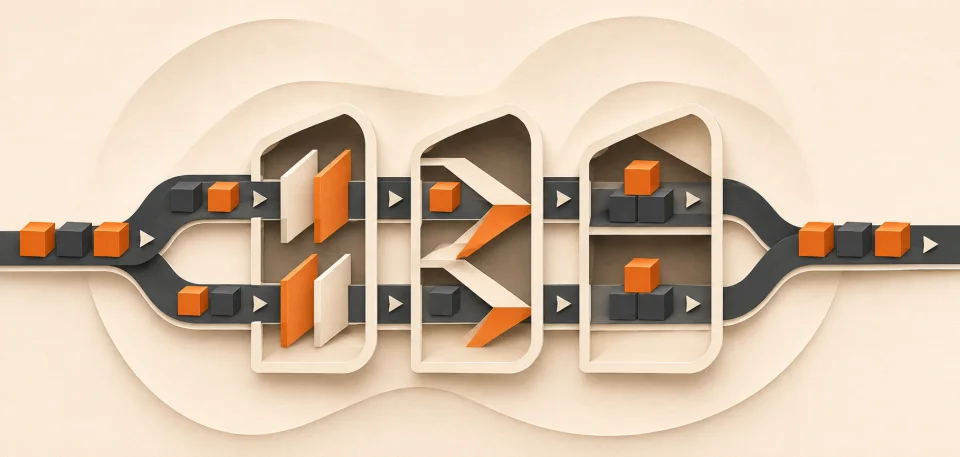
Contract logistics means a factory or retailer pays another company to store goods, pack orders, ship them or handle returns.
Existing precise value-chain case; shared parent markets and bundled contracts are not additive.

Food brands, commercial kitchens and exporters pay for batches that meet their quality and delivery requirements.
Existing precise value-chain case; shared parent markets and bundled contracts are not additive.

Owners of commercial rooftop solar systems pay to keep them safe and generating electricity.
Existing precise value-chain case; shared parent markets and bundled contracts are not additive.

Factories pay for chemicals that reliably do a particular job in their production process.
Existing precise value-chain case; shared parent markets and bundled contracts are not additive.

Producers pay for verified recycling services, and manufacturers pay for recovered plastic they can actually use.
Existing precise value-chain case; shared parent markets and bundled contracts are not additive.

Employers may contract for health services at work. The business depends on real use, safe care and employers paying and renewing their contracts.
Separate employer service fees from insurer premiums and hospital episodes. Childcare/training are linked workforce enablers with distinct economics, not automatically added health revenue.

Travellers pay for stays and activities, and property owners can pay someone to run a reliable local operation.
Existing precise value-chain case; shared parent markets and bundled contracts are not additive.

Factories pay for tests and equipment checks they can show to customers. A lab needs recognition for the exact tests it sells and enough repeat samples to cover its costs.
Exclude medical diagnostics and metrology already included in equipment/automation contracts. Count actual test-service revenue once; the customer’s product exports are impact, not lab revenue.
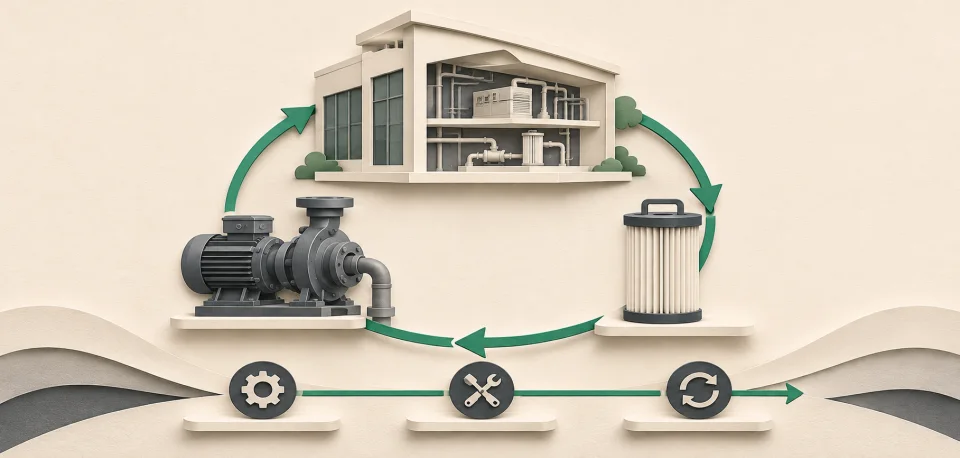
Households and employers pay to keep equipment and buildings working. Repeat jobs close together can help cover travel, staff and replacement visits.
Count contracted net/gross service revenue on a consistent basis. Allocate HVAC, water, pest and cleaning work once when bundled. Exclude repair parts or payroll pass-through from fee-only comparisons.

Hospitals and clinics pay for help preparing bills and getting claims paid. The fee has to make sense after the cost of staff, software and mistakes.
Count vendor net fees only. Hospital reimbursement and insurer claims are client funds, not vendor TAM. This is a specialist adjacent to engineering/AI services; do not add both parent and child budgets.

Small businesses may pay a regular fee for help with books, payroll and collections. Check whether the work saves enough time or money to keep customers paying.
Count collected net service fees; exclude tax payments, customer turnover and duplicate GST registrations. Broader fintech/credit opportunities are not assumed proved by bookkeeping demand.
The business economics score compares margins, cash needed and how hard the business is to copy. A service group’s sales range is for the example named on its card.
These four cases are worth a closer look because a supplier can start with a paid contract or upgrade. The terms of the deal determine what you earn.
2.5–4.0× sales · 84/100 business economics
Sell upgrades to buildings that can measure the drop in their power bill. Check whether customers renew after the first season.
2.5–4.0× sales · 82/100 business economics
Sell a factory upgrade that pays for itself through fewer rejects or breakdowns. Measure the savings before rolling it out.
2.4–4.3× sales · 79/100 business economics
Test or maintain cooling and power equipment for a funded data centre. Confirm that the operator will pay for the service separately.
2.4–3.8× sales · 85/100 business economics
Run or upgrade an existing treatment plant. Compare the contracted price with the cost to deliver usable water and check when the buyer pays.
Household budgets, borrowing costs and equity markets reach each industry through different channels.
31 main opportunity families contain 50 operating analyses. The six service families consolidate 12 models. Four specialty-care models sit under healthcare; four workforce models are enablers; five local businesses remain selective. No family market, revenue or confidence is obtained by adding or averaging the children.
Choose a business opportunity to see what needs to happen for it to work, what the evidence says, and what we still need to check.
Each opportunity has three questions: will customers pay, can Indian businesses deliver, and can they earn enough after costs? A support score rates the evidence for one answer. The overall confidence score also considers how reliable and complete the evidence is. These scores express a research judgment, separate from a chance of success.
Each necessary gate has five analyst-rated 0–1 evidence inputs: quality 25%, independent origin 20%, directness 20%, freshness 15%, coverage 20%. Average across the three gates; if any gate has directness or coverage below 0.5, cap evidence at 60. Support-strength anchors are 0 = disproved, 0.25 = weak, 0.5 = mixed/unresolved, 0.75 = supported with important gaps, 1 = strong direct evidence of the current condition.
Thesis confidence is the minimum of the evidence score, mean support-strength points and weakest support-strength points +15, rounded to 5. A contradicted necessary gate caps it at 25. These weights, caps and ratings are transparent governance judgments, not a fitted model. They are useful for structured updates and prioritising diligence; they do not create statistical certainty.
The displayed rubric stress range moves all evidence/support inputs down/up by 0.10 and recomputes the caps. It is sensitivity to judgment, not a statistical confidence interval. A new evidence-backed assessment can lower the thesis score while increasing confidence in the negative conclusion.
All 150 condition-level ratings, citations, observation periods, gaps and invalidation rules are in the download. Aggregated thesis scores live in research_runs.input_manifest.baseline; the installed schema has no standalone thesis_confidence column.
A targeted refresh checked 13 source records on 8 November 2026 and added WABAG’s 5 November H1 FY27 disclosure. Its global revenue rose 20% and its order book included a named Indian industrial order; this supports capability and demand, while leaving site-level reuse/O&M returns unproven. S56
Healthcare’s FY26 sample, cooling’s September industry update, FY26 electronics/export data and the GCC study use their stated data periods. Annual anchors remain useful; they are not relabelled as today’s operating readings. S28 S20 S23 S26
Syngene’s newer October Q2 FY27 filing was discovered, but its primary attachment was inaccessible in this refresh. Snowman’s FY26 release was rechecked without establishing a later primary quarterly release here. Their freshness ratings are limited and latest-quarter reconciliation is a required next step. No secondary numerical estimate was quietly substituted. S33 S40
This is a targeted research baseline, not an exhaustive current-quarter audit or a live data feed. No war/conflict scenario is treated as an observed event by the simulator.
A subsidy can help only if the business qualifies and receives the money. Follow each policy from announcement to money paid and projects in use.
This is an evidence ladder, not a forecast that every policy passes every step. Standards/trade rules can skip funding stages; their final product-specific instrument and implementation matter. A positive policy for customers may hurt a supplier.
Approval can help projects move forward. To see whether it is working, look for money paid out, contracts that qualify, and storage systems actually running.
Cabinet source ↗The current MHI portal distinguishes the broader extension from the closed L5 three-wheeler segment.
Current scheme brief ↗The cited approval ends in March 2026; a later extension is unverified here. No prospective funding upgrade is applied.
Dated source ↗The starting scores already include the policies we knew about. Try a new development to see what could change. A policy may make equipment cheaper while leaving open the question of whether customers will place orders.
The calculator shows what your assumptions would do to the score. Published scores stay as recorded in the assessment.
For each pre-mapped gate: support change = direction × policy-link ceiling × (new stage weight − reference stage weight). Stage weights are announced 0, approved 0.1, budgeted 0.3, disbursed 0.5, operating 0.75, paid outcomes 1. Explicit verified pause/withdrawal uses −0.25. Unknown, unverified or unresolved eligibility does not generate a numerical change.
These weights and ceilings are governance assumptions, not measured success frequencies. Sum distinct channels, cap each gate at ±10 support points, and use only the largest same-direction effect within an overlapping policy group. Conflicting effects in one overlapping group require review. This prevents treating a scheme approval and its aggregate PLI disbursement as independent full benefits.
Then apply the existing thesis rubric: minimum of evidence quality, mean necessary-gate support and weakest-gate support +15, rounded to 5. Evidence-quality inputs do not automatically improve just because a policy stage advances. A higher demand score may leave the full-thesis score unchanged when cash economics is the weakest link. Original opportunity ratings and uncalibrated scenario probabilities are unchanged.
References are scoped source observations. For example, an operating plant count does not mean every approved beneficiary has achieved commercial returns. A final rule can still raise compliance costs, exclude a category or transfer value to buyers/foreign technology owners. Use contract-specific eligibility and pass-through economics.